

North Facing Balcony Plants: Best Choices for Apartments
North facing balcony plants get a bad reputation — but shade-tolerant species actually thrive where sun-lovers fry. If you’re hunting for apartment balcony garden ideas that work without direct sun, you’re in the right place.
I grow a full balcony garden on a north-facing exposure in zone 6b Philadelphia, and it’s honestly one of my favorite setups. No wilted leaves by noon, no daily watering emergencies in August.
Table of Contents
The Hidden Potential of a North-Facing Balcony Garden
Most gardening guides treat shade like a problem to solve. It’s not. A north-facing balcony is a genuinely different growing environment — one that many plants prefer over scorching afternoon sun.
Think of it as a built-in woodland microclimate. The plants that evolved on the forest floor — ferns, hostas, impatiens — naturally want exactly what your balcony offers.
You won’t be fighting the sun to keep plants alive through July heat. You’ll be leaning into a cool, humid, lush aesthetic that sun-facing balconies can’t replicate no matter how hard they try.
The key is understanding what your specific space actually offers — and choosing plants that match it precisely, not plants you wish would work.
Understanding the North-Facing Microclimate
Before you buy a single plant, audit your space. A north-facing balcony without direct solar radiation behaves completely differently from a sun-drenched patio in terms of water use, temperature, and plant metabolism.
Skipping this step is the most common apartment gardening mistake beginners make. Get the microclimate wrong and the right plant will still fail.
Decoding “Deep Shade” vs. “Bright Indirect Light”
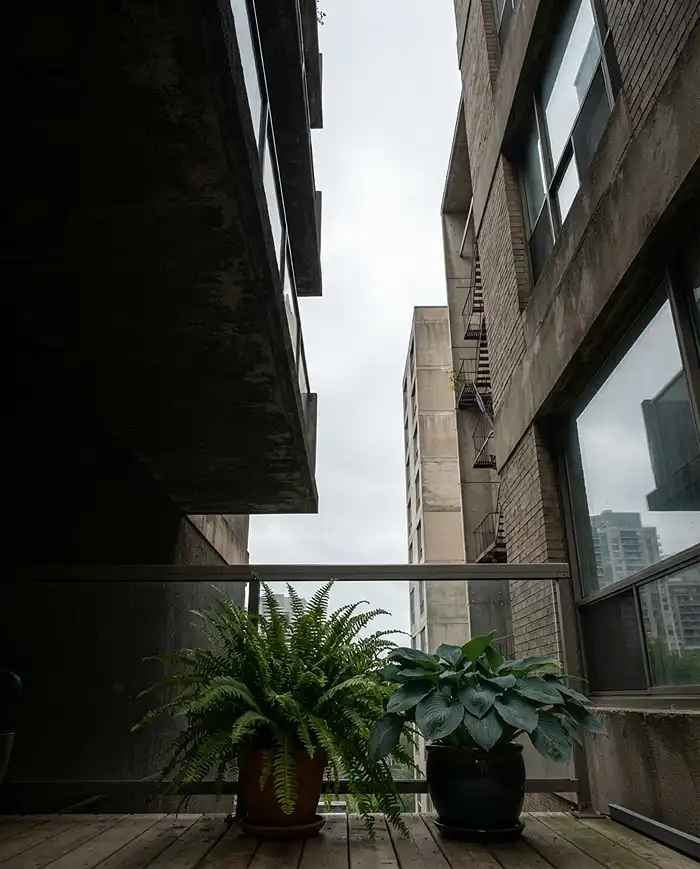
Quick Answer: Bright indirect light means sky is visible overhead but no direct sun rays hit the foliage. Deep shade means you’re boxed in by structures that block most of the sky. The distinction determines which plants survive.
Stand on your balcony at noon on a clear day. Look up. If you can see open sky, you likely have bright indirect light — enough for blooming shade plants like impatiens and fuchsia.
If neighboring high-rises block most of the sky, you’re in true deep shade. Stick to hardy foliage plants only: ferns, hostas, and cast iron plant (Aspidistra elatior), which tolerate very low light levels.
Managing Cooler Temperatures and Slower Evaporation
Quick Answer: No direct sun keeps a north-facing balcony 5-10°F cooler than south-facing equivalents. Soil dries out far more slowly, making overwatering the number one killer of shade container plants.
That cooler temperature is actually a gift for leafy crops and cold-hardy perennials. But it means your watering instincts from any previous gardening will mislead you.
Cold wind drafts from building corners also hit shade balconies hard. Position sensitive plants like maidenhair ferns away from the railing edge — use sturdier plants as a windbreak at the perimeter.
Top Foliage Plants for North-Facing Balconies
Shade gardening is fundamentally a texture and color game. Without blooms as the star, you build visual interest through leaf shape, size, and tone. These plants deliver structure and drama without needing a ray of sun.
Lush Ferns: Boston, Maidenhair, and Autumn Ferns
Quick Answer: Ferns are the backbone of a north-facing balcony garden. Boston ferns thrive in hanging baskets with consistent moisture. Autumn ferns add coppery-red color in floor pots. Both perform well with zero direct sun.
I’ve grown ‘Tiger Fern’ Boston ferns (Nephrolepis exaltata) in 14-inch hanging baskets on my balcony since 2021. They cascade beautifully and recover fast if I miss a watering — more forgiving than maidenhair.
Maidenhair ferns (Adiantum) are stunning but demanding. They want consistent humidity and hate wind. I lost two before I moved them behind a larger planter for wind protection. Worth it, but plan accordingly.
Autumn fern (Dryopteris erythrosora) is the workhorse. New fronds emerge coppery-red, maturing to glossy green. Hardy to zone 5. Plant it in a 12-inch pot with perlite-heavy mix and largely ignore it.
Pro Tip: Mist Boston fern fronds every other day in summer — a cheap pump sprayer does the job and prevents tip browning without overwatering the roots.
Vibrant Hostas and Heuchera for Colorful Leaves
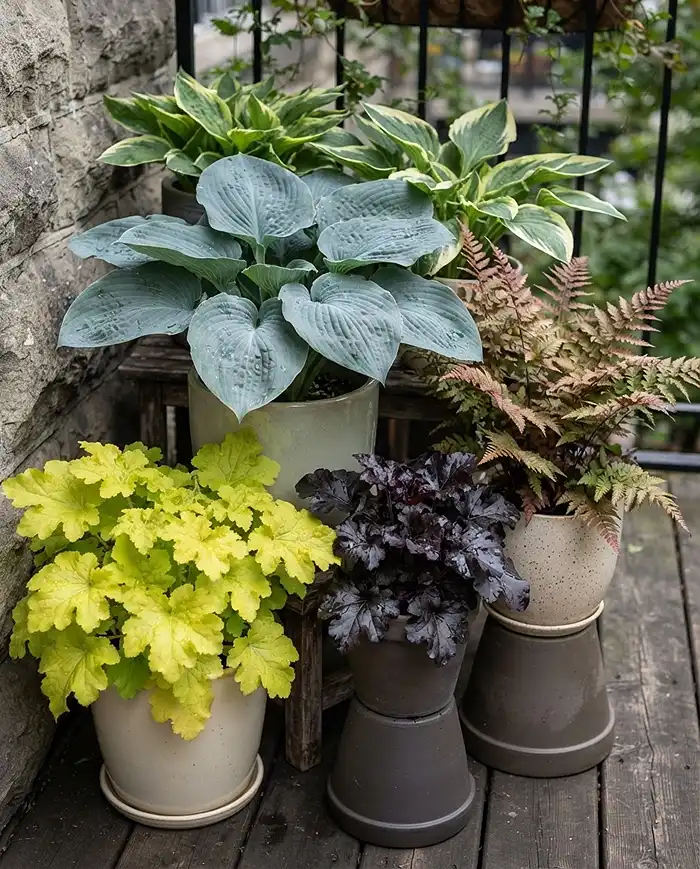
Quick Answer: Hostas and Heuchera (Coral Bells) are the best perennial foliage plants for north-facing containers. They return yearly, tolerate cold, and cover the color spectrum from blue-green to deep burgundy to chartreuse.
For small space gardening, hosta cultivar selection matters. ‘Blue Mouse Ears’ stays under 8 inches tall — perfect for a tight balcony. ‘Sum and Substance’ grows massive (3 feet across) and works as a solo statement plant in a half-barrel.
Heuchera ‘Obsidian’ (near-black leaves) and ‘Lime Rickey’ (bright chartreuse) planted together create contrast that reads as intentional design, not accident. Both handle zone 4 winters with just a little mulch over the pot.
I overwintered hostas in pots on my balcony by wrapping the containers in burlap and pushing them against the building wall. Three out of four survived a zone 6b winter without being moved indoors.
Pro Tip: Slugs love hostas. A ring of diatomaceous earth around the base of the pot catches them before they shred the leaves overnight.
Best Flowering Plants That Bloom Without Direct Sun
A north-facing balcony can absolutely have flowers. You just need to pick species that evolved in forest understories — plants that produce blooms under a canopy, with filtered or ambient light as their energy source.
For more ideas on building a productive balcony setup from scratch, the apartment gardening tips for beginners guide covers container selection and seasonal planning in detail.
Impatiens and Begonias for Continuous Summer Color
Quick Answer: New Guinea Impatiens and wax or tuberous Begonias are the most reliable flowering annuals for north-facing balconies. Both bloom continuously from May through frost without needing any direct sun.
New Guinea Impatiens tolerate more light variation than standard impatiens and have larger, showier flowers. Plant them 8-10 inches apart in railing planters for a dense mound effect. Colors range from hot coral to soft lavender.
Wax begonias are practically indestructible in shade containers. I planted ‘Super Olympia Red’ in a 10-inch window box in 2023 and they bloomed from May through the first hard frost in late October — zero deadheading required.
Tuberous begonias produce enormous, rose-like flowers and prefer the coolness of a north exposure over any other spot. Heat actually stunts them. Your balcony’s natural coolness is a competitive advantage here.
Pro Tip: Pinch impatiens back by one-third in midsummer if they get leggy. They’ll flush back fuller within two weeks and bloom harder through fall.
Fuchsias for Elegant Hanging Baskets
Quick Answer: Trailing fuchsias are ideal for north-facing hanging baskets. Their bell-shaped bi-color blooms cascade naturally downward and the plant actively suffers in direct sun — making your shaded balcony its preferred habitat.
Fuchsia ‘Dark Eyes’ (deep violet and red) is my go-to. I hang it in a 16-inch wire basket lined with coco fiber, and it blooms from late May through September in my zone 6b climate with no supplemental light.
What most guides don’t tell you: fuchsias attract hummingbirds. I had consistent hummingbird visits on my fourth-floor balcony in 2022 purely because of two fuchsia baskets. Worth it for that alone.
Keep the basket moist — the coco fiber dries faster than plastic pots, so check daily during warm spells. Feed with a balanced liquid fertilizer every two weeks through August.
Pro Tip: Deadhead [remove spent flowers and their seed pods] weekly. Fuchsias redirect energy from seed production back into flowering when you stay on top of this.
Edibles That Thrive on a Shaded Balcony
Forget tomatoes. A north-facing balcony is genuinely superior for growing certain edibles — the crops that full-sun gardens struggle with because they bolt [go to seed] the moment temperatures rise.
Your cool, shaded exposure keeps these crops sweet and productive weeks longer than a sunny balcony ever could.
Leafy Greens: Spinach, Arugula, and Lettuce
Quick Answer: Loose-leaf lettuce, spinach, and arugula are perfect north-facing balcony crops. The cool, shaded environment prevents bitterness and bolting, enabling a cut-and-come-again harvest from spring through early summer and again in fall.
Sow seeds densely in wide, shallow bowls — I use 16-inch clay saucers filled with potting mix. Cut leaves when they hit 4-5 inches, leaving the base intact. New growth comes back within 10-14 days.
‘Buttercrunch’ lettuce and ‘Bloomsdale’ spinach are both reliable performers in part shade. I get 6-8 cuts from a single sowing before flavor declines. Arugula is slightly more bolt-resistant in heat — a good late-season choice.
As of spring 2025, I started both a March and a September sowing on my balcony. The fall crop actually outlasted the spring one by three weeks, producing into late November under a simple frost cloth.
Pro Tip: Sow a new bowl every three weeks for continuous harvest rather than sowing everything at once and getting one big flush.
Shade-Tolerant Culinary Herbs: Mint, Parsley, and Chives
Quick Answer: Parsley, chives, cilantro, and mint all produce well with just 2-3 hours of ambient indirect light. These broad-leaf herbs prefer cool, moist conditions — exactly what a north-facing balcony provides naturally.
Mint is the caveat plant on this list: it spreads aggressively. Always pot mint separately — never mix it into a container with other herbs or it will take over within one season. One 8-inch pot per variety is enough.
Flat-leaf parsley is remarkably shade-tolerant and produces tender, flavorful leaves in low light. ‘Giant of Italy’ is my preferred cultivar. It runs all season in a 10-inch pot with regular harvest to encourage fresh growth.
Cilantro is a natural fit for a cool balcony — heat is what makes it bolt and turn bitter. A north-facing exposure gives you productive cilantro well into July, when most gardeners have already given up on it.
Pro Tip: Chives go semi-dormant in extreme cold but bounce back in early spring before almost anything else. Leave them in place year-round — they’re essentially maintenance-free perennials in a pot.
Soil, Pots, and Maintenance for Shade Gardens
Shade containers need a different approach than standard sun pots. The same potting mix that works beautifully on a south-facing balcony will waterlog and suffocate roots on a north-facing one. This is non-negotiable.
The beginner’s guide to small space gardening has a deeper breakdown of container selection if you’re just getting started with your setup.
Formulating a Fast-Draining Soil Mix
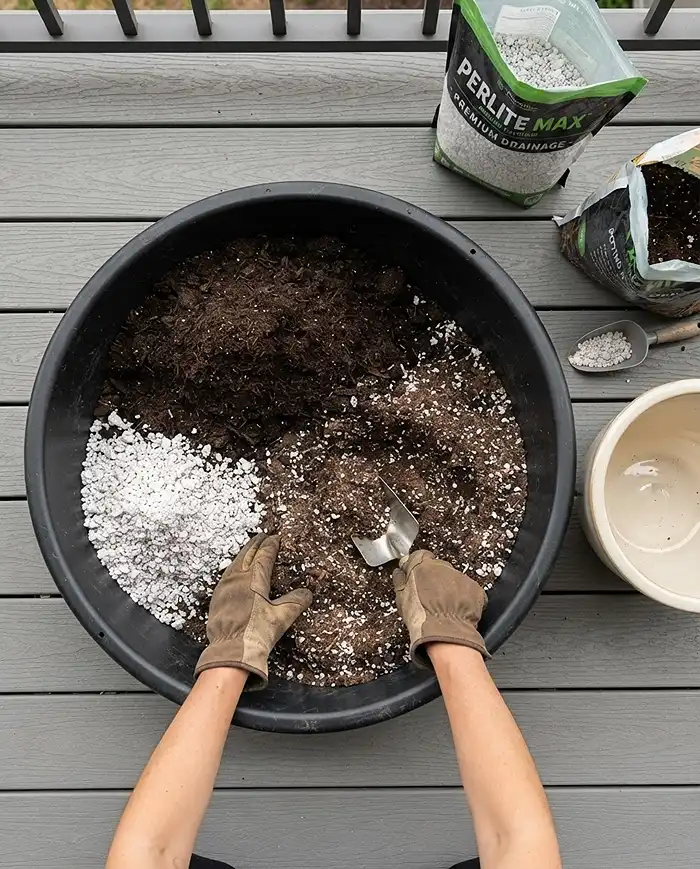
Quick Answer: Mix premium organic potting soil with 30-40% coarse perlite or pumice. Without sun to drive evaporation, standard potting mix stays too wet too long, leading to root rot in even drought-tolerant shade plants.
I use Espoma Organic Potting Mix as my base, blended with horticultural perlite at roughly a 65/35 ratio by volume. The mix feels lighter and grainier than standard potting soil — that’s correct.
Avoid “moisture-retaining” or “water control” potting mixes entirely for shade containers. They’re formulated for sun gardens that dry quickly. On a north balcony, they’ll stay waterlogged for days after rain.
| Plant Type | Recommended Pot Size | Perlite Ratio |
|---|---|---|
| Small ferns / herbs | 8-10 inches | 30% |
| Hostas / Heuchera | 12-14 inches | 35% |
| Large Boston ferns | 14-16 inch hanging basket | 25% (coco fiber liner helps) |
| Leafy greens | 16-inch wide, shallow bowl | 20% |
| Tuberous begonias | 12 inches minimum | 35-40% |
Adjusting Your Watering Schedule
Quick Answer: Use the finger-test method exclusively for shade containers. Push your finger 2 inches into the soil. Water only if it’s completely dry at that depth. Shade plants consume water slowly — most need water 50% less often than sun plants.
I water my north-facing balcony plants roughly every 4-5 days in summer, compared to every 1-2 days on my sunny front stoop. The difference is dramatic.
After rain, skip your next scheduled watering and re-test the soil. A north balcony gets less evaporation from the pot surface and less wind drying, so rain lingers in the soil longer than you’d expect.
- Water deeply when you do water — until it drains from the bottom of the pot
- Empty saucers 30 minutes after watering to prevent roots sitting in standing water
- Water in the morning to allow any surface moisture to evaporate during the day
- Reduce watering by half in September as plant metabolism slows heading into fall
Common Problems and Solutions
Shade container gardens have their own specific failure modes. Most are preventable once you know what to look for. Catch these early and plants recover fast.
Root Rot and Soggy Soil
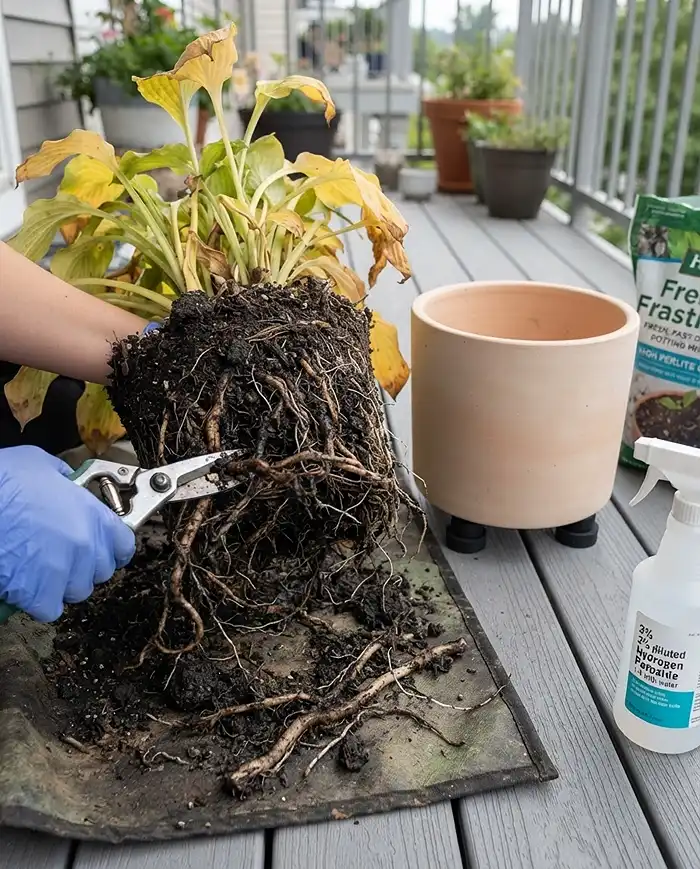
Quick Answer: Root rot shows as yellowing leaves, mushy stems at the base, and a sulfur or sour smell from the soil. Treat immediately by repotting into dry, perlite-heavy mix and elevating the container on pot feet for airflow.
I lost a beautiful ‘Halcyon’ hosta to root rot in year two of balcony gardening — classic mistake of keeping it in a saucer that collected rainwater. The smell confirmed it before the plant fully collapsed.
Pot feet (small rubber or ceramic risers under the container) create bottom airflow and let excess water drain freely. They cost about $5 for a set of three and have prevented far more plant deaths than any fertilizer I’ve used.
- Remove all mushy, brown roots with clean scissors before repotting
- Let the root ball air dry for 1-2 hours before placing in new soil
- Hold off on watering for 3-4 days after repotting to let roots stabilize
Powdery Mildew and Fungal Issues
Quick Answer: Powdery mildew appears as white, dusty patches on leaves. It thrives in damp, still air — common on shaded balconies. Treat with potassium bicarbonate spray and thin inner foliage to restore air circulation.
Begonias and squash (if you attempt it) are the most mildew-prone plants in shade conditions. I spray my begonias with a potassium bicarbonate solution (1 tablespoon per quart of water) at first sign of white spots.
The real fix is cultural: remove crowded inner leaves to open up the plant’s center. Good airflow through the foliage is more effective than any spray at preventing recurrence. Don’t wait until it’s severe.
The University of Maryland Extension guide on powdery mildew has an excellent breakdown of organic treatment options for container ornamentals.
Frequently Asked Questions
Can I grow tomatoes or peppers on a north-facing balcony?
No. Tomatoes, peppers, and eggplants biologically require 6-8 hours of direct, intense sunlight to flower and ripen fruit. A north-facing balcony simply cannot provide this. Attempting it results in tall, leggy plants that produce little to nothing. Stick to shade-tolerant edibles like lettuce, spinach, arugula, parsley, and chives.
Do I need to fertilize shade plants as often?
No — cut fertilizer applications in half compared to sun plants. Shade plants grow at a slower metabolic rate and absorb nutrients more slowly. Feed with a diluted organic liquid fertilizer (such as fish emulsion at half-strength) once a month. Over-fertilizing causes salt buildup in the soil, which burns roots and causes leaf tip browning.
How can I maximize ambient light on my balcony?
Paint adjacent walls a crisp white to reflect light back into the space. Place a weatherproof outdoor mirror in the darkest corner to bounce ambient light toward plants. Use light-colored or white planters rather than dark ones. These tricks won’t create direct sun, but they measurably increase the brightness that shade-tolerant plants can use.
Which north-facing balcony plants come back every year?
Hardy perennials that return in containers include hostas (zones 3-9), heuchera (zones 4-9), autumn ferns (zones 5-9), and chives (zones 3-9). Overwinter them by moving pots against the building wall and insulating with burlap or bubble wrap around the container. Ferns, impatiens, begonias, and fuchsias are annuals and must be replanted each season.
How do I know if my balcony has bright indirect light or deep shade?
Stand on your balcony at noon on a sunny day and look directly up. If you can see open sky — even if no direct sun reaches the floor — you have bright indirect light, suitable for blooming shade plants. If neighboring buildings block most of your sky view, you’re in deep shade and should limit yourself to hardy foliage plants like ferns and hostas.
Key Takeaways
- North facing balcony plants succeed when you match species to your actual light level — audit whether you have bright indirect light or true deep shade before buying anything.
- Overwatering is the primary killer in shade containers — use the 2-inch finger test and a fast-draining mix with 30-40% perlite.
- Foliage plants like hostas, heuchera, and ferns provide year-round structure; flowering annuals like fuchsia, impatiens, and begonias layer in seasonal color.
- Your shaded exposure is genuinely superior for cool-season edibles — lettuce, spinach, arugula, parsley, and chives all outperform what sun balconies can grow in those categories.
- Small design details matter: white walls, light-colored pots, and pot feet for drainage make a measurable difference in a small balcony garden’s long-term health.