
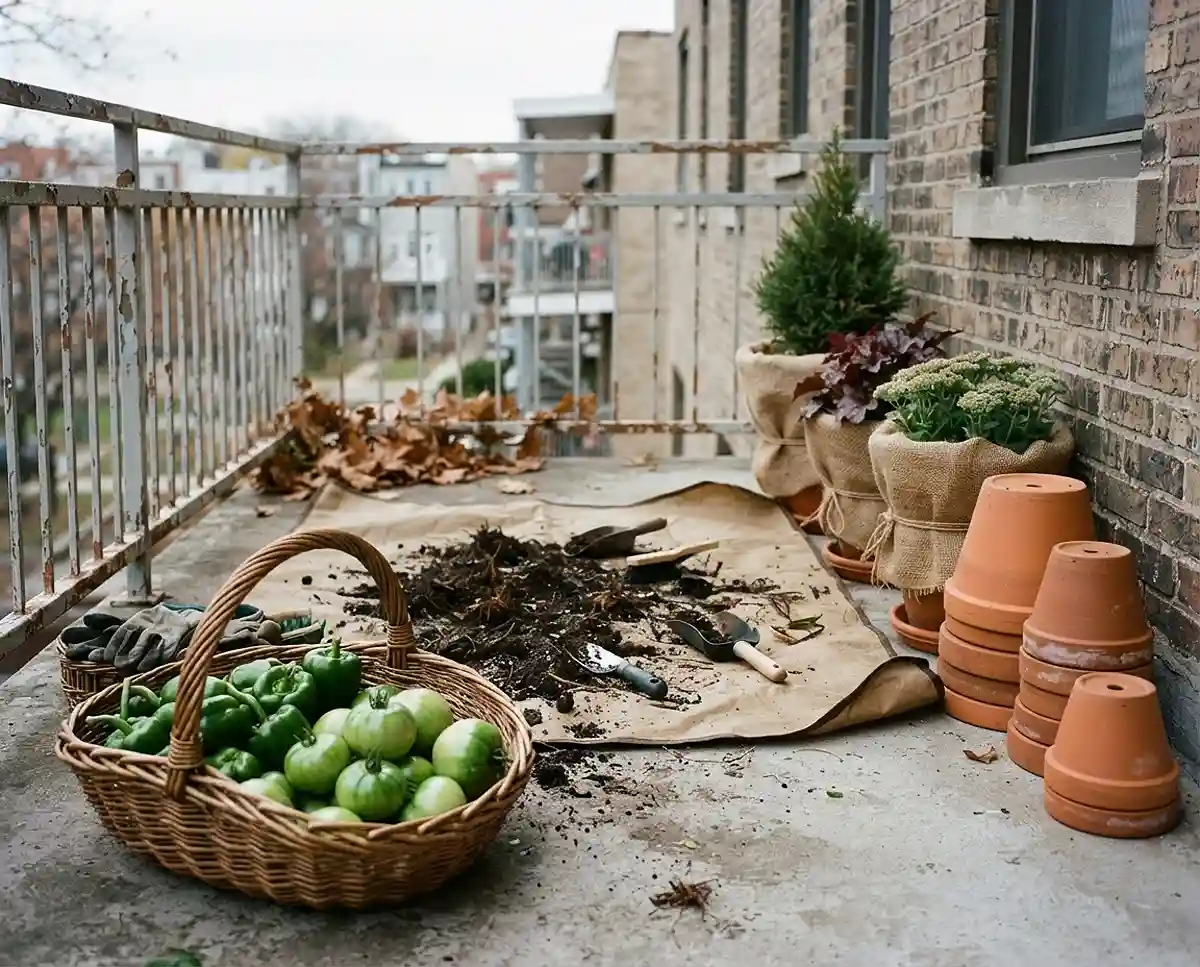
Fall Balcony Garden Cleanup
Your fall balcony garden cleanup takes one weekend and saves you a month of spring headaches. Use this fall garden checklist to harvest, sanitize, and protect everything before the first hard freeze. I grow containers on a north-facing balcony in zone 6b, and every shortcut I’ve taken has cost me a pot or a plant.
Table of Contents
Why Fall Balcony Garden Cleanup Matters
Leftover plant debris is a winter hotel for aphids, spider mites, and fungal spores. They hide in old soil and on pot walls, then wake up the moment you plant seedlings in April.
Water also expands when it freezes inside damp pots, and that cracks the expensive ones. A tidy shutdown protects your containers, starves pests before they settle in, and makes spring planting a simple refill job.
New to container growing? Start with our beginner small space gardening guide. When March arrives, our spring small space gardening checklist for beginners picks up where this leaves off.
Step 1: The Final Harvest and Plant Triage
Quick Answer: Harvest every usable crop before temperatures hit 32°F, then sort your plants into three piles: eat now, bring indoors, or pull. Peppers, citrus, and rosemary can winter inside. Tomatoes, petunias, and most annual herbs can’t.
- Pick green tomatoes before frost and ripen them in a paper bag with a banana.
- Cut basil when nights approach 50°F. It blackens at the first real chill.
- Take 4-inch cuttings of basil, mint, and sage and root them in a glass of water.
- Harvest remaining peppers, even small ones. Plants rarely finish them in cold weather.
Rescuing Tender Perennials for Indoors
Move tender plants inside when nights start dipping toward 45 to 50°F, usually one to two weeks before your first frost. Don’t wait for the forecast to scare you into it.
- Inspect leaf undersides and spray with insecticidal soap.
- Quarantine the plant for two weeks, away from your houseplants.
- Prune peppers and citrus back by about one third.
- Park them in your sunniest south-facing window, or under a grow light for 12 hours a day.
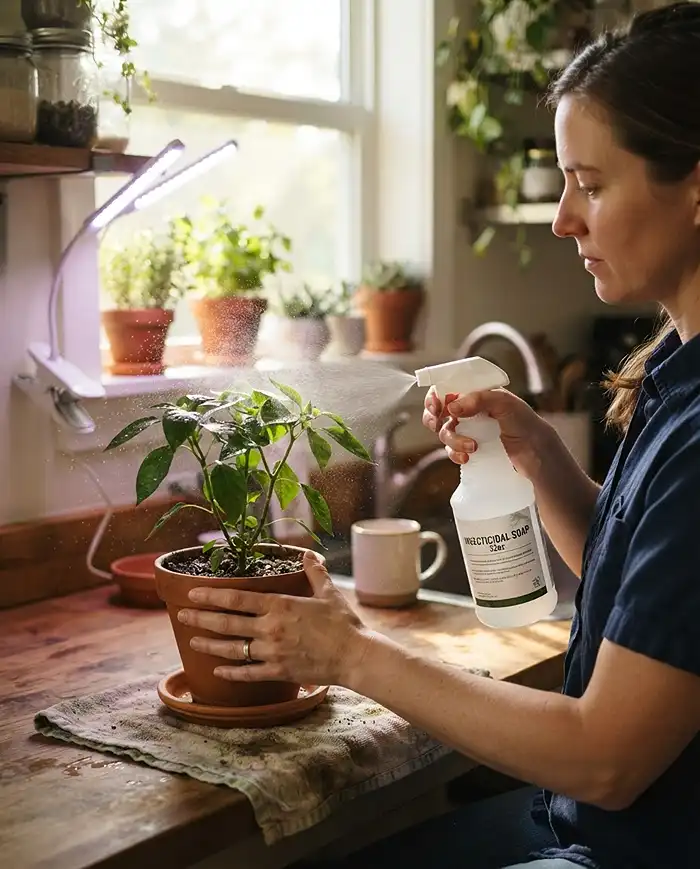
Real Example: Two Octobers ago I pruned a ‘Jalapeño M’ pepper to 10 inches and hauled it inside. It dropped half its leaves, restarted in February, and gave me 14 peppers by June.
Pro Tip: Water indoor peppers less than you think. Cool, dim winter rooms make soggy roots the number one killer.
Composting and Discarding Spent Annuals
Pull dead or dying annuals like tomatoes, petunias, and marigolds without sentiment. Clinging to half-dead plants just gives pests a longer runway.
Healthy, disease-free foliage can go into your compost. Anything with blight, powdery mildew, or leaf spot goes in the trash. Home compost piles rarely get hot enough to kill those spores, and they’ll come back next summer.
Bagging diseased plants is one of the most important fall small space garden tasks, so do it before you touch anything else. For the full tomato teardown, see our guide to pruning tomatoes at the end of the season.
Step 2: Managing and Refreshing Container Soil
Don’t dump your potting mix. Refilling a dozen large containers with fresh bagged soil easily costs $60 or more, and the empty bags add up fast.
Reusing healthy soil saves money and cuts plastic and peat use. The one exception: toss any soil from plants that had a serious disease, like late blight or verticillium wilt. Everything else can be cleaned up and refreshed.
Removing Root Masses and Top-Dressing
Old root balls choke drainage and use up space that should hold nutrients. Pull them out now, while the soil is still workable.
- Tip each pot onto a tarp and break up the clumps by hand.
- Sift out thick roots with a 1/2-inch hardware cloth screen.
- Refill the pot and mix in an inch of finished compost or worm castings per 12-inch container.
- Leave it alone. Winter rain and snowmelt will carry nutrients down and break the compost in.
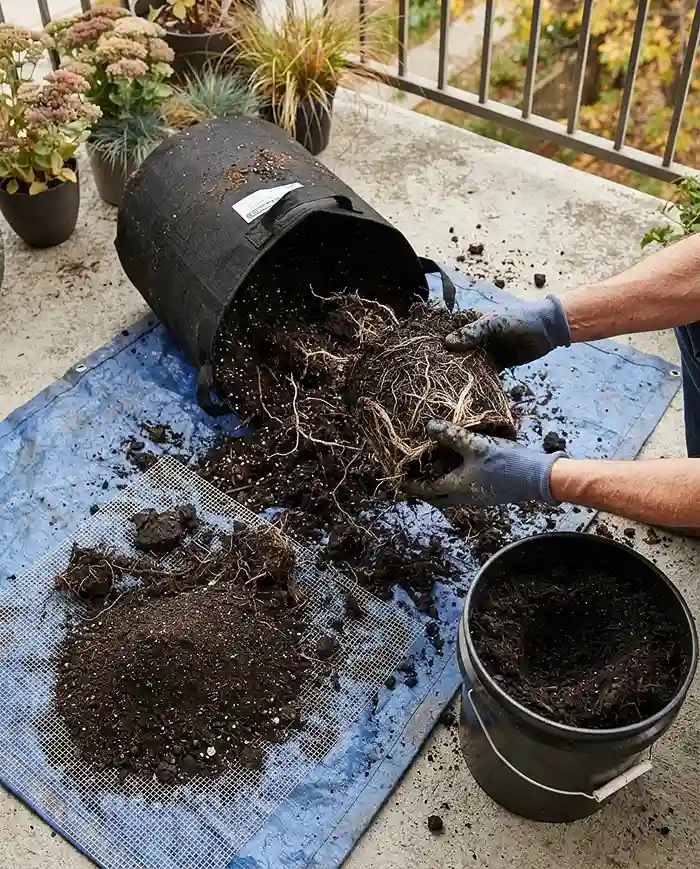
Pro Tip: Healthy roots you sift out can go straight into the compost bin. Chop them first so they break down faster.
Tarping and Storing Soil to Prevent Weed Seeds
Bare soil on a balcony is a landing pad for wind-blown weed seeds, and winter rain leaches out the nutrients you just added. A cover fixes both. This is the winter prep step most people skip.
| Option | Best For | Watch Out For |
|---|---|---|
| Tarp over planted pots | Large containers you can’t move | Tie it down well so wind doesn’t strip it off |
| Sealed 5-gallon bucket | Small amounts of sifted soil | Soil stored damp can turn sour or moldy |
| Heavy contractor bag | Bulk soil in tight spaces | Punctures from sharp pot edges |
Step 3: Cleaning, Sanitizing, and Storing Gear
Pathogens ride over winter on pot walls, trowel blades, and pruner handles. A thirty-minute scrub now stops last year’s problems from becoming this year’s. It also extends the life of gear you’ve already paid for.
Scrubbing and Disinfecting Empty Pots
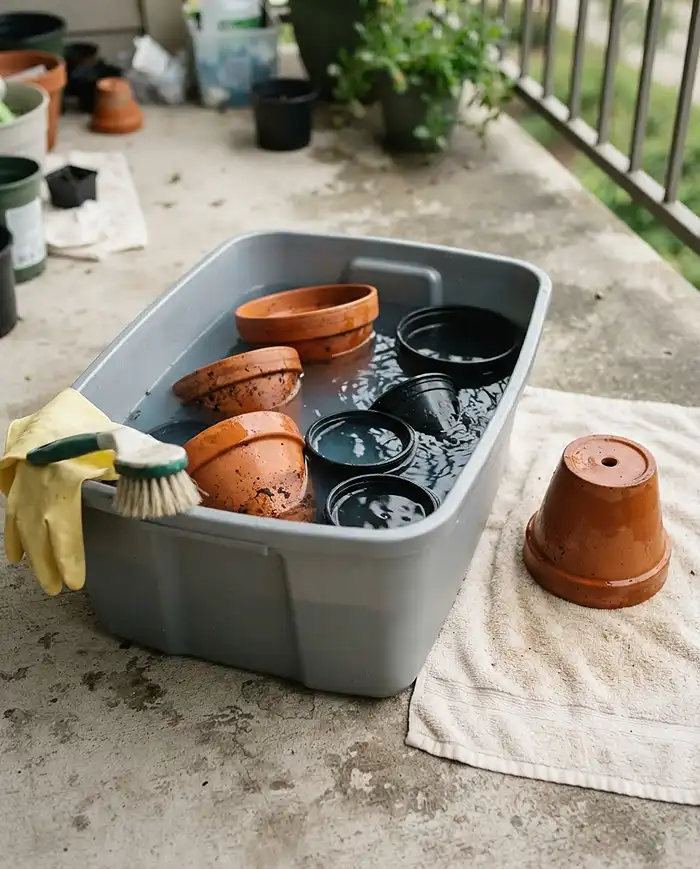
Quick Answer: Scrub off all soil, then soak pots for 10 minutes in a solution of one part bleach to nine parts water. Rinse thoroughly and let them dry before stacking. This kills most fungal spores that survive in container walls.
Iowa State University Extension’s pot-cleaning guide backs the same 10 percent bleach ratio and also lists rubbing alcohol as an option for single containers.
- Add bleach to the water, not the other way around, to avoid splashing.
- For white salt crust, scrub with a mix of one part white vinegar to three parts water.
- Never mix bleach and vinegar. The fumes are dangerous.
- Rinse well, since leftover bleach can harm next spring’s seedlings.
Winterizing Terracotta to Prevent Cracking
Terracotta is porous, so it soaks up water. When that water freezes and thaws repeatedly, the pot flakes or splits. Empty every clay pot, dry it completely, and store it indoors or upside down under cover.
I learned this the expensive way. In January I left a 14-inch terracotta planter half full of damp soil by the railing. A thaw-and-freeze cycle split it clean down the side, and I lost a $38 pot.
Oiling Tools and Storing Liquid Fertilizers
Wipe pruner blades with rubbing alcohol, dry them, and coat with a thin layer of mineral oil. That stops rust and keeps the cutting edge smooth. Do the same for trowels and snips.
- Remove sap with steel wool before oiling any sticky blade.
- Bring liquid fertilizers indoors. Frozen bottles expand and burst.
- Keep granular fertilizer in a sealed tub in a dry spot.
- Drain and coil any drip irrigation lines so water can’t freeze inside.
Step 4: Overwintering Hardy Balcony Shrubs and Perennials
Plants that stay outside need help. Roots in containers are far less cold-hardy than roots in the ground, because there’s no soil buffer around the pot.
A good rule: choose plants rated at least two zones colder than yours. One of my favorite balcony garden ideas for winter interest is a dwarf Alberta spruce paired with hostas. Both handle zone 6b if their pots are insulated.
Wrapping Pots and Mulching Crowns
- Water plants well in late fall, before the soil freezes solid.
- Group pots together against the building wall, out of the wind.
- Wrap each pot in burlap or bubble wrap, and tie it snugly.
- Pile 3 to 4 inches of straw mulch over the soil and crowns.
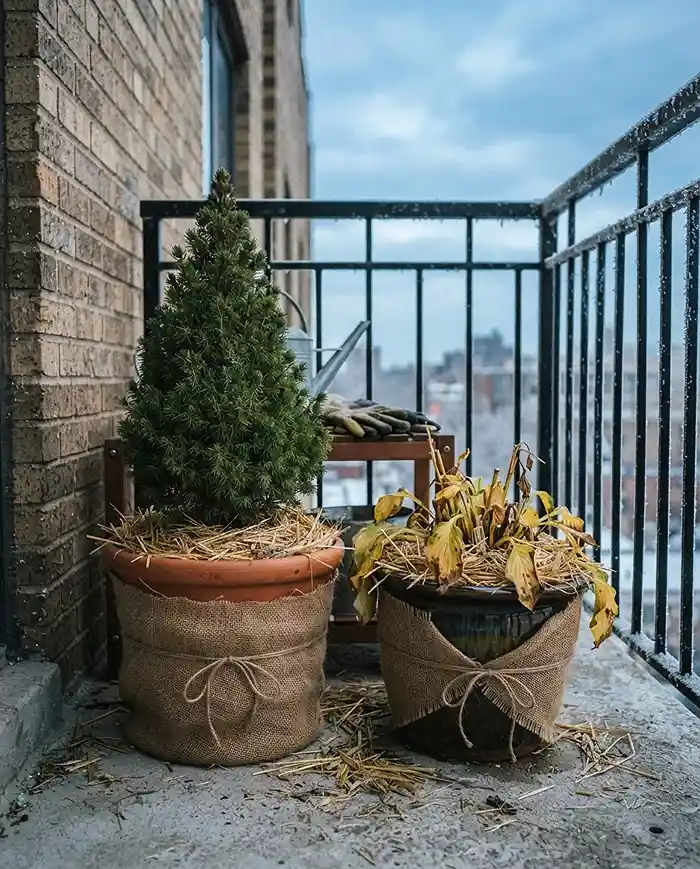
Pro Tip: Wrap the pot, not the foliage. Evergreens still need airflow, and covering the leaves invites rot.
Common Problems & Solutions
Closing down a small balcony throws up a few predictable annoyances. These two come up most often, and both are easy to fix if you catch them early.
Fungus Gnats Hatching in Saved Soil
Damp soil stored indoors is a breeding ground for fungus gnats. One winter I stashed two bags of slightly wet mix in my hall closet. By January, a cloud of gnats greeted me every time I opened the door.
Let soil dry out completely before storing it. Better yet, keep it in sealed bins on the cold balcony, where gnats can’t hatch.
Stains and Mildew on Balcony Concrete
Sprinkle baking soda over hard water rings, fertilizer stains, and green algae, then scrub with a stiff brush and a little water. It lifts most marks without harsh chemicals. Do this before the first snow, since wet leaves and snow make stains harder to remove later.
Frequently Asked Questions
Can I leave potting soil in my fabric grow bags over winter?
Yes, fabric grow bags can stay full of soil outdoors all winter. Their breathable walls drain well, so freezing damage is rare. The real risk is nutrient loss, because heavy rain and snowmelt flush nutrients through the fabric. Move the bags under an overhang or against a wall, or cover them with a tarp. In spring, top-dress with an inch of compost and you’re ready to plant.
Should I cut back my hardy perennial herbs before winter?
No. Skip heavy late-fall pruning on woody herbs like lavender and thyme. Fresh cuts can invite frost damage that travels down the main stem, and the old growth helps insulate the crown. Remove only dead or diseased pieces now. Wait until early spring, once you see new buds, then cut back to just above the fresh growth.
How do I clean my balcony floor without dropping water on neighbors below?
Skip the hose. Sweep first, then use a shop-vac to pick up debris and spilled soil. For stains, use a damp mop or a bucket and sponge, scrubbing one spot at a time and wiping up the rinse water. These methods keep dirty runoff from dripping onto the neighbors below, and many buildings prohibit hosing balconies anyway.
Key Takeaways
- A solid fall balcony garden cleanup comes down to four moves: harvest and triage, refresh soil, sanitize gear, and insulate hardy plants.
- Bring tender perennials indoors before nights hit 45 to 50°F, and quarantine them for two weeks.
- Bag diseased plants instead of composting them, and soak pots in a 1:9 bleach solution.
- Empty and dry terracotta so freeze-thaw cycles can’t crack it.
- Wrap pots, mulch crowns 3 to 4 inches deep, and skip heavy fall pruning on woody herbs.