
Small Vegetable Garden for Beginners
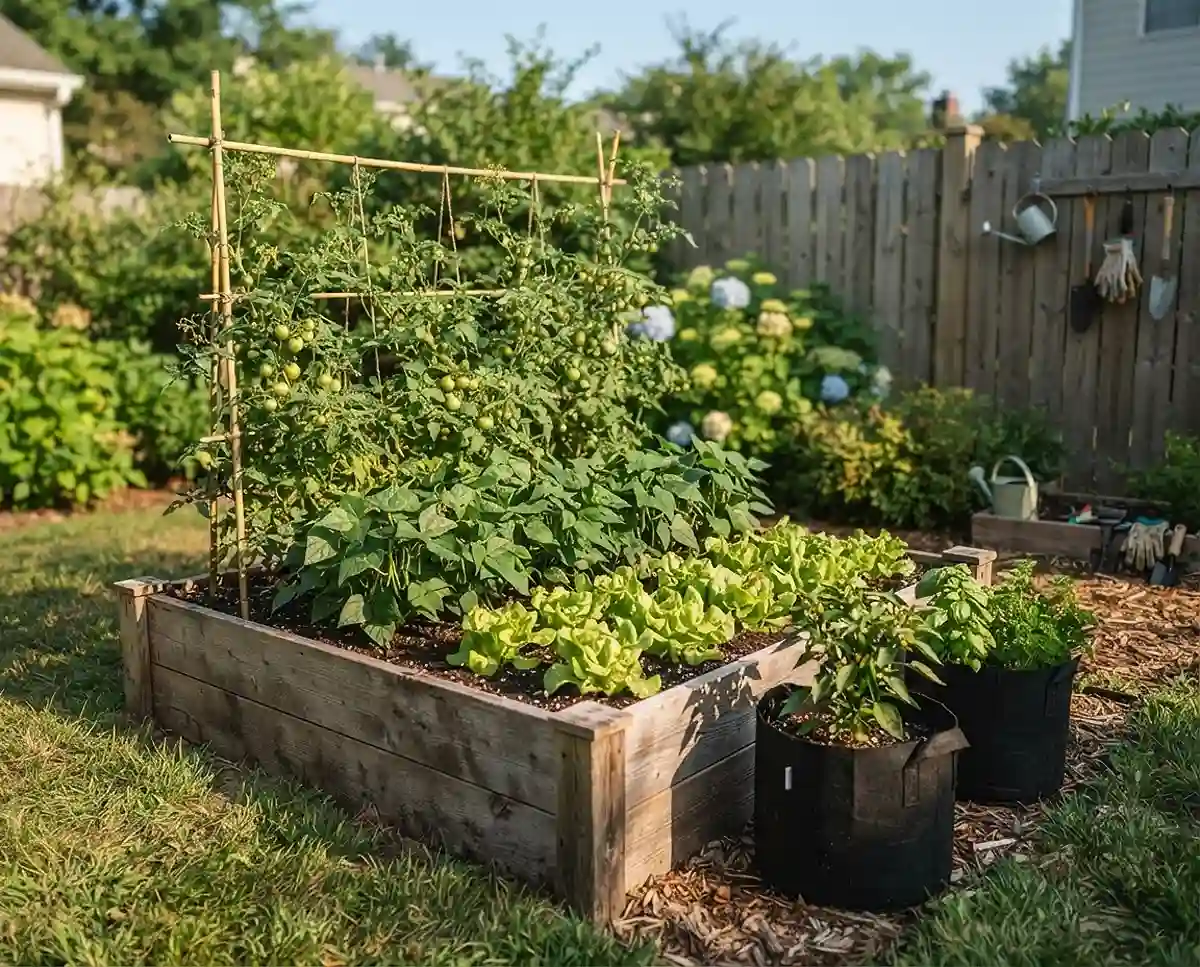
Want a small vegetable garden for beginners that actually produces? These small vegetable garden ideas keep it simple: one raised bed or a few pots, and crops that forgive mistakes.
I grow tomatoes, beans, and greens on a north-facing balcony in zone 6b, plus a 4×4 bed in a friend’s sunny yard. I’ve killed plenty of plants, so this is what works. For more on beginner small space gardening, see this apartment gardening starter guide.
Table of Contents
Starting Small: Why Your First Vegetable Garden Should Be Tiny
Beginners quit because of overwhelm, not bad luck. A 4×4 bed or four pots takes about 15 minutes a day. You learn watering, spacing, and harvest timing without burning out.
Small space gardening also forces good habits. You can’t ignore a plant you walk past every morning.
Real Example: My first year, I crammed 12 tomato plants into a 10×10 plot. By August, weeds and blight had won. The next spring I planted three ‘Sungold’ cherry tomatoes and harvested more fruit with a fraction of the work.
Evaluating Your Small Space and Sunlight
Before buying anything, walk your yard, patio, or balcony at 9 a.m., noon, and 3 p.m. Note where sun lands, where wind funnels, and where you can reach water. Also confirm your zone on the USDA Plant Hardiness Zone Map.
Tracking the 6-to-8 Hour Sunlight Rule
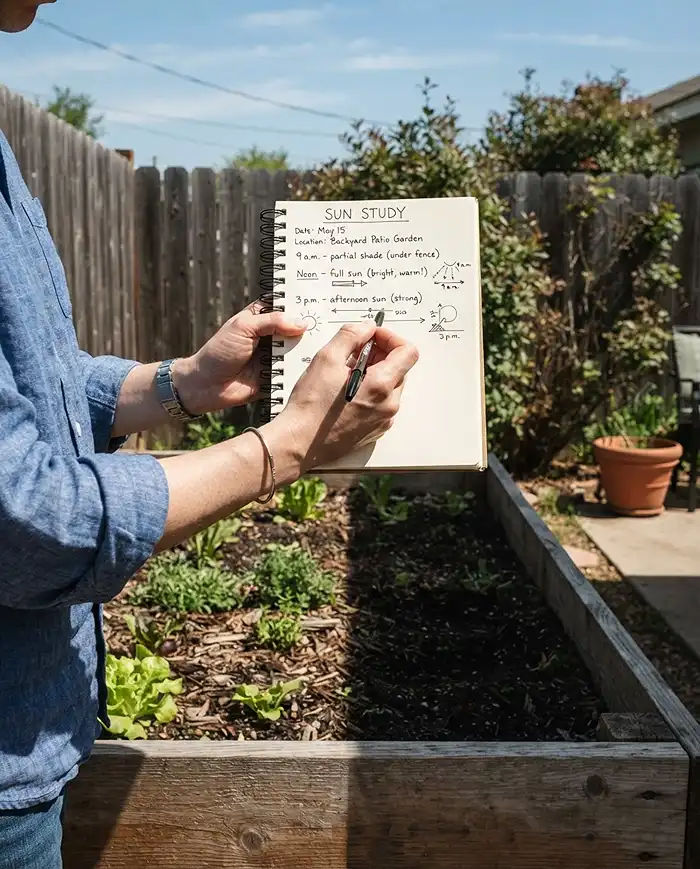
Quick Answer: Fruiting vegetables like tomatoes, peppers, and beans need 6 to 8 hours of direct, unobstructed sun daily. Leafy greens and radishes get by on 3 to 4 hours.
Check your spot every two hours on one clear day and jot down what’s sunny. Trees, fences, and railings shift shade fast, and July sun hits differently than April sun.
| Direct Sun Per Day | Best Crops | Watch Out For |
|---|---|---|
| 6-8+ hours | Tomatoes, peppers, bush beans | Pots drying out by afternoon |
| 4-5 hours | Swiss chard, carrots, kale | Slower growth |
| 3-4 hours | Lettuce, spinach, radishes | Bolting [going to seed] in heat |
Access to Water and Proper Drainage
Put your garden within easy reach of a hose or spigot. If you’re hauling water more than 30 feet, you’ll skip days.
After a heavy rain, check for puddles. Water that sits longer than four hours means you need a raised bed or pots with drainage holes.
Choosing the Right Small-Space Garden Layout
Pick one of these layouts, not all three. Each one packs a lot of food into a footprint a novice can manage.
Raised Garden Beds (4×4 or 3×6 Dimensions)
A single 4×4 bed gives you 16 square feet, plenty for a first garden. You control the soil, skip tilling, and bend less. Aim for 8 to 12 inches deep.
Keep it narrow enough to reach the middle from both sides, so you never step on the soil. Cedar lasts longest, and a 3×6 works if you have a long, narrow strip.
Container Gardening and Fabric Grow Bags
Vegetables in pots work on balconies, patios, and over poor or contaminated soil. Fabric grow bags drain well and are easy to move when the sun shifts. Every container needs drainage holes.
| Crop | Minimum Container | Plants Per Container |
|---|---|---|
| Cherry tomato | 10-gallon | 1 |
| Bush pepper | 5-gallon | 1 |
| Bush beans | 5-gallon | 4-5 |
| Lettuce | Window box, 6 inches deep | 4-6 |
Real Example: One 10-gallon bag of ‘Patio Princess’ tomato on my balcony kept producing from July through September. It needed watering every day in August heat.
Vertical Gardening with Simple Trellises
Trellises let vining crops climb instead of sprawl. You get more harvest per square foot, and better airflow cuts fungal disease. An A-frame trellis or a cattle panel bent into an arch both work.
Try pole beans or cucumbers. Put the trellis on the north side of the bed so it doesn’t shade shorter crops.
Essential Tools and a Foolproof Soil Mix
You don’t need a shed full of gear. Buy the basics, skip the gimmicks, and put your money into good soil.
The Beginner’s Minimalist Tool Kit
- Hand trowel: sturdy stainless steel with a one-piece shaft, so it won’t snap.
- Bypass pruners: sharp blades that slice past each other for clean cuts on stems.
- Gloves: snug, breathable, and washable.
- Watering can or hose wand: choose a soft shower head so you don’t blast seedlings.
The “No-Fail” Raised Bed and Potting Soil Recipe
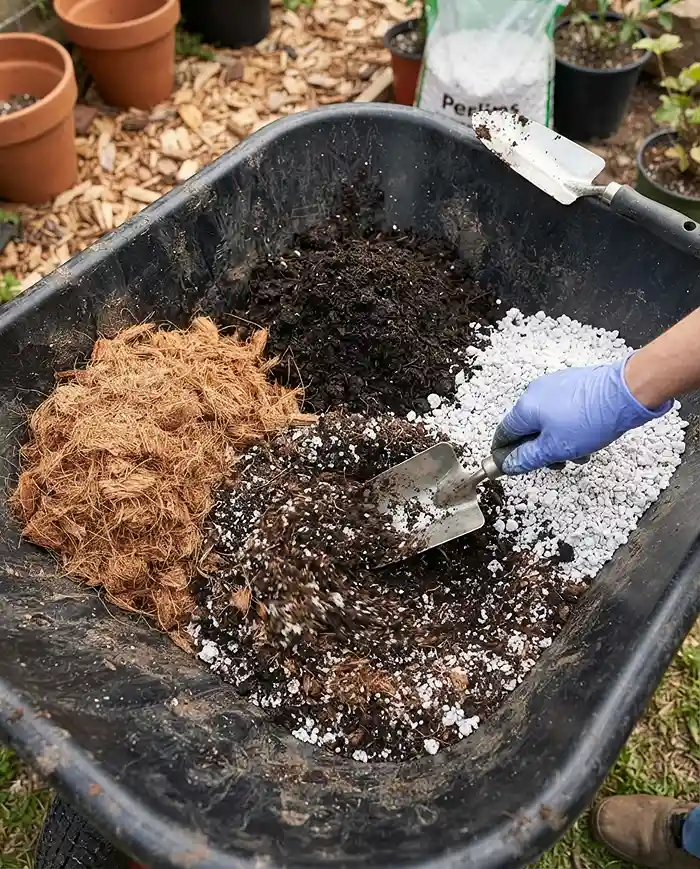
Quick Answer: Mix 2 parts coco coir, 2 parts compost, and 1 part perlite. This blend drains fast, holds moisture, and feeds roots without heavy backyard dirt.
- 2 parts coco coir: holds water and keeps the mix light.
- 2 parts compost: blend two different sources for more nutrients.
- 1 part perlite: adds air pockets for drainage.
A 4×4 bed filled 12 inches deep needs about 16 cubic feet of mix. Skip the soil from your yard. It compacts and brings weeds.
The Best “Easy-Win” Vegetables for Beginners
Choose compact, fast crops that reward you in weeks, not months. Early wins keep you motivated.
Fast-Growing Leafy Greens (Lettuce, Spinach, Swiss Chard)
These crops grow in 4 to 6 inches of soil and tolerate partial shade. Harvest the outer leaves and the plant regrows, which is called cut-and-come-again.
‘Black Seeded Simpson’ lettuce is ready in about 30 to 45 days. ‘Bright Lights’ chard takes around 55 but keeps producing for months.
High-Yield Bush Beans and Radishes
‘Provider’ bush beans sprout in 7 to 10 days and make their own nitrogen, so skip heavy fertilizer. ‘Cherry Belle’ radishes are ready in 22 to 30 days.
Neither needs staking, which makes them perfect for a first bed or a deep container.
Cherry Tomatoes and Compact Bush Peppers
Choose determinate (bush) cherry tomatoes like ‘Tiny Tim’ or ‘Patio Princess’ and compact peppers like ‘Mohawk’. They’re more forgiving and disease-resistant than large heirloom slicers.
Pro Tip: Pinch off the first flowers on a young pepper plant. It builds a stronger plant and a bigger harvest later.
Step-by-Step Planting and Maintenance Routine
Fill your container or bed, plant, water well, then check on it every day. That daily check is the habit that keeps plants alive.
Sowing Seeds vs. Buying Nursery Transplants
Direct-sow beans, radishes, carrots, and lettuce. They grow fast and dislike root disturbance. Buy tomatoes, peppers, and eggplant as transplants, since they need 6 to 8 weeks indoors before warm weather arrives.
Check your local extension office for your last spring frost date before planting anything warm-season.
Mastering the “Deep and Infrequent” Watering Rule
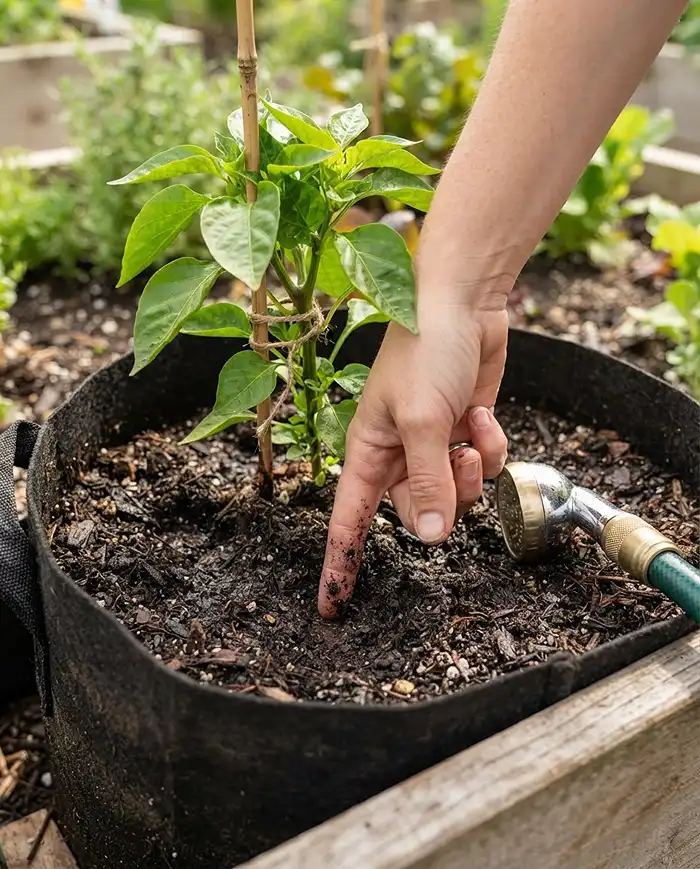
Use the finger test. Push a finger 2 inches into the soil. If it’s dry, water until it drains from the bottom or soaks the bed. If it’s damp, wait.
Deep watering pushes roots downward, so plants handle heat better. Daily surface sprinkles keep roots shallow and weak.
Real Example: I once lost a pepper plant by watering lightly every evening. Leaves turned yellow within three weeks, and the roots were mush. Now I use the finger test and rarely lose one.
Common Problems & Solutions
Most first-year problems come from too many plants, too much water, and too little patience. Our guide to common apartment gardening mistakes covers more.
Overcrowding Plants (The “Jungle” Effect)
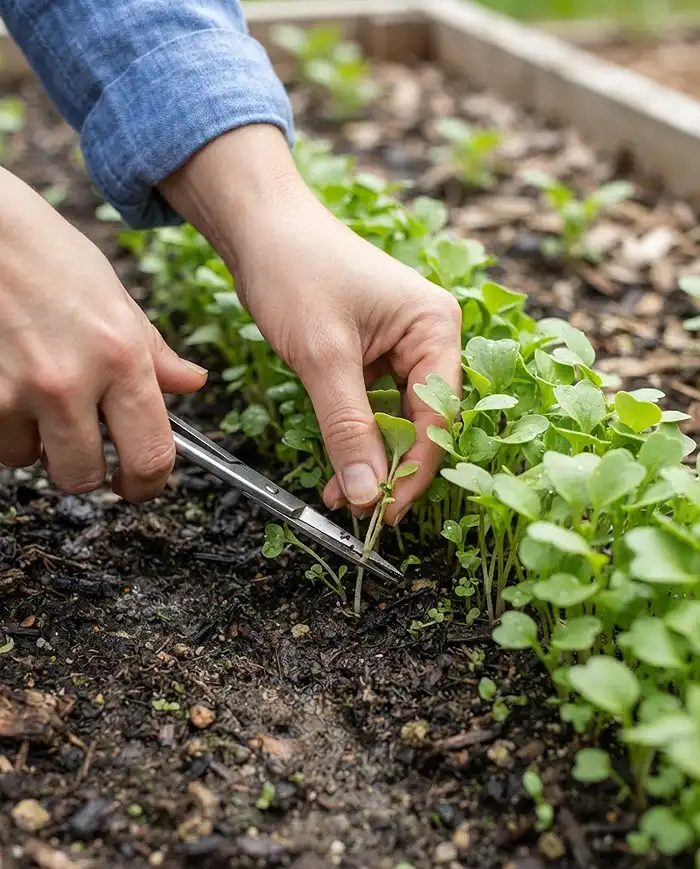
Seed packets say thin to 3 inches, and it feels cruel. Do it anyway. Crowded radishes grow leaves instead of roots, and crowded tomatoes trap humidity and invite blight.
Snip weaker seedlings at the soil line with scissors instead of pulling. This protects the roots of the plants you’re keeping.
Pests Chewing Holes in Vegetable Leaves
Hand-pick caterpillars in the morning and drop them in soapy water. Blast aphids off with a hose, then use insecticidal soap every 5 to 7 days.
Accept some cosmetic damage. A plant with 10 percent leaf loss still produces fine, and you avoid toxic sprays. More on this in these beginner apartment gardening tips.
small vegetable garden for beginners FAQs
How much does it cost to start a small vegetable garden?
A basic container setup costs about $60 to $80, and a small DIY raised bed with quality soil and seeds runs under $100. As of 2026, soil is usually the biggest expense, so buy compost and coco coir in bulk bags.
When is the exact best time to start planting vegetables?
Plant cool-season crops like lettuce, spinach, and radishes 2 to 4 weeks before your last spring frost. Plant warm-season crops like tomatoes and peppers after it. Check your local extension office for your last frost date.
Do I need to fertilize my first vegetable garden?
Not much. If your soil mix includes quality compost, a slow-release organic granular fertilizer once or twice a season is enough. Follow the package rate, because more is not better.
What is the easiest vegetable for a total beginner?
Radishes are the easiest. They sprout in a few days and are ready in 22 to 30 days. Leaf lettuce and bush beans are close behind.
Can I grow vegetables in pots on a balcony?
Yes. Use 5-gallon containers for peppers and beans, 10-gallon for tomatoes, and make sure the balcony gets 6 or more hours of direct sun for fruiting crops.
Key Takeaways
- A small vegetable garden for beginners works best at 16 square feet or four containers.
- Fruiting crops need 6 to 8 hours of direct sun. Greens and radishes tolerate less.
- Mix 2 parts coco coir, 2 parts compost, and 1 part perlite instead of using yard dirt.
- Water deeply but rarely, thin seedlings early, and start with radishes, lettuce, bush beans, and cherry tomatoes.