
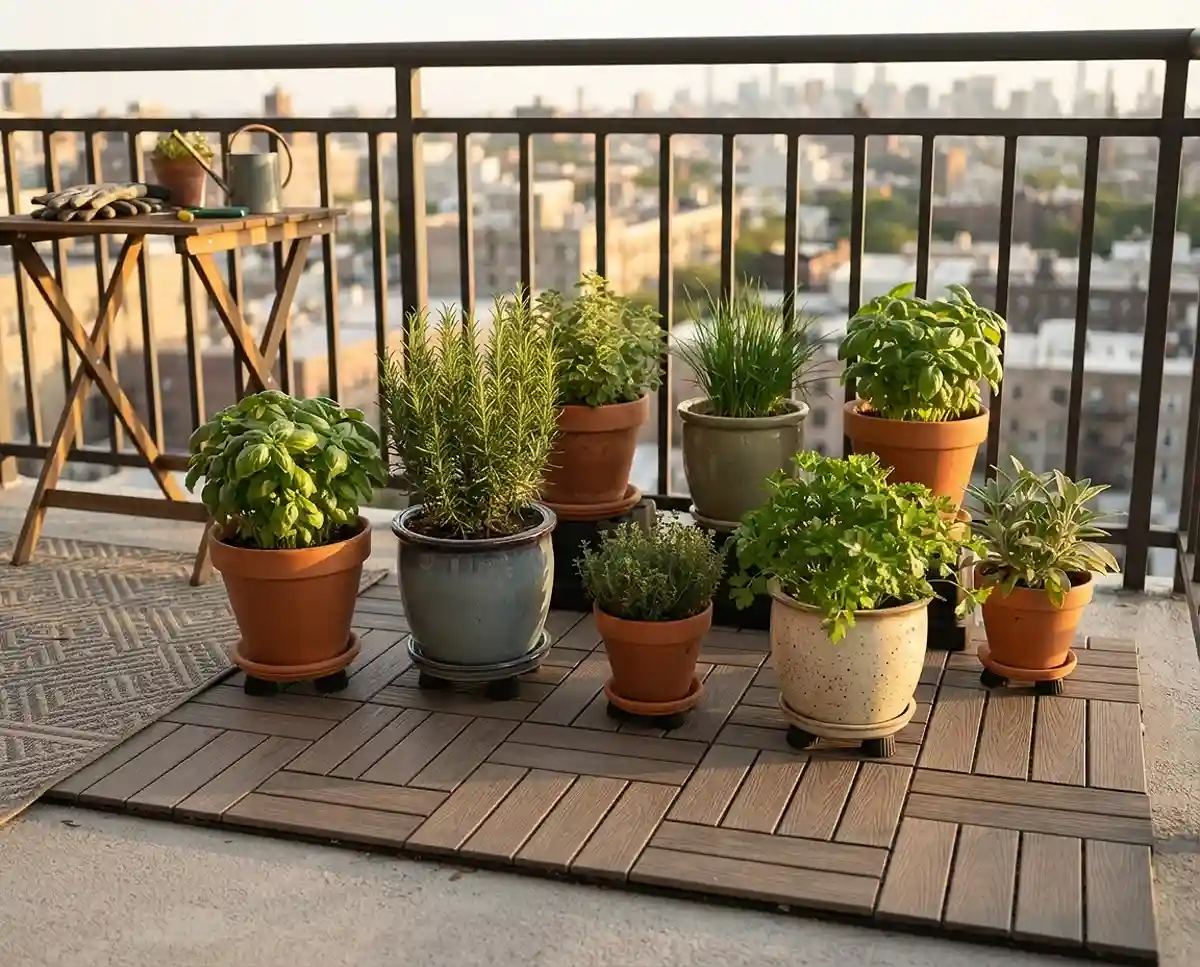
Renter Friendly Balcony Flooring Under Planters
Renter friendly balcony flooring can hide drab concrete without risking your deposit. Here’s what survives herbs in pots, soil spills, and lease rules, based on three seasons of testing on my own balcony.
I grow container herbs on a south-facing, third-floor balcony in zone 7a. Since 2023 I’ve tried acacia tiles, fake grass, and outdoor rugs under about 20 pots. Some worked great. One smelled like a wet dog.
Table of Contents
The Intersection of Balcony Aesthetics and Lease Agreements
Many leases ban anything drilled, glued, or painted onto the balcony. Floating floors that lift off cleanly usually pass, but ask first. A one-line email to my landlord took two minutes and saved a possible argument later.
The goal is a floor that drains freely, carries heavy pots, and leaves the concrete exactly as you found it. Everything below serves that goal.
Evaluating Your Balcony Surface and Weight Limits
Before buying anything, check two things: where water leaves your balcony and how much weight you’re adding. Skip this step and you’ll end up with puddles hiding under pretty tiles.
Inspecting Existing Concrete for Slopes and Drainage
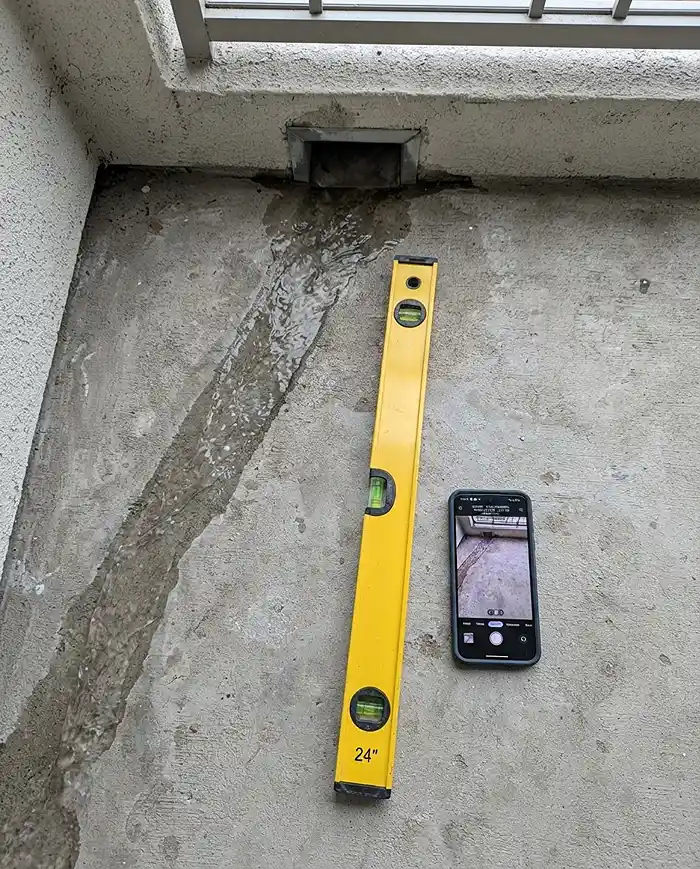
Quick Answer: Locate your drainage scuppers [the small wall openings where water exits], then set a 24-inch level on the slab. Most balconies slope 1/8 to 1/4 inch per foot toward them, and new flooring must never block that path.
Pour a quart of water near the far wall and watch where it travels. If it pools, raise that spot with plastic shims instead of leaving a low area under the flooring.
Pro Tip: Photograph the clean, dry concrete before you lay anything. Dated photos are the cheapest deposit insurance there is.
Calculating the Weight of Planters on Floating Floors
Quick Answer: Saturated potting mix weighs roughly 40 to 50 pounds per cubic foot, so a 10-gallon pot approaches 60 pounds before the container itself. Spread heavy pots over several tiles and check the tile’s load rating.
- 6-inch herb pot: about 4 to 5 pounds with wet mix
- 12-inch pot: about 20 to 25 pounds with wet mix
- 14-inch glazed ceramic pot: add 10 to 20 pounds when empty
Grid-base tiles handle this fine when weight spreads out. Trouble starts when one heavy pot sits on a single tile edge. Also ask your building manager for the balcony’s posted load limit.
Best Renter-Friendly Balcony Flooring Materials for Plant Lovers
Three materials cover nearly every renter’s needs. All install without tools or adhesive, and all handle weekly watering when you pick the right version.
| Option | Best For | Watch Out For |
|---|---|---|
| Composite deck tiles | Heavy pots and wet balconies | Higher upfront cost |
| Acacia wood tiles | A warm, natural look | Annual sealing and graying |
| Perforated-back turf | A soft, lush look | Mildew if water pools |
| Woven plastic rug | Tight budgets and easy move-outs | Sliding on smooth concrete |
Interlocking Deck Tiles (Acacia Wood and Composite)
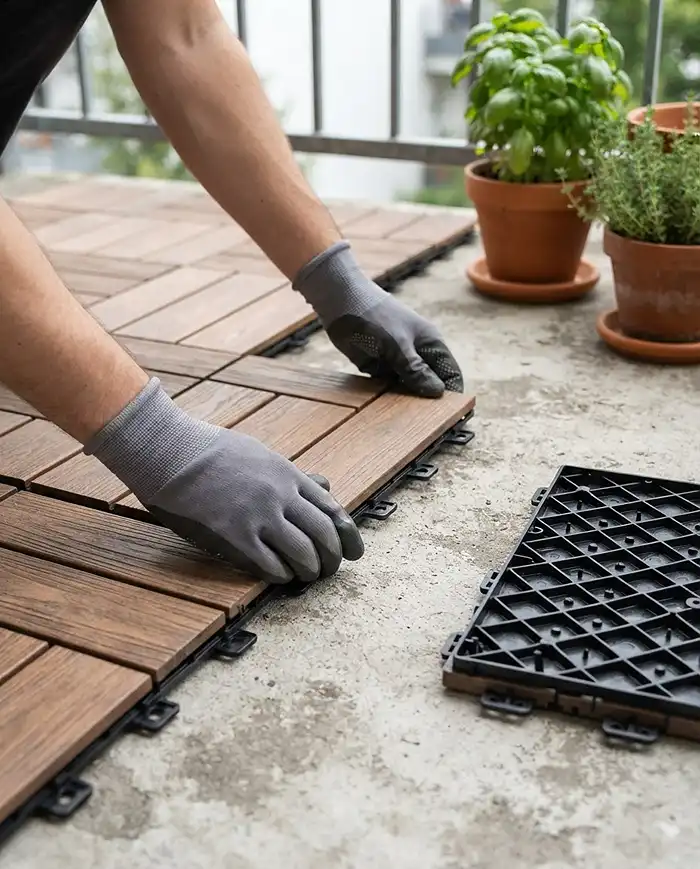
Quick Answer: Interlocking deck tiles are the best all-around choice for container herbs. Composite handles plant runoff better than acacia, which needs sealing every year. Both float on a plastic grid, so no adhesive or screws touch your concrete.
Real Example: In spring 2023 I laid acacia tiles and skipped the sealer. By October they’d turned silver-gray, with dark rings under every terracotta pot. I switched to composite in 2024, and as of October 2026 they still look new.
Artificial Turf: Pros, Cons, and Drainage Realities
Quick Answer: Fake grass looks lush, but only buy turf with a perforated marine-grade backing [a base with drainage holes that resists rot]. Solid-backed turf traps irrigation water against the concrete, where it stagnates.
Real Example: My first turf was a bargain 6×8-foot roll with a solid latex back. After one August week of daily watering under my ‘Genovese’ basil, the balcony smelled swampy. That was my honest failure.
Outdoor Rugs and Recycled Plastic Mats
Woven recycled-plastic rugs are the cheapest option and the easiest to live with. Water passes right through the weave, and you can roll the whole thing up in two minutes for cleaning or move-out day.
Sweep soil spills with a stiff broom instead of vacuuming. Suction pulls fine soil deeper into the weave and can clog your vacuum. Add a rubber grip pad underneath, since wet plastic slides on smooth concrete.
Protecting the Original Floor from Water and Soil Damage
Flooring covers the concrete, but it doesn’t protect it. Muddy runoff and fertilizer salts still seep through the gaps, so add a second layer of defense directly under each pot.
Herbs prefer a diluted feed, so a half-strength fertilizer for herbs in pots keeps runoff light. My guide to the best soil and fertilizer for container gardens covers rates that won’t stain.
Using Pot Feet and Plant Caddies for Airflow
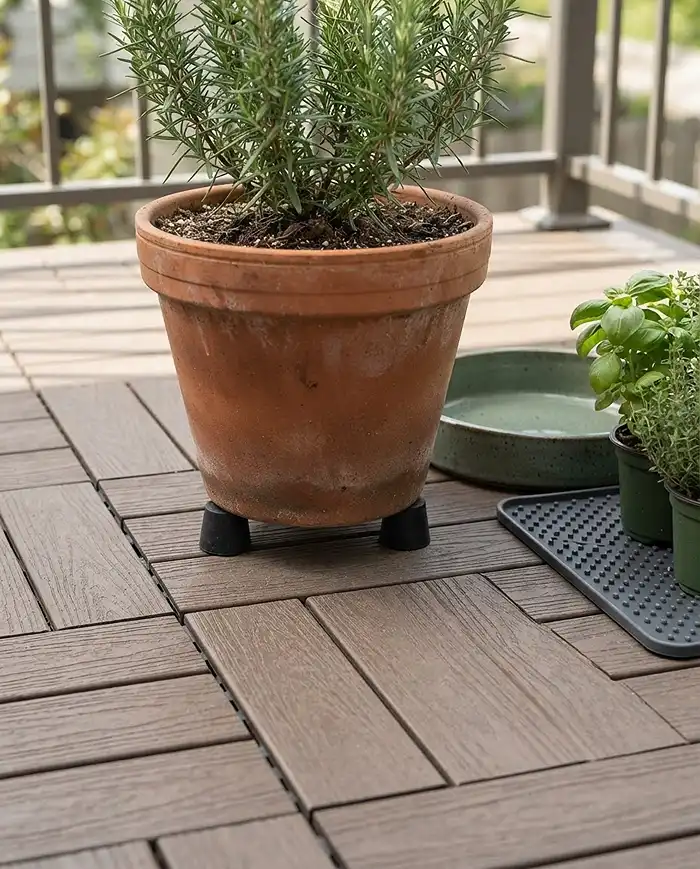
Quick Answer: Lift every pot about 1 inch off the flooring with pot feet or a wheeled caddy. The gap lets water evaporate and prevents the dark moisture rings that form under flat-bottomed pots.
Real Example: A 14-inch terracotta pot of ‘Tuscan Blue’ rosemary left a ring on my tiles that took a vinegar scrub to remove. Pot feet fixed it for good.
Pro Tip: Choose rubber or silicone feet. Hard plastic ones can scratch composite tiles.
Installing Protective Catch Trays and Silicone Mats
Quick Answer: Put a deep, watertight saucer or a large silicone mat under every heavy pot. A tray 2 inches wider than the pot catches nearly all the runoff, so muddy water never reaches the tiles or the concrete.
- Saucers 2 inches deep suit pots up to 12 inches wide
- Silicone mats, about 24 x 24 inches, suit clusters of small pots
- Empty trays within a day after heavy rain to prevent mosquitoes and root rot
Step-by-Step Guide to Installing Temporary Balcony Flooring
A 6×10-foot balcony takes about two hours, and you need no tools. Here’s the order I follow:
- Clear the balcony and photograph the bare concrete.
- Clean the slab and let it dry fully.
- Snap tiles together from the outside edge inward.
- Slide in trays and pot feet.
- Return pots, heaviest last.
Pre-Cleaning and Prepping the Bare Concrete
Quick Answer: Scrub the concrete with warm water, dish soap, and a stiff brush, then rinse and let it dry for 24 hours. Laying tiles over damp or mildewy concrete locks moisture in and starts the stains you’re trying to avoid.
For old mildew, use 1 cup of white vinegar per gallon of water and rinse well. Pick a dry, 70-degree day so the slab dries in hours instead of days.
Snapping Deck Tiles Around Difficult Corners
Start at the corner farthest from your door and snap tiles inward, row by row. That way any odd-sized gap lands along a wall, where it’s easy to hide.
Skip the saw. Around my drainpipe I filled the gaps with smooth river rocks, 1 to 2 inches wide. They stay put without adhesive, look intentional, and lift out in seconds at move-out.
Seasonal Maintenance for Plant-Heavy Balcony Floors
Container gardens shed soil, perlite, and dead leaves all season. A little upkeep each month keeps drainage open and your temporary flooring in good shape.
Sweeping Soil and Clearing Drainage Channels
Quick Answer: Every two weeks, sweep the surface, lift rug edges, and run a shop-vac over deck tiles to pull perlite and soil out of the drainage grid. Clogged channels hold water against the concrete.
Pro Tip: Before a forecast storm, clear the grid around your scupper first. That’s where debris piles up and water backs up.
Winterizing Wood Tiles and Mats
Quick Answer: In freezing climates, roll up outdoor rugs and store them dry. Stack wood tiles indoors if you can, since expanding ice can crack the plastic bases.
Good winter herb care follows the same logic. Bring tender container herbs, like rosemary, inside before the first frost and give them a grow light. Iowa State’s guide to growing herbs in containers explains the light and feeding needs.
Taper your feeding too. My fall container fertilizer schedule shows when to cut back.
Common Problems & Solutions
Floating floors fail in predictable ways, almost always from trapped moisture. These two fixes cover most of what I’ve dealt with.
Muddy Stains and Moisture Trapped Under Tiles
Quick Answer: Trapped moisture grows algae on the concrete below. Once a month, lift four or five tiles, scrub the slab, and flush it with 1 cup of white vinegar per gallon of water. Let it dry before relaying the tiles.
White crust on the slab is usually fertilizer salt from overfeeding. Rinse it away, then see my fall fertilizer for container vegetables post for how to taper.
Artificial Turf Smelling Like Mildew
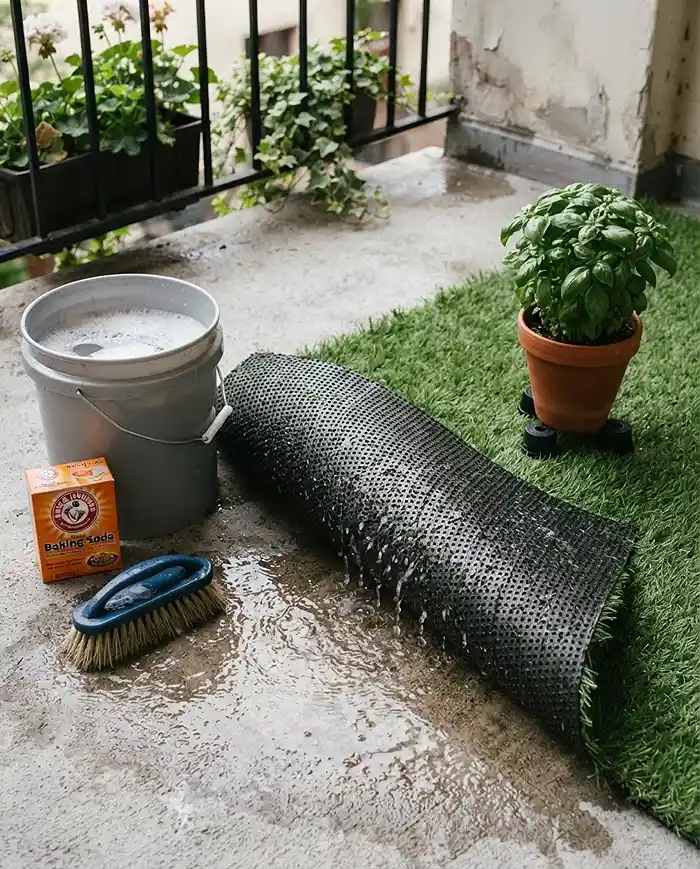
Quick Answer: A mildew smell means irrigation runoff is stagnating under the turf. Scrub the fibers with 1/4 cup of baking soda in 1 gallon of warm water, rinse, let it dry fully, and raise pots on feet so water stops pooling.
That routine rescued my swampy first-summer turf, though the solid backing meant it never fully recovered. I replaced it with perforated turf the next spring.
Frequently Asked Questions
Will interlocking deck tiles damage the balcony underneath?
No. Quality deck tiles sit on a plastic grid base that floats above the concrete, so they won’t scratch it and water drains harmlessly underneath. Avoid any tile that needs adhesive or screws.
How do I clean spilled potting soil out of artificial grass?
Wait until the soil dries completely, because water turns it into mud that sinks into the fibers. Then sweep with a stiff-bristled broom against the grain until the dirt lifts out.
Can I cut interlocking tiles to fit my balcony perfectly without losing my deposit?
Yes. The plastic backing cuts easily with a jigsaw, and cutting tiles never touches the balcony itself. Filling edge gaps with smooth river rocks is a safer, tool-free alternative for most renters.
Key Takeaways
- The best renter friendly balcony flooring floats on a plastic grid, needs no adhesive, and lifts off cleanly at move-out.
- Check your slope and scupper location first, because flooring must never block drainage.
- Composite tiles beat acacia for wet container herbs, and turf is only worth buying with a perforated backing.
- Pot feet and deep saucers keep stains and moisture rings off your tiles and the concrete.
- Lift a few tiles monthly, and roll up rugs or stack wood tiles indoors before freezing weather.