

Best Soil and Fertilizer for Container Vegetable Gardens
Discover the exact soil and fertilizer formula pros use for container vegetable gardens — bigger harvests, zero guesswork. Steal the 2026 blueprint now!
Let me guess — you bought a beautiful pot, scooped some dirt from the backyard, planted a tomato, and now you’re staring at a sad, yellowing plant wondering what went wrong. Been there. We’ve all been there.
Here’s the truth nobody tells you when you start: picking the best soil and fertilizer for container vegetable gardens is roughly 80% of the battle. Get this part right, and your plants practically grow themselves. Get it wrong, and no amount of pep talks (or fancy gardening gloves) will save them.
After more than a decade of growing tomatoes, peppers, lettuce, and just about every herb you can name in pots — across hot summers, cold springs, and one memorably disastrous balcony in a windy apartment — I’ve boiled it all down into this no-nonsense 2025 blueprint. If you’re just getting started with growing your own food, you might also want to check out our complete guide on Container Gardening for Food: Vegetables & Herbs for the bigger picture.
Table of Contents
Key Takeaways (The Cheat Sheet)
- Don’t use garden soil in pots. Ever. It compacts and basically suffocates your plants.
- Grab a real potting mix — one with good aeration, drainage, and nutrients baked in.
- The dream recipe? Coir or peat + compost + perlite or pumice.
- Pair slow-release and liquid fertilizers for the biggest harvest.
- Feed plants based on what they’re doing: leafing, flowering, or fruiting.
- Read the leaves — yellow, purple, or brown edges all mean something specific.
Why Garden Soil Is the #1 Killer of Container Vegetables
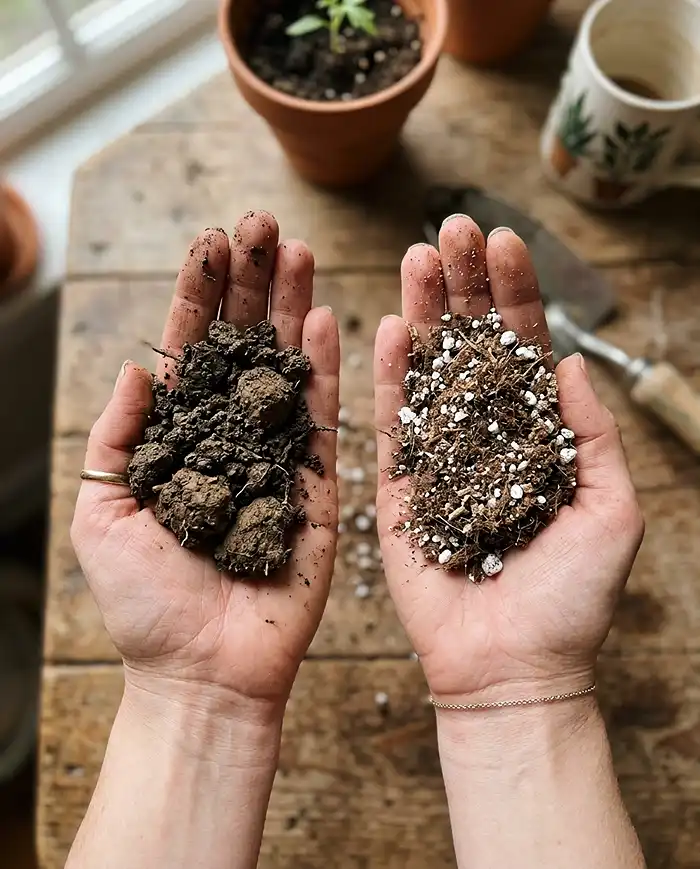
Garden Soil vs Potting Mix — They’re Not the Same Thing
I know it’s tempting. The dirt outside is free. Why pay $15 for a bag of fluffy stuff that looks fake?
Because that “free” dirt is going to cost you a whole season of harvests, that’s why. Garden soil is dense, mineral-heavy, and built to thrive surrounded by an entire ecosystem. Potting mix is a soilless substrate engineered specifically for the cramped life of a container.
The big differences come down to structure, density, and microbial load. In bilingual gardening circles, folks often clarify it as (garden soil) vs (pot soil) — totally different jobs.
The Physics of Why Roots Suffocate (Yes, Really)
Here’s something most beginners don’t realize: roots breathe. They need oxygen almost as much as they need water.
A healthy container substrate keeps 10–20% air-filled porosity — basically tiny pockets of air between particles. Pour water on garden soil inside a pot a few times, and those pockets collapse like a deflated balloon. What’s left? Anaerobic mush, root rot, and a very disappointed gardener.
The Hidden Pests and Diseases You’re Inviting In
Backyard topsoil comes with bonus features nobody asked for: fungal pathogens, nematodes, and a confetti of weed seeds. Outside, biodiversity keeps them in check. Inside a pot? They throw a party.
Quick Answer — Why can’t I use garden soil in pots?
Garden soil compacts in containers, blocking oxygen and drainage, and brings along pests, weed seeds, and pathogens that thrive in closed spaces. The result is root rot and weak plants.
How to Build the Best Soil and Fertilizer for Container Vegetable Gardens
This is the fun part — playing soil scientist in your kitchen.
The Three Layers of a Pro-Level Potting Mix
Every great container blend has three jobs to do:
- Hold moisture — peat moss or coconut coir.
- Feed the plant — compost or worm castings.
- Keep things breathing — perlite, vermiculite, or pumice.
Skip any one of these and the whole thing falls apart. Literally.
Peat Moss vs Coconut Coir vs Compost
Peat moss is the old-school favorite — acidic (pH 3.5–4.5), great at holding water, but harvested from ancient bogs that take centuries to regrow. Not exactly eco-friendly.
Coconut coir, on the other hand, is pH-neutral, renewable, and rehydrates like magic. It’s why coir has totally taken over in 2025 for sustainability-minded growers. According to the Royal Horticultural Society, peat-free alternatives like coir now match or beat peat in most performance tests — so you’re not sacrificing quality.
Compost? Add it for biology and slow-release nutrients, but cap it at one-third or your drainage suffers.
Aeration and Drainage — The Stuff Nobody Talks About
Roots need air. Microbes need air. Even worms need air. Without it, the bad guys (looking at you, Pythium) take over and your tomato turns to mush.
Good drainage means water flows through, not pools at the bottom.
Perlite vs Vermiculite vs Pumice
| Material | Aeration | Water Retention | Durability | Best For |
|---|---|---|---|---|
| Perlite | High | Low | Medium | Most veggies, tomatoes |
| Vermiculite | Medium | High | Low | Seedlings, leafy greens |
| Pumice | High | Medium | Very High | Long-term containers |
My honest take? Perlite for most jobs, pumice if you’ve got the budget and want it to last years.
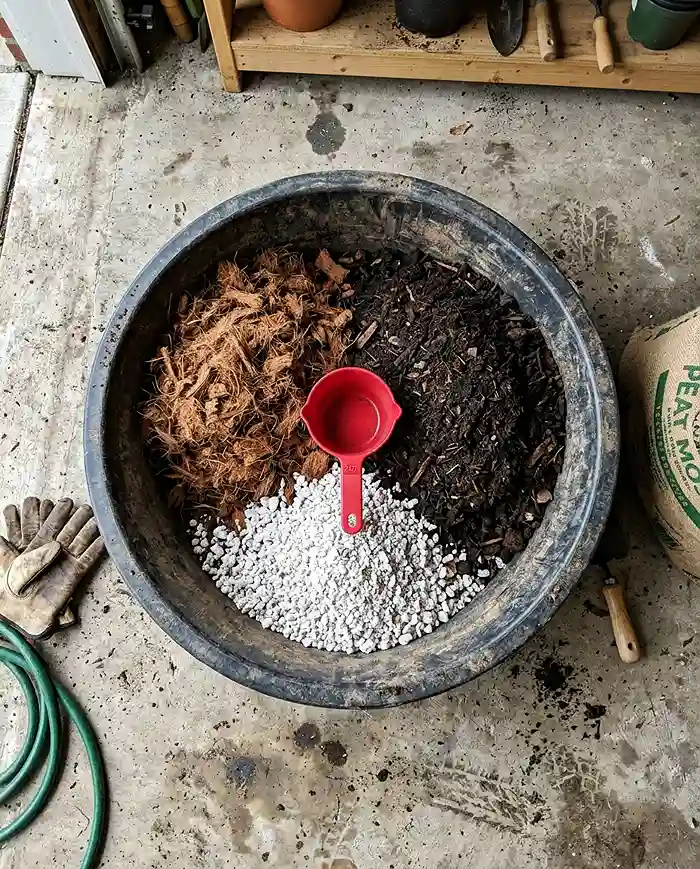
My Go-To DIY Potting Mix Recipe
After years of tinkering, this is the one I keep coming back to:
- 33% coconut coir (rehydrated)
- 33% mature compost or worm castings
- 33% perlite or pumice
Want to level up? Toss in a handful of biochar for microbial habitat and a cup of worm castings per 5 gallons. Your plants will send you thank-you notes.
A Crash Course in Soil Science (I’ll Keep It Painless)
Cation Exchange Capacity (CEC), Without the Jargon
CEC is just a fancy way of saying “how well your soil grips onto nutrients.” High CEC means fertilizer sticks around. Low CEC means it washes out the bottom of the pot. Compost, biochar, and coir all boost CEC, so you’re not throwing money down the drain.
pH — The Make-or-Break Number
Most veggies want pH 6.0 to 7.0. Outside that range, even fully fertilized soil might as well be empty — nutrients get chemically locked up.
A $15 pH meter pays for itself in one season.
The Moisture Sweet Spot
You want your mix to feel like a wrung-out sponge — damp, not dripping. If water pools on top, drainage is off. If it dries in a day, you need more coir or compost.
Choosing the Right Container Vegetable Fertilizer (Without the Overwhelm)
Organic vs Synthetic — The Eternal Debate
Organic fertilizer (fish emulsion, kelp, compost) feeds the soil, which feeds the plant. Synthetic fertilizer feeds the plant directly — fast, precise, but rough on microbes if you overdo it.
My honest opinion? Build the foundation with organics, then keep a bottle of synthetic liquid feed around for emergencies. Best of both worlds.
The Three Types You’ll Actually Use
- Slow-release granular — set-it-and-forget-it pellets that feed for months.
- Liquid fertilizers — your weekly maintenance tool.
- Compost and amendments — the long game.
NPK and the Other Nutrients That Matter
Everyone obsesses over N-P-K, but ignore the supporting cast at your peril:
- Nitrogen — leafy growth.
- Phosphorus — roots and flowers.
- Potassium — fruit quality and disease resistance.
- Calcium — the reason your tomatoes don’t get blossom end rot.
- Magnesium — the green in your green leaves.
The Three-Tier Feeding Strategy That Actually Works
Step 1: Basal Feeding at Planting
Mix a slow-release organic fertilizer (something like 4-4-4) into your potting blend on day one. That’s 60–90 days of baseline nutrition handled.
Step 2: Match the Feed to the Stage
During leafy growth, lean into nitrogen (7-3-3). Once flowers show up, switch to a bloom formula (3-7-7) heavy on phosphorus and potassium.
Step 3: Liquid and Foliar Boosts
Seaweed extract and fish emulsion work in days. Spraying diluted liquid feed on the leaves (foliar feeding) is my secret weapon when a plant looks like it’s about to give up.
Pots Matter More Than You Think
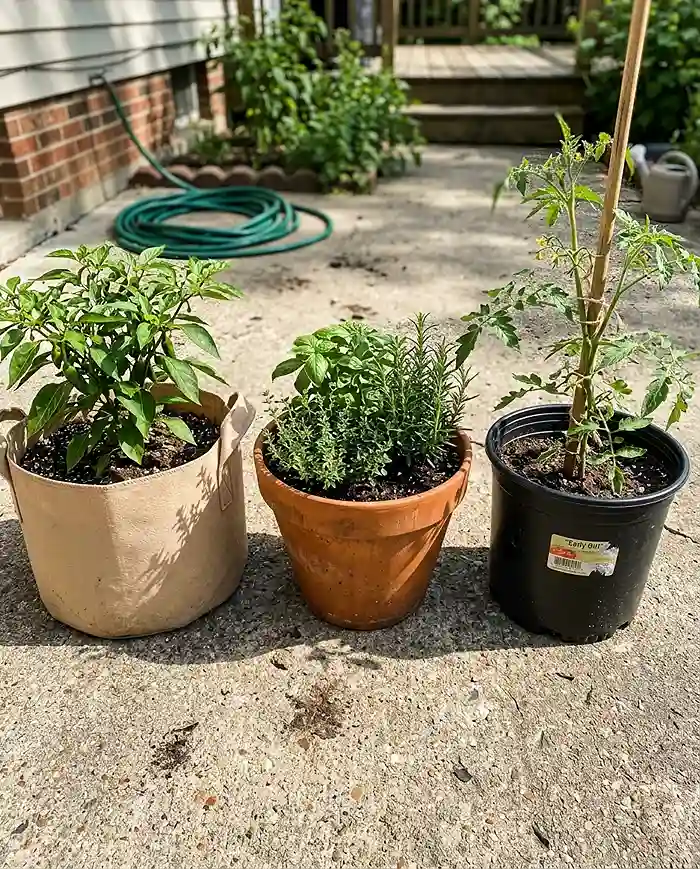
Fabric vs Plastic vs Clay
Fabric pots air-prune roots and stay cooler. Plastic holds moisture longest. Terracotta breathes but dries fast. The thermal and aeration differences decide how often you’ll be watering.
Drainage Holes Are Non-Negotiable
No holes, no harvest. Period.
Self-Watering Containers — A Game Changer
Sub-irrigation pots use a wicking reservoir to deliver moisture as roots need it. They cut watering by up to 70% and are basically cheating (in a good way).
Don’t Toss That Old Soil — Refresh It
The 3-Step Rejuvenation Method
- Sift out old roots and chunks.
- Mix in 25–30% fresh compost plus a balanced organic fertilizer.
- Check pH and add perlite if it feels compacted.
You’ll save serious money and your plants won’t know the difference.
Crop-Specific Feeding Cheat Sheet
| Crop | Priority Nutrient | Tip |
|---|---|---|
| Leafy greens | Nitrogen | Light, frequent feeds |
| Tomatoes & peppers | Potassium + Calcium | Prevents blossom end rot |
| Root crops | Phosphorus, low N | Keep mix loose |
| Beans & peas | Low N | They make their own |
Reading Your Plants Like a Pro
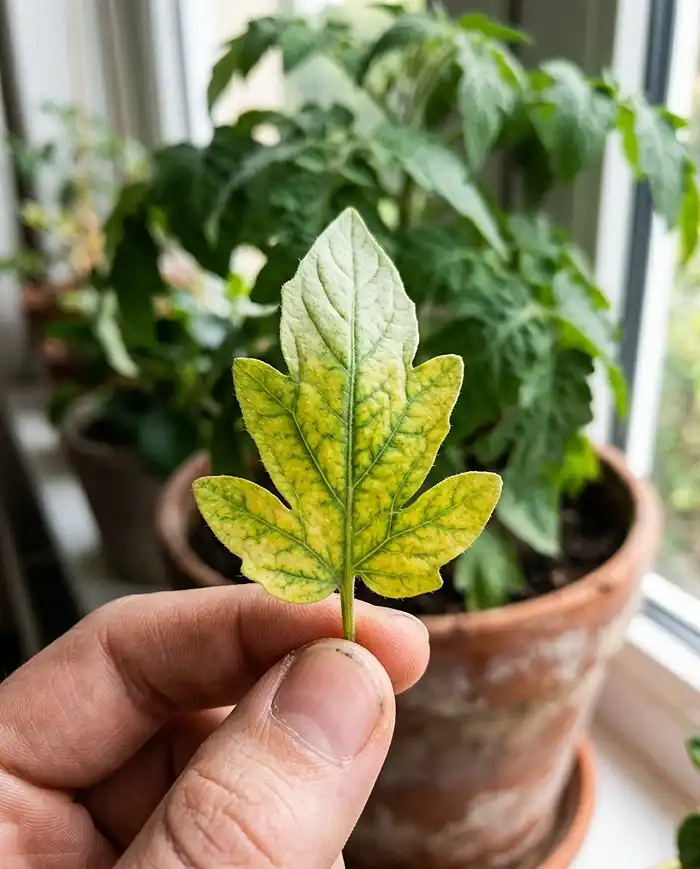
- Yellow lower leaves → needs nitrogen.
- Purple stems or leaves → phosphorus deficiency.
- Brown leaf edges → low potassium.
- Black mushy bottoms on tomatoes → calcium plus inconsistent watering.
Quick fixes: fish emulsion for nitrogen, bone meal for phosphorus and calcium, kelp for potassium. Foliar spray for emergencies.
Mistakes I See All the Time
- Using garden soil (please, no).
- Overwatering because drainage is bad.
- Over-fertilizing — salt buildup is real and ugly.
- Forgetting micronutrients.
- Reusing soil without refreshing it.
FAQs
How deep should soil be for tomatoes?
18–24 inches. Big indeterminate varieties want the full 24; bush types are fine at 18.
What’s the best soil mix for container vegetables?
One-third coconut coir, one-third compost, one-third perlite or pumice. Simple, balanced, hard to mess up.
Is synthetic fertilizer bad for vegetables?
Not really — just don’t rely on it alone. A hybrid approach (organic base + occasional synthetic boost) gives you the best results without trashing your soil biology.
What NPK ratio is best for vegetables?
Start balanced (5-5-5), then shift to higher P-K (3-7-7) once flowers appear.
Final Thoughts
Here’s the whole thing in one sentence: soil is the foundation, fertilizer is the fuel, and consistency is what separates a sad plant from a tomato jungle.
Get the mix right, feed by growth stage, and actually look at your plants every day. Do that, and your container garden will out-yield half the in-ground gardens on your block — balcony, patio, or fire escape included.
Now go get your hands dirty. Your future tomato sandwich is waiting.