

Edible Balcony Garden Tips
Your edible balcony garden can look like a lush jungle AND feed you real food — even on a tiny apartment balcony. Most renters don’t realize how much you can grow in small balcony garden setups with the right layering tricks.
Table of Contents
Creating a Lush Edible Jungle on Your Apartment Balcony
The best apartment gardening transformations I’ve seen share one thing: layers. Not just pots on a floor, but plants climbing, trailing, hanging, and stacking up every inch of vertical space.
An edible balcony garden isn’t a compromise between beauty and productivity. Done right, it’s denser and more dramatic than any ornamental setup — and you eat the results.
This guide walks you through planning, building, planting, and maintaining a balcony jungle that stays lush from spring through fall. Whether you have a sunny south-facing slab or a shady north-facing nook, there’s a productive layout for you.
Planning Your Edible Balcony Jungle
Before you buy a single pot, spend 20 minutes with a notebook. Rushed apartment gardening almost always means wasted money on plants that won’t thrive in your specific conditions.
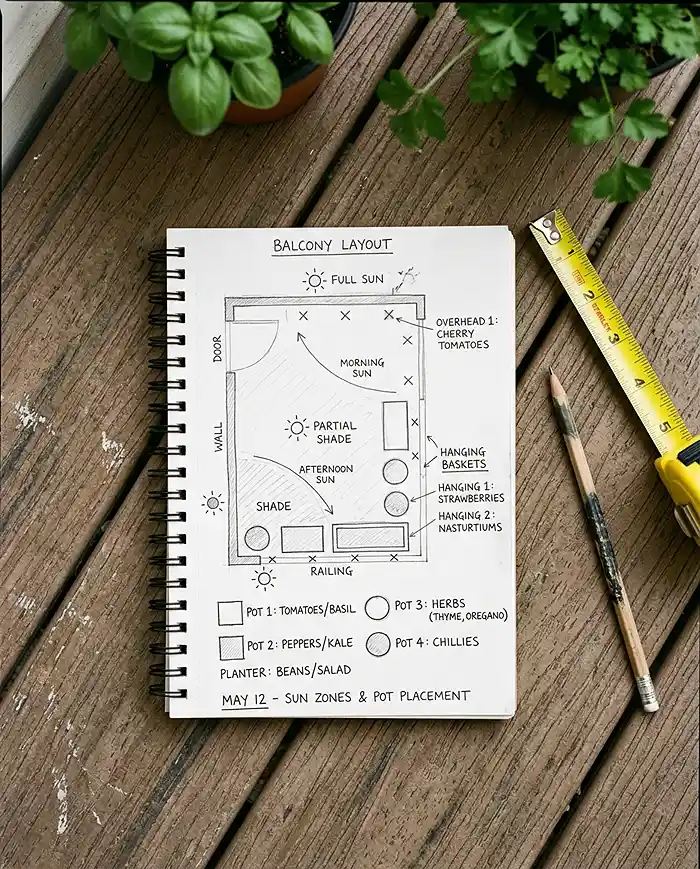
The three things worth measuring first: how many hours of direct sun you get, what your balcony floor can hold, and how much floor space you’re actually working with.
Mapping Sun, Shade, and Microclimates
Quick Answer: Count the hours of direct sun your balcony gets between 10am and 4pm. Six or more hours = full sun. Three to five = partial shade. Fewer than three = shade. Most edibles need at least four hours minimum.
Here’s the thing about apartment balcony garden ideas most guides skip: microclimates are real. A corner near a brick wall holds heat 5-10°F warmer than the open rail edge. A glass balcony railing creates wind shadow. These spots change what you can grow.
Track your sun on two days — one clear, one partly cloudy. Mark which zones get the most light. Full-sun edibles (tomatoes, peppers, cucumbers) go in your brightest spot. Herbs like mint, parsley, and chives handle shadier corners fine.
Real Example: My east-facing balcony gets four solid sun hours. I put dwarf tomatoes in the sunniest rail corner, lettuce under a hanging basket’s partial shade, and mint in the back corner. Each zone stays productive all season.
Pro Tip: Tape a sticky note to your glass door for one week — mark the sun line each hour. You’ll learn your microclimate faster than any app.
Checking Weight Limits and Layout
Quick Answer: Most apartment balconies handle 40-60 lbs per square foot. A large pot with wet soil can weigh 80+ lbs. Always check your building’s load specs before stacking heavy containers.
Keep the heaviest containers near load-bearing walls or columns — the outer rail edge is usually the weakest point. If you’re unsure, use lightweight fabric pots and perlite-enriched soil mixes to cut weight by 30-40%.
Sketch a quick floor plan. Mark where your anchors (large floor pots) go, where mid-height shelves fit, and where you’ll hang baskets. Knowing this before you buy saves serious frustration on install day.
For more balcony layout inspiration, check out these balcony railing planter ideas that maximize every inch.
Pro Tip: Cluster your heaviest pots over structural posts or beams, not in the center of open spans.
Building Layers for a Jungle Effect
The jungle look comes from three things: multiple height levels, varied leaf textures, and no visible empty space. Once you nail layering, your small balcony garden starts looking like you’ve been growing for years.
Think of it like a rainforest canopy. Tall plants at the back, mid-height in the middle, low trailers at the front, and climbers going vertical against every wall and rail.
| Layer | Height Range | Best Edibles | Container Type |
|---|---|---|---|
| Canopy (top) | 4-6 ft | Climbing beans, cucumbers on trellis | Deep floor pots, grow bags |
| Mid-level | 2-4 ft | Dwarf tomatoes, peppers, kale | Shelf pots, medium containers |
| Ground level | 0-2 ft | Lettuce, basil, spinach | Troughs, wide shallow pots |
| Hanging | Variable | Trailing strawberries, trailing herbs | Hanging baskets, wall planters |
Vertical Layers: Floor, Mid, and Hanging Levels
Quick Answer: Use floor pots for tall anchor plants, tiered shelves for mid-height herbs and greens, railing planters for trailing edibles, and ceiling hooks for hanging baskets. Each level adds density without using more floor space.
A vertical garden shelf is the single biggest upgrade for a small balcony garden. A three-tier unit at 5 ft tall holds 9-12 pots in the footprint of one large container.
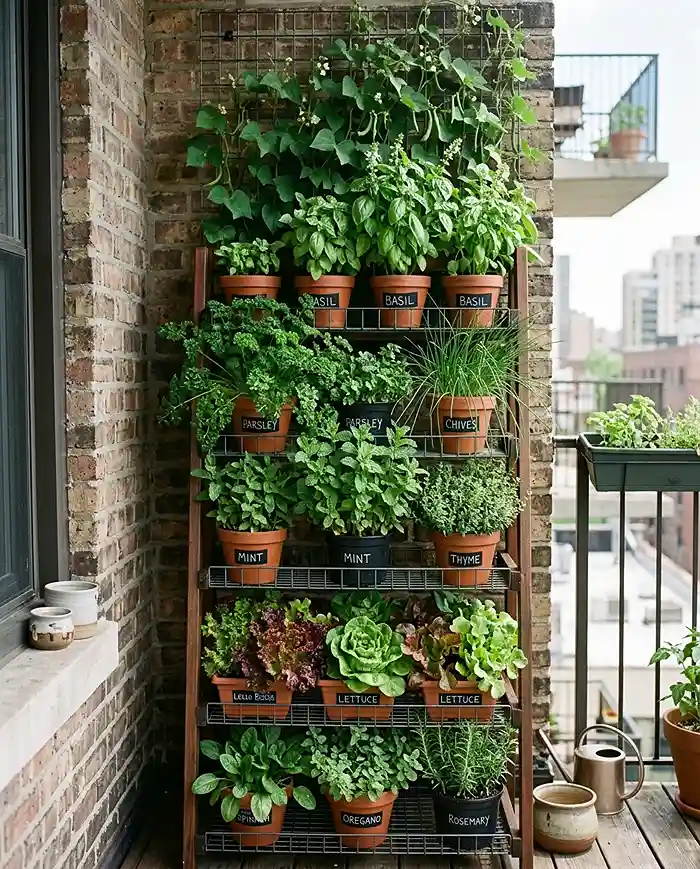
Mix leaf shapes and textures at every level. Feathery dill next to flat-leafed kale next to frilly lettuce — that contrast is what makes the jungle look feel wild and full rather than uniform and flat.
Real Example: I added one 4-tier herb shelf to a 6×8 ft balcony last spring. Basil, parsley, chives, mint, and two types of oregano. That one shelf tripled my herb harvest without touching floor space.
Pro Tip: Stagger shelf heights — mix a tall shelf with a short one instead of matching units for a more natural, layered look.
Vertical Structures and Climbing Edibles
Quick Answer: A trellis against the wall or rail turns 2 sq ft of floor space into 20 sq ft of growing surface. Climbing beans, cucumbers, and peas are the best edibles for fast, lush vertical coverage.
Use bamboo A-frames, wire mesh panels zip-tied to railings, or a simple string trellis between two hooks. Climbing beans reach 5-6 ft in 6-8 weeks. Cucumbers fill a trellis within a month in warm weather (USDA zones 5-11, plant after last frost).
Real Example: One 4 ft bamboo trellis in a 12-inch deep planter grew enough climbing French beans for 15+ harvests across July and August. Highly productive in minimal space.
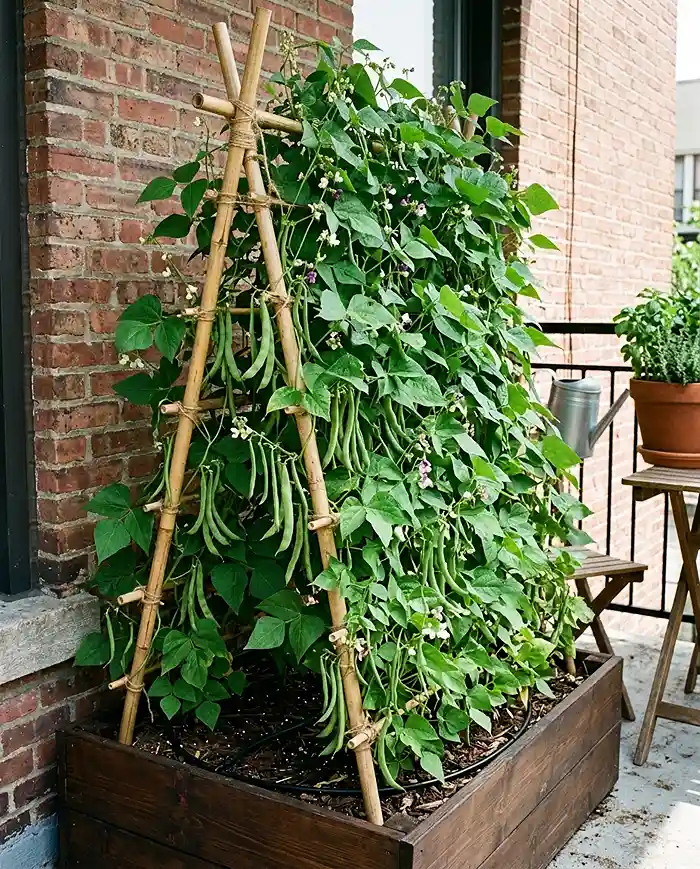
Pro Tip: Train climbers to the trellis early — once they find their own path, redirecting them without damage is tricky.
Best Edible Plants for a Balcony Jungle
For a true edible balcony garden jungle effect, you want plants that are both productive AND visually lush. That rules out sparse growers and favors anything with dense foliage, interesting texture, or vertical drama.
Leafy Greens, Herbs, and Compact Vegetables
Quick Answer: Lettuce, kale, basil, and dwarf tomatoes are the workhorses of apartment gardening. They grow fast, fill space quickly, and give you something to harvest within 4-8 weeks of planting.
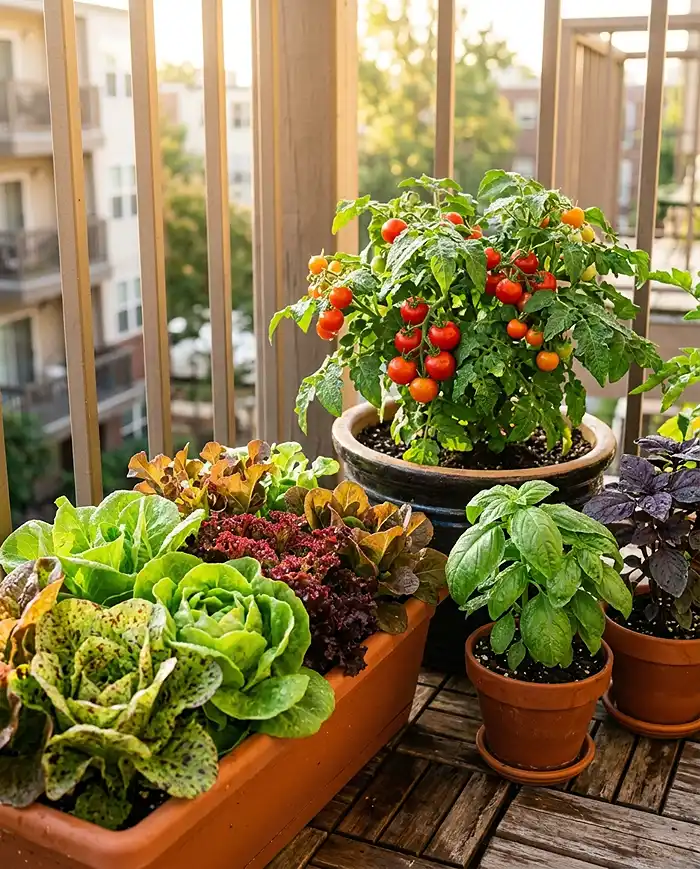
- Cut-and-come-again lettuce (varieties: ‘Black-Seeded Simpson’, ‘Salad Bowl’) — sow every 3 weeks for continuous harvest, tolerates partial shade
- Curly kale (‘Red Russian’, ‘Dwarf Siberian’) — large dramatic leaves, cold-hardy to zone 4, harvest outer leaves for months
- Basil (‘Genovese’, ‘Purple Ruffles’) — pinch flowers weekly to keep bushy, needs 6+ hours sun, replant mid-season
- Dwarf tomatoes (‘Tiny Tim’, ‘Tumbling Tom’) — 12-18 inch plants, no staking needed, fruit in 55-65 days
- Swiss chard (‘Bright Lights’) — rainbow stems add serious color, tolerates shade, harvest outer stalks continuously
- Bush beans (‘Provider’, ‘Contender’) — no support needed, harvest in 50 days, resow for second crop
Real Example: My best small balcony garden combo last season: one 24-inch trough of mixed lettuce, one pot of ‘Tumbling Tom’ tomatoes, and three pots of basil. Total spend: under $30. Total harvests: dozens across 14 weeks.
Pro Tip: Grow ‘Purple Ruffles’ basil alongside green basil — the color contrast looks intentional and dramatic in a dense jungle setup.
Climbing and Trailing Edibles for Drama
Quick Answer: Climbing beans, cucumbers, and trailing strawberries give you height, coverage, and the cascading effect that makes a balcony garden look wild. These are your drama plants — put them where they’ll be seen.
| Plant | Best For | Container Size | Watch Out For |
|---|---|---|---|
| Climbing French beans | Vertical coverage fast | 10-12 inch deep | Need trellis from day 1 |
| Mini cucumber (‘Bush Pickle’) | Lush canopy leaves | 12-15 inch deep | Thirsty — water daily in heat |
| Trailing strawberry (‘Albion’) | Hanging basket drama | 12 inch hanging basket | Needs 6+ hours sun for fruit |
| Peas (‘Sugar Snap’) | Early season coverage | 8-10 inch deep | Bolt in heat above 75F |
Pro Tip: Plant trailing strawberries in hanging baskets above climbing beans — the runners cascade down through the bean foliage for a layered, natural look that’s genuinely impressive.
Containers, Soil, and Setup Essentials
The wrong container kills more balcony edibles than any pest or disease. Too small, too shallow, or without drainage — any of these and your plants struggle no matter how good your care routine is.
For most vegetables, go bigger than you think you need. A 12-inch pot is the minimum for tomatoes and beans. Herbs tolerate 6-8 inch pots, but they thrive and stay lush much longer in 10-inch containers.
- Fabric grow bags — lightweight, excellent drainage, air-prune roots for healthier plants; 5-gallon and 10-gallon are most versatile
- Self-watering containers — built-in reservoirs cut watering frequency by 50%, ideal for dense setups where hand-watering every pot is time-consuming
- Terracotta pots — beautiful but heavy and dry out fast; only use for drought-tolerant herbs if weight is a concern
- Railing planters — hook-on styles work on most apartment rails, great for strawberries and trailing herbs
Use a lightweight potting mix — never garden soil in containers. Mix in 20-30% perlite for drainage and weight reduction. Add slow-release fertilizer at planting, then liquid feed every 10-14 days once edibles are actively growing.
For heat management in summer, see these tips on keeping pots moist in summer heat — critical for a dense edible balcony garden.
Tools and Materials Checklist
Before assembly day, have these ready. Running out mid-setup is the fastest way to a frustrated afternoon.
- Containers: 2-3 large floor pots (15+ inch), 4-6 medium pots (10-12 inch), 2 hanging baskets
- Lightweight potting mix (2-3 cubic feet per 5 pots, roughly)
- Perlite (1 bag for mixing)
- Slow-release granular fertilizer (for planting) + liquid feed (for ongoing care)
- Bamboo trellis or wire mesh panel (48-60 inch tall)
- Tiered plant shelf (3-4 tiers, weather-resistant)
- Railing planters with secure hooks rated for your rail width
- Twine or plant clips (for training climbers)
- Watering can with long spout or drip irrigation kit for dense setups
Step-by-Step: Assembling Your Balcony Jungle
Work from back to front and tall to short. This keeps you from blocking access to containers you haven’t planted yet. Assembly in the wrong order means moving heavy pots twice.
- Set anchor containers first — place the largest floor pots in your sunniest spots, near walls or structural supports. Fill with soil before placing on shelves to avoid shifting.
- Install trellises and shelves — anchor trellis panels before planting climbers. A trellis that shifts after beans attach causes damage you can’t easily fix.
- Add railing planters — install and fill these before hanging baskets so you’re not reaching past obstacles.
- Hang baskets last — check that hooks are rated for wet soil weight (a 12-inch hanging basket can weigh 15-20 lbs when wet).
- Plant and train — get climbers tied to their trellis on day one. Fill any visual gaps with fast-growing herbs like basil or lettuce immediately.
Layering Plants for Maximum Green Density
Quick Answer: Place tall plants behind and short plants in front. Mix fine-leafed plants (dill, fennel) with broad-leafed ones (kale, chard). Avoid single-species blocks — alternating textures makes the jungle effect convincing.
The fastest way to dense coverage: plant at 70-80% of the recommended spacing for ornamentals, then thin lightly if genuine overcrowding occurs. For edibles like lettuce, succession harvesting naturally opens space as you go.
Check out budget-friendly small space garden ideas if you’re building this setup without spending a fortune.
Pro Tip: Use filler plants — a pot of fast-growing cress or mustard greens fills gaps in days while slower plants establish. Harvest and replace as needed.
Watering and Feeding a Dense Edible Garden
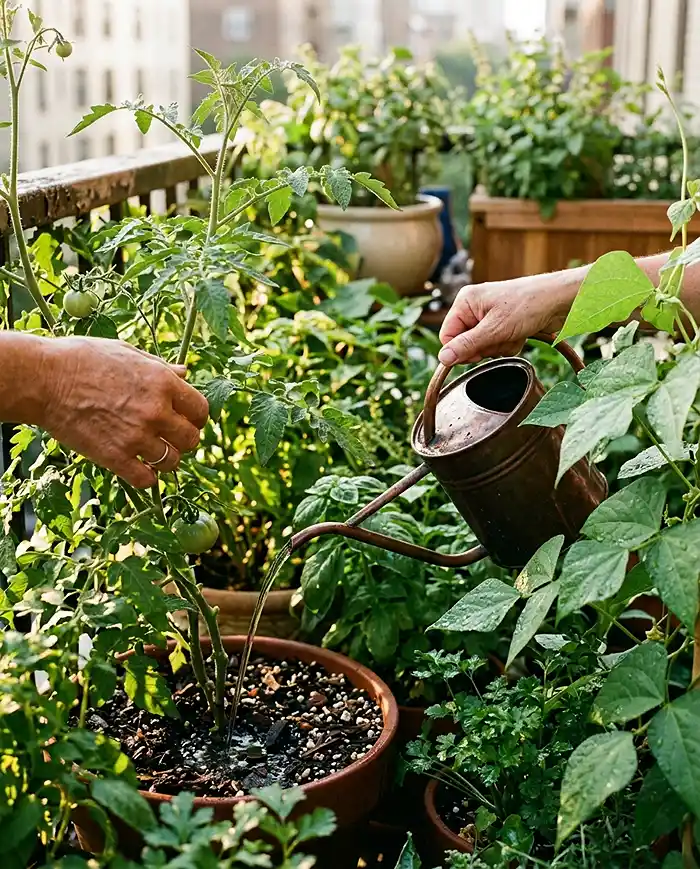
A densely planted edible balcony garden needs water more often than a sparse one. More roots competing in confined containers means soil dries faster — especially on sunny, windy balconies.
In summer, most containers need watering every 1-2 days. A quick finger test — push your finger 1 inch into the soil. Dry at that depth means water now. Still moist means check again tomorrow.
- Morning watering is best — leaves dry during the day, reducing fungal risk
- Water at soil level — avoid wetting foliage in dense setups to keep airflow clean
- Group containers by water need — thirsty plants (cucumbers, tomatoes) together for efficient watering rounds
- Drip irrigation works extremely well in dense balcony setups — a basic timer and drip kit ($30-50) cuts daily effort to near zero
Feed every 10-14 days with a balanced liquid fertilizer once plants are actively growing. Switch to a lower-nitrogen, higher-potassium feed once fruiting plants (tomatoes, beans) start flowering to encourage fruit over foliage.
Pro Tip: Yellowing lower leaves on healthy-looking plants usually means nitrogen deficiency — common in containers. A dose of diluted liquid feed usually fixes it within a week.
Seasonal Care and Succession Planting
The secret to a balcony jungle that looks full all season: never let a container sit empty. As soon as one crop finishes, something else goes in. This is called succession planting and it’s the biggest productivity upgrade for apartment gardening.
- Early spring (zones 6-9, March-April): Start with cold-tolerant greens — lettuce, spinach, kale, peas. These go in 4-6 weeks before last frost.
- Late spring (after last frost): Transition to warm-season crops — tomatoes, beans, cucumbers, basil. Remove cool-season plants showing bolt signs.
- Mid-summer: Resow fast greens (lettuce, arugula) in any gap. They germinate in 5-7 days and fill visual holes within 2 weeks.
- Late summer (August): Start second round of cool-season crops for fall harvest — kale, chard, spinach thrive in September-October in most zones.
Mark planting dates on containers with a marker and tape. Knowing when something went in tells you when to expect harvest and when to plan the next sowing.
Pro Tip: Keep a handful of fast-maturing seedlings (started indoors or from a nursery) ready to drop in whenever a gap appears. Never go more than 2-3 days with empty soil visible.
Common Problems and Solutions
Plants Competing for Light and Getting Leggy
Quick Answer: Leggy, stretched plants with pale leaves are reaching for light. The fix is usually repositioning — move taller plants that are shading shorter ones, or rotate containers every few days so all sides get sun exposure.
In a dense setup, check for light competition monthly. A kale that doubled in size in June might now be shading three shorter pots behind it.
- Move light-hungry plants to your sunniest spots immediately
- Prune large leaves blocking lower plants — a clean cut with sharp scissors causes minimal stress
- Raise shorter containers on bricks or pot feet to lift them into better light
Pro Tip: Shade-tolerant edibles like mint, parsley, and lettuce actively benefit from the filtered light under taller plants — use this pairing intentionally.
Pests Spreading in a Dense Garden
Quick Answer: Dense plantings make it easy for aphids, fungus gnats, and spider mites to spread fast. Inspect plants weekly — catching an infestation early means a simple fix instead of a full container removal.
Good airflow is your first defense. Don’t push plants so tightly together that leaves overlap constantly. Six inches between pot rims is a reasonable minimum for most edibles.
- Aphids: blast off with a strong water jet, follow with diluted neem oil spray
- Fungus gnats: let soil dry slightly between waterings, use sticky yellow traps
- Spider mites: increase humidity around plants, apply neem oil to leaf undersides weekly
- General prevention: remove dead leaves immediately and avoid overhead watering
Pro Tip: Companion planting basil near tomatoes and nasturtiums near beans genuinely deters common pests — not a myth, just not a guarantee either.
Uneven Watering in a Packed Balcony
Quick Answer: In a dense setup, front containers dry out faster than back ones, and small pots dry faster than large ones. Group by size and sun exposure — water each zone separately rather than treating the whole balcony identically.
- Group small pots together so you can water them more frequently as a cluster
- Use self-watering inserts in pots that dry out fastest
- A simple drip line covers uneven watering issues and frees up your mornings
Pro Tip: Push a wooden chopstick into the soil of your “problem” pots — pull it out to check moisture level quickly without the finger-soil contact in tight spaces.
edible balcony garden FAQs
What edible plants grow best on a balcony?
Herbs (basil, mint, parsley), cut-and-come-again lettuce, dwarf tomatoes, climbing beans, and trailing strawberries all perform well in containers. For low light, stick with mint, parsley, kale, and spinach. For full sun, tomatoes, cucumbers, and peppers thrive. Productivity comes down to container size and consistent feeding.
How do I make my balcony garden look lush and full?
Layer your plants across three height levels: floor pots for tall anchors, shelves for mid-height herbs and greens, and hanging baskets or railing planters for trailers and climbers. Mix leaf textures — fine and broad, light and dark green. Succession sow fast crops like lettuce to fill gaps instantly.
Can I grow vegetables on a small apartment balcony?
Yes, easily. Bush beans, dwarf tomatoes, lettuce, kale, and peppers all grow happily in containers on small balconies. Even 4-6 sq ft of floor space supports a productive edible garden when you go vertical with shelves and trellises. The main limits are sun hours and container size — both are manageable.
How do I prevent pests in a dense balcony garden?
Maintain 6 inches between pot rims for airflow, remove dead leaves immediately, and inspect plants weekly. Use diluted neem oil as a preventive spray every 2-3 weeks during warm months. Yellow sticky traps catch fungus gnats early. Companion planting basil near tomatoes adds a natural deterrent layer.
How often should I water a dense edible balcony garden?
Most containers in a dense setup need watering every 1-2 days in summer. Check soil moisture 1 inch below the surface daily in hot weather. Group plants by water need and consider a basic drip timer for consistency. Self-watering containers cut watering frequency roughly in half.
Key Takeaways
- An edible balcony garden thrives on layering — floor pots, shelves, railing planters, and hanging baskets multiply your growing space without expanding your footprint
- Map your sun hours and microclimate before buying a single plant — the right placement makes the difference between thriving and surviving
- Succession sowing fast crops like lettuce every 3 weeks keeps your balcony garden ideas looking full and productive all season
- Climbing beans and cucumbers on a trellis are the fastest route to genuine jungle density in apartment gardening setups
- Water daily in summer heat, feed every 10-14 days during active growth, and inspect for pests weekly — consistency beats perfection in a dense container garden