
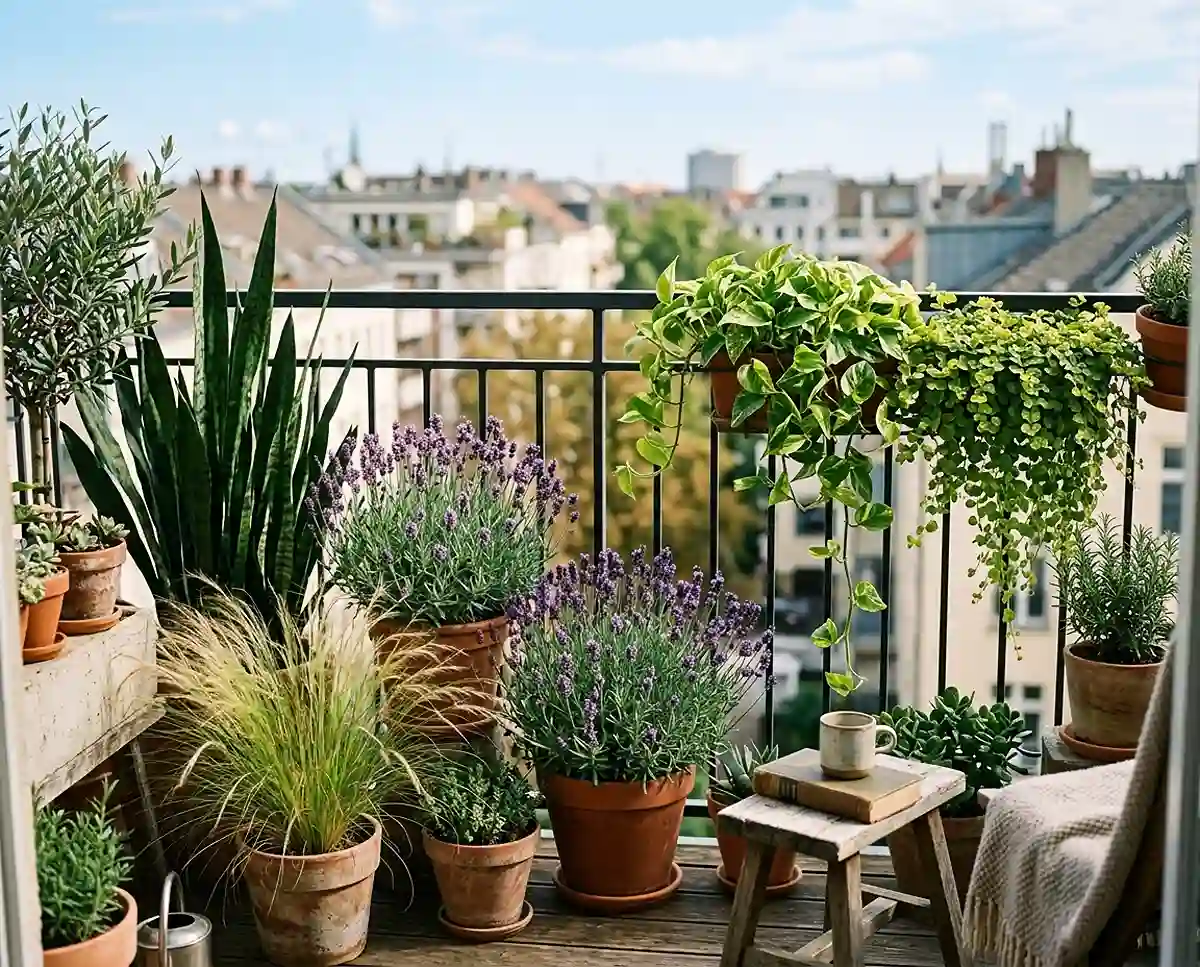
Low Maintenance Balcony Plants for Busy Gardeners
The best low maintenance balcony plants give you color and greenery without daily fuss. If your small balcony garden keeps dying from neglect, these picks change that.
Table of Contents
Why Low-Maintenance Plants Are Perfect for Busy Balcony Gardeners
Most people quit apartment gardening because they choose the wrong plants. They pick thirsty annuals, fussy tropicals, and pest magnets — then blame themselves when things die.
The fix is simple: match your plants to your lifestyle, not your aspirations. The right low maintenance balcony plants can go a week without water and still look great.
This guide covers the toughest, most forgiving options for every balcony condition — sun, shade, wind, or a mix. You’ll also find setup tips that cut your care time in half.
What Makes a Plant Low-Maintenance
Not every plant labeled “easy” actually is. True low-maintenance plants share a few key traits that matter for busy gardeners and balcony garden ideas.
- Drought tolerance — survives 5-10 days without water
- Pest resistance — aromatic or tough-leaved plants bugs avoid
- Slow growth — doesn’t need constant pruning or repotting
- Adaptability — handles temperature swings and wind
- Self-cleaning — drops spent flowers without deadheading
Drought Tolerance and Watering Needs
Quick Answer: Drought-tolerant plants store water in their leaves, stems, or roots. They’re built for dry spells — perfect for when life gets busy.
Most balcony plants die from overwatering, not underwatering. Drought-tolerant varieties forgive both extremes.
Succulents, lavender, and rosemary all fall into this category. They’ve evolved in dry climates, so a missed watering day (or week) is no big deal for your small balcony garden.
Pro Tip: Stick your finger 2 inches into the soil — if it’s still damp, skip watering entirely.
Matching Plants to Your Balcony Conditions
Quick Answer: Assess your sun, shade, and wind before buying anything. A sun-lover in deep shade fails no matter how tough it is.
| Condition | Best Plant Picks | Avoid |
|---|---|---|
| Full sun (6+ hrs) | Lavender, geraniums, sedums | Ferns, hostas |
| Part shade (3-5 hrs) | Impatiens, begonias, mint | Succulents, lavender |
| Windy/exposed | Ornamental grasses, thyme | Tall, top-heavy plants |
| Sheltered/urban heat | Marigolds, rosemary, agave | Cool-season annuals |
Pro Tip: Watch your balcony for one full day before buying — sun moves more than you think.
Best Low-Maintenance Flowering Plants
You want color without the constant fuss. These bloomers deliver for balcony garden ideas with minimal deadheading, watering, or pest control.
Drought-Tolerant Bloomers (Geraniums, Lavender, Marigolds)
Quick Answer: Geraniums, lavender, and marigolds are the holy trinity of low maintenance balcony plants. They bloom hard, tolerate neglect, and actually prefer leaner conditions.
- Geraniums — bloom spring through frost, handle dry spells well, thrive in USDA zones 10-11 or grown as annuals elsewhere
- Lavender — needs 6+ hours of sun, hates wet roots, blooms June-August with almost no care
- Marigolds — naturally repel aphids and whiteflies, tolerate heat and drought, bloom until first frost
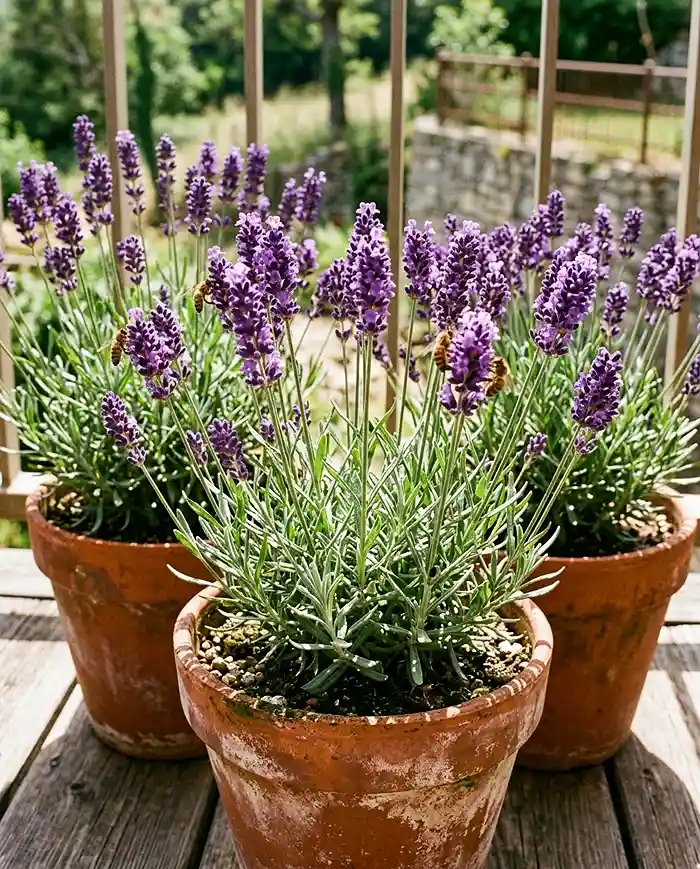
Real Example: I grew three lavender plants in terracotta pots on a south-facing balcony one summer. Watered them once a week. They bloomed for three months straight with zero feeding.
Pro Tip: Plant marigolds near your edibles — they deter pests from your herbs without any spraying.
Self-Cleaning Flowers That Skip Deadheading
Quick Answer: Self-cleaning flowers drop their spent blooms on their own. No pinching, no weekly grooming — just continuous color.
- Impatiens — shade-tolerant, self-cleaning, bloom nonstop in part shade
- Begonias — both sun and shade varieties self-clean reliably
- Calibrachoa — looks like mini petunias, completely self-cleaning, blooms spring to frost
- Portulaca — thrives in heat and drought, self-seeds freely
Pro Tip: Avoid standard petunias — they need weekly deadheading. Stick to calibrachoa instead for the same look with zero maintenance.
Best Low-Maintenance Foliage and Greenery
Not every balcony needs flowers. Structural foliage plants look great year-round and often need even less care than bloomers. These are ideal for apartment gardening on shaded or north-facing balconies.
Hardy Succulents and Architectural Plants
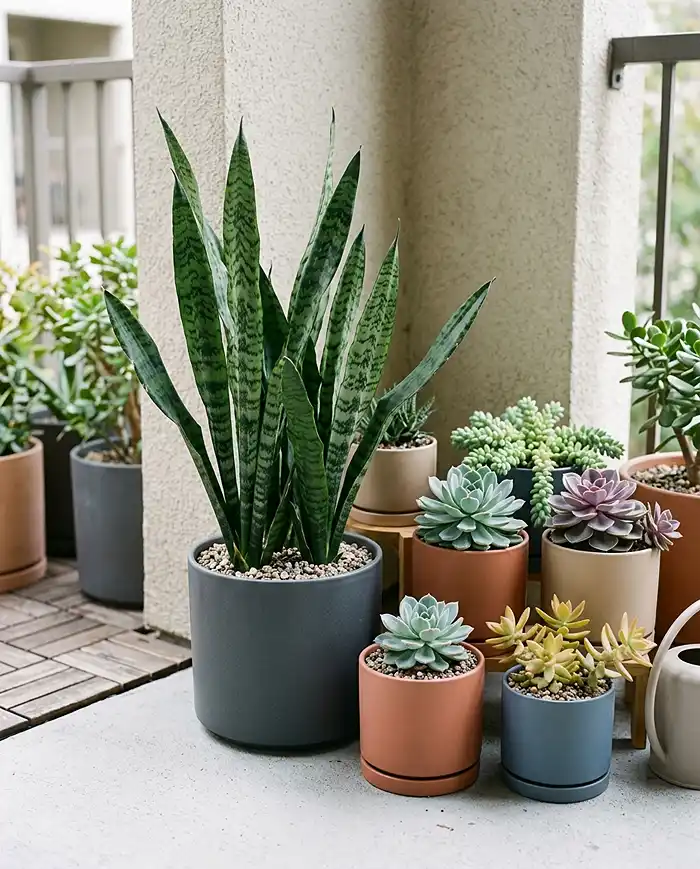
Quick Answer: Succulents and architectural plants thrive on neglect. They store water, grow slowly, and rarely need repotting.
| Plant | Best For | Watch Out For |
|---|---|---|
| Sedum (stonecrop) | Full sun, hot balconies | Soggy soil — roots rot fast |
| Snake plant | Low light, indoor-outdoor | Frost — bring in below 50F |
| Agave | Full sun, heat, drought | Sharp spines near walkways |
| Echeveria | Sunny windowsills, small pots | Heavy rain — can rot crowns |
Real Example: A snake plant sat on my partially shaded balcony for two summers. I watered it maybe 15 times total. It grew four new leaves.
Pro Tip: Use gritty cactus mix, not regular potting soil, for all succulents in containers — it prevents the root rot that kills most of them.
Ornamental Grasses and Evergreens
Quick Answer: Grasses and compact evergreens give year-round structure without seasonal replanting. They’re the backbone of a low-effort small balcony garden.
- Blue fescue — stays 10-12 inches tall, silver-blue color, drought-tolerant once established
- Japanese forest grass — glowing lime-gold foliage, thrives in part shade
- Dwarf boxwood — evergreen, wind-tolerant, needs trimming just once a year
- Dwarf mondo grass — near-indestructible ground cover for large containers
Pro Tip: Cut ornamental grasses back to 3 inches in late winter — that’s the only annual maintenance they need.
Best Low-Maintenance Edibles for Balconies
Growing food on a balcony sounds high-effort, but the right edibles are genuinely easy. These picks suit busy apartment gardening without demanding daily attention.
For more creative ways to grow food vertically, check out this guide to vertical strawberry planters for small spaces — it works brilliantly on balcony railings.
Forgiving Herbs (Rosemary, Thyme, Mint)
Quick Answer: Mediterranean herbs like rosemary and thyme are drought-tolerant by nature. Mint is the opposite — it loves moisture and shade but grows almost uncontrollably.
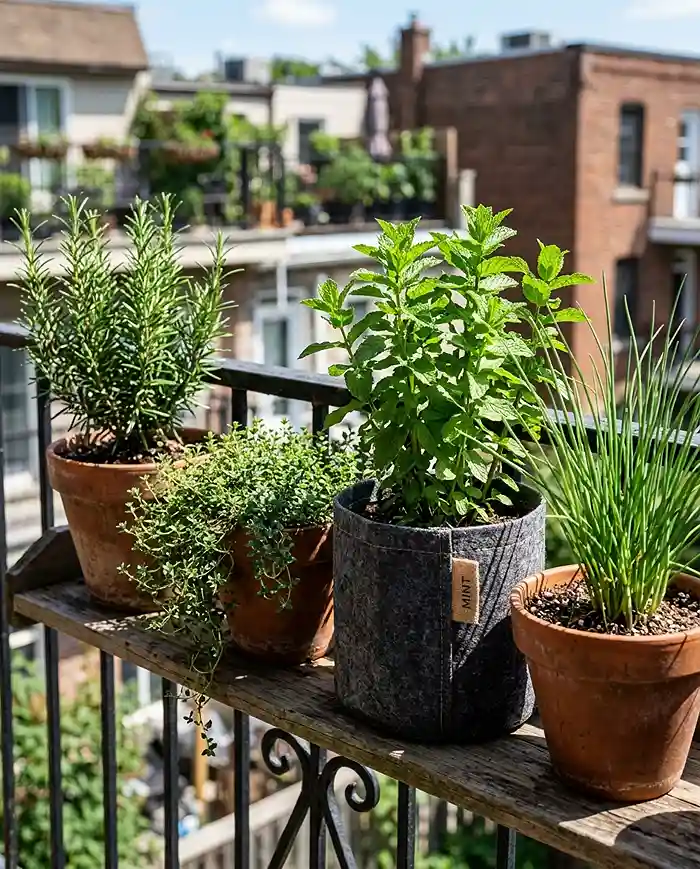
- Rosemary — thrives in full sun and poor soil, needs watering only every 7-10 days in summer
- Thyme — creeps attractively over pot edges, drought-tolerant, blooms in June attracting pollinators
- Mint — grows fast in part shade, keep it in its own pot or it’ll take over everything
- Chives — near-indestructible, regrows after cutting, handles partial shade fine
Real Example: My rosemary plant survived a two-week vacation with no watering in a terracotta pot in July. I came home to find it completely fine — slightly dry but unfazed.
Pro Tip: Harvest herbs regularly — cutting them back encourages bushy new growth and prevents them going woody or leggy.
Containers and Setup That Reduce Maintenance
Your container choice matters as much as your plant choice. The right setup for your low maintenance balcony plants can halve how often you need to water.
For more ideas on fitting more plants into a tight space, this budget small space garden guide has practical, wallet-friendly solutions.
Self-Watering and Large Containers
Quick Answer: Self-watering pots have a reservoir that plants draw from as needed. Large containers hold more soil, which dries out far slower than small pots.
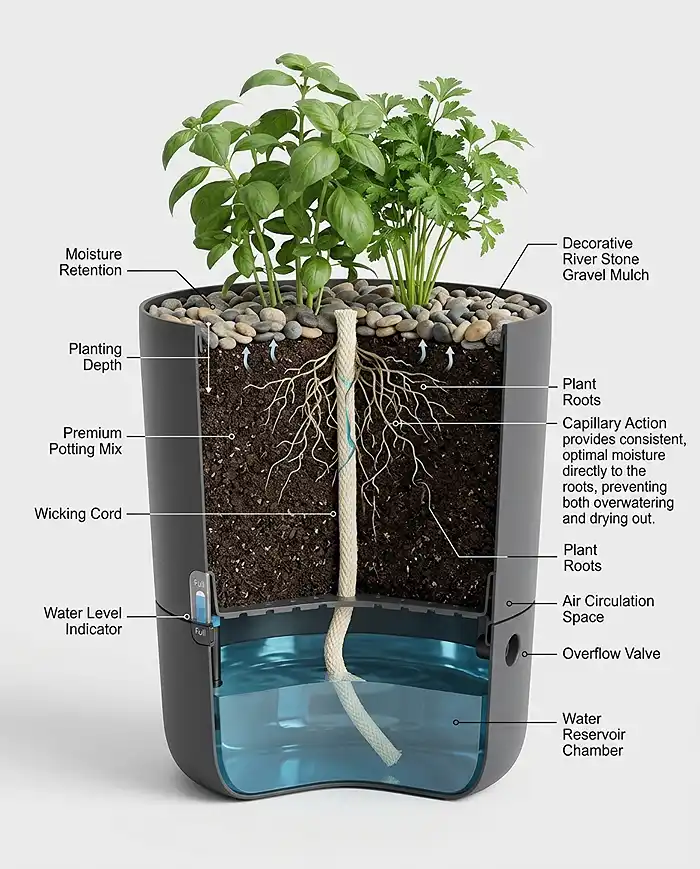
- Self-watering pots — reduce watering frequency from daily to once a week in summer
- Large containers (12″+ diameter) — buffer temperature swings and moisture loss dramatically
- Fabric grow bags — prevent root-bound plants, air-prune roots naturally
Small terracotta pots dry out in under 24 hours in summer heat. A 14-inch self-watering planter with quality potting mix can go 5-7 days easily.
Pro Tip: Add a 1-inch layer of perlite to your potting mix — it improves drainage without reducing moisture retention at root level.
Tools and Materials Checklist
You don’t need much for a low-effort balcony setup. Here’s what actually earns its space:
- Self-watering containers (12″ or larger)
- Quality potting mix with added perlite
- Slow-release granular fertilizer (6-month formula)
- Mulch or decorative gravel (1-2 inch layer on soil surface)
- Moisture meter (eliminates guesswork on watering)
- Drip irrigation kit with timer (optional but game-changing)
You can see more railing and wall setup options in this balcony railing planter guide — great for maximizing vertical space.
Time-Saving Care Tips for Busy Gardeners
The biggest time drain in balcony garden ideas isn’t the plants — it’s inefficient routines. Small changes in how you care for your garden save hours per season.
- Batch watering — water everything at once, same day each week, rather than spotting individual thirsty plants daily
- Slow-release fertilizer — one application in spring feeds plants for 4-6 months, no weekly liquid feeding
- Mulching — a 1-inch gravel or bark layer on top of soil cuts water evaporation by up to 30%
- Group plants by water needs — drought-tolerant plants in one spot, thirstier ones together
Water in the early morning when possible. Evening watering leaves foliage damp overnight, which encourages fungal disease on your small balcony garden.
Pro Tip: Set a weekly phone reminder for watering day. One consistent habit beats reactive care every time.
Seasonal Care With Minimal Effort
Even the toughest low maintenance balcony plants need a light seasonal reset. Here’s what actually matters:
| Season | Key Task | Time Required |
|---|---|---|
| Spring | Apply slow-release fertilizer, refresh top inch of soil | 30 minutes |
| Summer | Check water weekly, deadhead if needed | 10 min/week |
| Autumn | Remove frost-sensitive plants, cut back grasses | 45 minutes |
| Winter | Move tender plants indoors, wrap pots if freezing | 20 minutes |
Wrap terracotta pots in bubble wrap or hessian if you’re in USDA zones 5-6. Frozen wet soil expands and cracks unprotected pots.
Common Problems and Solutions
Plants Dying Despite Being “Low-Maintenance”
Quick Answer: Nine times out of ten, it’s overwatering or wrong placement — not neglect.
Check roots first. Brown, mushy roots mean overwatering. Bone-dry roots that pull away from the pot mean genuine drought stress.
If the plant is in the wrong light level — a sun plant in shade, or vice versa — move it before doing anything else. Wrong placement overrides all other care.
Pro Tip: Always check the Royal Horticultural Society plant database for specific light and water requirements before buying.
Plants Drying Out When You’re Away
Quick Answer: Combine self-watering pots, mulching, and plant grouping before you travel. This setup handles 10-14 days without you.
- Group all pots tightly together — they create humidity and shade each other
- Add a 1-inch mulch layer to every pot before leaving
- Move containers to a shadier spot to slow moisture loss
- Use self-watering reservoir inserts in existing pots as a quick upgrade
Pro Tip: For trips over 2 weeks, a basic drip irrigation system with a timer costs under $30 and is genuinely worth it.
Leggy or Overgrown Low-Care Plants
Quick Answer: Even slow growers eventually need a trim. A light cutback once a season keeps most plants compact and bushy.
For herbs like rosemary and thyme, cut no more than one-third of the plant at a time. For ornamental grasses, cut to 3 inches in late winter. Most foliage plants handle a hard prune in spring if they’ve gotten unruly.
Pro Tip: Sharp, clean secateurs make faster, cleaner cuts — and reduce disease spread between plants.
Frequently Asked Questions
What are the easiest plants to grow on a balcony?
For flowers: geraniums, marigolds, and calibrachoa. For foliage: snake plants, sedums, and blue fescue. For edibles: rosemary, thyme, and chives.
All of these tolerate irregular watering, handle wind, and thrive in containers. They’re the default starting point for any low maintenance balcony plants setup.
What balcony plants survive with little watering?
The most drought-tolerant options for apartment gardening are lavender, sedum, agave, portulaca, and rosemary. These are all adapted to dry conditions and store water in their tissues.
Avoid impatiens, fuchsias, and hydrangeas if you water infrequently — they’re thirsty and will flag fast.
How do I keep balcony plants alive while traveling?
The three-step approach works well: switch to self-watering containers, add a thick mulch layer, and group all pots together before you leave.
For longer absences (2+ weeks), install a basic drip irrigation timer. It’s a one-time setup that solves the problem permanently for your small balcony garden.
What plants survive full sun on a balcony with little care?
Full-sun, low-care picks include lavender (zones 5-8), marigolds, sedum, agave, rosemary, and ornamental grasses like blue fescue.
All of these evolved in exposed, sunny conditions. They actually prefer lean soil and minimal watering — overfeeding and overwatering are their main enemies.
Key Takeaways
- The best low maintenance balcony plants are drought-tolerant, pest-resistant, and slow-growing — geraniums, lavender, sedums, and rosemary lead the list
- Match your plant to your actual balcony conditions (sun, shade, wind) before buying anything
- Self-watering containers and slow-release fertilizer cut weekly care time dramatically
- Grouping pots, adding mulch, and using a drip timer keeps your balcony garden ideas alive through travel and busy stretches
- Seasonal care takes under 2 hours per year — spring setup and autumn tidy-up are all you really need