

Small Space Gardening Mistakes That Hurt Summer Growth
The most damaging small space gardening mistakes happen before summer even peaks — wrong pots, bad soil, and poor placement quietly kill plants most urban gardeners thought they were doing right. Catch these early and your tiny garden ideas turn into real harvests.
Table of Contents
Why Small Space Gardens Struggle in Summer
Small-space gardening sounds forgiving. Less ground to manage, fewer weeds, easier to water. But summer container gardening punishes every mistake faster than in-ground growing.
Containers hold a fraction of the soil a garden bed does. That means roots run out of room fast, heat spikes quicker, and nutrients wash out with every watering. There’s no buffer.
Urban gardening adds another layer: concrete and brick radiate extra heat, balconies create wind tunnels, and shaded walls fool you into thinking a spot gets enough sun.
The mistakes below all get amplified by these conditions. Fix them now and your small space gardening setup goes from struggling to seriously productive.
Mistake #1: Choosing the Wrong Container Size
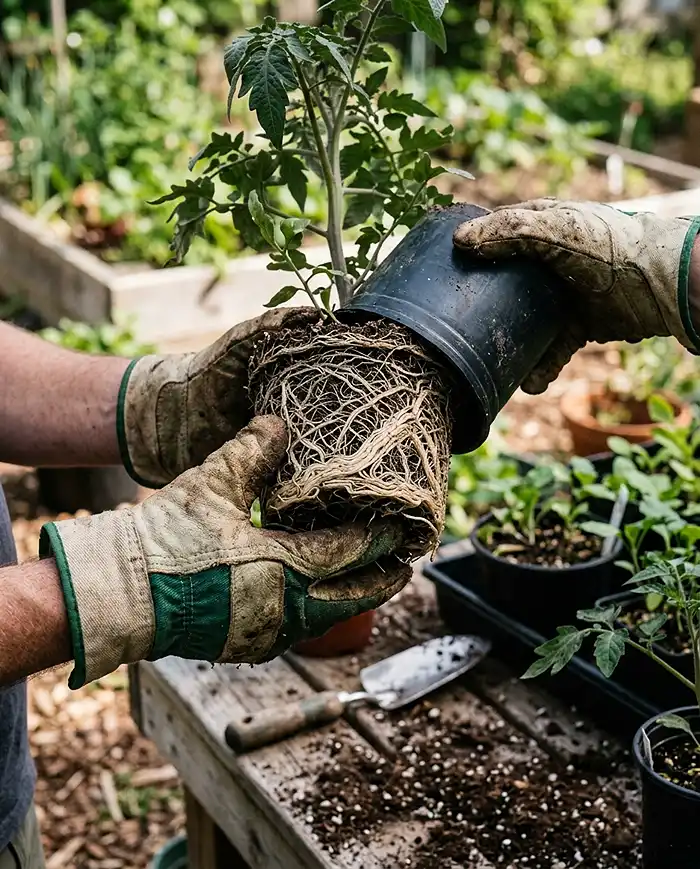
This is the single most common small space gardening mistake — and the easiest to miss because undersized pots look fine at first.
A tomato seedling in a 6-inch pot will grow for a few weeks, then stall. The roots hit the walls, circle, and choke themselves. The plant can’t uptake water or nutrients efficiently.
Small containers also dry out in hours during a heat wave. You end up watering twice a day and still losing plants. In summer container gardening, pot size directly controls how forgiving your setup is.
I planted cherry tomatoes in 3-gallon buckets one July. They fruited early, then crashed mid-August. Moved them to 10-gallon grow bags the following year — completely different result.
Pro Tip: If you’re torn between two sizes, always go bigger. The extra soil volume acts as a buffer against heat and drought stress.
How to Match Pot Size to Plant Needs
Quick Answer: Most summer vegetables need more space than beginner gardeners expect. Here’s a simple sizing guide to prevent root crowding.
| Plant | Minimum Pot Size | Ideal Size |
|---|---|---|
| Cherry tomatoes | 5 gallons | 10–15 gallons |
| Peppers | 3 gallons | 5 gallons |
| Zucchini | 5 gallons | 10 gallons |
| Lettuce | 6 inches deep | 8–10 inches deep |
| Basil / herbs | 6 inches | 8 inches |
| Cucumbers | 5 gallons | 8–10 gallons |
Check out these grow bag options for tomatoes if you want flexible, space-efficient containers that breathe better than plastic pots.
Mistake #2: Using the Wrong Soil or Garden Dirt
Scooping soil from your yard or grabbing the cheapest bag at the hardware store is a fast track to dead container plants. Garden soil compacts in pots — it suffocates roots and blocks drainage.
Heavy soil also holds too much moisture after watering, then dries into a solid brick that repels water entirely. Either way, roots suffer.
Cheap potting mixes often contain mostly peat with almost no nutrients. They work for a few weeks, then you’re feeding plants that have nothing to grab onto.
For urban gardening setups — especially balconies and rooftops — weight matters too. Dense soil adds serious load to structures not designed for it.
Pro Tip: Squeeze a handful of your potting mix. If it clumps into a solid ball that doesn’t break apart easily, it’s too heavy for containers.
The Right Soil Mix for Containers
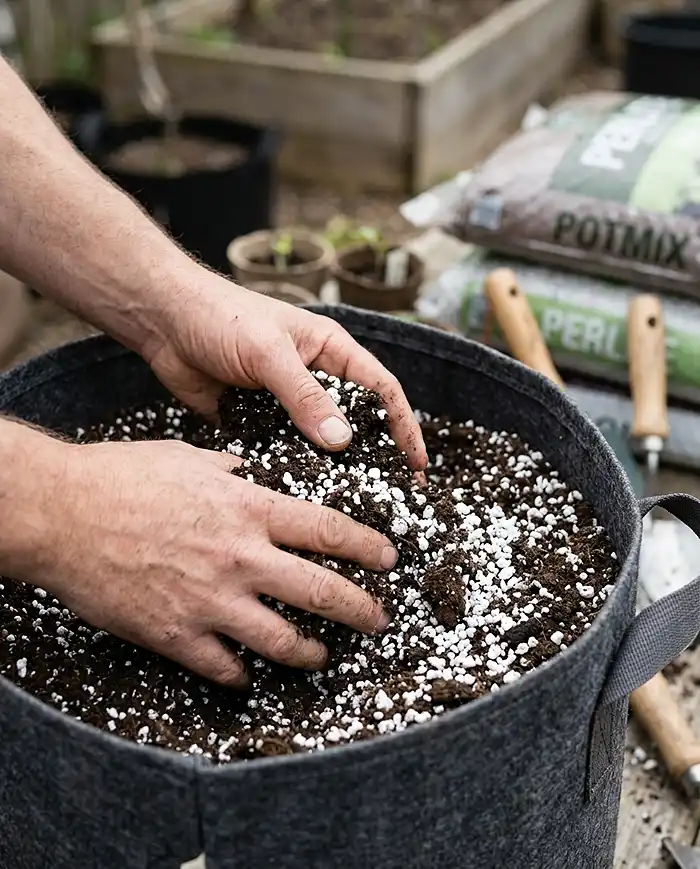
Quick Answer: Use a quality potting mix (not potting soil or garden soil) and amend it for summer performance.
- Start with a peat- or coco-coir-based potting mix — lightweight and well-draining
- Add 20–25% perlite to improve aeration and drainage
- Mix in slow-release granular fertilizer at planting (follow label rates)
- Add a handful of worm castings per gallon for microbial activity
- Avoid mixes labeled “moisture control” — they stay too wet in humid summers
Refreshing your mix each season matters. Old potting mix loses structure and nutrition after one full growing cycle.
Mistake #3: Watering Wrong in the Heat
Watering mistakes are the leading cause of summer container gardening failures — and the tricky part is that both overwatering and underwatering look almost identical at first.
Overwatered plants in summer seem counterintuitive, but it happens. People water on a rigid schedule instead of checking the soil. Waterlogged roots can’t absorb oxygen and start to rot, even in heat.
Underwatering is the more obvious problem. Containers in full sun on a hot day can dry out completely in 4–6 hours. A plant that wilts by noon may not recover even if you water that evening.
I had a pepper plant on a south-facing balcony go from healthy to dead in three days during a 95°F stretch — not from heat, but from skipping one morning watering when the pot was already dry.
Pro Tip: Lift the pot. A light pot means dry soil — this trick works better than any moisture meter for small containers.
How to Water Containers Correctly in Summer
Quick Answer: Water deeply and less often. Shallow daily splashes are worse than nothing.
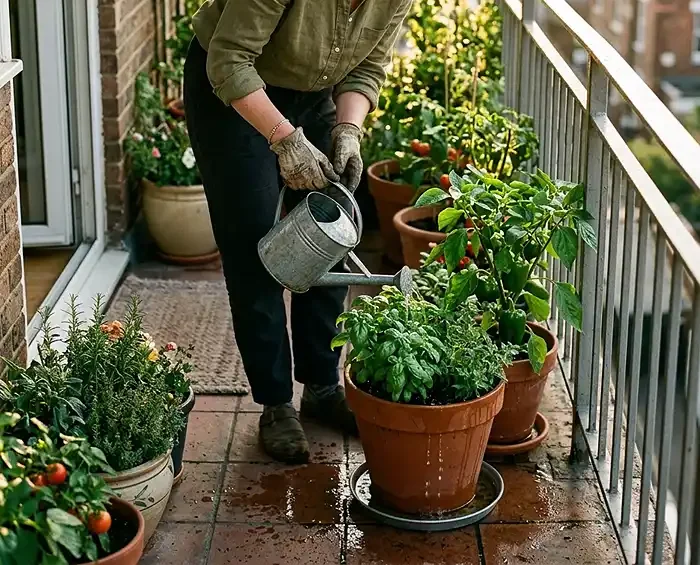
- Water until it drains freely from the bottom — this ensures the whole root zone gets wet
- Do the finger test: stick your finger 2 inches into the soil; water only if it’s dry at that depth
- Water in the early morning to reduce evaporation and prevent fungal issues
- Add a 1-inch layer of mulch on top of containers to cut moisture loss by up to 50%
- Group containers together — the collective humidity slows drying significantly
Mistake #4: Ignoring Sunlight and Placement
Misjudging light is one of the sneakiest small space gardening mistakes because plants don’t die immediately — they just slowly underperform.
Most vegetable crops need 6–8 full hours of direct sun. A spot that looks bright and open in May can be partially shaded by a neighboring building or overhang once the summer sun shifts.
In urban gardening, walls and pavement also create microclimates. A south-facing brick wall can add 10–15°F of radiant heat — great for peppers, brutal for lettuce.
Crowding containers against a wall or fence to save space is another trap. Poor air circulation breeds fungal disease and keeps plants from filling out properly.
Pro Tip: Move containers to their intended spot a week before planting and watch how the light actually hits — not how you think it will.
Reading Your Light and Positioning Plants Right
Quick Answer: Track sun hours before you plant, then match each crop to the right microclimate in your space.
- Full sun crops (tomatoes, peppers, eggplant): 6–8+ hours of direct sun
- Part sun crops (beans, chard, herbs): 4–6 hours works fine
- Shade-tolerant crops (lettuce, spinach, mint): 3–4 hours, good for north-facing spots
- Use a sun calculator app or simply mark light on a hand-drawn map every 2 hours through the day
- Rotate heat-sensitive pots away from reflected surfaces during heat waves
These minimalist balcony garden layouts show smart ways to arrange plants by light zone without wasting a single square foot.
Mistake #5: Overcrowding Plants
Tiny garden ideas often involve fitting as much as possible into a small footprint. That ambition becomes a problem when plants are crammed too close together.
Overcrowded plants compete for water, nutrients, and light. The weaker ones stall. The stronger ones still underperform compared to properly spaced plants.
Poor airflow is the other consequence. Humid, still air between packed containers is perfect for powdery mildew and botrytis — especially in the late-summer heat.
Pro Tip: If two leaves from different plants are touching, they’re too close. That’s your cue to spread them out or go vertical.
Proper Spacing for Small-Space Gardens
Quick Answer: When horizontal space runs out, go vertical. Proper spacing doesn’t mean fewer plants — it means smarter arrangement.
| Plant | Container Spacing | Vertical Option |
|---|---|---|
| Tomatoes | 1 plant per 10-gal pot | Stake or cage, train upward |
| Cucumbers | 1–2 plants per 8-gal pot | Trellis against wall |
| Beans | 4–6 plants per 5-gal pot | Pole varieties on a net |
| Herbs | 1 variety per 6-inch pot | Wall-mounted pockets |
| Lettuce | 4–6 plants per 12-inch pot | Stacked tiered planters |
Mistake #6: Forgetting to Feed Container Plants
In-ground plants can pull nutrients from a wide soil network. Container plants can’t. Every time you water, nutrients leach out the drainage holes — and in summer, you’re watering a lot.
A plant in a container that started with good soil will typically exhaust its available nutrients within 4–6 weeks. After that, it’s running on empty unless you feed it.
Yellowing lower leaves, slow growth, and small fruit are all signs of nutrient deficiency — but by the time you see them, the plant has already been struggling for weeks.
Pro Tip: Start a liquid feeding routine the moment you see the first flowers. That’s when nutrient demand jumps sharply.
A Simple Summer Feeding Schedule
Quick Answer: Feed container vegetables consistently throughout summer — not just at planting time.
- Weeks 1–3 after planting: slow-release granular fertilizer in the soil is usually sufficient
- Week 4 onward: begin liquid balanced fertilizer (10-10-10 or similar) every 7–10 days
- Once fruiting begins: switch to a lower-nitrogen, higher-phosphorus formula to support fruit development
- Leafy greens: continue high-nitrogen liquid feed every 10–14 days through harvest
- After heavy rain: feed the following day, since heavy watering flushes nutrients
If you’re growing herbs indoors or on a windowsill, this apartment herb garden guide covers feeding schedules for compact herb setups specifically.
Mistake #7: Skipping Heat Protection
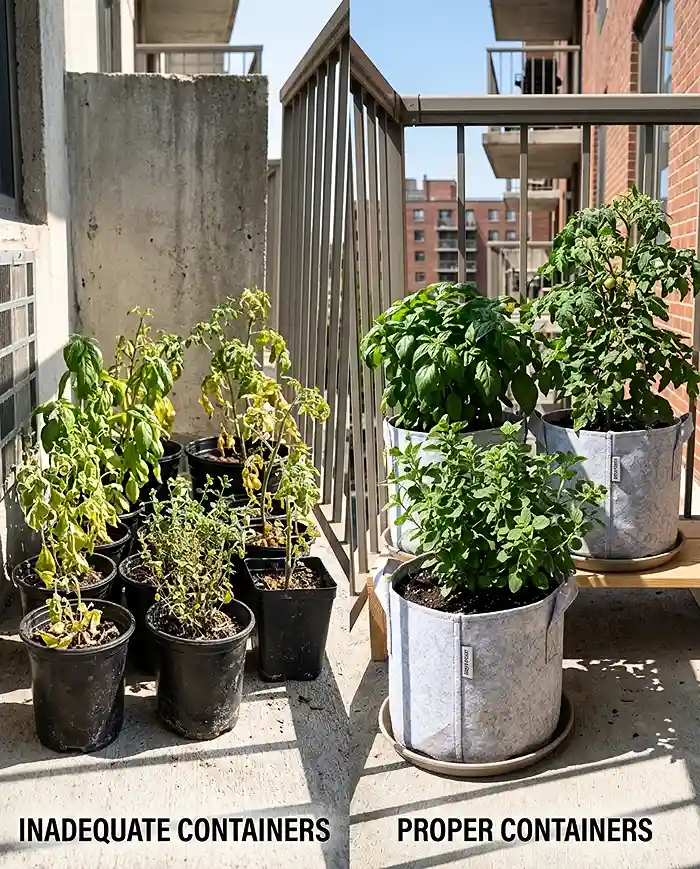
Container roots have zero insulation. When a black plastic pot sits in direct afternoon sun, soil temperatures can exceed 90°F — well above the root damage threshold for most vegetables.
This is a small space gardening mistake that hits hardest during heat waves, when outdoor temps already push containers to their limit.
Signs of heat stress include sudden wilting even with moist soil, leaf curl, blossom drop, and fruit that won’t set. These aren’t watering problems — they’re temperature problems.
- Use light-colored or fabric containers to reflect heat instead of absorbing it
- Double-pot: place a smaller pot inside a larger one with insulation between them
- Move containers to afternoon shade during extended heat above 95°F
- Apply a 1-inch mulch layer on the soil surface to insulate roots
- Avoid placing dark pots on dark pavement — reflected heat compounds quickly
Tools and Fixes to Get Back on Track
If your small space gardening setup is already struggling, this quick checklist covers the essential fixes and supplies.
- Larger containers: 5–15 gallon fabric grow bags for most vegetables
- Quality potting mix: Peat or coco-coir based with added perlite
- Saucers: Catch runoff and reduce watering frequency in extreme heat
- Mulch: Straw, shredded leaves, or coco coir on container surfaces
- Liquid fertilizer: Balanced formula for weekly feeding from week 4 onward
- Shade cloth (30–40%): Protect heat-sensitive plants during peak afternoon sun
- Moisture meter: Optional, but helpful for beginners learning to read soil moisture
For renters who can’t make permanent changes, these small patio garden ideas for renters show how to set up a highly functional system without any permanent modifications.
Common Problems and Solutions
Wilting Plants Despite Regular Watering
Quick Answer: If the soil is moist but the plant still wilts, the problem is root-related or heat-related — not a lack of water.
- Check for root crowding: lift the plant and inspect for a dense, pot-shaped root ball — repot immediately if roots are circling
- Check soil temperature: if the container is hot to the touch, move it to a shadier spot for a few days
- Look for root rot: dark, mushy roots mean overwatering; let the soil dry out fully before watering again
The University of Minnesota Extension container gardening guide covers root health and repotting timing in detail.
Yellowing Leaves and Slow Growth
Quick Answer: Yellow leaves are almost always a nutrient or soil issue in containers. Start with feeding before assuming disease.
- Lower yellow leaves on an otherwise healthy plant: classic nitrogen deficiency — start liquid feeding immediately
- Yellow leaves with green veins: iron or magnesium deficiency — add a balanced micronutrient supplement
- Yellowing across all leaves with very slow growth: the potting mix may be exhausted — consider repotting with fresh mix
Plants Drying Out Within Hours
Quick Answer: Fast drying is a container and placement problem, not just a watering frequency problem.
- Upgrade to a larger pot — more soil volume holds more moisture
- Group containers together to raise ambient humidity around plants
- Add a 1-inch mulch layer to dramatically slow evaporation
- Place saucers under containers so roots can absorb water from below
- Avoid placing containers directly on sun-heated concrete during peak afternoon hours
Frequently Asked Questions
What are the most common small space gardening mistakes?
The top errors are using undersized containers, filling them with garden soil or cheap potting mix, watering on a fixed schedule instead of checking soil moisture, ignoring sunlight requirements, and overcrowding plants. Fix these five and most small-space gardens recover quickly.
Why are my container plants dying in summer?
Most summer container plant deaths trace back to heat stress, root crowding, or inconsistent watering. Check pot size first — if roots are cramped, the plant can’t absorb water or nutrients properly even if you’re doing everything else right. Soil temperature and nutrient depletion are the next most common culprits.
How do I keep container plants from drying out so fast?
Use larger pots with more soil volume, add a 1-inch mulch layer on top of the soil, group containers together to slow evaporation, place saucers underneath to allow bottom watering, and avoid setting dark pots on heat-absorbing surfaces. Self-watering inserts also help for very fast-drying setups.
How often should I fertilize small-space container plants?
Start liquid feeding around week 4 after planting, then feed every 7–10 days through the growing season. Use a balanced formula early on and switch to a lower-nitrogen, higher-phosphorus blend once plants begin flowering and fruiting. Feed the day after heavy rain, since water flushes nutrients from containers quickly.
Key Takeaways
- Small space gardening mistakes compound fast in summer — fix pot size, soil, and watering first since these cause the most damage
- Containers dry out and deplete nutrients faster than in-ground beds; adjust your watering and feeding routine accordingly
- Match every plant to its true sun requirement and track actual light hours before planting
- Go vertical when floor space runs out — it solves crowding without sacrificing variety
- Protect container roots from heat with light-colored pots, mulch, and afternoon shade during heat waves