
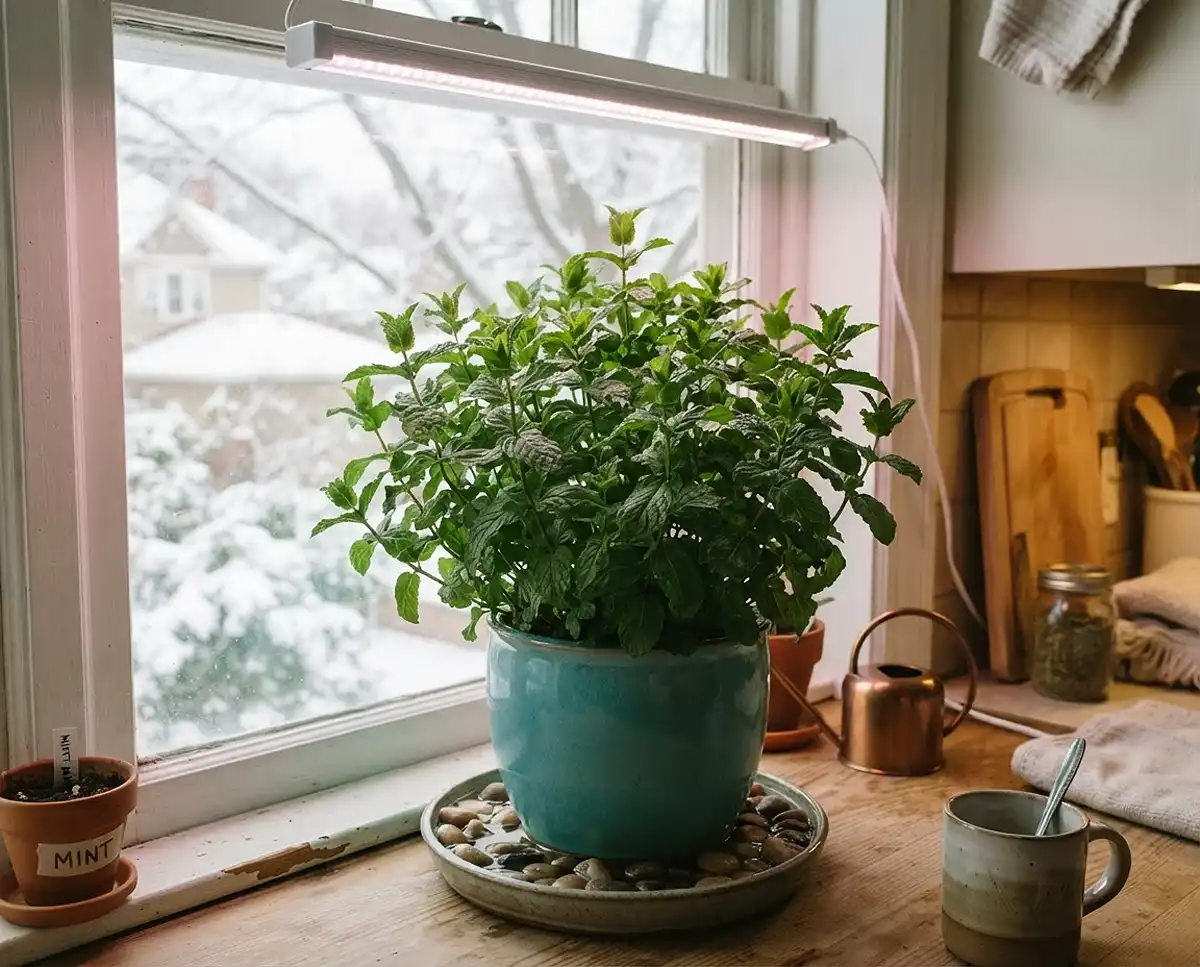
Growing Mint Indoors in Winter
Your mint ran wild in July. Now growing mint indoors in winter has it limp and leggy. Here’s how to keep your mint in pots bushy and alive until spring. I’ve done this on my zone 7a rooftop for years, and I’ve killed a few plants learning how.
Table of Contents
The Secret to Growing Mint Indoors in Winter
Short Answer: Mint thrives indoors when you copy what it loves outside: bright light, steady moisture, and moving air. Winter homes offer dim light and dry heat, so you build a small microclimate [a tiny pocket of controlled conditions] around the pot. Do that, and mint stays green all winter.
My terrace gets full sun from spring to fall. I keep mint in 10-inch plastic pots out there until frost forces it inside. New to growing in tight spots? Start with our beginner small space gardening basics.
Evaluating Your Winter Windowsill Microclimate
Short Answer: Check your light first. Stand at your brightest window at noon and count how many hours direct sun reaches the sill. Under six hours means you need a grow light. Also look for heat vents, drafts, and cold glass, because each one changes how fast the pot dries out.
The University of Illinois Extension’s winter herb tips also say to keep herbs away from heat vents. My crispy radiator-side plants agree.
Light Requirements and South-Facing Windows
Short Answer: Mint needs at least six hours of bright light daily. An unobstructed south-facing window works best, and a west-facing one is a solid second. Less light gives you weak, spindly stems and small, pale leaves. Mint can’t stretch toward light that isn’t there.
Keep the leaves an inch or two off the glass. Single-pane windows get cold on January nights, and chilled leaves turn dark and soggy. Rotate the pot a quarter turn each week so every side gets a turn facing the sun.
Using Full-Spectrum LED Grow Lights for Mint
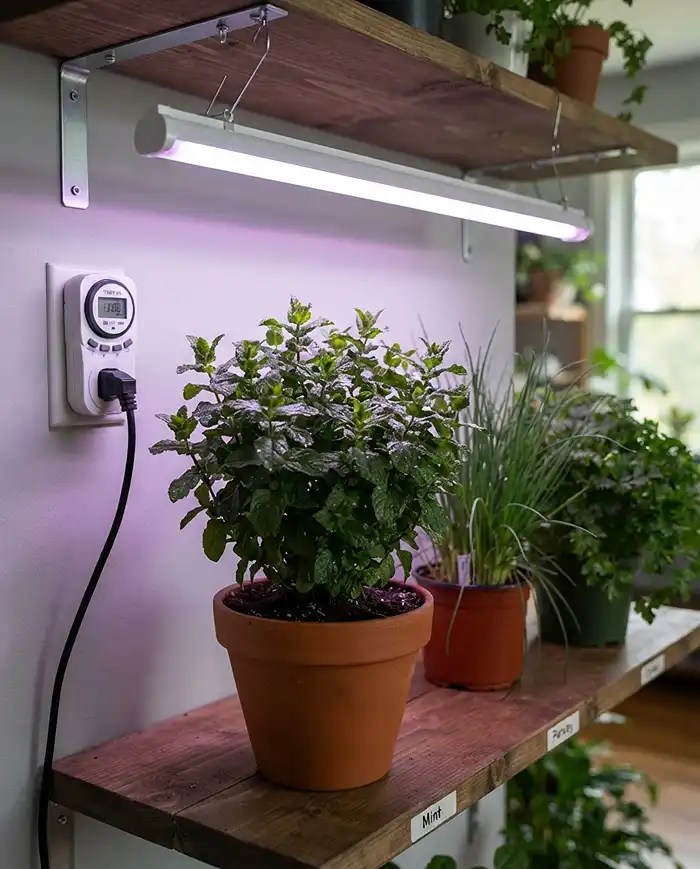
Short Answer: If your window gives under six hours of light, add a full-spectrum LED grow light [a bulb that mimics the whole sunlight range]. Hang it 6 to 12 inches above the leaves. Run it 12 to 14 hours a day on a cheap outlet timer.
Last December I tried ‘Mojito’ mint under an LED bar hung 8 inches up. Before the light, its stems stretched 3 inches between leaf pairs. After three weeks of 14-hour days, new growth stacked leaves every inch. Compact, dark green, and finally worth pinching.
One light covers a whole shelf of winter herbs indoors, so share the bar with chives or parsley.
Pre-Winter Preparation: Transitioning or Propagating
Short Answer: You have two routes to an indoor herb garden. Move your outdoor pot inside, or root fresh cuttings. Cuttings are cleaner because they skip the pests. Moving the whole pot is faster if you prep it right.
As of fall 2026, my rooftop’s first frost usually lands in late October. I start prepping in early October. Balcony growers can find more on moving pots in our balcony gardening for beginners guide.
How to Safely Bring Outdoor Mint Inside
Short Answer: Quarantine the pot away from other plants for two weeks. Cut it back by one-third, then wash the leaves with insecticidal soap [a gentle spray that smothers soft-bodied pests]. Mint hides aphids and spider mites well, and you don’t want them spreading to your houseplants.
Think of the quarantine as hardening off [gradually adjusting a plant to new conditions] in reverse. Try this checklist:
- Move the pot to a bright porch or garage for 14 days.
- Prune the stems back by one-third.
- Spray both sides of every leaf with insecticidal soap.
- Check the drainage holes for slugs and ants.
- Inspect for pests once a week for a month.
Propagating Fresh Cuttings in Water
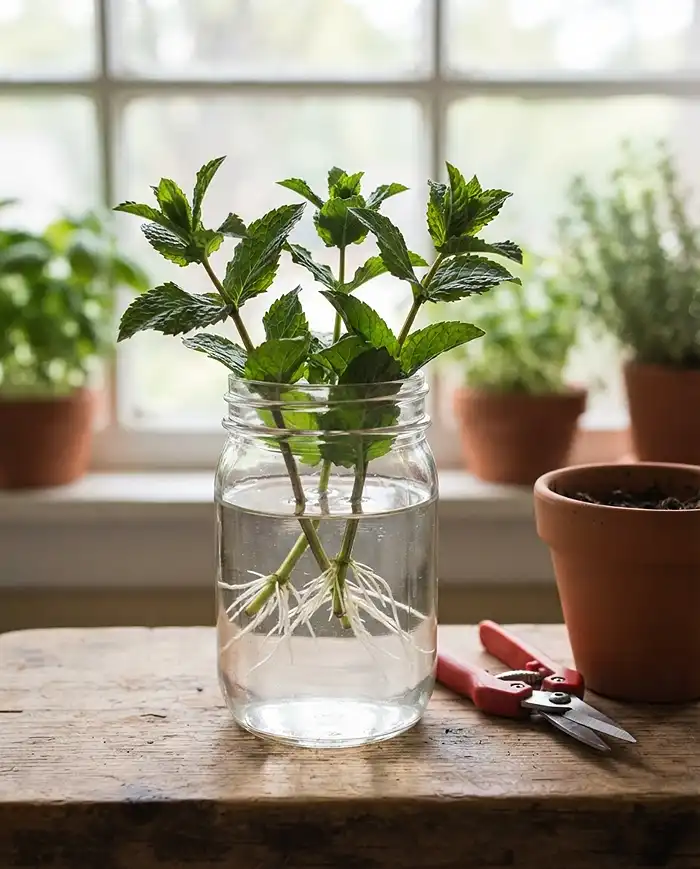
Short Answer: Snip healthy 4-inch stems just below a leaf node [the bump where leaves attach to the stem], strip the lower leaves, and stand them in a glass of water. Roots appear in about 7 to 10 days. Pot them at 1 to 2 inches of root.
Last September I clipped ten 4-inch stems from ‘Kentucky Colonel’ spearmint. Eight rooted in 10 days on my kitchen sill. By December, those pots gave me about a cup of leaves every week. No pests, no quarantine, no fuss.
Essential Supplies for Indoor Mint Care
Short Answer: You need four things: a wide pot with drainage, good potting mix, a pebble tray, and a light if your window is weak. Skip anything fancy. Mint is tough, and these basics solve most winter troubles for herbs in pots.
- One 8 to 10-inch pot with drainage holes
- Indoor potting mix, perlite, and coco coir
- A shallow tray and a bag of pebbles
- Yellow sticky traps for gnats
- A small oscillating fan
- Sharp snips or scissors
Choosing the Right Container and Drainage
Short Answer: Pick a wide pot, 8 to 10 inches across, in plastic or glazed ceramic, with deep drainage holes. Mint roots spread sideways instead of down. Wide pots give them room and hold moisture more evenly than tall, skinny ones. Always use a saucer underneath.
My worst mistake was a 6-inch terra-cotta pot. One January, my ‘Chocolate’ peppermint sat near a radiator, and the porous clay wicked moisture out fast. Within nine days, about 80 percent of the leaves crisped. I switched to a 10-inch glazed pot and moved it three feet from the heat. It regrew by February.
Our container gardening for beginners post compares pot materials in more detail.
Blending a Moisture-Retentive, Well-Draining Soil
Short Answer: Mix three parts indoor potting mix with one part perlite [puffed volcanic glass that loosens soil] and a handful of coco coir [shredded coconut husk that holds water]. The blend stays evenly moist but never soggy. Skip garden soil, which compacts in pots.
My go-to batch for one 10-inch pot:
- 6 cups indoor potting mix
- 2 cups perlite
- 1 big handful of coco coir
Daily and Weekly Winter Maintenance Routines
Short Answer: Central heating pulls moisture from soil and leaves fast. Counter it with a steady routine: check the soil daily, run a pebble tray for humidity, and pinch stems weekly. Five minutes of attention beats an hour of rescue work in February.
| Task | How Often | What to Look For |
|---|---|---|
| Knuckle test | Daily | Soil damp at your first knuckle |
| Quarter turn | Weekly | Even, upright growth |
| Pebble tray refill | Every 2 to 3 days | Water just below pebble tops |
| Pinch tips | Weekly | New branching at leaf nodes |
| Quarter-strength feed | Every 6 to 8 weeks | Deep green new leaves |
Mastering the Watering Schedule in Dry, Heated Air
Short Answer: Use the knuckle test: push a finger into the soil to your first knuckle. If it feels dry there, water until it drains out the bottom. Mint wants evenly damp soil. Heated rooms can dry a pot in two days, and thin leaves crisp quickly.
Empty the saucer after 15 minutes. Standing water drowns roots and invites gnats.
Boosting Ambient Humidity with Pebble Trays
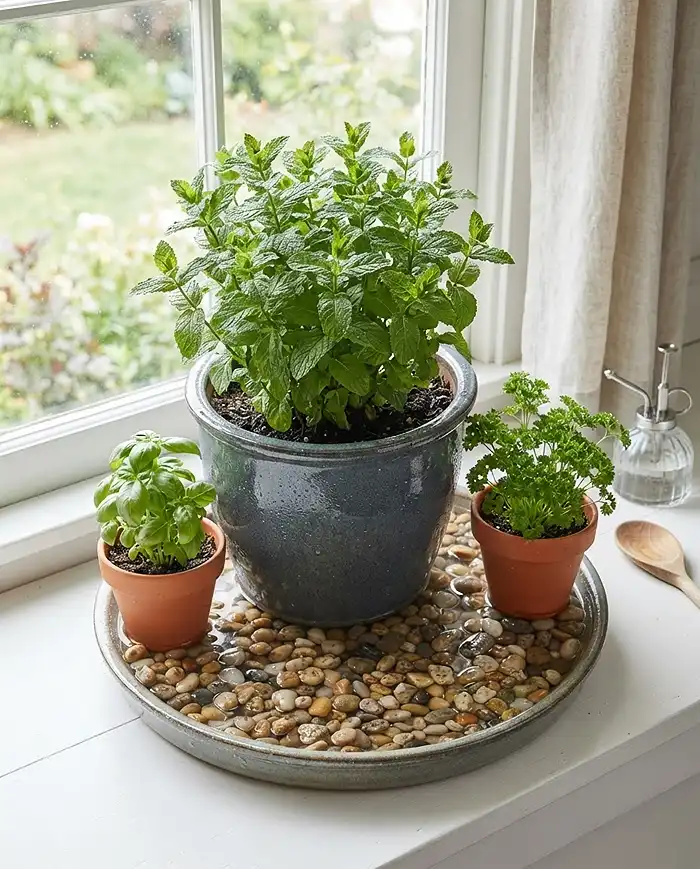
Short Answer: Set the pot on a shallow tray of pebbles with water just below their tops. Evaporation creates a humid pocket around the leaves. Keep the pot’s base above the waterline so roots don’t sit wet. Refill every few days, because heated air drinks it fast.
Group several herbs in pots on one big tray, and they’ll share the extra moisture.
Pruning and Harvesting to Prevent Leggy Growth
Short Answer: Pinch the top two sets of leaves often, cutting just above a leaf node. Each cut sends out two new side shoots. Regular pinching keeps mint dense and bushy instead of tall and floppy. Never take more than one-third of the plant at once.
Think of pinching as a haircut that makes the plant grow back thicker. Harvest from the tips, and your tea leaves double as pruning. Pinch off flower buds too, since flowering dulls the flavor and slows leaf growth.
Common Problems & Solutions
Short Answer: Indoor mint usually struggles for three reasons: stale air, wet soil, and too little light. Each has a clear fix. Read your plant first. White dust, tiny black flies, and stretched stems each point to a different cause.
Powdery Mildew on Mint Leaves
Short Answer: Powdery mildew shows up as white, dusty patches when air sits still. Pick off infected leaves, spray the rest with diluted neem oil [a plant-based fungicide and pest deterrent], and run a small oscillating fan nearby. Good airflow keeps spores from settling.
Follow the label for dilution, and spray in the evening so leaves don’t scorch under bright light.
Fungus Gnats in the Soil
Short Answer: Tiny black flies hovering near the pot mean the topsoil stays too wet. Let the top inch dry fully between waterings, and hang yellow sticky traps near the soil. Adults die off, larvae starve, and the cycle usually breaks within two to three weeks.
Small, Pale Leaves and Stretched Stems
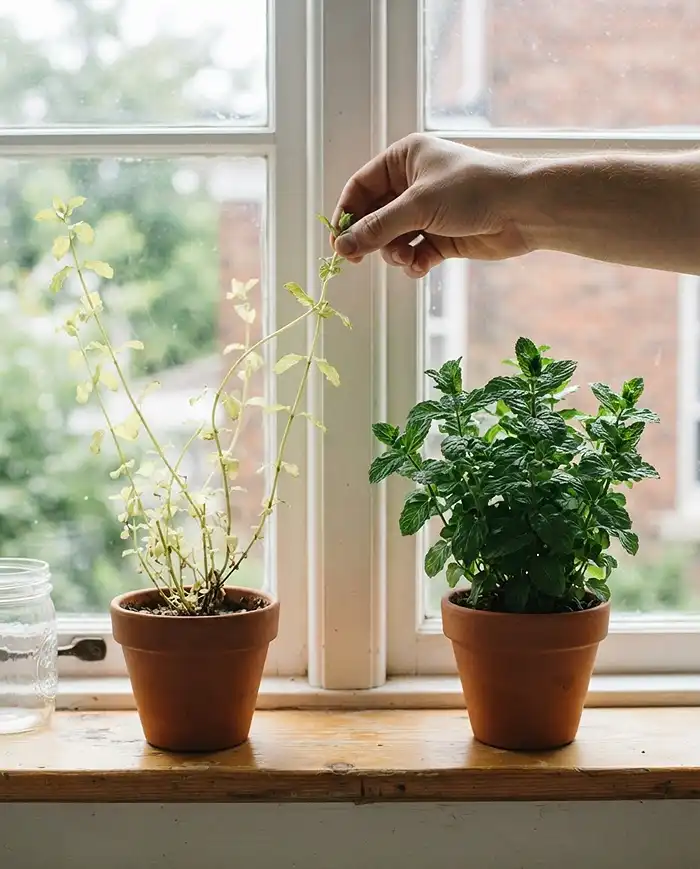
Short Answer: Stretched stems and small, pale leaves signal etiolation [stretching from too little light]. The plant is reaching for the sun. Move it closer to the window right away, or lower your grow light to 6 to 8 inches. Then pinch back the leggy tips.
Frequently Asked Questions
Does indoor mint naturally die back in the winter?
Outdoor mint dies back to its roots each winter and goes dormant. Indoor mint kept at 65 to 70°F with enough light stays evergreen and keeps growing. In a cold, dark spot, expect slow growth or dormancy instead.
Should I fertilize my mint plant during the winter?
Go light. Use a quarter-strength dose of liquid kelp or fish emulsion once every 6 to 8 weeks. Heavy feeding builds up salts in the soil, which burn roots and brown the leaf edges. If you see a white crust on the soil, flush the pot with plain water.
Why are the lower leaves on my indoor mint turning yellow and falling off?
Yellow lower leaves usually mean the roots are suffocating from overwatering, or the plant is root-bound [roots circling the pot with no room left]. Check the drainage holes first. If roots poke out the bottom, repot into a wider pot. If the soil stays soggy, let the top inch dry before watering.
Can mint grow indoors without a grow light?
Yes, if you have a south-facing or west-facing window that delivers about six hours of bright light. Without that, mint turns leggy and pale. An inexpensive LED bar on a timer fixes the problem.
How often should I water mint indoors in winter?
Skip the calendar and use the knuckle test every day. Most pots in heated rooms need water every 2 to 4 days. Water until it drains from the bottom, then empty the saucer.
Can I move my indoor mint back outside in spring?
Yes, but do it gradually. Wait until nights stay above 50°F, then start with two hours in shade. Add an hour or two of light each day over 7 to 10 days so the leaves don’t scorch.
Quick Recap
- Success with growing mint indoors in winter starts with light: six hours of bright sun, or 12 to 14 hours under an LED.
- Quarantine and prune outdoor pots, or root clean cuttings in water.
- Use a wide 8 to 10-inch pot with drainage and a mix of potting soil, perlite, and coco coir.
- Do the knuckle test daily and keep a pebble tray topped up.
- Pinch above leaf nodes weekly, and fix mildew, gnats, and stretching fast.