

Fall Container Fertilizer Schedule
By August, container vegetable gardening leaves soil bone dry of nutrients. Here’s my exact fall container fertilizer schedule to feed plants through frost.
Table of Contents
Why Your Container Plants Are Starving by Late Summer
I’ve grown container vegetables and herbs on a rooftop in Philadelphia, zone 7a, for about 12 years. Every August, without fail, my ‘Sungold’ tomatoes start looking pale.
Here’s why. July and August watering is brutal on container plants — sometimes daily, sometimes twice a day in a heat wave. Every time water runs out the drainage holes, it drags nitrogen and potassium with it.
That process is called leaching. By late summer, your potting mix isn’t really soil anymore. It’s closer to sterile filler, and your plants are trying to fruit or transition into fall on empty. This is the reality of late summer container gardening: the more you water, the faster nutrients disappear.
Understanding the Late Summer to Fall Biological Shift
As daylight hours shrink after the August 1 mark, plant hormones shift. Photosynthesis slows, and plants stop prioritizing new leaves and start prioritizing roots, seeds, and cold hardiness.
That means the fertilizer that worked great in June — heavy on nitrogen for leafy growth — actively works against your plants in September. Feeding a fall container garden the same way you fed it in spring is one of the most common mistakes I see.
Shifting from Foliage Growth to Root Storage
Spring fertilizing pushes nitrogen hard because you want leaves, stems, and vigorous top growth. By late summer, that job is done. Now the priority is root development and cellular hardiness — the stuff that gets a plant through a freeze without dying.
I learned this the hard way with a potted fig tree. I kept dosing it with a 20-10-10 liquid feed through mid-October one year, and it pushed a flush of soft new growth right before our first frost. Every bit of it turned black and mushy within days.
The Needs of Late-Season Edibles vs. Overwintering Perennials
Split your fall container gardening strategy into two camps, because they need opposite treatment:
- Fast-growing autumn edibles — kale, radishes, spinach, lettuce — keep feeding these on a normal schedule since they’re actively growing new tissue you plan to eat.
- Frost-tender perennials — rosemary, bay laurel, lavender, potted figs — pull back and stop feeding these by early fall so their stems harden instead of staying soft and vulnerable.
Rosemary is the clearest example. A rosemary plant that’s still getting nitrogen in October has soft, sappy stems. One that’s been starved since late August has woody, hardened stems that shrug off a light frost.
Choosing the Right Fertilizer for the Seasonal Transition
Skip the all-purpose summer fertilizer sitting in your shed. Container vegetable gardening in fall calls for a different elemental ratio, and using the wrong one either wastes your money or actively hurts your plants going into winter.
Decoding N-P-K Ratios for Autumn Plant Health
Look for a low-nitrogen, higher-phosphorus, higher-potassium formula — something like a 3-4-4 or 2-8-4 ratio. That combination pushes late blooms on ornamentals, helps ripen the last tomatoes on the vine, and toughens up cell walls against cold.
For reference, here’s how common fall-friendly ratios stack up against a typical spring blend:
| Ratio (N-P-K) | Best For | Skip It For |
|---|---|---|
| 10-10-10 (spring) | Early season leafy growth | Fall containers — too much nitrogen |
| 3-4-4 | General fall feeding, mixed containers | Fast-growing fall greens needing more N |
| 2-8-4 | Ripening tomatoes, boosting mum blooms | Newly seeded fall greens |
| 5-3-3 (organic, e.g. Plant-Tone) | Perennial herbs going into dormancy | Heavy feeders needing a fast fix |
Per this University of Minnesota Extension guide on container fertilizing, splitting doses into smaller, more frequent applications reduces the nutrient loss that heavy watering causes.
Liquid Soluble vs. Slow-Release Granular Organics
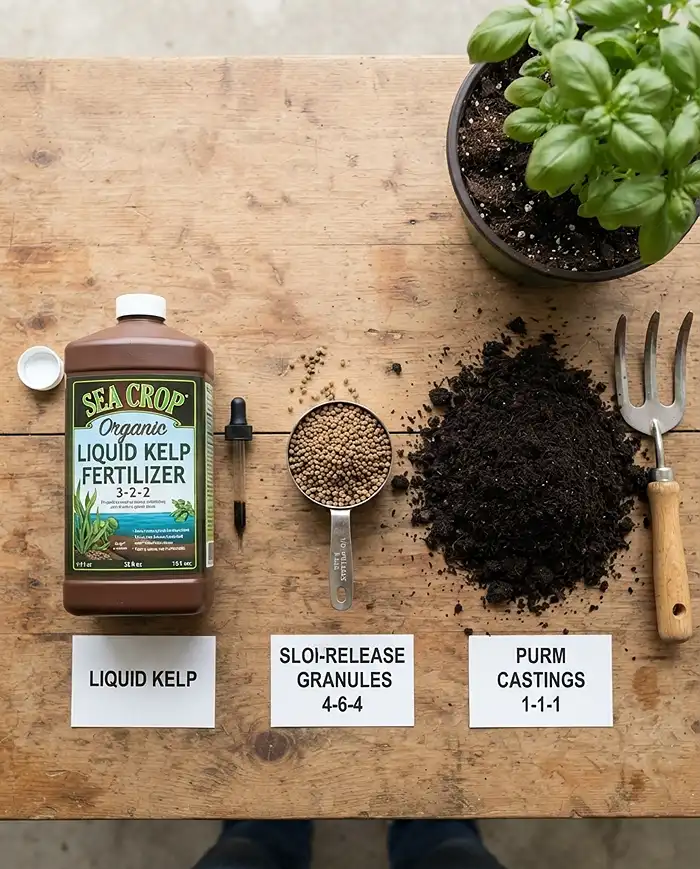
Both have a place in a fall container fertilizer schedule, and I use both every year depending on the plant’s condition.
- Liquid kelp or fish emulsion: fast-acting, ideal for an emergency August rescue when leaves are already yellowing.
- Slow-release granular organics: steady, gentle feeding through September that won’t burn tender fall roots.
- Worm castings top-dressed monthly: mild enough for newly seeded greens like spinach and ‘Bloomsdale’ lettuce.
For a full breakdown of specific products, see our guide to the best fertilizers for container vegetables.
The Late Summer to Fall Fertilizer Schedule
Here’s the chronological blueprint I follow on my own rooftop, from the dog days of August through the first hard frost in mid-October.
| Timing | What to Feed | Who Gets It |
|---|---|---|
| Late August | Liquid fish emulsion or kelp, weekly | Tomatoes, peppers, summer annuals |
| Early-Mid September | Slow-release granular or worm castings | Fall greens, mums, asters |
| Mid-September | Plain water flush (no fertilizer) | All containers, to clear salt buildup |
| October | Nothing | Overwintering perennials, woody herbs |
Late August: The Final Push for Summer Heavy Feeders
Tomatoes, peppers, and summer annuals still have a job to finish — ripening whatever fruit or flowers they’re carrying. This is the one window where a heavy liquid feed still makes sense.
I hit my ‘Sungold’ and ‘Cherokee Purple’ tomato pots with fish emulsion once a week through late August. It’s the difference between a sad, half-ripe final harvest and pulling another two or three pounds of usable fruit before things slow down.
September: Amending for Fall Greens and Hardy Mums
September is transition month. Newly planted fall greens — spinach, lettuce, ‘Ruby Frost’ kale — want a gentle, steady feed as they establish. Scratch slow-release compost or worm castings into the top two inches of soil at planting.
Seasonal ornamentals like asters and chrysanthemums benefit from the same treatment. This is standard practice for late summer container gardening: light, consistent feeding rather than one big dose.
October: The Hard Stop for Perennials and Shrubs
By mid-October, stop fertilizing overwintering perennials completely — potted blueberry bushes, hostas, rosemary, bay laurel, anything staying in its pot through winter.
Feeding them now pushes tender new growth that has zero time to harden before the first freeze kills it outright. I learned this with that potted fig I mentioned earlier, and I haven’t made the mistake since.
Pro Application Techniques for Confined Roots
Container roots are confined and concentrated, which means fertilizer mistakes show up fast. A few techniques prevent chemical burn and get nutrients where they’re needed.
Top-Dressing and the “Scratch and Water” Method
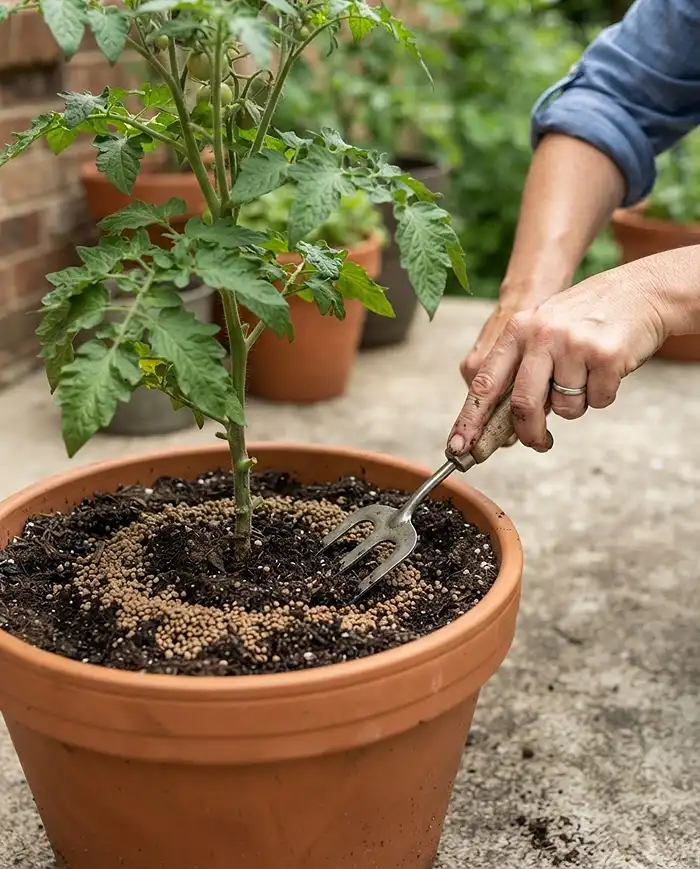
For dry granular fertilizer, gently scratch it into the top inch of soil using a hand fork, staying a couple inches away from the plant’s crown — the point where stem meets soil — to avoid direct contact.
Water it in heavily right after. This activates soil microbes that break the granules down into a form roots can actually absorb, instead of letting it sit on the surface doing nothing.
If you’re unsure how often your specific containers need feeding at all, our guide on fertilizing frequency for container plants breaks it down by container size and plant type.
Flushing Toxic Salt Buildup Before Winter
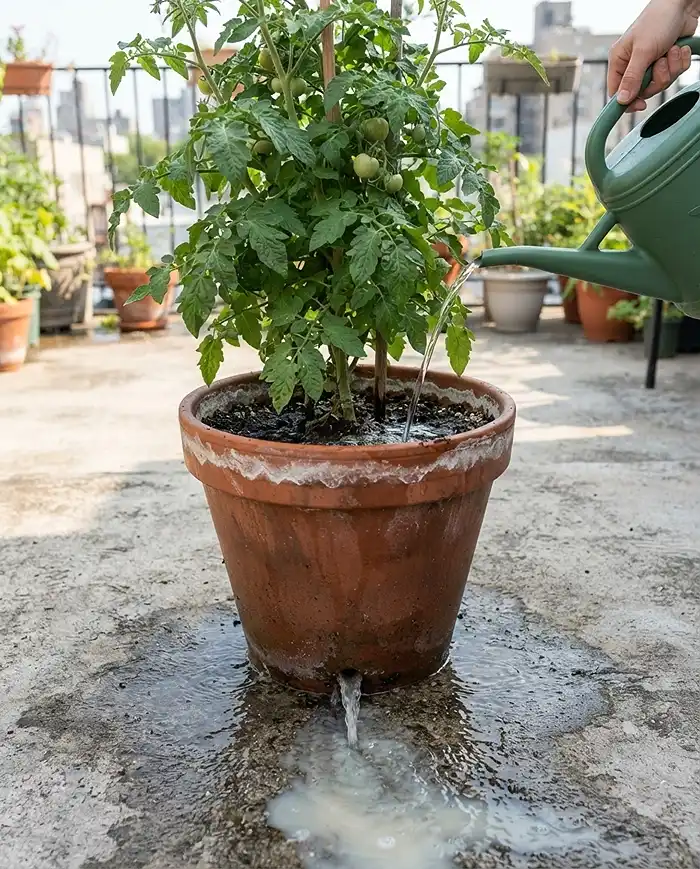
A crucial mid-September task most gardeners skip: flushing the container. Run a slow, continuous stream of plain water through the pot for about five minutes.
This dissolves and washes out the white, crusty fertilizer salts that build up on the inside walls of the pot all summer. Left alone, that salt buildup can scorch roots and block water uptake right when your plants need it most.
Common Problems & Solutions
Even with a solid fall container fertilizer schedule, things go sideways. Here’s how to spot the two most common late-season nutrient issues fast.
Nitrogen Burn on Tender Autumn Growth
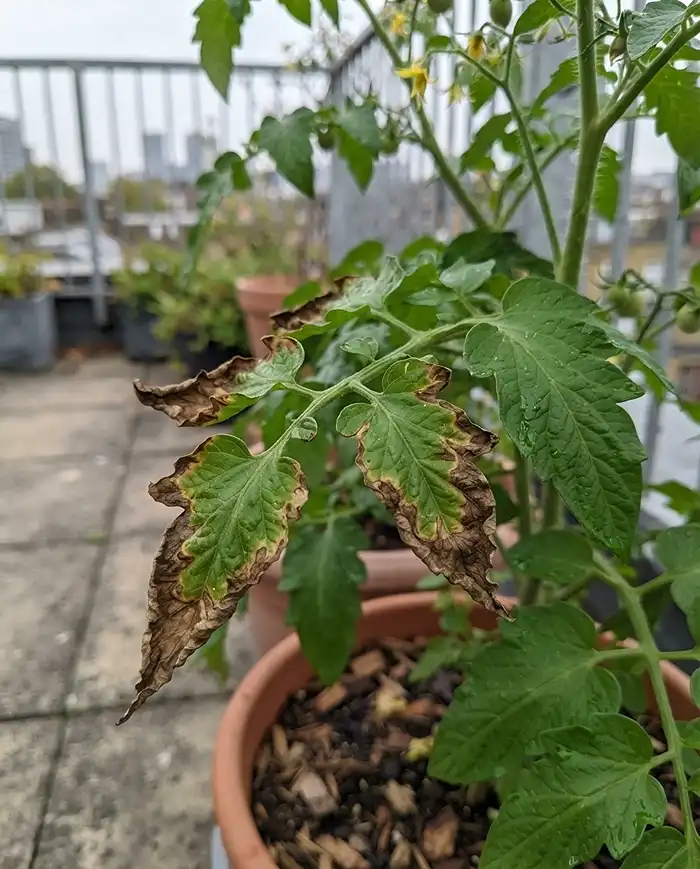
Crispy, browned leaf tips or edges usually mean too much synthetic nitrogen applied too late in the season. It’s easy to do if you’re still using a leftover spring fertilizer out of habit.
The fix: flush the container thoroughly with plain water to dilute the excess salts, then prune away the damaged tissue. Skip any fertilizer for at least two to three weeks while the plant recovers.
Nutrient Lockout Due to Dropping Soil Temperatures
Purple-tinged leaves on tomatoes and peppers usually signal phosphorus lockout, not an actual phosphorus shortage. Cool autumn soil physically slows a plant’s ability to absorb nutrients through its roots.
Adding more granular fertilizer to cold soil won’t fix this — it just sits there unused. A fast-absorbing foliar spray, applied directly to the leaves, gets nutrients into the plant without relying on cold roots.
If your containers are undersized for what you’re growing, root stress can make lockout worse. Check our pot size guide for vegetables to rule that out.
fall container fertilizer schedule FAQs
Should I keep fertilizing summer annuals that are dying?
No. Past mid-September, stop feeding declining summer annuals like petunias or determinate tomatoes. Their natural life cycle is ending, and extra nutrients won’t reverse normal seasonal decline or extend their bloom.
Does compost count as fall fertilizer for pots?
Not fully. Compost restores soil structure and adds slow-release micronutrients, but it’s usually too low in nitrogen, phosphorus, and potassium to sustain heavy-yielding fall vegetables on its own. Pair it with a liquid organic feed.
When exactly is the cutoff date to stop fertilizing for winter?
Find your region’s average first frost date, then stop all fertilizing on overwintering perennial containers six to eight weeks before that date. This gives plants time to harden off before cold weather arrives.
Can I use the same fertilizer for vegetables and perennial herbs in fall?
Not past early September. Fast-growing fall vegetables like kale and spinach can keep a light, steady feed. Perennial herbs like rosemary need to be weaned off fertilizer entirely so their stems harden before frost.
How do I know if my container soil still has nutrients left in fall?
Watch the leaves. Pale, uniformly yellowing lower leaves usually mean nitrogen has leached out. If a plant looks weak despite normal watering and light, it’s a strong sign the potting mix is nutrient-depleted.
Conclusion
A good fall container fertilizer schedule isn’t complicated — it’s just about matching the feed to the plant’s job. Heavy feeders finishing a harvest get more; perennials heading into dormancy get less, then nothing.
As of fall 2026, my own rooftop containers follow exactly this pattern: liquid feed through late August, a gentle granular switch in September, a salt flush mid-month, and a hard stop by mid-October for anything overwintering.
Key Takeaways
- Switch to a low-nitrogen, higher-phosphorus formula (like 3-4-4 or 2-8-4) once daylight hours start shrinking in August.
- Keep feeding fast-growing fall edibles like kale and spinach, but stop feeding frost-tender perennials by early September.
- Flush containers with plain water in mid-September to clear salt buildup before it damages roots.
- Stop all fertilizing on overwintering perennials six to eight weeks before your region’s average first frost date.
- A solid fall container fertilizer schedule protects both your last harvest and next spring’s growth in one move.