

Best Peppers for Balcony Containers
The best peppers for balcony containers are compact, heat-loving varieties like ‘Lunchbox’ and ‘Basket of Fire’ that fruit heavily in 3-to-5-gallon pots. If your small balcony garden bakes in afternoon sun, peppers will reward you with a huge harvest all summer.
I’ve grown peppers on a west-facing concrete balcony in zone 6b for over a decade. That slab throws off heat like a pizza stone, and peppers absolutely love it. Below is everything I’ve learned the hard way.
Table of Contents
Maximizing Heat and Harvest: Growing Peppers on a Balcony
Here’s why peppers are almost cheating in containers: they have shallow, fibrous root systems that don’t need deep soil, and they crave radiant heat. A sunny concrete or brick balcony is basically their dream microclimate.
Those hot surfaces soak up sun all day and slowly release warmth into the pots. That warm root zone speeds up flowering and ripening. My balcony peppers routinely fruit two weeks ahead of the same varieties in my friend’s in-ground plot.
So don’t fight your balcony’s harsh, baking conditions. For peppers, that heat is the whole point. You just need the right varieties, right-sized pots, and a smart watering routine.
Assessing Your Balcony’s Microclimate for Pepper Success
Before you buy a single transplant, spend a day watching your balcony. Peppers are strict warm-season crops. If they don’t get enough thermal energy and light, they’ll sit there sulking and refuse to set fruit no matter what you do.
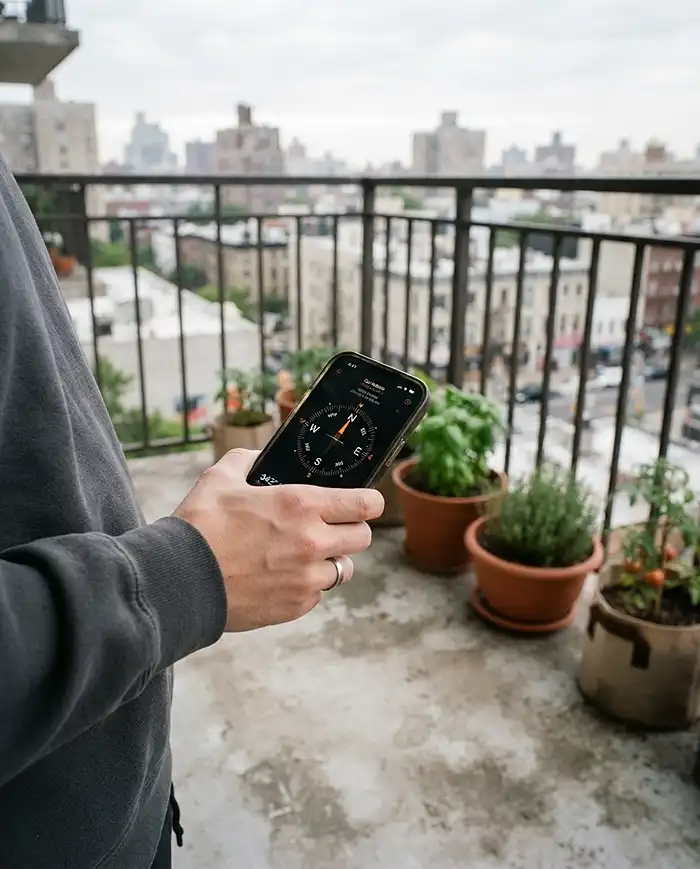
How much sun do balcony peppers actually need?
Quick Answer: Peppers need a bare minimum of six hours of direct sun daily, and eight or more is far better for a heavy harvest. Less than six and you’ll get a leafy plant with barely any fruit.
Track the sun across a full day and mark where light lands hour by hour. A phone compass helps you find true south. South and west exposures win for pepper growing.
You can also work the walls. A pale brick or stucco wall behind your pots bounces radiant heat back onto the plants, which stimulates flowering. I push my pepper pots right up against my building’s brick and it noticeably boosts fruit set.
Pro Tip: A dark-colored wall absorbs heat instead of reflecting it, keeping the surrounding air warmer overnight. Great for cool-climate balconies, risky during heat waves.
How do I protect brittle pepper stems from balcony wind?
Quick Answer: High-rise balconies funnel wind into damaging tunnels. Pepper stems are brittle and snap easily under a fruit load, so stake every plant and use a solid barrier if wind is constant.
Watch how air moves around your railing and corners. Gaps between buildings create sudden gusts that can flatten a top-heavy plant in one summer thunderstorm.
I lost a gorgeous ‘Early Jalapeño’ this way in July 2023, snapped clean at the base right when it was loaded with fruit. Now I stake at transplant and clip a windbreak of shade cloth to the railing on exposed sides.
Choosing the Best Compact Peppers for Balcony Containers
Not every pepper belongs in a pot. You want dwarf and compact cultivars bred to pump out heavy yields in small soil volumes. Here are the reliable performers I come back to every year, sorted by heat level.
Sweet and mild: mini bell and snacking peppers
Quick Answer: For sweet peppers in containers, grow ‘Lunchbox’, ‘Mini Belle’, or ‘Sweet Heat’. Their small fruit matures faster than full-size bells and the plants crop continuously in pots as small as 3 gallons.
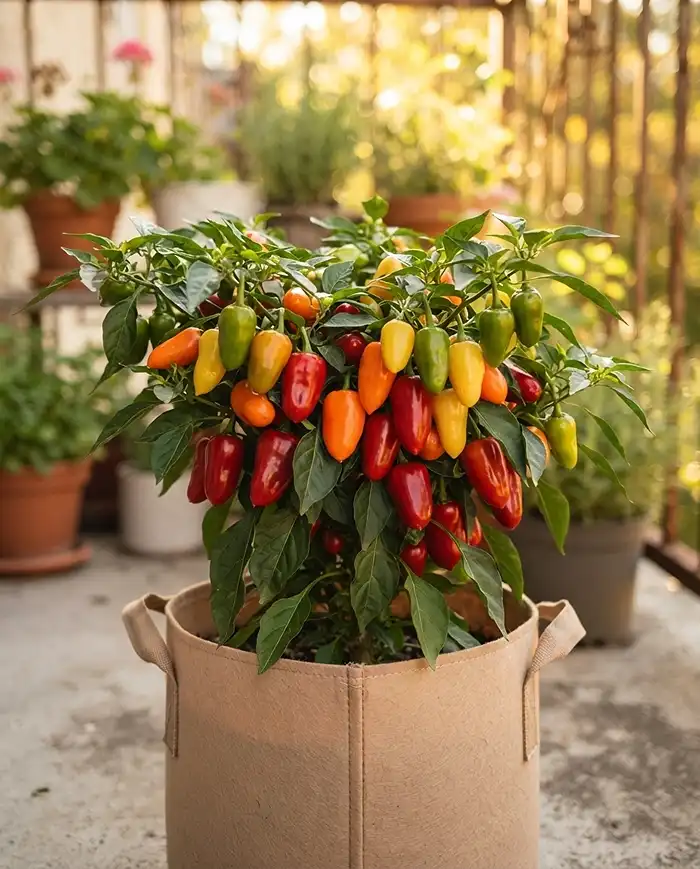
Small fruit is the secret. Because each pepper is tiny, the plant ripens it quickly and immediately starts another, so you get waves of harvest instead of a few giant peppers.
- ‘Lunchbox’ — thumb-sized red, orange, and yellow snacking peppers; incredibly sweet and prolific in a 3-gallon pot.
- ‘Mini Belle’ — palm-sized true bells, perfect for stuffing, on a compact 18-inch bush.
- ‘Sweet Heat’ — a whisper of warmth with sweet flavor; stays under 2 feet.
My ‘Lunchbox’ plants gave me handfuls of peppers a week from July through October last season from just two 3-gallon fabric bags. They’re my top pick for anyone new to container vegetable gardening.
Medium heat: jalapeños and compact cayennes
Quick Answer: For versatile medium spice, grow ‘Early Jalapeño’ or ‘Apache’ cayenne. Both stay compact, and keeping them slightly root-bound heats the soil faster, which nudges the fruit toward more pungency.
‘Apache’ is a genuine dwarf, often maturing under 18 inches, making it one of the best peppers for balcony containers where space is tight. ‘Early Jalapeño’ fruits fast, which matters in short-season zones like mine.
A slightly snug pot works in your favor here. The smaller soil mass warms quickly on a hot balcony, and mild root stress tends to concentrate heat in the pods. Don’t cramp them severely, though, or you’ll trade yield for spice.
Real Example: My ‘Apache’ in a black 3-gallon resin pot gave me over 40 fiery pods across one summer while never topping knee height.
High heat: ornamental and dwarf habaneros
Quick Answer: ‘Basket of Fire’ and dwarf habaneros are dual-purpose stunners. Their tight, bushy canopies covered in colorful pods look ornamental while producing serious culinary heat.
‘Basket of Fire’ was bred for hanging baskets and cascades with dozens of small, ripening chilies at once. It thrives in extreme heat and low humidity, so a scorching balcony suits it perfectly.
I keep one dwarf habanero in a decorative pot by my balcony door purely because it’s gorgeous, and it still hands me more heat than I can use. Beauty and function in one plant.
Essential Supplies for Container Peppers
Peppers are heavy-feeding nightshades. Skimp on the pot or the soil and you’ll stunt the crop before it starts. Get these two things right and you’re most of the way there.
What size pot do compact peppers need?
Quick Answer: One compact pepper needs a 3-to-5-gallon container. Bigger isn’t better here. Oversized pots stay cold and waterlogged, slowing growth on a heat-loving plant.
I use 3-gallon breathable fabric grow bags for snacking types and 5-gallon for jalapeños. Fabric bags air-prune the roots and drain fast. Dark resin pots are a great alternative because they absorb solar heat and warm the root zone.
If you’re unsure how to match plants to pots across your whole balcony, my pot size guide for vegetables breaks it down crop by crop.
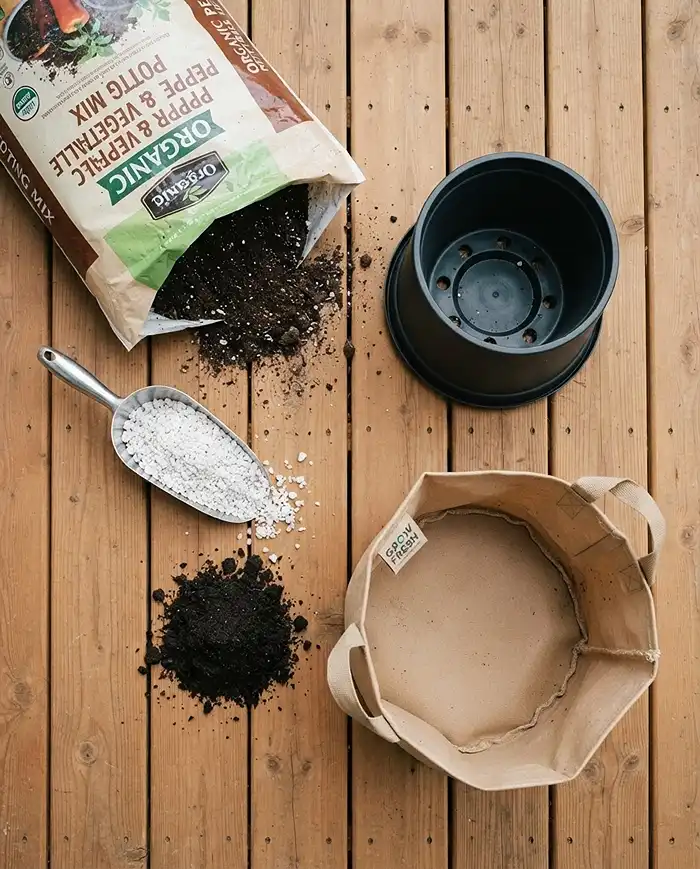
What soil mix do peppers need in pots?
Quick Answer: Peppers demand fast-draining, oxygen-rich soil. Mix premium organic potting mix with about 30% perlite and a handful of worm castings per pot. Never use heavy garden dirt.
Pepper roots need constant air at the root zone. Packed garden soil suffocates them and invites root rot, which kills container peppers faster than almost anything else.
Here’s my exact per-pot recipe for a 5-gallon container:
- Roughly 70% quality organic potting mix as the base.
- Around 30% perlite for drainage and root oxygen.
- One generous handful of worm castings for a gentle, slow nutrient boost at planting.
Peppers pair beautifully with other pot crops using this same mix, which I cover in my roundup of the best vegetables for container gardening.
Step-by-Step Guide to Planting Balcony Peppers
Timing is everything with peppers. Rush them into cold pots and they stall for weeks. Here’s the exact sequence I follow every spring.
- Wait for warmth. Don’t plant until nighttime lows stay reliably above 55°F (13°C). In zone 6b, that’s usually late May for me.
- Plant slightly deep. Bury the transplant about an inch deeper than its nursery pot. Peppers grow bonus roots along the buried stem for a sturdier plant.
- Stake immediately. Push a thin bamboo cane in at planting, right beside the stem. Wait, and you’ll spear the root ball later.
- Water in well and place the pot in its sunniest, most sheltered spot.
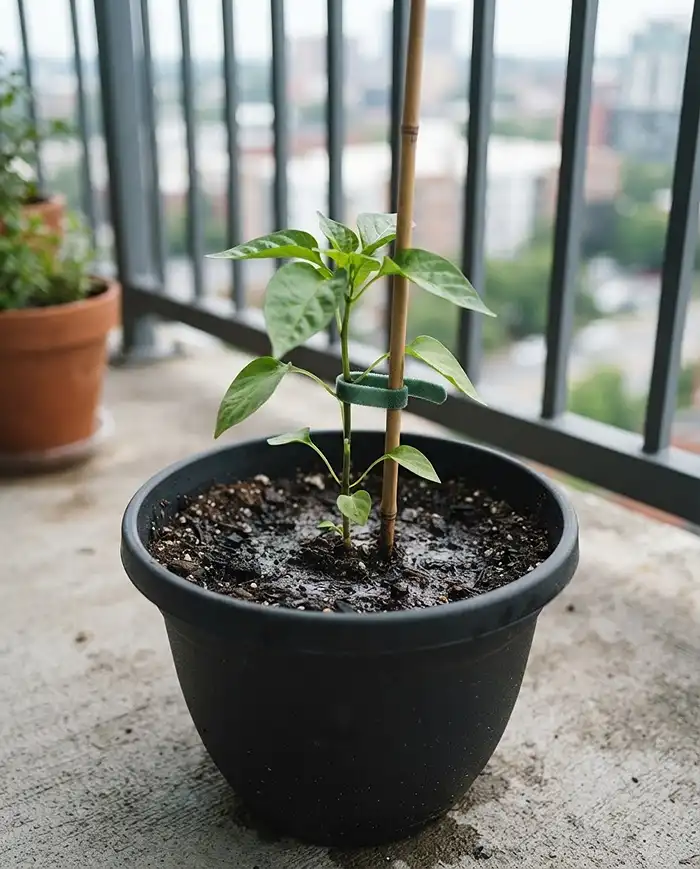
That’s it. Resist the urge to jump the gun on a warm April afternoon. A pepper set out too early in cold soil often gets outpaced by one planted two weeks later into warm soil.
Maintenance and Feeding for Explosive Pepper Yields
Once your plants take off, your job shifts to gently steering them toward fruit instead of foliage. Two levers control almost everything: how you water and how you feed.
How often should I water balcony peppers?
Quick Answer: Use the “soak and dry” method. Water deeply until it runs out the bottom, then wait until the top two inches of soil are dry before watering again. Mild dryness between drinks improves flavor and heat.
On a baking balcony in midsummer, that can mean watering daily, sometimes twice. Stick a finger two knuckles deep to check rather than guessing on a schedule.
A little controlled stress concentrates flavor and capsaicin in hot varieties. Just keep it consistent. Wild swings between bone-dry and soaked cause the fruit disorders we’ll cover next.
What fertilizer makes peppers fruit more?
Quick Answer: Once blossoms appear, feed a half-strength, low-nitrogen, high-phosphorus organic fertilizer such as a 3-4-4 tomato and vegetable blend every two weeks. Too much nitrogen gives you a huge green bush with no peppers.
This is the mistake I see most from readers. They feed a rich all-purpose or lawn-style fertilizer, get a jungle of leaves, and wonder where the peppers went. Phosphorus and potassium drive flowering and fruit; excess nitrogen drives leaves.
Go half-strength to protect those sensitive container roots from salt buildup. For a fuller feeding routine across pot crops, see my guide to a productive container garden.
Pro Tip: Ease off feeding entirely in the last few weeks of the season. It pushes the plant to ripen the fruit it already has instead of starting pods that won’t finish.
Common Problems and Solutions
Two issues cause most panic in small balcony garden setups: flowers falling off in heat, and ugly rot on the fruit bottoms. Both are fixable once you know the cause.
Why are my pepper flowers falling off?
Quick Answer: Extreme heat causes blossom drop. When days top 90°F (32°C) or nights stay above 75°F (24°C), pepper plants abort flowers to survive. Provide afternoon shade and wait for the heat wave to break.
This isn’t something you did wrong. It’s the plant self-protecting. Fruit set simply stops in a heat wave and resumes once temperatures ease.
During a brutal stretch in summer 2024, my whole pepper lineup dropped blooms for ten days. I clipped 30% shade cloth over them each afternoon, kept the water steady, and they set a heavy flush the moment it cooled off.
How do I fix aphids and blossom end rot on peppers?
Quick Answer: Blast aphids off with water, then treat with insecticidal soap. Prevent blossom end rot, the sunken black patch on fruit bottoms, with consistent watering and a little calcium in the soil.
Aphids cluster on new growth and undersides of leaves. A weekly insecticidal soap spray, hitting the undersides, usually clears them within a couple of applications.
Blossom end rot is a calcium delivery problem, not a simple soil shortage. According to the UF/IFAS extension fact sheet on blossom-end rot, erratic watering and excess nitrogen are the real triggers, since calcium moves with water in the plant.
So the fix is mostly steady moisture and restrained feeding. Scratching a little gypsum into the topsoil at planting can help as insurance, but consistent watering does the heavy lifting.
best peppers for balcony containers FAQs
Do I need to stake compact balcony peppers?
Yes, staking is a mandatory insurance policy. Even dwarf varieties develop heavy fruit flushes that can snap the main stem during a windy storm. Secure the central stem to a single bamboo cane at planting time to prevent breakage.
Can I overwinter my potted pepper plants indoors?
Yes. Peppers are tender perennials. Prune the plant back by about a third, then move the pot to a sunny, warm indoor windowsill before the first frost. It can survive winter and give you a much earlier, larger harvest the following year.
Why are my sweet peppers turning out spicy?
It is not cross-pollination, which cannot affect this year’s fruit. Severe environmental stress, such as prolonged drought or erratic heat waves on a balcony, can push normally mild varieties to develop defensive capsaicin, adding unexpected heat.
How many pepper plants fit in one container?
Grow just one compact pepper per 3-to-5-gallon pot. Peppers are heavy feeders with wide fibrous roots, and crowding two into a small container reduces airflow, competes for nutrients, and cuts your total yield significantly.
How long do balcony peppers take to produce?
Most compact varieties give ripe fruit about 60 to 90 days after transplanting, depending on heat level. Small snacking peppers like Lunchbox mature fastest, while hot habanero types take longest and need the most sustained warmth.
Key Takeaways
- The best peppers for balcony containers are compact cultivars like ‘Lunchbox’, ‘Apache’, and ‘Basket of Fire’ grown one per pot.
- Give plants six to eight hours of direct sun and a warm, sheltered spot against a heat-reflecting wall.
- Use 3-to-5-gallon fabric or dark resin pots filled with fast-draining mix cut with about 30% perlite.
- Water with the soak-and-dry method and feed a half-strength, high-phosphorus fertilizer once blossoms appear.
- Stake every plant, and expect a first harvest roughly 60 to 90 days after transplanting.