

How to Build a Productive Container Garden With 5 Pots
A productive container garden doesn’t need a yard — five pots and smart container gardening can feed you all summer long. Here’s the exact blueprint I use every season.
I’ve run this five-pot setup on a south-facing balcony in Columbus, Ohio (zone 6b) for four growing seasons now. No raised beds, no in-ground plot, just five containers and a plan.
Table of Contents
The Power of a 5-Pot Productive Container Garden
Most people think you need a quarter-acre plot to grow real food. You don’t. The “5-pot method” is a focused system: five containers, five specific roles, zero wasted space.
Instead of scattering effort across a dozen half-planted pots, you concentrate resources into five high-performers. Each pot earns its spot by producing continuously from June through October.
This approach works whether you’ve got a fire escape, a condo balcony, or a small patio. Small space gardening lives and dies on efficiency, and five well-chosen pots beat fifteen random ones every time.
Planning Your 5-Pot Strategy for Maximum Yield
When you’re limited to five containers, every decision matters more. Pot size, sun exposure, and plant pairing all have to work together, or you’ll end up with stunted, sad-looking crops by July.
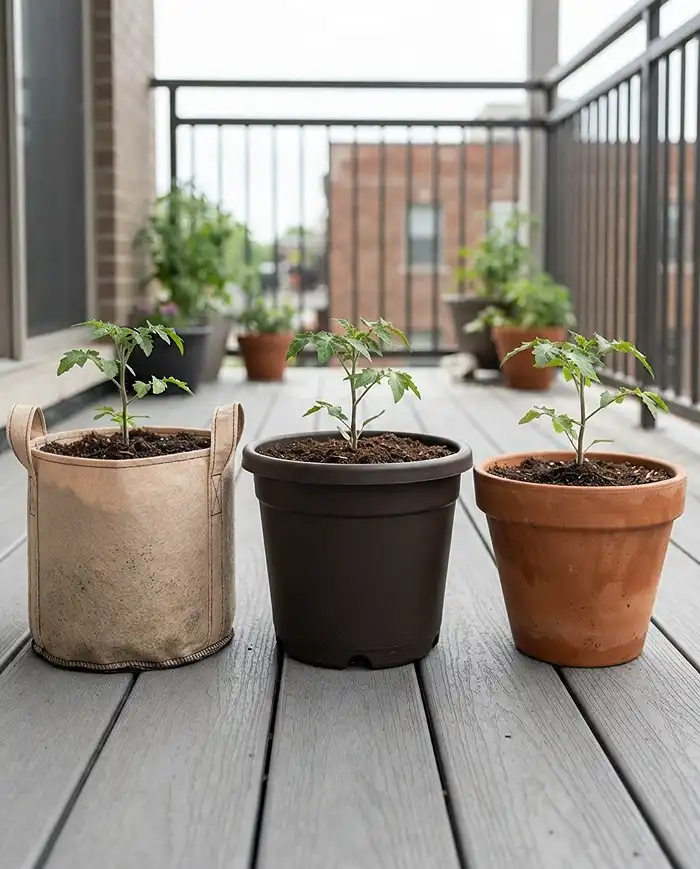
Before you buy a single seedling, walk your space at three points in the day: morning, noon, and late afternoon. That sun map decides everything else — pot placement, plant choice, even watering frequency.
Selecting the Right Pot Sizes and Materials
Get three large containers in the 10 to 15-gallon range for your heavy fruiting crops. These are non-negotiable — a tomato in a 5-gallon pot will stay stunted and drop blossoms all summer.
For the other two, wide 5-gallon containers work well for greens and herbs, since those crops need surface area more than depth. I use breathable fabric grow bags for all five now.
- Fabric grow bags: better root pruning, cooler soil in heat waves, but dry out faster
- Thick resin or plastic pots: hold moisture longer, ideal for hot, exposed balconies
- Terracotta: attractive but wicks moisture away fast — skip it for tomatoes and peppers
My first year I used thin plastic nursery pots for tomatoes. The soil hit 95°F on hot afternoons and root growth basically stalled. Switching to fabric grow bags the next season fixed it completely.
Sun Mapping and Strategic Placement
You need a minimum of 6 to 8 hours of direct sun for this whole system to work. Anything less and you’ll get leggy plants and thin harvests, no matter how good your soil is.
Arrange pots so your tallest, trellised crops sit at the back or north side of the group. That keeps them from shading your lower-growing lettuce and herb pots as the season progresses.
The Ultimate 5-Pot Crop Blueprint
This is the exact lineup I plant every May, and it’s held up across four seasons in zone 6b. Each pot has one clear job, and together they cover fruiting vegetables, continuous greens, and herbs.
| Pot | Size | Best Crop | Support Needed |
|---|---|---|---|
| Pot 1 | 15-gallon | Indeterminate cherry tomato | Heavy-duty cage or stake |
| Pot 2 | 15-gallon | Cucumber or pole beans | A-frame trellis |
| Pot 3 | 10-gallon | Bell or jalapeño pepper | Single stake, early staking |
| Pot 4 | 5-gallon wide bowl | Lettuce, spinach, radish mix | None |
| Pot 5 | 5-gallon | Basil, thyme, marigold combo | None |
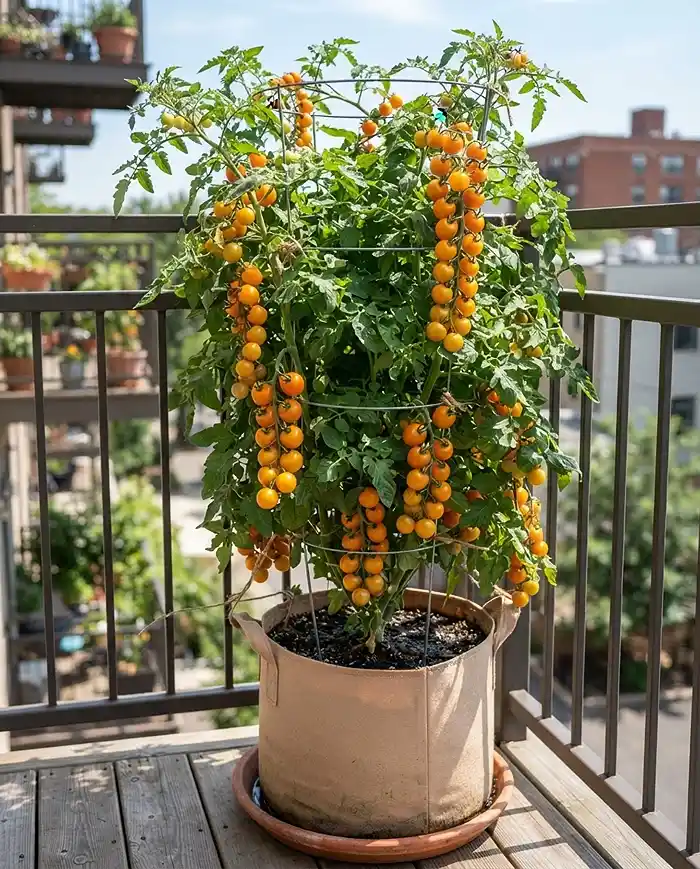
Pot 1: The High-Yield Tomato Tower
Dedicate your first 15-gallon container to one indeterminate cherry tomato — ‘Sungold’ or ‘Sweet 100’ are my go-to picks. Both produce heavily from midsummer straight through frost.
Plant it deep, burying two-thirds of the stem so it develops extra roots along the buried section. Install a heavy-duty cage immediately at planting, not weeks later once the plant’s already sprawling.
‘Sungold’ turned into a 7-foot monster on my balcony last year and needed re-tying to the railing by August. It was worth every bit of the mess — we picked tomatoes almost daily from July on.
Pot 2: The Vertical Vining Crop (Cucumbers or Beans)
Your second large pot goes to a vertical climber. I like parthenocarpic cucumbers (fruit without pollination) such as ‘Picolino,’ or pole beans like ‘Kentucky Wonder’ if you want a nitrogen-fixing bonus.
Set up a sturdy A-frame trellis at planting time. Growing up instead of out means you get real yield from a pot footprint smaller than a dinner plate — that’s the whole point of vertical growing in tight spaces.
My honest failure: I skipped the trellis my first year with cucumbers and let them sprawl across the balcony floor. Fruit rotted on damp concrete and slugs had a feast. Never again.
Pot 3: The Heavy-Producing Pepper Plant
Plant one prolific sweet bell or jalapeño in your third container. Peppers love hot soil, which is exactly what a dark-colored container on a sunny balcony gives them.
Stake it early, even before you think it needs it. Pepper branches are brittle, and a loaded plant can snap clean off in a summer storm if it’s not supported ahead of time.
Pot 4: The Continuous Cut-and-Come-Again Salad Bowl
Use a wide, shallow 5-gallon bowl planter for this one. Densely sow loose-leaf lettuce, spinach, and radishes together — the radishes come up fast and get pulled first, opening space for the greens.
Harvest with the cut-and-come-again method: snip outer leaves at soil level and let the center keep producing. Done right, one bowl gives you salad most days from May through early July.
Pot 5: The Pest-Repelling Herb and Flower Combo
Turn your final 5-gallon pot into a companion planting powerhouse. Basil, thyme, and marigolds share a pot well and do more than smell good — they actively protect your other four containers.
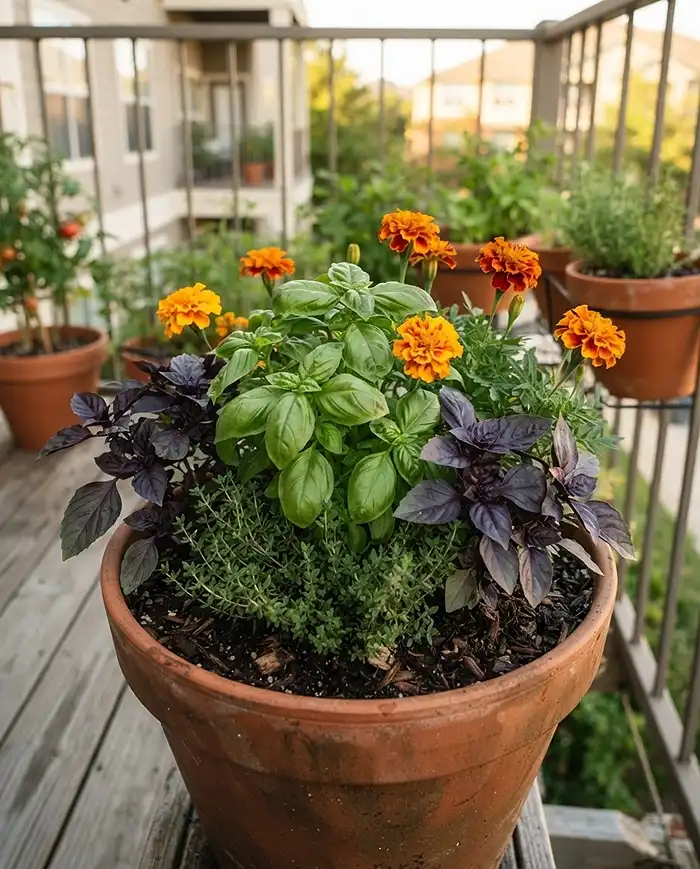
Marigolds repel aphids, basil confuses pests hunting your tomatoes by scent, and thyme draws in pollinators and beneficial insects. It’s the cheapest pest control I’ve ever used.
For a full layout diagram showing exactly how to arrange all five containers by sun exposure, see our container garden layout guide.
Formulating the Perfect Soil and Setup
Heavy-producing vegetables burn through cheap, bagged potting soil fast. Tomatoes and peppers especially will exhaust a mediocre mix by mid-July if you don’t build in nutrition from the start.
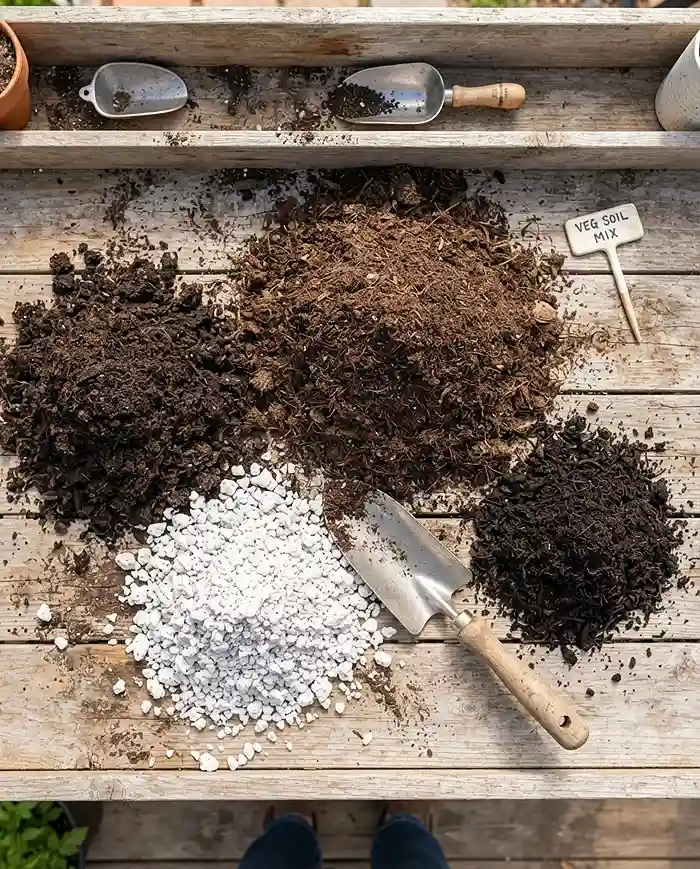
Mixing the Ultimate Container Soil
Here’s my exact recipe for all five pots, which I mix fresh every spring:
- 60% premium organic potting mix (not garden soil — it compacts and drains poorly in containers)
- 20% finished compost for slow-release nutrition and microbial life
- A generous handful of worm castings per pot for extra nitrogen and trace minerals
- Extra perlite folded in, about 10-15%, so roots get oxygen even when the soil is moist
This blend gives roots sustained food and enough drainage that you won’t be fighting root rot all season. It’s the single biggest upgrade I made after that first rough tomato season.
The 10-Minute Maintenance Routine for High Yields
Keeping five productive pots alive doesn’t take much time — it just takes consistency. Deep watering matters more than frequent shallow watering, since containers dry from the top down first.
Feed every 10 to 14 days with a liquid organic fertilizer like fish emulsion, especially once fruiting begins. For more detail on rates and timing, the University of Maryland Extension’s fertilizing guide is a solid science-based reference.
If you’re new to container gardening in general, our apartment gardening for beginners guide covers the basics this article assumes you already know.
Common Problems and Solutions
Two issues show up almost every season with high-density container setups. Both are fixable fast if you catch them early instead of waiting until the plants look truly rough.
Nutrient Exhaustion in Mid-Summer
Watch for yellowing lower leaves and blossom drop around August — that’s classic nutrient collapse. Heavy feeders like tomatoes and peppers simply run out of food faster than you’d expect.
Rescue protocol: apply a fast-acting foliar spray (diluted fish emulsion works) for immediate uptake, then top-dress with a half-inch layer of fresh compost to rebuild reserves for the rest of the season.
Soil Drying Out Rapidly
During heatwaves, containers can lose an inch of moisture a day. A 2-inch layer of straw mulch over the soil surface in all five pots slows evaporation dramatically and buffers root temperature.
Pair that with deep plastic saucers underneath for bottom-watering during the worst heat. It’s saved my pepper plant more than once during Ohio’s July dry spells.
For more tiny garden ideas on stretching a small footprint further, check our space-saving small garden ideas guide.
Frequently Asked Questions
Can I reuse the potting soil in my containers next year?
Yes, but only partially. Heavy-feeding vegetables like tomatoes strip most nutrients from the mix by season’s end. Remove about 30% of the old soil and replace it with fresh compost and a slow-release organic fertilizer before replanting.
How often do I need to water five large vegetable pots?
During peak summer heat, mature fruiting vegetables in containers often need deep watering every single day. Use the two-inch finger test: push your finger two inches into the soil, and if it’s dry at that depth, water thoroughly.
Can I grow this 5-pot garden on an apartment balcony?
Yes, this exact blueprint works well on balconies. Just confirm the structure can handle roughly 200 pounds of combined weight once soil and plants are fully watered, and make sure the space gets at least six hours of direct sun daily.
What’s the best material for containers in a productive container garden?
Breathable fabric grow bags regulate soil temperature best and encourage healthier root systems, though they dry out faster. Thick resin pots hold moisture longer and suit hot, exposed balconies better than thin plastic or terracotta.
Do I need five different pot sizes, or can they all match?
No, they shouldn’t match. Use three larger 10 to 15-gallon containers for fruiting crops like tomatoes, peppers, and cucumbers, and two wide 5-gallon containers for greens and herbs, since those need surface area more than depth.
Conclusion
You don’t need a sprawling plot to eat from your own garden all summer. A productive container garden built around five focused pots gives you tomatoes, cucumbers, peppers, salad greens, and herbs from one balcony.
Start with good soil, stake early, water deeply, and feed consistently every 10 to 14 days. As of the 2026 growing season, this exact five-pot lineup is still what I plant every spring — and it hasn’t let me down yet.