

Balcony Railing Herb Garden Ideas for Apartments
Picture stepping onto your balcony and snipping fresh basil right at elbow height. A balcony railing herb garden turns wasted vertical space into a chic, productive kitchen garden.
I’ve grown herbs on the railing of my fourth-floor apartment in Denver (zone 6a) for four seasons now, and it’s the single best small-space upgrade I’ve made. No floor space lost, no tripping over pots, just fresh oregano within arm’s reach of the grill.
Railing planters aren’t just practical for apartment gardening — they look intentional, almost like a green ledge running the length of your balcony. But because they hang or straddle the edge, they come with real structural stakes. Get the setup wrong and you risk a planter, or worse, a whole pot of wet soil, taking a four-story trip to the sidewalk.
This guide walks through picking secure hardware, choosing herbs that actually thrive at railing height, and building a system that survives wind, sun, and the occasional forgotten watering day.
Table of Contents
Assessing Your Balcony Railing and Microclimate
Before you buy a single planter, spend a week just watching your railing. Planting on a railing exposes herbs to sun, wind, and heat radiation that ground-level containers never see.
Metal railings absorb and radiate heat all afternoon. Wood plank railings flex slightly in wind. Concrete ledges barely move but often have irregular, sloped tops. Each surface changes what hardware and herbs will actually work.
Measuring Railing Width and Weight Limits
Grab a tape measure and record the exact top width of your railing — round metal tubing, flat wood plank, or thick concrete ledge all need different bracket styles. Most saddle planters fit rails between 3.5 and 6 inches wide.
Check your lease before you buy anything. Many buildings cap exterior weight per linear foot and restrict visible exterior décor, and violating that can mean a fine or a forced removal mid-summer.
- Measure railing width in at least three spots (rails aren’t always uniform)
- Note whether the top surface is flat, rounded, or angled
- Ask your leasing office in writing about weight limits and drilling rules
- Check whether your HOA or lease restricts what’s visible from the street
Evaluating Sun Exposure and Wind Corridors
Track sun for one full day before planting. Note the hour light hits the railing and when it leaves — apartment balconies often get harsher, more direct light than a shaded backyard bed would.
Wind matters just as much. Upper-floor balconies sit in wind corridors that ground-level gardens never experience. My third season, a gust off a wind tunnel between two towers snapped my rosemary’s main stem clean off overnight — I hadn’t accounted for how exposed a fourth-floor railing really is.
Railing planters have zero windbreak on either side, so soil dries out fast and tall, woody stems need real support or a lower profile to survive gusty afternoons.
Choosing the Most Stylish and Secure Railing Planters
The best railing planter ideas balance a clean look with hardware that doesn’t require drilling into a rail you don’t own. Gravity-based saddle designs and clamp-on troughs both work well without damaging the structure.
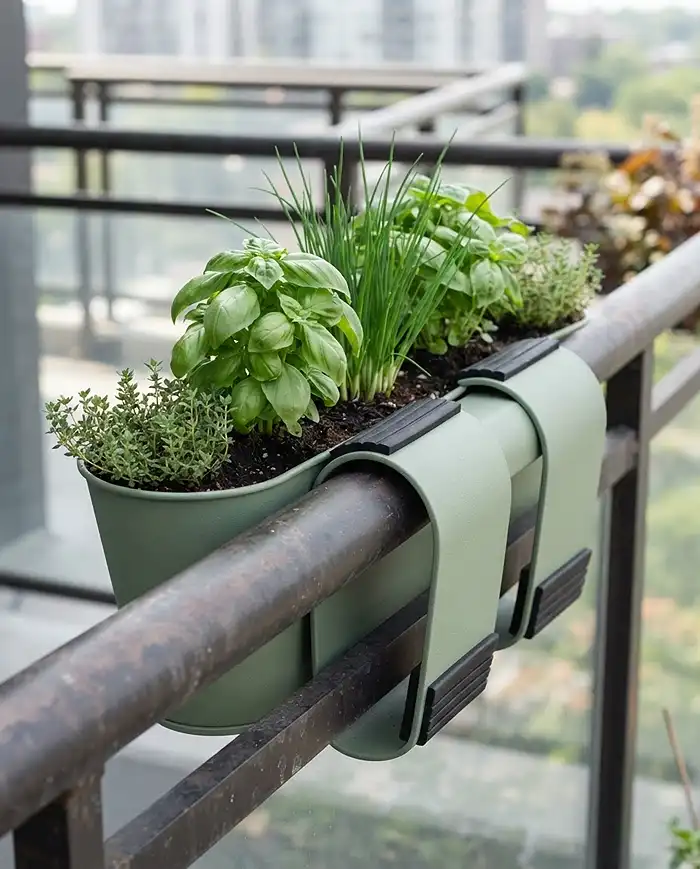
Sleek Metal Troughs and Saddle Planters
Quick Answer: Saddle planters drape over the railing using gravity and their own weight, while adjustable metal troughs use screw-free locking brackets that clamp flush against the rail.
Saddle planters (sometimes called deck rail planters) split into two compartments — one hangs on the outside, one on the inside — so the weight balances itself across the rail. Look for powder-coated steel or galvanized designs; they resist rust and read as modern rather than farmhouse-rustic.
Metal troughs with adjustable brackets suit wider or irregular rails better than saddle designs. Brands like Bloem and Vego offer anti-scratch rubber padding at the contact points, which protects both the finish and the plants from scraping.
Pro Tip: Always test-fit the empty planter and tighten the brackets before you add a single scoop of soil — adjusting hardware under 20 pounds of wet dirt is how wrists get sprained.
Self-Watering Resin Planters for Busy Renters
Quick Answer: Self-watering resin planters use a hidden internal reservoir to combat the extreme evaporation rates of exposed railing gardens, which can dry out twice as fast as ground pots.
UV-resistant resin won’t crack or fade after a summer of direct sun, and the built-in reservoir wicks water up through a cotton rope or capillary mat, so roots stay evenly moist between waterings.
I switched my west-facing basil box to a self-watering resin planter two summers ago, during a stretch of 95°F days, and it went from needing water twice daily to every three days without wilting once.
Real Example: That same box let me leave for a five-day trip in July without asking a neighbor to water — the reservoir kept the mint and parsley alive with zero attention.
Selecting the Best Culinary Herbs for Elevated Planters
Pick herbs that tolerate shallow soil and quick drying, since most railing boxes only offer 6 to 8 inches of depth. Mix trailing and upright varieties for both aesthetics and a fuller harvest.
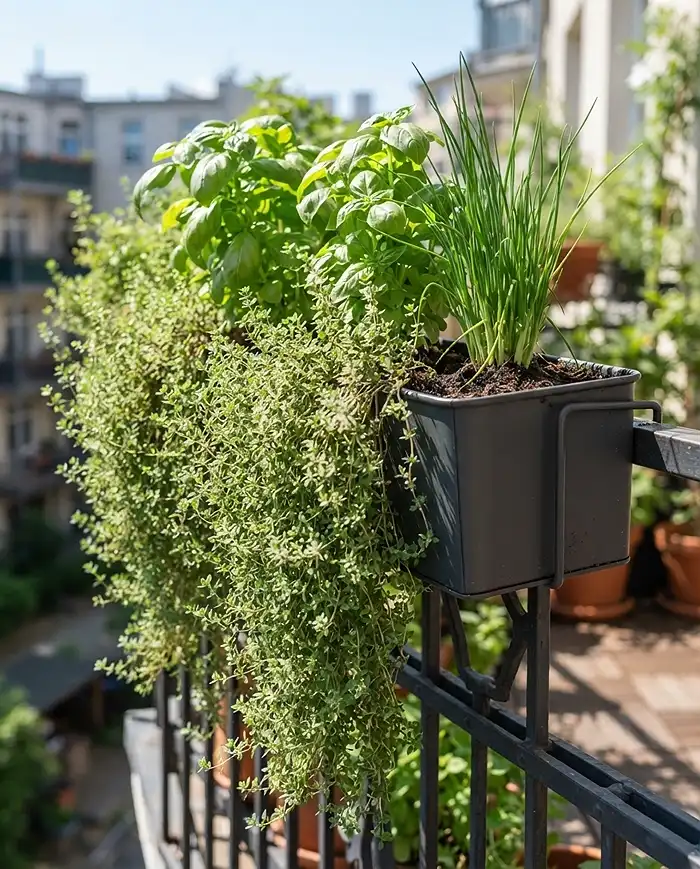
Trailing Herbs for a Cascading Aesthetic (Thyme, Oregano)
Quick Answer: Creeping thyme and creeping oregano planted along the outward edge cascade over the sides, softening the hard lines of a metal or resin box within a few weeks.
- Creeping thyme (Thymus praecox) — drought-tolerant, spills 8-12 inches by midsummer
- Golden creeping oregano — softer texture, slightly more water needs than thyme
- Both handle full sun and neglect better than almost any other culinary herb
Real Example: I tucked creeping thyme along my planter’s front lip in May one year; by August it had cascaded a full foot down the outside of the box, and I hadn’t fertilized it once.
Upright Structural Herbs (Rosemary, Basil, Chives)
Quick Answer: Use sturdy upright herbs like ‘Tuscan Blue’ rosemary, sweet basil, and chives as the visual “thriller” in the center, giving the eye somewhere to land and the kitchen a steady harvest.
| Herb | Best For | Watch Out For |
|---|---|---|
| ‘Tuscan Blue’ rosemary | Year-round structure, zones 8+ | Won’t survive freezing roots above ground |
| Sweet basil | Fast, high-volume summer harvest | Bolts to seed fast in heat if not pinched |
| Chives | Cold tolerance, tidy upright habit | Slower to bounce back after hard pruning |
Pro Tip: Plant rosemary in its own small pot inside the box instead of directly in the soil — it makes moving it indoors before the first frost a five-second job instead of a full excavation.
Step-by-Step Planting and Mounting Guide
Mount the empty hardware first. Lifting a fully planted, soil-heavy box over a railing edge is how brackets get overtightened, cracked, or dropped.
Once the empty planter is locked in place, fill it with a lightweight, perlite-rich organic potting mix — never garden topsoil, which compacts and adds unnecessary weight to the rail.
- Secure empty hardware to the railing and check for wobble
- Fill with a lightweight, well-draining potting mix, leaving 2 inches below the rim
- Gently tuck in transplants, upright herbs centered, trailing herbs along the front edge
- Water deeply until it runs from the drainage holes
- Top-dress with decorative gravel or river stone for a finished look
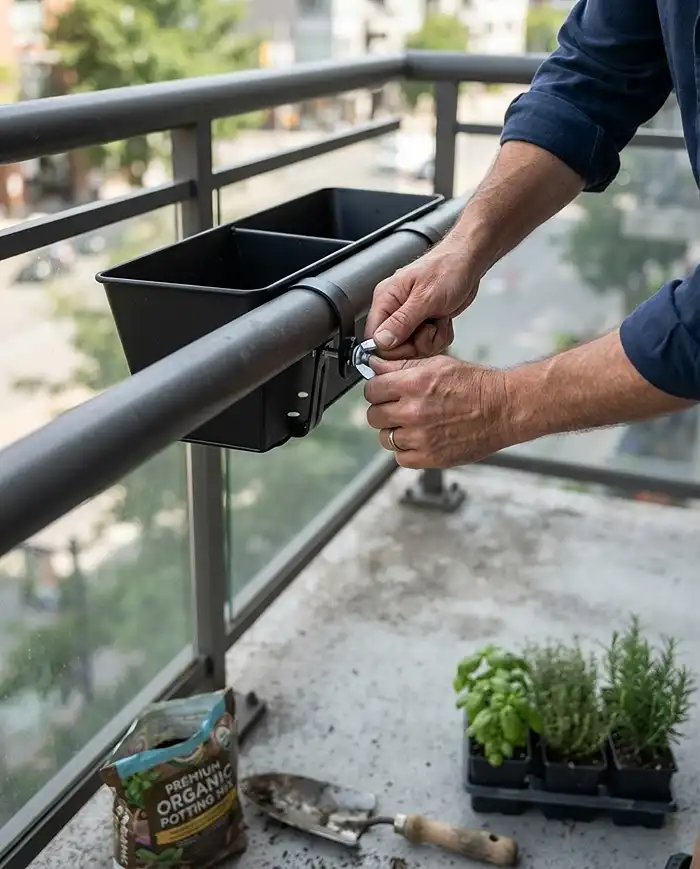
That gravel top-dressing isn’t just decorative — it keeps wind from lifting loose soil off the surface and dumping it on the balcony below.
Maintenance Routine for Healthy, Beautiful Herbs
Elevated planters dry out and get leggy faster than ground pots, so the maintenance rhythm shifts slightly compared to a traditional small balcony garden in raised beds or floor containers.
Watering Hacks for Fast-Drying Elevated Pots
Quick Answer: Water at soil level with a narrow-spout can rather than overhead, and check moisture daily — wind exposure dries railing planters roughly twice as fast as ground-level pots.
A narrow spout aimed directly at the soil avoids wetting foliage, which cuts down on fungal issues like powdery mildew that thrive on damp leaves in still, humid air.
Pro Tip: Stick a finger knuckle-deep before watering — if it’s dry at that depth, water; if it’s still cool and damp, wait another day even if the surface looks parched.
Harvesting and Pruning to Maintain a Lush Shape
Quick Answer: Pinch back the top growth nodes of basil and mint regularly to force dense, bushy growth instead of leggy stems that bolt to seed.
Harvest just above a leaf node, not mid-stem, so the plant branches into two stems where you cut one. This is how you get a fuller, more photogenic planter by midsummer instead of a sparse, stretched-out one.
Common Problems & Solutions
Two headaches show up more than any others with elevated container gardening: soil blowing off the ledge and leaves scorching from radiant heat.
Soil Blowing Away and Messy Balcony Floors
Quick Answer: Keep soil two inches below the rim and add a heavy top-mulch of river stones or wood chips to stop high winds from blasting potting mix onto the balcony or the neighbors below.
Loose, dry potting mix is light enough that a strong gust can lift it right out of an open box, especially after the soil has dried for a few days.
Sun-Scorched Leaves and Dehydrated Roots
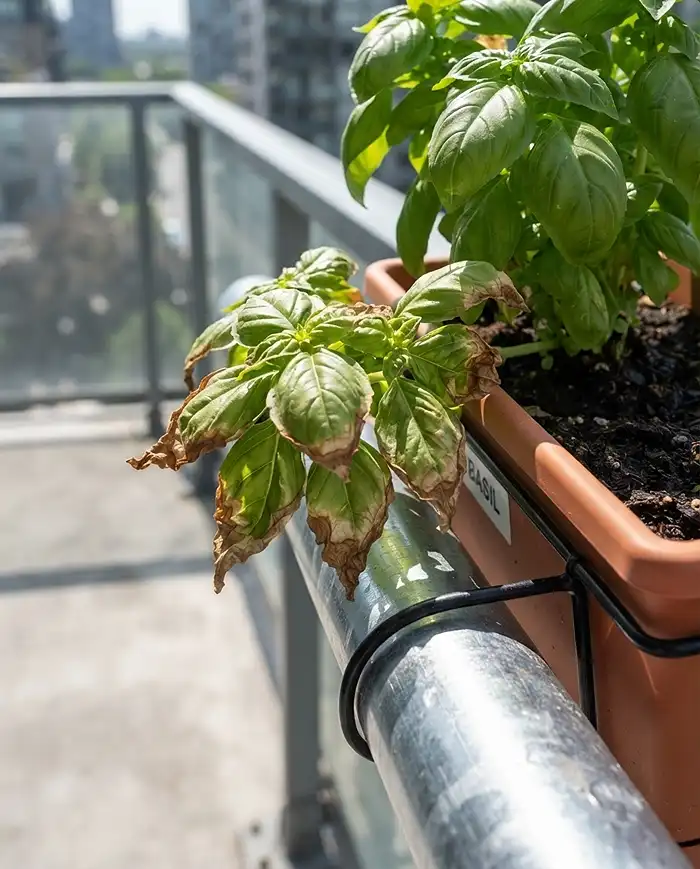
Quick Answer: Water in the early morning, before metal railings heat up, and mix hydrogel water-storing crystals into the potting soil to buffer roots against the radiant heat coming off the rail itself.
Crispy, bleached leaf edges usually mean the metal underneath the pot is radiating heat upward into the root zone, not just strong overhead sun. That’s a distinctly railing-garden problem ground pots rarely face.
For science-backed potting mix and drainage guidance, the University of Maryland Extension’s guide to container herbs is a solid reference. For more layout inspiration, check our apartment balcony garden ideas and balcony color palette guide.
Frequently Asked Questions
How do I secure a railing planter so it doesn’t fall?
Buy planters with adjustable, lockable brackets that tighten flush against the railing rather than relying on gravity alone. Double-secure the base with heavy-duty, UV-resistant zip ties as a backup against tipping during storms or high wind.
Can I leave my railing herb planters outside during winter?
In cold climates, no. Railing planters lack the insulation of in-ground soil, so perennial herbs like rosemary will have their roots freeze solid and die. Bring the boxes indoors or treat the herbs as single-season annuals.
What is the best potting soil for balcony railing planters?
Use a lightweight, premium organic potting mix blended with about 30 percent coco coir for better moisture retention. Avoid heavy garden topsoil, which compacts into a dense mass and can dangerously overload the railing’s weight limit.
Conclusion
A balcony railing herb garden gives apartment dwellers real harvest volume without giving up an inch of floor space. Measure your rail, respect your lease’s weight limits, and choose hardware built for gravity or clamping, not drilling.
Mix trailing thyme with upright rosemary and basil for a planter that looks as good as it tastes. Check out our renter-friendly patio garden ideas for more ways to green up a rental without losing your deposit.
Key Takeaways
- Measure railing width and confirm weight limits with your lease before buying any hardware
- A balcony railing herb garden needs gravity-based saddle planters or screw-free locking brackets, not drilled-in hardware
- Self-watering resin planters solve the fast-evaporation problem that comes with full wind and sun exposure
- Mix trailing herbs like creeping thyme with upright rosemary, basil, and chives for both looks and yield
- Water at soil level in early morning and top-dress with gravel to stop soil loss and leaf scorch