
space saving small garden ideas
Short on floor space but want more plants? These space saving small garden ideas show you how to grow upward — using walls, railings, and overhead space to triple your planting room without crowding your patio.
Table of Contents
Why Saving Floor Space Matters in Tiny Gardens
Most small-space gardeners instinctively reach for more pots — and run out of floor space within a season. The fix isn’t fewer plants. It’s growing up.
Vertical surfaces and overhead areas in a typical 6×8-foot patio can hold two to three times more plants than the floor alone. That means herbs, flowers, and food crops without sacrificing the space you need to actually sit and enjoy the garden.
Urban gardening has made this approach mainstream. Felt pocket panels, rail planters, and wall-mounted systems let you turn a blank fence into a productive growing wall in an afternoon.
The payoff isn’t just plant count. Keeping the floor open makes a tiny area feel bigger, easier to move through, and genuinely usable — not just green and cramped.
Assess Your Space Before You Start
The biggest mistake in small space gardening is buying gear before understanding what the space actually supports. Spend 20 minutes observing before you spend a dollar.
Spotting Unused Vertical and Overhead Areas
Walk around your patio and look up. Blank walls, fence panels, the underside of a pergola, window ledges, the inside of a railing — most patios have four or five vertical surfaces going completely unused.
Note which surfaces face which direction. A south-facing fence is prime real estate for herbs and tomatoes. A shaded north wall suits ferns, mint, and trailing nasturtiums.
Corners are especially valuable. A floor-to-ceiling trellis in a corner takes up maybe two square feet of floor space but provides 20+ square feet of growing surface.
Checking Light, Weight, and Access
Track sunlight across your space for one full day before planting. Many balconies get far less direct sun than expected once nearby buildings cast afternoon shade.
Weight matters more than most people expect. A saturated felt pocket panel can weigh 15-20 lbs. A large wall-mounted planter with wet soil can hit 40 lbs. Check what your wall anchors, railing, or ceiling hooks are rated for before mounting anything.
Finally, keep plants reachable. Hanging a basket 8 feet up looks great until you need to water it daily. A step stool is fine; a ladder every morning is not.
Vertical Gardening to Free Up the Floor
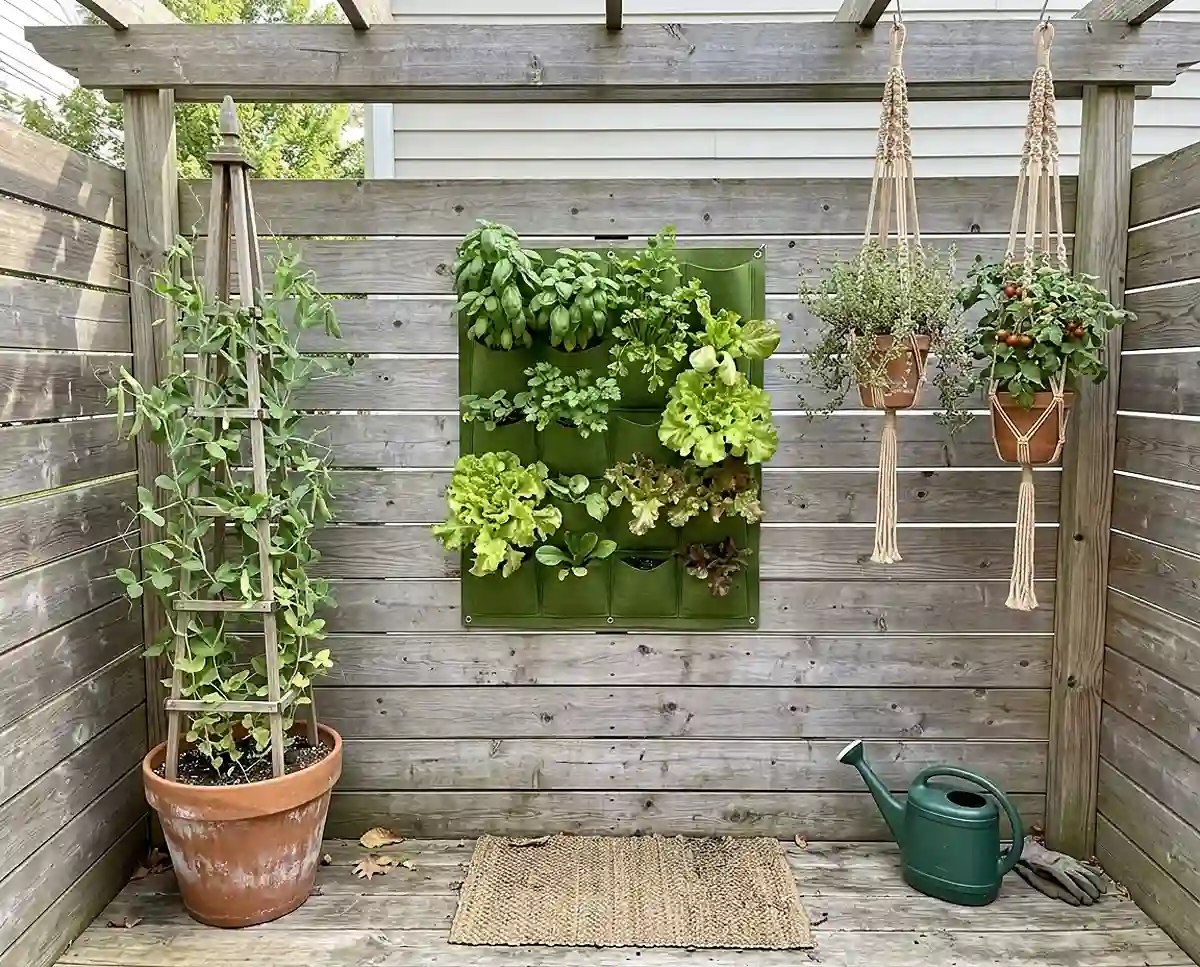
Going vertical is the single highest-impact move in tiny garden ideas. A 4-foot-wide section of fence fitted with a pocket panel system can hold 20+ individual plants — herbs, lettuces, strawberries, or flowers — in the footprint of one large floor pot.
I grow basil, parsley, and three varieties of lettuce on a south-facing wooden fence using a felt pocket system. In summer 2024, that 3×4-foot panel produced enough salad greens for weekly harvests from late May through September. The floor under it stays clear — just a small mat and a watering can.
The key is matching the system to the wall surface. Felt pockets and modular panels suit wooden fences and solid walls. Freestanding trellis frames work where you can’t drill. Rail-mounted systems are purpose-built for balconies.
Check out these renter-friendly patio garden ideas if you can’t make permanent changes to your walls or railings.
Wall-Mounted and Pocket Planters
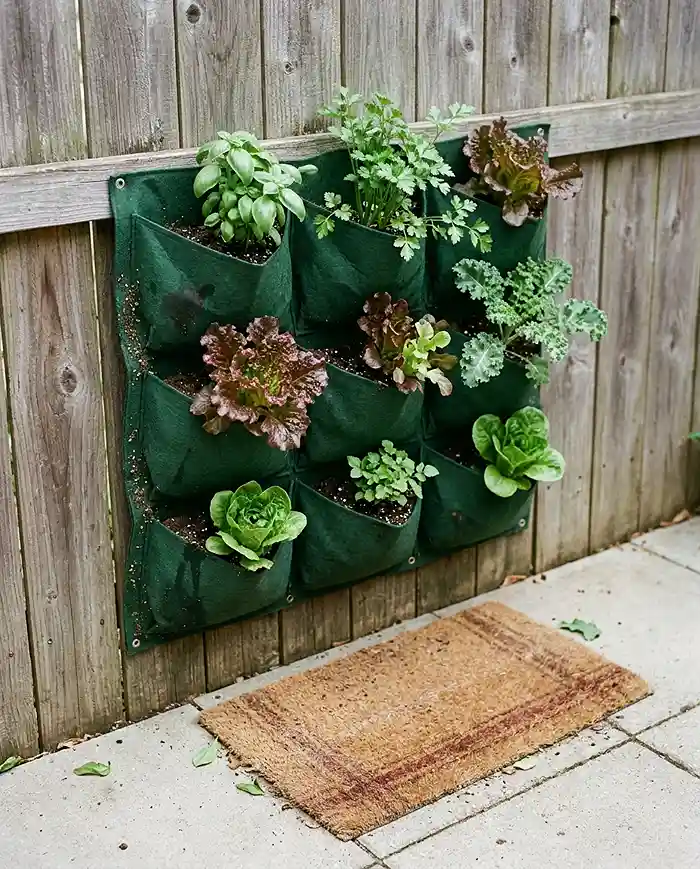
Felt pocket planters are the most beginner-friendly wall system. They mount with two screws, hold individual plants in separate pockets, and cost $20-$40 for a panel that holds 12-20 plants.
Modular wall panels — plastic grid systems or metal frames with individual pots — are sturdier and better for heavier plants like tomatoes or peppers. They’re pricier ($60-$150) but last years.
For herbs, greens, and small flowers, felt pockets are hard to beat. For anything over 6 inches in pot size, step up to a mounted frame with clip-in containers.
Trellises and Climbing Plant Supports
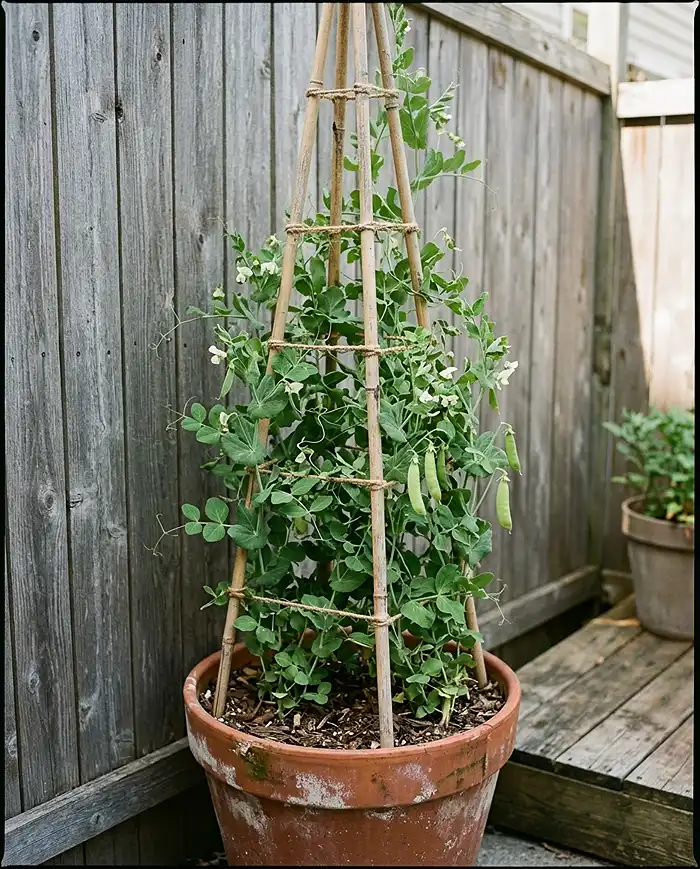
A trellis is the most space-efficient structure you can add to a small garden. A 6-foot obelisk in a 12-inch pot takes up less than a square foot of floor but gives a climbing bean or sweet pea 18+ feet of vertical growth.
Fan trellises mount flat against a wall and suit compact climbers like ‘Sugar Snap’ peas, small-fruited cucumbers, and annual vines. A freestanding arch between two pots creates an overhead canopy and doubles as a privacy screen.
For small space gardening, stick to compact or “patio” climbing varieties — regular indeterminate tomatoes will outgrow any trellis fast.
Hanging and Overhead Garden Ideas
The air above your patio is wasted space in most gardens. Ceiling hooks, pergola beams, and bracket-mounted rods can hold dozens of plants at eye level or above — completely off the floor.
I added three ceiling hooks to my pergola in spring 2023 and hung macrame planters with trailing herbs. That single move freed up an entire shelf on my potting bench and added Dichondra ‘Silver Falls,’ thyme, and cherry tomatoes to the garden with zero floor footprint.
Overhead planting does require more frequent watering — hanging containers dry out faster. Pair them with self-watering solutions for small-space gardens to cut maintenance.
Hanging Baskets and Macrame Planters
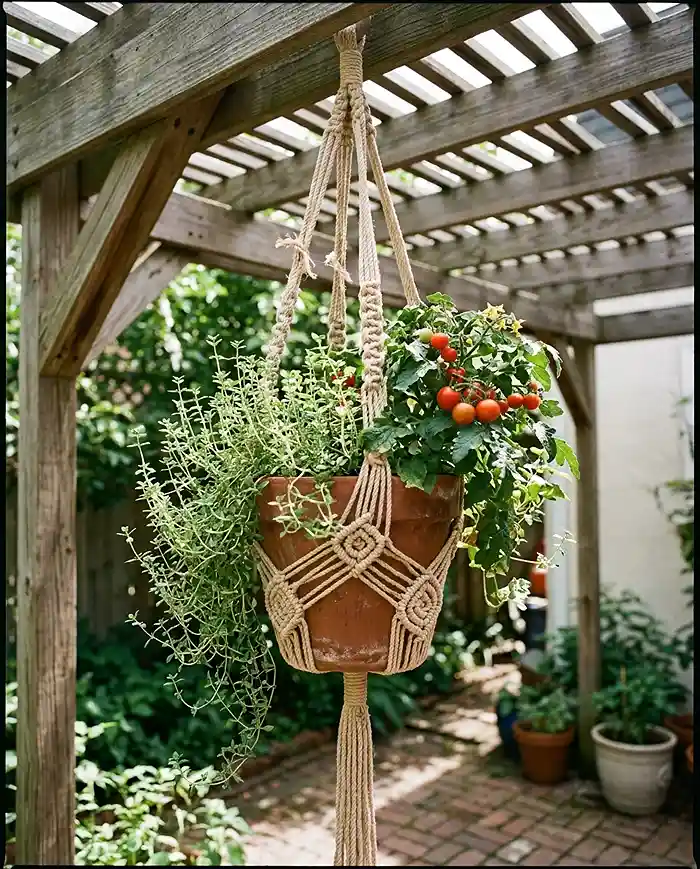
Standard ceiling hooks rated for 30-50 lbs handle most hanging baskets and macrame planters. Use a stud finder or masonry anchor if mounting into a solid overhead surface.
Best plants for overhead hanging: trailing petunias, fuchsia, strawberries, creeping thyme, and Lobelia. Herbs like thyme and oregano love the extra airflow and drainage that hanging provides.
Replace lightweight plastic pots with coco-lined wire baskets for better moisture retention — hanging pots in full sun can dry out in under 24 hours in summer heat.
Tiered and Rail-Hung Planters
Railing planters hook directly over balcony or deck rails with no drilling required. A good set runs $30-$60 and holds 3-4 plants in self-watering reservoirs. They’re one of the best tools in urban gardening.
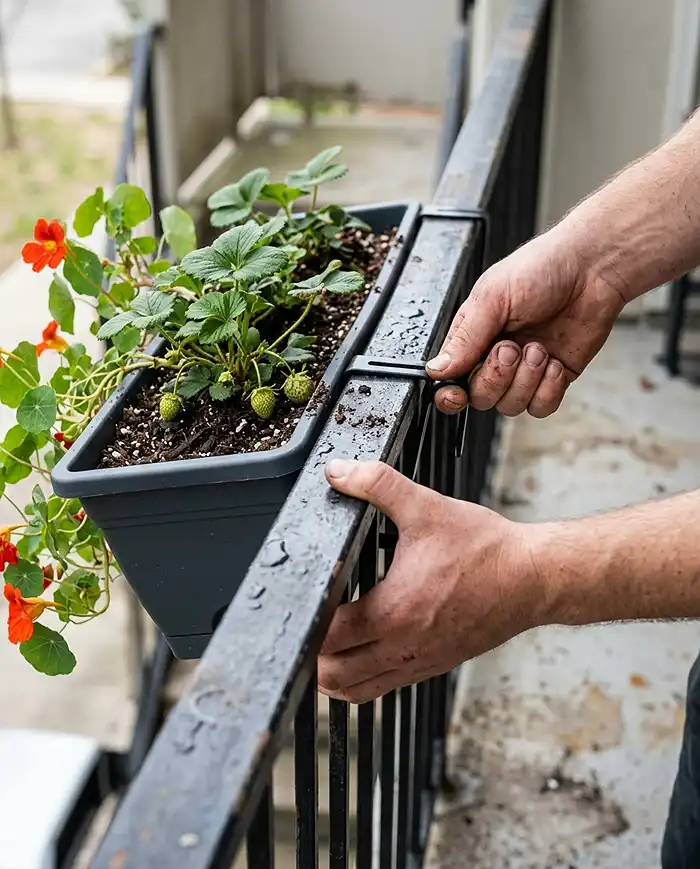
Tiered plant stands are the floor-bound equivalent. A three-tier stand holds nine 6-inch pots in the footprint of one. Lean it against a wall to stabilize it and angle shelves toward light.
- Look for rail planters with built-in drainage holes and reservoirs — they significantly reduce watering frequency
- Metal tiered stands outlast plastic versions and handle heavier pots without flexing
- Choose stands with adjustable shelf heights so you can fit different pot sizes
Smart Furniture and Built-In Solutions
Every piece of furniture on a small patio should earn its spot twice — once as furniture, once as growing space. Multi-functional pieces are a cornerstone of tiny garden ideas done well.
I replaced a basic bench with a planter bench in 2022 — a cedar seat with built-in trough planters on both ends. It seats two, grows herbs on both sides, and takes up the same footprint as the plain bench did. That’s the standard to aim for.
Furniture With Built-In Planters and Storage
Planter benches are the most practical dual-purpose piece for small patios. Look for cedar or teak construction — both handle outdoor moisture without rotting.
Side tables with planter inserts, raised bed coffee tables, and railing-mounted window boxes that double as privacy screens are all worth considering. Each adds growing space without claiming extra floor area.
Storage ottomans with a planter top exist too — they’re not always beautiful, but they work hard in a tight space where every surface counts.
Foldable and Stackable Plant Solutions
Foldable plant shelves are underrated. A 3-tier folding shelf holds nine plants when open and collapses flat against the wall — maybe 3 inches deep — when you need the floor space back.
Stackable pots — designed to interlock vertically like a tower — hold 6-10 plants in the footprint of one standard 12-inch pot. They work best for strawberries, herbs, and small lettuces.
- Stack towers near a water source — they need more frequent watering than single pots
- Rotate stackable towers a quarter turn every few days to keep all plants evenly lit
- Folding shelves are ideal for renters — no mounting, no damage, easy to store off-season
Tools and Materials You’ll Need
You don’t need a lot of gear to build an efficient vertical garden, but the right materials make a real difference in how long things last and how well plants perform.
- Mounting hardware: Stainless steel screws and anchor bolts for masonry; heavy-duty hooks rated to at least 50 lbs for overhead hangers
- Planters: Felt pockets for walls, coco-lined baskets for hanging, resin or fiberglass pots for trellised plants (lighter than terracotta)
- Potting mix: Use a high-quality container mix, not garden soil — it stays loose and drains properly in confined pots
- Drip trays or reservoirs: Essential for wall planters and railing pots to prevent water damage below
- Level and tape measure: Even small spacing errors show clearly on a wall-mounted panel
- Slow-release fertilizer: Small containers deplete nutrients fast — top-dress every 6-8 weeks
How to Set Up a Space-Saving Garden
Putting the system together is easier if you treat it as a layout project before it’s a planting project. Map the space first — plants second.
Planning Layout and Mounting Supports
Sketch your patio with measurements. Mark north, south, east, and west. Assign each wall or surface to a light zone: full sun (6+ hours), partial sun (3-6 hours), or shade (under 3 hours).
Mount the heaviest structures first — wall panels, trellises, and railing planters. Use a level and check weight ratings before drilling. For masonry walls, use anchor bolts rated for at least twice the expected loaded weight.
Leave 18-24 inches of clearance in front of any wall-mounted system so you can water, harvest, and prune without contorting. Tight access is the most common setup mistake.
Planting and Arranging for Maximum Yield
Put your tallest, most light-hungry plants at the top of vertical setups — they won’t shade out lower plants and they’re first to catch morning sun. Shade-tolerant plants like mint, ferns, and impatiens go at the bottom.
In pocket panels, stagger plant types. Mixing fast-growing herbs with slower-maturing greens means something is always ready to harvest, keeping the panel productive for the full season.
Use compact and dwarf cultivars wherever possible. ‘Tumbling Tom’ cherry tomatoes, ‘Spacemaster’ cucumber, and ‘Tom Thumb’ lettuce are all bred for exactly this kind of setup — they won’t outgrow their containers in six weeks.
| Plant | Best Position | Container Size | Notes |
|---|---|---|---|
| Basil | Wall pocket, full sun | 4-6 inch | Pinch flowers to extend harvest |
| Tumbling Tom Tomato | Hanging basket or rail | 10-12 inch | No staking needed; trails naturally |
| Sugar Snap Pea | Trellis, full sun | 8-10 inch | Sow early spring; done by midsummer |
| Strawberry | Stacked tower or hanging | 6 inch per pocket | Runners cascade attractively |
| Mint | Lower wall pocket, part shade | 4-6 inch | Keep isolated — it spreads aggressively |
| Nasturtium | Hanging planter or trellis | 6-8 inch | Edible flowers; thrives in poor soil |
Best Plants for Small, Vertical Spaces
Not every plant suits vertical small space gardening. The winners are compact by nature, productive in small containers, and tolerant of the drier, warmer conditions that wall and hanging setups create.
Compact and Dwarf Varieties
‘Patio’ and ‘Bush’ labeled varieties are your shortcut. ‘Bush Pickle’ cucumber stays under 24 inches. ‘Patio’ tomato maxes out at 18 inches in a 5-gallon pot. ‘Little Gem’ lettuce heads in 45 days in a 6-inch pocket.
For herbs, all of them work — basil, thyme, oregano, parsley, chives, and cilantro thrive in 4-inch wall pockets. Rosemary prefers a deeper container (8+ inches) to accommodate its root system.
Dwarf pepper varieties like ‘Lunchbox’ and ‘Mini Bell’ are productive in 6-inch containers and suit railing planters perfectly for zones 5-9.
Trailing and Climbing Plants
Trailing plants are the aesthetic anchor of any vertical setup. Dichondra ‘Silver Falls,’ string of pearls, creeping Jenny, and bacopa all cascade beautifully from wall pockets and hanging baskets.
For climbers on a trellis: ‘Sugar Snap’ peas, morning glory, black-eyed Susan vine, and compact sweet peas all perform well in containers. Train them early — once they start climbing freely, redirecting them is fiddly.
Climbing nasturtiums double as pest control — aphids flock to them first, keeping them off your food crops. They’re one of the most underused plants in urban gardening.
Caring for a Compact Garden
Dense planting in small containers is productive but demanding. The same proximity that makes vertical gardens beautiful also makes them vulnerable — pests spread fast, containers dry out quickly, and nutrients deplete within weeks.
Watering, Feeding, and Pruning in Tight Spaces
Water small containers daily in summer — sometimes twice daily in heat above 85°F. Felt wall pockets and hanging baskets dry out fastest; check them morning and evening in midsummer. A moisture meter costs $10 and removes the guesswork.
Feed container plants every 2-3 weeks with a balanced liquid fertilizer during the growing season. Small pots have limited nutrient reserves — regular feeding is not optional, it’s the difference between struggling plants and productive ones.
Prune aggressively in tight spaces. Deadhead flowers weekly, cut herbs back by a third when they get leggy, and remove any yellowing or diseased leaves immediately. Good airflow between plants is what keeps fungal problems from spreading in a dense vertical setup.
For self-watering options that cut daily maintenance, see these self-watering ideas built for small-space gardens.
Common Problems and Solutions
Every compact vertical garden runs into the same handful of problems. None of them are dealbreakers if you catch them early.
Overcrowding and Poor Airflow
Quick Answer: Crowded plants share diseases and compete for water and nutrients. Space plants at least the minimum distance listed on the label, even in vertical pockets. If you see gray mold or black spot spreading, remove affected plants immediately and improve spacing.
Uneven Light in Vertical Setups
Quick Answer: The top of a wall panel always gets more light than the bottom. Rotate plants between positions every 2-3 weeks, or choose shade-tolerant plants for lower pockets. Sun-loving herbs and fruiting plants belong at the top.
Plants Drying Out Too Quickly
Quick Answer: Small containers in sun dry out in hours, not days. Top-dress pots with a thin layer of coco coir or perlite mulch to slow evaporation. Upgrade to self-watering containers for anything on a south-facing wall in full sun.
space saving small garden ideas fAQs
How can I garden in a very small space?
Use walls, railings, and overhead hooks to grow vertically instead of outward. Felt pocket panels, railing planters, hanging baskets, and tiered shelves let you fit 20+ plants into a 6×8-foot patio without using the floor. Choose compact and dwarf varieties bred for container growing.
What plants are best for tiny gardens?
Compact and dwarf cultivars perform best: ‘Tumbling Tom’ cherry tomatoes, ‘Little Gem’ lettuce, ‘Bush Pickle’ cucumber, and all culinary herbs. For vertical interest, add trailing plants like Dichondra and climbing nasturtiums or sugar snap peas on a trellis.
How do I grow more plants without taking up floor space?
Mount felt pocket panels or modular planters on walls and fences. Hang baskets from ceiling hooks or pergola beams. Add rail planters to balcony railings. Each of these solutions adds growing space above the floor and leaves your patio open and usable.
What is the best vertical planter for a small balcony?
Railing planters with built-in reservoirs are the most practical choice for balconies — no drilling, no damage to the structure, and the reservoir reduces watering frequency. For walls, felt pocket panels offer the most plants per square foot at the lowest cost.
How do I keep vertical garden plants from drying out?
Water daily in summer — small containers lose moisture fast. Use coco-lined baskets and add a layer of coco coir mulch on top of the soil to slow evaporation. Self-watering containers with built-in reservoirs are the most effective long-term solution for wall and railing setups.
Key Takeaways
- The best space saving small garden ideas go vertical — walls, railings, and overhead space hold far more plants than the floor ever will
- Assess light, weight limits, and access before mounting anything; a well-planned vertical setup beats a haphazard one every time
- Felt pocket panels and railing planters give the highest plant-per-square-foot return at the lowest cost and effort
- Choose compact and dwarf cultivars — ‘Tumbling Tom,’ ‘Little Gem,’ ‘Bush Pickle’ — and match plants to their light position in the vertical setup
- Small containers demand consistent watering and feeding; self-watering systems and slow-release fertilizer make dense vertical gardens manageable without daily stress