
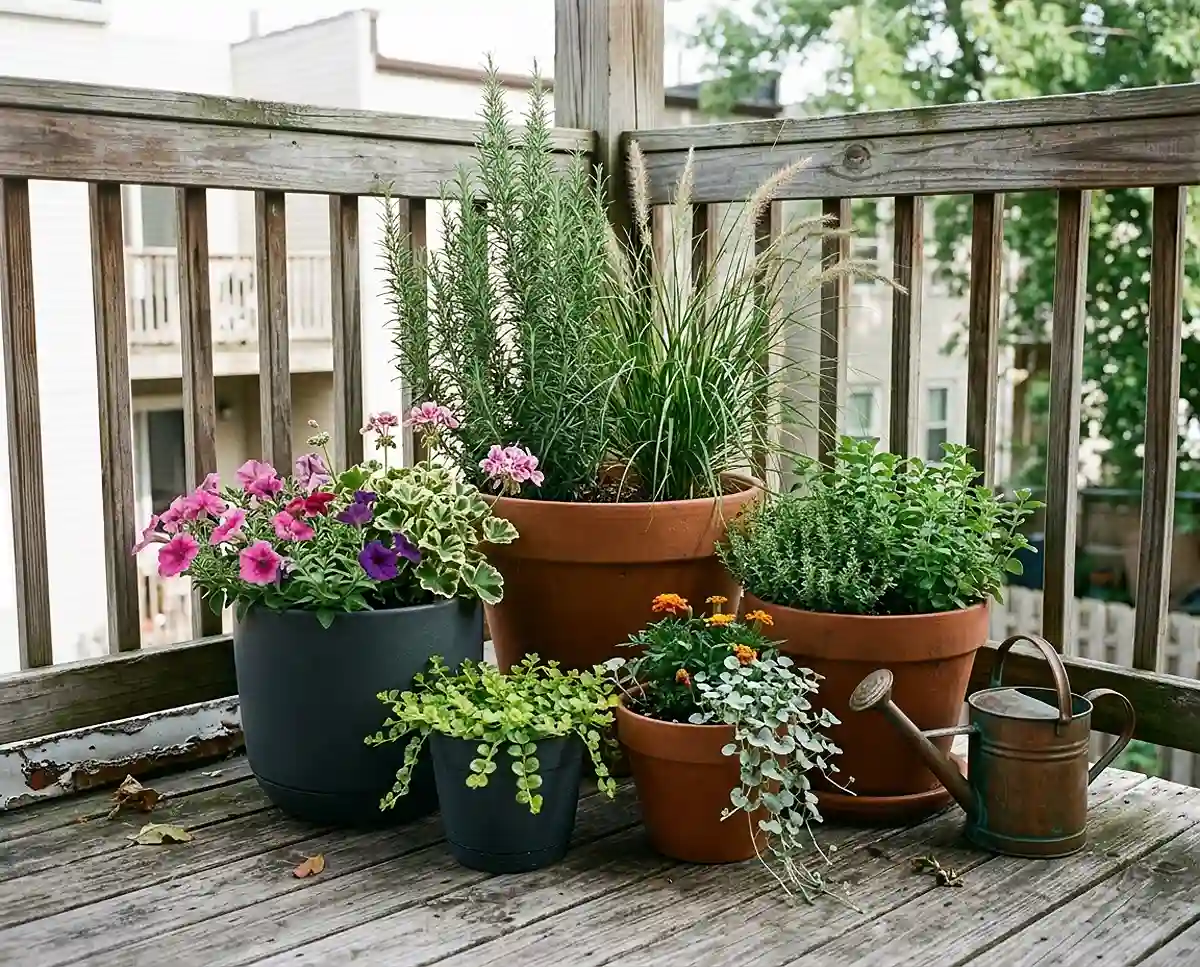
Container Garden Layout With 5 Pots That Works
A container garden layout with 5 pots is one of the smartest setups for small balconies and patios — enough variety to look full, easy enough to actually maintain.
I’ve been growing on a 6×8-foot east-facing balcony in zone 6b for seven years. Five pots is the number I keep coming back to. It’s the point where things start looking intentional instead of thrown together.
Table of Contents
Why a 5-Pot Layout Is the Sweet Spot for Small Spaces
Two or three pots feel sparse. Eight or ten become a watering chore that eats your weekends. Five hits the middle ground perfectly for small garden layout success.
With five containers, you can create height variation, mix edibles with flowers, and still move pots around without turning it into a project.
It’s also budget-friendly. You’re investing in five decent pots rather than fifteen cheap ones that crack by August. And you can focus on feeding and watering properly instead of constantly playing catch-up.
Five pots also gives you enough visual mass to anchor a patio corner or run along a railing without overwhelming the space. It’s the layout I recommend to every new container gardener I talk to.
Plan Your 5-Pot Container Garden
Before you buy a single pot or plant, spend one weekend observing your space. Rushing this step is where most people go wrong.
Assessing Light, Space, and Purpose
Walk your balcony or patio at 8 a.m., noon, and 4 p.m. and note where direct sun lands. Full sun means 6+ hours. Part shade is 3-6 hours. Most vegetables need full sun — flowers are more forgiving.
Measure your space. A 6×8-foot patio fits five pots comfortably with walking room. A narrow 3-foot balcony works better with a row layout along the rail.
Decide your goal: pure flowers for color, container vegetable gardening for food, or a mix of both. That choice shapes every decision after it.
Choosing a Cohesive Look or Theme
Five pots in five random styles look chaotic. Pick one unifying element: a color palette (terracotta + black), a material (all glazed ceramic), or a planting theme (Mediterranean herbs, cottage flowers, edible salad garden).
I went with a “kitchen garden” theme one summer — all five pots in matte charcoal, planted with food I actually cook with. It looked sharp and I used it all season.
A theme makes shopping easier, too. You’re not second-guessing every pot or plant at the nursery when you already know your direction.
Choosing Your 5 Pots
The mix of pot sizes you choose determines how interesting your layout looks and how well your plants perform. Don’t buy five identical pots.
Varying Pot Sizes and Heights
Aim for this combination across your five pots: one large (16-18 inches), two medium (12-14 inches), and two small (8-10 inches). This gives you natural height variation without needing a single stand.
Large pots hold moisture longer and suit tomatoes, peppers, or large ornamental grasses. Medium pots work for herbs, compact flowers, or lettuce. Small pots are perfect for trailing plants at the front edge of a grouping.
In spring 2023, I added a 20-inch pot as my anchor piece and built four smaller ones around it. The difference in how the display looked versus my old matched-set approach was immediate.
Matching Pot Material, Color, and Drainage
Drainage holes are non-negotiable. Roots sitting in water is the fastest way to lose a plant. Check every pot before buying — or drill your own holes if needed.
Material affects watering frequency. Terra cotta dries out faster than glazed ceramic or plastic. In hot climates, go glazed or resin. In cool, wet climates, terra cotta gives roots more breathing room.
For color, a two-tone palette (say, natural terra cotta + matte black) ties five different-sized pots together without making them feel mismatched. The RHS guide on choosing containers has solid advice on materials for different climates.
The Best 5-Pot Layout Arrangements
The arrangement you choose should match your space shape first, your aesthetic second. Here are three layouts that actually work.
Corner Cluster Layout
Quick Answer: Place your tallest pot in the back corner, medium pots flanking it on each side, and two small pots in front. This creates a triangular pyramid effect that looks intentional from every angle.
This works best on square or rectangular patios where you have a corner to anchor. The tall pot creates a focal point, and the front small pots pull the eye downward to complete the display.
Leave 6-8 inches between pots for airflow and so you can actually reach in to water and harvest without knocking things over.
Row and Railing Layout
Quick Answer: Line pots along a wall or railing in graduating heights — tallest at one end, shortest at the other — so the display has a visual slope rather than a flat line.
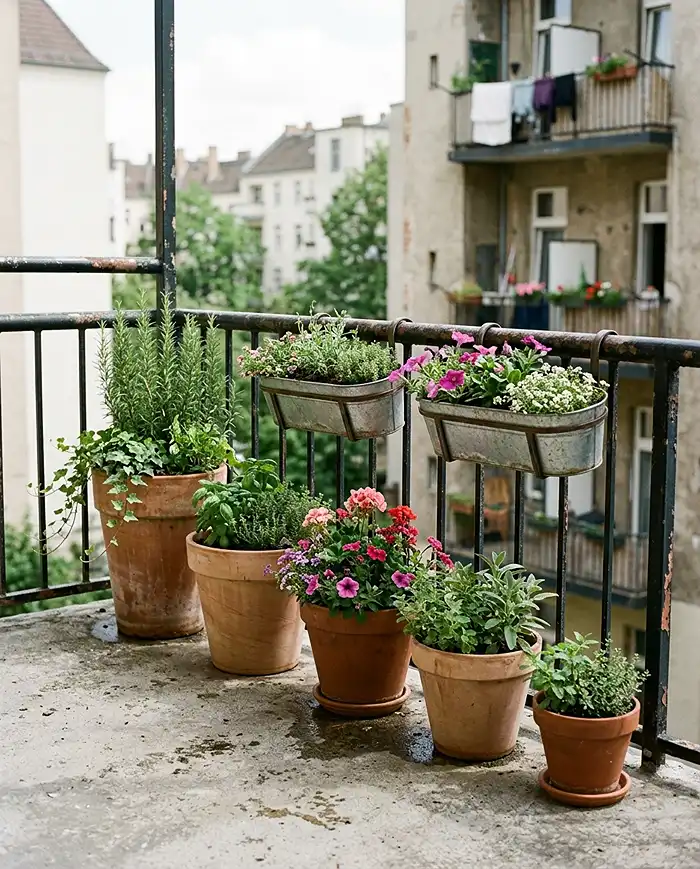
This is the go-to layout for narrow balconies under 4 feet deep. Hang two small rail planters on the railing itself if you want to count those as two of your five pots and save floor space.
Alternate pot heights even in a row — don’t go strictly tallest to shortest. A small pot between two mediums creates rhythm. See more renter-friendly patio garden ideas for layouts that work in tight rental spaces.
Staggered and Tiered Layout
Quick Answer: Use a two- or three-tier plant stand to elevate two or three pots, then place the remaining pots at ground level in front. This maximizes visual impact in the smallest footprint.
A tiered metal stand (available at most garden centers for $30-50) lets you display five pots in the space two would normally occupy. It’s the best option when floor space is genuinely limited.
For even more vertical options, check out these vertical garden wall ideas for small patios that pair well with a tiered pot setup.
What to Plant in Each Pot
Here are two ready-to-copy planting plans — one for flowers, one for food. Both work across USDA zones 5-9 for a spring/summer season (as of 2025).
Flower-Focused 5-Pot Plan
Use the thriller, filler, spiller formula across your five pots to get a layered, full look that blooms all season.
| Pot | Role | Plant Example | Pot Size |
|---|---|---|---|
| 1 (anchor) | Thriller | Canna ‘Tropicanna’ or tall salvia | 16-18 in |
| 2 & 3 | Filler | Zinnias, petunias, or marigolds | 12-14 in |
| 4 & 5 | Spiller | Trailing lobelia or sweet potato vine | 8-10 in |
Deadheading [removing spent flowers] on petunias and zinnias every 5-7 days keeps the pots blooming from June through first frost. Skip it once and production drops noticeably within two weeks.
Edible 5-Pot Plan (Herbs and Veggies)
This is my personal go-to for container vegetable gardening. It produces from June through September on a single balcony.
- Pot 1 (large, 16-18 in): One ‘Patio’ or ‘Tumbling Tom’ tomato — compact indeterminate varieties bred for containers
- Pot 2 (medium, 12-14 in): Two ‘Lunchbox’ sweet peppers or one ‘Shishito’ — both stay under 18 inches tall
- Pot 3 (medium, 12-14 in): Basil + parsley combo — they grow well together and you harvest both all summer
- Pot 4 (small, 10 in): ‘Tom Thumb’ lettuce or a cut-and-come-again mix — harvests within 30-40 days of planting
- Pot 5 (small, 8-10 in): Chives or trailing nasturtiums — nasturtiums double as pest deterrents and are fully edible
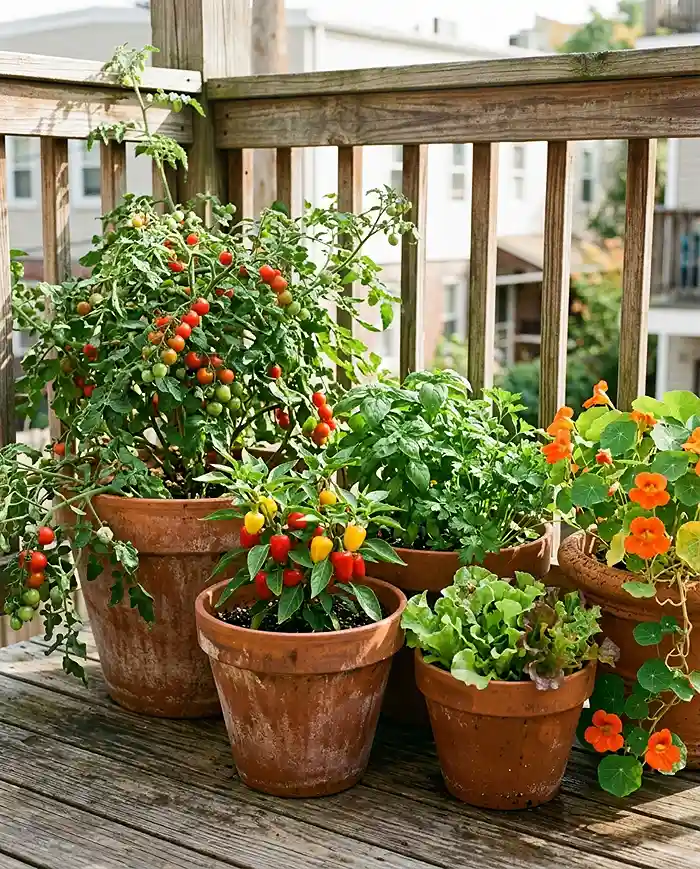
I ran this exact plan in summer 2024. The tomato in the 18-inch pot produced through late September in zone 6b, and the lettuce bolted in July — I swapped it for a second herb pot mid-season.
Tools and Materials You’ll Need
Keep this list simple. You don’t need specialty gear to run a successful 5-pot layout.
- Potting mix: Use a quality container mix — never garden soil, which compacts and kills drainage. Look for perlite in the ingredient list.
- Slow-release fertilizer: Granules like Osmocote worked into the mix at planting cuts down on feeding frequency
- Liquid fertilizer: A balanced 10-10-10 or tomato-specific feed for every 2 weeks once plants are established
- Watering can or hose with wand: A wand attachment lets you water at soil level without wetting foliage
- Pot feet or risers: Elevate pots slightly for drainage and to protect deck surfaces
- Trowel and pruners: A quality pair of bypass pruners handles everything from deadheading to harvesting
For self-watering options that cut down on how often you need to check soil moisture, these self-watering ideas for small space gardens are worth reading before you buy your pots.
How to Set Up Your 5-Pot Layout
Setup day goes faster if you arrange before you plant. Moving a pot filled with wet soil and a large tomato is not fun.
Arranging Pots for Light and Balance
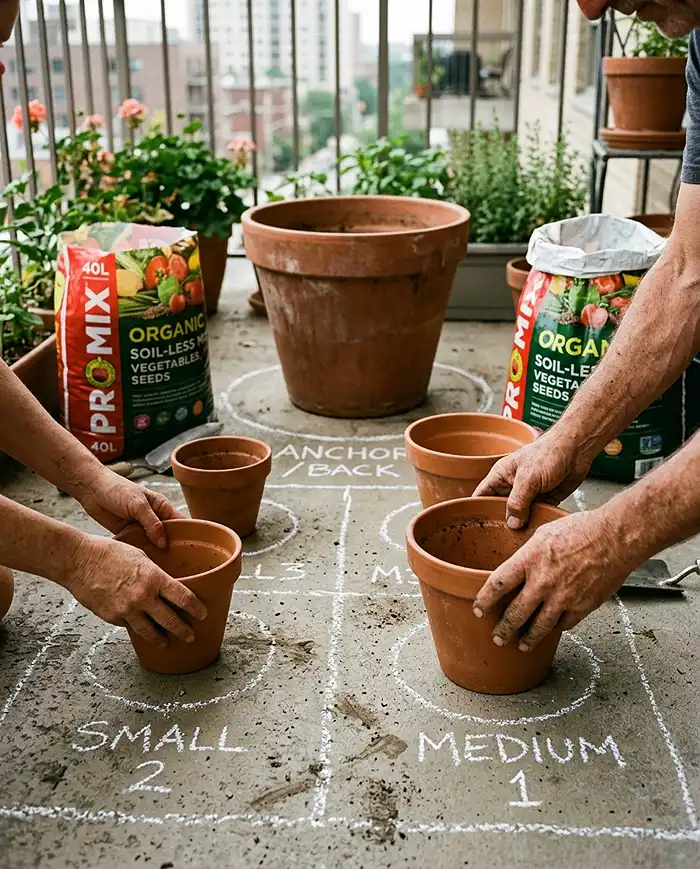
Put your tallest pot in the back or at the north end of your space so it doesn’t shade smaller pots. Sun-loving plants — tomatoes, peppers, zinnias — need that prime bright spot.
Step back and look at the grouping from your main viewing angle (usually your door or seating area). Adjust until the visual weight feels balanced — that means no cluster of all-tall or all-short pots on one side.
Mark pot positions with chalk or tape before filling them. This saves you from second-guessing everything once pots are heavy.
Planting and Spacing Each Pot
Fill each pot to within 2 inches of the rim. Plant at the same depth the plant was in its nursery container — burying stems (except tomatoes, which root along buried stems) invites rot.
For combination pots, leave 4-6 inches between plants. They’ll fill in within 3-4 weeks. Crowding at planting leads to poor airflow and fungal issues by midsummer.
Water each pot thoroughly right after planting until water drains from the bottom. This settles the soil and removes air pockets around roots. Don’t water again until the top inch of soil feels dry.
Caring for Your 5-Pot Garden
Five pots is manageable precisely because the maintenance routine is short. Build it into 10-15 minutes every other morning and the layout stays sharp all season.
Watering and Feeding Schedule
Small pots (8-10 in) may need water daily in summer heat. Large pots (16-18 in) often go 2-3 days between watering. Check each pot individually — don’t water on a fixed schedule for all five.
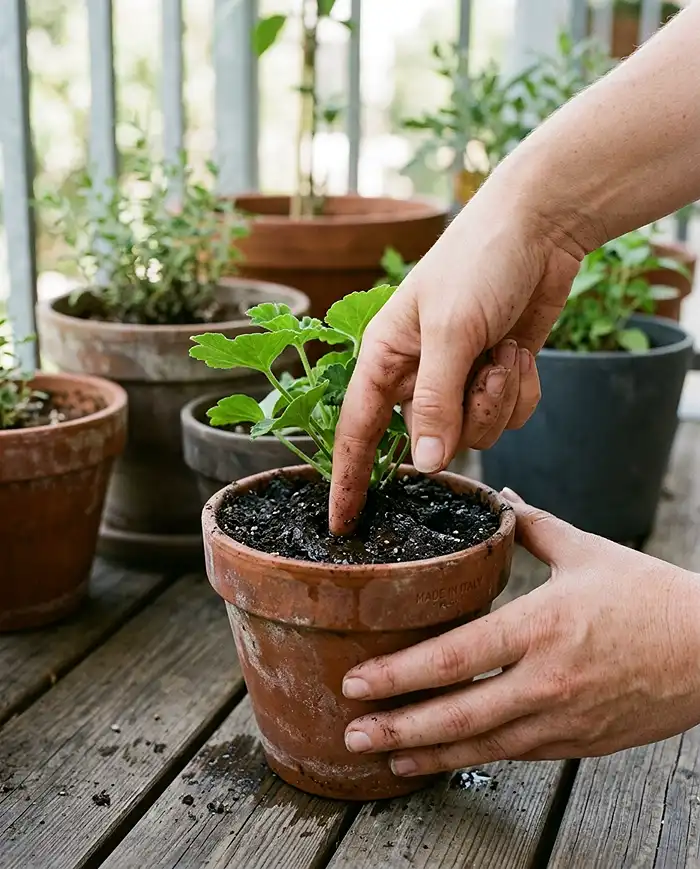
The finger test works: push your finger an inch into the soil. If it’s dry, water. If it’s still moist, wait. Overwatering kills more container plants than drought does.
For feeding, mix slow-release granules into potting mix at planting. Supplement with liquid fertilizer every 14 days once plants hit active growth. Cut liquid feeding to every 3 weeks for herbs, which prefer leaner soil.
Pruning, Deadheading, and Harvesting
Deadheading [removing spent blooms] on petunias, marigolds, and zinnias every 5-7 days keeps flowering going. Let one flower go to seed and the plant thinks its job is done.
Pinch basil flowers as soon as they appear to keep leaves coming. Once basil bolts [goes to flower], the leaves turn bitter within days.
Harvest lettuce, herbs, and peppers regularly — this signals the plant to keep producing. A pepper left on the plant too long slows new fruit set. Pick when ripe, pick often.
Seasonal Refresh for Your 5 Pots
One of the advantages of container gardening over in-ground beds is how easy it is to swap plants season to season.
Swapping Plants and Winter Care
In spring, plant cool-season crops: lettuce, spinach, pansies, snapdragons. Swap to warm-season plants (tomatoes, peppers, zinnias) once nighttime temps stay above 50F.
Come fall, replace spent summer plants with ornamental kale, mums, or asters for another 6-8 weeks of color before frost.
In zones 6 and below, empty pots before hard frost or bring them indoors. Terra cotta cracks if water freezes inside it. Plastic and resin pots can overwinter outside if emptied. Store potting mix in sealed bags — it’s reusable next spring with a nitrogen boost mixed in.
For more creative ideas to keep your small space productive year-round, these space-saving small garden ideas are worth bookmarking.
Common Problems and Solutions
Most 5-pot problems are fixable in under an hour once you know what you’re looking at.
Layout Looking Unbalanced or Flat
Quick Answer: Add a pot riser under one medium pot, or swap a small pot for a taller trailing plant. Height variation of at least 12-18 inches between shortest and tallest is the target.
If all five pots are roughly the same height, the display reads as flat from across the patio. Even adding a simple upturned pot under your anchor piece can fix this in minutes.
Some Pots Drying Faster Than Others
Quick Answer: Small pots and terra cotta dry faster than large glazed pots. Group them by material and size so your watering checks make sense, or switch fast-drying pots to self-watering versions.
Dark-colored pots in direct sun also heat up faster and stress roots. Light-colored or glazed pots in hot spots are worth the switch if you’re fighting daily wilting.
Pests Spreading Between Pots
Quick Answer: Inspect the undersides of leaves weekly. Catch aphids, spider mites, or whiteflies early and treat with insecticidal soap spray before they jump to neighboring pots.
Spacing pots 6-8 inches apart slows pest migration and improves airflow. Pots crammed together trap moisture and make inspections harder — both conditions pests love.
Frequently Asked Questions
How do I arrange 5 pots on a balcony?
Place your tallest pot at the back or corner as an anchor, two medium pots flanking it, and two smaller pots in front. Vary heights by at least 12 inches between shortest and tallest, group sun-lovers in the brightest spot, and leave 6-8 inches between pots for airflow and access.
What should I plant in a 5-pot container garden?
A flower plan uses one thriller (tall salvia or canna), two fillers (petunias or zinnias), and two spillers (trailing lobelia). An edible plan works well as: one tomato, one pepper, one herb combo pot, one lettuce, and one chive or nasturtium pot. Mix edibles and flowers freely — there are no rules.
How far apart should container pots be?
Leave 6-8 inches between pots. This allows air to circulate and reduces fungal problems, gives you room to reach in and water or harvest without knocking things over, and slows the spread of pests between containers. In a tight cluster display, 6 inches minimum is the practical floor.
What size pots do I need for a 5-pot layout?
Use one large pot (16-18 inches) as your anchor, two medium pots (12-14 inches) as the mid-layer, and two small pots (8-10 inches) at the front. This combination gives you height variation and suits a mix of plants — large for tomatoes or tall flowers, small for herbs, lettuce, or trailers.
Can I do container vegetable gardening with just 5 pots?
Yes — five pots is enough for a productive edible garden. A practical plan: one tomato, one pepper, one herb pot (basil plus parsley), one lettuce, and one nasturtium or chive pot. In a full-sun spot in zones 5-9, this setup produces from June through September with regular watering and feeding.
Key Takeaways
- A container garden layout with 5 pots gives you visual variety and manageable upkeep — the sweet spot for small balconies and patios
- Vary pot sizes (one large, two medium, two small) and use at least 12-18 inches of height difference between shortest and tallest
- Track sunlight before placing pots — sun-lovers need the brightest spot, and tall pots go at the back so they don’t shade everything else
- Whether you go flowers, vegetables in pots, or a mix, pick a theme before you shop so the five pots read as one intentional display
- Check soil moisture individually for each pot — small containers and terra cotta dry faster than large glazed ones, and a fixed watering schedule ignores that