
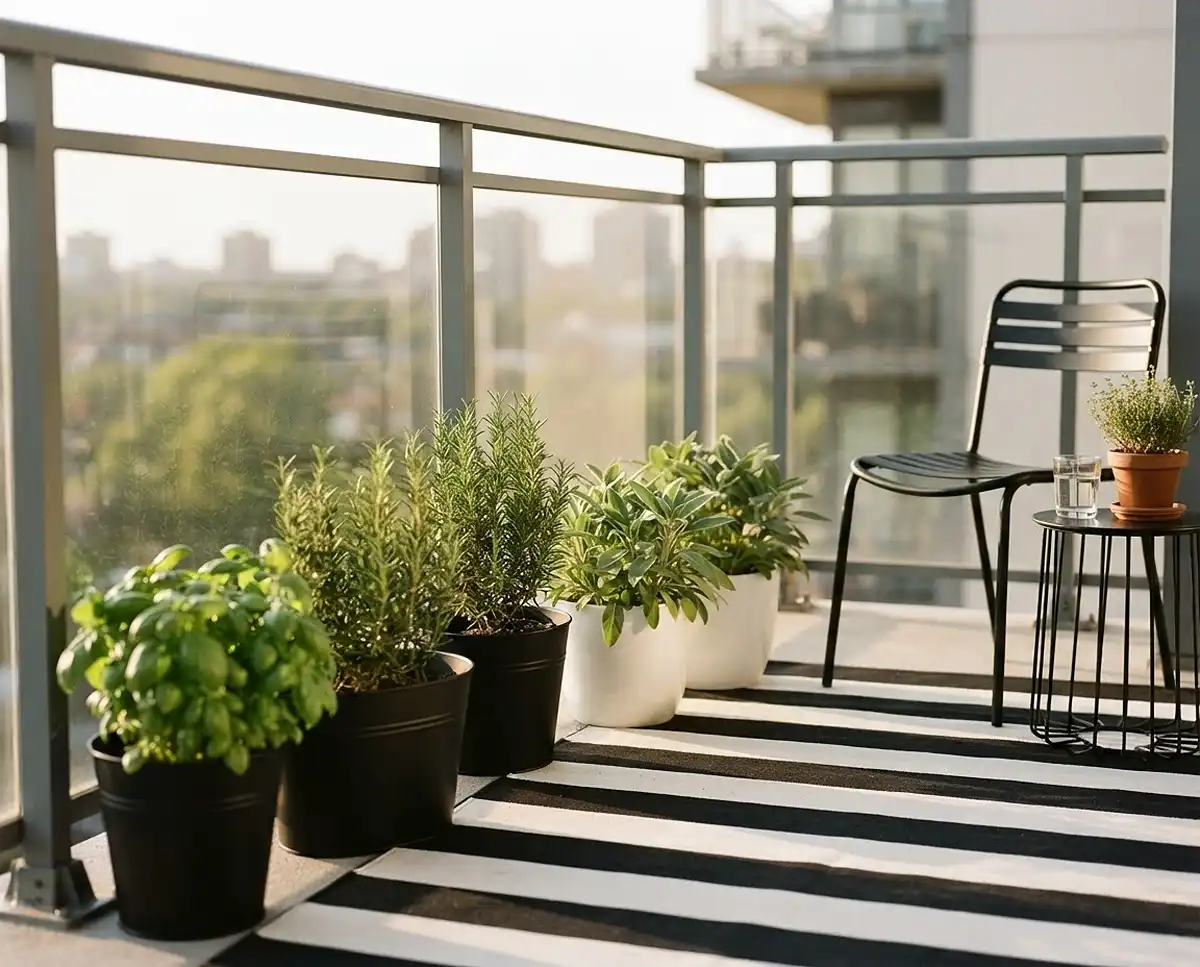
Black and White Balcony Garden Ideas With Herbs
Want a balcony that looks like a design magazine spread but still grows your dinner herbs? Black and white balcony garden ideas With Herbs give you sharp, modern style plus fresh basil within arm’s reach.
I’ve grown herbs on a west-facing balcony in zone 7a for six seasons now, and monochrome is the one palette that’s never gone stale on me. It photographs well, it hides dirt splatter better than pastel pots, and it makes even a 4×8-foot slab of concrete feel like a real outdoor room.
Table of Contents
Why a Black and White Herb Balcony Looks So Chic
A black and white palette reads as intentional, not accidental. When every pot, chair, and tray shares the same two-tone language, even a cluttered little balcony garden ideas setup looks curated instead of chaotic.
Herbs are what keep it from feeling like a showroom. Basil’s glossy green, chive blooms, and the soft gray of sage break up all that black and white with texture and scent. You get the calm of a minimalist space and the payoff of snipping rosemary for dinner.
This combo works especially well for renters. It’s one of the easiest small balcony garden looks to build without painting a single wall.
Plan Your Monochrome Herb Balcony
Before you buy a single pot, spend a week just watching your space. I skipped this step my first year and ended up with thyme baking on a south wall that hit 95°F by 2pm — it browned out in ten days flat.
Defining Your Style and Palette
Black and white suits modern, Scandinavian, and minimalist styles best because those looks already favor clean lines and negative space. Decide your ratio upfront: mostly white with black accents feels airy and works well on small, shaded balconies, while mostly black with white trim feels bold and hides grime on high-traffic balconies.
Pick one dominant tone and stick to a rough 70/30 split. Consistency, not variety, is what makes this apartment gardening style read as designed.
Assessing Light, Space, and Herb Placement
Track your balcony’s sun for a full day before planting anything. Note where light lands at 9am, noon, and 4pm — most herbs need at least 6 hours of direct sun to thrive.
Measure your footprint in feet, not steps. A 3×6-foot balcony can realistically hold a rail planter, two floor pots, and a small café table — anything more starts to feel cramped.
Building the Black and White Foundation
Your hardscape does the heavy lifting here. Get the containers and furniture right and the herbs practically style themselves.
Choosing Black and White Planters and Furniture
Quick Answer: Matte black powder-coated metal pots and glazed white ceramic planters anchor the look, paired with a black bistro set or white folding chairs for seating.
- Matte black 10-12 inch fiberglass pots for taller herbs like rosemary
- Glazed white ceramic pots, 6-8 inches, for compact herbs like thyme
- A black wrought-iron plant stand to add vertical layers
- White resin or folding bistro chairs, easy to wipe clean
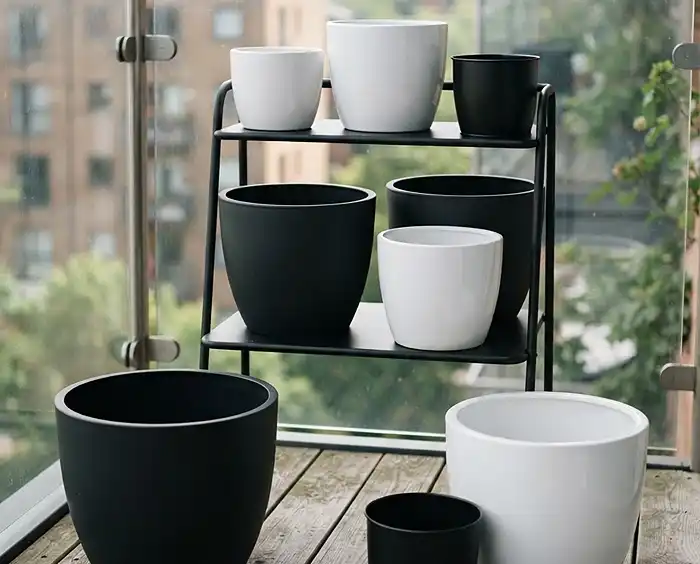
Fiberglass beats terracotta in this scheme — it’s lighter for balcony weight limits and holds paint or glaze without flaking after one winter, unlike the cheap terracotta I tried my first year.
Adding Texture With Patterns and Materials
Flat black and white alone can feel a little sterile, so bring in pattern through materials, not color. A black-and-white striped outdoor rug, a checkerboard-pattern tile mat, or woven black rattan baskets all add depth while staying inside the palette.
Mixing matte and glossy finishes — a matte pot next to a glossy white side table — does more visual work than any extra color ever could.
Best Herbs for a Black and White Theme
The right herb garden ideas lean into foliage color and shape as much as flavor. Some herbs practically look designed for a monochrome backdrop.
Green Herbs That Pop Against Monochrome
Quick Answer: Basil, parsley, and chives bring the brightest, most saturated green, which reads as a real color statement against black or white containers.
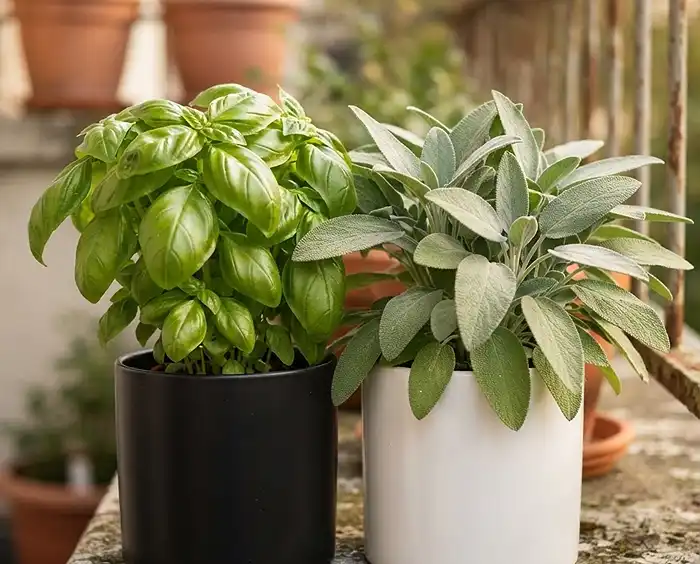
Genovese basil is my go-to — its broad, glossy leaves catch light and look almost lacquered next to a matte black pot. Curly parsley adds a denser, ruffled texture if you want more visual weight.
Silvery and Dark-Leaved Herbs
Quick Answer: Sage, lavender, and purple basil echo the black and white scheme directly, with silvery-gray or near-black foliage that blends rather than contrasts.
Berggarten sage has thick, felted silver leaves that look almost painted. Purple ruffles basil goes so dark it reads nearly black in low light — dramatic against a white ceramic pot.
Compact and Trailing Herbs for Structure
Rosemary gives you height and a stiff, upright form that anchors taller black pots. Thyme and trailing oregano do the opposite, spilling over pot edges to soften hard lines and add movement at balcony-rail height.
| Herb | Best Container Color | Sun Needs |
|---|---|---|
| Genovese basil | Matte black | 6+ hours direct sun |
| Berggarten sage | Glazed white | 6 hours, tolerates part shade |
| Rosemary | Matte black, tall pot | 6-8 hours direct sun |
| Trailing oregano | White rail planter | 4-6 hours |
| Purple ruffles basil | White ceramic | 6+ hours direct sun |
Tools and Materials You’ll Need
- Black and white containers in mixed sizes (6-12 inches)
- Well-draining potting mix with perlite — never use garden soil in containers
- A black watering can with a narrow spout for precision
- Chalkboard or slate plant labels for a cohesive monochrome look
- Black or white outdoor-rated rug and cushions
- A trowel and small pruning snips
Check your USDA Plant Hardiness Zone map before buying perennial herbs like rosemary or sage, since some varieties won’t survive winter outdoors below zone 7.
How to Plant and Style Your Balcony
Once you’ve got your materials, the actual build takes an afternoon.
Preparing Pots and Planting Herbs
Every pot needs drainage holes — I learned this the hard way when a gorgeous glazed white planter with no holes drowned my first rosemary in two weeks. Add a 1-inch layer of gravel if the pot is borderline.
Fill with a peat-free potting mix, group herbs by water needs (Mediterranean herbs like rosemary and thyme together, thirstier basil and parsley separately), and plant at the same depth they were in the nursery pot.
Arranging for Contrast and Balance
Layer heights the way you’d style a bookshelf: tall rosemary at the back, mid-height basil and sage in the middle, trailing thyme spilling off the front edge or rail. This creates depth on even the smallest balcony garden footprint.
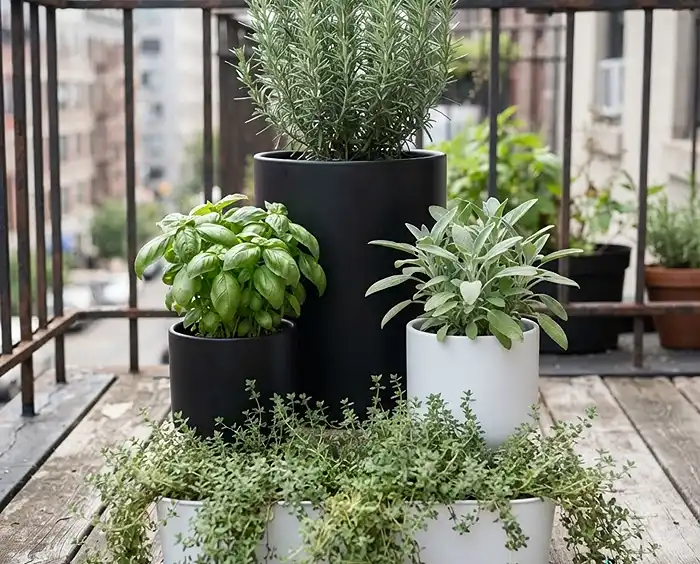
Balance your black and white ratio across the whole space, not pot by pot — if your floor planters are black, let your rail planters and furniture skew white to keep the eye moving evenly.
Place sun-loving herbs like rosemary and basil where you tracked the most light earlier, and tuck shade-tolerant mint or parsley into cooler corners.
Caring for Your Herbs and the Look
The style only works if both the plants and the containers stay in good shape.
Watering, Feeding, and Harvesting Herbs
Container herbs dry out fast — check soil daily in summer and water when the top inch feels dry, usually every 1-2 days for basil, every 3-4 for rosemary. Feed with a diluted liquid fertilizer every 3 weeks during active growth.
Harvest regularly, taking no more than a third of the plant at once. Frequent snipping is what keeps basil and mint bushy instead of leggy.
Keeping White Planters and Surfaces Clean
White ceramic and resin show soil splashes fast. Wipe pots down weekly with a damp cloth, and add a thin gravel mulch layer on top of the soil to cut down on splatter when you water.
Wash textiles like cushion covers monthly, and treat white resin furniture with a UV-protectant spray each spring to prevent yellowing.
Adding Atmosphere and Finishing Touches
The details are what push this from “nice plants” to a space you actually want to sit in after work.
Lighting, Lanterns, and Monochrome Accents
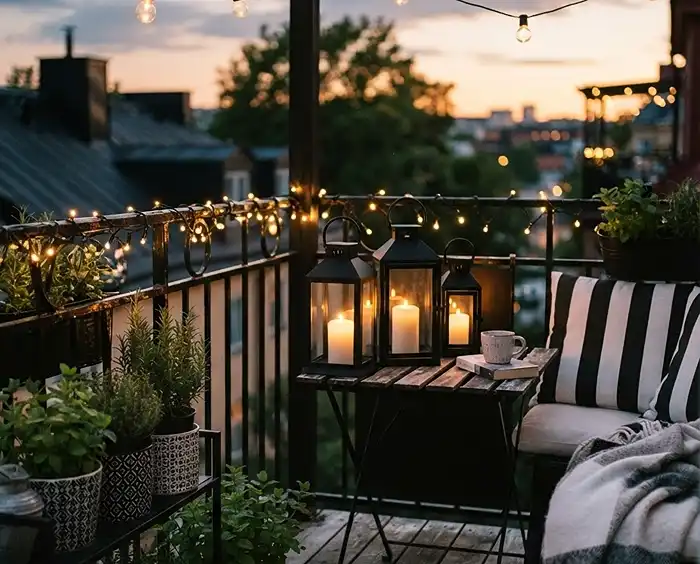
Black lanterns with warm white candles or LED tea lights add glow without breaking the palette. String lights on a black cord, left unlit during the day, disappear into the design until evening.
Textiles, Labels, and Decorative Details
A striped black and white cushion or two softens metal furniture instantly. Chalkboard herb labels double as decor and practical ID tags, and one or two black-and-white striped ceramic accents finish the look without clutter.
Seasonal Care for Your Herb Balcony
Overwintering Herbs and Refreshing the Look
Tender herbs like basil won’t survive frost — bring potted basil indoors to a sunny windowsill once nights dip below 50°F, or treat it as an annual and restart each spring. Rosemary and thyme can often stay outside through zone 7 and warmer winters with some wind protection.
A grow light helps indoor herbs through short winter days. Refresh cushions and rugs each season for wear, and swap in cool-season herbs like chives and parsley once summer basil fades.
Common Problems & Solutions
The Space Feels Too Stark or Cold
Add more green mass — a few extra herb pots, a trailing oregano, or a leafy parsley clump softens hard black-and-white edges fast. Warm-toned lighting after dark helps too.
White Planters Staining or Discoloring
Use quality UV-stable resin or glazed ceramic rather than cheap plastic, add a plant liner to catch soil directly, and wipe pots down weekly before stains set in.
Herbs Growing Leggy or Sparse
Leggy growth almost always means too little light — move pots to your sunniest spot. Pinch growing tips regularly; it forces bushier growth instead of one tall, thin stem.
Frequently Asked Questions
What herbs look best in a black and white garden?
Bright green herbs like basil, parsley, and chives create the strongest contrast. Silvery sage and dark purple basil echo the palette directly, while trailing thyme and oregano add soft, cascading texture.
How do I make a small balcony look chic on a budget?
Spray-paint mismatched terracotta pots black or white, add a striped dollar-store rug, and use free chalkboard labels from scrap slate tile. The monochrome palette makes budget pieces look coordinated instead of cheap.
Where should I place herbs on a monochrome balcony?
Position sun-loving herbs like rosemary and basil in your brightest 6-plus-hour spot, and tuck shade-tolerant herbs like mint or parsley into cooler corners, while keeping black and white containers balanced across the space.
Can I keep herbs alive on a balcony year-round?
Perennial herbs like rosemary, thyme, and sage can often survive outdoors in zone 7 and warmer with wind protection, while tender herbs like basil should move indoors near a sunny window once nights drop below 50°F.
What size pots work best for a small balcony herb garden?
A 6 to 8 inch pot suits compact herbs like thyme, while taller herbs like rosemary need at least 10 to 12 inches. Grouping several smaller pots often fits a small footprint better than one large planter.
Conclusion
Black and white balcony garden ideas prove you don’t need a big yard or a wild color palette to grow real, usable herbs in style. Start with a few key pots, get your light and drainage right, and let the herbs fill in the rest.
For more layout inspiration, check out our black and white balcony garden ideas gallery or browse more balcony color palette ideas if you want to experiment beyond monochrome. Either way, this is one of the most forgiving apartment gardening styles you’ll ever try — mine’s still going strong as of this summer.
Key Takeaways
- Black and white balcony garden ideas work because the neutral palette lets herb foliage supply all the color
- Track sunlight for a full day before choosing where to place pots and furniture
- Mix matte black and glazed white containers with rosemary, basil, sage, and thyme for contrast and texture
- Weekly wipe-downs keep white surfaces from staining and looking dingy
- Bring tender herbs indoors once nights drop below 50°F to keep the display going year-round