
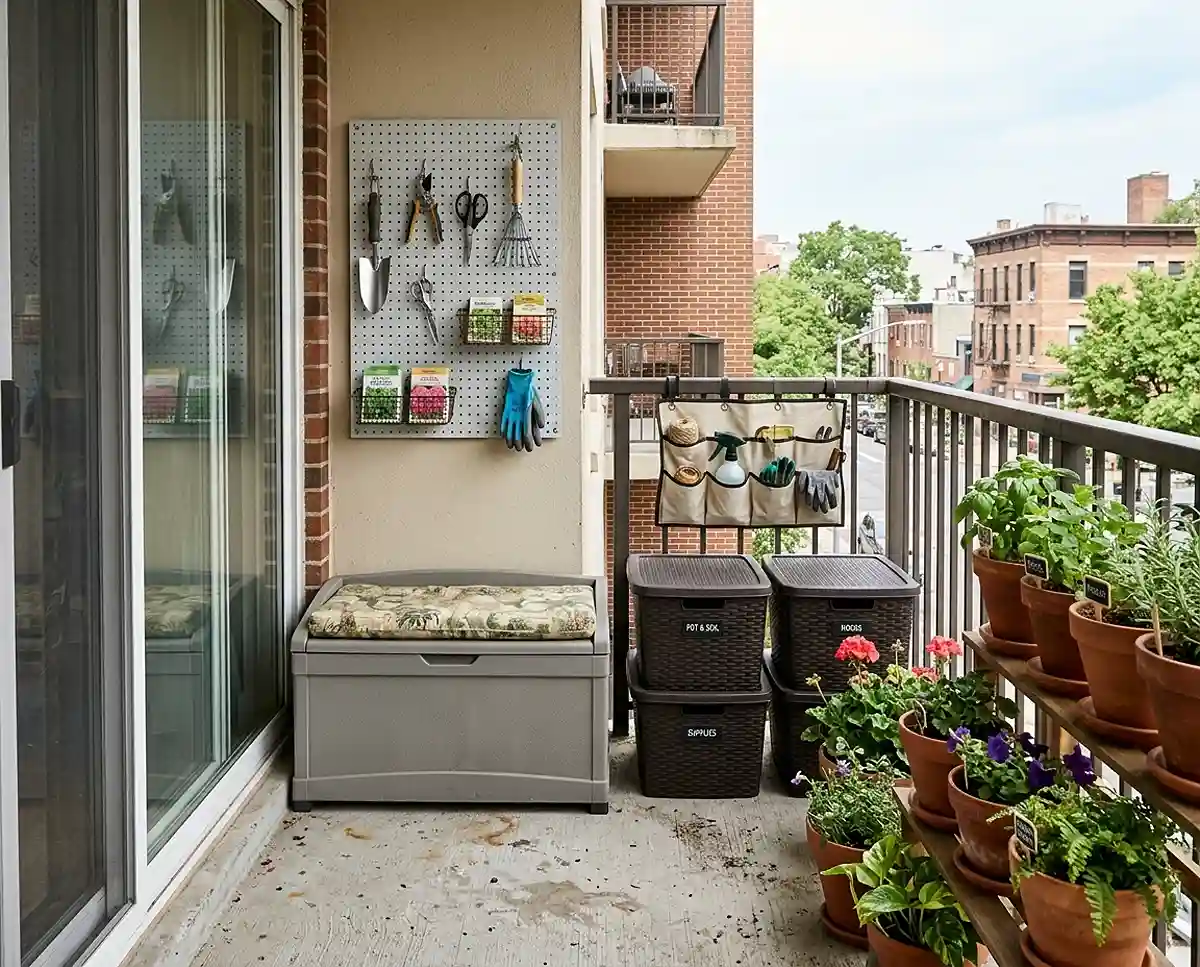
Tiny Balcony Storage Ideas for Gardeners
Good balcony storage ideas for gardeners can turn a chaotic 40-square-foot slab into a tidy, functional growing space. I garden on a 6×8 ft balcony in zone 6b — and the right storage made everything click.
Table of Contents
Why Smart Storage Makes Balcony Gardening Easier
When tools and supplies have a home, you spend less time hunting for your trowel and more time actually growing. That’s the real win of organized small balcony garden storage.
Good storage protects soil bags from rain, keeps fertilizers from baking in the sun, and prevents that pile of pots from taking over your only seating area.
It also makes your balcony look intentional — not like a garden center exploded on it. A tidy space is easier to work in, and honestly, more enjoyable to sit in after a long day.
Assess Your Storage Needs and Space
Before buying a single shelf or bin, spend 10 minutes taking stock. You’ll avoid buying storage that doesn’t fit — physically or practically.
Taking Inventory of Tools and Supplies
List everything you need to store: hand tools, watering cans, spray bottles, bags of soil, pots, saucers, fertilizers, seed packets, and gloves.
Group them by size and how often you reach for them. Daily-use items need to stay accessible. Bulky or seasonal items can go lower or more out of the way.
This inventory also helps you see what you can cut. I realized I had four trowels. I kept one good one and donated the rest. Less stuff = easier storage.
Spotting Unused Vertical and Hidden Spaces
Most balcony gardeners look at the floor and call it full. But walls, railings, corners, and the space under a bench seat are often completely unused.
Walk your balcony slowly and look at every surface. A bare wall can hold a pegboard. A railing can carry a caddy. A corner fits a tall, narrow shelf.
Hidden spaces matter too — under chairs, inside ottomans, behind a potted tree. These spots are perfect for soil bags or rarely-used tools in small space gardening.
Vertical Storage Solutions for Tiny Balconies
Going vertical is the single best move in urban gardening. It frees floor space for plants, seating, and movement — while keeping everything within arm’s reach.
I added a simple pegboard to the wall beside my sliding door and immediately reclaimed two square feet of floor. That floor space went to a self-watering planter instead.
Check out these vertical herb ladder ideas for inspiration on combining vertical storage with actual growing space.
Wall-Mounted Racks, Hooks, and Pegboards
Quick Answer: Mount a pegboard or slatwall panel on any solid balcony wall to hang hand tools, spray bottles, and small baskets. It keeps everything visible and within reach without using an inch of floor space.
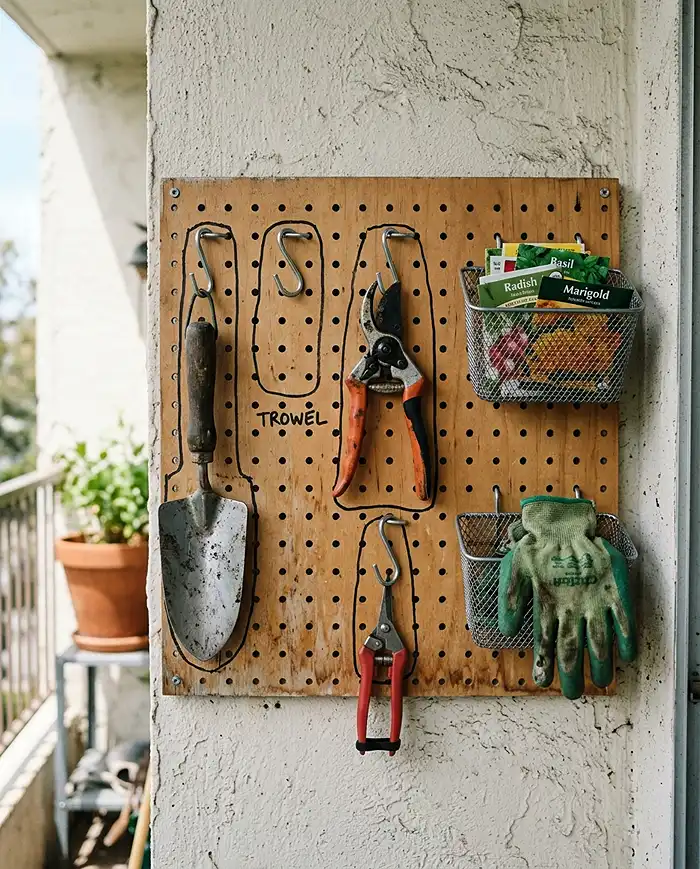
Use a pegboard with a variety of hooks and bins. Hang trowels, pruners, and scissors from S-hooks. Add small wire baskets for seed packets, gloves, and twist ties.
For renters, look for adhesive rail systems (like IKEA SKADIS) that don’t require drilling. They hold surprisingly well and come down cleanly at move-out.
Pro Tip: Outline your tools with a marker on the pegboard so you always know where each one lives — and immediately notice when something’s missing.
Hanging Organizers and Over-Rail Storage
Quick Answer: Over-rail caddies and hanging fabric organizers attach to your balcony railing in seconds — no tools required. They’re ideal for storing small tools, plant ties, and accessories right where you work.
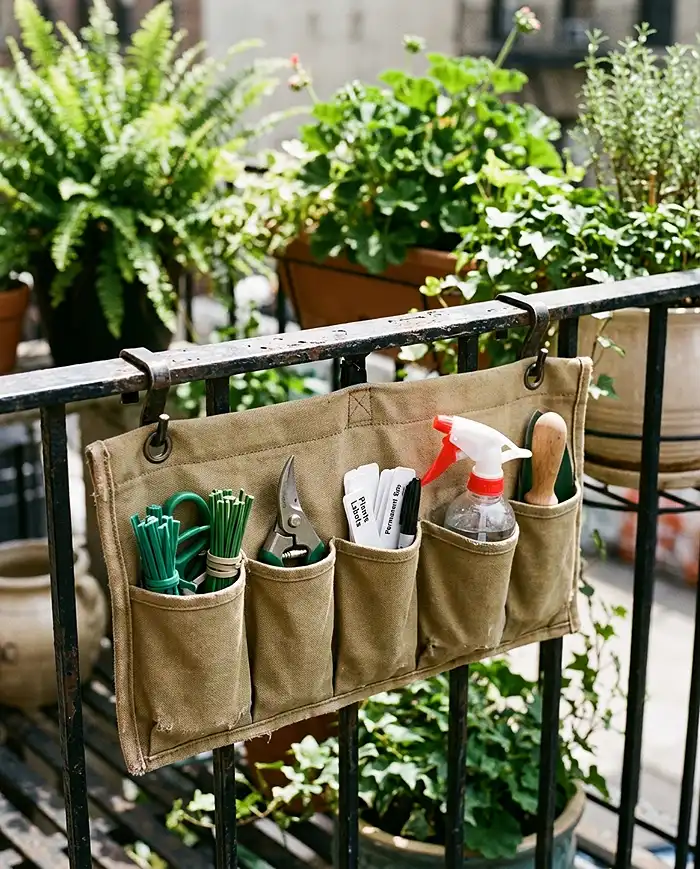
Over-rail planters and storage caddies are designed to straddle a 2–4 inch railing. Many have multiple pockets — use one section for tools and another for seed packets or labels.
Hanging fabric shoe organizers (the kind with clear pockets) also work well on a wall or railing. Each pocket holds a category: labels, gloves, hand pruners, or spare twine.
Pro Tip: Choose UV-resistant fabric organizers — cheap ones fade and crack within one season in direct sun. Look for 600D polyester or canvas.
Multi-Functional and Hidden Storage Ideas
The best storage in a tiny garden pulls double duty. A bench that seats guests AND hides a 20-lb soil bag? That’s good design. These tiny garden ideas make every piece of furniture work harder.
I replaced a simple folding chair with a storage ottoman on my balcony. Now my cushions, extra twine, and two bags of perlite live inside it — completely out of sight.
Storage Benches and Seating With Compartments
Quick Answer: A weatherproof storage bench or deck box gives you seating AND hidden storage for soil, tools, and cushions. It’s the most space-efficient piece of furniture a balcony gardener can own.
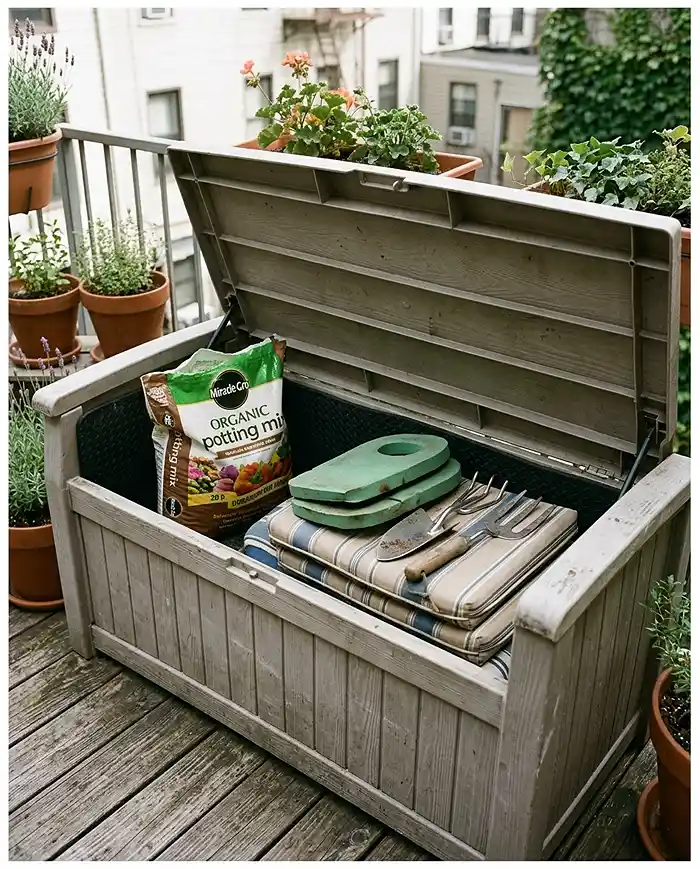
Look for resin or teak benches with lift-top lids rated for outdoor use. Keter and Suncast make durable options in the 30–60 gallon range that fit a standard balcony without overwhelming it.
A 30-gallon deck box holds: one 20-lb bag of potting mix, a set of hand tools, two folded knee pads, and a spray bottle — with room to spare.
Pro Tip: Line the bottom of a storage bench with a rubber mat to protect soil bags from moisture that condenses on the bottom interior.
Stylish Bins, Baskets, and Disguised Containers
Quick Answer: Weatherproof wicker-look bins and rattan baskets keep supplies organized while looking intentional. Use them for pots, soil scoops, or seasonal gear — they blend into any balcony aesthetic.
Plastic bins that mimic natural materials (wicker, rattan, terracotta) are widely available and hold up outdoors. They’re lighter than real wood baskets and won’t rot or mold.
Use matching bins in two or three sizes for a cohesive look. A tall bin near the wall holds extra stakes and canes upright. A medium one corrals small pots. A small basket stays on the table for daily-use tools.
Pro Tip: Drill a few small drainage holes in the bottom of solid bins so rainwater doesn’t pool — especially important for bins storing wooden-handled tools.
Tools and Materials You’ll Need
Here’s a quick reference for setting up balcony storage. Most of these are available at hardware stores or online, and you don’t need all of them — pick what suits your wall type and renter situation.
| Item | Best For | Watch Out For |
|---|---|---|
| Pegboard + hooks | Wall-mounted tool storage | Needs wall anchors or stud mounting |
| Adhesive rail system | Renters avoiding holes | Weight limits (~10–15 lbs per strip) |
| Over-rail caddy | Railing-based storage | Must match railing width (check specs) |
| Resin storage bench | Seating + bulk storage | Heavy when full; check floor weight limits |
| Weatherproof bins | Visible, attractive storage | Cheap ones crack in UV over time |
| Hanging fabric organizer | Small tools + seed packets | Fades without UV protection |
How to Set Up Balcony Storage Step by Step
A little planning up front saves a lot of rearranging later. Here’s the process I use every spring when I reset my balcony setup.
Planning Zones and Mounting Hardware
Quick Answer: Divide your balcony into zones — a work zone near the door, a growing zone for planters, and a seating zone. Then assign storage to the zone where you use those items most.
Map your zones on paper or with tape on the floor first. Once zones are set, identify your mounting surfaces: solid masonry wall, hollow stucco, wood railing, or metal railing. Each needs different hardware.
For masonry walls, use concrete anchors. For hollow walls or renters, use adhesive strips or over-door style hooks. Always check with your landlord before drilling — many allow it with proper patching on move-out.
Pro Tip: Use a stud finder app (many are free) on wood-framed balcony walls before mounting anything heavy. It takes 30 seconds and saves a lot of re-patching.
Organizing Tools and Supplies by Use
Quick Answer: Keep daily-use tools at eye level and within arm’s reach of where you work. Store bulk supplies like extra soil, pots, and seasonal gear lower or inside hidden storage.
- Eye level: trowel, pruners, gloves, spray bottle, plant labels — what you touch every visit
- Mid level: watering can, fertilizer, seed packets, twist ties, and small hand tools
- Low level or hidden: spare pots, bulk soil, seasonal items like frost cloth and grow lights
- Railing storage: current-project supplies, small scissors, string, and temporary items
Group by task, not just type. Everything you need to repot a plant can live in one basket. Everything for a watering session stays together. You’ll move faster and enjoy the process more.
Protecting Stored Supplies From Weather
Weather is the enemy of a well-organized balcony. Sun degrades plastic, rain soaks into soil bags, and wind knocks over anything not secured. Here’s how to stay ahead of it as of spring 2025.
Weatherproofing Tools and Soil Storage
Quick Answer: Store bagged soil in sealed, weatherproof bins to prevent it from getting wet or hardening. Wipe metal tools dry before storing and apply a thin coat of linseed oil to wooden handles each season.
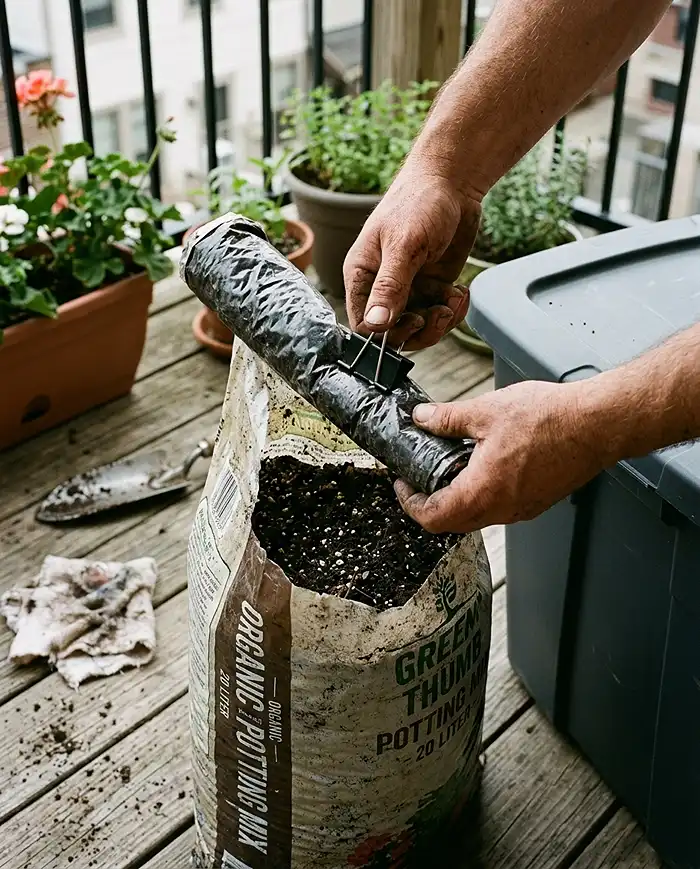
Never leave an open bag of potting mix on the balcony. Even partial bags should go into a sealed bin or ziplock bag inside a bin. Wet potting mix loses structure and can harbor fungus gnats.
Metal tools rust fast in outdoor humidity. A quick wipe with a dry rag after each use takes 10 seconds. At season’s end, a light rub with WD-40 or mineral oil keeps them rust-free through winter.
Keeping Lightweight Items Secure in Wind
Quick Answer: Use bungee cords, velcro straps, or carabiners to secure lids, baskets, and lightweight bins on windy balconies. Items above the railing line need extra anchoring.
Anything stored above railing height is a flight risk. Use carabiners to clip baskets to rails or hooks. Bungee cord lids to deck boxes in exposed spots.
Heavy items at the base of storage units add stability. Keep your heaviest bins low and your lightest accessories at the top — like a properly loaded backpack.
Seasonal Storage and Off-Season Organization
How you store gear through the seasons matters as much as where you store it. A little prep in autumn means everything’s ready to go the moment spring hits.
Storing Tools and Pots in the Off-Season
In late October (zone 6b), I pull out every ceramic and terracotta pot that isn’t frost-proof. I wash them with a 10% bleach solution, let them dry completely, and stack them inside the storage bench with cardboard between each one to prevent chips.
Metal tools get cleaned, oiled, and stored in a sealed bin or brought indoors if space allows. Soil bags get rolled tightly, clipped with a binder clip, and placed in the sealed deck box.
This takes about two hours once a year and means I’m not replacing cracked pots or rusted tools every spring. It’s worth the time.
- Wash and dry all pots before stacking — residual moisture causes mold and freeze damage
- Store empty pots upside-down or padded if stacking — avoids cracking under pressure
- Label soil bags with the date before sealing — year-old potting mix loses nutrients
- Bring terracotta, ceramic, and concrete pots indoors if you’re in zone 6 or colder
Common Problems and Solutions
Even with the best intentions, balcony storage can go sideways. Here are the problems I see most often — and how to fix them fast.
Clutter Taking Over the Balcony
If clutter keeps returning, the system isn’t working. Either you have too much stuff, or nothing has a designated spot. Do a quick declutter first — donate anything unused in a full season.
Then add vertical storage and hidden compartments so more stuff is off-sightlines. Visible clutter is usually just stuff without a home.
Tools Rusting or Supplies Getting Damaged
Rust and damage almost always come down to moisture. Store tools in sealed bins, dry them before putting them away, and treat metal surfaces once a season.
For soil and fertilizers, sealed weatherproof bins are non-negotiable. Even a “sheltered” balcony gets wet in heavy rain or high humidity.
Storage Looking Messy or Unattractive
Mismatched bins and improvised storage look chaotic even when organized. Switching to matching bins in one or two colors makes an instant visual difference.
Use baskets or decorative covers for utilitarian items. A plain black utility bucket looks completely different in a wicker sleeve. Small investments in aesthetics make the space feel calm and intentional.
For more ideas on making your small balcony beautiful as well as functional, browse these native flower balcony garden ideas that pair well with smart storage setups.
Frequently Asked Questions
How do I store gardening tools on a small balcony?
Use a wall-mounted pegboard or hooks to hang tools vertically, freeing up floor space. Over-rail caddies work well for renters who can’t drill. A storage bench can hold larger tools out of sight. Keep daily-use items at eye level for easy access.
How can I store soil and supplies outside?
Store bagged soil and fertilizers in sealed, weatherproof resin bins. These protect against rain, UV, and pests. Roll open bags tightly and clip before placing in the bin. Never leave open soil bags on an exposed balcony — moisture degrades the mix and attracts fungus gnats.
What is the best storage for a tiny balcony?
The best storage combines vertical solutions (pegboards, over-rail caddies) with multi-functional furniture (storage benches or ottomans). This approach saves floor space for plants and seating while keeping tools and supplies accessible and protected from weather.
Can I add storage to a balcony without drilling?
Yes. Adhesive rail systems, over-rail caddies, freestanding shelving units, and storage benches all require no drilling. Many renters successfully set up complete storage systems this way. Always check weight limits on adhesive products and test them before loading fully.
How do I keep a small balcony garden organized long-term?
Assign every item a specific spot and return it after each use. Do a quick 10-minute reset each week and a deeper seasonal tidy in spring and autumn. Declutter once a year — if you haven’t used it in a full growing season, it probably doesn’t need to be on the balcony.
Key Takeaways
- The best balcony storage ideas for gardeners go vertical first — pegboards, over-rail caddies, and wall hooks reclaim floor space instantly.
- Multi-functional furniture like storage benches and ottomans hides bulky supplies while adding usable seating.
- Seal all soil and fertilizers in weatherproof bins — moisture and UV exposure are the biggest enemies of outdoor supply storage.
- Organize by frequency of use: daily tools at eye level, seasonal gear tucked low or inside hidden compartments.
- A quick seasonal reset — especially before winter — extends the life of your tools, pots, and supplies significantly. Browse ideas for vegetables to plant in late summer in pots to keep your organized balcony productive right through autumn.