
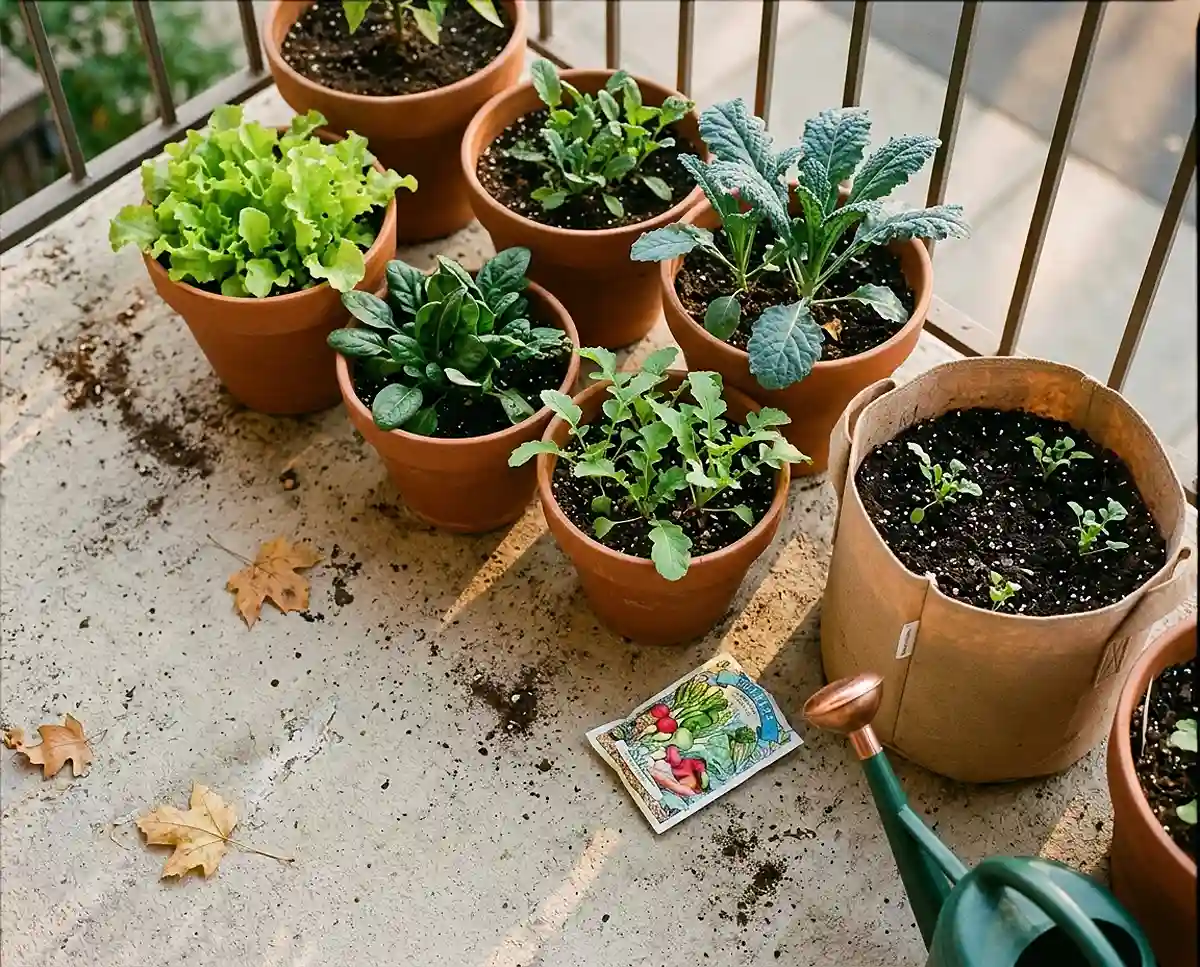
Vegetables to Plant in Late Summer in Pots for a Fall Harvest
The best vegetables to plant in late summer in pots are fast-maturing, cool-season crops — think lettuce, radishes, spinach, and kale. Start them now and you’ll be harvesting well into fall.
I garden on a north-facing balcony in zone 6b, and late summer is honestly one of my favorite planting windows. The race against first frost keeps things interesting, and the crops that thrive in cooling temps are some of the most satisfying to grow.
Table of Contents
Why Late Summer Is Perfect for a Second Container Harvest
Most gardeners plant in spring and call it done. That’s leaving a full season of growing on the table.
Cool-season vegetables — lettuce, spinach, kale, radishes — actually taste better after a light frost. The cold converts starches to sugars, and greens get noticeably sweeter. Starting them in late summer means they hit their stride just as temps drop.
Container gardening makes this second harvest even easier. You control the soil, you move pots to catch light as the sun angle shifts, and you can bring them indoors when frost threatens.
As of summer 2025, small space gardening is booming — more people are squeezing productive fall gardens onto patios and balconies than ever. Late summer is your window to make that happen.
Understanding Timing and Your Growing Window
The key to a successful late-season harvest is math, not luck. You need to know two numbers: your first expected frost date and each crop’s days to maturity.
Calculating Days to Maturity Before First Frost
Quick Answer: Count backward from your first frost date by the crop’s days-to-maturity, then subtract a week as a buffer. That’s your last safe planting date.
For example: if your first frost is October 15 and you’re planting radishes (25 days to maturity), count back 25 days plus 7 for buffer — that puts your last planting date around September 13.
Always check the seed packet for days-to-maturity. It varies by cultivar. ‘Cherry Belle’ radishes mature in 22 days; ‘Scarlet Globe’ takes closer to 28.
Knowing Your Climate and Frost Dates
Quick Answer: Find your average first frost date through the Old Farmer’s Almanac frost date tool — enter your zip code and get precise local data.
Zones 7 and warmer (think mid-Atlantic south) have frost dates in late October or November, giving you a longer window. Zone 5 gardeners may see frost by late September, so timing is tighter.
Warmer microclimates — south-facing walls, urban heat — can add 1-2 weeks. A balcony vertical garden against a brick wall holds heat well into the evening.
Best Fast-Growing Vegetables to Start in Pots
Not every vegetable suits late-season container planting. You want crops that mature quickly, tolerate or prefer cool temps, and don’t mind being started in residual summer heat.
Leafy Greens (Lettuce, Spinach, Arugula)
Quick Answer: Lettuce, spinach, and arugula are the fastest and most forgiving late-summer container crops. Most mature in 30-45 days and can be harvested as cut-and-come-again.
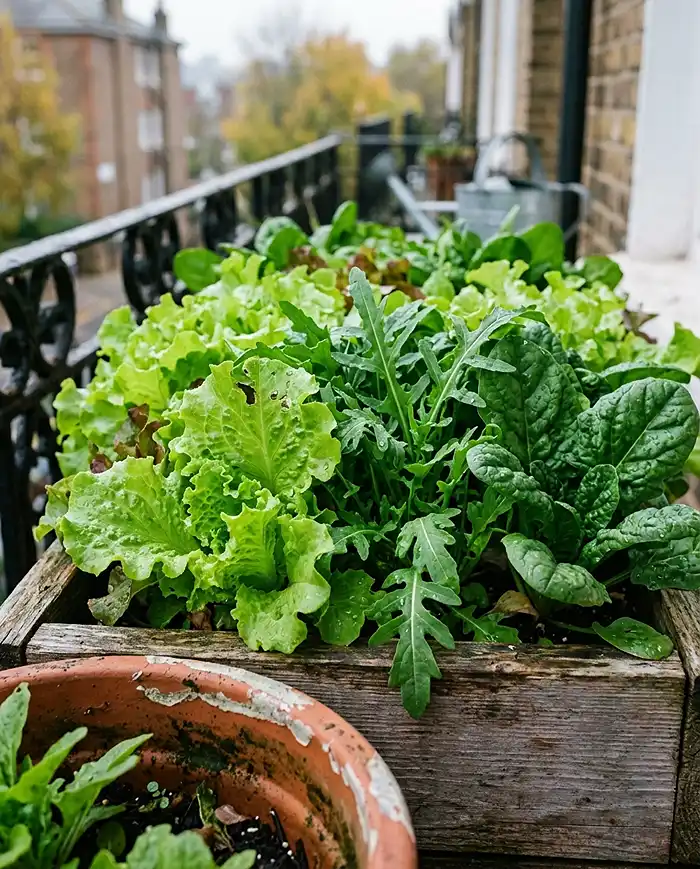
Use a pot at least 6 inches deep and 12 inches wide. Sow seeds 1 inch apart and thin to 4-6 inches. ‘Black Seeded Simpson’ lettuce and ‘Bloomsdale’ spinach are reliable performers.
I sowed arugula in a window box in late August 2023. Six weeks later I was cutting handfuls every few days. It outproduced my spring planting because the cooler temps slowed bolting.
Pro Tip: Sow lettuce in small batches every 10 days to stagger your harvest and avoid a glut.
Root Vegetables (Radishes, Carrots, Beets)
Quick Answer: Radishes are the speed champions — ready in 22-30 days. Carrots and beets take 50-70 days but work if your frost date is late enough.
- Radishes: Need just 6 inches of depth. Sow direct, thin to 2 inches apart. ‘French Breakfast’ is a great container variety.
- Carrots: Require at least 12 inches depth. Try ‘Chantenay Red Core’ — shorter roots suit pots better than standard types.
- Beets: 8-10 inches depth minimum. ‘Bull’s Blood’ gives you edible greens within 30 days even if roots aren’t fully formed.
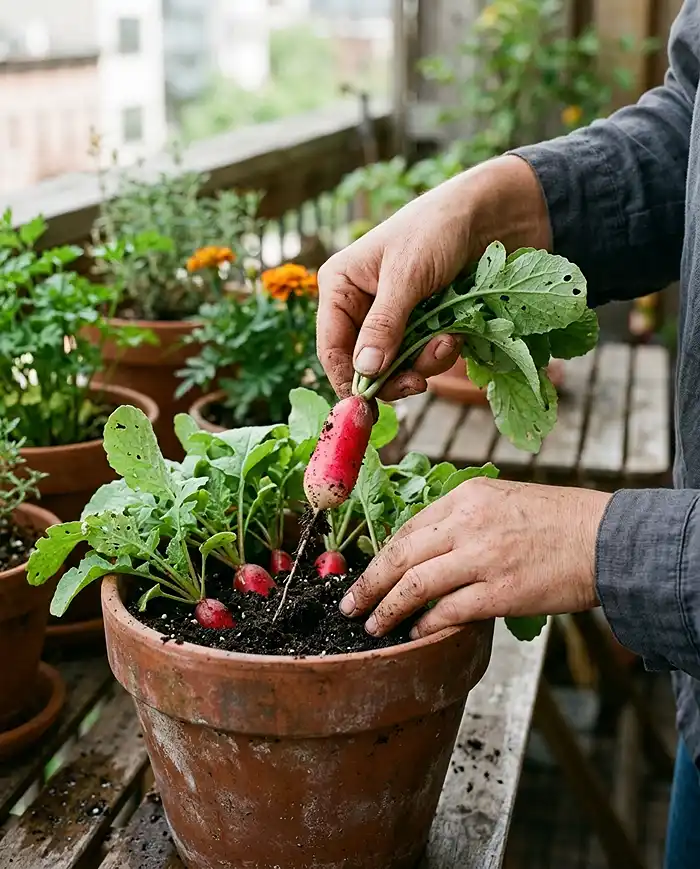
One year I tried full-size Nantes carrots in a 10-inch pot. They were stubby and forked. Switched to Chantenay and got a real harvest. Pot depth matters more than width for roots.
Brassicas and Quick Crops (Kale, Bok Choy, Green Onions)
Quick Answer: Kale, bok choy, and green onions are cold-hardy stars that improve with frost. They’re ideal for small space gardening and vertical gardening setups.
Kale takes 55-65 days but tolerates hard frost, extending your harvest into November in many zones. ‘Dwarf Blue Curled’ is compact enough for 12-inch pots.
Bok choy matures in just 45-50 days. Green onions are ready in 60 days from seed or 3 weeks from sets — great for herb garden ideas on a crowded balcony.
Choosing the Right Containers
The right pot makes a real difference in late-season success. Poor drainage and wrong depth are the two most common mistakes.
Pot Size and Depth by Crop
| Crop | Minimum Depth | Minimum Width | Notes |
|---|---|---|---|
| Lettuce / Arugula | 6 inches | 8 inches | Shallow roots; window boxes work well |
| Spinach | 6 inches | 8 inches | Dense sowing OK; thin after germination |
| Radishes | 6 inches | 6 inches | Small pots fine; good for balcony vertical garden rails |
| Carrots | 12 inches | 10 inches | Use short varieties like Chantenay |
| Beets | 10 inches | 10 inches | Harvest greens early even if roots are small |
| Kale | 10 inches | 12 inches | Dwarf varieties best for pots |
| Bok Choy | 8 inches | 10 inches | Fast; great for succession planting |
| Green Onions | 6 inches | 6 inches | Pack them in; 1 inch apart works |
Material and Drainage for Cooler Weather
Quick Answer: As temperatures drop, pot material matters more. Dark-colored plastic and terra cotta absorb heat; light-colored containers lose it faster. Choose accordingly.
Dark plastic pots warm up quickly on sunny fall days, giving cool-season roots a boost. But they can also dry out faster than expected — check moisture daily in warm spells.
Whatever material you use, drainage holes are non-negotiable. Waterlogged soil in cool weather leads to root rot almost every time. Elevate pots on pot feet or bricks to keep drainage free.
For a balcony vertical garden setup, lightweight fabric grow bags drain excellently and fold flat for storage after the season.
Tools and Materials You’ll Need
You don’t need much to get a late-season container garden going. Here’s the short list:
- Fresh potting mix: Don’t reuse exhausted summer soil. A peat- or coir-based mix with perlite drains well and holds moisture evenly.
- Seeds or transplants: Seeds are cheapest for greens. For brassicas, buying transplants buys you 3-4 weeks of growing time.
- Slow-release fertilizer: Work a granular balanced fertilizer into your potting mix at planting. Less need to feed mid-season.
- Watering can with a rose head: Gentle spray avoids displacing small seeds.
- Row cover or frost cloth: Essential for extending the season. Keep a roll on hand before you need it.
- Plant labels: You will forget what you planted where. Label everything.
How to Plant Late Summer Vegetables in Pots
The process is straightforward, but a few details at planting time pay off weeks later.
Preparing Containers and Soil
Quick Answer: Refresh old potting mix by blending in 30% compost and a slow-release fertilizer. Don’t skip this — depleted soil from summer crops won’t support strong fall growth.
If you’re reusing pots from summer tomatoes or peppers, scrub them with a dilute bleach solution (1 part bleach to 9 parts water) to prevent disease carryover. Rinse thoroughly before adding soil.
Position containers where they’ll get 6 hours of direct sun. As days shorten in fall, south- and west-facing spots outperform east-facing ones for heat retention.
Check out this guide to small patio garden layouts for vegetables and herbs if you’re working out how to arrange multiple pots for maximum light.
Sowing Seeds and Spacing Seedlings
Quick Answer: Sow most greens at 1/4 inch depth, root vegetables at 1/2 inch. Water in gently and keep the surface consistently moist until germination — usually 5-10 days.
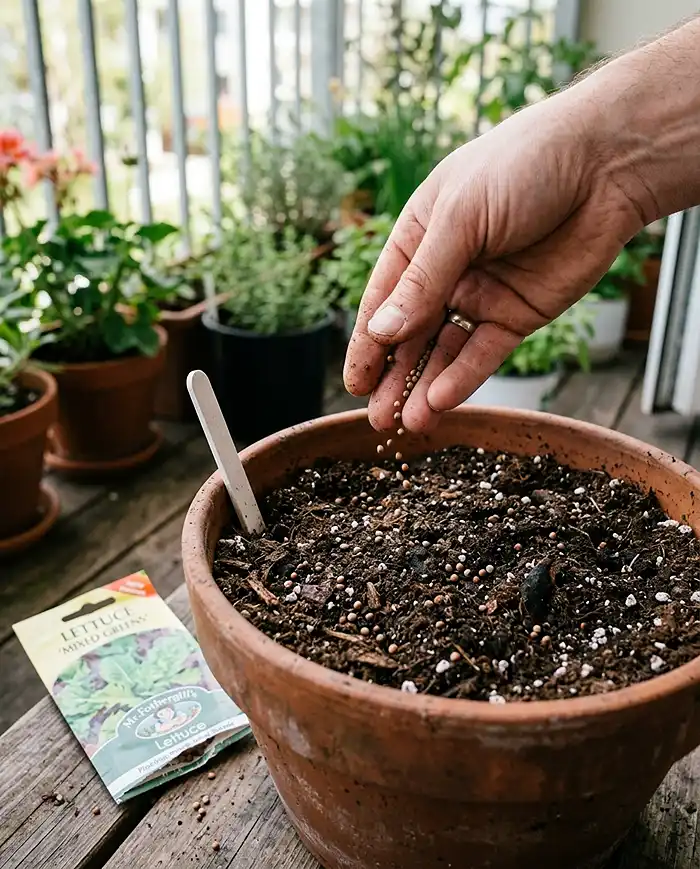
For lettuce, scatter seeds thinly and press them lightly into the soil surface — they need light to germinate, so don’t bury them. Cover the pot loosely with a damp paper towel for the first 3 days to hold moisture.
Spacing matters more in late season because you want plants to size up before cold hits. Don’t crowd: lettuce at 4-6 inches, spinach at 3-4 inches, kale at 8-10 inches.
Planting companion crops together saves space. For ideas on what to grow alongside each other, the container companion planting guide is a solid reference.
Caring for Late-Season Container Vegetables
Late summer care is mostly about managing two competing problems: heat stress early on and cold stress as the season progresses.
Watering and Feeding as Temperatures Cool
Quick Answer: Water deeply but less often as fall temps arrive. Cool soil holds moisture longer than summer heat allows. Overwatering in fall causes more damage than underwatering.
In late summer (still hot), pots may need daily watering. By October in zone 6b, I’m watering every 3-4 days. Stick your finger 2 inches into the soil — if it’s still moist, hold off.
Go light on nitrogen fertilizer in the last 4-6 weeks of the season. Heavy feeding pushes soft leafy growth that’s vulnerable to frost. One liquid feed at half-strength every 3 weeks is plenty.
Managing Heat Stress at Planting Time
Quick Answer: Late summer soil temps above 80°F can prevent germination for cool-season crops. Shade young seedlings and water daily until temps drop below 75°F.
I made this mistake in 2022, sowing spinach in August without any shade. Half the seeds baked in the pot and germination was patchy at best. Now I drape a single layer of row cover over pots for the first two weeks.
Moving pots to a spot with afternoon shade during heatwaves does more good than any product. Morning sun, afternoon shelter — that’s the sweet spot for late summer starts.
Extending the Harvest Into Fall
A little protection goes a long way. Most container crops can survive several degrees below their stated frost tolerance if you act ahead of time.
Using Covers, Cloches, and Moving Pots
Quick Answer: Floating row cover (1.5 oz weight) adds 4-6°F of frost protection. Cloches add more. Moving pots indoors or against a warm wall on freezing nights can save entire harvests.
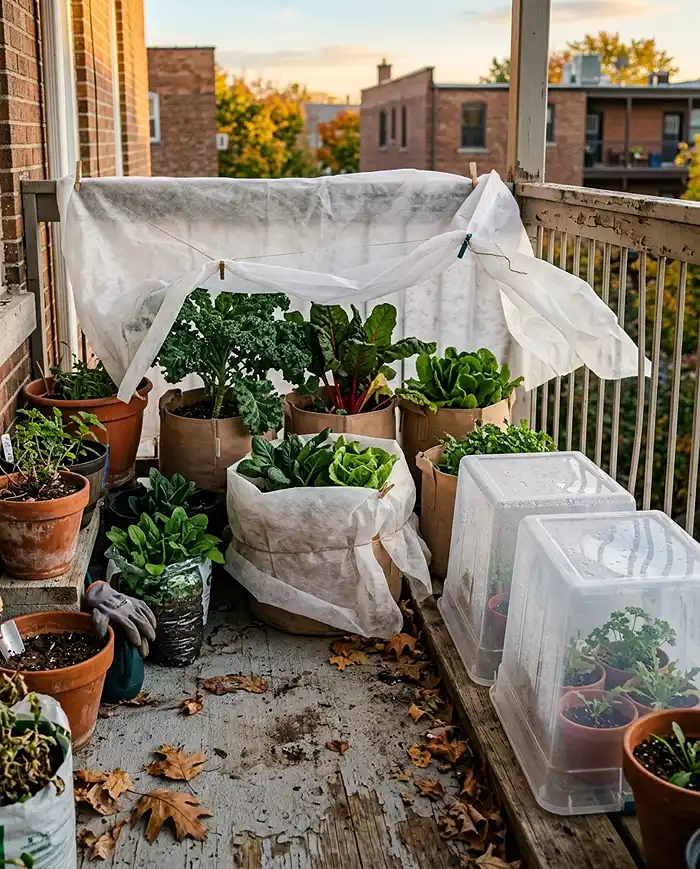
I keep a stack of old plastic storage bins near my balcony. On nights that threaten frost, I drop them over individual pots — quick, free, and surprisingly effective down to about 28°F.
Commercial frost cloth is worth the investment if you grow a lot of containers. A 10×12 foot piece covers most of a patio and can be reused for several seasons.
For more ideas on maximizing small outdoor spaces into fall, browse these apartment balcony garden ideas — many of the setups work beautifully into November.
Common Problems and Solutions
Late-season container growing throws up a few specific challenges. Here’s what to expect and how to handle it.
Seeds Not Germinating in Summer Heat
Quick Answer: Soil temperatures above 80°F inhibit germination in cool-season crops. Shade the container, water twice daily, and consider pre-sprouting seeds between damp paper towels in a cool spot indoors first.
Once sprouted (tails visible), transplant carefully to the pot. This bypasses the hot-soil germination problem entirely and gets plants established faster.
Bolting or Bitter Greens
Quick Answer: Bolting happens when heat tricks cool-season crops into thinking it’s time to set seed. Shade cloth during the hottest part of the day delays bolting and keeps greens from turning bitter.
If lettuce starts to bolt (central stalk rising), harvest immediately — even immature leaves. Once a plant bolts, flavor deteriorates fast and doesn’t recover.
Pests on Young Fall Crops
Quick Answer: Aphids, caterpillars, and flea beetles are the main threats in fall. Row covers at planting prevent most insect pressure. For active infestations, insecticidal soap spray works within 48 hours.
Check the undersides of leaves every few days. Catching aphid colonies early — when they’re small — means a single spray usually solves it. Waiting until plants are covered makes control much harder.
Frequently Asked Questions
What vegetables can I plant in late summer in containers?
The best vegetables to plant in late summer in pots are fast-maturing cool-season crops: lettuce, spinach, arugula, radishes, kale, bok choy, beets, and green onions. Most mature in 30-60 days and actually taste better after light frosts.
Is it too late to plant vegetables in late summer?
It depends on your first frost date and each crop’s days to maturity. Count backward from your frost date using the seed packet’s days-to-maturity number, subtract a week as a buffer, and that’s your last safe planting date. Fast crops like radishes and lettuce give you the most flexibility.
How do I protect fall container crops from frost?
Cover plants with floating row cover (1.5 oz weight) for 4-6 degrees of frost protection. Use cloches for more coverage, or move pots against a warm wall or indoors on nights when temperatures will drop below 32 degrees Fahrenheit.
How deep do containers need to be for fall vegetables?
Leafy greens and radishes need just 6 inches of depth. Beets and bok choy need 8-10 inches. Carrots need at least 12 inches — and use a short variety like Chantenay for best results in pots.
Can I reuse summer potting mix for fall container vegetables?
Yes, but refresh it first. Blend in 30% compost and a slow-release balanced fertilizer. Summer crops deplete nutrients fast, and depleted soil won’t support strong fall growth. Always scrub reused pots with dilute bleach to prevent disease carryover.
Key Takeaways
- The best vegetables to plant in late summer in pots are cool-season, fast-maturing crops — lettuce, spinach, radishes, kale, and bok choy are your most reliable options.
- Count backward from your first frost date using each crop’s days-to-maturity to find your last safe planting window — always add a one-week buffer.
- Match pot depth to crop: 6 inches for greens, 10-12 inches for root vegetables. Drainage is non-negotiable as fall rains increase.
- Shade young plants during hot late-summer days to prevent germination failure and bolting — row cover and afternoon shade solve most early problems.
- Frost cloth, cloches, and moveable pots let you push the harvest weeks past your first frost date, making small space gardening productive well into fall.