
Best Companion Plants for Containers
Companion plants for containers can mean the difference between a struggling pot and one that produces all season long. Pair the right plants and you get natural pest control, better pollination, and smarter use of every inch of soil.
I grow food on a north-facing balcony in zone 6b, where space is tight and every pot has to earn its keep. Pairing companions in the same container has been one of the highest-ROI moves in my small space food garden.
Why Companion Planting Works in Containers
In traditional beds, companion planting improves the garden ecosystem over large areas. In pots, those benefits get concentrated — which makes them even more powerful in container vegetable gardening.
When you pair compatible plants in a single container, you’re doing several things at once. You’re using vertical and horizontal space together, so a deep-rooted tomato and a shallow-rooted basil share the pot without fighting.
You’re also recruiting plants to do pest control work. Certain flowers and herbs confuse or repel insects naturally, reducing how often you need to intervene. And in a small space food garden, every advantage matters.
The result: healthier plants, better yields, and containers that look intentional rather than overcrowded. That’s why this approach has become a core part of smart space-saving small garden ideas for urban growers.
How Companion Planting Works in Pots
Before you start pairing plants, it helps to understand the mechanics. Not every combination is compatible — and in a container, an incompatible pairing can tank both plants quickly because they share limited soil, water, and nutrients.
Matching Sun, Water, and Soil Needs
This is the foundation. A drought-tolerant Mediterranean herb paired with a water-hungry vegetable will leave one plant stressed no matter what you do.
Sun needs must align too. Shade-tolerant plants can share a pot with full-sun crops only if they’re positioned to benefit from afternoon shade cast by the taller plant. Otherwise, one gets scorched and the other gets leggy.
Soil pH matters as well. Most vegetables prefer a slightly acidic mix (6.0–6.8), which overlaps well with most herbs and edible flowers — making those the safest companions for container vegetable gardening.
How Plants Help Each Other (Pest Control, Pollination, Space)
Strong-scented plants like basil and marigolds mask the smell of nearby vegetables, making it harder for pests to locate their targets. Aphids, whiteflies, and spider mites are all deterred by certain aromatic companions.
Flowers bring in pollinators, which boosts yields in fruiting vegetables like tomatoes and peppers. Even self-pollinating plants produce more when bees visit regularly.
Space efficiency is the third benefit. A tall, upright plant shades the soil surface, reducing moisture loss. A low-spreading plant fills in below, blocking weeds and keeping roots cool. Together they make better use of the pot than either would alone.
Choosing the Right Container for Companions
The container itself can make or break a companion pairing. Put two vigorous plants in an undersized pot and they’ll compete from day one — stunted growth, yellowing leaves, and early decline.
For most companion combinations, you’ll need more room than you think. A single tomato plant needs at least a 5-gallon pot on its own. Add a companion and you’re looking at 10–15 gallons minimum. Don’t shortchange the roots.
Material matters less than size and drainage, but terra cotta dries out faster than plastic — keep that in mind when grouping plants with different moisture needs. For more on building out a container setup, see this small patio garden layout for vegetables and herbs.
Pot Size, Depth, and Drainage for Multiple Plants
Quick Answer: For two companion plants, start at 10 gallons. Go deeper rather than wider — most vegetables need at least 12 inches of root depth. Drainage holes are non-negotiable; waterlogged soil kills roots fast.
A wide, shallow pot works for herbs but not for companions that include root vegetables or deep-rooted tomatoes. Aim for a depth-to-width ratio of at least 1:1. Elevate pots on feet or bricks to keep drainage holes clear.
Spacing Plants to Avoid Competition
Quick Answer: Give each companion plant at least 6–8 inches of surface space in the pot, more for large plants. Crowding isn’t cute — it cuts airflow and invites disease.
The general rule: place the tallest plant at the back or center, medium plants around it, and low spreaders or trailers at the edge. This creates a canopy effect that reduces water evaporation and gives each plant its own light zone.
Check spacing at planting, not after they’ve filled in. It’s easier to correct early. If seedlings look crowded by week three, remove one rather than letting them fight.
Best Companion Plant Combinations for Containers
These are pairings I’ve used myself or seen work consistently in containers. Each one has a clear reason behind it — not just folklore.
Vegetable Combinations (Tomatoes, Basil, Peppers)
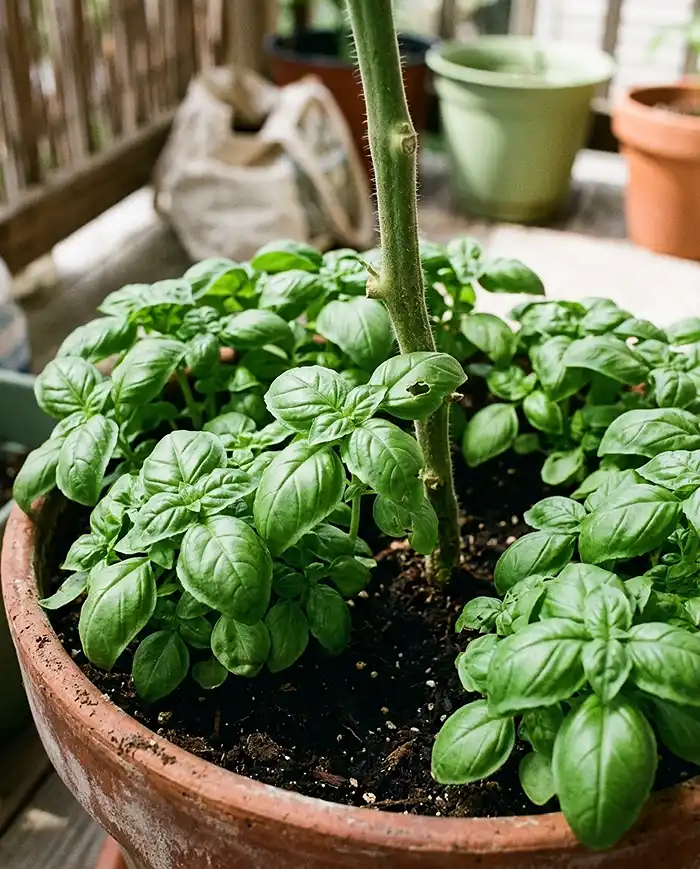
Quick Answer: Tomato and basil is the classic container pairing. Basil repels aphids and whiteflies, improves airflow by filling the soil surface, and stays compact enough not to compete. Peppers and basil work the same way.
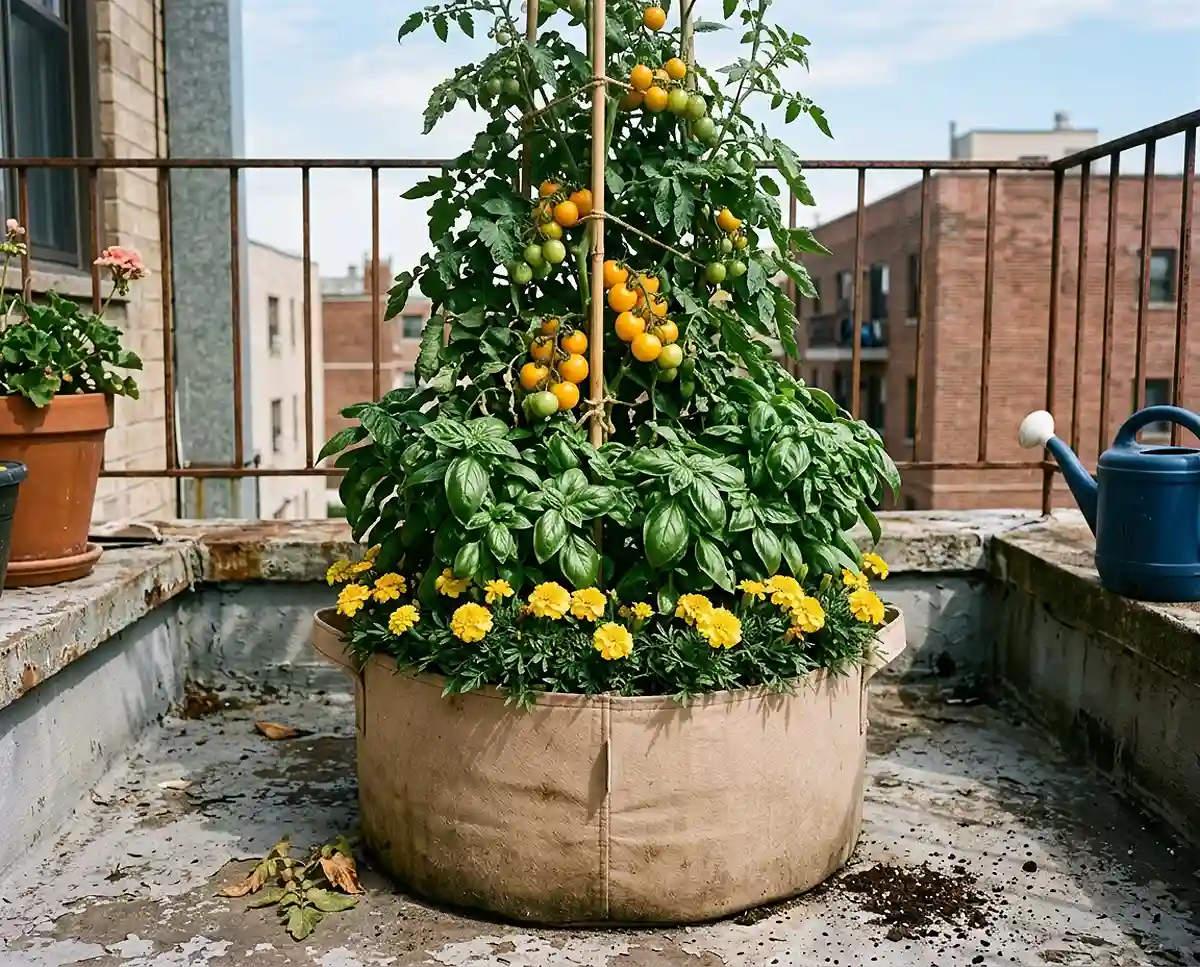
In summer 2023, I planted ‘Sungold’ cherry tomatoes with ‘Genovese’ basil in a 15-gallon fabric pot. The basil filled in around the base, and I had almost zero aphid pressure all season — compared to the previous year when I grew the same tomato alone.
Peppers pair well with parsley and chives too. Both herbs stay compact, deter certain beetles, and don’t compete aggressively for water.
Pro Tip: Pinch basil flowers as they appear — letting it bolt reduces its pest-repelling oils and redirects energy away from leaf production.
Herb Combinations
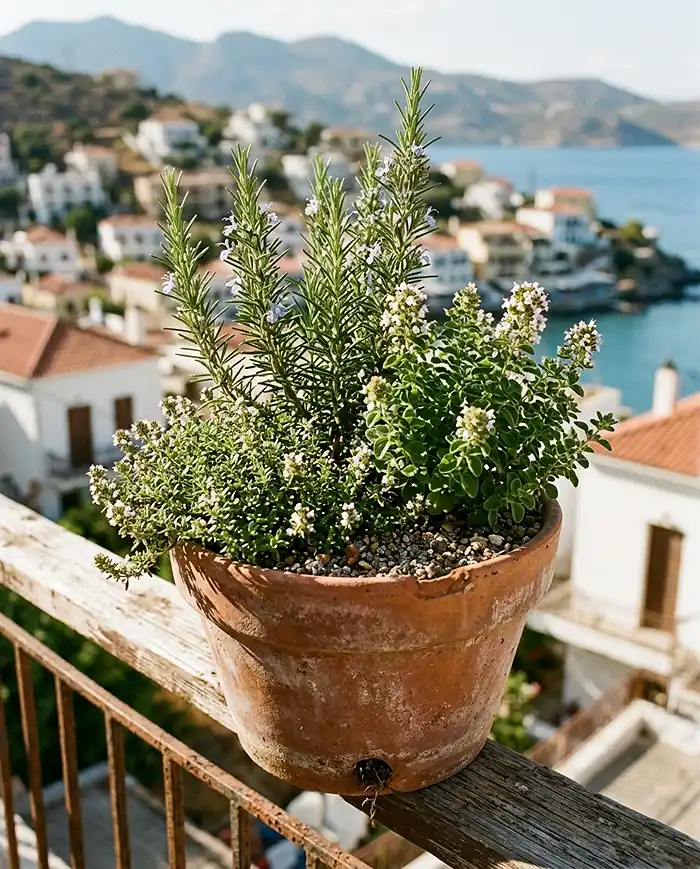
Quick Answer: Group Mediterranean herbs together — rosemary, thyme, oregano, and sage all prefer well-drained, slightly dry conditions and full sun. They’re natural companions in a single pot and thrive on neglect.
| Herb Group | Water Needs | Best Companions | Keep Separate From |
|---|---|---|---|
| Mediterranean (rosemary, thyme, oregano) | Low — let dry between waterings | Sage, lavender | Basil, cilantro (need more moisture) |
| Moisture-loving (basil, parsley, cilantro) | Medium — keep consistently moist | Each other, chives | Rosemary, thyme |
| Chives | Medium | Most vegetables, carrots | Beans, peas |
Don’t mix Mediterranean and moisture-loving herbs in the same pot. One group will always be unhappy. Keep them in separate containers even if space is limited.
Flower and Vegetable Pairings (Marigolds, Nasturtiums)
Quick Answer: French marigolds (Tagetes patula) repel nematodes and aphids and work in any vegetable container with at least 8 inches of space. Nasturtiums act as trap crops, drawing aphids away from nearby vegetables.
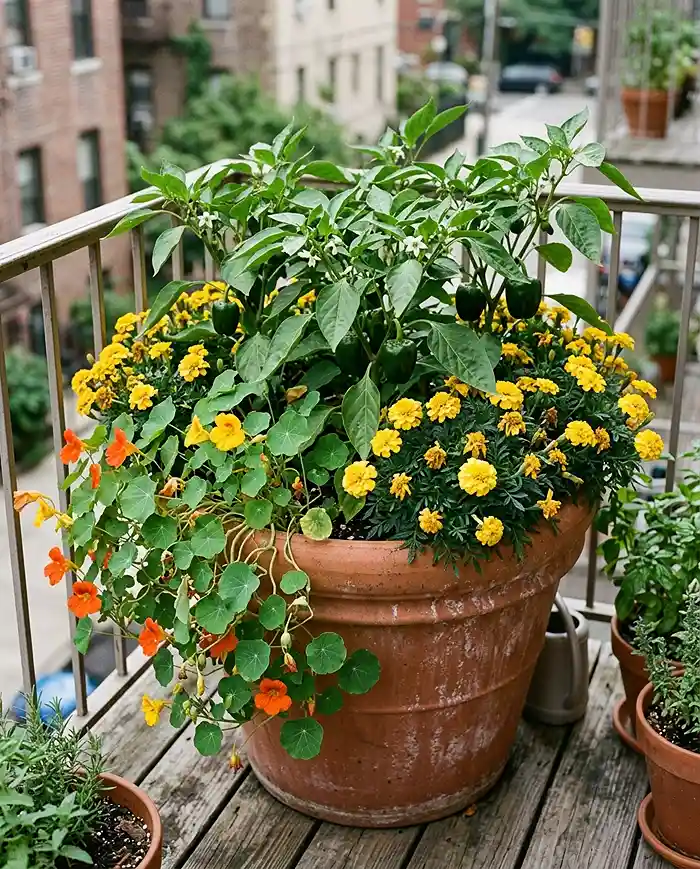
I ring the edge of my vegetable pots with ‘Lemon Gem’ marigolds every season. They stay compact (under 10 inches), bloom from June through frost, and look great alongside vegetables in pots. Nasturtiums are messier but double as a salad green — edible flowers and pest control in one plant.
For more ideas on pairing flowers with edibles, check out the best summer flowers for container edges.
Plants to Keep Apart in Containers
Companion planting isn’t just about what to pair — it’s equally about what not to put together. Some combinations actively harm each other.
Incompatible Pairings and Aggressive Growers
Quick Answer: Mint should always have its own pot — it spreads aggressively and will crowd out any companion within weeks. Fennel is allelopathic and inhibits the growth of most other plants around it.
- Mint + anything: Mint spreads via runners and will take over a shared pot within one growing season. Grow it alone in a dedicated container.
- Fennel + vegetables: Fennel releases compounds that stunt nearby plants, especially tomatoes and peppers. Keep it isolated.
- Beans + onions or chives: Alliums suppress bean growth. Don’t pair them in the same container.
- Tomatoes + brassicas: Both are heavy feeders and compete aggressively. Neither performs well when crowded together.
- Dill + tomatoes: Young dill stunts tomato growth. Mature dill is fine, but it’s not worth the risk in a container.
The rule I follow: if a plant is known for being aggressive in the ground, it’ll be worse in a pot. Contain it or grow it alone.
Tools and Materials You’ll Need
You don’t need much, but having the right materials set up before planting day makes a real difference.
- Containers: 10–15 gallon pots for most companion combos; fabric pots work well for drainage and air pruning roots
- Potting mix: Use a high-quality peat- or coco-based mix — never garden soil, which compacts in containers and drains poorly
- Slow-release fertilizer: Work a granular balanced fertilizer (10-10-10 or similar) into the mix at planting; containers deplete faster than in-ground beds
- Liquid feed: A diluted fish emulsion or balanced liquid fertilizer for mid-season top-ups every 2–3 weeks
- Stakes or cages: For tall companions like tomatoes; set them at planting, not after roots are established
- Watering can or drip system: Consistent moisture is critical when multiple plants share limited soil
How to Plant a Companion Container
The order you do things in matters. Rushing the planting process leads to overcrowded roots and disturbed companions later.
Preparing the Pot and Soil
Start with a clean pot. If it’s been used before, scrub it with a diluted bleach solution (1 part bleach to 9 parts water) and rinse well. Old pathogens linger and can wipe out an entire container in one season.
Cover the drainage holes with a small piece of mesh or broken pottery — enough to keep soil in without blocking flow. Fill one-third of the pot with quality potting mix, then mix in your slow-release fertilizer according to the package rate.
Don’t use garden soil or cheap bagged mix. The investment in good potting mix pays back in every harvest.
Arranging and Spacing Companions
Set your plants on top of the soil in their nursery pots first. Arrange them before you plant anything — it’s much easier to adjust spacing this way.
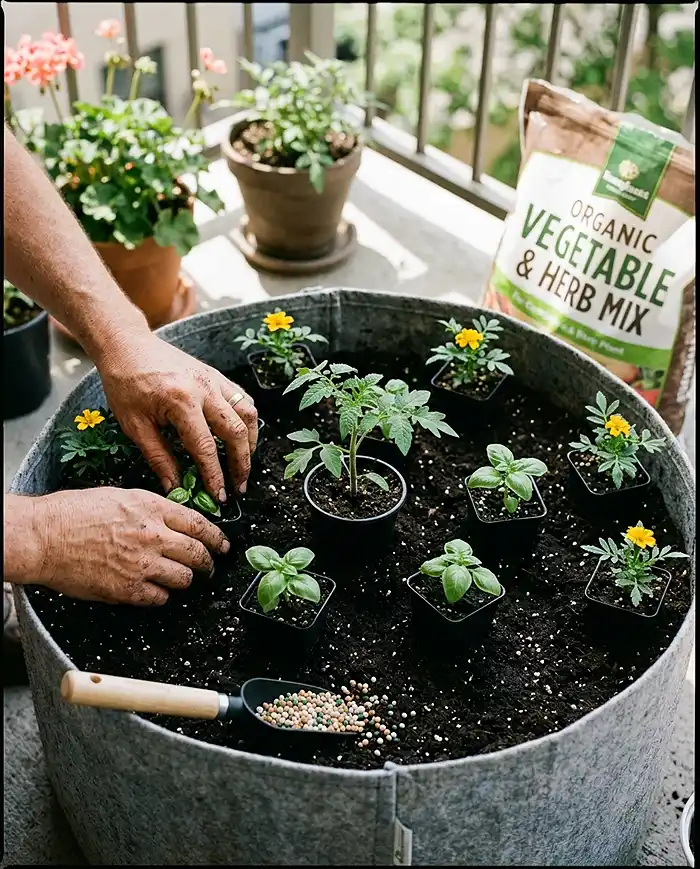
Tallest plant goes to the back or center. Medium plants surround it. Low-growers and trailers sit at the rim. This arrangement maximizes light for everyone and gives the container a layered, intentional look.
Once you’re happy with placement, remove each plant from its nursery pot, loosen the roots gently, and plant at the same depth it was growing before. Firm the soil around each plant and water in well to eliminate air pockets.
For apartment balcony setups, see these apartment balcony garden ideas for layout inspiration that makes the most of limited space.
Caring for Companion Container Plants
A shared pot needs more attention than a single-plant container. Multiple root systems draw down nutrients and moisture faster, and the balance between companions can shift through the season.
Watering and Feeding Multiple Plants
Quick Answer: Water companion containers more frequently than single-plant pots — daily in heat, every other day in mild weather. Feed every two weeks with a diluted liquid fertilizer once the slow-release granules start to deplete (typically 6–8 weeks in).
Check moisture by pushing your finger 2 inches into the soil. If it’s dry, water thoroughly until it drains from the bottom. Shallow watering causes shallow roots and wilting between sessions.
If one plant is yellowing while the other is thriving, the balance is off. Increase feeding and consider whether the root systems have become imbalanced — it may be time to upsize the pot.
Pruning and Harvesting Without Disturbing Companions
Quick Answer: Harvest and prune from the outside of the plant inward, keeping your hands clear of neighboring root zones. Sharp, clean scissors do less damage than tearing.
When harvesting basil from a tomato-basil combo, pinch from the top of the basil stems, not from the base. This encourages bushy growth and keeps the basil from shading the tomato’s lower leaves.
Deadhead flowers on companion marigolds and nasturtiums weekly. This extends their bloom and keeps them in pest-repelling mode rather than going to seed.
Seasonal Care for Companion Containers
No companion combination lasts forever. Seasons change, plants bolt, and some companions finish before others. Managing this rotation keeps your containers productive year-round.
Rotating and Refreshing Combinations
When one plant in a companion pair finishes — basil bolts in late summer, annual flowers fade after frost — pull it out cleanly without disturbing the remaining plant’s roots. Top-dress with fresh potting mix and a slow-release fertilizer to replace what was depleted.
In spring 2024, I replaced spent basil in a tomato container mid-August with ‘Profusion’ zinnia seedlings. The zinnias brought in pollinators for the late tomato harvest and kept the pot looking good through October.
Before winter, cut back any perennial herbs in mixed containers to about half their height. Mulch the soil surface with an inch of compost to insulate roots in colder zones. In zone 6b, I bring my rosemary-thyme pot indoors by mid-October — they won’t survive an outdoor winter here.
Common Problems and Solutions
One Plant Overtaking the Others
Quick Answer: If one companion is crowding the others, prune it back by one-third immediately. If it keeps dominating, remove it and grow it in its own container — some plants just don’t share well.
This is most common with basil that’s allowed to bolt, spreading laterally, or with nasturtiums that vine more than expected. A weekly check and a quick trim keeps the balance.
Competition for Water and Nutrients
Quick Answer: Signs of competition include stunted growth in one plant, yellowing lower leaves, and wilting despite watering. Upsize the pot first, then increase feeding frequency.
If upsizing isn’t possible, separate the plants into individual containers. Some combinations work better in theory than in a specific pot size. There’s no shame in giving each plant its own space.
Pests Spreading Between Companions
Quick Answer: Inspect both sides of leaves on all companion plants every 3–5 days. Pests spread quickly in a shared pot. Treat with insecticidal soap spray at the first sign of infestation — as of spring 2025, diluted neem oil remains one of the most effective organic options.
Isolate the affected container from other pots immediately. One infested pot can spread spider mites or whiteflies across an entire balcony garden within a week. Catch it early.
Frequently Asked Questions
What plants grow well together in containers?
Tomato and basil is the most reliable container pairing — basil repels aphids and thrives in the same conditions. Marigolds pair well with almost any vegetable, deterring pests naturally. Mediterranean herbs like rosemary, thyme, and oregano grow well together since they share the same low-water, full-sun needs.
Can I plant different vegetables in the same pot?
Yes, if they share similar sun, water, and space requirements. Tomatoes and basil work well together in a 15-gallon pot. Lettuce and chives are another easy combo. Avoid pairing heavy feeders like tomatoes and brassicas, which compete too aggressively in limited soil.
What plants should not be grown together in pots?
Mint should always have its own container — it overtakes companions within weeks. Fennel inhibits the growth of most nearby plants and is best kept isolated. Beans and onions or chives suppress each other, and tomatoes and brassicas compete too aggressively for nutrients in a shared pot.
How many plants can I put in one container?
It depends on the pot size and plant types. A 10-gallon pot can support two medium companions comfortably — for example, one pepper plant and one basil. A 15-gallon pot can handle three companions if one is a low-growing filler like marigolds or thyme. Overcrowding always backfires.
Do companion plants really work in containers?
Yes — when the pairing is based on compatible needs rather than folklore. Basil genuinely deters aphids through volatile oils. Marigolds repel nematodes and certain flies. The key is pairing plants with matching light, water, and soil preferences so both thrive rather than compete.
Key Takeaways
- The best companion plants for containers share identical sun, water, and soil needs — compatibility comes first, companion benefits second.
- Tomato + basil and marigold + vegetable are the most proven container combinations for pest control and yield improvement in container vegetable gardening.
- Size up your containers — 10–15 gallons minimum for most companion pairings, with at least 12 inches of depth for rooted vegetables in pots.
- Keep mint, fennel, and other aggressive or allelopathic plants in solo containers; they’ll always dominate in a shared pot.
- Rotate companions as seasons change — swap out finished plants, top-dress with compost, and replant to keep your small space food garden productive from spring through first frost.