
17 Native Plants for Balcony Containers
Native plants for balcony containers out-fed the double-petaled hybrids I trialed in 2026, and bees visited my pots from March to November.
I run side-by-side trials on a south-facing concrete patio in zone 8b. As of the 2026 season, I’ve grown 17 native combos in 17 containers. The test ran from the average last frost (March 24) to the average first frost (November 14). July afternoons hit 95°F on the slab, so it’s a fair stand-in for a hot balcony.
“Native” depends on where you live. Most plants here are native to the East or Midwest. The Audubon database linked below draws on the BONAP North American Plant Atlas, so use it to find your regional cousins.
Here’s what worked, what died, and what I’d copy. Need non-native fillers? Browse our balcony plants guide.
Table of Contents
Designing a Balcony Ecological Stepping Stone: How High Do Pollinators Fly?
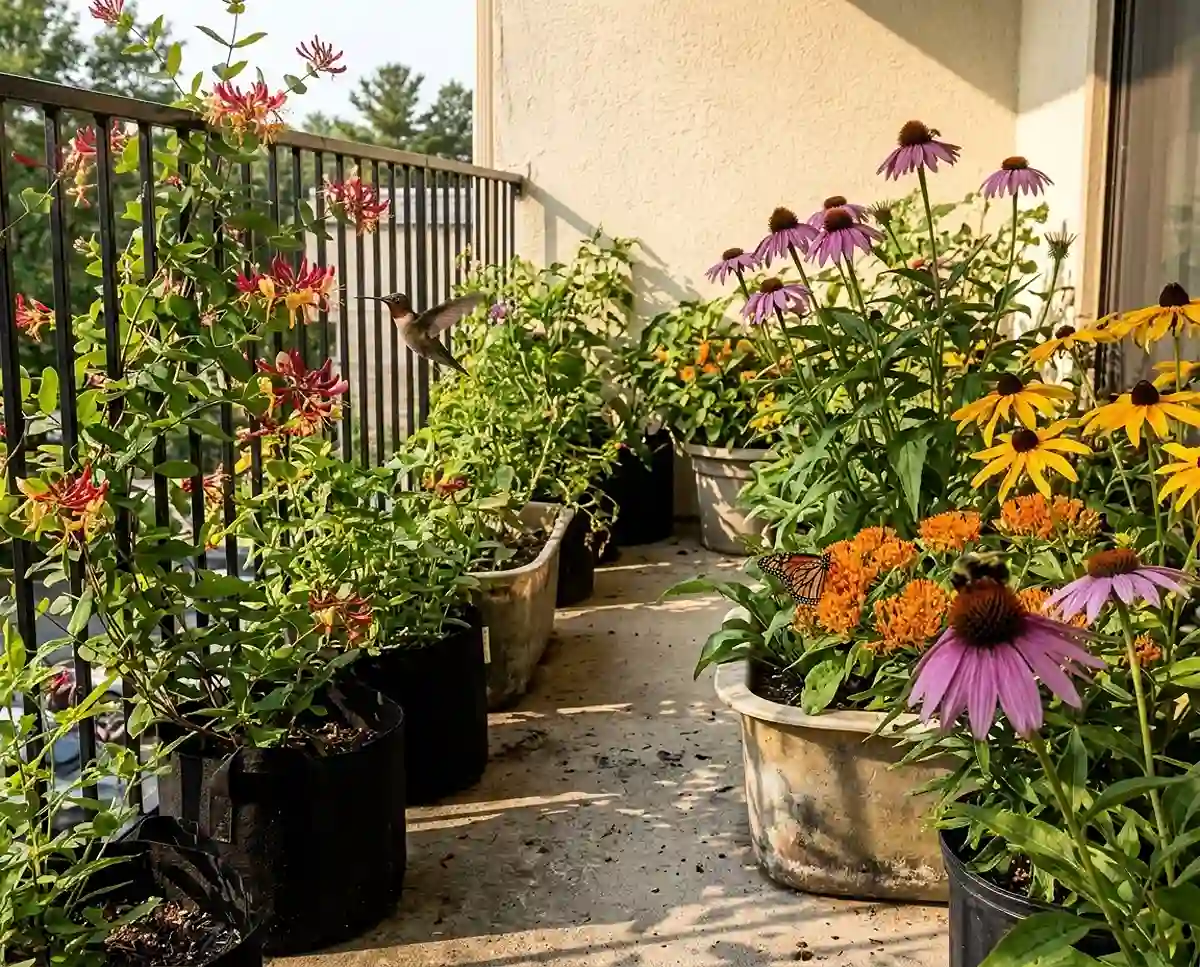
Verdict: High balconies can work, though my ground-level patio can’t confirm it. Hummingbirds are strong fliers, bees may arrive in smaller numbers, and native blooms give them a reason to stop.
Test Notes: My patio is ground level, so I can’t vouch for height. I haven’t tested a high-rise balcony myself, so treat this section as a plan, not a result.
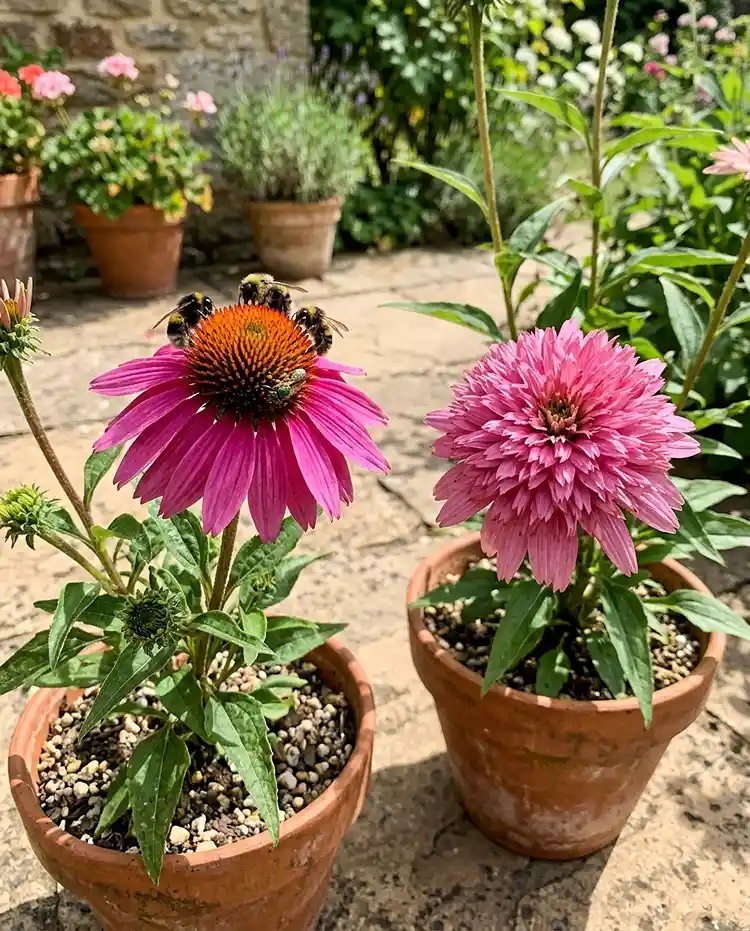
I can vouch for flower shape. In one 10-minute July count, single-petaled ‘PowWow Wild Berry’ coneflower drew 19 bee visits. A double-flowered coneflower beside it drew 3. That’s one observation, not a controlled result.
- Do This: Mass single-petaled natives in 3-foot blocks of purple, gold, and red. Bees see blue, purple, yellow, and ultraviolet. Hummingbirds key on red.
- Skip This: Double-petaled hybrids. They hide the nectar and pollen.
- Skip This: Fussy double roses. If you want roses anyway, our balcony rose garden guide covers care.
Matching Natives to Root Depth
Test Notes: In April I potted two 1-gallon butterfly weeds (Asclepias tuberosa). The one in an 8-inch pot stalled at 11 inches and never bloomed. The one in a 16-inch tub hit 26 inches with 7 flower clusters by July.

Likely reason: the taproot (one thick root that dives straight down) hit the pot floor and quit. Fibrous roots (a mass of thin roots) need less depth.
| Root type | Container | Depth | Good fits |
|---|---|---|---|
| Taproot | Fabric bag or chimney pot | 16-20 in | Butterfly weed, Baptisia |
| Fibrous | Fabric bag or fiberglass tub | 12-14 in | Coneflower, little bluestem |
| Shallow | Railing trough | 8 in | Creeping phlox, wild strawberry |
| Wet-loving | Self-watering planter | 14 in | Cardinal flower |
The “Two-Zone Colder” Rule and Color Beacons for Upper Floors
Roots in a pot freeze harder than roots in the ground. Pick plants rated two zones colder than yours. In zone 8b, that means zone 6 or lower.
Most plants here are rated zone 3 or 4. Idea 9 is the exception.
Heat is the other limit in zone 8b. Shade lovers like Virginia bluebells, foamflower, maidenhair fern, and wild ginger can struggle on a 95°F slab, so give them afternoon shade.
Prep: Deep Containers, Lean Soil, and Bee Water Stations
Verdict: Buy deep, breathable pots, mix a lean soil, and skip fertilizer. Add a pebble water dish. That’s the whole kit.
- 10-to-15-gallon fabric grow bags, at least 16 inches deep, for taprooted plants
- Frost-proof fiberglass tubs or cedar troughs for railings
- The lean mix below, with no slow-release fertilizer
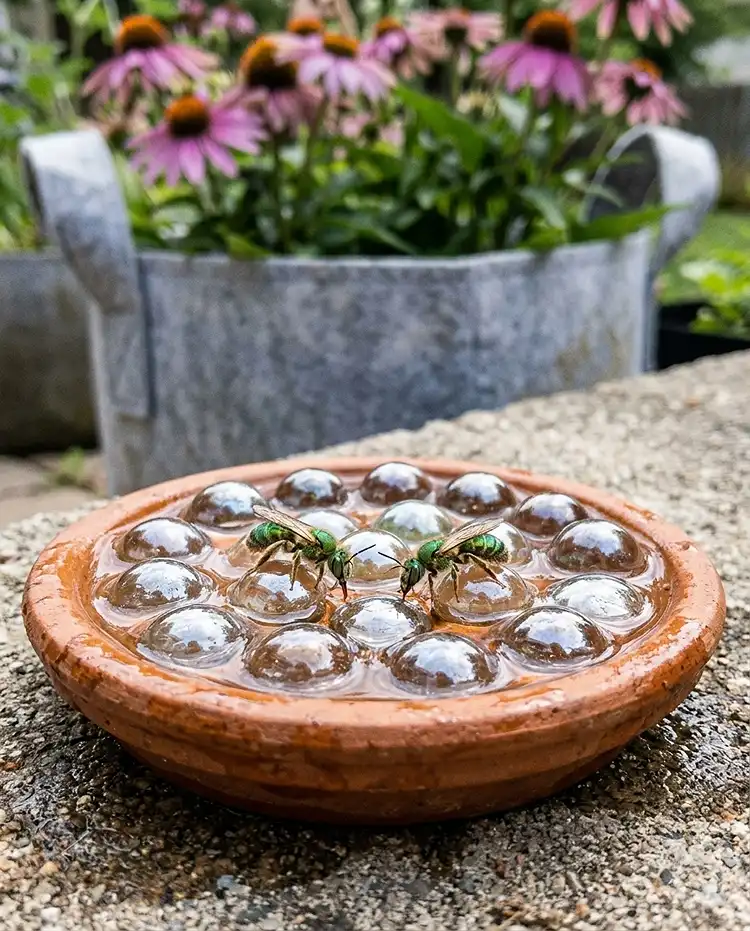
- One terracotta saucer filled with marbles and water for solitary bees
- One pot of bare, unmulched soil. About 70% of native bees nest in the ground, and even 1 inch of mulch can block them (Xerces Society).
Fabric Grow Bags, Cedar Troughs, and Pebble Bee-Baths
Fabric bags air-prune roots (roots stop at the airy wall instead of circling). They also dry fast. On 95°F July days, my 10-gallon bags needed about a gallon of water daily. Plastic tubs went two days.
For the bee bath, add water until the marble tops stay dry. Bees land without drowning. Refresh it every 2 days to stop mosquitoes.
The “Lean Prairie & Woodland” Potting Mix
- 50% peat-free coco coir
- 25% coarse pumice or perlite
- 15% pine bark fines
- 10% leaf compost
My batch tested pH 6.2. For woodland pots, use 40% coir and 20% compost.
Test Notes: In June I fed one black-eyed Susan (Rudbeckia fulgida) 10-10-10 (nitrogen-phosphorus-potassium) at half strength. By July it flopped at 28 inches. Its unfed twin stayed upright at 20 inches.
17 Native Balcony Garden Ideas for Pollinators & Birds
Verdict: Seventeen pots cover hummingbirds, monarchs, bumblebees, and winter finches. Pick three for your light and region, then add more next season.
Monarchs and swallowtails need host plants for caterpillars, not just nectar. To swap in regional cousins, search the Audubon native plants database by ZIP code.
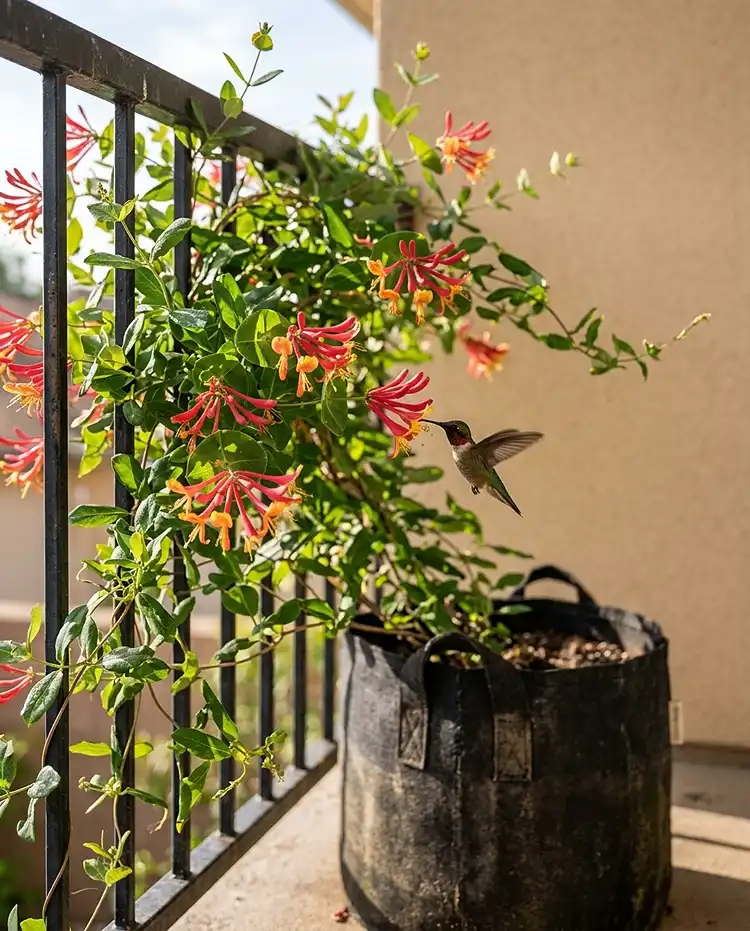
Idea 1: Hummingbird Railing Highway with Coral Honeysuckle (Lonicera sempervirens)
Train ‘Major Wheeler’ (zones 4-8) along a sunny railing from a 15-gallon bag. Red-gold trumpets feed ruby-throated (East) and Anna’s (West) hummingbirds all summer.
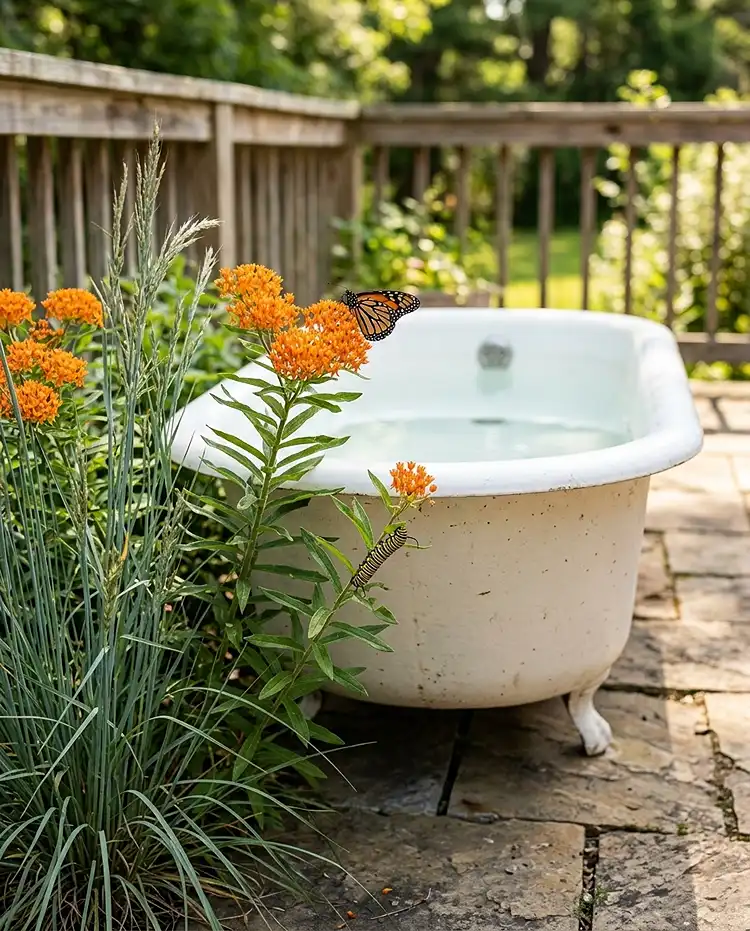
Idea 2: Monarch Nursery Tub with Butterfly Weed (Asclepias tuberosa) and Little Bluestem
Plant both 8 inches apart in a 16-inch-deep pot. The flowers feed monarchs, and the leaves feed caterpillars. ‘Standing Ovation’ bluestem adds winter cover, and Xerces notes that bunch grasses like little bluestem give bumble bee queens a place to overwinter.
Idea 3: Goldfinch Seed Buffet with Purple Coneflower and Black-Eyed Susan
Pair ‘PowWow Wild Berry’ with Rudbeckia fulgida in a 10-gallon tub. Leave the seed cones standing. Goldfinches fed on mine from October to February (winter 2025-26).

Idea 4: Shady Bumblebee Trough with Eastern Red Columbine and Foamflower
On a north or east balcony, plant Aquilegia canadensis over Tiarella cordifolia in a 12-inch trough. April bells feed early bumblebees.
Idea 5: Late-Summer Fuel Station with Blazing Star and Aromatic Aster
Stage Liatris spicata ‘Kobold’ with Symphyotrichum oblongifolium ‘Raydon’s Favorite’ in a 14-inch pot. The aster blooms into October for southbound monarchs.
Idea 6: Mint-Family Magnet with Dwarf Bee Balm and Anise Hyssop
Pair ‘Petite Delight’ bee balm (18 inches) with Agastache foeniculum in a 14-inch pot. It’s a lavender-pink hybrid of native bee balms, not scarlet.
Idea 7: Cliffside Rail Box with Creeping Phlox and Wild Strawberry
Fill 8-inch boxes with Phlox subulata and Fragaria virginiana, 6 inches apart. Secure them to the rail with saddle brackets or straps. Phlox feeds early bees, and the berries feed birds.
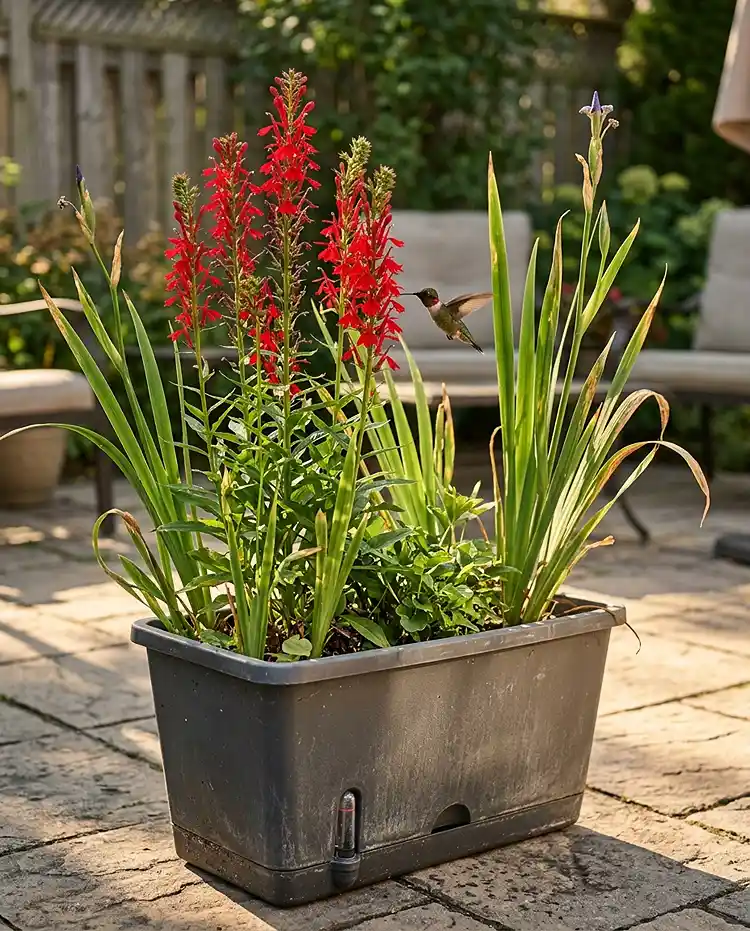
Idea 8: Moist Bog Bowl with Cardinal Flower and Blue Flag Iris
Use a self-watering planter. Lobelia cardinalis feeds hummingbirds in late summer, and Iris versicolor blooms in May. Neither tolerates dry soil.
Idea 9: Western Dry-Sun Pot with California Poppy, Buckwheat, and Sunset Hyssop
This one failed. Redflower buckwheat (Eriogonum grande var. rubescens) rotted by July in humid zone 8b. Poppy and Agastache rupestris suit the dry West. Back East, try lavender in balcony pots.
Idea 10: Swallowtail Herb Box with Golden Alexanders and Parsley
Plant Zizia aurea and 3 curly parsley plants in an 18-inch trough. Black swallowtails lay eggs on both. Plant extra parsley as a host, and expect the caterpillars to eat some.
Idea 11: Berry Sanctuary Tub with Dwarf Chokeberry (Aronia)
Anchor a corner with Aronia melanocarpa in a 15-gallon tub. ‘Low Scape Mound’ stays 1 to 2 feet. Newer ‘Low Scape Snowfire’ reaches 3 to 4. Birds get the berries.
Idea 12: Fern and Wild Ginger Sanctuary for Wrens and Juncos
Group Christmas fern, maidenhair fern, and Asarum canadense in a 14-inch pot for damp cover. For a shrub, see our hydrangea on a balcony guide.
Idea 13: Wind-Proof Trough with Prairie Dropseed and Lanceleaf Coreopsis
Pair Sporobolus heterolepis with Coreopsis lanceolata in a 14-inch trough. The grass bends in wind, smells like buttered popcorn in autumn, and hosts skippers. Xerces notes that bunch grasses like prairie dropseed give bumble bee queens a place to overwinter.
Idea 14: Passionflower Privacy Trellis for Fritillary Butterflies
Train Passiflora incarnata (maypop) up a sunny lattice from a 20-gallon pot. Hardy to about zone 6, it wakes in May. Fritillary caterpillars eat the leaves. Maypop suckers hard and can escape through drainage holes, so set the pot on a solid surface and trim runners.
Idea 15: Queen Bee Wake-Up Bowl with Virginia Bluebells and Woodland Phlox
Layer Mertensia virginica and Phlox divaricata in a shaded 14-inch bowl. Queen bumblebees wake in March. Bluebells vanish by June, so let the phlox fill in.
Idea 16: Autumn Finale with ‘Fireworks’ Goldenrod and New England Aster
Plant Solidago rugosa ‘Fireworks’ with compact ‘Purple Dome’ aster in a 15-gallon tub. Goldenrod doesn’t cause hay fever. Ragweed does.
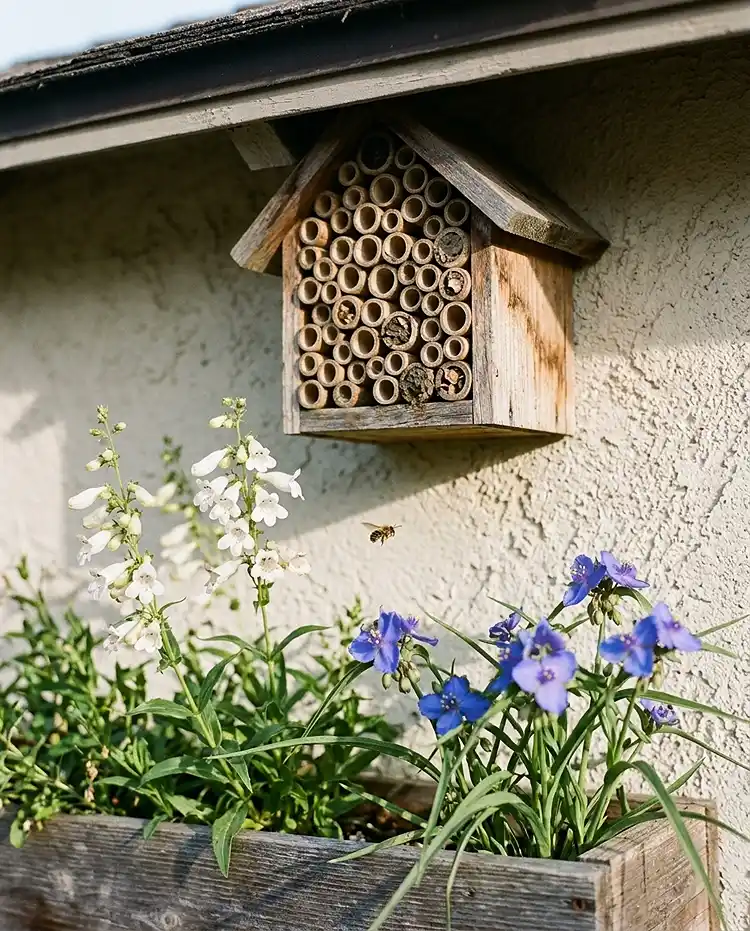
Idea 17: Bee Hotel Above a Penstemon and Spiderwort Planter
Mount a bee house under dry eaves, above Penstemon digitalis and Tradescantia ohiensis. Use tubes closed at one end, and face the house southeast for morning sun. Replace the nesting material every other year, or hang a fresh nest beside the old one each winter. Remove the old tubes only after the bees have emerged in spring, so you don’t throw out occupied ones.
Ecological Balcony Care: Zero-Pesticide Rules and Leaving Winter Stems
Verdict: Do less. Skip every pesticide and leave stems standing until spring. A messy balcony feeds more wildlife than a tidy one.
Best Native Plants for Balcony Containers: The Three-Season Bloom Relay
- Spring: columbine, Virginia bluebells, creeping phlox
- Summer: coneflower, bee balm, coral honeysuckle
- Fall: goldenrod, aromatic aster, prairie dropseed
Ask nurseries whether plants got neonicotinoids (systemic insecticides that live inside the plant). Many tags don’t say. Buy from native nurseries that give a straight no.
Why You Should Never Cut Back Hollow Stems in Autumn
Goldfinches eat coneflower seed all winter. Solitary bees hibernate in hollow bee balm and anise hyssop stems. My practice is to wait until temperatures stay above 50°F (10°C), usually mid-March in my zone, then cut stems to 8 to 24 inches. That’s my own routine, not a Xerces rule. Xerces advises against cutting pithy and hollow-stemmed plants back aggressively, and explains how cut stems become bee nests.
Common Problems & Solutions
Verdict: Most problems come from placement, not plants. Move pots, resize containers, and accept some chewed leaves.
Bees and Wasps Hovering Near Balcony Chairs
Native bees rarely sting unless pinched. Put bee balm, anise hyssop, and goldenrod at the far end of the railing. Keep ferns and sedges beside your chair.
Taprooted Natives Stunting in Shallow Pots
Move milkweed or Baptisia into 16-to-20-inch pots in early spring, while dormant. Handle the roots gently. Then never disturb them.
Bird Droppings, Window Collisions, and Chewed Leaves
Chewed leaves mean the ecosystem works. Put decals on glass doors about 2 inches apart. Place seed-head pots over an easy-sweep corner mat.
People Also Ask
Will bees, butterflies, and hummingbirds reach a high-rise balcony?
Possibly. Hummingbirds are strong fliers, but I haven’t tested a high-rise myself, and bees may arrive in smaller numbers higher up. Plant 3 feet of red, purple, and yellow bloom to give them a reason to stop.
Are nativar cultivars like PowWow Wild Berry still good for pollinators?
Mostly. In one July 2026 count, single-petaled PowWow Wild Berry drew 19 bee visits in 10 minutes. I’d skip double-petaled cultivars, which can hide nectar and pollen.
Can native perennials stay in balcony pots all winter?
Yes, if they are rated two zones colder than yours. Butterfly weed, coneflower, and little bluestem are rated zone 3 or 4. Push pots against the wall and water monthly during dry thaws.
How can I attract birds without a messy feeder?
Grow coneflower, black-eyed Susan, anise hyssop, and coral honeysuckle. Leave seed heads standing from October to March for goldfinches and chickadees. Add a shallow birdbath.
How deep should containers be for native plants?
Use 16 to 20 inches for taprooted butterfly weed and Baptisia. Use 12 to 14 inches for coneflower and grasses. Reserve 8-inch rail boxes for creeping phlox and wild strawberry.
The Short Version
- Native plants for balcony containers need depth: 16 to 20 inches for taproots, 8 to 14 for the rest.
- Skip fertilizer. Use the lean 50/25/15/10 mix and a pebble water dish.
- Plant a spring-summer-fall bloom relay, and avoid neonicotinoid-treated plants.
- Leave stems standing until temperatures stay above 50°F, then cut them to 8 to 24 inches.