

Renter Friendly Balcony Garden: Zero-Drill Looks
A renter friendly balcony garden is totally doable with zero drilling. I’ve built lush balcony gardens across three rentals using tension poles, saddle planters, and freestanding shelves. No holes, no lost deposit, just plants.
Table of Contents
Transforming Your Rental Balcony Without Losing Your Deposit
Strict landlord rules used to drive me nuts. My first apartment lease banned any hardware in exterior walls, and I nearly gave up on gardening entirely.
Then I figured out the trick: spring-loaded tension hardware and heavy freestanding designs do all the work. Gravity and friction hold everything in place, so nothing touches the wall.
I grow herbs and vines on a 4-by-8-foot north-facing balcony in zone 6b. Everything I use packs down into a car when I move. Your deposit stays safe, and your balcony still looks like a real garden.
Assessing Your Balcony’s Microclimate and Structural Limits
Before you buy a single pot, study your space. Zero-drill structures rely on placement and weight to stay put, so a windy corner or an overloaded slab creates real safety risks. Spend a weekend observing first.
Mapping Sun Exposure and Wind Corridors
Quick Answer: Track sunlight hourly for one full day, then note where wind funnels between buildings. Place tall, tippy structures in sheltered corners, never in open wind tunnels.
High-rise balconies act like wind tunnels. Air squeezed between towers speeds up, and a summer storm gust can flatten an unsecured tension pole in seconds.
- Snap a phone photo every hour from 8 a.m. to 6 p.m. to map sun and shade zones accurately.
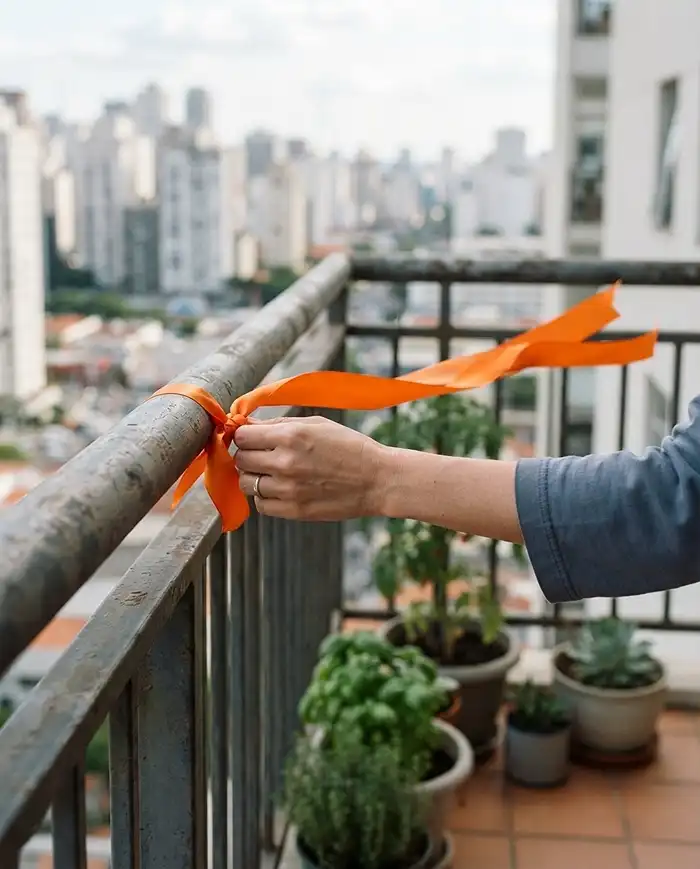
- Tie a ribbon to your railing and watch which direction gusts hit hardest during a breezy afternoon.
- Keep freestanding towers against a solid wall or in a corner, out of the main wind corridor.
Real Example: On my old 11th-floor balcony, I lost a $40 tiered stand to a July storm because I set it dead center. Moved it to the sheltered corner and it never budged again.
Understanding Weight Capacity and Lease Restrictions
Quick Answer: Read your lease for rules on items hung over the railing, and keep total soil weight modest. Wet potting mix weighs roughly 12 to 15 pounds per cubic foot.
Most balcony slabs handle plenty of static load, but wet soil adds up fast. A single large container can hit 40 pounds once soaked, so spread weight out instead of clustering heavy pots.
Many leases specifically ban anything overhanging the railing, since a falling pot is a genuine hazard. Check yours before you buy saddle planters.
Pro Tip: Use lightweight fabric or fiberglass containers instead of terracotta. You’ll cut per-pot weight by more than half and stress your slab far less.
Top Zero-Drilling Vertical Garden Systems
These systems skip masonry drills and permanent anchors entirely. They lean, wedge, or straddle instead. Here are the three secure setups I return to on every rental, ranked by how much vertical space they free up.
Floor-to-Ceiling Tension Rod Planters
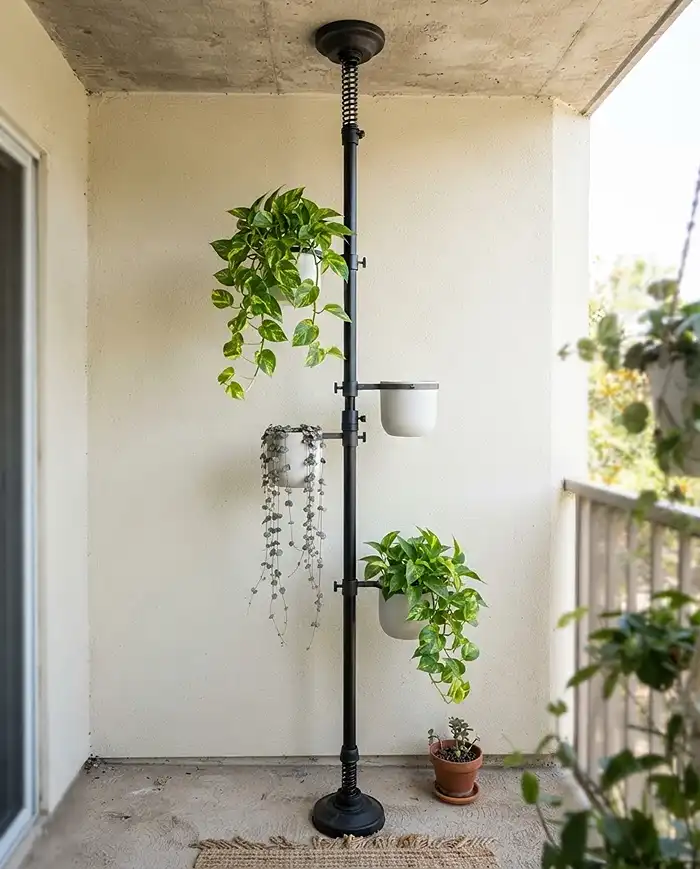
Quick Answer: A spring-loaded tension pole wedges between your concrete floor and ceiling, creating a vertical plant tower that uses almost no floor space. Most rate 10 to 15 pounds per arm.
To install, extend the pole a few inches longer than your ceiling height, set the rubber feet, then crank the spring mechanism until it locks tight. Push and wiggle it hard before trusting it with plants.
- Best for trailing plants like pothos, string of hearts, or lightweight herb pots that stay under 3 pounds each.
- Position it against a wall, not free in the open, so wind can’t torque the pole.
- Only load fiberglass or plastic pots. Ceramic on a tension arm is asking for a crash.
For more layout options that pair with these poles, see this no-drill balcony garden guide.
Over-the-Railing Saddle Planters and Brackets
Quick Answer: Deep saddle planters drape over your railing and rely on gravity to stay put. Screw-free locking brackets clamp adjustable window boxes without any drilling at all.
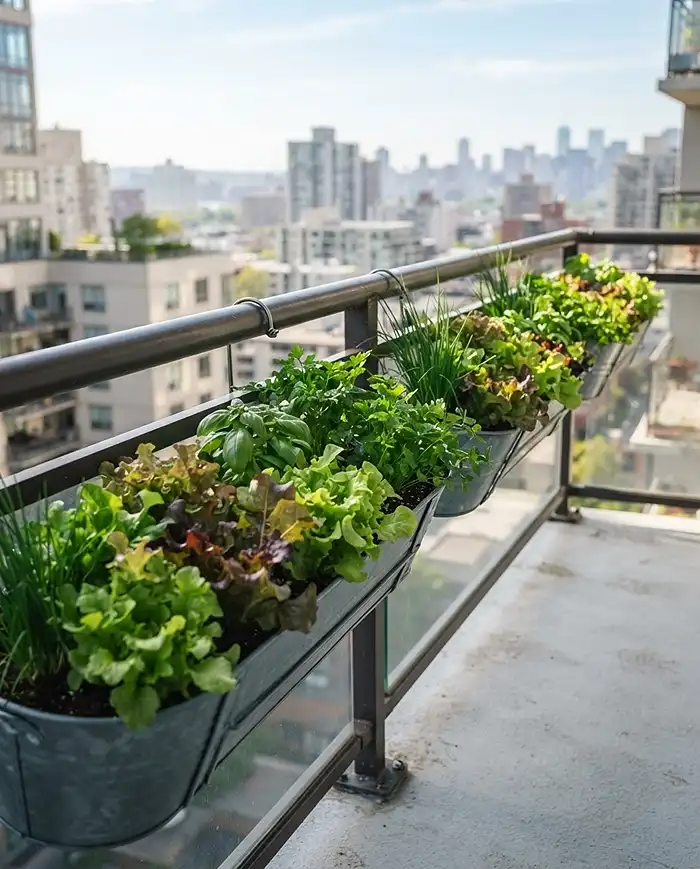
Look for saddle pots at least 8 inches deep so they sit low and don’t tip. The soil weight itself becomes the anchor once you fill both sides evenly.
Real Example: I ran six saddle planters of loose-leaf lettuce along my railing one spring in zone 6b. They cleared the entire floor and I never drilled a thing.
Pro Tip: If your lease bans railing overhangs, hang saddle planters on the inside face of the railing so nothing projects over the edge.
Freestanding Ladder Shelves and Plant Stands
Quick Answer: A leaning acacia ladder shelf or tiered corner stand displays a high volume of small pots securely, as long as it has rubber anti-slip feet gripping the floor.
Ladder shelves lean against the wall at an angle, which naturally lowers their center of gravity. Corner stands tuck into dead space you’d otherwise waste.
Acacia handles weather well and looks warm against concrete. Keep the heaviest pots on the bottom rungs and featherweight ones up top so a bump never topples the whole thing.
Renter-Friendly Privacy Screen Solutions
You can block nosy neighbors and hide ugly railings with living green barriers instead of permanent fencing. Climbing vines on a weighted planter give you a soft, lush screen you can dismantle in an afternoon when you move.
Heavy-Bottomed Trellis Planters for Climbing Vines
Quick Answer: Use a rectangular planter box with an integrated trellis. The heavy wet soil at the base acts as a gravity anchor for fast-growing privacy vines, no wall attachment needed.
Fast climbers fill a trellis in one season. My favorites for quick coverage:
- Sweet Potato Vine (Ipomoea batatas) — dense chartreuse or purple foliage, thrives in containers, needs no support tying.
- Morning Glory (Ipomoea tricolor) — reaches 6 to 8 feet by midsummer and self-twines up any lattice.
Real Example: I screened my exposed corner in zone 6b with Morning Glory sown in late May. By August it hit 7 feet and completely hid the neighbor’s window.
Best Container Plants for a Renter’s Balcony
Pick varieties that thrive in shallow, lightweight containers. This keeps structural load low on tension poles and saddle planters, and it means less water weight straining your zero-drill hardware.
Low-Maintenance Evergreens and Structural Succulents
Quick Answer: Hardy, low-profile plants like Jade, Sedum, and dwarf Boxwood give year-round structure without growing top-heavy or dropping constant leaf litter.
Succulents store water, so they tolerate the erratic watering that balcony life demands. Boxwood holds a tidy shape and reads as “designed” even in winter.
Pro Tip: Plant Sedum in wide, shallow bowls. Its shallow roots don’t need depth, so you save soil weight and your tension shelf stays balanced.
High-Yield Edibles: Herbs and Compact Veggies
Quick Answer: Fast, lightweight crops like loose-leaf lettuce, bush beans, and herbs (basil, thyme, cilantro) flourish in the shallow depths of railing planters.
Loose-leaf lettuce roots stay in the top 6 inches, perfect for saddle boxes. Bush beans skip the tall staking that pole beans demand.
Herbs are the highest reward per square inch. A single basil plant kept me in pesto all summer from one 8-inch railing pot. For more edible layouts, browse these apartment balcony garden ideas.
Step-by-Step Guide to Setting Up Your Zero-Drill Garden
Order matters here. Do it out of sequence and you’ll be shuffling heavy pots around a wet floor. Follow this exact chronological process for a stable setup.
- Clean the floor thoroughly. Sweep and dry the concrete so rubber tension pads and anti-slip feet grip at full strength.
- Assemble all freestanding structures first. Set tension poles, trellises, and ladder shelves before any soil enters the picture.
- Wiggle-test every pole. Push hard at the top. If it shifts, tighten the spring and reset the feet.
- Place your heaviest anchor pots. Position trellis planters and large containers on the floor where they’ll stay.
- Add lightweight hanging plants last. Clip trailing pots to tension arms and saddle boxes onto the railing.
Working heavy-to-light keeps you from lifting soaked containers over finished arrangements.
Maintaining a Clean, Damage-Free Space
The fastest way to lose a deposit is water damage, not drill holes. Adjust your watering routine so runoff never touches bare concrete or decking, and you’ll hand the keys back spotless.
Preventing Water Damage and Soil Runoff
Quick Answer: Use sealed, exact-fit drip trays or self-watering pots, and elevate terracotta on rubber pot feet to stop permanent moisture rings on concrete or decking.
Terracotta wicks moisture straight into whatever it sits on, leaving stubborn white mineral rings. Rubber pot feet lift the base so air circulates and water drains into a tray, not the slab.
Pro Tip: Water slowly in two passes rather than one heavy pour. The soil absorbs it instead of flushing muddy runoff out the drainage holes.
Common Problems & Solutions
Two issues trip up nearly every zero-drill gardener I’ve helped. Both have quick fixes once you know what’s happening behind the scenes.
Tension Rods Slipping During Weather Changes
Quick Answer: Cold weather makes metal tension poles contract and loosen. Do a monthly “wiggle test” and re-tighten the central spring as seasons change.
When temperatures drop, metal shrinks slightly and the spring loses grip. I’ve watched a pole that held all summer sag by October.
Set a monthly phone reminder. Push the pole firmly, and if there’s any play, crank the spring mechanism until it’s rock solid again. Thirty seconds saves your plants.
Top-Heavy Freestanding Trellises Blowing Over
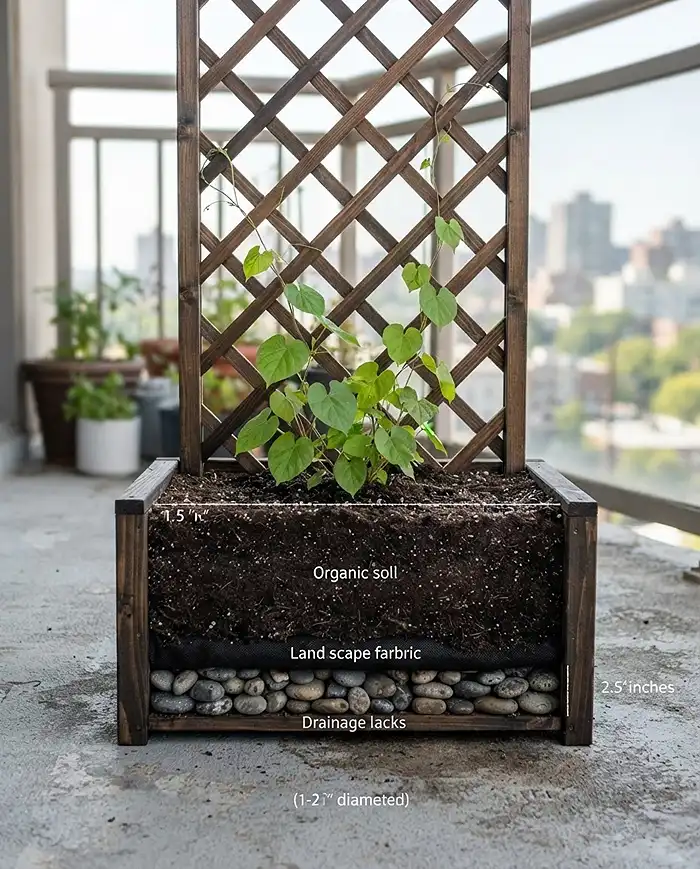
Quick Answer: Lower the center of gravity. Add a layer of heavy river rock or a couple of bricks at the very bottom of the planter box before adding soil.
A tall trellis catches wind like a sail while its lightweight pot offers no resistance. The ballast at the base fixes the physics.
Line the bottom 2 to 3 inches with river rock, then fill with potting mix on top. The extra weight sits low, so gusts push against a firmly grounded base instead of tipping it.
renter friendly balcony garden FAQs
How much weight can a balcony tension pole hold?
Most commercial tension plant poles are rated for 10 to 15 pounds per arm. Always follow the manufacturer’s limit and use featherweight plastic or fiberglass pots rather than ceramic to avoid a sudden collapse.
Can I use adhesive hooks on exterior balcony walls?
Exterior-grade adhesive hooks work on smooth glass or clean metal siding for very light items like fairy lights. They fail fast on porous brick or stucco, and intense summer UV heat weakens the adhesive quickly.
What is the best way to hide an ugly balcony floor without glue?
Lay interlocking snap-together acacia wood decking tiles or a heavy-duty recycled plastic outdoor rug. Both upgrade the look instantly without adhesive and pack up easily when you move out.
Will a zero-drill balcony garden survive strong wind?
Yes, if placement and weight are handled well. Keep tall structures in sheltered corners, ballast trellis planters with river rock, and use tension poles against a wall rather than in open wind corridors.
Do I need my landlord’s permission for a balcony garden?
Usually not for freestanding pots, but always check your lease for rules about items hung over the railing or added floor coverings. Zero-drill, non-permanent setups almost never violate standard rental agreements.
Zero-Drill System Comparison at a Glance
Here’s how the main hardware options stack up, so you can match each to your space and lease as of the 2026 growing season.
| System | Best For | Watch Out For |
|---|---|---|
| Tension pole tower | Vertical space, trailing plants | Loosens in cold; 10-15 lb per arm limit |
| Over-railing saddle planter | Herbs, lettuce, freeing floor space | Lease bans on overhangs; must sit 8 in deep |
| Ladder shelf / corner stand | Displaying many small pots | Needs anti-slip feet; keep heavy pots low |
| Weighted trellis planter | Privacy vines, screening | Top-heavy; ballast base with river rock |
For a fuller roundup of layouts, this renter balcony garden ideas collection pairs well with these systems. To double-check load safety, the Old Farmer‘s Almanac container gardening guide covers soil weight and drainage basics.
Final Thoughts on Your Renter Friendly Balcony Garden
You don’t need a single drill hole to build something lush. Smart weight distribution and tension hardware carry the whole load, keeping your deposit safe and your balcony beautiful.
Start with one tension pole or a row of saddle planters, learn your wind and sun patterns, then build from there. A small balcony garden rewards patience more than square footage.
Key Takeaways
- A renter friendly balcony garden relies on tension poles, saddle planters, and weighted trellises, never drilling.
- Map sun and wind first, then place tall structures in sheltered corners away from wind corridors.
- Keep pots lightweight (fiberglass or plastic) and stay within the 10-15 lb per-arm tension pole limit.
- Elevate terracotta on rubber feet and use drip trays to prevent moisture stains and protect your deposit.
- Ballast top-heavy trellis planters with river rock, and do a monthly wiggle test on tension poles.