
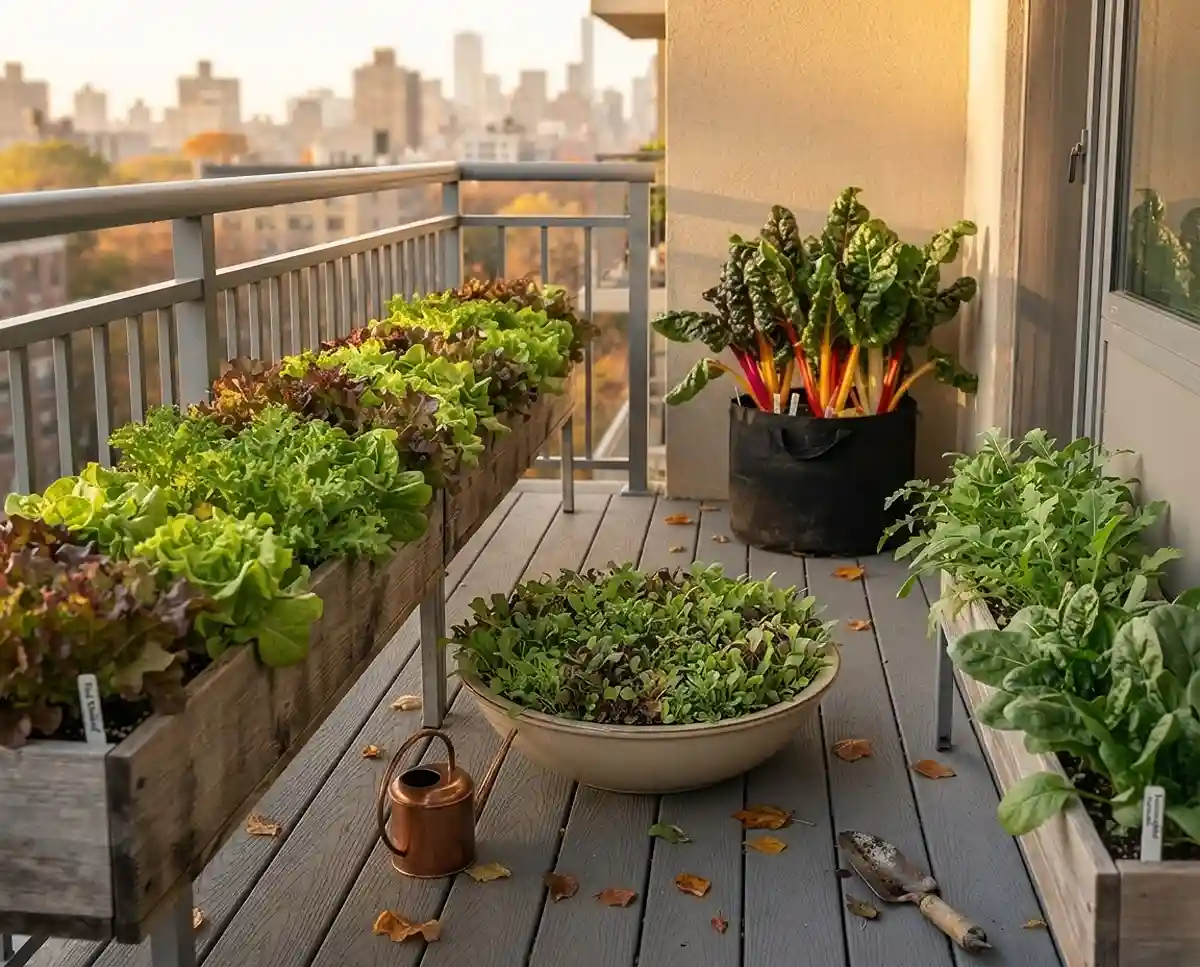
Fall Balcony Salad Garden
A fall balcony salad garden isn’t just a consolation prize after summer — it’s actually the best growing season for leafy greens. Cool air triggers sweeter, more tender leaves, and the plants stop bolting.
I grow salad greens in containers on a north-facing balcony in zone 6b, and autumn is when my little setup genuinely outperforms. Here’s how to lay it out so you’re harvesting through November.
Table of Contents
Designing a High-Yield Fall Salad Bar on Your Balcony
Summer crops wither by September, but that’s exactly when fall container vegetables hit their stride. Lettuce, spinach, and arugula love the crisp temps between 45°F and 65°F — the range that triggers peak flavor.
The goal is a staggered, continuous setup: different crops at different maturity stages, all within arm’s reach off your railing. Think of it less like a garden and more like a rotating pantry.
Container vegetable gardening in fall rewards planning over impulse. Get the layout right now, and you’ll be snipping fresh salads into early December instead of buying plastic bags of wilted greens.
I’ve killed enough summer lettuce to know timing matters. But my ‘Red Oakleaf’ sown in mid-September 2023? Still producing at Thanksgiving. The setup below is what made that happen.
Assessing Your Autumn Balcony Microclimate and Containers
Before you sow a single seed, spend a few days watching your balcony. Autumn changes everything about light and airflow — and what worked for tomatoes in July won’t work for spinach in October.
Two things matter most: where the sun actually hits now that it’s lower in the sky, and whether your containers are the right shape for shallow-rooted leafy greens. Get these right, and everything else follows.
Tracking the Lowering Autumn Sun
The sun’s arc drops significantly after the equinox. Shadows that didn’t exist in July now swallow half your balcony by 2 PM. I learned this the hard way with a railing planter that got shade from the floor above by early October.
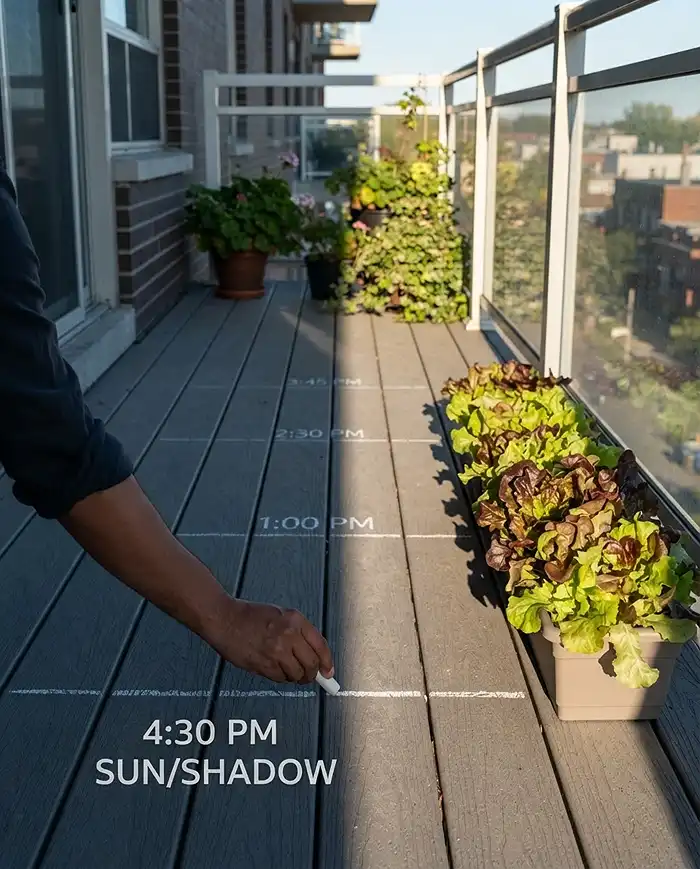
Spend one full day marking where sun hits every two hours. You need a minimum of 4 to 6 hours of direct light for robust salad green growth. Less than that and you’ll get leggy, pale leaves with zero flavor.
Move your containers to the sunniest zones first — usually closest to the outer railing edge, away from the building wall. In autumn, every inch of light counts more than it did all summer.
Selecting Wide, Shallow Planters
Lettuce roots stay in the top 6 to 8 inches of soil. Deep pots waste space and dry out unpredictably. What you actually want is horizontal real estate — more surface area for more plants.
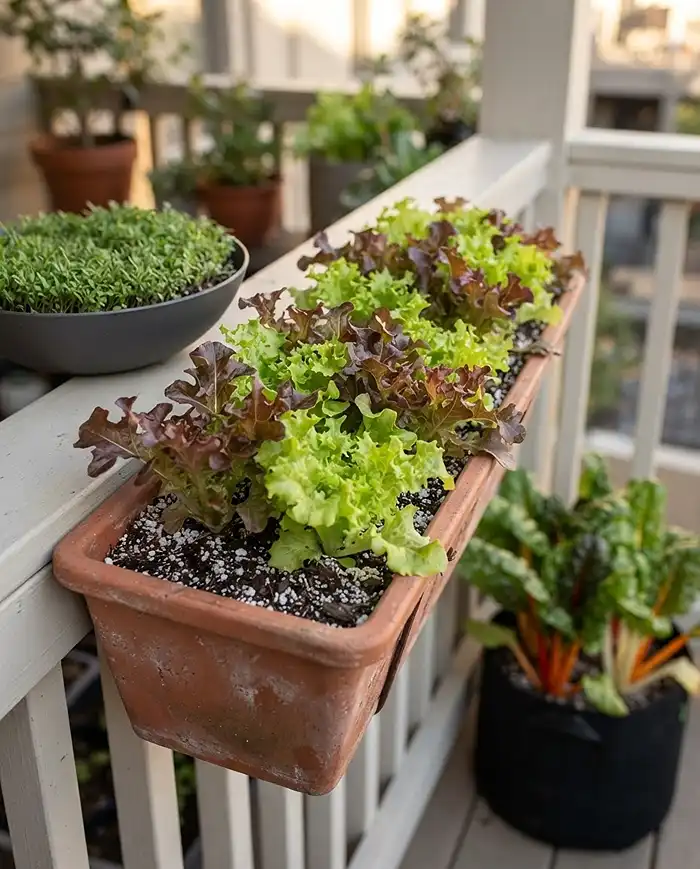
Window boxes, railing planters, and wide, shallow bowls are your best tools for vegetables in pots during fall. A 24-inch window box holds a full cut-and-come-again lettuce row. A 12-inch wide bowl fits a dense mesclun patch.
- Window boxes (24–36 inches long, 6–8 inches deep): ideal for succession rows of lettuce and arugula
- Railing planters (8 inches wide, 6 inches deep): perfect for radishes and compact spinach
- Wide bowls (14–16 inches diameter, 8 inches deep): great for a mixed mesclun center display
- Fabric grow bags (7–10 gallons, wide and squat): excellent drainage and root aeration for chard
Avoid tall, narrow pots. They hold too much cold moisture in autumn and give you nothing extra in return for leafy greens.
The Best Cold-Hardy Crops for Your Salad Layout
Not every green belongs in a fall container garden. You want crops that tolerate a frost, resist bolting in cool temps, and can be harvested repeatedly. The shortlist below gives you contrasting textures, colors, and harvest windows — a real gourmet mix, not just a bag of generic lettuce.
The Foundation: Mesclun and Loose-Leaf Lettuces
Loose-leaf lettuces are the workhorses of any fall balcony salad garden. They mature in 30 to 45 days, tolerate light frost, and regrow after cutting — making them ideal for the cut-and-come-again method.
Sow a custom mesclun blend or choose individual varieties: ‘Red Oakleaf’ for color, ‘Black Seeded Simpson’ for speed, and ‘Buttercrunch’ for that soft, buttery texture. Avoid heading types like iceberg — they need too long to mature and waste container space.
Dense sowing works well for salad greens in containers. Scatter seeds thickly, thin to 4 inches once seedlings appear, and use the thinnings as your first harvest. Check out our complete guide to fall salad greens for variety-by-variety timing charts.
Cold-Sweetened Staples: Spinach and Swiss Chard
‘Bloomsdale’ spinach is one of the most reliable fall container vegetables you can grow. It handles temps down to 25°F and actually tastes better after a frost — cold nights convert stored starches into sugars, giving you leaves that are genuinely sweet.
‘Bright Lights’ Swiss chard pulls double duty: it’s frost-hardy to around 28°F and visually stunning in a container with its red, yellow, and orange stems. It grows taller than lettuce, so position it at the back of your layout.
Both crops are heavy nitrogen feeders. Feed them bi-weekly with a diluted liquid kelp and you’ll get thick, lush growth even as daylight shortens in October and November.
Spicy Accents and Quick Roots: Arugula and Radishes
Arugula is the fastest-maturing green in a fall container setup — ready to harvest in just 21 to 28 days from seed. Cool weather mellows its peppery bite significantly, so even people who find summer arugula harsh tend to love the autumn version.
Interplant ‘French Breakfast’ radishes between your slower greens. They’re ready in 25 to 30 days and fill the harvest gap while your lettuces establish. Pull them as they size up and the freed space automatically expands your greens’ root room.
Arugula and radishes also serve as a natural planting calendar marker. When your first radish batch is ready, it’s time to sow your second succession of lettuce.
The Continuous Harvest Balcony Layout Blueprint
A productive fall balcony salad garden isn’t just about what you grow — it’s about how you arrange it in time and space. This blueprint turns a few containers into a machine that keeps producing fresh salads for 10 to 12 weeks straight.
Spacing and Intercropping for Maximum Yield
Think of your container layout in layers, front to back. Tall crops at the back, mid-height in the center, fast maturers at the front edges. This keeps everything accessible and ensures nothing shades out a neighbor.
Container layout by position:
| Position | Crop | Spacing | Harvest Window |
|---|---|---|---|
| Back row | ‘Bright Lights’ Swiss Chard | 6 inches apart | 50–60 days; ongoing cuts |
| Middle zone | Buttercrunch / Red Oakleaf Lettuce | 4–6 inches apart | 35–45 days; cut-and-come-again |
| Front edges | ‘French Breakfast’ Radishes | 2 inches apart | 25–30 days; pull whole plant |
| Railing boxes | Arugula / ‘Bloomsdale’ Spinach | 3–4 inches apart | 21–40 days; cut-and-come-again |
Fill every gap. When a radish gets pulled, drop in two or three lettuce seeds the same day. Idle soil is wasted space in small-container vegetable gardening.
For more ideas on what else thrives in autumn pots alongside your greens, see our list of best fall container vegetables for balconies and patios.
Succession Sowing for Uninterrupted Salads
Succession planting is the single most important technique in continuous fall container vegetable gardening. Sow a new small batch of seeds every 10 to 14 days and you’ll always have a fresh crop maturing as the previous one winds down.
Here’s a simple schedule starting September 1st in zone 6b:
- Sept 1: Sow arugula, radishes, and mesclun blend in containers A and B
- Sept 14: Sow ‘Bloomsdale’ spinach and second arugula round in container C
- Sept 28: Sow final lettuce succession — this batch will carry you into November
- Oct 12: Last radish sowing — harvest before first hard freeze
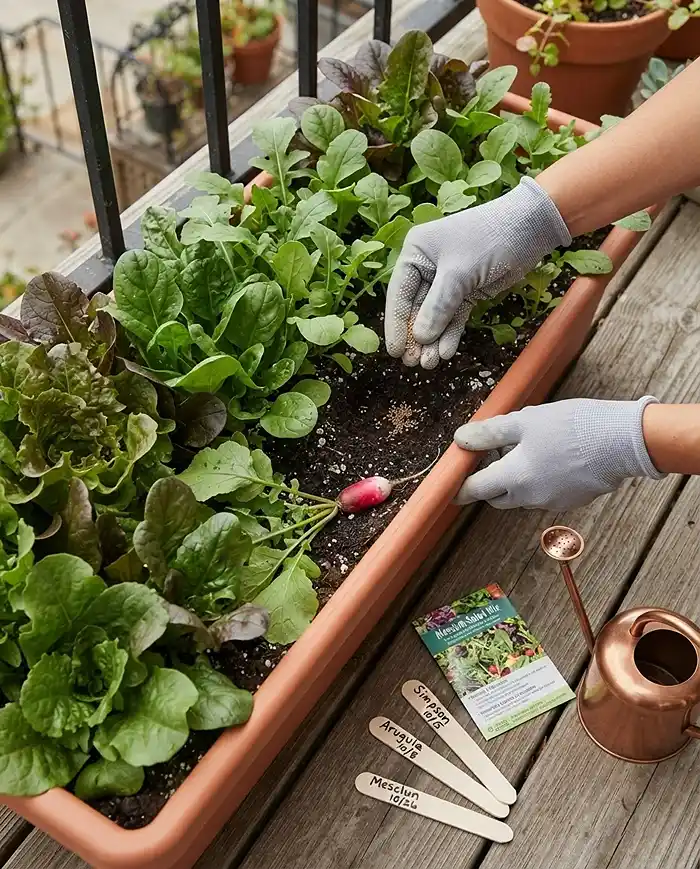
After your first hard frost warning, stop sowing new seeds and focus on protecting what’s already growing. The last-sown crops, covered with frost fleece, can push harvests deep into December in zones 6 and 7.
Pair this technique with our notes on fast-maturing root vegetables in pots to fill the gaps between greens with something more substantial.
Autumn Soil Prep and Maintenance Routines
Fall container vegetable gardening demands different soil management than summer. Evaporation slows way down, nitrogen needs stay high, and drainage becomes critical as rain gets more frequent. Adjust your routine now or you’ll get yellow, stunted leaves instead of lush growth.
Formulating a Fast-Draining, Nitrogen-Rich Soil
Standard potting mix holds too much moisture in cool, wet autumn conditions. The fix is straightforward: blend your potting soil with 30% perlite by volume. This opens up the structure and prevents the waterlogged roots that rot lettuce crowns in October.
Add a generous amount of worm castings — roughly 20% of the total mix. Worm castings are a slow-release nitrogen source, exactly what leafy greens need to push rapid, lush top growth before daylight hours drop below 10 hours a day in late fall.
Fill containers to within one inch of the rim. Settle the mix with water before planting. A loose, well-aerated medium is the foundation every fall salad green relies on to establish quickly.
Adjusting Fall Watering and Fertilization
Stop watering on a summer schedule. Cool temps and higher humidity mean your containers hold moisture much longer. Overwatering is the number-one killer of fall container vegetables — it creates anaerobic conditions that rot roots and invite fungal disease.
Switch to the “finger test”: push your finger 2 inches into the soil. Water only when it feels dry at that depth. Always water in the morning on mild days, never at night, to avoid cold, saturated roots sitting in wet soil overnight.
For fertilization, apply a half-strength liquid kelp fertilizer every two weeks. Kelp provides natural growth hormones and a broad spectrum of micronutrients that synthetic fertilizers miss. Full-strength applications in cool weather can burn roots — keep it diluted.
Common Problems and Solutions
Even a well-designed fall balcony salad garden runs into trouble. The two most common culprits are unexpected frost snaps and cool-weather pests. Both are preventable with the right tools on hand.
Protecting Greens from Early Frost Snaps
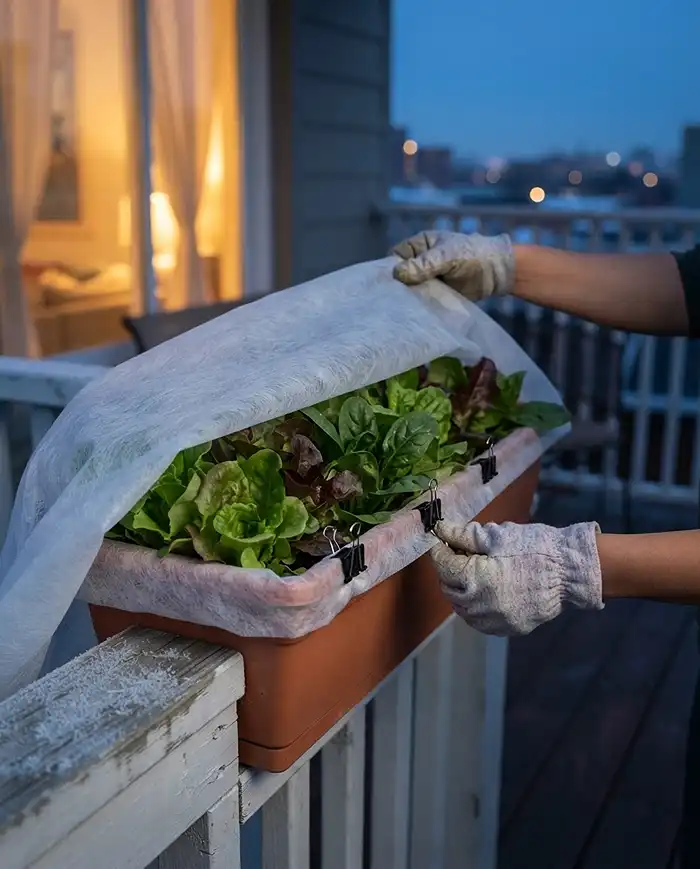
A single night at 28°F can turn tender lettuce leaves to mush if you’re not prepared. The simplest fix is a layer of lightweight horticultural fleece (frost cloth rated to 28°F or lower) draped over your railing boxes at dusk and removed in the morning.
The fleece traps heat radiating from the building wall and the containers themselves — often keeping temps 4 to 8 degrees warmer than the open air. For my zone 6b balcony, this extended my lettuce harvest by nearly three weeks in fall 2022.
Keep a roll of frost cloth clipped to the railing and check the forecast nightly once temps start dipping into the mid-30s. A five-minute routine saves the whole crop.
Managing Fall Pests: Slugs and Cabbage Worms
The cool, damp conditions that make autumn perfect for leafy greens also attract slugs and cabbage looper caterpillars. Both feed at night and can shred a container of arugula faster than you’d expect.
For slugs, set shallow beer traps at soil level — they’re drawn to the yeast, crawl in, and drown. Replace every two to three days. For cabbage worms and loopers, apply Bacillus thuringiensis (Bt) spray directly to leaf surfaces at dusk. It’s organic, safe for edibles, and kills caterpillars within 24 to 48 hours of ingestion.
Check the undersides of chard and spinach leaves every few days. Early detection means you’re dealing with two caterpillars, not twenty.
Frequently Asked Questions
How cold is too cold for balcony lettuce?
Hardy greens like spinach and kale can survive dips into the low 20s Fahrenheit, but tender loose-leaf lettuces suffer cellular damage if exposed to sustained temperatures below 30°F without protection. Cover them with horticultural fleece on any night forecast below 32°F.
How do I harvest my salad greens without killing the plant?
Use sterilized scissors to snip only the outer, oldest leaves, cutting about one inch above the soil crown. Leave the inner rosette completely intact. This cut-and-come-again method allows the plant to regrow and be harvested again within 10 to 14 days.
Can I reuse my summer potting soil for fall greens?
Yes, but you need to refresh it. Physically sift out old dead root balls, then amend the top half of the pot with fresh compost or worm castings to replace depleted nitrogen and organic matter. A complete soil change is not necessary, but amendment is.
When should I stop planting fall salad greens on my balcony?
Make your last succession sowing 6 to 8 weeks before your average first hard freeze date. In zone 6b, that means a final sowing around late September. Plants already in the ground can be protected with frost cloth well beyond the first freeze.
Do I need grow lights for a fall balcony salad garden?
Not necessarily, but if your balcony gets fewer than 4 hours of direct sun per day in autumn, a simple LED grow light on a timer for 4 to 6 additional hours can make a significant difference. Lettuce and spinach respond well to supplemental light at low intensity.
Key Takeaways
- A fall balcony salad garden thrives in the 45°F to 65°F range — the same cool temps that make greens sweeter and slower to bolt.
- Choose wide, shallow containers (6 to 8 inches deep) and prioritize horizontal surface area over depth for salad greens in containers.
- Layer your layout back-to-front: chard at the rear, lettuces in the middle, radishes and arugula at the front edges for maximum yield per square foot.
- Sow a new small batch every 10 to 14 days for continuous harvests — succession planting is the difference between a one-time crop and a 10-week salad bar.
- Keep horticultural fleece on hand, switch to morning-only watering, and use a half-strength liquid kelp fertilizer bi-weekly once fall container vegetables are established.