

Fall Salad Greens to Plant After Summer Heat
When summer’s heat finally breaks, it’s time to plant fall salad greens for a second, sweeter harvest. I grow mine in 8-inch containers on a west-facing patio in zone 6b, and September lettuce always beats June’s.
Table of Contents
Reviving Your Garden: The Second Spring of Fall Salad Greens
Most gardeners treat late August like the season’s over. It’s not. Cooling nights and shorter days trigger what I think of as a second spring, and cool-season crops actually thrive in it.
Lettuce, spinach, and arugula turn bitter and bolt (send up a flower stalk and go to seed) in July heat. Come September, those same plants grow slower, sweeter, and often survive a light frost with better flavor than anything you grew in spring.
I learned this the hard way in 2022 after three failed batches of spring lettuce that bolted before I got a single salad. My September restart, by contrast, fed us through Thanksgiving.
Timing Your Late Summer and Early Fall Planting
The trick to fall salad greens is working backward from your first frost date instead of forward from spring. Get the timing wrong and seedlings either bake in residual heat or freeze before they mature.
Calculating Days to Maturity and First Frost Dates
Quick Answer: Find your average first fall frost date, then count backward using the seed packet’s “days to maturity,” adding two extra weeks for slower autumn growth.
Every USDA hardiness zone has a published average first frost date — a quick search of your zone plus “first frost date” will get you there. If a lettuce variety says 45 days to maturity, plan for 60 in fall, since dropping daylight hours slow photosynthesis noticeably by late September.
Pro Tip: Add a full two-week buffer even for “quick” 30-day greens like arugula — I’ve timed it wrong twice and lost a harvest window to an early cold snap.
Managing Lingering Heat and Regional Timing Variations
Quick Answer: Southern gardeners should wait until mid-September to avoid bolting, while Northern gardeners need to sow in August under shade cloth to protect seeds from heat.
Regional timing varies more than most guides admit. Here’s how I’d break it down by general region:
| Region | Sowing Window | Key Risk |
|---|---|---|
| Northern (Zones 3-5) | Early-to-mid August | Soil still too hot; use 30% shade cloth |
| Mid-Atlantic/Midwest (Zones 6-7) | Late August-early September | Bolting if planted too early |
| Southern (Zones 8-9) | Mid-to-late September | Lingering 90°F+ soil temps |
Real Example: My sister gardens in zone 8b Georgia and lost an entire tray of spinach seedlings to July-planted heat stress. She waited until September 20th the following year and got a full six weeks of harvest.
Top Salad Greens to Restart After the Summer Heat
Not every green handles this transition well. These varieties genetically prefer cool soil and actively resist the bolting that ruins spring lettuce.
Cold-Hardy Spinach and Peppery Arugula
Quick Answer: Arugula matures in about 30 days and spinach varieties like ‘Bloomsdale Long Standing’ turn noticeably sweeter once autumn nights cool below 50°F.
Cool nights convert stored starches into sugars in both crops, which is why fall arugula tastes peppery-sweet instead of just harsh. I direct-sow arugula every two weeks through mid-October for a rolling harvest.
Pro Tip: ‘Bloomsdale Long Standing’ spinach resists bolting far better than baby-leaf hybrids if an early warm spell hits after sowing.
Loose-Leaf Lettuces and Mesclun Mixes
Quick Answer: Cut-and-come-again varieties like ‘Black-Seeded Simpson’ and oakleaf lettuce germinate fast and thrive in cramped containers without needing a long maturation period.
These are ideal for anyone growing salad greens in containers, since they don’t need to form a tight head — you’re just harvesting loose outer leaves as they grow.
- ‘Black-Seeded Simpson’ — ready in about 28 days, extremely reliable
- Oakleaf lettuce — deeply lobed leaves, slow to bolt
- Custom mesclun blends — mix 3-4 varieties for texture and color
Robust Asian Greens: Mizuna, Tatsoi, and Mustard
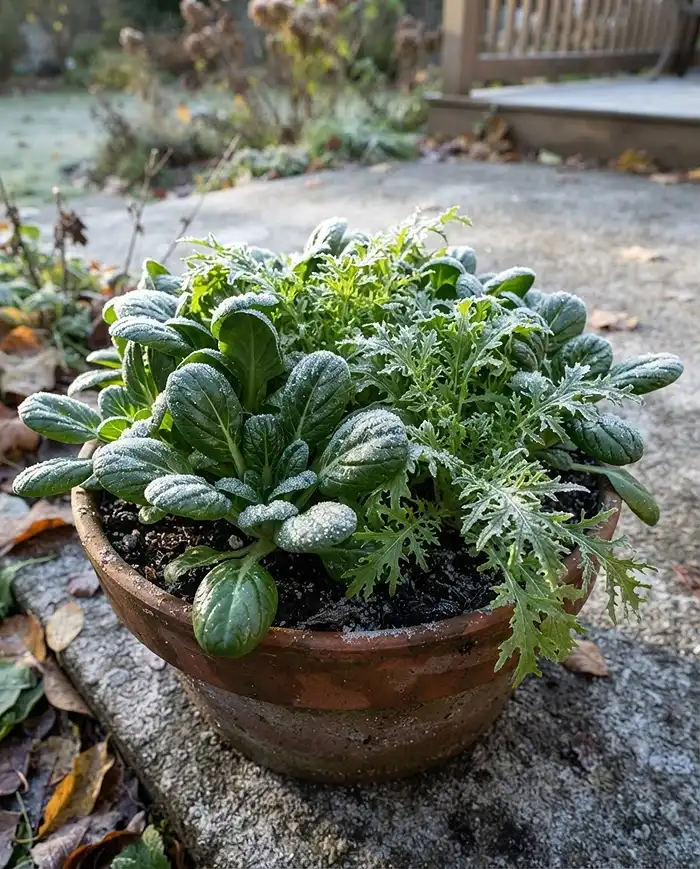
Quick Answer: Mizuna, tatsoi, and mild mustard greens are among the most frost-tolerant salad crops, often producing fresh leaves even after the first snow flurries.
I keep tatsoi going in an unheated cold frame well into December most years. Its glossy, spoon-shaped leaves add crunch that lettuce alone can’t match, and mizuna’s feathery texture makes a mesclun mix look far more interesting.
Prepping Your Garden Beds and Containers for Fall
Late-summer soil is usually compacted and stripped of nutrients after a full season of heavy-feeding tomatoes or squash. Rehabilitating it is the real first step toward a good fall harvest.
Clearing Summer Debris and Amending Exhausted Soil
Quick Answer: Pull out spent summer vines, aerate the top four inches of soil, then mix in two inches of compost and worm castings for an immediate nitrogen boost.
Here’s my exact routine every September:
- Rip out exhausted tomato, cucumber, or squash vines and roots
- Loosen the top 4 inches of soil with a hand fork to break up compaction
- Layer in 2 inches of finished compost plus a scoop of worm castings
- Water thoroughly before sowing to settle amendments in
If you’re growing in pots, this is also the moment to refresh at least a third of the potting mix — a core practice in solid container vegetable gardening that most people skip because it feels wasteful.
Step-by-Step Guide to Sowing Seeds for Autumn Harvests
Quick Answer: Sow seeds slightly deeper than spring recommendations to reach cooler, moister soil, and space them closely in wide bands rather than single rows.
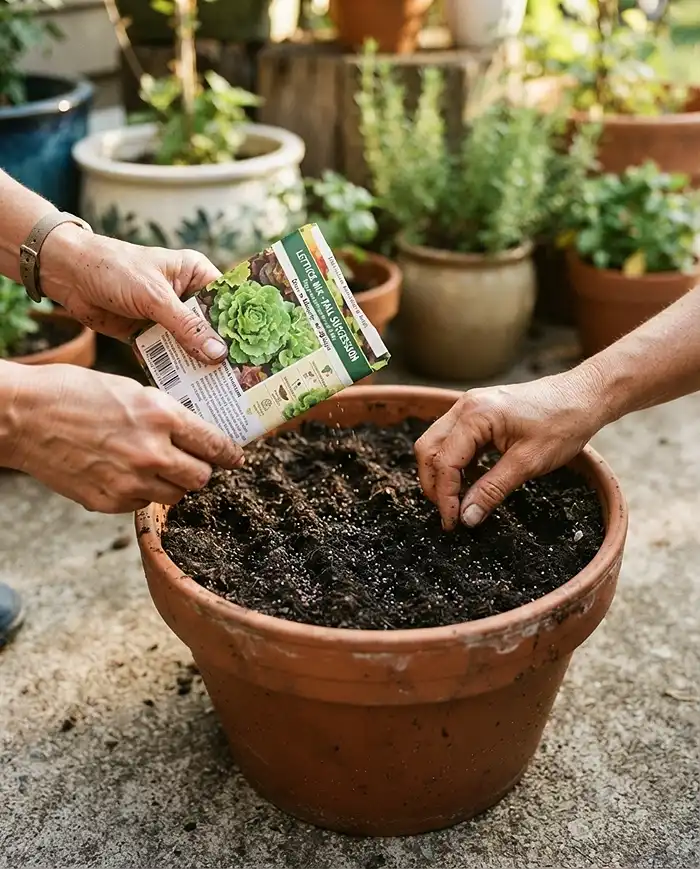
In fall, I sow lettuce and spinach about a half-inch deep instead of the quarter-inch spring depth, since surface soil dries and heats faster in September sun. Planting in 4-inch-wide bands rather than thin rows creates a living mulch that shades the soil and holds moisture as seedlings establish.
For anyone new to vegetables in pots, use containers at least 6-8 inches deep with drainage holes, and sow slightly thicker than you would in ground soil since pots dry out faster.
Seasonal Maintenance to Maximize Your Leafy Yields
Your daily routine needs to shift as lingering summer heat gives way to cool, damp autumn air — watering and monitoring both change significantly.
Shading Seedlings and Adjusting Autumn Watering Routines
Quick Answer: Water twice daily with cool water during August germination to lower soil temperature, then shift to infrequent morning-only watering by October to prevent powdery mildew.
I water new seedlings at dawn and dusk through late August, since afternoon heat can spike container soil past 85°F. By mid-October, once nights turn cool and damp, I cut back to one morning watering to avoid the humid, still air that breeds powdery mildew overnight.
Mastering the “Cut-and-Come-Again” Harvesting Technique
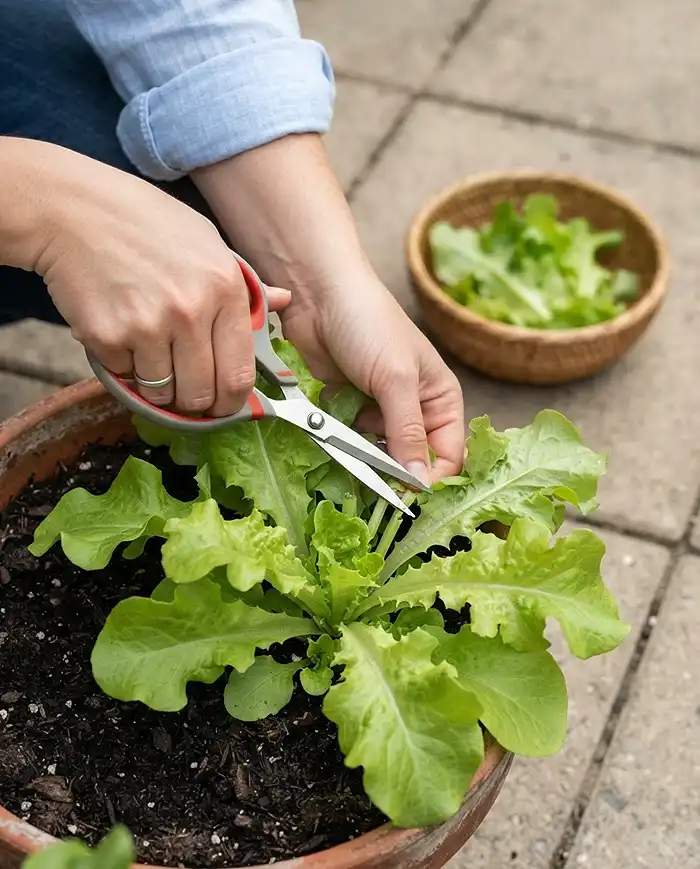
Quick Answer: Use clean scissors to snip only outer, mature leaves about one inch above the soil crown, leaving the inner growth tip intact for a fresh harvest every 10-14 days.
This is one of the best container garden tips I can offer: never pull whole plants if you want repeat harvests. I sterilize my scissors with rubbing alcohol between plants to avoid spreading soil-borne fungal issues.
Common Problems and Solutions
Bridging summer to fall creates a few predictable hurdles. Here’s how to diagnose and fix the two most common ones fast.
Poor Germination in Hot Late-Summer Soil
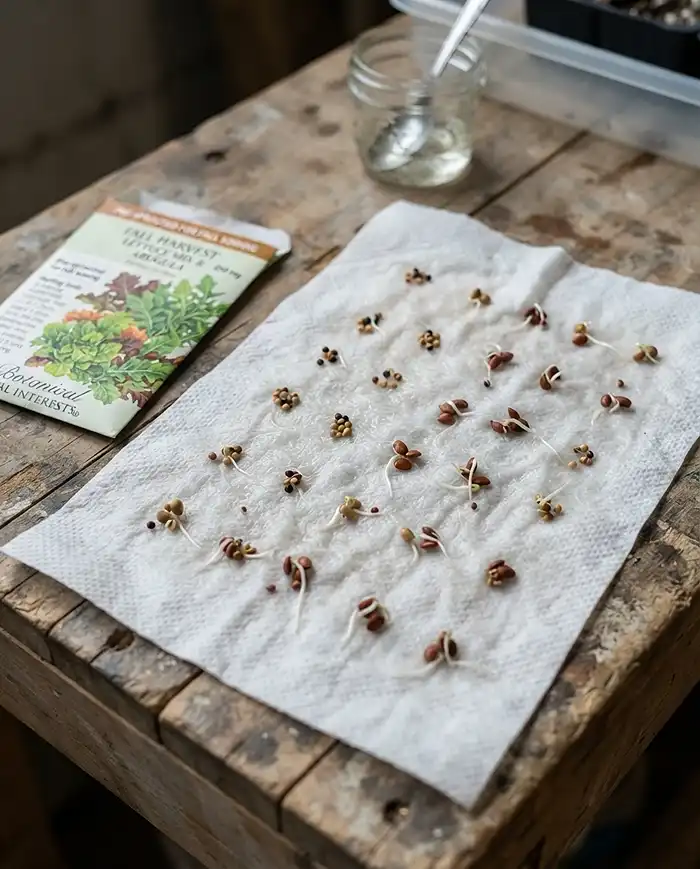
Quick Answer: Lettuce seeds go dormant and won’t sprout if soil exceeds 80°F, so pre-sprout seeds indoors on a damp paper towel or shade the bed with wet cardboard until sprouts appear.
This thermal dormancy trips up more gardeners than any pest ever does. I pre-sprout arugula and lettuce seeds on a damp paper towel in a cool basement, then transplant once the tiny root shows.
Battling Autumn Garden Pests: Slugs and Aphids
Quick Answer: Cool, damp autumn weather brings a resurgence of slugs and aphids — use shallow beer traps for slugs and insecticidal soap applied at dusk for aphids.
I sink a shallow dish of beer level with the soil near my lettuce beds each fall, and it catches slugs reliably within a night or two. For aphids, spraying insecticidal soap at dusk avoids harming daytime pollinators.
fall salad greens FAQs
Will a light frost kill my new salad greens?
No. Established fall greens like spinach, kale, and arugula easily survive light frosts between 28°F and 32°F. Covering them with a floating row cover or horticultural fleece at night lets you keep harvesting well into November.
Do I need to fertilize fall-planted lettuce?
Yes. Apply a half-strength, water-soluble organic nitrogen fertilizer like fish emulsion or kelp extract every two weeks once true leaves appear. Shorter autumn days mean plants need extra help pushing vegetative growth before winter dormancy.
Can I grow fall salad greens in small balcony containers?
Absolutely. Shallow-rooted greens are ideal for containers and do well in 6-to-8-inch-deep window boxes or railing planters. Keep the soil consistently moist and provide at least 4 to 6 hours of ambient sunlight.
Conclusion
Fall salad greens reward the gardener willing to plant one more round instead of calling it quits after summer. With the right timing and a little soil prep, you’ll be harvesting sweeter, crisper leaves well past the point spring lettuce ever managed.
For more on choosing varieties, check out our guide to the best salad greens to grow in containers, our roundup of the best vegetables for container gardening, and our tips for building a productive container garden. For frost date lookups by zip code, the Old Farmer’s Almanac frost date tool is a reliable free resource.
Key Takeaways
- Fall salad greens taste sweeter and resist bolting compared to spring-planted lettuce
- Count backward from your first frost date, adding two weeks to the seed packet’s maturity time
- Spinach, arugula, mizuna, and tatsoi are the most frost-hardy choices for late harvests
- Refresh exhausted soil with compost before sowing, especially in containers
- Harvest with the cut-and-come-again method to keep beds producing for weeks