

Compact Pepper Plants for Pots
Compact pepper plants for pots are one of the smartest investments you can make in container vegetable gardening — especially if you want harvests that push well past the summer rush and into cool autumn days.
Most gardeners give up on their pepper plants the moment nights start dipping below 60°F. But with the right dwarf cultivars and a few strategic moves, your pots can still be bursting with color and flavor in October.
I grow peppers on a south-facing concrete balcony in zone 6b, and I’ve learned the hard way which varieties earn their space and which ones just sulk as the light fades. This guide gives you exactly what worked for me — and what didn’t.
Table of Contents
The Secret to Continuous Late-Season Pepper Harvests in Pots
While most summer crops throw in the towel by mid-September, compact pepper plants for pots can keep delivering well into October — if you choose the right genetics and use your container’s biggest advantage: mobility.
You can chase warmth. A tomato plant rooted in the ground can’t follow the sun. Your potted ‘Lunchbox’ pepper absolutely can.
The key is understanding that late-season production isn’t about fighting autumn — it’s about buying your plants two or three extra weeks of warmth through positioning, insulation, and a few targeted care adjustments.
Get those three things right, and peppers in containers will outlast nearly everything else on your balcony or patio this fall.
Assessing Your Late Summer and Autumn Microclimate
Before you do anything else, spend a few days actually watching your space. Peppers are heat-loving nightshades. They need warmth to set fruit, and autumn quietly steals that warmth in ways that catch most gardeners off guard.
The sun angle drops, shadows lengthen, and your once-bright balcony may suddenly lose two hours of direct light by mid-September. That’s the difference between ripe peppers and green ones still clinging to the plant in November.
Tracking Shifting Sun Angles and Dropping Temperatures
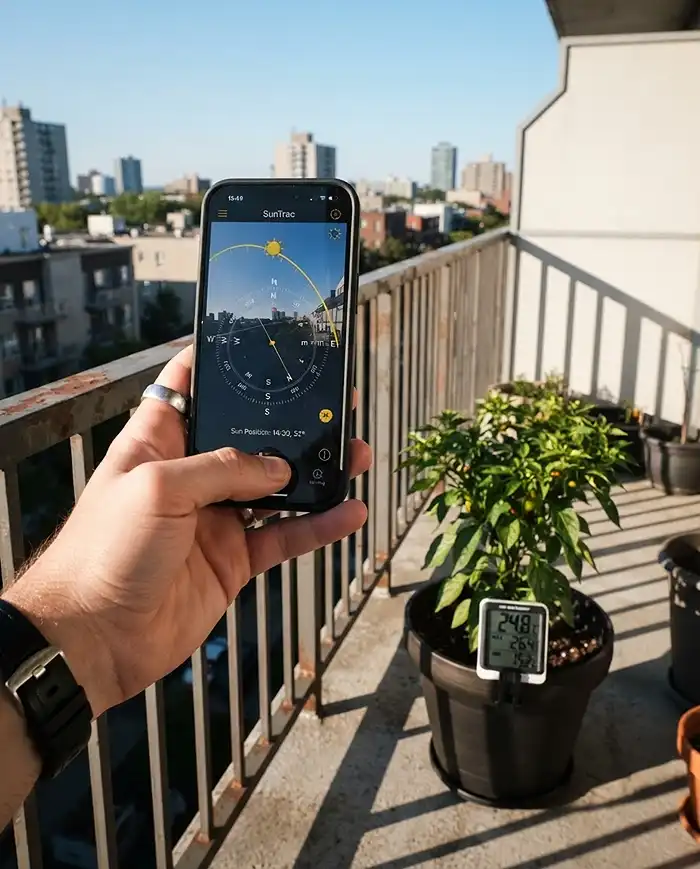
Grab a sun-tracking app (Sun Seeker is excellent) and map where your light lands in September versus July. You may be surprised. A south-facing rail that gave you eight hours of sun in summer might drop to five hours by the autumn equinox.
Peppers need a minimum of six hours of direct sun to continue ripening fruit. If your current spot falls short, move the pots now — don’t wait.
Also start tracking overnight lows. Once temps drop below 55°F (13°C), fruit development slows dramatically. Below 50°F, many varieties stall entirely. A cheap min-max thermometer placed near your containers gives you the data you need to act before a cold snap causes damage.
How Thermal Mass on Balconies Extends the Season
Brick walls, concrete slabs, and even dark-painted railings function as thermal batteries. They absorb heat during the day and radiate it back at night — keeping the air around your pots a few critical degrees warmer than the open garden.
I once moved a struggling ‘Thai Hot’ pepper flush against my building’s south-facing brick wall in late September. Within a week it was setting new flowers again. The wall was probably holding it 4-5°F warmer overnight compared to the open corner where it had been sitting.
Position your containers to exploit this. The junction where a sun-facing wall meets a concrete floor is the warmest microclimate on most balconies — that’s prime real estate for your late-season peppers.
Best Compact Pepper Varieties for Late Container Harvests
Not all peppers are created equal for container vegetable gardening in autumn. You want dwarf plants that prioritize fast fruit maturity over leafy bulk, set fruit in cooler conditions, and produce continuously rather than in one big flush. Here are the cultivars that have earned a permanent spot on my balcony.
High-Yield Sweet Peppers: ‘Lunchbox’ and ‘Mini Belle’
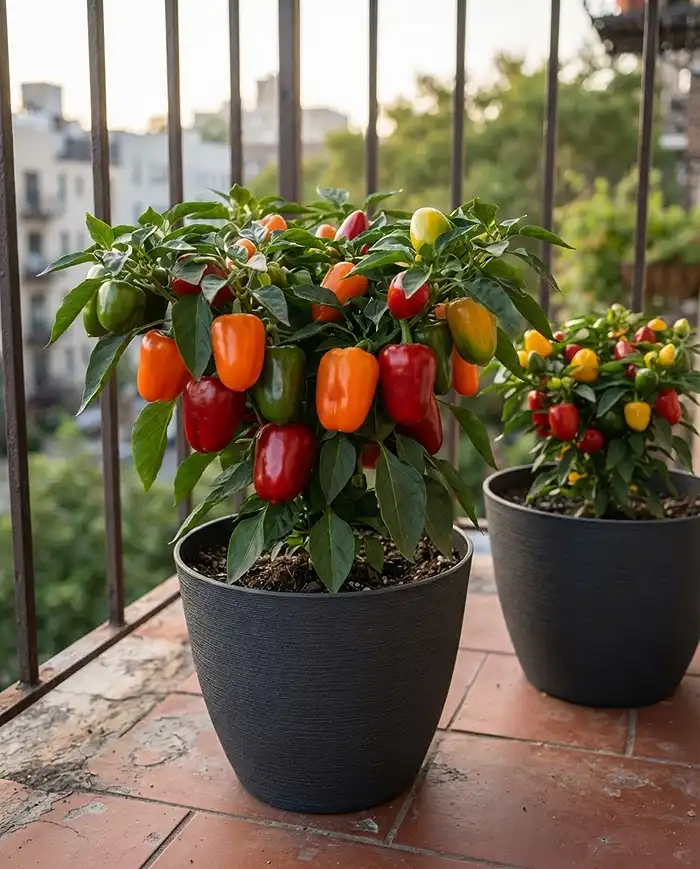
‘Lunchbox’ is the sweet pepper I’d recommend to anyone growing vegetables in pots for the first time. The plants stay compact at around 18-24 inches, and the small fruit — roughly the size of an egg — ripens from green to red, orange, or yellow in as little as 65-70 days from transplant.
That speed matters enormously for late-season harvests. Smaller fruit means less energy per pepper, so the plant can ripen multiple pods simultaneously even as days shorten.
‘Mini Belle’ is another excellent choice, producing a dense cluster of miniature bell peppers. I had a ‘Mini Belle’ in a 12-inch dark resin pot last autumn (zone 6b, 2024 season) that was still producing ripe fruit on October 18th — two weeks after I’d given up hope.
Both varieties work beautifully as top performers in container gardens when given a warm wall and well-draining potting mix.
Cold-Tolerant Hot Peppers: ‘Early Jalapeño’ and ‘Thai Hot’
‘Early Jalapeño’ is exactly what it sounds like: a jalapeño bred specifically for speed. It hits maturity in about 65 days and keeps setting fruit in conditions that would make standard jalapeño varieties give up. Plants top out at 24-30 inches — manageable in a 10-12 litre pot.
‘Thai Hot’ is the other variety I refuse to garden without. These compact little plants max out around 18 inches but produce an almost ridiculous number of small, fiery pods. More importantly, they handle cooler nights better than most hot peppers.
In my experience, ‘Thai Hot’ was still setting new flowers at 58°F nighttime temps while my bell pepper had completely stalled. The small pod size is the key — less energy per fruit means faster ripening even with reduced heat.
For more ideas on what grows brilliantly in tight spaces, browse this guide to fast-growing vegetables for containers.
Dual-Purpose Ornamentals: ‘Basket of Fire’ and ‘NuMex Twilight’
‘Basket of Fire’ is one of the few plants I’d call genuinely beautiful and genuinely productive. The compact mounding habit (around 14-18 inches) means it fits in smaller pots, and the fruit ripens through purple, yellow, orange, and red simultaneously — creating a stunning display right through autumn.
It’s also surprisingly cold-tolerant for an ornamental. I’ve had ‘Basket of Fire’ look immaculate at temperatures where other pepper varieties were already showing stress.
‘NuMex Twilight’ from New Mexico State University performs similarly — upright, densely fruited, and bold enough to anchor an autumn container display. Both varieties produce edible, moderately hot fruit, so they pull double duty as decor and as peppers in containers for actual cooking use.
| Variety | Heat Level | Days to Maturity | Container Size | Cold Tolerance |
|---|---|---|---|---|
| Lunchbox | Sweet | 65-70 days | 10-12 litre | Moderate |
| Mini Belle | Sweet | 68-72 days | 10-12 litre | Moderate |
| Early Jalapeño | Medium-Hot | 65 days | 10-12 litre | Good |
| Thai Hot | Very Hot | 70-80 days | 8-10 litre | Very Good |
| Basket of Fire | Medium-Hot | 75-80 days | 8-10 litre | Very Good |
| NuMex Twilight | Medium | 80 days | 8-10 litre | Good |
Essential Gear for Extending the Pepper Season
Choosing the right cultivar only gets you halfway there. To genuinely extend your harvest into autumn, you need the physical tools to protect your plants from the cold — particularly overnight. Here’s what actually makes a difference.
Choosing Insulated, Heat-Retaining Containers
Dark-coloured, thick-walled resin or double-walled fiberglass planters are significantly better for late-season growing than terracotta or thin plastic. Dark surfaces absorb solar heat during cool autumn days and release it slowly overnight, keeping root zone temperatures higher when ambient temps drop.
I switched from terracotta to dark resin planters three seasons ago and noticed my peppers producing about two weeks longer into autumn. Terracotta is beautiful, but it’s porous and loses heat rapidly — exactly what you don’t want in October.
Aim for a minimum 10-litre volume. Larger soil mass buffers temperature swings better. A small pot in a cold snap can drop to damaging root temperatures within hours; a larger pot holds its heat significantly longer.
Frost Blankets and Miniature Cold Frames
A roll of lightweight horticultural fleece (also called row cover or frost blanket) is the single most useful tool for late-season container garden tips. Drape it over your plants on any night the forecast dips below 40°F and you’ll buy yourself several more weeks of growing time.
For more serious cold protection, a simple cold frame made from four PVC pipes and a sheet of clear polycarbonate placed around and over the containers traps daytime heat and creates a warmer microclimate that can hold temperatures 5-10°F above ambient overnight.
The University of Minnesota Extension frost date guide is a reliable reference for knowing exactly when to have your blankets ready based on your region.
Step-by-Step Guide to Late Season Pepper Care
Timing your interventions correctly is everything. Start these steps in mid-to-late August — about four to six weeks before your average first frost date — to give plants the best chance of ripening existing fruit before temperatures make further growth impossible.
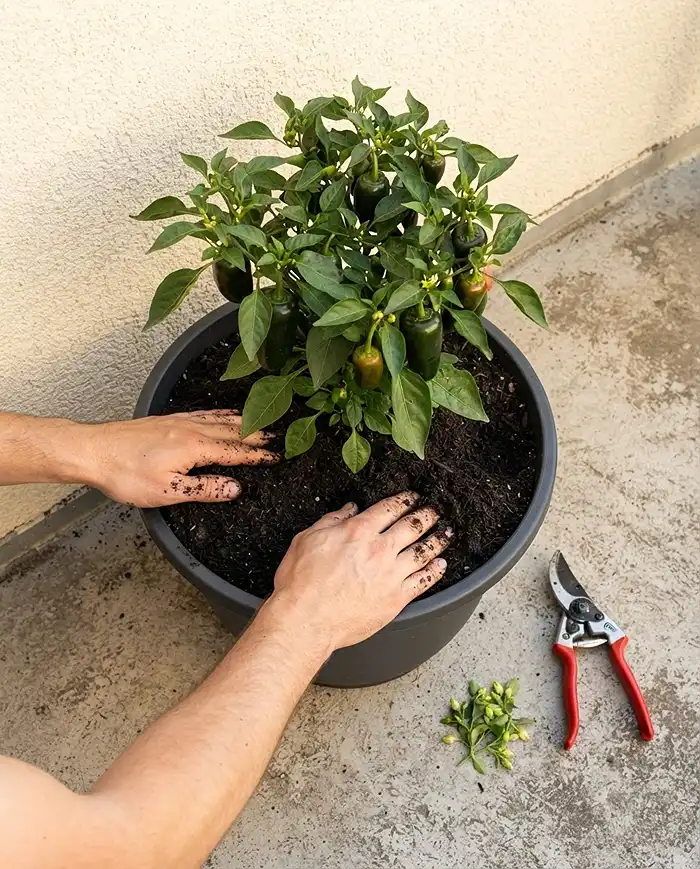
- Top-dress with compost: Add a 1-inch layer of mature compost to each pot. It acts as light insulation for the root zone and provides a gentle slow-release nutrient boost without pushing tender new growth.
- Relocate to your warmest wall: Move pots flush against a south- or west-facing wall to maximize both sun exposure and thermal mass benefits. Do this before temperatures drop, not after.
- Prune new flowers four weeks before frost: This feels ruthless, but it forces the plant to direct all remaining energy into ripening fruit that’s already set, rather than starting new pods that won’t make it to maturity.
- Remove any damaged or diseased foliage: Clean up the plant to reduce disease pressure and improve airflow — autumn’s damp conditions are prime time for fungal issues.
- Check ties and supports: Autumn winds can be brutal. Make sure any fruit-laden branches are supported so they don’t snap under the weight of ripening pods.
Advanced Maintenance for Continuous Autumn Fruiting
Once the season shifts, your summer watering and feeding routine will actively harm your plants if you don’t adjust it. Cooler soil behaves completely differently from warm summer soil — and most late-season pepper losses I’ve seen come from gardeners still running their summer program in September.
Adjusting Watering Schedules for Cool Soil
Lower ambient temperatures slow evaporation dramatically. Soil that might dry out in two days during July can stay wet for five or six days in September. Overwatering in cool conditions is the number one cause of late-season root rot in peppers in containers.
Switch to the finger test immediately in early autumn: push your finger 2 inches into the soil. Water only when it feels dry at that depth. Resist any urge to water on a schedule — let the soil and the plant tell you when they’re thirsty.
When you do water, do it in the morning so excess moisture can evaporate during the day rather than sitting in cold, wet soil overnight. That single change makes a real difference to root health.
Tapering Nitrogen and Boosting Potassium
Stop applying any high-nitrogen liquid fertilizer as soon as September arrives. Nitrogen pushes leafy vegetative growth — exactly what you don’t want heading into frost. Soft new leaves are the first thing to get damaged by cold, and tender growth signals the plant to keep vegetating rather than finishing its fruit.
Instead, apply a single dose of a potassium and phosphorus-heavy fertilizer — bone meal or a low-nitrogen tomato fertilizer works well. This supports final fruit development and helps harden off the plant tissue for cooler conditions.
I made the mistake of continuing liquid feed into early October one year with a ‘Lunchbox’ pepper. The plant pushed out several inches of lush new growth that turned black with the first frost. The fruit it had already set would have survived under fleece. That new growth meant nothing was saved. Lesson learned.
Common Problems and Solutions
Late-season peppers face a specific set of challenges that differ from midsummer problems. Knowing what to look for — and having a plan — makes the difference between a productive October harvest and a pot of dead plants.
Blossom Drop During Cold Snaps
If overnight temperatures drop below 55°F (13°C), pepper plants will start dropping flowers. This is a biological stress response — the plant is choosing to survive rather than set new fruit.
Don’t panic when this happens. It doesn’t mean the plant is dying. It means you need to insulate it overnight with fleece, and accept that your harvest will come from fruit that’s already set rather than new flowers.
Blossom drop in autumn is usually the plant telling you it’s shifting focus. Help it ripen what it has rather than pushing for new pods at this stage of the season.
Aphids and Overwintering Pests
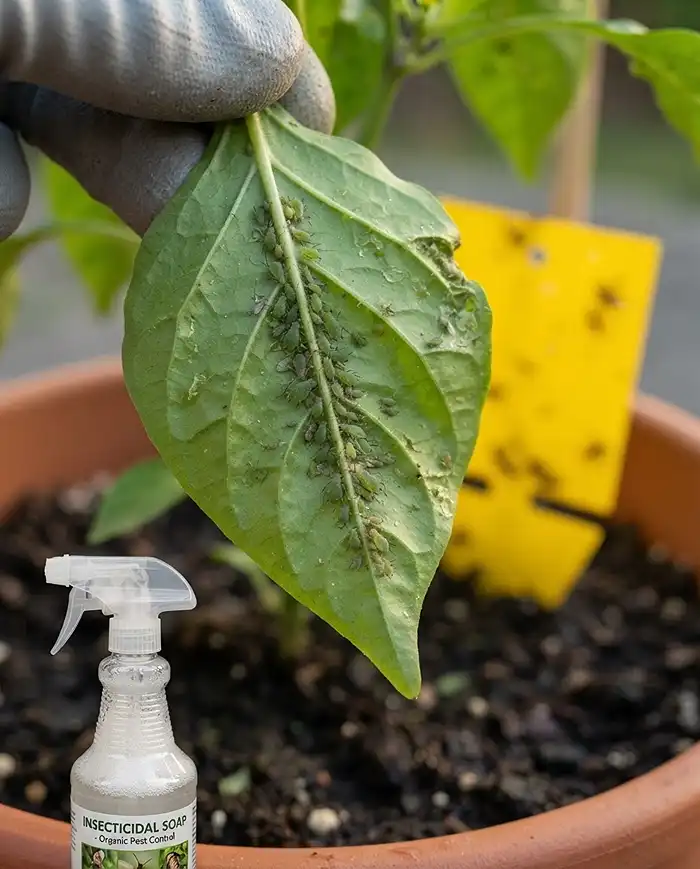
Aphids genuinely love autumn pepper plants. As temperatures drop, aphids congregate on warm, stressed foliage seeking shelter. Check the undersides of leaves weekly starting in September.
Yellow sticky traps placed near the pots catch flying adults and give you early warning of an infestation. For active colonies, spray with insecticidal soap at dusk — applying in the evening reduces harm to beneficial insects and gives the product time to work before it dries.
Don’t ignore a small aphid problem. Stressed plants carry pests indoors if you decide to overwinter them, and a large aphid colony can devastate a plant before you realize the extent of the damage.
Compact pepper plants for pots FAQs
Can I bring my potted pepper plant indoors for the winter?
Yes — peppers are tender perennials, not annuals. Before the first frost, prune the plant back by about one-third, move the pot to your sunniest, warmest windowsill, and reduce watering significantly. The plant will go semi-dormant and can survive winter indoors, then produce a big early harvest the following year.
Why are my late-season peppers ripening so slowly?
Ripening — including the color change from green to red — is driven entirely by heat. As autumn temperatures drop, the process slows or stalls. Use frost blankets to trap heat around your containers during the day, and move pots to your warmest wall to speed things up.
Will a light frost kill my container pepper plants?
Yes. Peppers have zero frost tolerance. Even a light freeze at 32°F (0°C) will turn foliage black and kill the plant within hours. If you can’t protect your pots with fleece or move them indoors, harvest all unripe fruit immediately — green peppers will continue to ripen on a warm countertop.
What size pot do compact peppers need for a late-season harvest?
A minimum of 10 litres (roughly a 12-inch diameter pot) is the sweet spot for most compact varieties. Larger pots hold more soil mass, which buffers temperature swings better during cool autumn nights. Avoid anything smaller than 8 litres — root restriction stresses plants and reduces late-season production.
Should I remove green peppers before frost, or wait for them to ripen on the plant?
If frost is less than 48 hours away and your pots can’t be protected or moved indoors, harvest all fruit immediately — even fully green. Green peppers picked at full size will ripen to red, orange, or yellow on your kitchen counter over 1-2 weeks at room temperature.
Key Takeaways
- Compact pepper plants for pots extend your harvest into autumn by combining fast-maturing genetics with the mobility that container vegetable gardening uniquely provides.
- Choose cultivars proven for speed and cool-weather tolerance: ‘Lunchbox’, ‘Early Jalapeño’, ‘Thai Hot’, and ‘Basket of Fire’ are all reliable late-season producers.
- Position pots against south-facing walls to exploit thermal mass, and use dark, thick-walled containers to retain soil warmth overnight.
- Stop nitrogen feeding in early autumn and switch to potassium-heavy fertilizer; adjust watering to the finger-test method to avoid root rot in cool, slow-drying soil.
- Have horticultural fleece ready before the first cold snap — peppers have zero frost tolerance, and one unprotected freeze ends the season immediately. For a broader overview of what thrives in containers, see our guide to the best vegetables for container gardening and the best root vegetables for containers to round out your autumn growing plan.