

Fall Balcony Garden Ideas With Warm Earth Tones
The best fall balcony garden ideas for fall ditch the neon summer chaos and lean into rusts, mustards, and deep greens — a palette that turns even a tiny apartment balcony garden into a genuinely cozy outdoor room.
I grow on a north-facing balcony in zone 6b, and every September I do a full swap. What used to feel like a scramble now takes one focused afternoon because I follow the same earth-toned framework each year.
Table of Contents
Embracing the Season: Designing an Earth-Toned Autumn Balcony
Summer containers are loud by nature. Bright petunias, electric marigolds, lime-green sweet potato vine — they earn their place in July heat. But by September, that same palette starts to feel jarring against shorter days and cooling air.
Switching to an earth-toned autumn palette — rusts, ochres, deep olive, terracotta — does something different. It feels intentional. It reads as styled, not seasonal.
The key insight is that warm autumn colors work like a cozy interior room brought outside. Burnt orange next to deep bronze foliage. Mustard-yellow grasses catching the low afternoon light. The palette does the heavy lifting.
For a small balcony garden, a restricted color scheme also makes the space feel larger. Three to four tones, repeated across containers and textiles, create visual flow rather than clutter.
Assessing Your Balcony Microclimate for the Autumn Transition
Before you buy a single mum, audit your balcony’s autumn conditions. Early fall brings two changes that catch gardeners off guard: the sun drops lower on the horizon, and temperatures swing hard between midday and midnight.
Both factors directly decide which warm-toned plants will thrive versus which will sulk and rot. Spend a morning tracking light before spending money on plants.
Tracking the Shifting Sun Angles and Shadows
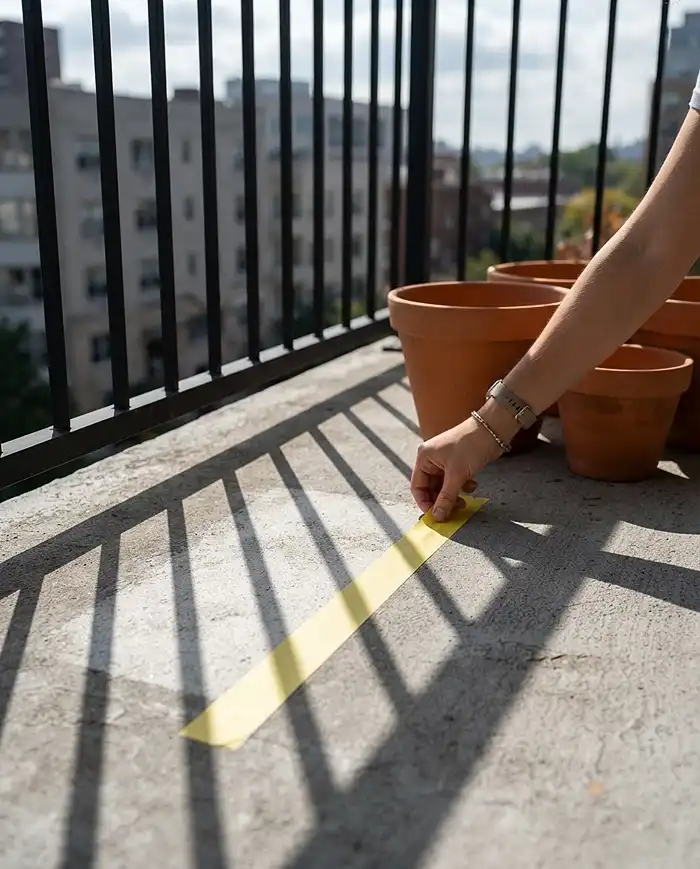
The autumn sun sits roughly 20 to 30 degrees lower than it does in June. That means shadows from your railing, neighboring buildings, or your own walls stretch much farther into your balcony space than they did all summer.
A spot that got six hours of sun in July might only get three hours by October. Spend one morning in mid-September watching where direct light actually falls — not where you assume it lands.
Mark it with a piece of tape or a phone note. Then position your sun-hungry plants, like mums and violas, exactly in those zones. Move shade-tolerant Heuchera to the back corners where light fades fastest.
Pro tip: A south or west-facing balcony railing is prime real estate in fall. Hang rail planters with Heuchera there to grab every last ray of low afternoon sun.
Wind Protection for Cozy Corners
Autumn wind is desiccating. It pulls moisture from leaves and potting mix faster than you’d expect, especially once night temperatures drop below 50 degrees Fahrenheit.
Use your balcony’s physical corners strategically. A corner position gives plants two walls of protection. Cluster your most fragile specimens — ornamental grasses, tall mums — there first.
For railings exposed to prevailing wind, a bamboo screen or outdoor privacy panel adds a windbreak without looking makeshift. These are worth the investment for renters doing a fall balcony refresh, since they’re removable and reusable.
Curating the Warm Earth-Toned Color Palette
Professional interior designers work with a restricted palette because restraint reads as confidence. The same rule applies outdoors. Pick three to four colors and repeat them deliberately across plants, pots, and textiles.
For fall, that means one warm dominant (rust or burnt orange), one warm mid-tone (mustard or ochre), one dark anchor (bronze or deep plum), and one neutral (terracotta clay). Everything else is texture, not color.
Rust, Mustard, and Burnt Orange Hues
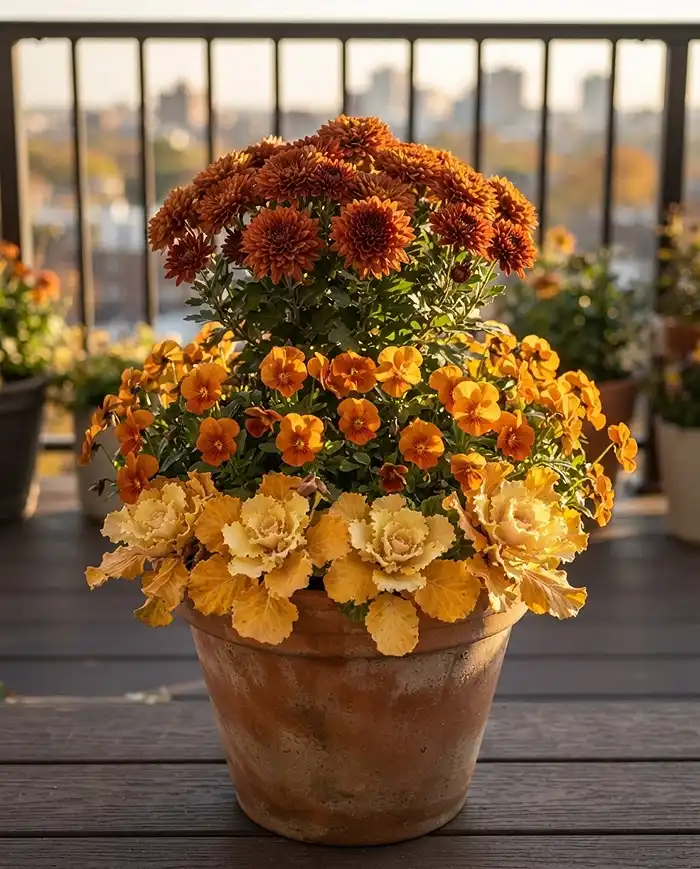
These are your workhorse tones. Rust-colored chrysanthemums, burnt-orange violas, and deep-gold pansies build the seasonal feeling without reaching for plastic Halloween decor.
The trick is layering warm shades with slight variation. A copper mum next to a true burnt-orange viola creates visual depth. Matching the exact same orange across every container reads as flat.
In 2024, I planted a mix of ‘Burnt Copper’ chrysanthemums alongside ‘Halloween’ and ‘Delta Yellow’ violas in a 14-inch terracotta pot. The combination bloomed for nearly eight weeks, well into November in zone 6b.
Ochre-toned ornamental kale adds a quieter warm note that grounds the brighter orange without competing. Think of it as the warm neutral that lets the louder colors breathe.
Pro tip: Buy chrysanthemums with buds still closed. Open blooms at the nursery mean you’re getting two weeks of color instead of six.
Deep Olive and Bronze Foliage Accents
Bright orange needs a foil, or the whole arrangement reads as one-dimensional. Bronze Heuchera, deep-plum ornamental kale, and dark olive foliage do that anchoring work.
These darker tones add sophistication. They’re what separates a styled autumn container from a generic garden center display.
‘Caramel’ Heuchera is my first pick every fall. Its amber-brown leaves shift to deeper bronze as temperatures drop. ‘Obsidian’ Heuchera adds near-black drama for contrast.
Pair deep foliage at the base of tall mums or grasses to create the thriller-filler-spiller structure. The dark plants visually anchor the bright tops and prevent the arrangement from looking top-heavy.
Pro tip: Dark foliage shows water droplets and spider webs beautifully in autumn morning light — a detail that makes your balcony feel like a curated outdoor room.
Best Plants for an Earth-Toned Autumn Display
The plants below earn their place in an apartment balcony garden because they combine genuine cold-hardiness with colors that fit the earth-toned palette. These aren’t just pretty — they’re practical for container life in zones 5 through 7.
| Plant | Key Color | Cold Tolerance | Best Container Size |
|---|---|---|---|
| Chrysanthemum ‘Burnt Copper’ | Rust / Copper | Zone 5 (in-ground) | 12-14 inch |
| Pansy ‘Halloween’ | Deep Orange | Zone 4 | 8-10 inch |
| Heuchera ‘Caramel’ | Amber / Bronze | Zone 4 | 10-12 inch |
| Ornamental Kale ‘Redbor’ | Deep Plum / Green | Zone 3 | 10-12 inch |
| Carex comans ‘Bronze’ | Golden Bronze | Zone 5 | 10-14 inch |
| Hakonechloa macra ‘Aureola’ | Gold / Green | Zone 5 | 12-16 inch |
Floral Centerpieces: Rust-Colored Mums and Pansies
Chrysanthemums are the backbone of a fall container garden. They bloom prolifically, tolerate light frosts, and come in every shade from pale gold to deep mahogany.
For the earth-toned palette, look for cultivars labeled copper, bronze, rust, or mahogany. ‘Burnt Copper,’ ‘Cheryl Terracotta,’ and ‘Mammoth Dark Bronze’ are reliable performers in zones 5 to 7.
Pansies and violas fill the gaps between mums and extend the season. ‘Matrix Harvest’ pansies hit the rust-to-orange range perfectly. ‘Halloween’ violas add deep orange that holds color even in hard frosts.
I always buy mums with at least 80 percent of buds still closed. One fall I bought fully open plants on sale — looked great for ten days, then looked ragged for four weeks. Lesson learned the hard way.
Pro tip: Deadhead pansies every three to four days by pinching the spent stem back to the nearest leaf node. It doubles bloom time.
Textural Foliage: Bronze Heuchera and Ornamental Kale
Heuchera (Coral Bells) is the most underused fall container plant. It looks polished from the first cool night of September straight through the first hard freeze of November.
‘Caramel’ shifts from amber in early fall to rich bronze-brown by October. ‘Marmalade’ adds warm copper-orange tones. Both hold their color even when temperatures dip below 28 degrees Fahrenheit.
Ornamental kale and cabbage are the other foliage workhorses. ‘Redbor’ starts green-purple and deepens to near-black with cold. ‘Osaka Red’ produces tightly ruffled heads in deep rose and purple-green.
Here’s the counterintuitive truth about ornamental kale: the colder it gets, the better it looks. A hard frost at 28 degrees triggers color intensification. I’ve had ‘Redbor’ looking its best in December in zone 6b.
Pro tip: Plant ornamental kale in its own container so you can move it to the coldest spot on your balcony to trigger deeper color saturation.
Sweeping Movement: Golden Ornamental Grasses
Every fall container arrangement needs movement. Static mums and kale, however beautiful, feel heavy without something that sways. Ornamental grasses solve this.
For containers on a small balcony garden, stick to compact species. Carex comans ‘Bronze’ grows to about 18 inches and cascades outward like a fountain of warm copper hair. It handles shade and tolerates drying wind.
Hakonechloa macra ‘Aureola’ is showier — chartreuse-gold blades that catch the low autumn sun and glow. It prefers a bit more moisture than Carex but rewards you with spectacular color as temperatures drop.
I tried Pennisetum ‘Rubrum’ on my balcony one fall — beautiful burgundy plumes, but it needs full sun and hit by wind from the west, it flopped sideways within two weeks. The compact Carex never moved. Compact wins on a balcony.
Pro tip: Place grasses in the back or center of arrangements so their movement doesn’t knock over smaller plants when wind picks up.
Styling Your Balcony with Terracotta and Warm Decor
Plants alone don’t create an atmosphere. The containers you choose and the textiles you layer in are what push a fall container display from “nice plants” to “cozy outdoor room.”
Fortunately, the materials that perform best in autumn conditions — unglazed terracotta, woven rattan, weathered wood — are exactly the ones that fit the warm earth-toned palette.
Layering Unglazed Terracotta and Woven Rattan
Unglazed terracotta is the ideal autumn container. Its porous walls allow excess moisture to evaporate, which dramatically reduces root rot risk during cool, damp fall weather.
Aesthetically, terracotta’s warm clay color is a direct match for the rust-and-ochre palette. It doesn’t compete with the plants — it completes the picture.
Mix terracotta with woven rattan basket liners and rustic wooden crates for texture variation. A rattan basket holding a bronze Heuchera next to a stack of terracotta pots creates the layered, curated look that photographs well and feels intentional in person.
One note on rattan outdoors: line baskets with a coco coir liner and a plastic bag with drainage holes punched in. Rattan itself won’t last a wet autumn season without protection.
Pro tip: Group containers in odd numbers — three or five — at varying heights using pot feet or small wooden risers. The asymmetry reads as styled, not staged.
Adding Ambient Lanterns and Cozy Textiles
Early sunsets are one of fall’s defining features. By late October, it’s dark by 6 p.m. in most of the northern U.S. That’s actually an opportunity — low warm light transforms a balcony.
Battery-operated LED lanterns in brass or copper finishes add a safe, intimate glow without extension cords or fire risk. Place two or three at different heights among the containers.
Outdoor blankets in mustard or rust tones draped over seating anchor the color palette into the functional part of the space. Look for polypropylene or acrylic outdoor fabric — it handles moisture and dries quickly.
I added a single mustard-yellow outdoor throw and two brass lanterns to my balcony setup in fall 2023. The whole aesthetic shifted from “garden display” to “outdoor living room” with those two additions alone.
Pro tip: Store blankets in a sealed bin between uses to prevent mildew. Autumn nights are damp, and fabric left outside overnight can develop musty odors within a week.
Step-by-Step Guide to Your Autumn Balcony Makeover
Do this in one afternoon and you’ll have a finished autumn display before the weekend is over. The sequence matters — don’t skip the soil prep step or you’ll pay for it in stunted plants by October.
- Clear summer debris first. Pull dead annuals, empty summer containers, and sweep the balcony floor. A clean start prevents fungal carryover into your new planting.
- Position heavy anchor pots before filling. Terracotta pots are significantly heavier when planted. Place them in their final spots while empty, then fill and plant in place.
- Refresh potting mix. Remove old root masses and top-dress with two to three inches of fresh compost. Mix in slow-release fertilizer formulated for fall — lower nitrogen, higher potassium.
- Plant using thriller-filler-spiller structure. Tall mum or grass in center (thriller), Heuchera or kale mid-layer (filler), trailing viola or sedge at edges (spiller).
- Water thoroughly after planting. Then allow soil to partially dry before watering again. Fall evaporation is slow — overwatering is the most common new-season mistake.
- Place textiles and lanterns last. Style the seating area after all plants are positioned so you can see the full picture before committing to lantern placement.
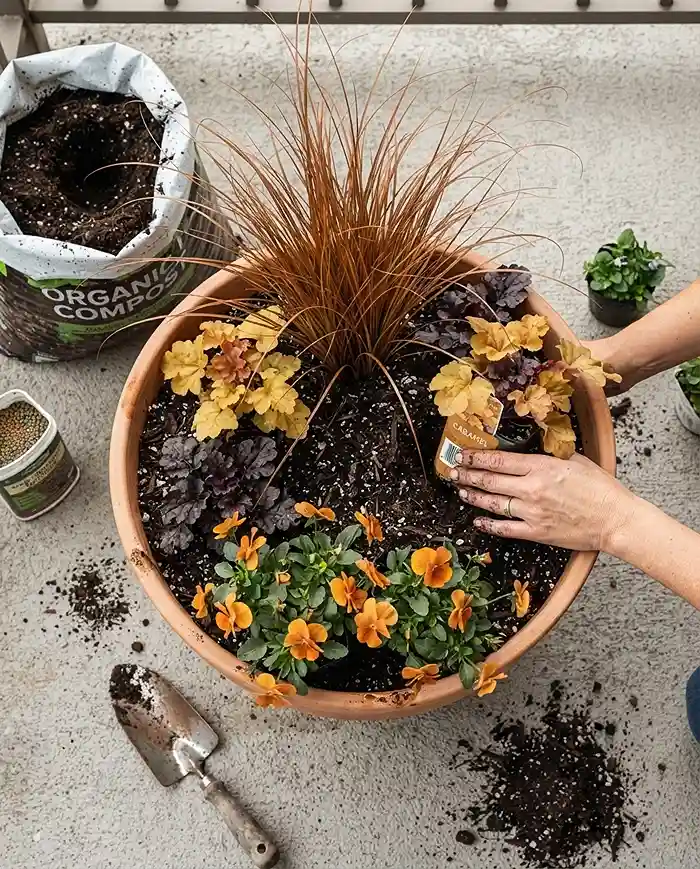
Check out our complete autumn balcony garden ideas guide for additional planting combinations and seasonal timing by zone.
Seasonal Maintenance for Cool Weather Containers
The maintenance habits that worked all summer will actively harm your fall plants if you don’t adjust. Two routines need to change immediately: watering frequency and bloom management.
Get these right and your display holds its polished look for two to three months. Get them wrong and you’ll be dealing with root rot and leggy plants by mid-October.
Adjusting Watering Routines for Dropping Temperatures
In summer heat, containers dry out fast. You’re watering every day or every other day. In fall, that same schedule becomes a death sentence for roots.
Lower temperatures mean slower evaporation. Potting mix that dried out in 24 hours in August may still feel moist three days later in October. Overwatering in cool weather is the fastest route to fatal root rot in container plants.
Switch to the finger-test method exclusively. Push your index finger one to two inches into the potting mix. If it feels moist, don’t water. If it feels dry at that depth, water thoroughly until it drains from the bottom.
Pro tip: Empty saucers completely after every rain. Standing water in saucers during cool weather chills roots and accelerates rot faster than overwatering from the top.
Deadheading to Prolong Autumn Blooms
Deadheading [removing spent flowers] is the single most effective maintenance habit for keeping fall containers looking sharp. Left unchecked, fading blooms signal the plant to stop producing new flowers.
For mums, pinch the spent bloom head back to the nearest set of leaves. For pansies and violas, remove the entire stem back to the base of the plant. Do this every three to four days.
Beyond the aesthetic benefit — no brown, mushy petals cluttering your display — deadheading removes decaying plant material that can harbor botrytis and powdery mildew in autumn’s cool, damp air.
I skipped deadheading for two weeks one October due to travel. Came back to a pansy container that looked half-dead and a mum with botrytis starting on three stems. Thirty minutes of cleanup brought it back, but it was avoidable.
Pro tip: Keep small pruning snips on the balcony rather than inside. The lower the barrier to deadheading, the more often it actually gets done.
Common Problems and Solutions
Even a well-planned fall container setup hits specific problems. These are the two most common issues in cool-weather balcony gardens, along with straightforward fixes.
Powdery Mildew in Damp Autumn Air
Quick Answer: Powdery mildew appears as a white, dusty coating on leaves during cool, humid nights. Treat immediately with a potassium bicarbonate spray and improve airflow between containers.
Autumn nights combine the two conditions powdery mildew loves: cool temperatures and high humidity. Crowded containers make it worse by trapping damp air between plants.
At the first sign of white coating — usually on mum foliage or squash-family plants — mix one tablespoon of potassium bicarbonate per gallon of water and spray the affected leaves, including undersides.
Space containers at least four to six inches apart. If mildew is recurring, that’s a sign your arrangement is too dense for the airflow your balcony gets. Thin it out before the problem spreads.
Terracotta Pots Cracking in the Cold
Quick Answer: Frost-heave cracks terracotta when water trapped in the porous clay freezes and expands. Seal new pots with clear masonry sealer before planting, and always empty saucers after rain.
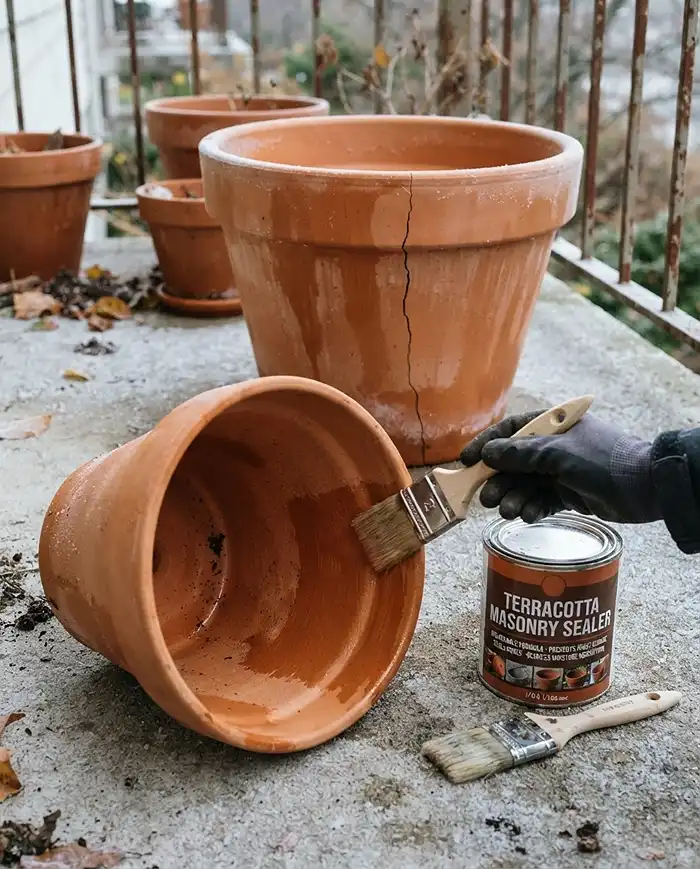
This is a physics problem. Terracotta is porous. Water saturates the clay walls. When temperatures drop below 32 degrees Fahrenheit, that water expands as it freezes and literally splits the pot from the inside out.
Before planting new terracotta in fall, apply one coat of clear masonry sealer to the interior walls. Let it cure for 24 hours. This dramatically slows water absorption without affecting drainage.
For existing pots, keep saucers bone-dry after any rainfall and move pots to a sheltered spot — pushed against the building wall — when a hard freeze is forecast. See our guide to a fall Mediterranean balcony style for cold-weather container protection strategies that work across climates.
Frequently Asked Questions
How long will an autumn balcony garden last?
Cold-hardy plants like violas, Heuchera, and ornamental grasses will thrive for two to three months, often surviving past the first light frosts. They’ll continue until a deep hard freeze — typically below 20 degrees Fahrenheit sustained overnight — forces them into dormancy or kills them outright.
Do I need to buy new soil for fall container plants?
Not necessarily. If your summer plants were healthy, remove the old root masses, then amend the top third of existing potting mix with fresh compost and a slow-release fall fertilizer. Only replace soil completely if the previous plant died of a fungal disease like root rot.
Can I overwinter fall plants on a rental balcony?
Heuchera and pansies are cold-hardy, but above-ground containers freeze solid in harsh winters. Renters in USDA Zones 5 and below should treat these as seasonal annuals or wrap containers in burlap to insulate roots. In Zones 6 and above, many will survive with minimal protection.
What fall container vegetables work with an earth-toned palette?
Ornamental kale and cabbage are both edible and beautiful in the earth-toned palette. Swiss chard ‘Bright Lights’ adds yellow and orange stems. Mustard greens and purple-leaf lettuce extend the color scheme while providing actual fall container vegetables you can harvest through November.
How do I keep mums blooming as long as possible on my balcony?
Buy mums with buds mostly closed, deadhead every three to four days, and position them where they get maximum available autumn sun. Water only when the top two inches of soil are dry. Avoid high-nitrogen fertilizer in fall — it promotes leaves, not flowers.
Key Takeaways
- The best balcony garden ideas for fall use a restricted palette of three to four warm earth tones — rust, ochre, bronze, terracotta — repeated across plants, pots, and textiles to create a cohesive, cozy outdoor space.
- Map your autumn sun angles before buying plants. A spot with six hours of sun in July may only get three hours by October, which changes which plants belong where.
- Buy chrysanthemums with tightly closed buds. Open blooms at the nursery mean weeks less color on your balcony.
- Switch to the finger-test watering method in fall. Cool temperatures slow evaporation, and overwatering is the fastest way to lose container plants to root rot.
- Terracotta, bronze Heuchera, compact ornamental grasses, and cold-hardy pansies form the most reliable four-part foundation for an apartment balcony garden that holds its earth-toned aesthetic from September through November.
For more fall container inspiration suited to renters and small-space gardeners, explore these fall balcony ideas designed specifically for renters — practical, removable, and styled for the season.
For deeper reading on container plant cold tolerance and zone-by-zone timing, the USDA Plant Hardiness Zone Map is the definitive reference for matching plant choices to your specific climate.