

Small Balcony Garden Design That Feels Bigger
I’ve squeezed a lush garden onto a 6×10-foot balcony for eight years, and smart small balcony garden design is what makes it feel twice the size.
It’s not about buying more plants. It’s about tricking the eye with height, color, and clear sightlines so a cramped concrete slab reads as an open-air retreat instead of a storage closet.
Table of Contents
The Illusion of Space in Balcony Gardening
Landscape architects have used optical tricks for centuries, and you can borrow the same tools for a small balcony garden. Tall, narrow plants pull the eye up. Cool colors recede. Clear floor lines read as more square footage than you actually have.
On my own balcony, zone 6a in Chicago, I learned this the hard way. My first year, I crammed nine terracotta pots along the railing and floor. It looked like a garden center, not a retreat. Once I cut that down to four large containers and added height, the same footprint felt roomy.
That’s the core idea behind every technique in this guide: work with a small footprint’s real limits, but design so the brain perceives more room than the tape measure says exists.
Core Design Principles for Small Outdoor Spaces
Quick Answer: Small outdoor spaces succeed when you commit to a tight color palette, a handful of large containers, and strict self-control at the garden center. Every extra impulse-buy plant chips away at the openness you’re trying to create.
Cohesive geometry matters more than variety here. Repeating the same pot shape, the same two or three plant colors, and the same material finish does more for a small balcony garden than a dozen mismatched treasures ever will.
Utilizing Vertical Space and Uninterrupted Sightlines
Quick Answer: Draw the eye upward with trellises, tall planters, and hanging baskets, then keep the entire floor clear of small pots so there’s one unbroken sightline from your door to the railing.
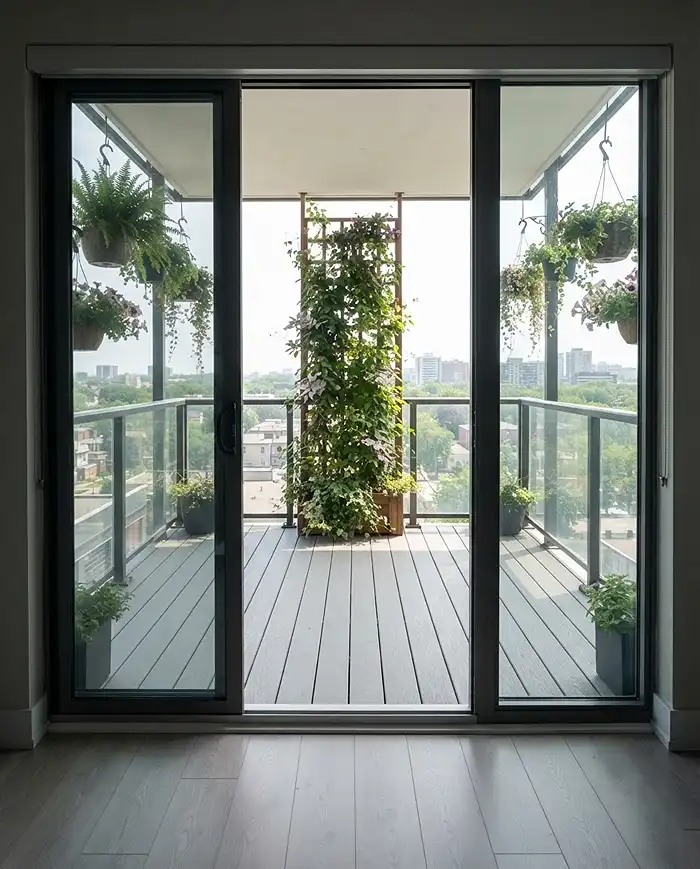
Every trip-hazard pot scattered across the floor chops the space into fragments. A single clear path, even if it’s only 24 inches wide, reads as far larger than a floor dotted with six mismatched containers.
Pro Tip: Stand in your doorway and look straight across the balcony. If your eye hits a pot before it hits the railing, move that pot to a corner or a wall-mounted planter.
The Power of Color Theory and Foliage Texture
Quick Answer: Cool-toned blooms in blue, purple, and white visually recede, making walls and railings feel farther away, while pairing fine, airy foliage against bold, broad leaves adds depth without using extra floor space.
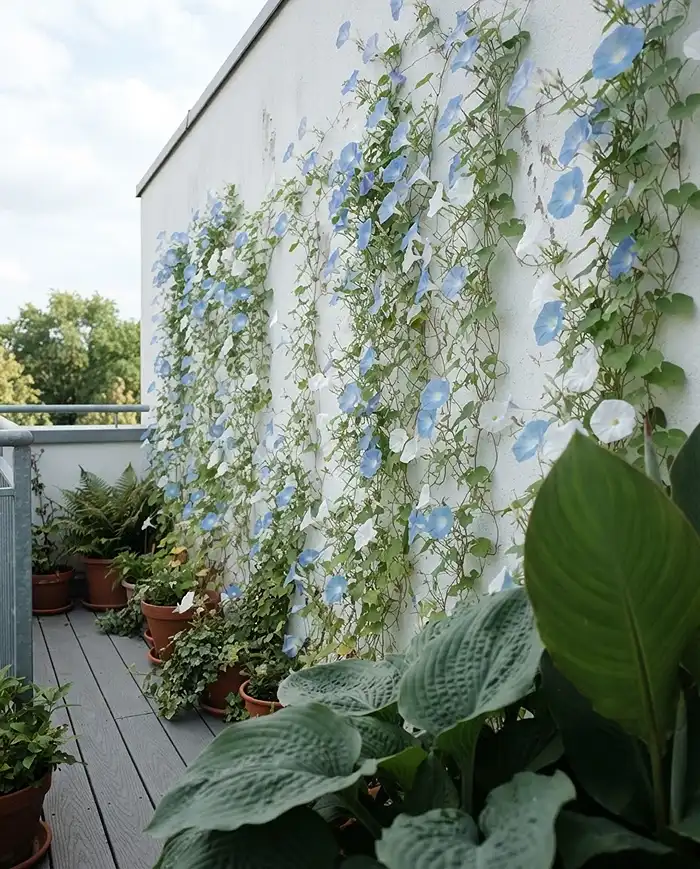
I learned this by accident. I planted ‘Heavenly Blue’ morning glory against a white stucco wall one July, and the wall seemed to disappear behind a haze of blue. A hot orange zinnia in the same spot the year before had done the opposite, it flattened the whole corner.
For a full breakdown of which hues pace furthest back visually, I put together a guide to balcony color palette ideas with plants that pairs well with this approach.
Pre-Planning Your Spacious Balcony Layout
Before you buy a single bag of soil, audit your balcony’s microclimate and measure the exact footprint. A layout blueprint on paper saves you from expensive rearranging once pots are full of wet soil and impossible to move alone.
Mapping Floor Space and Structural Weight Limits
Quick Answer: Measure your balcony’s exact square footage and check your building’s weight capacity before buying containers, then choose lightweight fiberglass planters over heavy terracotta to maximize usable soil volume per pound.
Most residential balconies are rated for 50 to 100 pounds per square foot, but older buildings can be lower. Saturated soil is heavy: a 24-inch fiberglass planter full of wet potting mix can weigh 80 pounds even though it looks light.
Check your official USDA Plant Hardiness Zone Map at the same time, since your zone determines which perennials can survive winter in an exposed container rather than needing to come indoors.
Choosing Minimalist, Multi-Functional Furniture
Quick Answer: Pick leggy, open-frame bistro sets or a built-in storage bench instead of solid patio furniture, since light passing under and through the pieces keeps the whole balcony from feeling boxed in.
A solid opaque bench against the railing blocks both light and sightlines. A slim two-chair bistro set with thin metal legs does the opposite: it disappears visually while still giving you somewhere to sit with your coffee.
Selecting the Best Plants to Maximize Space
Choose plants with predictable, controlled growth habits over anything described as “vigorous” or “spreading.” A wide bushy shrub that looked tidy at the nursery can swallow your only walking path by August.
Tall, Narrow Plants for Vertical Impact
Quick Answer: Columnar cultivars like ‘Sky Pencil’ holly, Emerald Green arborvitae, and ‘Karl Foerster’ feather reed grass add height and drama in a footprint barely wider than a dinner plate.
| Plant | Mature Size | Best For |
|---|---|---|
| ‘Sky Pencil’ Holly | 6-8 ft tall, 1-2 ft wide | Corner anchor, evergreen structure |
| Emerald Green Arborvitae | 10-15 ft tall, 3-4 ft wide (container-slowed) | Privacy screen along a railing |
| ‘Karl Foerster’ Grass | 4-5 ft tall, 1-2 ft wide | Movement and texture near seating |
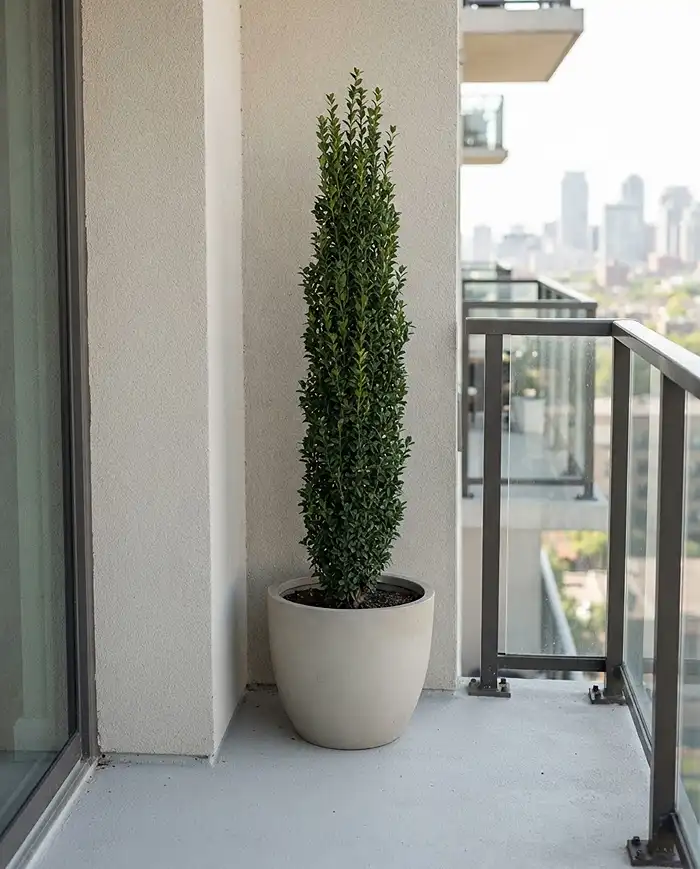
I planted a ‘Sky Pencil’ holly in a 16-inch fiberglass pot in my far corner four seasons ago, and it’s still under 3 feet wide even at 6 feet tall. It does more visual work than any shrub I’ve owned.
Trailing Spillers to Blur Hard Boundaries
Quick Answer: Cascading plants like creeping Jenny, sweet potato vine, and trailing nasturtiums planted in railing planters soften harsh concrete edges and blur where the balcony physically ends.
- Creeping Jenny: chartreuse trailer, thrives in part shade, spills 2-3 feet
- Sweet potato vine ‘Marguerite’: fast, heat-tolerant, spills 3-4 feet by midsummer
- Trailing nasturtium: edible flowers, full sun, self-seeds mildly
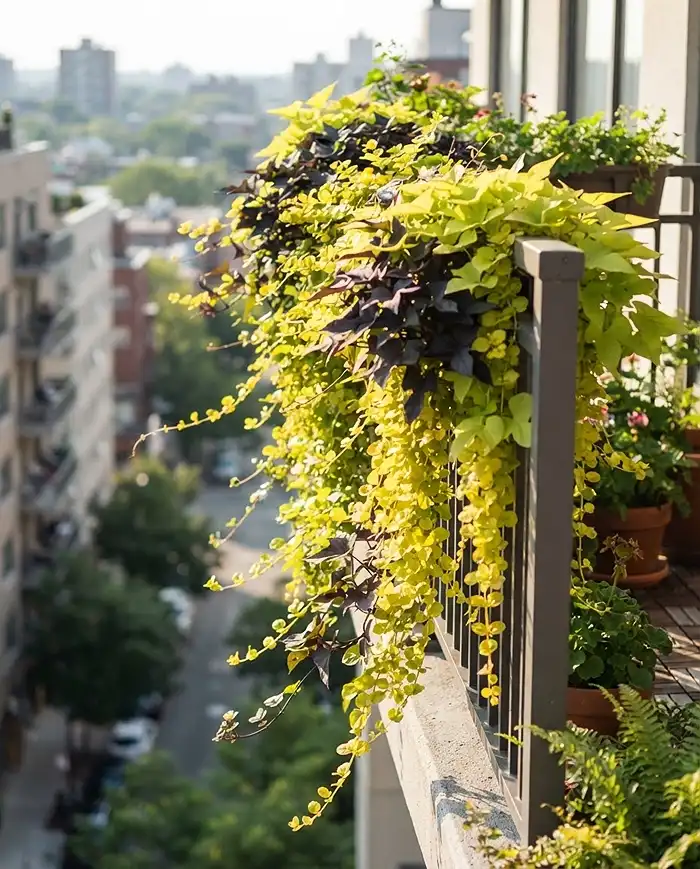
Real Example: I lost an entire railing planter of sweet potato vine to spider mites one August because I skipped watering during a heatwave. It taught me to check trailing plants twice a week when temperatures climb past 85°F.
These same spillers show up throughout my broader roundup of space-saving small garden ideas, if you want more container combinations.
Step-by-Step Guide to Executing Your Design
Once your plan is on paper, install everything in this order so you’re never undoing earlier work:
- Clean the slate: remove old pots, sweep, and check the drain for clogs
- Install vertical structure first, trellises and railing planters, while the floor is empty
- Place your largest anchor pots in the far corners to draw the eye outward
- Add mid-height plants between the anchors and the seating area
- Finish with trailing spillers along the railing to blur the hard edges
Working corner-out rather than door-in keeps you from boxing yourself into a tight space with your own furniture. It’s the single biggest layout mistake I see on small balconies.
Maintenance Routines to Keep the Balcony Open
Overgrowth is the number one reason a small balcony garden that looked airy in May feels claustrophobic by July. A short weekly routine prevents almost all of it.
Aggressive Pruning for Shape and Airflow
Quick Answer: Thin the interior canopy of container plants every two to three weeks during peak growing season, cutting inward-facing stems to encourage upward growth instead of horizontal spread into the seating area.
Pro Tip: Prune to an outward-facing bud whenever possible. It pushes new growth away from the plant’s center and keeps the silhouette narrow instead of bushy.
Managing Clutter and Seasonal Debris
Quick Answer: Set a weekly ten-minute routine to deadhead spent blooms, sweep fallen leaves, and stash empty watering cans and soil bags in a hidden deck box so sightlines stay clean.
I keep a small lidded bin behind my tallest arborvitae specifically for this. It’s out of view but always within reach when I need to grab pruning shears or a bag of slow-release fertilizer.
Common Problems and Solutions
High-density container gardening in a tight footprint creates a few predictable problems. Here’s how to catch and fix the two most common ones fast.
Overcrowding and Leggy Plant Growth
Quick Answer: Packing too many plants into limited space causes etiolation, where stems stretch and thin as they compete for light. Thin out underperforming plants ruthlessly and rotate pots weekly so all sides get even sun.
If a stem looks pale and stretched with wide gaps between leaves, that plant is losing the light competition. Move it to a brighter spot or remove it rather than letting it weaken its neighbors too.
Mildew and Pests in Tightly Packed Corners
Quick Answer: Powdery mildew and spider mites thrive where poor air circulation meets tightly packed corners. Treat with a diluted neem oil spray weekly and prune surrounding foliage to restore airflow.
I mix one tablespoon of neem oil with a teaspoon of mild dish soap per quart of water, then spray both sides of affected leaves in the early evening. Combined with pruning for airflow, it usually clears mild mildew within two weeks.
small balcony garden design FAQs
Should I use many small pots or a few large ones?
Three to four large, cohesive planters beat scattering fifteen small pots. Large containers create a cleaner, more modern look, reduce visual clutter, and hold moisture far longer between waterings.
What pot colors make a small balcony look larger?
A monochromatic palette of crisp white, light grey, or muted terracotta works best. Light-colored pots reflect ambient sunlight into shady corners and keep the whole space feeling airy and open.
How do I hide an ugly balcony wall without taking up floor space?
Install a tension-mounted bamboo screen or a modular vertical pocket planter. Both cover an unsightly wall with shallow-rooted foliage like ferns or herbs while using zero square inches of floor space.
How much sunlight does a small balcony garden design actually need?
Most flowering and vegetable plants want six or more hours of direct sun. South and west-facing balconies usually qualify; north-facing ones do better with shade-tolerant foliage like ferns and hostas.
What’s the fastest way to add height without expensive furniture?
A simple tension trellis mounted between floor and ceiling adds vertical growing space in minutes. Pair it with a fast climber like black-eyed Susan vine for height within a single growing season.
Key Takeaways
- Good small balcony garden design relies on height, cool color, and clear floor sightlines rather than plant quantity
- Three or four large, lightweight containers beat a dozen scattered small pots for both looks and weight limits
- Trailing spillers along the railing blur hard edges and make the boundary of the space feel less defined
- A weekly ten-minute pruning and tidying routine is what actually keeps a small balcony garden from feeling cramped by midsummer
- For more apartment-specific layouts, check out these apartment balcony garden ideas