

Best Cucumbers for Containers
Looking for the best cucumbers for containers this late in the season? A second planting in late July or August can still hand you a full harvest before frost, if you pick the right variety.
I grow cucumbers in 7-gallon fabric grow bags on a south-facing patio in zone 6b, and my late-summer round almost always outperforms my June planting. The soil is already warm, so seeds pop up in 4 to 5 days instead of the 10 it took in cool spring dirt. You also skip the worst window for the striped cucumber beetle, which does most of its damage on tender young seedlings in May and June. By August, beetle pressure has dropped off and your new seedlings get a much easier start.
Table of Contents
Selecting the Best Cucumbers for Containers
Success with a late planting comes down to genetics, not luck. You need cultivars bred for speed, compact growth, and reliable fruit set as daylight hours shrink. That’s the whole game with container vegetable gardening this late in the year: pick plants built for a short, tight window.
The Importance of Fast-Maturing “Days to Harvest”
Quick Answer: Count backward from your region’s average first frost date and choose cucumber varieties listed at 45 to 55 days to maturity. Add a 10 to 14 day buffer since growth slows as light fades in September.
For my zone 6b garden, first frost lands around October 10. That means I need seeds in soil no later than early August for a 50-day variety, with room to spare. Skip anything labeled 60-plus days unless you’re growing under row cover.
Pro Tip: Check the seed packet’s days-to-maturity number twice. Some catalogs measure from transplant, not direct seeding, which can throw off your countdown by a week or more.
Bush vs. Vining and Parthenocarpic Traits
Bush varieties are the better structural fit for late-season pots. Their compact 2 to 3 foot vines don’t sprawl or topple a container the way a 6-foot vining type will once fruit weight sets in.
Parthenocarpic varieties add another layer of insurance. These set fruit without insect pollination, which matters because bee activity naturally tapers off as summer ends. According to the University of Illinois Extension, parthenocarpic cucumber hybrids produce fruit without pollination, resulting in seedless cucumbers, which is exactly what you want when pollinators are scarce.
Top Cucumber Cultivars for Late Summer Containers
These six varieties have earned a spot in my late-summer rotation over the years, either through my own trials or repeated recommendations from gardening friends in similar zones. Each one balances speed, compact growth, and container performance.
‘Spacemaster 80’ and ‘Bush Champion’: Reliable Slicers
Quick Answer: ‘Spacemaster 80’ and ‘Bush Champion’ are compact slicing cucumbers that mature in under 60 days and fit comfortably in a 5-gallon bucket.
- ‘Spacemaster 80’ matures in about 60 days with vines under 2 feet long
- ‘Bush Champion’ produces full-sized 8-inch slicers in roughly 55 days
- Both stay under 3 feet, so they rarely need more than a short cage
Real Example: I direct-seeded ‘Spacemaster 80’ in a 5-gallon bucket on August 3 one year in zone 6b, and by early October I’d picked nine full-sized cucumbers before a hard frost hit.
‘Patio Snacker’ and ‘Pickle Bush’: High-Yield Compacts
Quick Answer: ‘Patio Snacker’ and ‘Pickle Bush’ are ultra-compact varieties suited to balconies, producing snacking-sized fruit in as little as 45 days.
Both show strong resistance to the late-season fungal issues that show up once cool, damp nights roll in. ‘Patio Snacker’ vines stay under 24 inches, making it one of the few cucumbers that thrives in a genuinely small pot without a trellis.
Pro Tip: ‘Pickle Bush’ fruit turns bitter fast if left on the vine too long. Pick at 3 to 4 inches for the best crunch and flavor.
‘Diva’ and ‘Socrates’: Parthenocarpic Powerhouses
Quick Answer: ‘Diva’ and ‘Socrates’ are self-pollinating hybrids that reliably set sweet, seedless fruit even as temperatures drop and pollinators disappear.
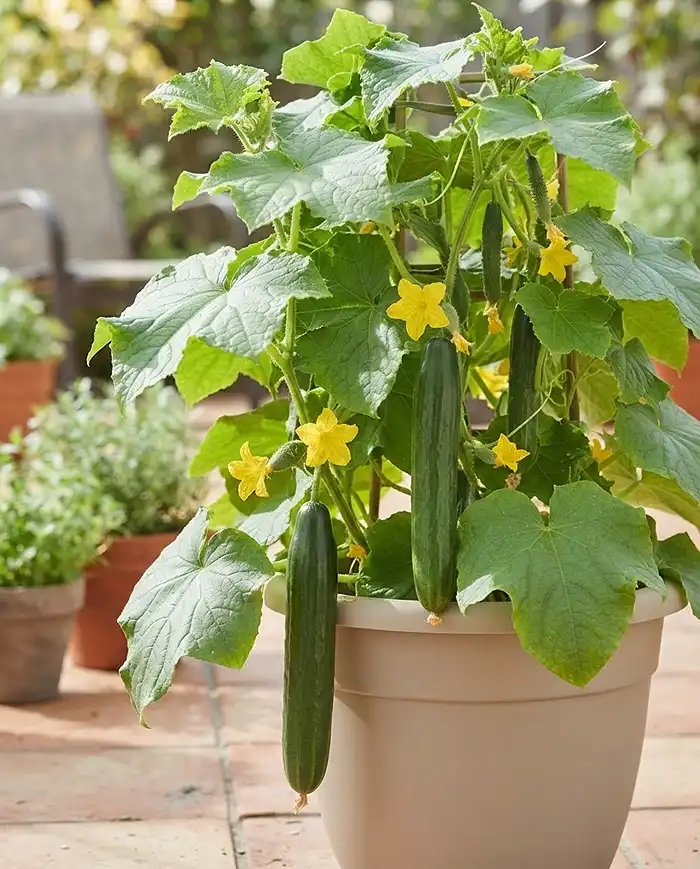
‘Diva’ won an All-America Selections award for good reason. I’ve grown it in a north-facing spot with limited bee traffic and still pulled a steady harvest through early October. ‘Socrates’ is a mini-slicer that matures in about 50 days and handles cooler nights better than most standard slicers.
Real Example: The one season I skipped a parthenocarpic variety and planted a standard vining type in late August, pollinator visits had already dropped off, and I lost most of the female flowers to no fruit set. That failure is why ‘Diva’ has a permanent spot in my late rotation now.
Setting Up Your Late Summer Cucumber Containers
Late-season cucumbers grow fast and hard once the heat hits, so your container and soil setup need to keep pace. Get this part right and the plants mostly take care of themselves.
Container Sizing and Thermal Protection
Choose wide 5 to 10-gallon resin pots or fabric grow bags. Avoid dark-colored plastic containers in August; they can trap heat and cook roots on a 95-degree afternoon, stalling growth for days. For more detail on matching pot volume to plant type, this pot size guide for vegetables is worth a look before you buy containers.
Moisture-Retentive Soil and Trellising Systems
Mix standard potting soil with about 30% coco coir to slow down evaporation during peak summer heat. Straight potting mix alone can dry out within hours on a hot afternoon.
Install your trellis or tomato cage at planting time, not later. Cucumber roots are shallow and easily damaged if you try to wedge in support once the plant is established.
| Setup Element | Recommendation | Watch Out For |
|---|---|---|
| Container size | 5 to 10-gallon grow bag or wide pot | Dark plastic overheating roots |
| Soil mix | 70% potting soil, 30% coco coir | Straight potting soil drying out fast |
| Support | Tomato cage or A-frame trellis | Adding support after roots establish |
| Mulch | 2-inch layer of straw | Bare soil with wild temperature swings |
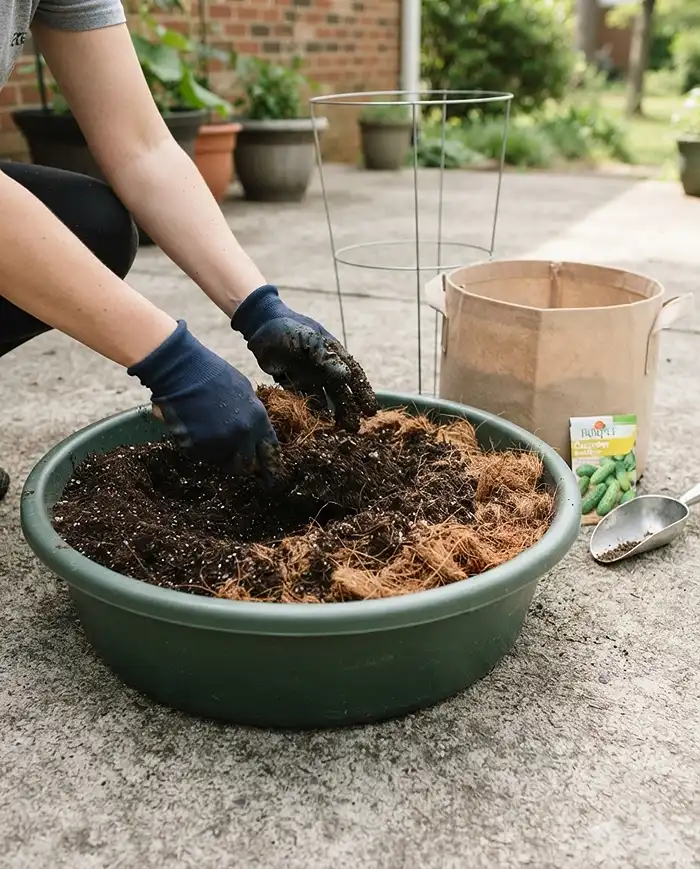
Step-by-Step Planting Guide for Late Summer
Pre-soak seeds in room-temperature water for 4 to 6 hours before planting to speed up germination in August heat. Plant seeds a half-inch deep, spacing bush varieties about 12 inches apart in a wide container.
Water gently right after planting, then apply a 2-inch layer of straw mulch around the base once seedlings show their first true leaves. The mulch buffers wild soil temperature swings between scorching afternoons and cooling nights, which otherwise stresses young roots.
If you’re staggering multiple crops this time of year, it helps to plan the whole bed at once. This guide to late summer vegetables to plant in pots covers good companions to seed alongside your cucumbers.
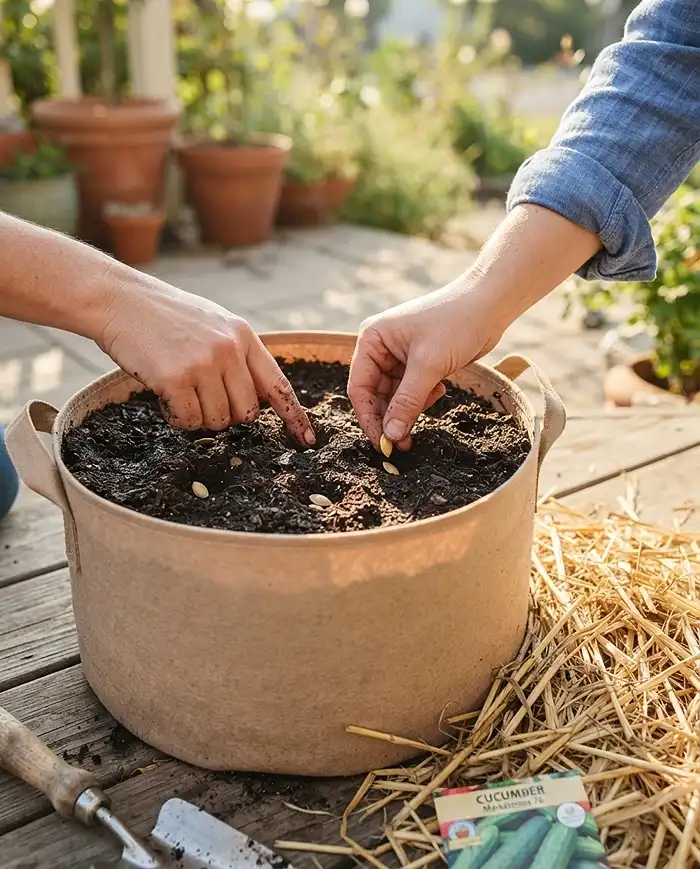
Late Season Care: Transitioning from Heat to Cool Fall
Your care routine needs to shift as August’s blistering heat gives way to September’s cooler, damper nights. Watering and feeding both need adjusting along the way.
Aggressive Watering Strategies for August Heat
Check soil moisture daily during heatwaves, and expect to water container cucumbers once or even twice a day when temperatures top 90 degrees F. Container gardening dries out faster than in-ground beds because there’s simply less soil volume to hold moisture.
Inconsistent watering is the number one cause of bitter, stress-induced compounds called cucurbitacins building up in the fruit. Keep moisture steady rather than letting the pot swing between bone-dry and soaked.
Liquid Fertilization for Rapid Fruit Development
Apply a high-potassium, water-soluble organic fertilizer like liquid kelp every 10 to 14 days. Late-season plants are racing the calendar, and they need that extra push to fuel heavy fruiting in a restricted container environment.
Pairing your feeding schedule with companion plants can also help keep pests down while cucumbers focus on fruit. This guide on companion plants for containers pairs well with a late cucumber planting.
Common Problems and Solutions
Two issues show up more than any others once cucumbers hit the shoulder season between summer and fall. Both are manageable if you catch them early.
Powdery Mildew During Humid Autumn Nights
Quick Answer: Powdery mildew shows up as a white, dusty coating on leaves, triggered by warm days paired with cool, humid nights common in early fall.
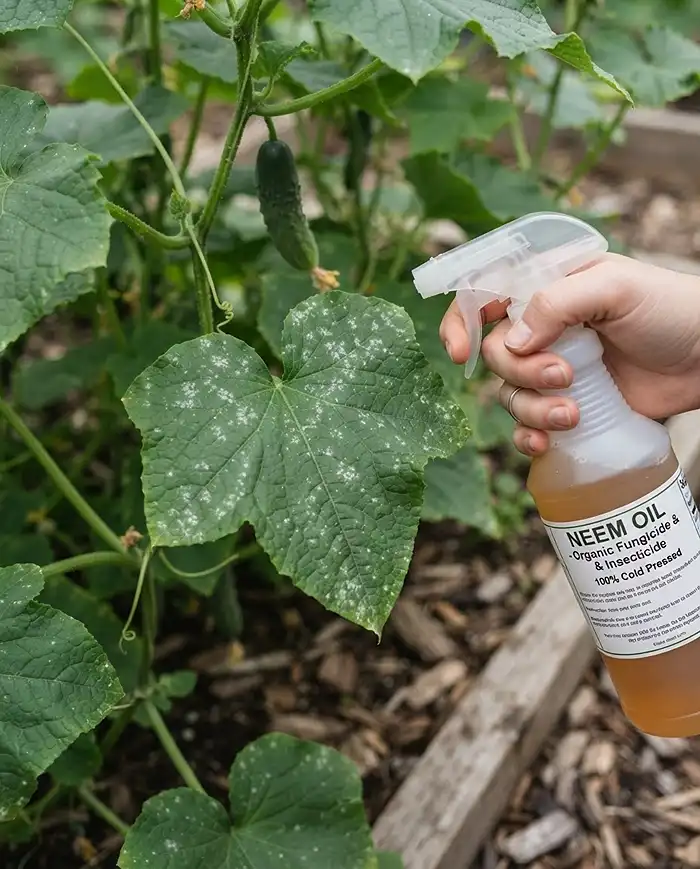
Mix 1 tablespoon of neem oil and 1 teaspoon of potassium bicarbonate per gallon of water, then spray leaves (top and underside) weekly as a preventative once nights start dipping below 60 degrees F.
Misshapen or Bitter Tasting Fruit
Quick Answer: Misshapen cucumbers usually signal incomplete pollination or wild swings in watering, not a plant disease.
If you didn’t plant a parthenocarpic variety, hand-pollinate with a small, soft paintbrush by transferring pollen from male flowers (thin stems, no baby fruit behind the bloom) to female flowers (tiny fruit visible at the base).
best cucumbers for containers FAQs
How late in the summer can I plant cucumber seeds?
Count backward from your region’s first expected frost date using the variety’s days-to-maturity number, then add 14 extra days for slower autumn growth. For most of Zones 5-7, that means seeding fast varieties in mid-to-late July or early August.
Do I need to cover my pots when the temperature drops?
Yes. Use a floating row cover or frost blanket at night once temperatures dip below 50 degrees F. This prevents cold-stunting and can extend your harvest window by several extra weeks.
Why are my container cucumber flowers dropping off?
It’s normal for the first flush of male flowers to drop without producing fruit. If female flowers (the ones with a tiny cucumber behind the bloom) drop off, suspect heat stress above 90 degrees F or a lack of pollinator activity.
What size container do late-summer cucumbers actually need?
A 5 to 10-gallon fabric grow bag or wide resin pot works well for a single bush or parthenocarpic plant. Smaller containers dry out too fast during peak August heat and limit root development.
Can I reuse the same potting soil from my spring planting?
Refresh at least a third of the old soil with fresh potting mix and compost before a late-summer planting. Spent soil holds fewer nutrients and can harbor fungal spores from earlier crops.
Conclusion
The best cucumbers for containers in late summer are the fast, compact, parthenocarpic varieties bred to outrun the calendar. ‘Spacemaster 80,’ ‘Diva,’ and ‘Patio Snacker’ have all earned their spot in my pots over the years.
Get your container size, soil mix, and watering routine dialed in now, and you’ll be picking fresh cucumbers well into October, long after most gardens have called it a season.
Key Takeaways
- Choose the best cucumbers for containers by prioritizing 45 to 55-day maturity and parthenocarpic traits
- Bush varieties like ‘Spacemaster 80’ and ‘Patio Snacker’ fit small pots without a full trellis
- A 30% coco coir soil blend and daily watering checks prevent bitter, stress-induced fruit
- Feed every 10 to 14 days with a high-potassium organic fertilizer to fuel fast fruiting
- Cover pots below 50 degrees F to stretch your harvest window well into fall