

Overwatering Container Plants
Your plant isn’t dying from neglect — you’re loving it to death. Spot every sign of overwatering container plants fast, understand exactly why wet soil kills, and follow our step-by-step rescue protocol before it’s too late. Save your plant today →
Let me guess — your plant is drooping, you panic, you water it, and it gets worse. You’re not alone, and you’re probably not underwatering. Overwatering container plants is the #1 cause of houseplant death, and the cruel joke is that it’s almost always done out of love.
Here’s the thing most gardening guides won’t tell you upfront: overwatering isn’t about how much water you give — it’s about how often. One generous watering? Totally fine. Soil that stays soggy for days on end? That’s where things go south fast. The real villain isn’t your watering can — it’s the container environment itself, a closed system where trapped water pushes oxygen out and quietly suffocates your plant’s roots.
And yes, if you’ve been making this mistake, you’re in good company. It’s actually one of the most common small-space gardening mistakes beginners make — right up there with wrong pot sizes and bad soil choices.
Table of Contents
What Overwatering Container Plants Actually Does to Your Roots
Most articles just tell you not to overwater. But nobody explains why it’s so destructive — and honestly, once you understand this, you’ll never look at a watering can the same way again.
Your Roots Are Basically Suffocating
Healthy soil has tiny air pockets running through it — roughly half the soil volume should be oxygen-filled pore space. When that soil stays waterlogged, water shoves that oxygen out completely. And here’s the thing: roots aren’t just sitting there looking pretty. They’re actively breathing and working to pull up nutrients. Cut off their oxygen supply, and they start dying — not in weeks, but in days.
This process is called hypoxia, and it’s the real reason overwatering container plants is so dangerous.
The Twist: Your Plant Looks Thirsty (But It Isn’t)
Here’s where it gets genuinely confusing for beginners. When roots suffocate, your plant releases a stress hormone called abscisic acid (ABA), which forces the leaves to wilt — even though the soil is completely soaked. You look at your droopy plant, assume it’s thirsty, water it again, and accidentally make everything worse.
This condition even has a name, and it’s worth knowing:
📦 What is Physiological Drought?
Physiological drought is when a plant wilts despite sitting in wet soil, because oxygen-starved roots can’t transport water — triggering hormonal (ABA) stress signals that look exactly like thirst.
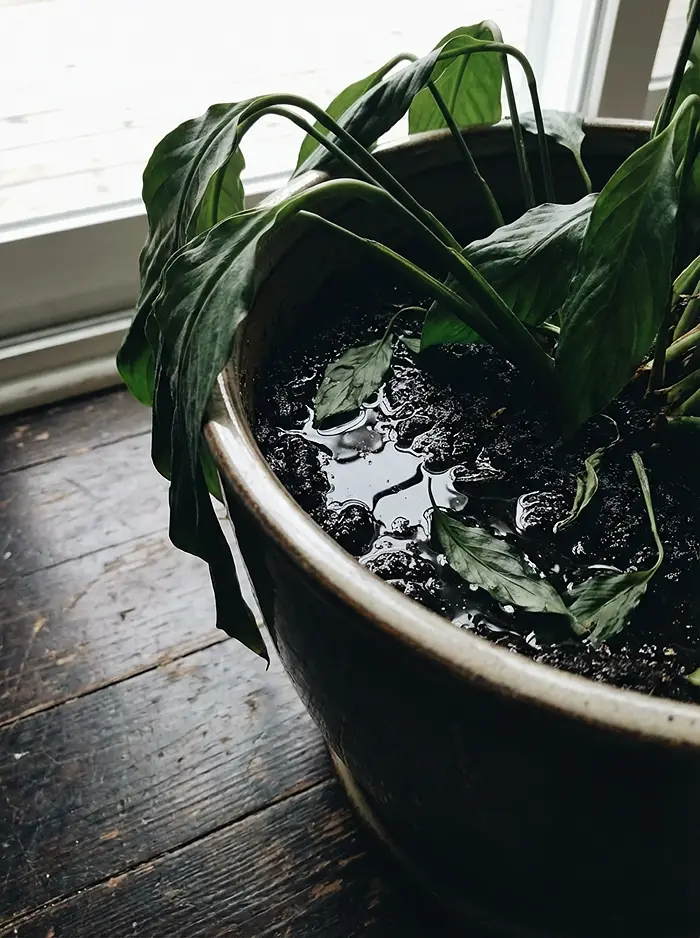
It’s basically your plant crying “water!” when what it actually needs is air. Frustrating, right?
The Gravel-at-the-Bottom Myth (Please Stop Doing This)
If someone told you to put rocks or gravel at the bottom of your pot to “improve drainage,” I hate to break it to you — that’s actually a gardening myth that research in soil physics has thoroughly debunked.
Water doesn’t magically fall through to the gravel layer. Instead, it pools above that layer due to capillary forces, creating what’s called a perched water table — which actually raises the saturated zone inside your pot. What genuinely helps is proper drainage holes and a porous potting mix. That’s it.
Signs of Overwatered Plants: Your Full Diagnostic Checklist
Before you can fix overwatering container plants, you need to know for certain that’s what you’re dealing with. Here’s how to read your plant like a pro.
What You Can See
- Yellowing leaves starting at the base and moving upward — this is chlorosis, and it’s different from the tip-browning you’d see with underwatering
- Tiny blister-like bumps on leaf surfaces — called edema, this happens when cells literally burst from too much internal water pressure
- Stunted or pale new growth even though you’re feeding the plant regularly
- Brown tips AND soft yellowing lower leaves at the same time — this combo is a strong overwatering signal
What You Can Touch and Smell
- Stem base that feels soft, spongy, or mushy when you gently squeeze it
- A pot that still feels surprisingly heavy several days after watering
- Soil that smells sour, musty, or outright rotten — that’s anaerobic bacteria doing damage underground
What’s Living on Your Soil
- Fungus gnats floating around near the soil surface — their larvae can only survive in persistently moist substrate
- Green algae creeping across the soil surface or pot walls
- White surface mold forming on top of the soil
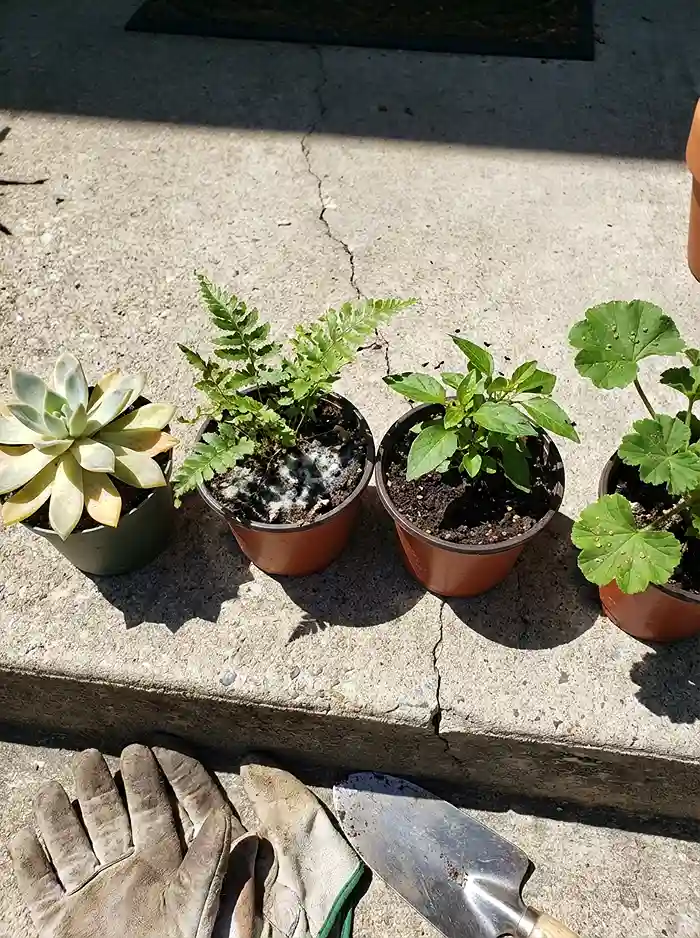
Still Not Sure? Use This Table:
| Symptom | Overwatering | Underwatering |
|---|---|---|
| Leaf color | Yellow, starting at base | Brown, crispy, starting at tips |
| Soil feel | Wet and heavy days later | Bone dry, pulling from edges |
| Stem base | Soft and mushy | Firm |
| Smell | Sour/musty | Neutral |
| Pot weight | Noticeably heavy | Very light |
| Common pests | Fungus gnats | Spider mites |
How to Save an Overwatered Container Plant: The Step-by-Step Recovery Protocol
Good news: if you caught it early enough, your plant is probably saveable. Here’s exactly what to do — in order.
Step 1 — Stop Watering and Give It Some Shade
This sounds obvious, but stop watering immediately — no “just a little bit.” Move the plant out of direct sunlight to reduce how hard it has to work (less sun = less transpiration = less strain on damaged roots). Then try the “Tilt and Tap” method: lay the pot on its side for 30–60 minutes so gravity can help pull excess water toward the drainage holes while air sneaks back into the root zone.
Step 2 — Unpot and Inspect the Roots
Gently slide the plant out of its pot and shake off the excess soil. Now look at the roots closely:
- Healthy roots = white or tan, firm, and springy
- Rotten roots = brown or black, mushy, and they’ll probably smell awful
Using sterilized scissors or pruning shears, cut all the damaged roots off — back to where the tissue looks clean and healthy. Sterilize your tool between every single cut with isopropyl alcohol. Yes, every cut. This stops pathogens from spreading from sick roots to healthy ones.
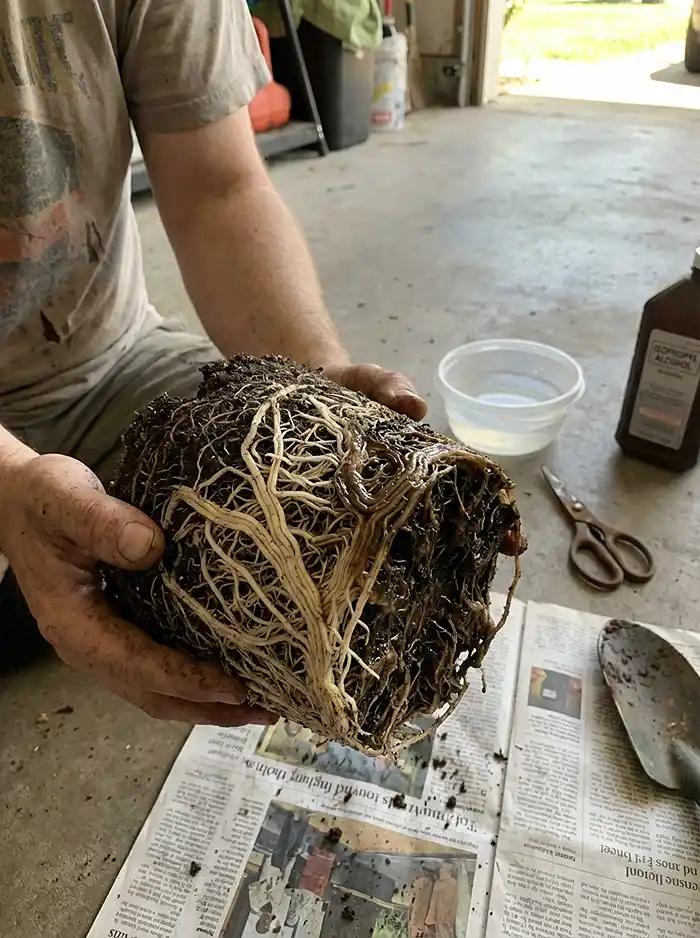
Step 3 — Treat with Hydrogen Peroxide
This step is genuinely underrated for root rot recovery, and it works in two ways at once.
Mix a 50/50 solution of standard 3% hydrogen peroxide and water. Gently dip or rinse the trimmed root ball in it. The oxidation reaction kills off the anaerobic bacteria and residual rot, while simultaneously releasing oxygen directly into the root tissue — like an emergency oxygen boost for your plant. Let the roots air-dry for 20–30 minutes before you repot.
Step 4 — Repot Into the Right Soil Mix
Don’t put it back in the same soil. Build a fresh mix with:
- Standard potting soil as your base
- 30–40% perlite for drainage and air porosity
- Optional but excellent: orchid bark and/or horticultural charcoal for structure and natural antimicrobial properties
This mix drains fast, holds just enough moisture, and keeps oxygen flowing between waterings — everything your old soggy soil wasn’t doing.
Not Sure How Bad It Is? Use This as Your Guide:
| Severity | Symptoms | What To Do |
|---|---|---|
| Mild | Yellow lower leaves, heavy pot, no smell | Stop watering; improve airflow; wait for full dry-out |
| Moderate | Soft stem, fungus gnats, musty smell | Unpot, remove rot, H₂O₂ treatment, fresh mix repot |
| Severe | Black mushy roots, foul smell, wilting in wet soil | Full debridement, H₂O₂ soak, airy substrate; propagate healthy cuttings as backup |
Preventing Overwatering Container Plants for Good
Recovery is great, but not needing to recover is better. These three habits will change everything.
Pick the Right Pot Material
Terra cotta and fabric pots let moisture evaporate through their walls — a passive process that keeps the root zone aerated without you doing anything. Plastic and glazed ceramic seal everything in, making overwatering almost inevitable if you’re not extremely precise. For succulents, cacti, or orchids especially, terra cotta or fabric isn’t a preference — it’s a necessity.
Stop Guessing at Moisture Levels
The knuckle test is fine for beginners but not very precise. Instead, train yourself on the weight test: lift your pot right after watering and feel that weight. Then lift it again each day. You’ll quickly develop an intuitive sense of what “dry enough to water” feels like. If you want zero guesswork, a moisture meter inserted at root depth gives you an accurate reading in seconds and costs almost nothing.
Use the Nursery Pot + Cache Pot System
Keep your plant in a plain nursery pot with drainage holes. Slide it into a prettier decorative cache pot for display. Thirty minutes after every watering, pull the nursery pot out and empty whatever collected in the cache pot. You get the aesthetic you want and the drainage your plant needs. Win-win.
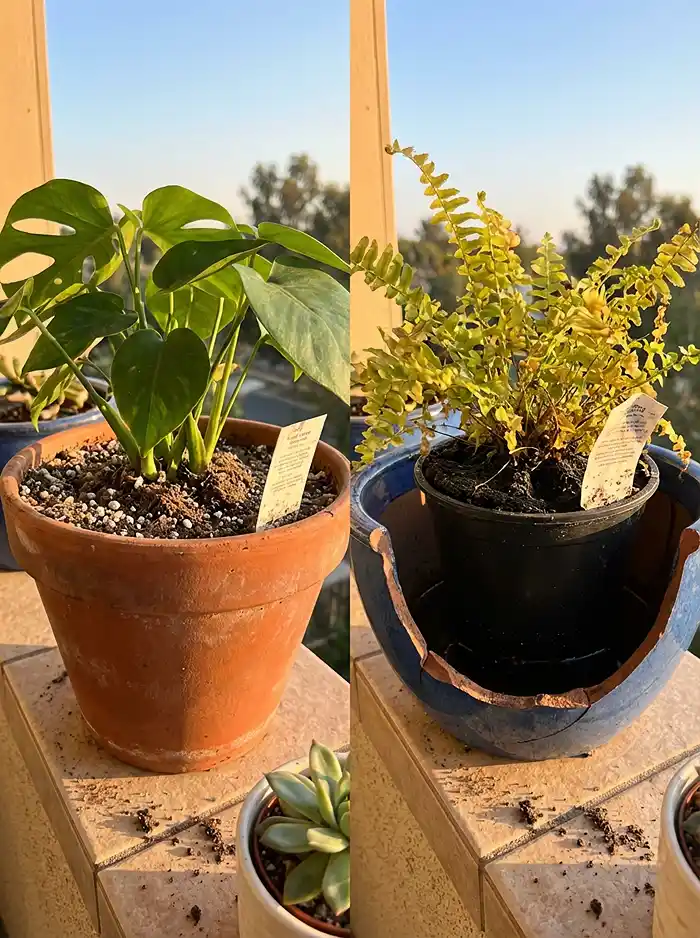
Overwatering Sensitivity by Plant Type
Succulents & Cacti
Look for translucent, glassy leaf tissue — that’s cells bursting with excess water. If you see aerial roots growing above the soil, your plant is literally trying to escape the saturated zone and find oxygen higher up. These plants need to be completely dry between waterings, and in winter, once a month is often more than enough.
Tropical Foliage Plants
Peace Lilies are frustratingly dramatic — they wilt for both overwatering and underwatering. Always check soil moisture before reacting, or you’ll just keep cycling through the wrong fix. Spider Plants develop brown tips that look like fertilizer burn but are often caused by mineral buildup from consistently wet soil — a common misdiagnosis.
FAQ: Overwatering Container Plants — Quick Answers
Can an overwatered plant fix itself?
Probably not once root rot sets in. Even if you stop watering, the anaerobic environment keeps breaking down roots. You need to physically intervene — aerate, debride, and repot.
How long does it take to recover from overwatering?
Usually 2–4 weeks for new roots to establish in fresh soil. You’ll start seeing above-ground signs of recovery — new leaves, firmer stems — around the 3-week mark.
Is misting okay while my plant is recovering?
Nope. Misting just raises surface humidity and increases fungal risk without actually hydrating the root system. It doesn’t help, and it can actively make foliar rot worse.
How do I quickly tell overwatering from underwatering?
Dig down to root depth and smell the soil. Dry and odorless = underwatered. Wet, heavy, and sour-smelling days after watering = overwatered. Or just lift the pot — heavy means wet, wet means wait.
The single most important shift you can make as a container gardener is this: stop watering on autopilot and start responding to what your plant actually needs. Learn the weight of your pots. Trust your nose. Once you understand that wet soil kills by suffocation — not kindness — overwatering becomes a mistake you make once, diagnose fast, and never repeat.