

Common Gardening Mistakes
Your plants keep dying — but it’s not bad luck. These 12 common gardening mistakes have simple fixes anyone can apply today. See which ones you’re making →
Here’s a secret nobody tells you at the garden center: your plants don’t care how much you love them. They care about physics, biology, and chemistry — and that’s actually great news. It means gardening isn’t some mystical talent you’re born with. It’s a system. Get the system right, and you’ll grow food and flowers even if every houseplant you’ve ever owned died a slow, mysterious death on your windowsill.
I’ve watched dozens of beginner gardeners — myself included, once upon a time — repeat the same common gardening mistakes on balconies, patios, and rooftops. The good news? Every single one is fixable.
This guide walks you through all twelve, with practical solutions you can use today. If you’re just getting started, you’ll also want to bookmark our complete Small-Space Gardening: The Complete Beginner Guide for the full picture.
Let’s dig in. (Pun fully intended.)
Table of Contents
1. The Planning & Buying Trap
Hardware-Store Impulse Buys vs. a Sun-Map
We’ve all done it — walked into a garden center on a sunny Saturday, got hypnotized by the flower displays, and walked out with six plants we know absolutely nothing about. Then we shove them into whatever corner of the balcony has space and wonder why they look miserable by Tuesday.
The fix is almost embarrassingly simple: make a sun-map before you spend a single dollar. Track where sunlight hits your growing space at 7 AM, noon, and 5 PM. It takes maybe 15 minutes and saves you months of guessing.
“Driveway of Death”: Plants Left Unplanted Too Long
Those little nursery pots are temporary housing, not apartments. Seedlings left sitting on hot concrete in thin plastic can cook their roots in hours. If you can’t plant something within 48 hours of buying it, at least move it to shade and keep it watered.
The Fix: Start a 5-minute daily routine — water, observe, and take one small action. Before your first purchase, fill out a 12-hour sun-tracking sheet so you actually know what you’re working with.
2. Container Miscalculations
Using Decorative Pots Without Drainage
That gorgeous glazed pot from the home decor store? It’s basically a swimming pool for your plant’s roots. Without drainage holes, water pools at the bottom, oxygen disappears, and root rot moves in like an uninvited houseguest. According to the UC Master Gardeners of Santa Clara County, all containers should have drainage holes — no exceptions.
Balcony Load Limits & the “Wet-Soil Weight” Formula
Here’s something most people never think about: a single large pot full of wet soil can easily weigh 30 kg or more. Most residential balconies support 150–200 kg/m². Cluster four or five big pots together and you could be pushing structural limits.
A quick formula to stay safe: dry pot weight + (soil volume in liters × 1.2) = approximate wet weight in kg.
The Fix: Switch to food-grade, lightweight planters — fabric grow bags and recycled polypropylene are excellent. Always use saucers underneath to manage runoff and protect surfaces.
3. Getting Container Soil Science Wrong
Native Dirt ≠ Potting Mix — Macropore Collapse Explained
This is one of the most destructive common gardening mistakes I see, and it seems so logical on the surface: “There’s perfectly good dirt in my yard — why would I buy soil?” Here’s why. Garden soil compacts inside containers, crushing the macropores — those large air channels roots depend on to breathe. The result is a suffocating, waterlogged brick.
Container soil science requires a completely different approach. Quality potting mixes use ingredients like coco coir, perlite, and composted bark to maintain roughly 50% solid matter, 25% air space, and 25% water retention. That ratio is everything.
Nutrient Depletion & pH Lockout (The 6.0–7.0 Sweet Spot)
Containers burn through nutrients fast because every watering session flushes minerals out the drainage hole. And when the pH drifts outside the 6.0–7.0 range, nutrients like iron and phosphorus become chemically locked — they’re present in the soil, but your plant simply can’t absorb them. Frustrating, right?
The Fix: Start with a high-porosity potting mix (check the label for perlite or pumice). Every 6–8 weeks, top-dress with 20% vermicompost to replenish beneficial biology and naturally buffer pH.
4. Watering Gone Wrong
80% of Plant Deaths Come from Overwatering
I know — it sounds backward. But it’s true: more container plants drown than die of thirst. When you water too often, every air pocket fills with water, roots suffocate, and fungal pathogens like Pythium throw a party.
Watering Geometry: Aim at the Soil, Not the Leaves
Watering geometry is a term that sounds fancy, but the concept is dead simple. Water the soil, not the foliage. Overhead watering wets leaves, which invites powdery mildew, bacterial leaf spot, and even sunburn — water droplets can actually focus sunlight like tiny magnifying glasses.
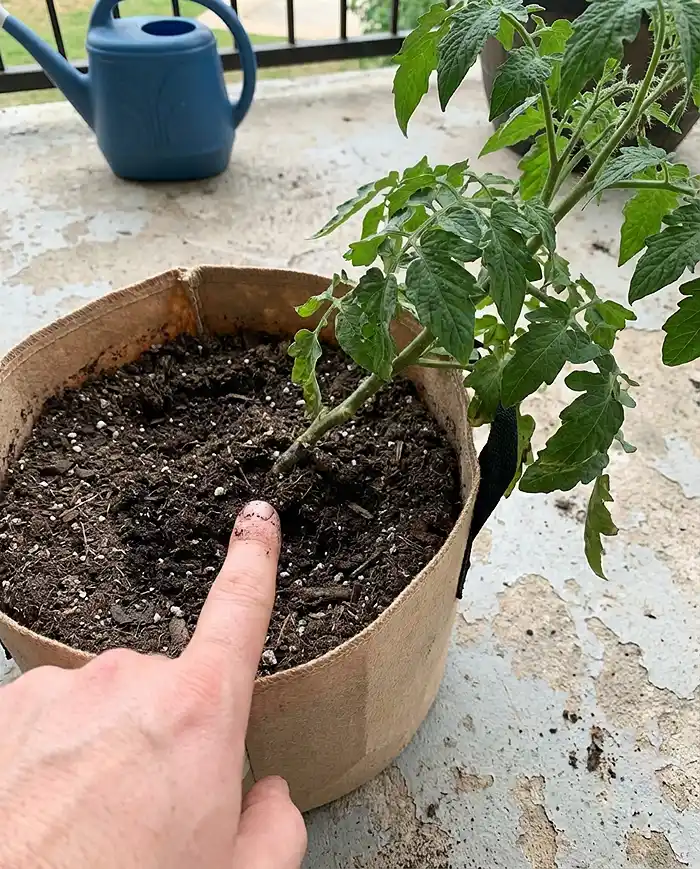
The Fix: Use the “Finger Test.” Push your finger two inches into the soil. Moist? Walk away. Dry? Water slowly and thoroughly until it drains from the bottom. Try to irrigate during the early-morning window (6–9 AM) — less evaporation, and leaves have all day to dry.
5. Light Mistakes & Ignoring Urban Microclimates
Fruiting vs. Leafy Light Needs (8–10 h vs. 3–5 h)
Tomatoes, peppers, and strawberries are sun addicts — they want 8–10 hours of direct light. Lettuce, spinach, and parsley? They’re the introverts of the plant world, perfectly happy with 3–5 hours. Mixing these up is one of the most common gardening mistakes in cities.
Seasonal Sun-Angle Shifts (June ≠ September)
Here’s what catches people off guard: urban microclimates shift constantly with the seasons. That south-facing balcony that bathes in 10 hours of sun in June? It might only get 4 hours by December as the sun’s angle drops and neighboring buildings cast new shadows.
The Fix: Reassess your light situation every quarter and move planters accordingly. A simple trick — lean a white-painted board or reflective surface behind shaded plants to bounce extra light their way.
6. The Crowding-Yield Paradox
Airflow, Disease Pressure & Resource Competition
More plants does not equal more food. I learned this the hard way when I crammed eight tomato plants into a space meant for two and harvested exactly… not much. Overcrowded containers trap humidity, breed fungal diseases, and force roots to fight over the same tiny pool of water and nutrients.
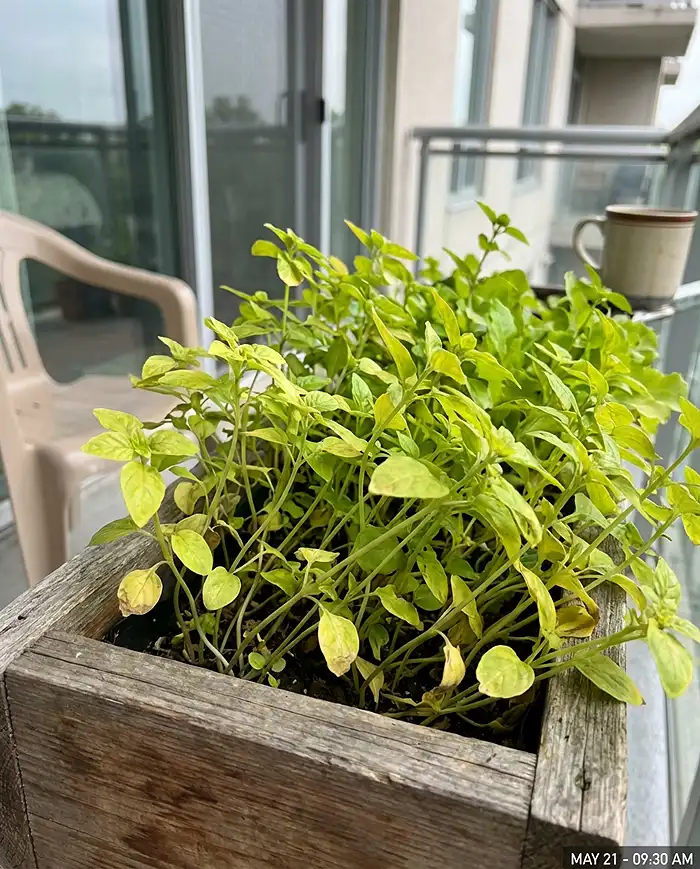
The Fix: Follow a Square-Foot Gardening spacing chart: 1 zucchini per 4 ft², 4 lettuce heads per 1 ft², 16 radishes per 1 ft², 1 tomato per 4 ft². Giving plants room to breathe often doubles your yield per plant.
7. Choosing the Wrong Plants for Your Space
Ignoring Hardiness Zones & Heat Units
Every plant has a comfort zone. Planting tropical basil outdoors in a USDA Zone 4 winter, or trying to grow cool-season peas in Zone 10 midsummer, is like wearing a parka to the beach — it just doesn’t work. Spend two minutes looking up your hardiness zone before you buy.
Invasive Herbs in Shared Boxes
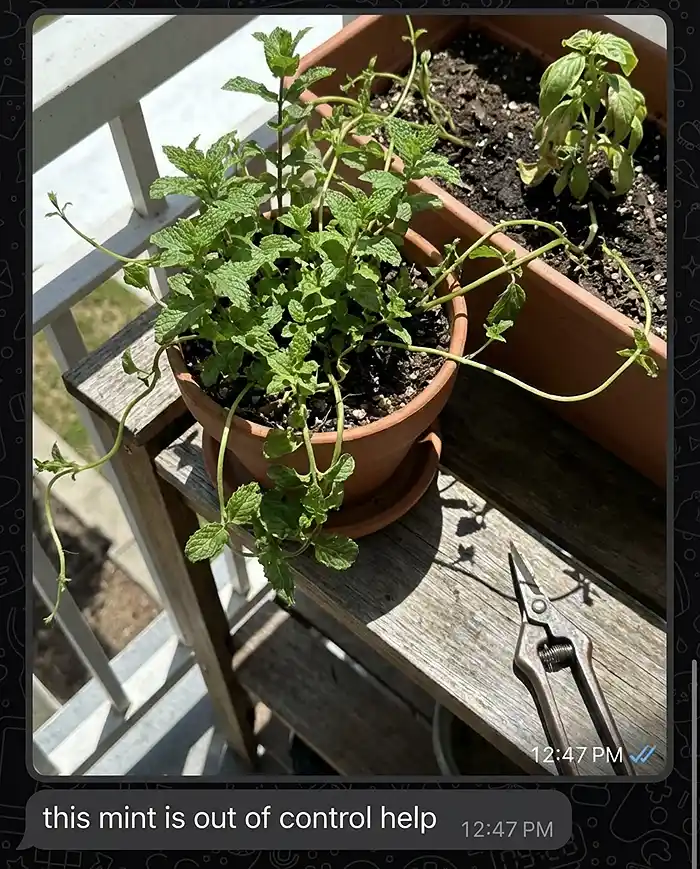
Mint is delicious. Mint is also a ruthless colonizer. Plant it alongside basil and cilantro in a shared container, and within a few weeks, it’s the only thing left. Lemon balm is the same story.
The Fix: Create a zone-appropriate “Easy Wins” list — cherry tomatoes, basil, lettuce, radishes, and dwarf peppers succeed almost everywhere. And always give aggressive runners like mint their own isolated pot. Seriously, treat mint like it’s in plant jail.
8. Pest & Disease Mismanagement
Broad-Spectrum Pesticides Kill Your Allies
When aphids show up, the instinct is to nuke everything with whatever spray is on the shelf. Problem is, that spray also kills ladybugs, parasitic wasps, and pollinators — the exact creatures that would’ve handled the aphids for free.
The IPM Ladder: Cultural → Mechanical → Organic Targeted
Integrated Pest Management is a fancy name for a common-sense approach. First, adjust conditions — better airflow, proper spacing, correct watering. Second, remove pests by hand or blast them off with water. Only reach for organic treatments when populations actually warrant it.
The Fix: Reserve neem oil and Bt (Bacillus thuringiensis) for confirmed infestations. And scout your plants weekly — catching problems early is the most effective “pesticide” that exists.
9. Fertilization Mistakes
Salt Build-Up from Synthetic Overfeeding
Synthetic fertilizers deliver a quick nutrient hit, but they leave mineral salts behind that accumulate in containers over time. See a white crust forming on top of your soil? That’s salt buildup, and it’s burning your roots.
The Fix: Feed with worm-cast (vermicompost) tea once a month — it’s gentle, biologically rich, and won’t fry anything. Every three months, do a soil flush: run clean water through your pots for 2–3 minutes until it flows freely from the bottom, dissolving those accumulated salts.
10. Skipping Routine Maintenance
Pruning, Deadheading, and Harvest Timing
An unpruned tomato plant becomes a tangled jungle with terrible airflow. Spent flowers left on the stem signal the plant to stop producing new blooms. Overripe vegetables hanging on the vine slow down new fruit development. A little regular attention goes a long way.
The Fix: Don’t create a separate “garden chore” block you’ll inevitably skip. Instead, anchor tasks to habits you already have. Water while your morning coffee brews. Do a 2-minute inspection when you step outside after dinner. Consistency beats intensity every single time.
11. Unrealistic Expectations & the Mindset Trap
Social-Media Perfection vs. Real-World Biology
Let’s be honest — Instagram gardens are curated highlight reels with professional lighting and strategic camera angles. Real gardens have yellow leaves, pest nibbles, and the occasional mystery fungus. If you’re comparing your first-ever container garden to someone’s heavily filtered feed, you’re setting yourself up for disappointment.
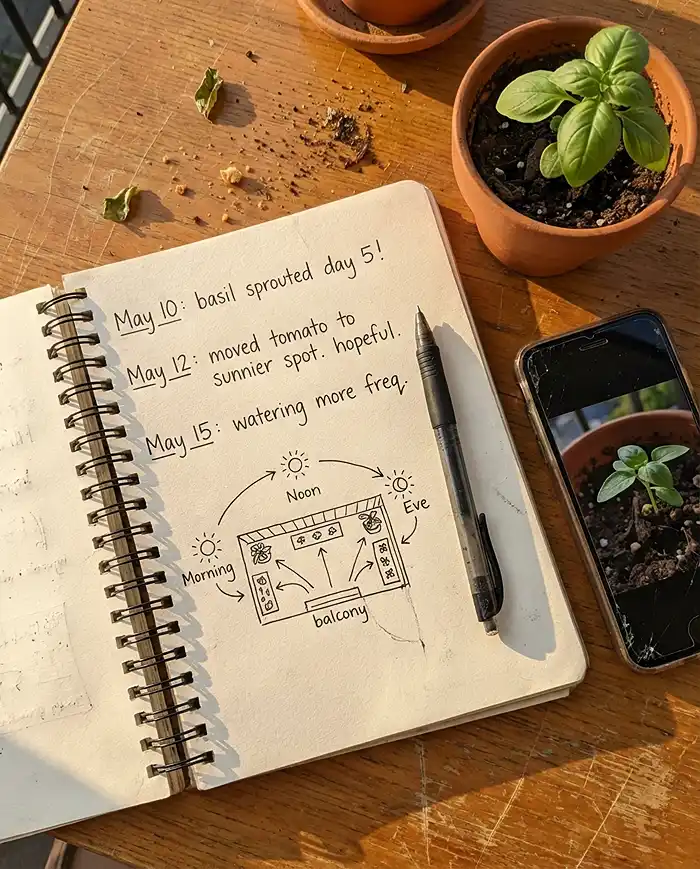
The Fix: Keep a “Progress Log.” Photograph your garden weekly and jot down what’s working and what isn’t. Set 30-day micro-goals — “germinate 5 basil seeds” or “harvest first radish batch” — instead of vague, overwhelming seasonal ambitions. Small wins build real confidence.
12. Structural Safety on Balconies & Rooftops
Waterproofing, Run-Off, and Neighbor Considerations
Nobody wants to be the person whose balcony garden stains their downstairs neighbor’s patio or damages building waterproofing. Unmanaged water runoff can also create slippery surfaces — not ideal when you’re carrying heavy pots around.
The Fix: Place drip trays under every single pot. Use capillary mats to absorb excess moisture before it reaches the floor. Keep walkways clear with non-slip arrangements. And check your building’s bylaws — some require written approval for rooftop gardens above a certain weight threshold.
Quick-Reference Tables & Checklists
Drainage Hole Sizes by Pot Diameter:
- Pots under 15 cm → 1 hole, minimum 8 mm
- Pots 15–30 cm → 2–3 holes, 10 mm each
- Pots over 30 cm → 4+ holes, 12 mm each
Square-Foot Spacing Chart:
- Tomato: 1 plant / 4 ft² | Lettuce: 4 / 1 ft² | Radish: 16 / 1 ft² | Zucchini: 1 / 4 ft² | Bush beans: 9 / 1 ft² | Carrots: 16 / 1 ft²
Weekly IPM Scout Sheet: Check leaf undersides, inspect stems for frass, monitor sticky traps, record pest type and count, decide whether to act or wait.
Balcony Weight Calculator: (Number of pots × average wet weight in kg) ÷ balcony area in m² = your load in kg/m². Stay below your building’s rated limit (typically 150–200 kg/m²).
FAQ
What is the “Finger Test” for watering?
Push your finger about two inches into the potting mix. If it feels moist, skip watering. If it’s dry at that depth, water slowly until liquid drains from the bottom hole. It’s the simplest way to prevent both overwatering and underwatering.
Can I use garden soil in containers?
Nope. Garden soil compacts inside pots, destroying the air channels roots need to breathe. Always use a purpose-made potting mix with perlite, coco coir or peat, and compost for proper drainage and aeration.
Why is my mint taking over the whole box?
Because mint spreads through underground runners (stolons) that aggressively colonize any available soil. The only real solution is giving mint its own dedicated, isolated container — never a shared planter.
What is a Hardiness Zone and why does it matter?
A USDA Hardiness Zone tells you the average minimum winter temperature for your area. It helps you pick plants that can actually survive your climate. Planting outside your zone without protection dramatically increases the chance of losing your crop.
The Bottom Line: Keep It Simple, Keep It Consistent
Here’s what it all comes down to: most small-space garden failures aren’t bad luck. They’re predictable, repeatable common gardening mistakes — and every one of them has a straightforward fix.
Start small, log everything, and adjust monthly. Don’t plant ten containers your first season. Start with three. Learn their rhythms. Then expand.
Focus on light, soil porosity, and consistent routines. Honestly, about 80% of your success lives right here in these three fundamentals. Get them dialed in, and everything else — pests, fertilizer, spacing — becomes manageable.
The other 20%? That’s the fun part. That’s experimentation, happy accidents, and the day you pluck your first homegrown tomato off the vine and eat it while it’s still warm from the sun.
Ready to get started? Download our free printable Sun-Map template and 5-Minute Daily Routine Checklist — everything you need to stop guessing and start growing with confidence. Your balcony garden is ready when you are.