

How to Care for Potted Herbs
Your potted herbs keep dying — and it’s not your fault. Learn the exact watering rules, pruning tricks & harvesting tips that keep herbs alive & thriving. Fix it today.
Let’s be honest — most of us have killed at least one pot of herbs. You bring home a gorgeous basil plant, set it on the windowsill, and two weeks later it looks like it’s auditioning for a horror movie. Sound familiar?
Here’s the good news: learning how to care for potted herbs isn’t complicated once you understand what they actually need. This guide breaks down everything — watering, pruning, harvesting, pest control, and more — so your herbs stay lush, productive, and very much alive.
And if you’re still figuring out which herbs to grow first, check out our guide on the Best Herbs to Grow in Pots (Indoor & Outdoor Guide) before diving in here.
Table of Contents
1. How to Care for Potted Herbs: Start With the Right Environment
Before we talk watering schedules or pruning tricks, let’s get the basics right. Potted herb care starts with putting your plants in conditions they’ll actually enjoy — not just survive.
Give Your Herbs the Light They’re Craving
Here’s something most beginner guides gloss over: “full sun” isn’t the same for every herb.
Mediterranean herbs like Basil, Rosemary, Thyme, and Oregano are sun obsessives. They want 6–8 hours of direct sunlight daily, minimum. Put them in your brightest south- or west-facing window and they’ll love you for it.
Shade-tolerant herbs — Mint, Parsley, and Chives — are more easygoing. They’ll do just fine with 4 hours of partial sun, which makes them the MVPs of indoor herb care in darker apartments.
No sunny windowsill? No problem. A decent grow light does the trick:
- 5,000 lumens minimum (anything less is basically a nightlight)
- 6,500K Kelvin — this is the daylight spectrum your herbs actually want
- Run it for 12–14 hours daily to compensate for the lack of natural light
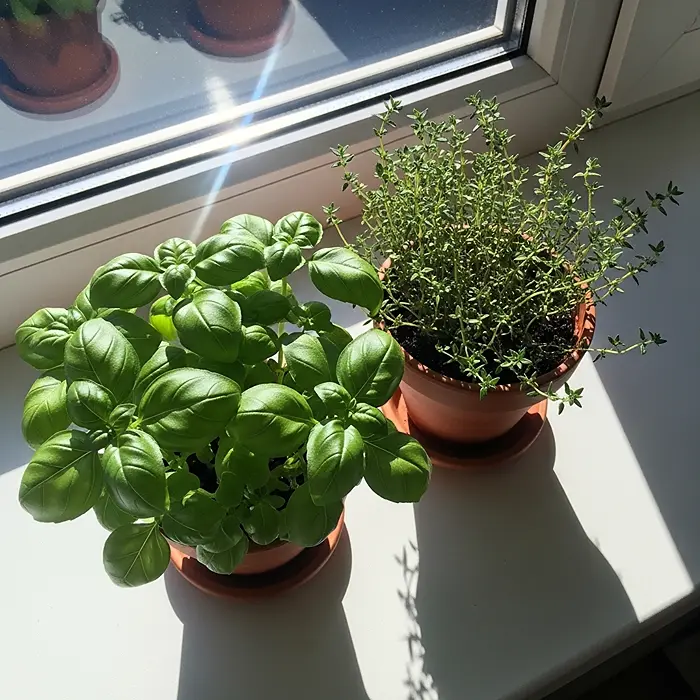
Temperature & Humidity: The Comfort Zone
Herbs aren’t divas, but they do have preferences. Keep them between 18–24°C (65–75°F) and aim for 40–60% humidity — which most homes naturally hover around anyway.
What kills herbs faster than you’d think? Two sneaky culprits:
- Cold drafts near winter windows
- Heating vents blasting dry, hot air at your poor plants
A smart seasonal strategy: bring herbs indoors in winter, move them outside once overnight temps stay above 10°C in spring. Just don’t throw them outside all at once — acclimate them gradually over 7–10 days so they don’t go into shock.
2. Potted Herb Care: How to Water Without Drowning (or Ignoring) Your Plants
Watering is where most people go wrong with potted herb care. Either they’re helicopter parents — watering every single day — or they completely forget until the plant is crispy. Neither works.
Does Your Pot Actually Drain?
Your pot choice matters more than most people realize.
Terracotta pots are breathable and dry out faster, which is exactly what drought-tolerant herbs like Rosemary and Thyme want. Give these guys terracotta and they’ll thrive.
Plastic or glazed ceramic pots hold moisture longer — perfect for Mint and Parsley, which prefer consistently moist (not soggy) soil.
One rule that applies to every pot: drainage holes are non-negotiable. No drainage hole = root rot = dead herb. Don’t do it.
Bottom Watering vs. Top Watering — Which Is Better?
Here’s a technique worth knowing: bottom watering.
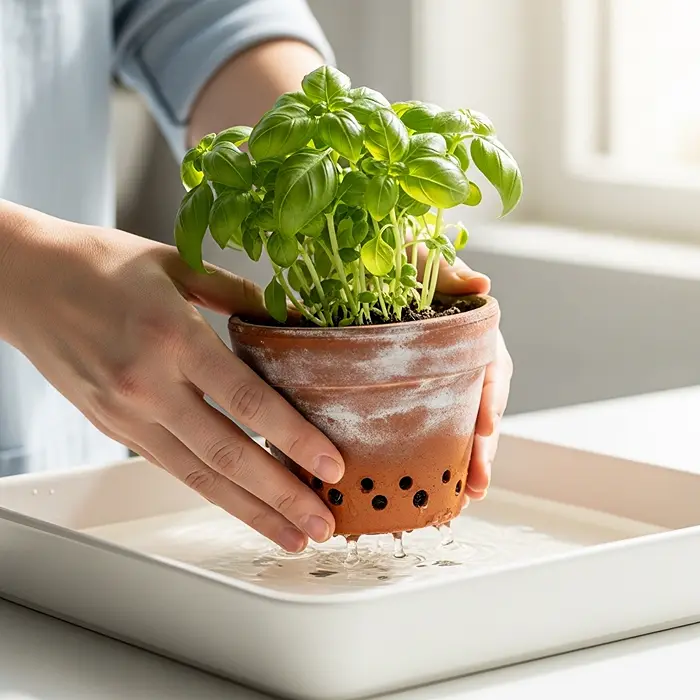
Instead of pouring water over the top, you set the pot in a tray of water and let the soil soak it up from below through the drainage holes. It sounds fussy but it’s genuinely brilliant — it prevents soil compaction, encourages roots to grow deeper, and cuts down on fungus gnats significantly.
How to bottom water your herbs:
- Fill a tray or basin with about 3–5 cm of water
- Set the pot in and leave it for 20–30 minutes
- Remove and let any excess drain completely
Top watering is still fine for quick hydration or for pots that are too heavy to lift. Just use whichever works for your setup.
A simple watering schedule to follow:
- Summer: Check soil daily; water 2–3 times per week as needed
- Winter: Once a week or less is usually plenty
- Mediterranean herbs: Let the top 2–3 cm of soil dry out before watering again
- Mint & Parsley: Keep soil evenly moist, but never waterlogged
The golden rule? Stick your finger in the soil. If the top 2–3 cm are dry, water. If not, leave it. Simple as that.
The Soil Mix Nobody Talks About
The potting mix you use is just as important as how often you water. According to the Royal Horticultural Society, good drainage is one of the most critical factors in container plant health — and they’re not wrong.
Here’s a solid all-purpose herb mix:
- 40% compost for nutrients
- 30% coco coir or peat for moisture retention
- 30% perlite for airflow and drainage
One sneaky trick: sterilize new potting mix by pouring boiling water through it before use. It kills fungus gnat eggs hiding in peat-heavy mixes. Let it cool and dry completely before potting your herbs.
3. How to Prune Potted Herbs for Bigger, Bushier Growth
Pruning feels counterintuitive — you’re cutting off the very thing that’s growing. But skipping it is the fastest route to a tall, leggy, barely-producing herb plant. Trust the process.
The Pinching Technique (Your New Best Friend)
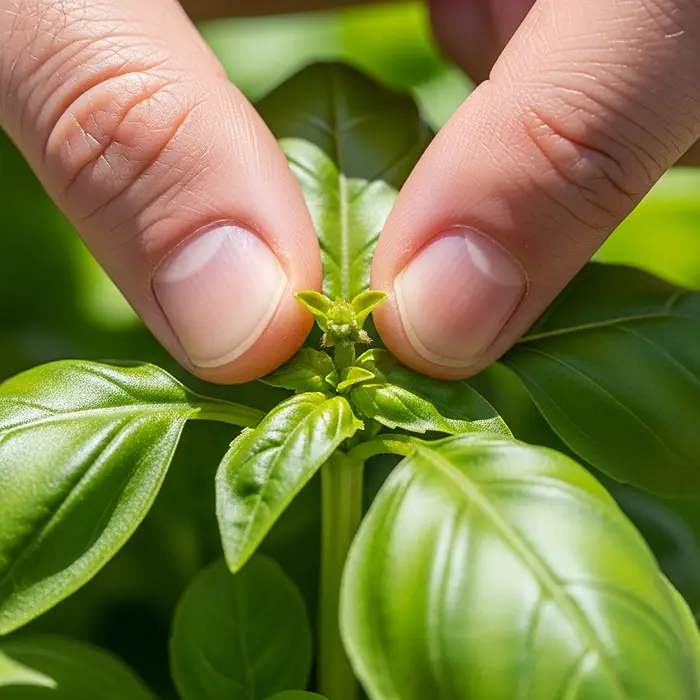
Here’s the science in plain English: herbs grow from a central bud that produces a hormone called auxin, which tells the plant to keep growing upward and suppresses side shoots. When you pinch off the top, you remove that signal — and suddenly the plant redirects energy into bushy lateral growth.
How to pinch your herbs:
- Wait until the plant hits about 15 cm in height
- Pinch or snip off the top 2–3 cm, just above a set of leaves (this point is called a node)
- Repeat every 2–3 weeks throughout the growing season
This single habit will genuinely transform your herb garden. Bushy, full plants instead of sad, stretchy ones.
When Your Pot Becomes a Prison: Root Pruning
After a year or two, herbs can become root-bound — their roots have filled the entire pot and are circling back on themselves. You’ll notice it when soil dries out suspiciously fast, roots poke out of drainage holes, or growth grinds to a halt.
The fix? Root pruning — the bonsai trick for herb gardeners.
- Pull the plant out of its pot
- Trim away the outer third of the root mass with clean scissors
- Refresh with new potting mix and replant
Best done in early spring before the growing season kicks in.
How to Harvest Potted Herbs Without Damaging the Plant
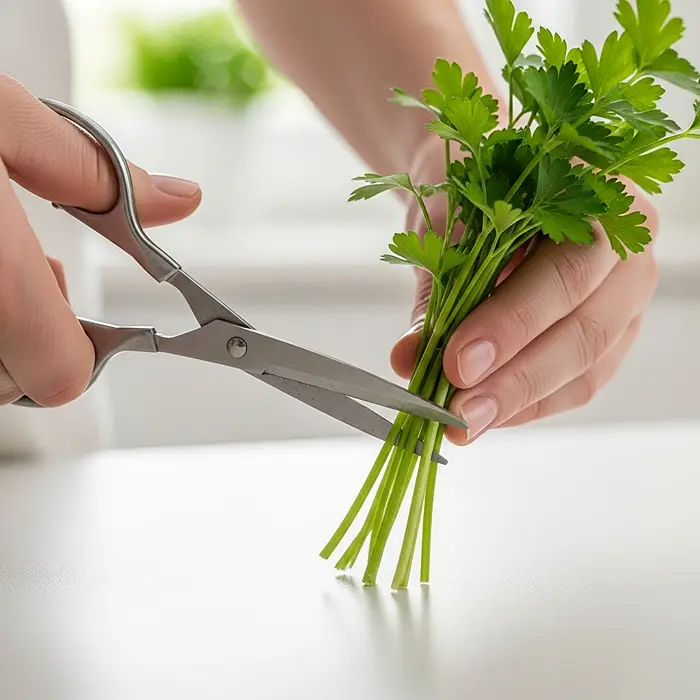
Always use sanitized scissors, and never take more than 30% of the plant at once. Beyond that, each herb has its own harvesting style:
| Herb | How to Harvest | Where to Cut | How Often |
|---|---|---|---|
| Basil | Node cuts | Above a leaf pair | Weekly |
| Parsley | Base cuts | Outer stems at the base | Continuously |
| Chives | Base shear | 2–3 cm above soil | Every 3–4 weeks |
| Cilantro | Outer leaves | Base of plant | Before it bolts |
| Rosemary | Tip trim | 5 cm of green growth | Monthly |
4. Quick-Reference Care Guide for the 7 Most Popular Potted Herbs
This is the cheat sheet version of indoor herb care — bookmark it:
| Herb | Light | Watering | Pruning Style |
|---|---|---|---|
| Basil | 6–8 hrs | Even moisture | Pinch nodes |
| Rosemary | 8 hrs | Drought-tolerant | Tip trim |
| Thyme | 6–8 hrs | Allow drying | Light shaping |
| Mint | 4–6 hrs | Moist soil | Aggressive trim |
| Oregano | 6–8 hrs | Moderate drying | Stem trim |
| Parsley | 4–6 hrs | Even moisture | Base harvest |
| Chives | 4–6 hrs | Moist soil | Shear from base |
5. When Things Go Wrong: Troubleshooting Your Potted Herbs
Even with the best potted herb care routine, things occasionally go sideways. Here’s how to diagnose what’s actually happening:
Reading the Warning Signs
- Leggy, stretched growth → Not enough light. Move it closer to a window or switch on a grow light
- Yellow lower leaves → Usually overwatering or nitrogen deficiency; ease up on water and consider a balanced liquid fertilizer
- Crispy leaf tips → Underwatering or salt buildup from tap water; give the soil a thorough flush
- Stunted growth despite good care → Root-bound; time to prune those roots or repot
Dealing With Pests (Without Chemicals)
Herb gardening in small spaces means pests can spread fast — especially indoors. Keep interventions organic so you’re not eating pesticide-covered herbs:
- Neem oil at 0.5–1% dilution handles aphids, spider mites, and whiteflies beautifully
- Yellow sticky traps near pots catch fungus gnats before they become a full infestation
- Sterilize your tools with a 10% bleach solution between plants
- Improve airflow around pots to prevent powdery mildew from taking hold
- Never water foliage at night — wet leaves in the dark are a fungal paradise
6. Make Your Herb Garden Work Harder (and Greener)
Grow Herbs That Give Back to Nature
Your little container garden can actually support local wildlife. A few herbs do double duty as pollinator magnets:
- Oregano and Thyme flowers attract bees like crazy
- Fennel and Dill bring in butterflies
- Basil blooms draw beneficial insects that prey on common pests
Let a few plants flower occasionally — especially if you’re growing herbs on a balcony or patio.
Propagate Your Herbs for Free Plants Forever
This might be the most satisfying part of herb gardening in small spaces: once you have one healthy plant, you can multiply it indefinitely.
Water rooting for Basil and Mint:
- Cut a 10 cm stem just below a leaf node
- Strip the lower leaves and place the stem in a glass of water
- Roots appear in 7–14 days — pot up once they hit 3–4 cm long
Division for Chives and Thyme: Dig up the root clump in early spring, split it into sections with your hands or a knife, and repot each section immediately. Easy, free plants.
Frequently Asked Questions About How to Care for Potted Herbs
Can I use garden soil in pots?
Nope. Garden soil compacts in containers, wrecks drainage, and often carries pathogens. Always go with a proper potting mix.
Why does my basil taste bitter?
It’s bolted — the plant has flowered and shifted focus to seed production. Pinch those flowers off immediately and harvest more regularly to delay it happening again.
What are the best low-light herbs for indoors?
Mint, Parsley, and Chives all thrive with just 4 hours of light — perfect for shadier kitchens or north-facing windows.
How often should I water potted herbs?
When the top 2–3 cm of soil is dry. Finger test every time — don’t rely on a fixed schedule alone.
How do I stop fungus gnats?
Sterilize your potting mix, use bottom watering to keep the soil surface dry, and set out sticky yellow traps. Gnats need moist soil to breed — dry them out and the problem disappears.
Potted herb care really comes down to one thing: understanding what your plants would naturally want, and giving them as close to that as possible. Get the light right, water with intention, prune consistently, and harvest confidently. Do that, and your herbs won’t just survive — they’ll absolutely thrive.