

Herbs That Grow Well Together in One Pot
Find the best herbs that grow well together in one pot, with easy pairing ideas for flavor, watering needs, sunlight, and healthy container growth.
Let’s be real — throwing a bunch of herbs into one pot and hoping for the best is basically a plant death sentence. But get the right herbs that grow well together in one pot, and suddenly your balcony or windowsill smells incredible and you’re snipping fresh basil into your pasta like some kind of urban homesteader.
The difference between thriving and dying? It comes down to three things: light, water, and roots. Nail those, and you’re golden.
Table of Contents
Why Some Herbs That Grow Well Together Actually Don’t
Before we get to the fun combinations, here’s the thing nobody tells you at the garden center: not all herbs are friends. They’re more like roommates — some are totally compatible, others will make each other’s lives miserable.
The Two Metabolic Camps (Sun & Water)
There are two very different personalities in the herb world, and mixing them carelessly is the #1 rookie mistake.
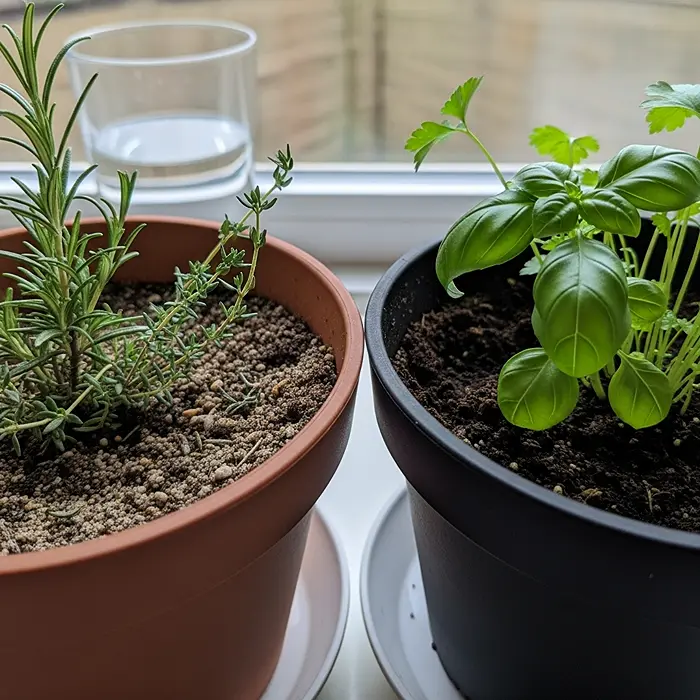
Mediterranean herbs — think rosemary (Salvia rosmarinus), thyme, and oregano — evolved in rocky, sun-drenched landscapes with barely any rainfall. Their leaves are waxy or silvery specifically to reduce water loss. These guys want to be dry.
Moisture-loving herbs — basil, parsley, cilantro — prefer rich, consistently damp soil and a bit of humidity. They’re basically the opposite.
So what happens when you pot rosemary next to basil? Basil needs frequent watering; rosemary’s roots will literally rot in those same wet conditions. It’s called fungal root collapse, and it’s as grim as it sounds — saturated soil destroys the oxygen channels around woody roots, and your rosemary quietly dies while you wonder what went wrong.
The Underground War: Root Architecture
What’s happening above the soil is only half the story. Down below, roots are competing intensely for space, water, and nutrients — especially in containers, where they can’t just spread out to find what they need.
Here’s a quick breakdown of root personalities:
- Deep taproots (parsley, dill) need at least 8–10 inches of soil depth to be happy
- Fibrous shallow roots (chives, thyme) stay near the surface and are generally easygoing neighbors
- Aggressive rhizomes (mint — always mint) will colonize an entire pot within a single growing season if you let them
And speaking of mint: the smartest move is the pot-in-pot method. Plant your mint in a smaller inner pot, then sink that pot into your larger container. The plastic barrier stops the rhizomes from spreading while still making it look like one cohesive planting. It’s a bit of extra effort, but so worth it.
A good rule of thumb? 1 gallon of soil per herb. Crowding is the fastest way to trigger nutrient depletion and disease — don’t do it.
The Best Herb Companion Planting Combinations for Containers
Alright, here’s the good stuff. These five groupings actually work — tested, practical, and optimized for container success.
1. The Mediterranean Pizza Garden (Full Sun / Low Water)
Herbs: Basil, Oregano, Chives
This is probably the most popular herbs-that-grow-well-together combo out there, and honestly, it earns that reputation. All three thrive in 6–8 hours of full sun and prefer a moderate watering cycle with good drainage between sessions. Chives even pull double duty as a natural pest deterrent, keeping aphids away from your basil. Together, they cover pasta, pizza, and salads — basically your entire Italian kitchen.
Pro tip: If you’re just getting started with growing herbs in containers, this combo is about as beginner-friendly as it gets. Check out our guide to the best herbs to grow in pots (indoor & outdoor) for more on setting up each of these individually.
2. The Mexican Salsa Box (Moist / Partial Sun)
Herbs: Cilantro, Parsley, Mexican Oregano
Got an east-facing patio or a partially shaded balcony? This one’s for you. All three tolerate 4–6 hours of indirect light and prefer higher moisture levels than their Mediterranean cousins. They’re a naturally compatible herbs-that-grow-well-together trio because their needs align almost perfectly.
One heads-up: cilantro bolts fast in heat — meaning it shoots up, flowers, and stops producing usable leaves almost overnight. The fix is succession planting: sow new seeds every 2–3 weeks to keep a steady harvest going all season.
3. The Beverage & Infusion Pot (Moisture-Loving Herbs)
Herbs: Mint (contained!), Lemon Balm, Stevia, Lemon Verbena
This is a moisture-loving herbs combo worth bookmarking — especially if you’re into homemade teas, cocktails, or infused water. All four share a need for consistent watering, moderate humidity, and good airflow to prevent powdery mildew.
Stevia is a genuinely underrated addition here. It’s a natural sweetener straight off the plant — just drop a leaf into your mint tea and skip the sugar entirely. And yes, mint absolutely must be grown in an inner pot. No exceptions. Without containment, it’ll crowd out everything else within weeks.
4. The Seafood Specialist (Cool & Even Moisture)
Herbs: Dill, French Tarragon, Lemon Thyme
This one’s for the more culinary-minded gardener. These three prefer cooler conditions, consistent but light watering, and similar nutrient uptake rates — which makes them naturally compatible pot companions. They’re not the flashiest combination, but if you cook a lot of fish, you’ll use every bit of what this pot produces.
Just remember to harvest dill before it bolts. Once it flowers, leaf production stops almost entirely.
5. The Gothic Garden (2025’s Hottest Aesthetic Trend)
Herbs: ‘Dark Opal’ Basil, Purple-Leaved Sage
Design-forward container gardening is having a real moment in 2025, and this pairing delivers serious visual drama without sacrificing function.
Both herbs share Mediterranean water needs, strong sun tolerance, and a deep-purple color palette that looks absolutely stunning in terracotta or matte black planters. Functional and gorgeous — this herbs-that-grow-well-together combo genuinely earns its Instagram moment.
Mediterranean Herb Pairings: The Dry Soil Dream Team
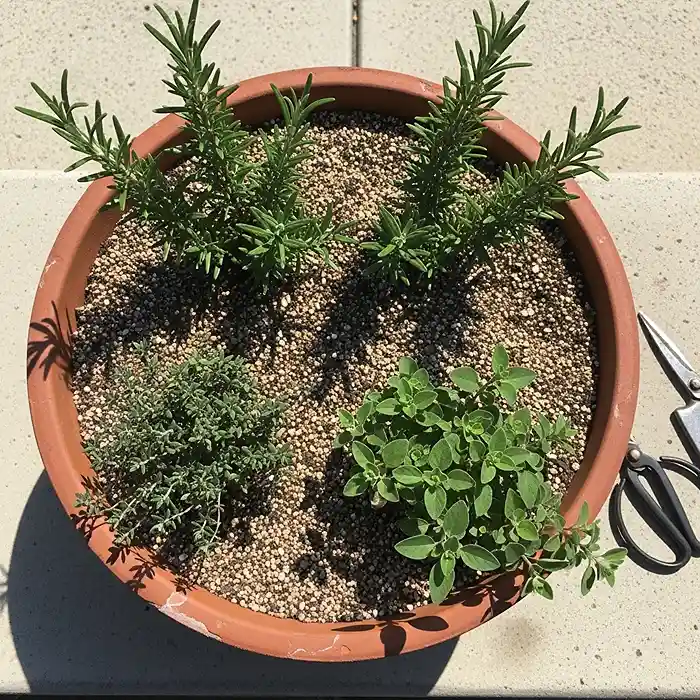
For a dedicated Mediterranean herb container, combine rosemary, thyme, sage, and oregano in a wide terracotta pot with a substrate mix containing about 40% coarse drainage material — perlite, pumice, or coarse horticultural grit all work well.
Terracotta is ideal here because it’s porous and naturally wicks away excess moisture, mimicking the fast-draining rocky soils these plants evolved in. It’s basically built-in insurance against overwatering.
And a hard rule: never mix Mediterranean herbs with basil, parsley, or cilantro. The watering conflict alone will sacrifice one group or the other. They just can’t coexist.
Moisture-Loving Herbs That Grow Well Together
On the opposite end of the spectrum, these herbs thrive in rich, consistently moist potting soil and make excellent pot companions:
- Parsley
- Cilantro
- Mint (contained, always)
- Chives
- Lemon Balm
Apply a mulch layer — shredded bark or coco coir works great — over the soil surface to retain moisture between waterings. Water on a consistent schedule rather than waiting for the soil to fully dry out. These herbs are more forgiving than Mediterranean types, but they still need decent drainage to avoid root rot.
Container Engineering: Getting the Setup Right
Good herb companion planting in containers isn’t just about which plants you choose — it’s also about how you set up the pot itself.
Sizing It Correctly
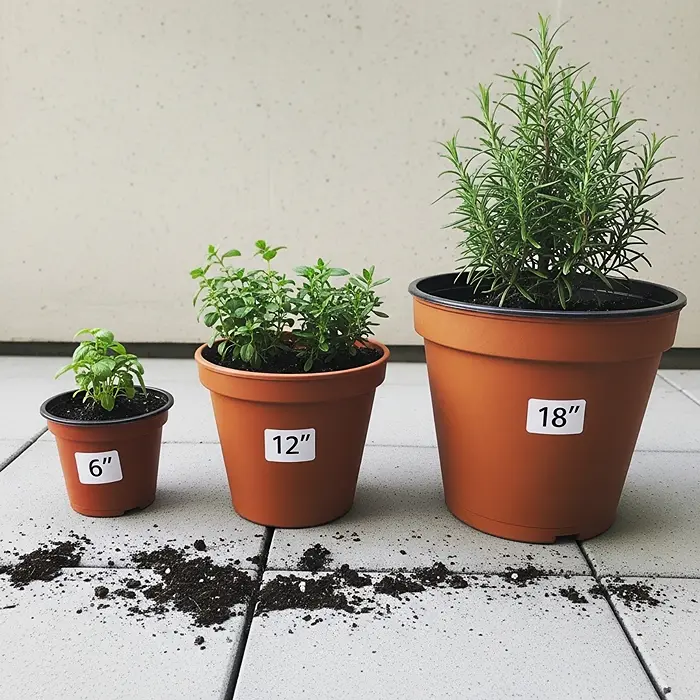
- 6-inch minimum depth for any herb
- 1 gallon of soil per herb as your baseline
- A 12-inch pot comfortably supports 3–5 annual herbs
- An 18–24-inch pot for woody perennials like rosemary or sage
For a deeper dive into building out a full container food garden, the container gardening for food guide covers everything from pot selection to soil mixes in detail.
Soil & Drainage
The ideal potting mix pH for most culinary herbs sits between 6.0 and 7.5. Mediterranean herbs want a grittier, lower-nutrient mix; moisture-lovers prefer organic-rich, compost-based soil.
For drainage, choose pumice over perlite where possible — it’s heavier, stays distributed in the mix longer, and improves drainage more effectively over time. According to the University of Maryland Extension, good drainage is one of the single most important factors in successful herb container gardening — something even experienced gardeners underestimate.
A few other drainage tricks worth knowing: fabric pots promote air pruning of roots (which prevents root-circling and encourages a denser structure), terracotta passively regulates moisture through the walls, and always raise containers on pot feet to ensure airflow under the base.
Keeping Your Herb Pot Thriving All Season
The Saturate-and-Dry Watering Method
Water deeply until you see consistent runoff from the drainage hole — then wait. Don’t water again until the top 1–2 inches of soil have dried out. This prevents the two most common container herb problems: fungal root rot from constant surface moisture, and salt buildup from shallow, frequent watering.
Pruning & Harvesting as Growth Control
Here’s something that surprises a lot of new herb gardeners: regular harvesting isn’t just about getting ingredients — it actively shapes your plant’s health.
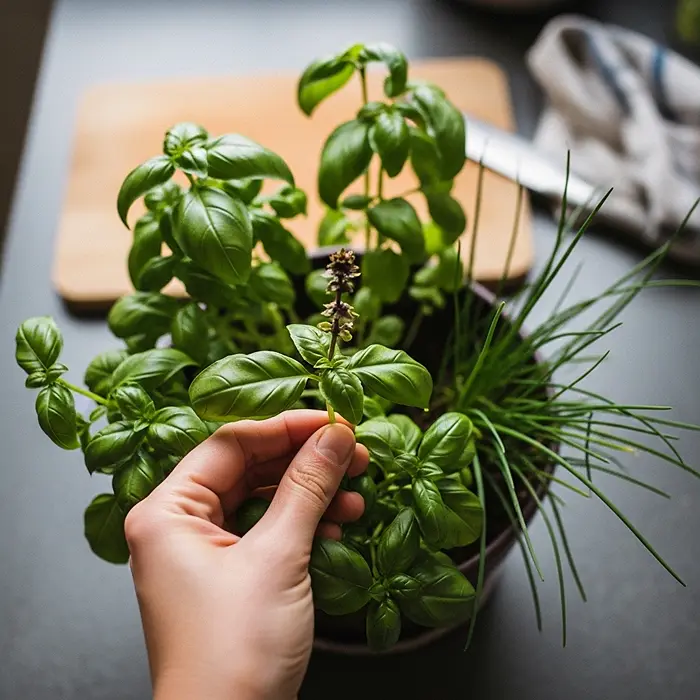
- Pinch basil above a leaf node to encourage bushy growth and delay flowering
- Cut dill before flower stalks appear to extend leaf production
- Remove flower buds on chives, parsley, and lemon balm to redirect the plant’s energy back into foliage
The more you harvest (strategically), the more you get. It’s a rare win-win in gardening.
Common Mistakes to Avoid
These are the pitfalls that trip up even enthusiastic gardeners — and they’re all avoidable:
- Mixing rosemary with basil — the classic watering conflict mistake
- Ignoring mint’s root aggression — it will take over any uncontained shared pot, guaranteed
- Overcrowding — more than 5 herbs in a 12-inch pot creates nutrient competition fast
- Using garden soil — it compacts, drains poorly, and harbors pathogens in containers
- Insufficient sunlight — less than 6 hours of direct light is the #1 cause of leggy, flavorless herbs
Herbs That Grow Well Together in One Pot FAQs
Can mint grow with other herbs?
Yes — but only if it’s planted in a separate inner pot submerged in the larger container. Mint’s rhizomes spread aggressively and will take over shared soil within a single season if left unchecked.
What herbs grow well in partial shade?
Parsley, cilantro, chives, and mint all tolerate 4–6 hours of indirect light — making them ideal for east-facing or partially shaded spaces.
Why are my container herbs leggy?
Insufficient sunlight is almost always the culprit. Most herbs that grow well together in containers still need at least 6 hours of direct sun daily. Move the pot before you reach for the fertilizer.
How many herbs can I plant in one pot?
Stick to the 1 gallon per plant rule. A 12-inch pot comfortably supports 3–5 annual herbs — don’t push beyond that or you’ll trigger nutrient depletion and crowding stress.
Choosing herbs that grow well together in one pot really comes down to respecting what each plant actually needs — not just what looks pretty at the garden center. Match water needs, respect root architecture, choose the right container, and you’ll have a thriving herb pot from spring right through the first frost. Simple rules, genuinely great results.