

How Big Should a Pot Be for Tomatoes?
Learn the best pot size for tomatoes based on variety, root depth, and yield so you can avoid stunted plants and low production.
For maximum yield, determinate tomatoes need 5–10 gallons (12–15 inches deep), while indeterminate varieties require 15–25 gallons (18–24 inches deep) to support root systems that naturally reach 2–3 feet. Container depth is more critical than width for preventing yield loss and root restriction.
Here’s a confession: I once killed a perfectly healthy ‘Brandywine’ tomato — not with neglect, but with a pot that was way too small. It looked fine for weeks, then everything went sideways in July. Tiny fruit. Crispy leaves. Daily wilting that no amount of watering could fix. The culprit? A cute little 5-gallon bucket that was basically a straightjacket for the roots.
This guide covers the best container size for tomatoes by variety type, explains why tomato root depth matters way more than pot width, and helps you pick the perfect indeterminate tomato pot size — no guesswork required. If you’re brand new to container growing, you’ll also want to bookmark our complete guide to growing tomatoes in containers for the full picture.
Let’s dig in (pun absolutely intended).
Why Pot Volume Is the #1 Thing Controlling Your Harvest
The Yield Gap Nobody Talks About
Here’s a number that should stop every container gardener in their tracks: indeterminate tomatoes grown in 15-gallon pots produce up to 40% more fruit than the exact same variety in a 5-gallon pot. Forty percent. That’s the difference between bragging about your harvest and pretending you didn’t try.
Why is the gap so dramatic? It comes down to root restriction. When roots hit the walls of a too-small container, they start circling instead of branching. Circling roots can’t efficiently absorb water, phosphorus, potassium, or calcium — basically everything your plant needs to set fruit and keep it coming.
There’s also something called the buffering effect of soil mass. A 15-gallon container holds roughly three times the soil of a 5-gallon pot. All that extra volume acts like a savings account — it stores moisture longer, stabilizes nutrient availability, and slows down temperature swings. Practically speaking, a bigger pot forgives the days you forget to water (we’ve all been there).
So when people ask about 5-gallon vs. 15-gallon tomato yield, the honest answer is: it’s not even close for vining types. A 5-gallon pot keeps a plant alive. A 15-gallon pot lets it actually produce.
The Root Reality Check: Think Deep, Not Wide
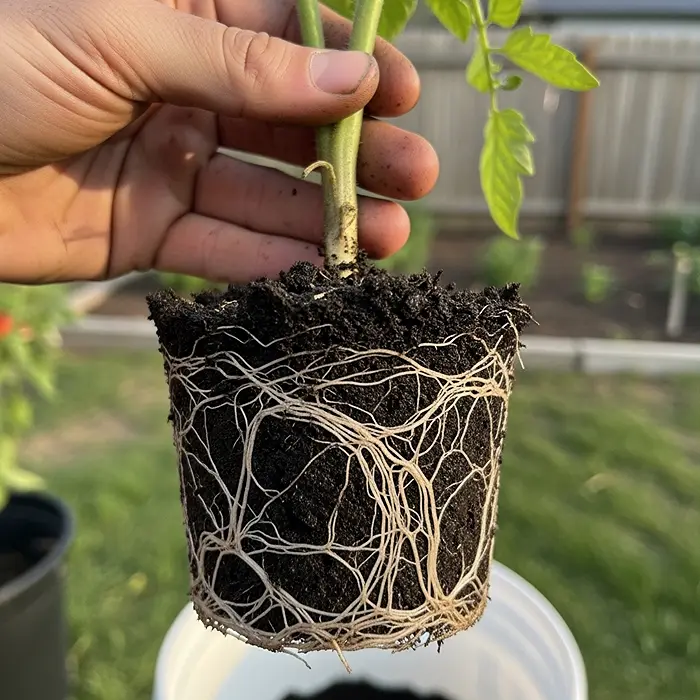
Here’s what surprised me when I first started digging into this (again, pun intended): tomato roots are vertically dominant. In open ground, a healthy indeterminate tomato can push roots 2–3 feet deep, with some researchers documenting tap roots extending past 4 feet in loose, well-drained soil.
That’s the natural tomato root depth we’re working against when we stick a plant in a shallow pot. Containers under 12 inches deep cut off this vertical architecture, and the consequences are measurable — shallow pots can reduce yields by up to 35%.
The science boils down to two things: oxygen exchange and root hair development. Deeper soil columns drain better, which pulls fresh oxygen into the root zone after every watering. Root hairs — the microscopic structures that actually do the heavy lifting of nutrient absorption — need that vertical space to proliferate. Cramp them, and the whole plant pays the price.
How Big Should a Pot Be for Tomatoes? Sizing by Growth Habit
Not all tomatoes are created equal, and the answer to how big should a pot be for tomatoes depends entirely on what type you’re growing. Here’s the breakdown.
Determinate (Bush) Varieties
Think ‘Roma’ and ‘Celebrity.’ These guys grow to a fixed height (usually 3–4 feet), produce a big flush of fruit, and then call it a season. Their root systems are more compact, which makes them the friendliest option for container gardening.
A 5-gallon pot is the bare minimum, but honestly, 7–10 gallons is where you’ll see the plant really perform. Aim for at least 12–15 inches of depth so you can bury the transplant stem deep — which encourages extra root growth along the buried portion.
Indeterminate (Vining) Varieties
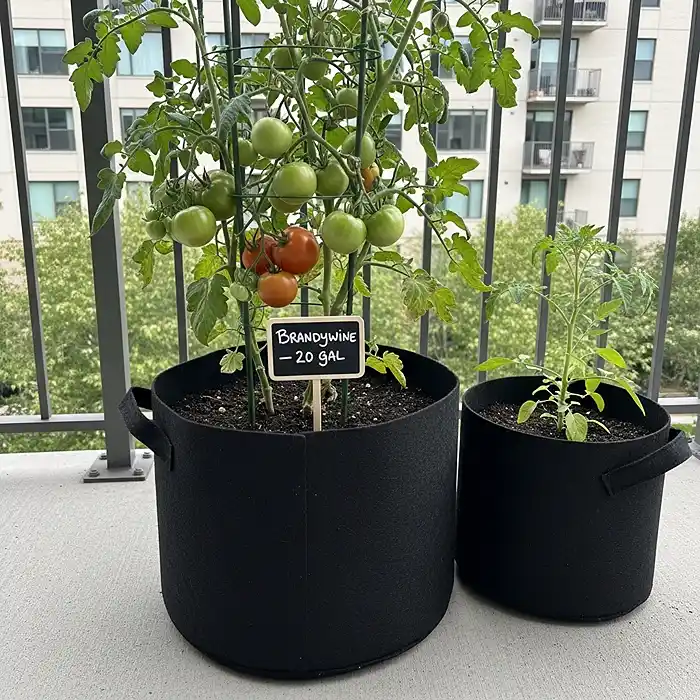
‘Beefsteak,’ ‘Brandywine,’ ‘Cherokee Purple’ — these are the marathon runners of the tomato world. They grow continuously all season, often reaching 6–10+ feet, and they produce fruit for months instead of weeks.
The ideal indeterminate tomato pot size is 15–25 gallons with 18–24 inches of depth. I know that sounds massive, but these plants have massive appetites. Anything under 10 gallons will bottleneck production right when you need it most — during the midsummer fruiting surge when water and nutrient demands peak.
Patio & Micro-Dwarfs
Varieties like ‘Tiny Tim’ and ‘Micro Tom’ were literally bred for small spaces. Balconies, windowsills, even a sunny countertop — they stay under 18 inches tall with proportionally tiny root systems.
A 1–3 gallon pot works fine here, though bumping up to 3–5 gallons gives a noticeable improvement in fruit size and overall plant vigor. Depth of 8–10 inches is plenty.
Quick-Reference Table: Best Container Size for Tomatoes by Type
| Growth Habit | Min Gallons | Ideal Gallons | Min Depth | Expected Height |
|---|---|---|---|---|
| Determinate | 5 gal | 7–10 gal | 12–15″ | 3–4 ft |
| Indeterminate | 10 gal | 15–25 gal | 18–24″ | 6–10+ ft |
| Micro-Dwarf | 1–3 gal | 3–5 gal | 8–10″ | 8–18 in |
Depth vs. Width — Which Matters More for Tomatoes?
If you’re standing in a garden center choosing between a deep-but-narrow pot and a wide-but-shallow one, always go with depth. Every time. No exceptions for tomatoes.
Here’s why: tomato root depth is the bottleneck, not spread. Wide, shallow containers create two problems. First, roots hit the bottom fast and start circling, which leads to root binding and oxygen stress. Second, shallow soil dries out quicker because there’s more surface area exposed to air relative to total volume.
Think of it this way: a 5-gallon bucket that’s 14 inches deep and a wide 5-gallon planter that’s only 9 inches deep hold the same volume — but the tall bucket will grow a healthier plant every time because of better drainage, deeper root penetration, and more stable moisture levels.
Minimum depth benchmarks to remember: 12 inches for determinate types, 18 inches for indeterminate types, and 8 inches for micro-dwarfs. The University of Maryland Extension recommends a minimum depth of 12–16 inches for large vegetables like tomatoes, which aligns perfectly with what I’ve seen in practice.
How Pot Material Secretly Affects Your Tomato Roots
Bigger Pots = More Thermal Stability (And That Matters a Lot)
Here’s something most people don’t think about when asking how big should a pot be for tomatoes: larger soil masses buffer temperature swings far better than small ones. A 15-gallon container can keep root-zone temperatures up to 15°F more stable than a 3-gallon pot sitting on the same patio.
Why does that matter? Root hairs — the tiny structures responsible for absorbing water and nutrients — begin dying at soil temperatures above 104°F. Thermal stability isn’t a luxury; it’s plant insurance.
Fabric vs. Plastic vs. Clay vs. Self-Watering
Fabric Grow Bags are my top pick for hot climates, and it’s not close. Their breathable walls allow evaporative cooling, keeping internal soil around ~98°F even on brutal summer days.
They also promote air-pruning, where roots that reach the edge get naturally trimmed by air exposure — preventing that problematic circling and encouraging dense, branching root systems. For indeterminate tomato pot size in warm zones, a 15–20 gallon fabric bag is the sweet spot.
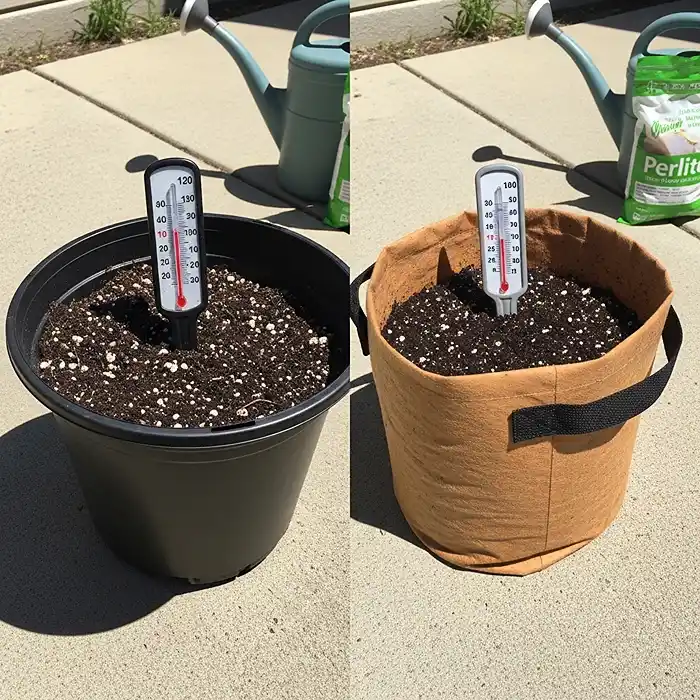
Black Plastic Pots are cheap and everywhere, but here’s the catch: in full sun, the walls can hit up to 138°F. That’s literally cooking the outer ring of roots. They’re fine in cool climates (zones 3–5) where extra warmth is actually helpful, but in zone 7 and above, they’re a liability. If plastic is all you’ve got, go with light-colored pots or wrap dark ones in reflective material.
Terracotta / Clay Pots are breathable, gorgeous, and heavy. The breathability means faster moisture loss (so you’ll water more), but the weight makes them incredibly stable for tall indeterminate plants that catch the wind. A large terracotta pot isn’t tipping over — and that matters on a balcony.
Self-Watering Containers use a built-in reservoir that buffers both moisture and temperature (roughly ~105°F internal). They’re a game-changer for travelers, forgetful waterers, or anyone who’s battled blossom end rot. Consistent moisture = consistent calcium delivery = no more ugly black spots on your fruit.
Support, Soil & Stability: The Stuff People Skip
The 60/30/10 Soil Formula That Just Works
After years of tweaking soil mixes, this is the blend I keep coming back to for container tomatoes:
- 60% high-quality potting mix (peat- or coir-based)
- 30% mature compost (slow-release nutrients + microbial life)
- 10% perlite or vermiculite (aeration and drainage)
One hard rule: never use straight garden soil in containers. It compacts under repeated watering, destroys drainage, and can harbor pathogens that thrive in the warm, confined environment of a pot. Trust me, I learned this one the expensive way.
Why Big Pots Keep Your Plants Standing
A 15–25 gallon container full of moist soil weighs 50–100+ pounds. That sounds like a hassle until a summer thunderstorm rolls through and your top-heavy, fruit-laden tomato plant doesn’t budge. Heavy pots are their own anchors — a hidden benefit when you’re growing 8-foot vining varieties on an exposed patio.
Match your cage or stake to the container. A flimsy wire ring in a 5-gallon bucket will tip the moment a loaded plant catches a breeze. Use sturdy, 54-inch or taller cages driven at least 6 inches deep into the soil for proper support.
Common Container Mistakes (And How to Avoid Them)
The 5-Gallon Trap
Five gallons gets marketed as the “standard” tomato container everywhere. And look — it’ll work for a compact determinate type in a pinch. But if you’re growing ‘Brandywine’ or ‘Cherokee Purple’ in a 5-gallon bucket and wondering why your fruit is small and your plant is wilting by noon, the pot is the problem.
When deciding how big should a pot be for tomatoes of the indeterminate type, start at 15 gallons and don’t look back.
Blossom End Rot? Blame the Pot Size.
Small pots dry out frighteningly fast — sometimes twice a day during summer heat waves. When soil moisture swings wildly between soaking and bone-dry, your plant can’t transport calcium to developing fruit consistently.
The result is blossom end rot (BER): dark, sunken lesions on the bottom of your tomatoes. The fix isn’t adding calcium supplements. It’s maintaining even moisture, and the easiest way to do that is — you guessed it — a larger container.
Stop Putting Rocks in the Bottom of Your Pots
I’m begging you. This old-school advice actually makes drainage worse, not better. Adding gravel creates what’s called a perched water table — the soil above the gravel layer stays wetter than it would without the rocks.
Instead, make sure your pot has 6–8 drainage holes, each about ½-inch in diameter. Elevate pots on pot feet or a wire rack so air can circulate underneath. That’s proper drainage. Rocks are just heavy filler.
FAQs: How Big Should a Pot Be for Tomatoes?
Can I Grow a Tomato in a 3-Gallon Pot?
Only if it’s a micro-dwarf variety like ‘Micro Tom’ or ‘Tiny Tim.’ Standard determinate or indeterminate types crammed into 3-gallon pots can experience up to 30% yield loss from root restriction, rapid drying, and nutrient depletion. It’s not worth the gamble.
Does the Color of the Pot Actually Matter?
More than you’d think. Dark pots absorb solar radiation and can dangerously heat up root zones in warm climates. Light or tan pots reflect heat. In zones 8+, go with light-colored containers or breathable fabric bags. In zones 3–6, dark pots can actually be an advantage by warming soil earlier in spring.
How Many Tomato Plants Can I Put in One Pot?
One. Always one. Tomatoes are heavy feeders with aggressive root systems. Two plants in the same pot compete for water, nutrients, and root space, and both will underperform compared to a single plant given the whole container to itself. No exceptions.
What’s the Best Container Size for Tomatoes if I Want Maximum Yield?
For indeterminate varieties, 15–20 gallons hits the sweet spot between yield, manageability, and soil stability. For determinate varieties, 7–10 gallons is ideal. You’ll never regret going bigger — just heavier and slightly more expensive.

The Quick Decision Guide: Pick Your Pot in 30 Seconds
- Balcony grower → 7–10 gallon pot + determinate variety (‘Roma,’ ‘Celebrity’)
- High-yield patio grower → 15–20 gallon pot + indeterminate variety (‘Beefsteak,’ ‘Brandywine’)
- Windowsill gardener → 3–5 gallon pot + micro-dwarf (‘Tiny Tim,’ ‘Micro Tom’)
- Hot climate (zone 7+) → Fabric grow bag for temperature regulation
- Cool climate (zone 3–6) → Plastic pot works fine; dark colors help warm soil early
Here’s the bottom line: figuring out how big should a pot be for tomatoes isn’t the exciting part of gardening. Nobody’s posting their pot-size calculations on social media.
But it’s the single highest-impact decision you’ll make for container tomatoes — more important than which fertilizer you buy or how often you prune. Nail the container, and everything else — watering, feeding, pest management — becomes dramatically easier.
Start with the sizing table above, match it to your space and variety, and give those roots the room they’ve been asking for. Your future self (and your future BLTs) will thank you.