

Bringing Outdoor Plants Inside for Winter
Bringing outdoor plants inside for winter sounds simple — until you watch a healthy patio hibiscus drop every single leaf within a week. The difference between survival and sudden death is a proper acclimation plan, not luck.
I grow citrus, tender salvias, and a beloved ‘Black Knight’ buddleia on a zone 6b rooftop in a genuine small space gardening setup. I’ve killed plants by rushing this process. Now I don’t lose any.
Table of Contents
The Survival Guide: Bringing Outdoor Plants Inside for Winter
Plants don’t die because you moved them indoors. They die because of how fast you moved them. Bright outdoor conditions — even on a shaded balcony — deliver far more photosynthetic energy than your sunniest south-facing window.
That gap triggers a stress response. Chloroplasts restructure, roots slow water uptake, and the plant essentially panics. Too much change, too fast, and it sheds leaves to survive — or doesn’t survive at all.
The fix is biological trickery: gradual light reduction, mandatory pest eradication, and adjusted watering. Nail all three and your plants will coast through winter without drama.
Planning Your Transition Timeline and Assessing Microclimates
This is not a one-afternoon job. Start planning at least three to four weeks before your average first frost date. Check your USDA Plant Hardiness Zone map if you’re not sure of your zone.
For most of the northern US (zones 5–7), that means kicking off the process in mid-September. Urban gardening and tiny garden ideas often mean limited indoor space, so audit your windowsills before you commit to saving everything.
When to Move Plants Based on Nighttime Temperatures
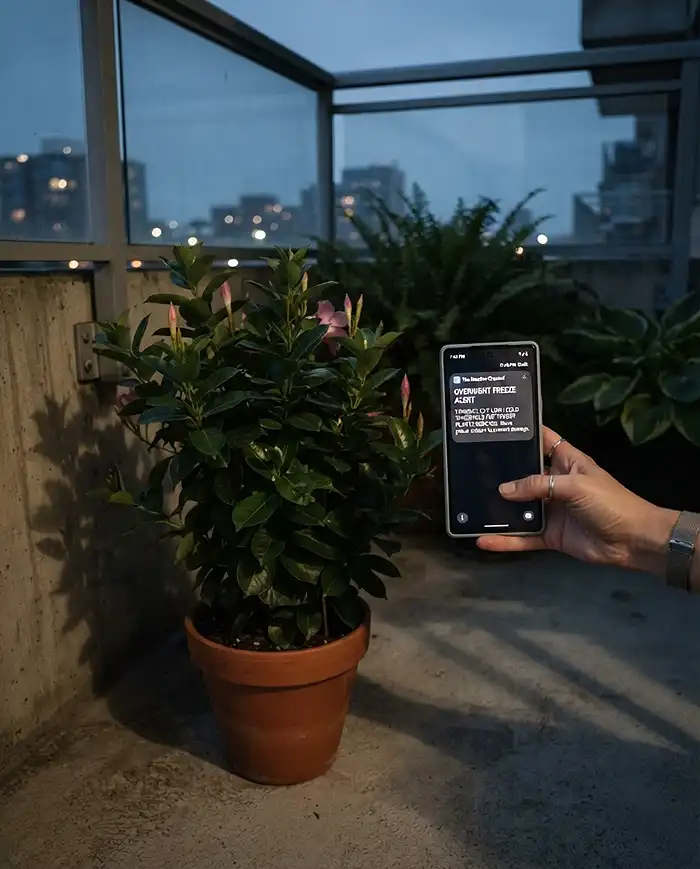
Quick Answer: Begin acclimation the moment nighttime temps consistently drop to 55°F (12°C). Don’t wait for a frost warning — by then it’s an emergency, not a transition.
Tropical plants like hibiscus, mandevilla, and bougainvillea start experiencing cellular stress below 50°F (10°C). That stress is often irreversible. A few cold nights can shut down root function even if the foliage looks fine for another week.
Set a weather app alert for 58°F nighttime lows. That’s your signal to start moving plants to a shadier outdoor spot — the first step of the acclimation ladder.
Pro Tip: Don’t trust monthly averages. Check the 10-day forecast daily starting September 1st in zones 5–6.
Evaluating Your Indoor Windowsills and Light Availability
Quick Answer: A south-facing window gets roughly 200–400 foot-candles of winter light. A shaded outdoor balcony in summer delivers 1,000–2,000. Plan for that gap — it’s enormous.
Walk through your home at noon on a cloudy November day. That’s your real winter light condition, not the bright September afternoon when you’re planning. Rooms that feel light and airy in summer can be genuinely dim by December.
Match plant to spot before moving day. Sun-lovers like citrus need your absolute best south window plus a grow light. Lower-light tropicals like pothos or peace lily can handle an east-facing sill with no supplemental light.
| Plant Type | Minimum Indoor Light | Best Window Direction |
|---|---|---|
| Citrus, Hibiscus | 6+ hrs direct sun or grow light | South, supplemented |
| Mandevilla, Bougainvillea | 4–6 hrs bright indirect | South or West |
| Fuchsia, Impatiens | 3–4 hrs indirect | East or West |
| Coleus, Caladium | 2–3 hrs indirect | East or North |
Essential Supplies for the Indoor Transition
Don’t wing the supply list. Having the right tools ready before you start means you won’t skip the pest treatment step because you’re tired and it’s getting dark outside.
- Full-spectrum LED grow light (at least 2,000 lumens for sun-lovers)
- Shallow pebble trays sized to each pot
- Organic Neem oil concentrate (cold-pressed)
- Unscented Castile soap (Dr. Bronner’s works well)
- Yellow sticky traps (for fungus gnat monitoring)
- Bacillus thuringiensis israelensis — sold as “Mosquito Bits”
Grow Lights, Humidity Trays, and Pest Sprays
Quick Answer: A full-spectrum LED grow light, pebble humidity trays, and a Neem oil spray are non-negotiable for overwintering sun-loving tropicals indoors successfully.
For grow lights, I use a Barrina T5 bar light (45W, 4000K) suspended 6–8 inches above my citrus. Running it 14 hours a day through January keeps new growth firm and green, not pale and etiolated.
Pebble trays are simple but effective. Fill a tray with pebbles, add water to just below the surface, and set the pot on top. As water evaporates, it raises local humidity around the foliage — exactly what indoor heating destroys.
The Mandatory Pre-Move Pest Eradication Protocol
Assume every outdoor pot is infested. Not “might be.” Is. Spider mite eggs, aphid nymphs, fungus gnat larvae — they’re all there, invisible to the naked eye, waiting for a warm living room to hatch into a full outbreak.
I learned this the hard way in fall 2021 when a single potted rosemary I moved in without treating wiped out three established houseplants within six weeks. The spider mites were undetectable until they weren’t.
Soil Flushing to Evict Hidden Insects
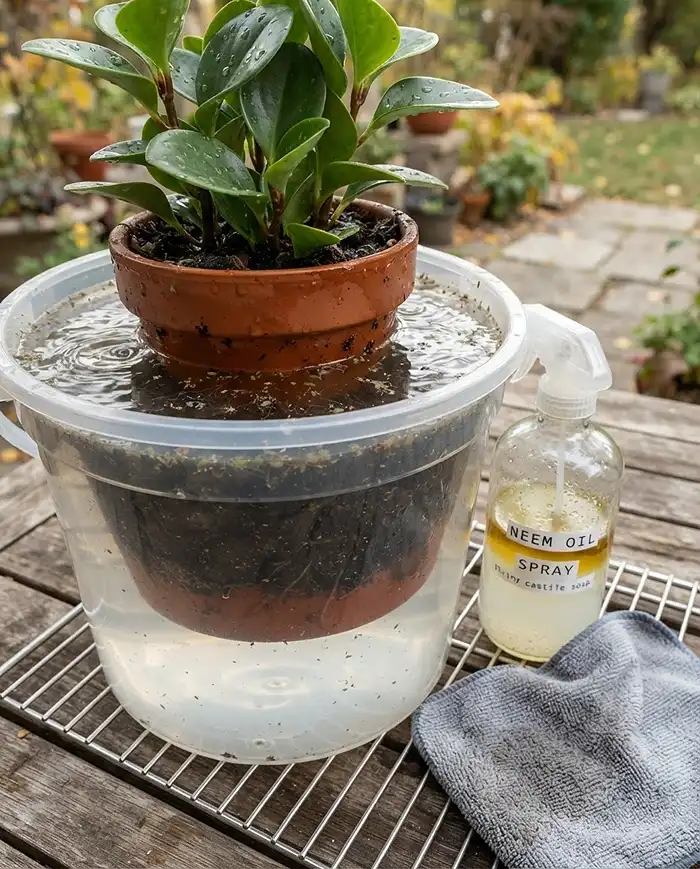
Quick Answer: Submerge the entire container up to the soil line in a bucket of lukewarm water for 15 minutes. This forces ants, centipedes, earwigs, and soil-dwelling larvae to the surface where you can remove them physically.
Use a bucket large enough that the pot sits fully submerged. Lukewarm water is important — cold water shocks roots. You’ll often see insects emerging within the first five minutes.
Let the pot drain fully (30–45 minutes on a rack) before moving on to the foliage wash. Don’t rush this step. Soggy soil going indoors creates the perfect environment for fungus gnats.
Pro Tip: Do this outdoors where escaping insects don’t become a house problem.
The Neem Oil and Castile Soap Foliage Wash
Quick Answer: Mix 2 tsp cold-pressed Neem oil + 1 tsp unscented Castile soap per quart of warm water. Spray and physically wipe every leaf surface — tops and undersides. Repeat three times over one week before the plant enters the house.
The wiping part matters as much as the spraying. Neem disrupts insect hormones, but physical contact is what kills eggs and adults on contact. Use a soft cloth or paper towel and work methodically.
Three applications over seven days catches multiple life cycle stages. Miss this and you’re just cosmetically cleaning — one missed egg cluster can re-infest within two weeks indoors.
- Day 1: Soil flush + first Neem spray
- Day 4: Second Neem spray and wipe-down
- Day 7: Final Neem spray — plant is now eligible to enter quarantine
Step-by-Step Acclimation Process (Hardening Off in Reverse)
You’ve probably hardened off seedlings in spring — gradually moving them from indoors to outdoors over two weeks. This is the same process, reversed. The goal is to reduce light levels progressively so chloroplasts restructure without triggering mass leaf drop.
Skipping this is the single most common reason healthy-looking plants die within a month of coming indoors. The most costly small-space gardening mistakes almost always involve rushing a transition.
| Week | Location | Light Level |
|---|---|---|
| Week 1 | Shadiest outdoor spot | Bright indirect only |
| Week 2 | Covered porch or garage with window | Low indirect |
| Week 3 | Indoor quarantine room | Dim or artificial light |
| Week 4+ | Final indoor position | Best available + grow light |
Pruning and Repotting Before the Move
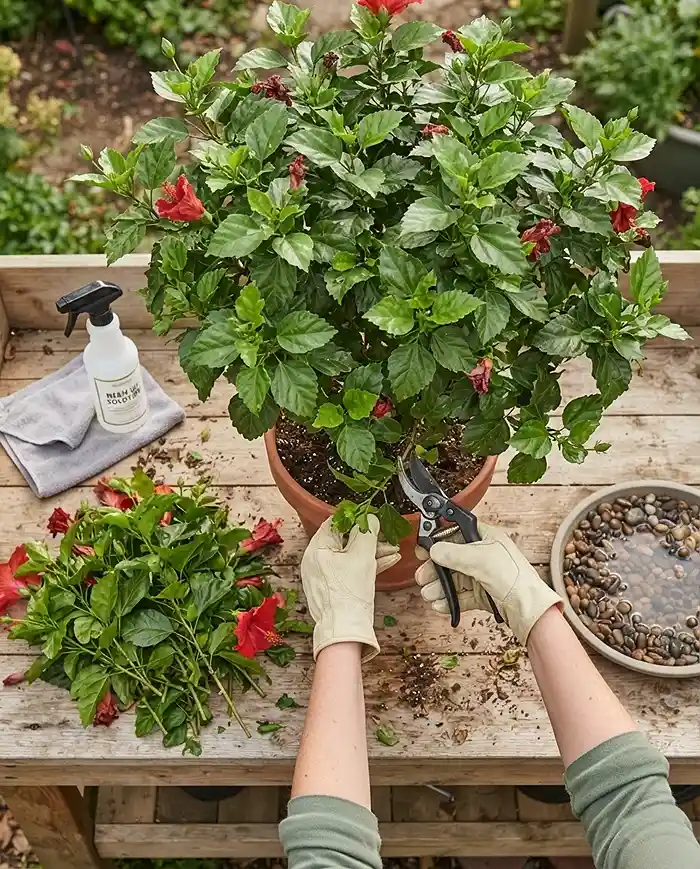
Quick Answer: Remove up to one-third of leafy volume before moving indoors. Less foliage means less photosynthetic demand on a root system that’s about to slow down significantly.
This feels aggressive, but it’s genuinely helpful. A large hibiscus that drops 40% of its leaves in shock is doing the same thing — just uncontrollably. Strategic pruning gives you control and leaves the plant with a better structure come spring.
Avoid repotting at the same time as the move. Combining root disturbance with light change is too much stress at once. If the plant needs repotting, do it 4–6 weeks before the indoor transition begins.
For small space gardening setups where indoor real estate is tight, this pruning step also physically reduces the plant to a manageable size for your windowsill.
Mastering Indoor Winter Maintenance for Potted Plants
Your outdoor watering schedule is irrelevant indoors. Plants in low light with no wind and cooler soil temperatures use a fraction of the water they did on a sunny balcony. Maintaining a summer routine indoors is how most overwintered plants actually die.
Think of your plant as metabolically downshifting. Less light equals less photosynthesis, equals less water demand, equals less fertilizer need. Everything slows. Your job is to match that slower rhythm.
Drastically Reducing Watering Schedules
Quick Answer: Water only when the top 2 inches of soil are completely dry to the touch. For most tropicals indoors in winter, that means watering once every 10–14 days, not every 2–3 days as in summer.
The “finger test” is foolproof: push your finger 2 inches into the soil. If it comes out with any moist soil clinging to it, wait. If it comes out clean and dry, water thoroughly until it drains from the bottom.
The number one killer of overwintered plants isn’t cold or dark — it’s root rot from overwatering in low-light conditions where the soil simply can’t dry out fast enough. This applies even to plants that love summer water.
Managing Indoor Humidity and Radiator Heat
Quick Answer: Never place a plant directly above a baseboard heater or forced-air vent. The desiccating heat creates a microclimate that will brown leaf edges and dry out root balls faster than the plant can absorb water.
Central heating can drop indoor humidity to 20–30% in winter — far below the 50–60% most tropicals prefer. Group plants together so their transpiration creates a shared humidity bubble. It genuinely works.
For serious urban gardening setups with multiple overwintering plants, a small room humidifier running 8 hours a day makes a measurable difference. Pebble trays add local humidity; a humidifier raises the whole room.
Common Problems and Solutions
Even a well-executed transition will produce some stress symptoms. Knowing which ones are normal versus which ones require action saves a lot of panic in November.
Sudden Yellowing and Massive Leaf Drop
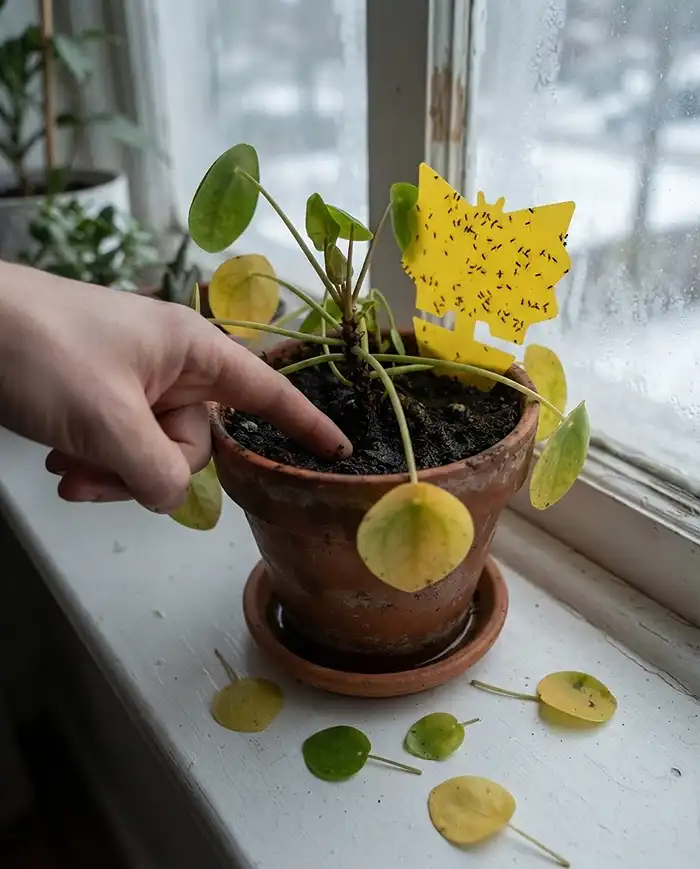
Quick Answer: Dropping up to 20% of leaves in the first two to three weeks indoors is normal. It’s the plant right-sizing its foliage to match reduced light. More than 30% drop rapidly is a distress signal requiring action.
If leaf drop is severe, immediately cut watering in half and add a grow light 6 inches above the canopy for 14 hours daily. Do not fertilize. The goal is stabilization, not pushing new growth.
Yellowing at the leaf tips with dry, crispy edges usually means low humidity or heat vent damage. Move the plant away from any heating source and add a pebble tray immediately.
Fungus Gnat Invasions in the Living Room
Quick Answer: Fungus gnats breed in warm, moist potting soil. The adults are annoying but harmless; the larvae damage roots. Kill larvae with Bacillus thuringiensis israelensis (BTI) “Mosquito Bits” tea and trap adults with yellow sticky traps.
To make BTI tea: soak 1/4 cup Mosquito Bits in a gallon of water for 30 minutes, strain, and use it as your regular watering liquid for two to four weeks. The BTI kills larvae safely without harming roots, people, or pets.
Meanwhile, let soil dry out more aggressively between waterings. Fungus gnat larvae need consistently moist soil to survive. Dry soil breaks their lifecycle faster than any treatment.
Frequently Asked Questions
Should I fertilize my outdoor plants once I bring them inside?
No. Stop fertilizing when you begin the indoor transition and don’t resume until March or until you see active new growth. Feeding a dormant plant in low light forces weak, spindly growth that depletes its energy reserves and makes it more vulnerable to pests and disease.
Which outdoor plants simply won’t survive indoors?
Annual vegetables like tomatoes and squash die of old age — they’re not worth overwintering. Temperate perennials like hostas, creeping thyme, and ornamental grasses need a cold dormancy period and will struggle without it. Tropicals like hibiscus, citrus, and mandevilla overwinter indoors beautifully.
Do I need to quarantine plants even if they look completely healthy?
Yes, always. Spider mite eggs and dormant aphid nymphs are invisible to the naked eye. A two-week quarantine in an isolated room — away from existing houseplants — is mandatory for every single incoming plant, no exceptions. One missed infestation can devastate an entire indoor collection within weeks.
Can I bring in annual herbs like basil for the winter?
Basil is a true annual and will decline and die regardless of indoor conditions — it’s not worth the effort or the pest risk. Hardy perennial herbs like rosemary, lemon verbena, and lemongrass overwinter well indoors with a bright window or grow light.
How do I know if my overwintered plant is dead or just dormant?
Scratch the stem lightly with your thumbnail near the base. Green tissue beneath the surface means the plant is alive but dormant. Brown, dry, or mushy tissue all the way through means the stem is dead. Check multiple spots before giving up — a plant can lose most stems but regenerate from the base in spring.
Key Takeaways
- Start bringing outdoor plants inside for winter when nighttime temps hit 55°F — not when frost is already forecast.
- Treat every outdoor pot for pests before it crosses your threshold: soil flush plus three Neem oil applications over seven days.
- Reverse-acclimate over two to three weeks, moving plants through progressively lower light zones before their final indoor position.
- Cut watering dramatically — finger-test the top 2 inches of soil and water only when completely dry.
- Whether you’re running a full small space garden or just a few beloved patio pots, the acclimation protocol is the same — take your time and the plants will thank you in spring.