
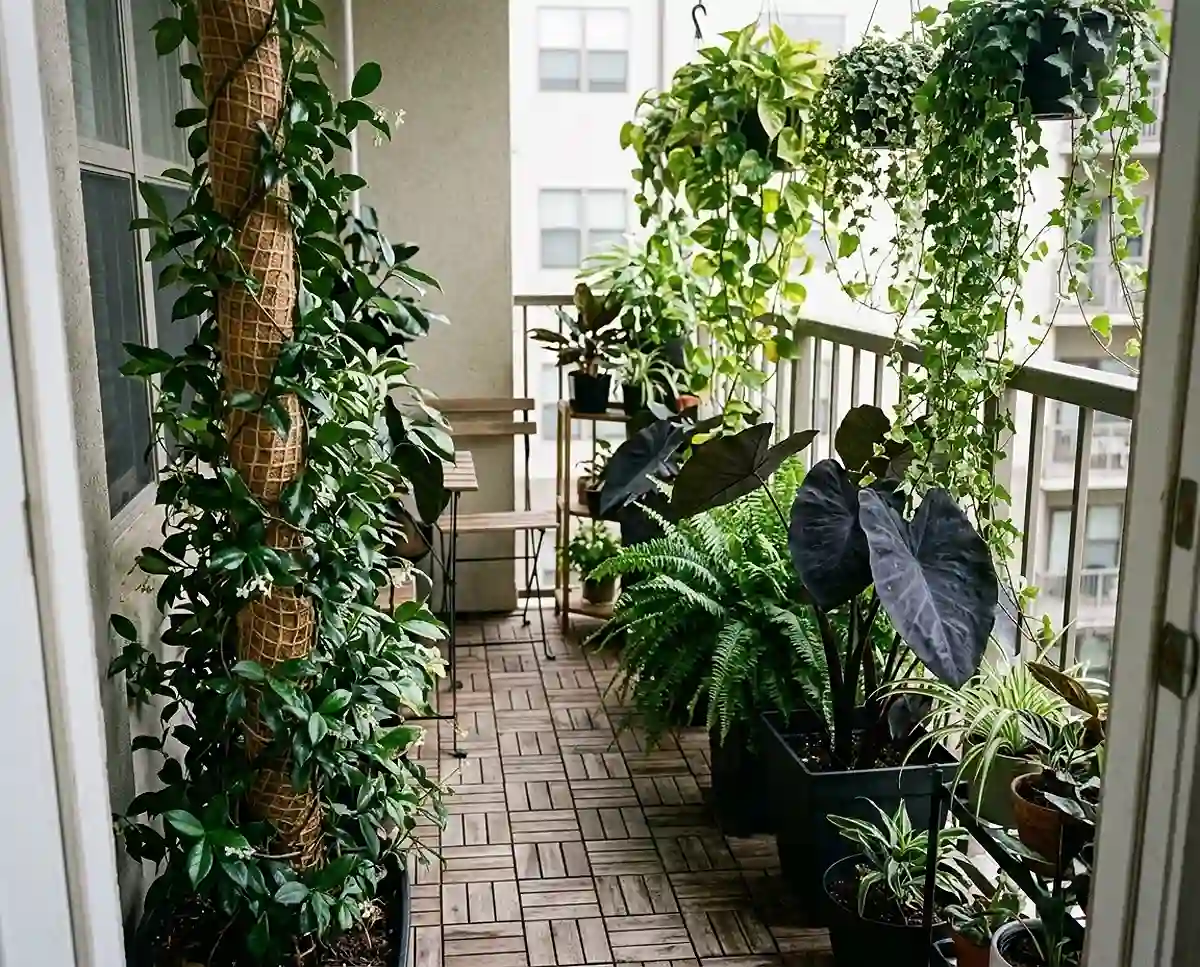
Vertical Balcony Garden Ideas
Vertical balcony garden ideas can turn a 5-by-8-foot balcony garden into a dense urban jungle without eating your seating space. Here’s how I did it.
I grow on a north-facing fifth-floor balcony in zone 6b, with a strict no-drilling lease. After three summers of trial and error, a railing, a vent, and half my neighbor’s view are hidden behind leaves. Here’s what worked as of the 2026 season.
Table of Contents
Transforming a Tiny Balcony into a Vertical Jungle Oasis
A vertical jungle oasis copies a rainforest’s layers. Climbers go up, big-leaf tropicals fill the middle, and trailing plants spill over the edges, so your floor stays open.
That’s vertical gardening at its simplest, and it’s one of the smartest small balcony ideas. Need layout basics first? Start with my space-saving balcony garden guide.
Think of it as an apartment balcony makeover that happens mostly overhead.
Assessing Your Balcony’s Microclimate for a Jungle Setup
Map your conditions before buying a single plant. Delicate tropicals and dense vines only survive where light, wind, and humidity suit them. A week of notes saves months of crispy leaves.
Want to go deeper? My balcony microclimate guide shows how to read your space.
Evaluating Sun Exposure and Shade Pockets
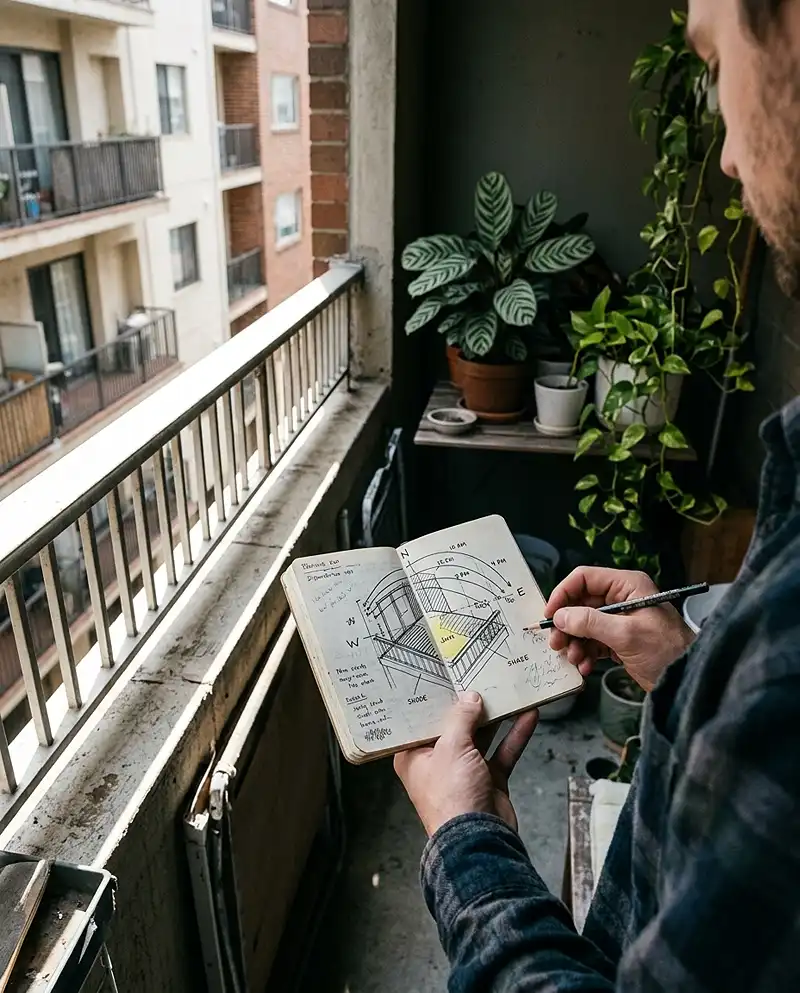
Quick Answer: Check your balcony at 9 a.m., noon, and 4 p.m. for one week. Six or more direct-sun hours is full sun, three to six is part shade, and under three is shade. Match plants to your number, not the plant tag’s best-case guess.
| Light level | Direct sun | Jungle picks |
|---|---|---|
| Full sun | 6+ hours | Mandevilla, star jasmine, Colocasia |
| Part shade | 3-6 hours | Monstera adansonii, Boston fern, creeping fig |
| Shade | Under 3 hours | Golden pothos, English ivy, Calathea |
Real Example: My balcony gets about 2.5 hours of direct June sun. I ignored that in 2023, bought a Mandevilla, and watched it drop buds all summer. Shade-tolerant understory plants have thrived there ever since.
Wind Load and Humidity Considerations
High-rise wind shreds big leaves like Elephant Ears and strips moisture from every pot. Here’s how to tame it:
- Install a slatted screen or lattice on the windward side. Slats filter gusts better than a solid wall, which creates swirling turbulence.
- Cluster pots tightly so foliage shares humidity and shelters its neighbors.
- Set pots on pebble trays filled with water just below the pebble tops for extra local humidity.
Pro Tip: Put your most fragile large-leaved plants in the corner farthest from the prevailing wind, and let tough ivy take the exposed side.
Essential Gear to Make Vertical Balcony Garden Ideas Work
Everything below is drill-free and removable, which makes a renter friendly patio realistic. When move-out day comes, it all comes down without a single hole to patch.
Freestanding Trellises and Tension Poles
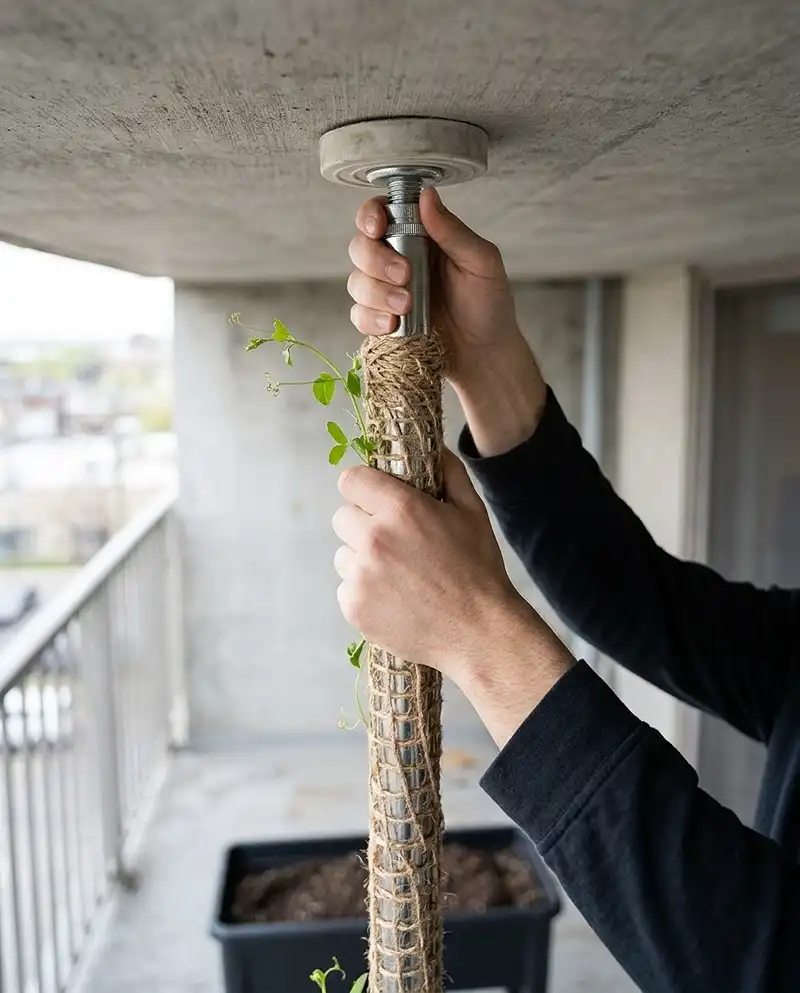
Quick Answer: Tension poles and weighted planter trellises hold vines without drilling. Wedge a pole floor to ceiling, or choose a trellis built into a heavy planter box. Check the rated load before trusting either with a mature vine.
Look for adjustable poles with rubber caps that reach 8 to 10 feet, and wrap them in jute netting so tendrils can grip. For heavier vines, pick a weighted planter trellis, because the soil itself becomes the anchor.
Pro Tip: Attach the netting before the vine arrives. Threading it later snaps tender shoots.
Hanging Baskets, Railing Planters, and Wall Pockets
Use every inch of the perimeter with three container types:
- Railing planters: choose models 8-10 inches deep with clamp-style brackets, not loose hooks. Check your building’s railing rules first.
- Felt wall pockets: breathable fabric keeps roots from rotting. Hang them from a freestanding rack rather than the wall.
- Hanging baskets: pick coco-lined 12-inch baskets with sturdy chains, hung from heavy-duty shepherd’s hooks.
Selecting the Best Plants for a Jungle Aesthetic
Build layers like a rainforest: canopy, mid-story, and forest floor. Look up your zone on the USDA Plant Hardiness Zone Map first, so you know which plants return and which are summer-only.
The Canopy: Fast-Growing Climbing Vines
Quick Answer: Star jasmine (zones 8-10), Mandevilla (zones 9-11), and Monstera adansonii (zones 10-12) are fast container climbers. Star jasmine and Mandevilla can cover a 6-foot trellis in a single season.
Mandevilla wants six sun hours, and I treat it as an annual in zone 6b. Monstera adansonii prefers bright shade and a moss pole. Star jasmine (Trachelospermum jasminoides) adds scent.
Put two climbers on the open side of the railing and you’ll get real balcony privacy by August.
The Mid-Story: Large-Leaved Tropicals and Ferns
This layer gives that classic jungle texture at eye level. Elephant Ears (Colocasia esculenta ‘Black Magic’) deliver dinner-plate leaves in part sun, and I lift the tubers each October.
Calathea orbifolia needs shade and steady moisture, and it scorches fast in direct sun. Boston ferns (Nephrolepis exaltata) love humidity and part shade. Group all three, and they’ll humidify each other.
The Forest Floor: Cascading Spillers and Creepers
Trailers blur the hard, ugly lines of concrete. Golden pothos (Epipremnum aureum) drapes 3 to 4 feet in a season. English ivy (Hedera helix) is hardy to zone 4. Creeping fig (Ficus pumila) hugs rails and walls.
Pro Tip: Pinch trailing tips every two weeks to force branching, so spillers look dense instead of stringy. English ivy is invasive in parts of the Pacific Northwest, so check local guidance.
Step-by-Step Guide to Assembling Your Vertical Oasis
Work in this order: flooring, structures, soil, plants, training. Doing it backward means hauling wet pots past fresh planting. Set aside one weekend for a balcony this size.
Setting Up Structures and Protective Flooring
Lay snap-together deck tiles or a waterproof outdoor rug first. Then wedge every tension pole and set every trellis before any soil arrives. Tug each one hard. If it shifts, a mature vine will bring it down in a summer storm.
Add a rubber-backed mat under heavy planters to protect the floor and stop sliding.
Potting, Layering, and Training the Vines
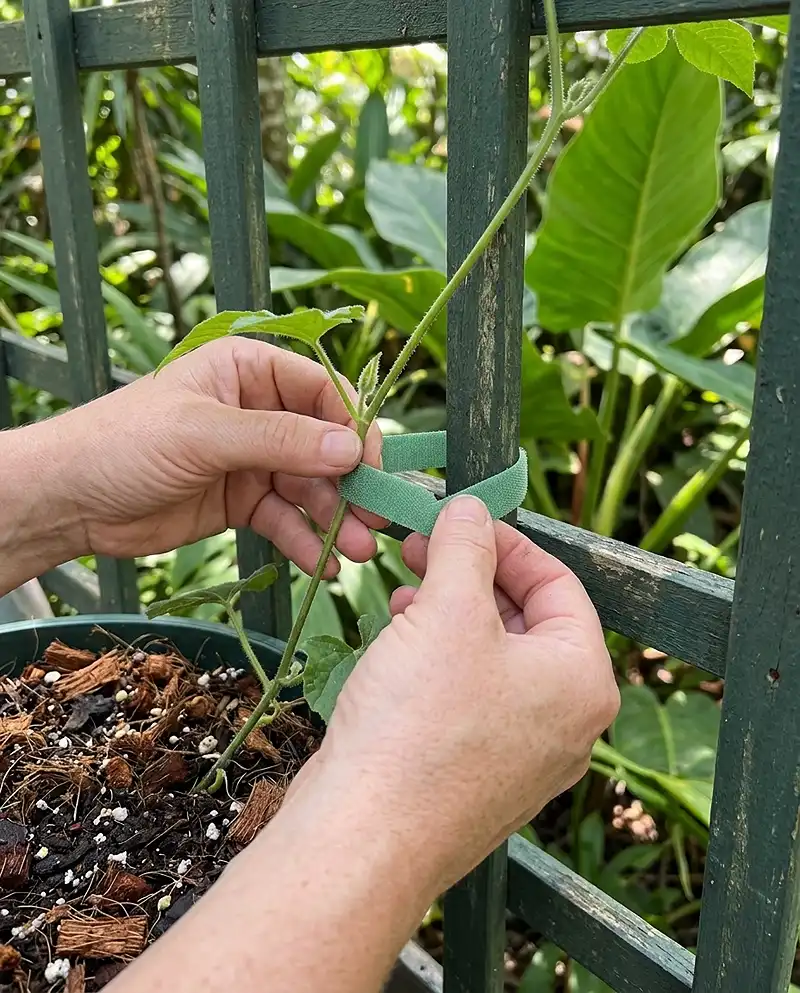
Fill containers with moisture-retentive mix, such as 3 parts potting soil to 1 part coco coir. Plant climbers at the back beside their supports, mid-story plants in the center, and trailers along the railing.
Tie young vines to supports every 8-10 inches with soft plant Velcro or twine. Keep ties loose so stems can thicken, and retie weekly during peak growth.
Maintenance Routines for a Lush, Dense Canopy
A packed jungle needs roughly 20 minutes, twice a week, in summer. Water, check for pests, and prune. Skip two weeks in July and the canopy swallows your chair.
Precision Watering and Boosting Ambient Humidity
A long-spout watering can reaches hanging baskets without a step stool. In July heat, my baskets need water daily, so push a finger 1 inch into the soil to check.
Misting relieves crispy leaf edges on dry afternoons, but only briefly. Mist in late-afternoon shade, and rely on clustering and pebble trays for lasting humidity.
Aggressive Pruning to Prevent Tangled Messes
Be ruthless. Cut rogue vines back to a node, which is the bump where a leaf attaches. Remove yellow or dead leaves weekly, and thin the canopy until you can slide a hand through it.
Never remove more than one-third of a plant at once. Keep one clear path to your seat.
Common Problems & Solutions
Packing moisture-loving plants close together invites trouble. These two issues show up on nearly every dense balcony garden, and both are fixable.
Powdery Mildew from Poor Air Circulation
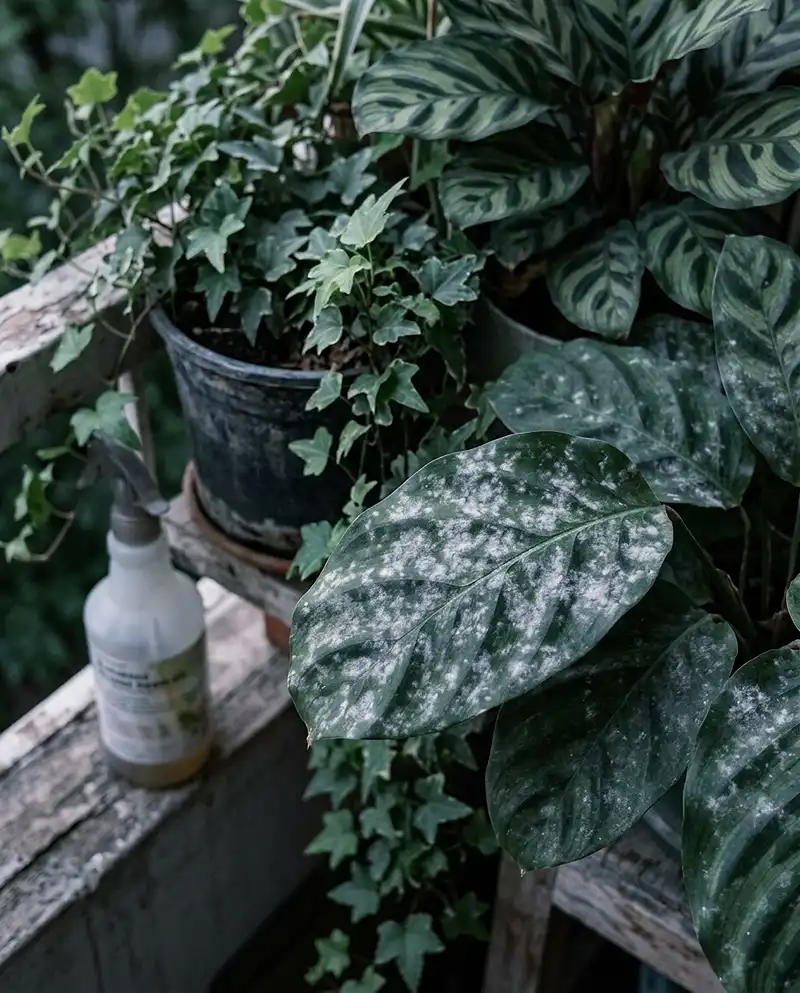
White, powdery patches on leaves mean powdery mildew, a fungus that thrives in crowded, stagnant air. In August 2024, my packed ivy and calathea corner turned dusty within a week.
Thin the canopy first, then spray diluted neem oil per the label. Apply in the evening, never in direct sun, and repeat every 7 to 14 days until clean.
Dripping Mud Staining the Balcony Floor
Muddy water raining from wall pockets and baskets will annoy your downstairs neighbor fast. I learned that after a deep watering left brown streaks on their railing.
Switch to self-watering pots, or add deep drip trays firmly attached below each container. Water slowly until the first drip appears, then stop.
Frequently Asked Questions
Can I leave tropical jungle plants on my balcony during winter?
No. True tropicals die in freezing temperatures, and many suffer below 50 F (10 C). Bring them indoors before the first frost, or swap in cold-hardy plants like English ivy, which is hardy to zone 4.
How do I safely hang heavy baskets without drilling into the ceiling?
Use freestanding heavy-duty shepherd’s hooks, hooks that clamp over a sturdy railing, or a tension pole rated for the basket’s wet weight. Check the load rating, since a watered 12-inch basket can weigh 15 pounds or more.
Are vertical felt wall pockets good for tropical plants?
Yes, with a catch. Felt pockets save huge amounts of space but dry out very fast, so moisture-loving tropicals need daily watering or a built-in drip irrigation line. Pothos and ivy cope best.
How much weight can my balcony hold?
Check your lease or ask your building manager, because limits vary. Wet soil is heavy, and a 14-inch pot can top 30 pounds. Use lightweight potting mix, choose resin or fiberglass pots, and spread weight along the walls.
What’s the fastest way to add privacy to a balcony?
Plant fast climbers like star jasmine or Mandevilla on a trellis along the open side. In one season they can form a leafy screen that adds balcony privacy without a permanent fence.
Key Takeaways
- The best vertical balcony garden ideas stack three layers: climbers, large-leaved tropicals, and trailing spillers.
- Track sun for one week before buying plants, then match each plant to your actual direct-sun hours.
- Tension poles, weighted trellises, and clamp-on planters keep everything drill-free and renter friendly.
- Prune weekly to keep air moving, and use self-watering pots or drip trays to stop muddy drips.
- Bring tropicals indoors before the first frost, or lean on hardy ivy for year-round green.