
Preserving Small Harvests From a Container Garden
Preserving small harvests is hard when you pick three tomatoes a day. Here’s how I handle storing garden harvest from my rooftop pots without wasting a bite. I’m a former community-garden coordinator, and these are the tricks that actually worked on my zone 7a terrace.
Table of Contents
The Unique Challenge of Storing Small Container Harvests
Short Answer: Container gardens deliver food in small, steady handfuls instead of one big haul. That means you need storage methods that fit a regular fridge and a small counter. Match each crop to its ideal conditions, and a few days of pickings can become a week of meals.
The Why: Container vegetable gardening rarely hands you a bushel. It gives you four tomatoes on Tuesday and six more on Friday. Those small, steady batches need storage that fits a normal fridge and a crowded counter.
My setup: a sunny zone 7a rooftop with about eight hours of direct sun. I grow ‘Sungold’ cherry tomatoes (about 57 days from transplant) in two 15-gallon fabric bags. Peppers live in 5-gallon buckets, and herbs in 12-inch terracotta pots.
As of fall 2026, my first frost usually lands in early November. That makes now the time for fall garden tasks: pulling spent plants and sorting the last pickings. If you want bigger yields first, see these ways to maximize your balcony harvest.
Assessing and Prepping Your Harvest for Storage
Short Answer: Sort every picking the moment it comes inside. Set aside perfect, firm produce for storage and eat anything bruised, split, or soft within a day or two. One damaged tomato can speed up spoilage in the whole bowl, so quick sorting protects the rest.
Try This: Set out three bowls before you start sorting.
- Store: firm, unblemished produce with intact skins
- Eat today: anything bruised, split, or soft
- Compost: moldy or slimy pieces that aren’t worth saving
The Golden Rule: Storing Vegetables Unwashed
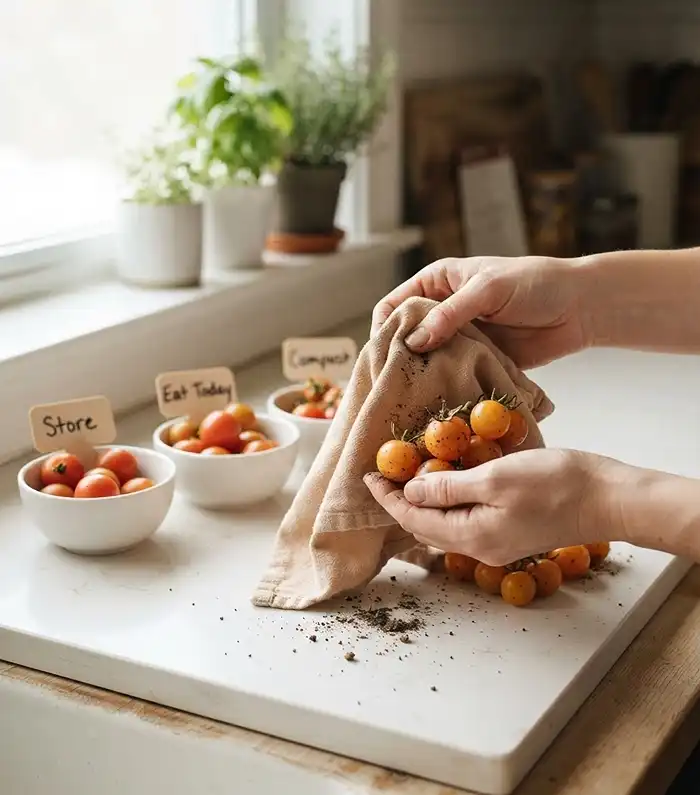
Short Answer: Don’t wash vegetables before storing them. Moisture left on skins and leaves feeds mold and speeds rot. Gently brush off loose soil with a dry cloth or soft brush, then store the produce. Rinse it right before you cook, freeze, or eat.
What Happened to Me: Last July, I rinsed a full pint of ‘Sungold’ cherry tomatoes and bagged them damp. Three days later, nearly half were fuzzy with mold. Now I store them dry, and a pint lasts a full week.
Curing Crops vs. Immediate Refrigeration
Short Answer: Onions, garlic, and winter squash need curing: about two weeks somewhere dry, dark, and airy so skins toughen. Tender crops like lettuce, beans, and radishes need the opposite. Cool them fast to slow respiration [the process that burns the plant’s stored sugars], and they stay crisp longer.
Try This: Use this quick sorting guide.
| Crop | Treatment | Where | Timing |
|---|---|---|---|
| Onions and garlic | Cure | Dry, dark, airy spot | About 2 weeks |
| Winter squash | Cure | Warm, dry spot | About 10 days |
| Lettuce and spinach | Chill now | Fridge crisper | Same day |
| Radishes and green beans | Chill now | Fridge crisper | Same day |
Short-Term Storage Hacks for Continuous Yields
Short Answer: Keep small daily pickings fresh by matching each crop to the right spot. Warm-season fruits stay on the counter, while greens and roots go to the crisper. A standard kitchen handles it all, and a little planning turns scattered handfuls into easy weekly meals.
Just starting out? Pair these habits with our balcony gardening for beginners basics.
Countertop Heroes: Tomatoes, Peppers, and Eggplants
Short Answer: Store tomatoes and eggplants on the counter, never in the fridge. Chilling below 50°F damages flavor compounds and turns texture mealy. Set them stem-side down on a breathable rack, out of direct sun, and eat them within about three to five days.
The Why: Below 50°F, chilling injury sets in. Tomatoes turn mealy, and eggplant flesh pits and browns.
Try This: Peppers are more flexible. Leave them out for two or three days, then move them to the crisper for longer holds.
The Crisper Drawer: Leafy Greens and Radishes
Short Answer: Cut the leafy tops off radishes, beets, and other root crops right away. Tops pull moisture from the roots, leaving them rubbery. Store roots and greens in separate perforated bags in the high-humidity crisper drawer, and both stay crisp for about a week.
Try This: Trim the tops, pat the roots dry, and tuck a folded paper towel into each bag.
Long-Term Methods for Preserving Small Harvests
Short Answer: Small batches are easy to preserve because you don’t need canning gear or a huge freezer. Freeze, dry, or pickle each pick as it comes, and add to a stash over several weeks. By frost, those small handfuls add up to winter meals.
Quick Freezing: Cherry Tomatoes and Blanched Greens
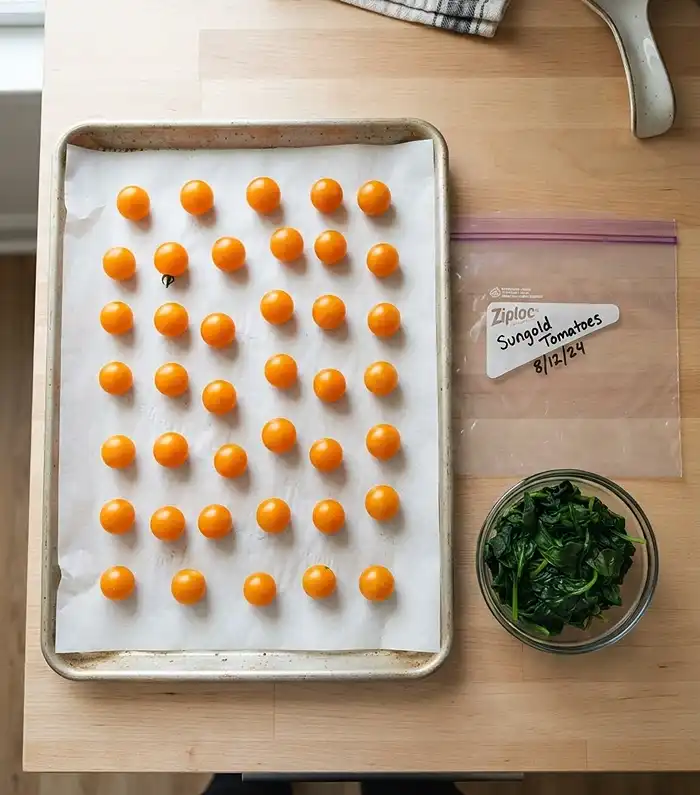
Short Answer: Flash freezing keeps small batches loose and usable. Spread cherry tomatoes or blanched greens [dunked briefly in boiling water, then ice water] in one layer on a parchment-lined sheet. Freeze until solid, about two hours, then pour them into freezer bags.
Try This: Follow these three steps.
- Wash cherry tomatoes and dry them completely. No blanching needed.
- Blanch spinach for about two minutes, then cool it in ice water for the same time.
- Freeze at 0°F or lower, and use within 8 to 12 months.
For other greens, check the blanching times from the National Center for Home Food Preservation.
Air-Drying and Freezing Container Herbs
Short Answer: Hang tough, woody herbs like rosemary and thyme upside down in small bundles until crisp. Freeze tender herbs like basil and cilantro in ice cube trays with olive oil. Match the method to the stem, because soft leaves turn brown and limp when air-dried slowly.
Try This: Pick the method that fits your herb.
- Tie five to eight rosemary or thyme stems together and hang them in a dim, airy spot for about two weeks.
- Pack chopped basil or cilantro into an ice cube tray and cover with olive oil.
- Once frozen, pop the cubes into a bag, and keep them frozen until you cook.
Small-Batch Refrigerator Pickling
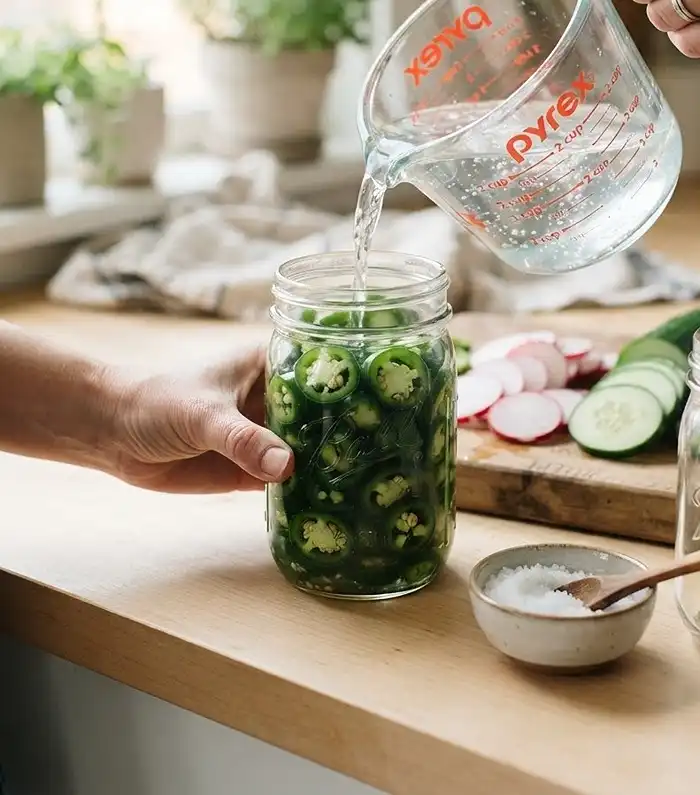
Short Answer: Refrigerator pickling needs no canner and no stove. Pack cucumbers, radishes, or jalapeños into a clean jar. Cover with equal parts vinegar and water plus a spoonful of salt, then chill. A handful becomes a crunchy condiment in about two days.
What Happened to Me: Last September, I sliced a dozen ‘Early Jalapeño’ peppers into a 16-ounce jar. They stayed crisp and spicy for four full weeks in the fridge.
Try This: Stir 1 cup of 5% vinegar, 1 cup of water, and 1 tablespoon of kosher salt until the salt dissolves. Pour over the vegetables, and eat within about a month.
Space-Saving Storage Gear for Apartment Dwellers
Short Answer: You don’t need a gadget drawer to store homegrown food well. A few cheap tools, such as mesh bags, ethylene absorbers, and mason jars, extend shelf life and fit in any small kitchen. Buy only what solves a problem you actually have.
Small space gardening works best when the kitchen gear stays small too. New to growing in tight spots? Start with our beginner’s guide to small space gardening.
Breathable Produce Bags and Ethylene Absorbers
Short Answer: Swap suffocating plastic grocery bags for reusable cotton or mesh produce bags. They let moisture escape, which cuts slime and rot. Add an ethylene absorber [a small packet that traps the gas ripening fruit releases] to your crisper drawer to slow premature ripening.
Try This: Keep ripe tomatoes and other fruit away from leafy greens, which yellow faster near them.
The Mason Jar Water Hack for Herbs and Scallions
Short Answer: Stand scallions, parsley, cilantro, and asparagus upright in a mason jar with an inch of water, like a tiny bouquet. The stems keep drinking, so they stay crisp for a week or two. Basil does best on the counter, not the fridge.
What Happened to Me: Last August, a jar of ‘Genovese’ basil on my counter stayed lush for nine days. The same bunch in the fridge turned black in two.
Try This: Change the water every two days. Keep scallions, parsley, and cilantro in the fridge, loosely covered with a bag.
Common Problems and Solutions
Short Answer: Most spoilage comes down to two culprits: too little moisture in greens and too much moisture in bags. Both are fixable with simple tweaks, and neither needs special equipment. Spot the symptom early, adjust the storage, and you’ll save most of what you grew.
Limp, Wilted Leafy Greens in the Fridge
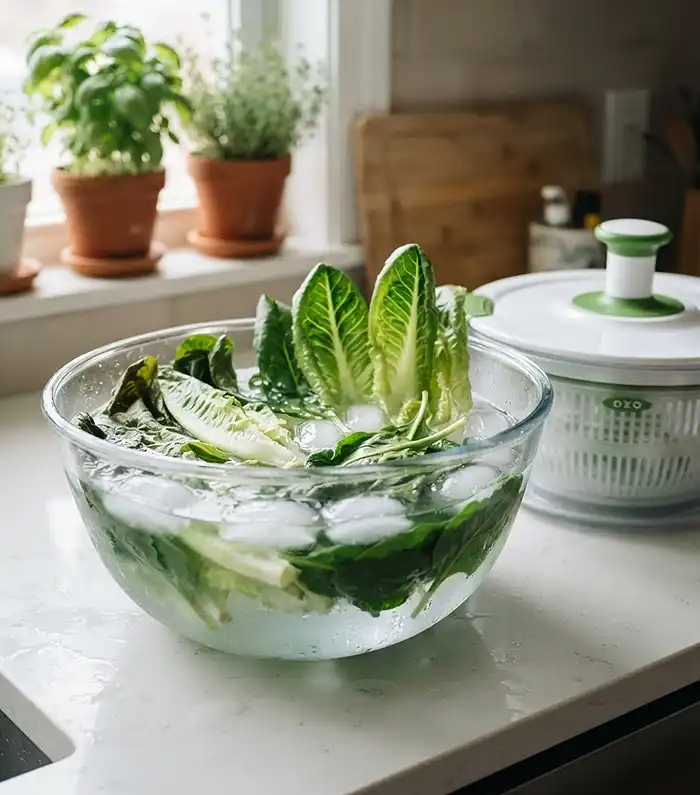
Short Answer: Limp spinach and lettuce have lost moisture, not quality. Submerge them in a bowl of ice water for about twenty minutes. The cells refill and the leaves crisp up again. Spin or pat them dry, then store them with a dry paper towel.
Premature Rot and Mold from Trapped Condensation
Short Answer: Sealed plastic traps the moisture plants naturally release, so condensation drips onto leaves and speeds slime and mold. Tuck a dry paper towel into each bag to absorb excess humidity. Leave the bag slightly open, and replace the towel when it feels damp.
Frequently Asked Questions
Short Answer: Most storage questions come down to temperature, moisture, and timing, and the fix is usually simple. These six answers cover the ones I hear most from container gardeners. Each answer works on its own, so jump to whichever fix you need right now.
Should I store my homegrown potatoes in the refrigerator?
No. Cold temperatures convert potato starches into sugars, which makes them taste sweet and can darken them when fried. Keep them in a cool, dark pantry at roughly 45 to 55°F instead.
How do I store a partial harvest if the rest of the plant isn’t ripe yet?
Cut-and-come-again harvesting is ideal, so pick what’s ready and leave the rest. Store small daily yields in a breathable bag in the fridge and add new pickings as they ripen. Keep tomatoes and eggplants on the counter instead.
Can I freeze homegrown vegetables without a vacuum sealer?
Yes, standard zip-top freezer bags work well. Use the water displacement method: seal the bag almost shut, lower it into a bowl of water so the pressure pushes the air out, then seal it fully. This helps prevent freezer burn.
Can I store tomatoes and cucumbers together?
It’s better to keep them apart. Ripe tomatoes give off ethylene, a ripening gas that makes cucumbers yellow and soften faster. Store tomatoes on the counter and cucumbers in the fridge.
How long do frozen herb cubes last?
Herbs frozen in olive oil keep their best flavor for about six months. Store the cubes in a sealed bag at 0°F or lower, and label it with the date so you use the oldest first.
What fall garden tasks help with storing my harvest?
Before your first frost, pick remaining tomatoes and peppers and sort them for storage. Cure onions and garlic, cut and hang woody herbs, and pull spent plants. Doing it all in one weekend keeps the last pickings from going to waste.
Quick Recap
- Sort every picking right away, and eat bruised produce first.
- Store vegetables unwashed, and rinse them right before you cook, freeze, or eat.
- Keep tomatoes and eggplants on the counter, and greens and roots in the crisper.
- Freeze, dry, or pickle extras as they come, because preserving small harvests works best in small, regular batches.
- Use breathable bags, dry paper towels, and mason jars to stop wilting and slime.