
Plant Risers for Outdoor Pots
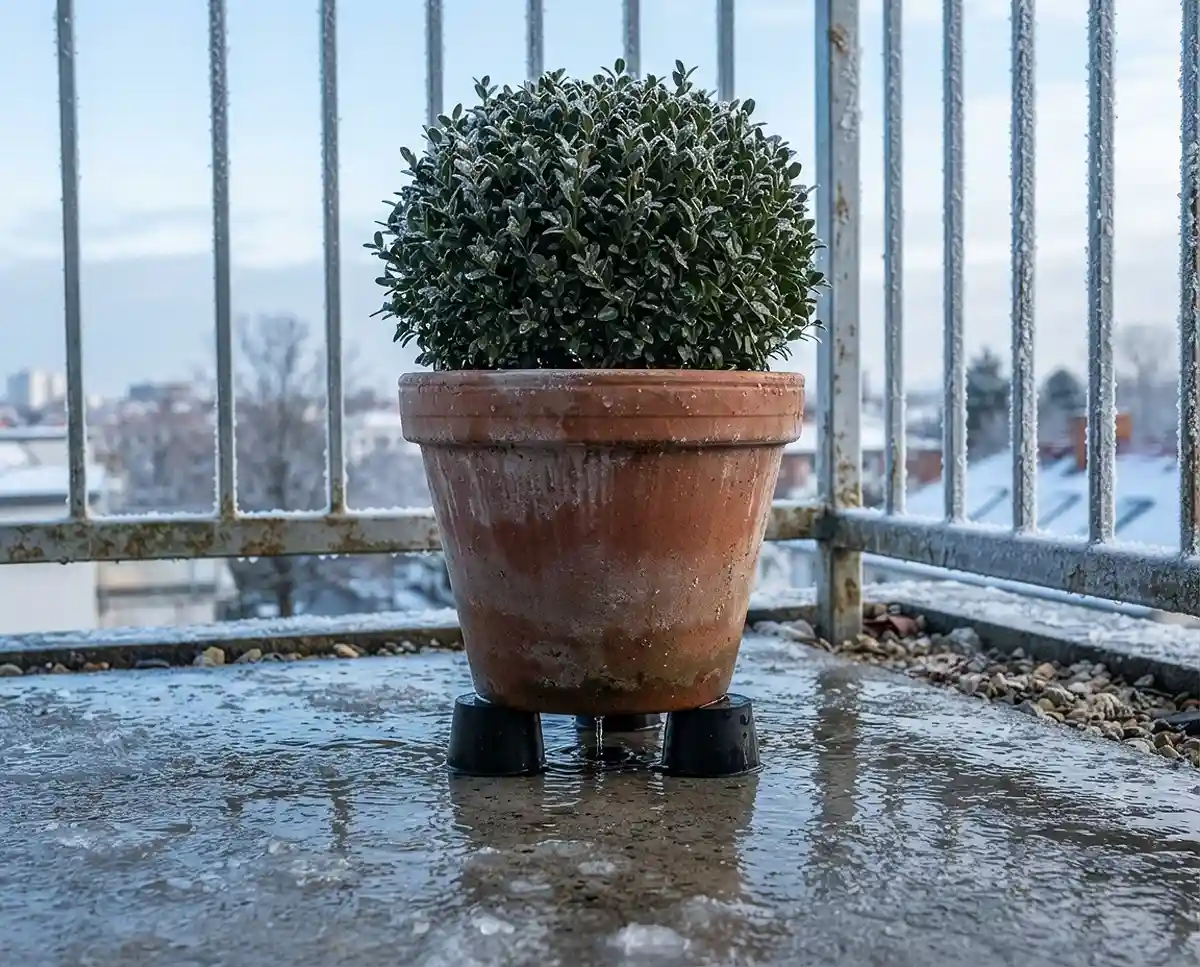
Plant risers for outdoor pots keep winter rain from drowning roots and freezing to your patio. Here are the best pot feet for drainage that survive ice.
I garden on a north-facing balcony in zone 6b, where January swings between freezing rain and thaw. Before I added plant risers, pots sitting flat on that concrete did not come through my first two winters unscathed.
This guide covers materials, placement, and upkeep as of fall 2026. It’s one of the cheapest container drainage solutions I know, and it costs less than a bag of potting mix.
Table of Contents
The Hidden Dangers of Leaving Planters Flat in Winter
Heavy winter rain doesn’t just soak your containers. It pools underneath them. A flat pot seals against concrete, so water can’t escape through the drainage holes, and the bottom few inches of soil turn to cold slush.
Roots need oxygen, even when dormant. Sitting in freezing puddles suffocates them, and by February evergreens like boxwood can develop crown rot [decay at the base of the stem]. Snowmelt makes it worse.
Your balcony pays too. Trapped moisture stains flooring, and repeated freeze-thaw cycles lift sealants and crack concrete. Skipping this step breaks one of the drainage rules every beginner must know.
How Plant Risers Prevent Winter Root Rot
Risers create a gap between the pot and the ground. That gap does two jobs, one for the plant and one for your patio.
- Plant benefit: water exits freely, so roots stay oxygenated and crown rot risk drops.
- Surface benefit: air moves under the pot, so concrete dries out and stays stain-free.
- Cold benefit: the pot no longer touches icy concrete directly.
Good winter plant care comes down to this: keep water moving out and cold moving slowly in.
Breaking Surface Tension for Proper Drainage
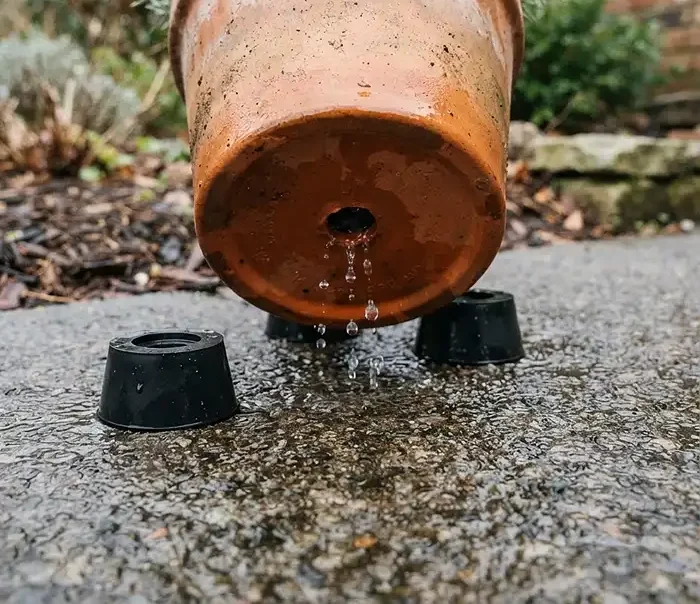
Quick Answer: Pot feet break the surface tension seal between a pot’s base and the ground. That lets gravity pull excess water out through the drainage holes instead of trapping it in the soil. Even a half-inch gap does the job.
Water clings to flat surfaces. When a pot sits flush, a thin film bridges the drainage holes and the concrete, and water backs up inside. Lift the base and that film snaps. Drops fall away, and gravity keeps pulling moisture down through the soil.
Real example: Last November my ‘Arp’ rosemary sat flat through a week of rain. The soil stayed heavy for days. With three rubber risers under it, the same pot drained within an hour of the next downpour.
Protecting Roots from Freezing Concrete
Concrete holds cold like a heat sink. On a 15°F night, a flat pot pulls that chill straight into the bottom of the root ball. Roots are far less hardy than stems, and potted roots can drop to nearly the same temperature as the winter air.
Penn State Extension recommends choosing container plants rated two zones colder than yours for exactly this reason. A riser’s air gap slows how fast cold travels up from the surface into the root zone.
Pro Tip: After elevating pots, cluster them together against a sheltered wall. The group shields each pot’s sides while the risers handle the bottom.
Choosing the Right Materials for Wet and Freezing Conditions
Ice is the real test. Water expands about 9 percent when it freezes, and that force splits anything porous or brittle. Here’s how the main riser materials compare in a wet, freezing winter.
For a wider roundup, see our guide to the best pot feet for drainage.
| Material | Best For | Watch Out For |
|---|---|---|
| Rubber or silicone | Nearly every container in freeze-thaw climates | Thin foam versions flatten; check the load rating |
| Terracotta | Dry, covered spots in mild winters | Porous clay absorbs water and cracks below freezing |
| Cast iron or powder-coated steel | Large troughs and pots over 100 pounds | Chipped coatings rust and stain concrete |
Heavy-Duty Rubber and Silicone Blocks
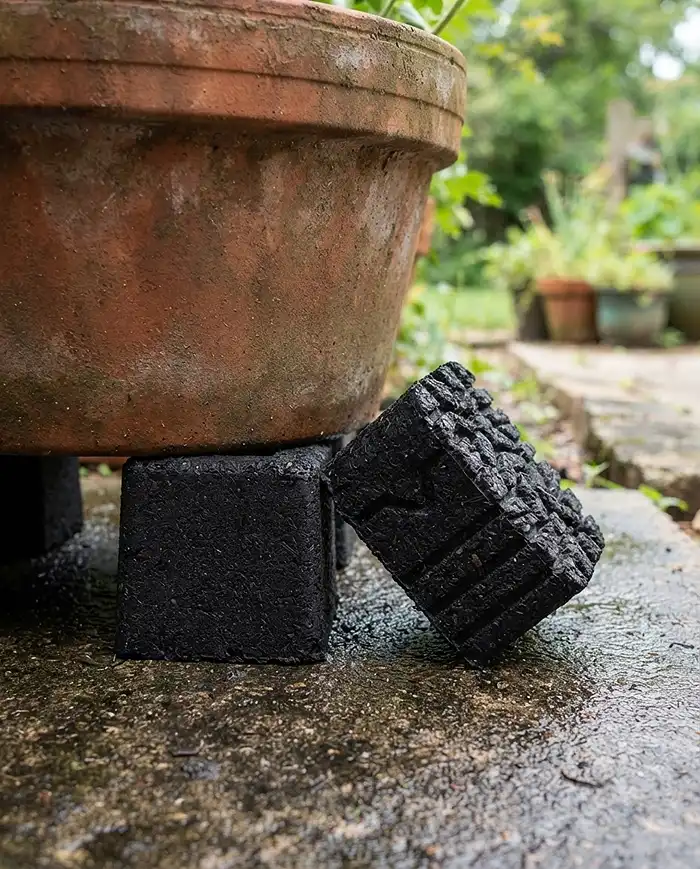
Quick Answer: Dense rubber or silicone blocks are the top choice for freezing winters. They don’t crack under wet soil weight and won’t shatter during freeze-thaw cycles. Choose solid, molded blocks rated above your pot’s soaked weight.
A 16-inch pot of soaked soil can top 50 pounds, so load rating matters. Here’s what I look for:
- Solid or dense-molded construction, not hollow foam
- A textured underside that grips wet concrete
- A height between one-half and one inch
- A load rating above the pot’s soaked weight
Real example: I run one-inch recycled rubber blocks under 18-inch pots of ‘Green Velvet’ boxwood. Two winters, lows near 5°F, and not one crack.
Why You Should Avoid Terracotta in Freezing Weather
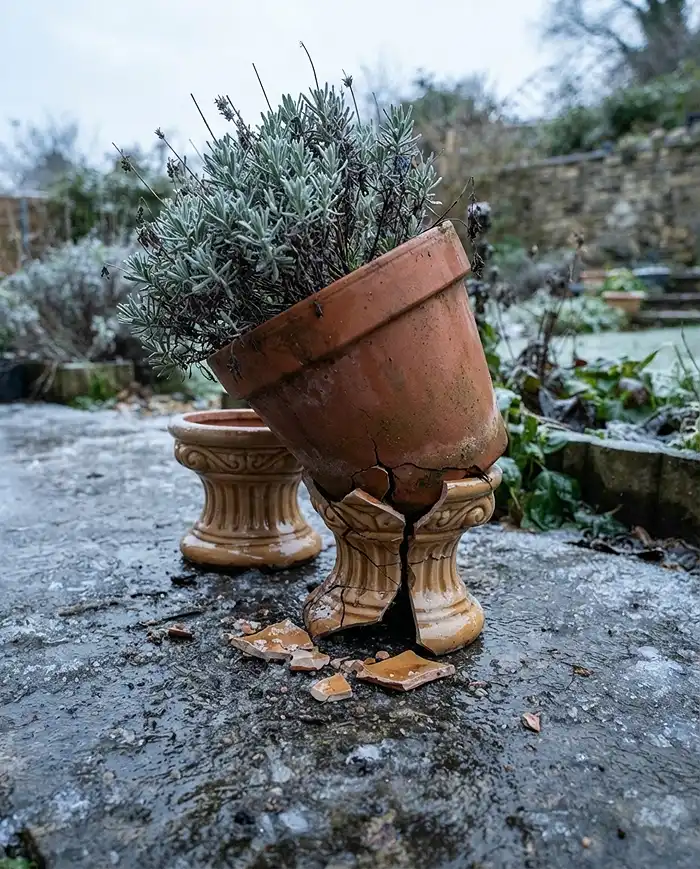
Terracotta animal feet look wonderful. They’re also a winter trap. Porous clay soaks up rain and snowmelt, then that trapped water expands as it freezes and splits the foot from the inside.
Real example: I learned this the hard way. Two winters ago, decorative terracotta feet held up a pot of ‘Hidcote’ lavender. After a freeze-thaw week in January, one foot split and the pot tilted. The roots sat in water until spring, and I lost the plant.
Pro Tip: Love the look? Use terracotta feet from May through October, then store them dry indoors before the first hard frost.
Metal Caddies and Iron Stands for Heavy Loads
Quick Answer: Cast iron and powder-coated steel stands suit massive containers because they won’t compress or crack under weight. In wet winters, the coating is everything. Chipped coatings rust fast and leave orange stains on your patio.
For half-barrels, large troughs, or any pot over 100 pounds, metal caddies spread the weight evenly. Pick models with rubber caps on the contact points.
Inspect the coating every fall. Touch up chips with rust-inhibiting enamel before the wet season starts, not after the first orange streak appears.
Step-by-Step Guide to Installing Plant Risers Safely
Soil-filled containers are heavy, awkward, and slippery in winter. Install risers in fall, before the first ice, and never rush the lift. A few minutes of careful setup protects your back and your pot’s base.
The Triangular Placement Method for Stability
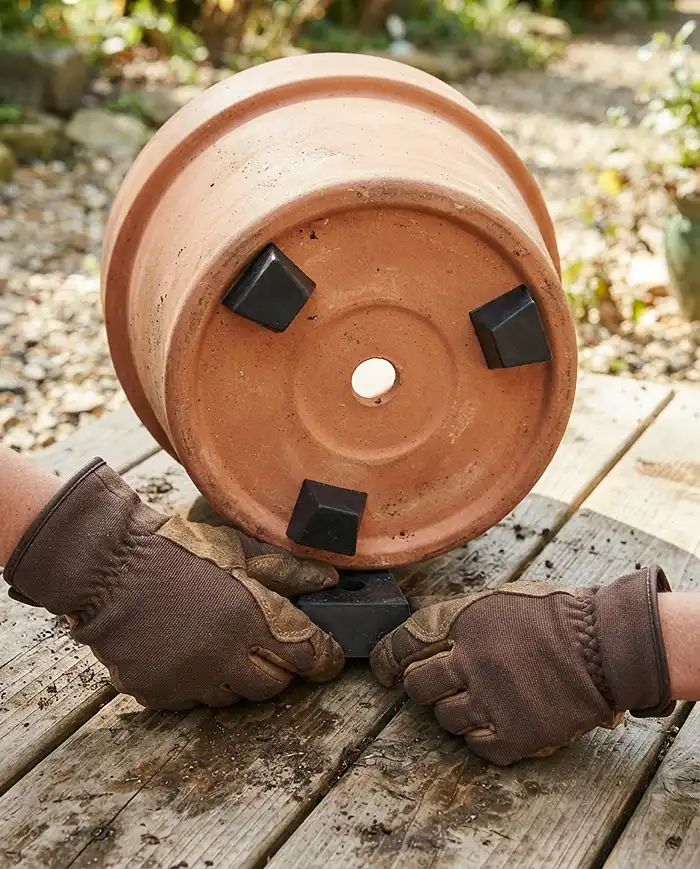
Quick Answer: Use three risers for round pots and four for square or rectangular ones. Space them evenly and tuck each about an inch inside the pot’s outer edge. This creates a stable base that resists winter gusts.
Three points always form a stable plane, which is why round pots only need three. Space them 120 degrees apart. Square pots need one riser per corner so no edge sags under the soil’s weight.
Never place a riser directly under a drainage hole. That blocks the very exit you’re trying to open up.
Safe Lifting Techniques for Waterlogged Pots
Never wrestle a waterlogged pot alone. A soaked 20-inch container can weigh well over 80 pounds. Here’s what works:
- Have a partner tilt the pot slightly while you slide the risers underneath.
- Use a pry bar over a wood block as a fulcrum for pots you can’t tilt by hand.
- Bend your knees, keep your back straight, and wear grippy gloves.
- Wait for ice to melt off the surface before moving anything.
- Tilt only a few inches. You just need room for the risers.
Winter Maintenance for Elevated Containers
Elevated containers need very little care, but a few quick checks keep the system working. After every big storm, spend two minutes looking under your pots. It’s the most useful of all my container gardening tips: check the gap, not just the plant.
Clearing Ice and Debris from the Drainage Gap
Fallen leaves, compacted snow, and ice can bridge the gap you created and re-seal the base. Check under each pot after storms. Use a plastic scraper or a gloved hand, and skip metal tools that could chip the pot.
If ice has bonded to the pot, don’t chip at it. Wait for a thaw, then sweep the gap clear. Prying a frozen pot loose can crack the rim or the riser.
Removing Saucers to Prevent Freezing Puddles
Remove every drip tray and saucer from November through March. A saucer turns your drainage gap back into a bathtub. Water collects, freezes into a solid disk, and locks roots in ice. Store saucers in the shed until spring.
I forgot one under a hellebore ‘Ivory Prince’ last January. The saucer froze solid, and I had to wait for a thaw to free it. The plant survived, barely.
Common Problems & Solutions
Lifting a pot changes how it behaves. Uneven balcony surfaces, gusty winds, and dark, damp gaps all create new headaches. These two problems come up most, and both are easy to fix.
Planters Wobbling in High Winter Winds
Elevation raises a pot’s center of gravity, so tall containers catch more wind. Choose wider, lower-profile rubber risers over tall stands, and push vulnerable pots against a protective wall or railing.
Real example: A ‘Limelight’ hydrangea in a 22-inch pot tipped in a December gale after I propped it on tall caddies. Flat half-inch rubber blocks and a spot against the wall fixed it.
Pests Hiding Underneath the Elevated Pots
The dark, damp gap is a perfect nursery for overwintering slugs and snails. Every couple of weeks, sweep under each pot with a small brush or gloved hand. Remove any pearly egg clusters and slimy residents. A dry, clear gap discourages them.
Frequently Asked Questions
Can I use DIY materials like bricks or cedar blocks?
Bricks work perfectly as a budget-friendly alternative. They’re dense, weatherproof, and won’t compress under heavy pots. Set them flat so the pot sits level. Avoid untreated wood blocks, cedar included. They break down quickly in constant wet, rot within a winter or two, and give slugs and other pests a cozy place to hide.
How high should I elevate my pots for winter drainage?
A gap of one-half inch to one full inch is completely sufficient. That’s enough to break surface tension and let water flow freely away from the drainage holes. Taller isn’t better, since extra height raises the pot’s center of gravity and makes wind tipping more likely. Keep the gap clear of leaves, ice, and debris all winter.
Do rectangular window boxes need extra support in the middle?
Yes. Long trough planters need a minimum of six risers: one at each corner and two supporting the middle. Without middle support, the heavy, soil-filled base can bow or crack over a wet winter. Space the middle pair evenly along the length, and use risers of identical height so the box stays level.
Key Takeaways
- Pot feet for drainage only need to lift a container one-half to one inch to break surface tension.
- Dense rubber or silicone blocks are the safest choice for freeze-thaw winters.
- Skip terracotta feet below freezing, and choose coated metal stands only for pots over 100 pounds.
- Use three risers for round pots, four for square pots, and six for long troughs.
- Remove saucers, and clear the gap of ice, leaves, and slugs after every storm.