
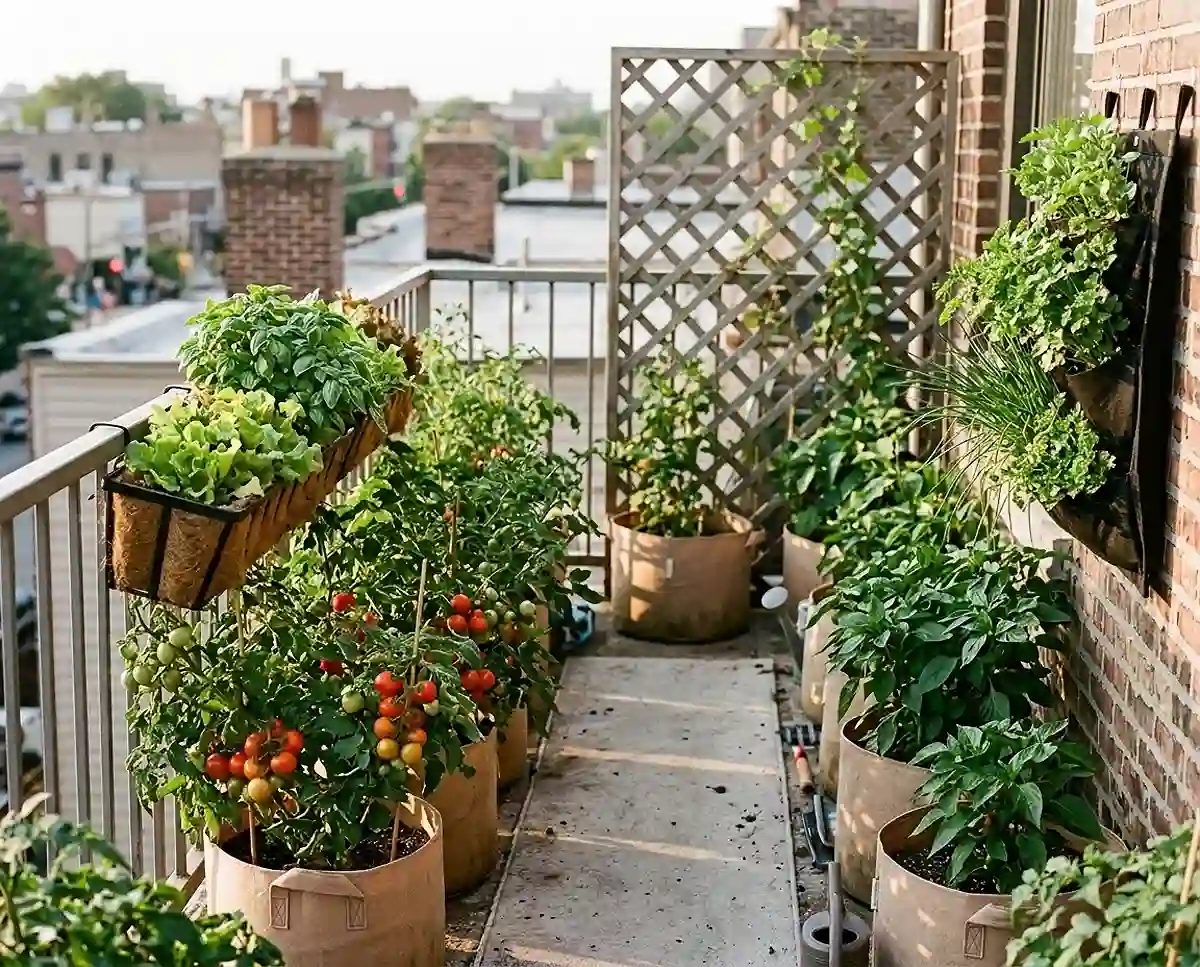
Balcony Vegetable Garden: Build a Micro Urban Farm
Your balcony holds two chairs and one sad fern. Here’s how to grow your own food there with a balcony vegetable garden that actually produces all season. I’m a former community-garden coordinator who’s spent 12 years helping renters grow food in tiny spaces.
My rooftop terrace in zone 7a gets about eight hours of sun and a lot of wind. I run fabric bags, railing boxes, and one stubborn terracotta pot. Everything below is tested up there.
Table of Contents
The Rise of the Micro Urban Farm on Apartment Balconies
Short Answer: A micro urban farm is a small, carefully planned set of containers that supplies real food. With the right pots, soil, and crops, an edible balcony can feed you herbs and veggies for months, not just decorate your railing.
Urban gardening took off because people got tired of wilted grocery-store basil. One tomato plant costs less than a single clamshell of cherry tomatoes. And it tastes like July. You don’t need a yard. You need light, a few good containers, and a little stubbornness.
Container gardening also forgives mistakes. You can drag a pot into better sun, swap the soil, or start over for under ten dollars. That’s why I tell every first-timer to start small and start now.
Auditing Your Balcony’s Microclimate for Farming
Short Answer: Your balcony’s microclimate [the local mix of sun, wind, and heat around your space] decides which crops survive. Spend one weekend tracking sun, wind, and weight limits before buying anything. A quick audit now saves you from dead tomatoes and a grumpy landlord later.
While you’re mapping, sketch where a chair fits too. These small balcony dining ideas show how to share the space with your plants.
Mapping Daily Sun Exposure and Shade Pockets
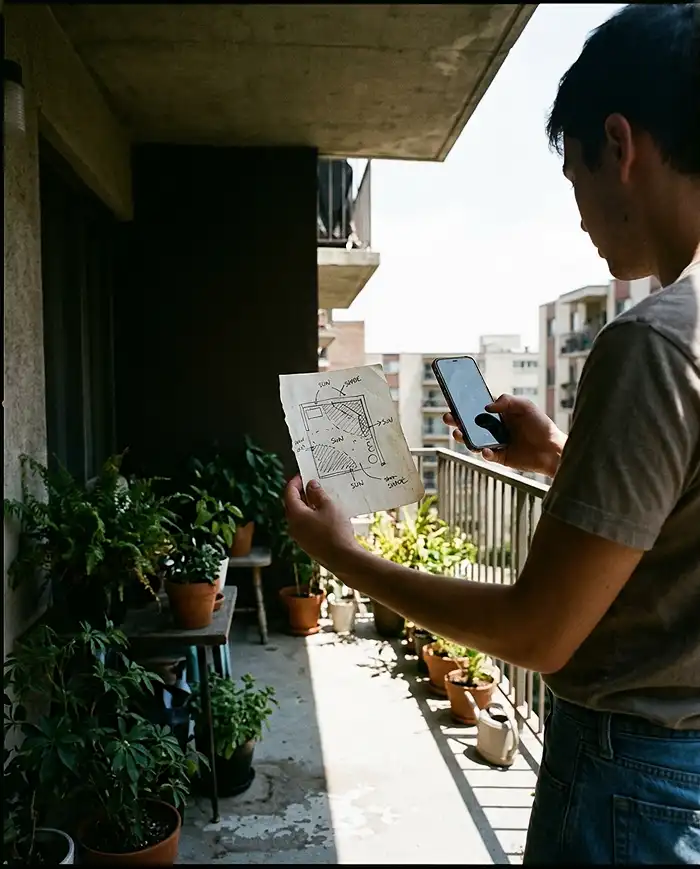
Short Answer: Track direct sun every hour on a clear day. Fruiting veggies like tomatoes and peppers need 6 to 8 hours. Leafy greens and most herbs are happy with about 4. Note shade from railings, neighbors, and overhangs, then match each crop to its spot.
The Why: Plants make fruit with sunlight. Less light means more leaves and fewer tomatoes. Not sure of your zone? Check the USDA Plant Hardiness Zone Map for your ZIP code.
Try This:
- Set a phone alarm every hour from 8 a.m. to 6 p.m. and note where the sun lands.
- Label each spot full sun, part sun, or shade.
- Repeat in spring and midsummer, since the sun’s angle shifts.
Calculating Weight Limits and High-Rise Wind Factors
Short Answer: Check your lease for weight limits before loading up the balcony. A wet 10-gallon bag can top 40 pounds. Then block wind with a lattice panel or outdoor fabric. High-rise gusts snap tomato stems, shred basil leaves, and dry out soil fast.
Try This: Weigh one watered pot on a bathroom scale, then multiply by the number of pots. If the total tops your lease limit, switch to lighter containers.
Selecting the Best Containers for High-Yield Crops
Short Answer: Choose lightweight containers that give roots the most room per square foot. Fabric grow bags, railing boxes, and wall pockets each do a different job. Match depth to the crop, and your small balcony will out-produce a bigger one planted in cramped pots.
Shopping on a tight budget? These balcony garden on a budget tips stretch every dollar.
| Crop | Container | Minimum Size |
|---|---|---|
| Determinate tomatoes | Fabric grow bag | 10 gallons |
| Peppers, eggplant | Fabric grow bag | 5 to 7 gallons |
| Basil, thyme | Railing box | 6 to 8 inches deep |
| Loose-leaf lettuce | Railing box | 6 inches deep |
| Chives, parsley | Wall pocket | 1 gallon each |
Fabric Grow Bags for Healthy Vegetable Roots
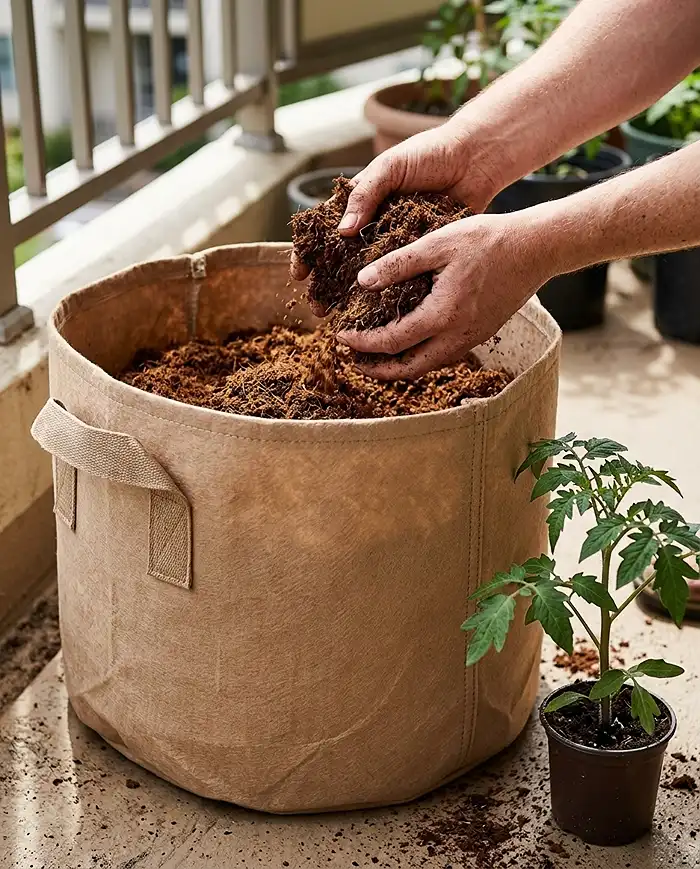
Short Answer: Use 5- to 10-gallon fabric grow bags for tomatoes and peppers. The breathable cloth air-prunes [dries root tips at the edge so they branch instead of circling]. It also drains well, so roots form a dense mass instead of a soggy knot.
The Why: Fabric stays cooler than black plastic. That matters on a sun-baked balcony, where plastic can cook roots by August. As of 2026, a 10-gallon bag runs about $6 to $10.
Vertical Planters and Railing Boxes for Herbs
Short Answer: Put shallow-rooted herbs like basil and thyme in railing boxes at least 6 inches deep. Hang vertical wall pockets for chives and parsley. Every herb you lift off the floor frees space for a big fruiting plant. Think of it as stacking your herb garden upward.
What Happened to Me: In July 2024, I planted Genovese basil in a 36-inch railing box, 7 inches deep. I cut it back by a third every week. For 14 weeks, that gave me about 2 cups of leaves weekly.
Essential Soil and Organic Fertilization Strategies
Short Answer: Skip heavy garden dirt. Container plants live or die by their soil, so use a lightweight mix that drains fast but holds moisture. Then feed regularly with organic fertilizer. Pots flush nutrients out with every watering, so the food you add has to keep coming.
Mixing a Lightweight, Nutrient-Dense Potting Soil
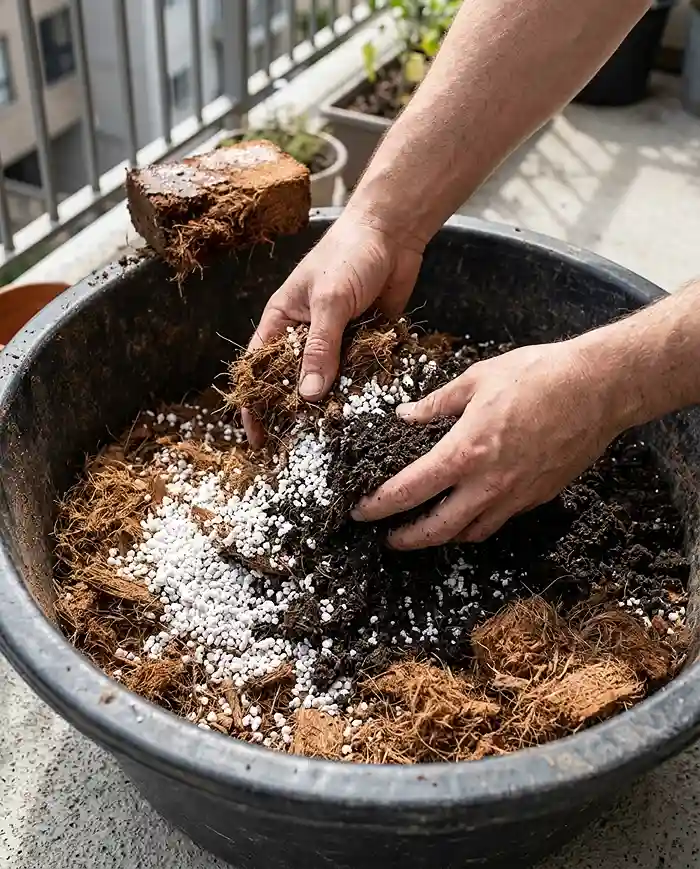
Short Answer: Blend 5 parts coco coir [shredded coconut husk], 2 parts perlite [puffed volcanic glass], and 2 parts worm castings. Coir holds water, perlite adds drainage, and castings add nutrients. Mix it dry, then dampen before filling pots. It stays light, drains fast, and still holds moisture for thirsty tomatoes.
Try This: Coir comes compressed in bricks. Soak one brick, fluff it apart, then fold in the perlite and castings. It’s far lighter than bagged garden soil.
Routine Feeding with Organic Liquid Fertilizers
Short Answer: Feed every two weeks with diluted liquid kelp or fish emulsion. Watering flushes nutrients out of containers, so regular feeding replaces what drains away. Use half the label strength at first. Pale lower leaves usually mean your plant is hungry.
Fish emulsion smells, so apply it in the evening and rinse the saucer. Kelp is gentler and nearly odorless.
Top High-Yield Crops for Your Balcony Vegetable Garden
Short Answer: Pick dwarf, compact, and fast-growing varieties bred for pots. They give heavy harvests without sprawling vines or giant trellises. Mix a few fruiting plants with quick greens and herbs, and your balcony veggies will keep showing up on your plate.
Hunting for kitchen garden inspo? These balcony vegetable garden ideas show layouts that fit real balconies.
Bush Tomatoes, Peppers, and Eggplants
Short Answer: Choose determinate [ripens fruit in one flush] tomatoes like ‘Patio Choice’ or ‘Bush Early Girl’. Add compact ‘Redskin’ peppers and ‘Fairy Tale’ eggplant. They crop heavily in 5- to 10-gallon bags without a sprawling trellis. Each needs 6 to 8 hours of sun.
Cut-and-Come-Again Greens and Culinary Herbs
Short Answer: Plant loose-leaf lettuce, spinach, basil, parsley, and chives, then harvest the outer leaves only. The plants keep regrowing from the center, giving you a daily salad bowl. A $3 seed packet can replace a lot of $4 grocery clamshells. Try ‘Black Seeded Simpson’ lettuce first; it forgives mistakes.
Step-by-Step Planting and Maintenance Schedule
Short Answer: Plant cool-season greens first, then warm-season fruiting crops once nights stay above 50°F. Water by touch, feed every two weeks, and sow something new on a regular rhythm. As of spring 2026, I set tomatoes out in early May in zone 7a.
Succession Planting for Continuous Harvests
Short Answer: Succession planting [sowing small batches on a regular schedule] keeps food coming instead of one giant harvest. Sow radishes or lettuce every two weeks in spring and fall. Pull the old plants as the new row comes up, and you’ll never face a salad avalanche.
What Happened to Me: In spring 2025, I sowed ‘Cherry Belle’ radishes in a 12-inch box every 14 days. Each batch was ready in 25 days. Five batches gave me about 90 radishes over ten weeks.
Precision Watering in a Container Farm
Short Answer: Use the finger test: push a finger two inches into the soil. If it’s dry, water until it drains from the bottom. In peak summer heat, black plastic pots and fabric bags on a sunny balcony may need deep watering every single day.
Try This:
- Water in the morning, before the heat builds.
- Check twice on days above 90°F.
- Add 2 inches of mulch to slow evaporation.
Common Problems & Solutions
Short Answer: Most balcony troubles come from two things: uneven watering and sap-sucking bugs. Catch both early and you can fix them without harsh chemicals. Check leaf undersides and fruit bottoms weekly, and you’ll spot trouble while it’s still small.
Blossom End Rot on Tomatoes and Peppers
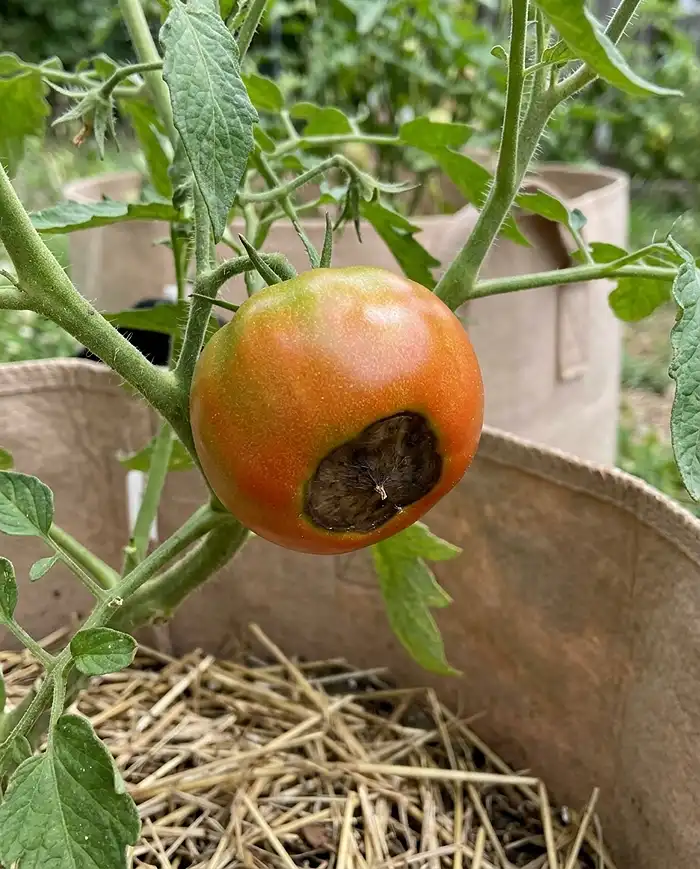
Short Answer: Black, sunken spots on the fruit’s bottom are blossom end rot, a calcium shortage caused by uneven watering. Mulch the pot, then water deeply on a steady schedule. The plant can’t move calcium without steady moisture. Cut off affected fruit so energy goes to new ones.
What Happened to Me: In summer 2023, 7 of my first 10 ‘Roma’ tomatoes rotted in 3-gallon black plastic pots. I’d been watering every few days. I switched to 10-gallon fabric bags, 2 inches of straw mulch, and morning watering. The next summer, I lost 1 fruit out of 40.
Aphids and Spider Mites on Edible Herbs
Short Answer: Blast aphids and spider mites off with a firm hose spray, then wipe leftovers by hand. Follow with insecticidal soap, coating leaf undersides, every 5 to 7 days for three rounds. Soap suits edibles when you rinse harvests before eating.
Spray in the evening so the sun doesn’t scorch wet leaves.
Frequently Asked Questions
Can I grow root vegetables like carrots or potatoes on a balcony?
Yes. Use deep 10- to 15-gallon fabric grow bags filled with loose, stone-free potting soil so roots can grow straight down. Pick short carrot types like ‘Paris Market’, and add soil to potato bags as the shoots grow.
Do I need bees to pollinate my balcony vegetables?
Bees help, but high-rise balconies often have few pollinators. Touch an electric toothbrush to the flower stem of tomatoes and peppers for a few seconds around midday. The vibration releases pollen much like a bumblebee would.
How do I compost on an apartment balcony for my farm?
Use a sealed Bokashi bucket [a fermenting bin for kitchen scraps] indoors, or a compact worm bin in a shaded balcony corner. Both stay nearly odor-free when managed well. The finished compost or castings feed your pots for free.
How much does it cost to start a small container garden?
As of 2026, a starter setup usually runs $60 to $120. That covers three 10-gallon fabric bags, a railing box, soil ingredients, and seeds. Reuse the containers each year, and your costs drop to seeds and fertilizer.
What vegetables grow best on a shady balcony?
With 3 to 4 hours of sun, grow lettuce, spinach, kale, arugula, mint, parsley, and chives. Skip tomatoes and peppers, which sulk below 6 hours. Light-colored walls can bounce extra light onto your plants.
How often should I water my balcony vegetables?
Check daily and water when the top two inches feel dry. In July heat, fabric bags may need water every day. In spring, every two to three days is usually enough. Always water until it drains from the bottom.
Quick Recap
- Track sun for a full day before you buy a single pot.
- Choose 5- to 10-gallon fabric bags for fruiting crops and railing boxes for herbs.
- Mix coco coir, perlite, and worm castings, then feed every two weeks.
- Water deeply, mulch the pots, and sow something new every 14 days.
- Start your balcony vegetable garden with three or four crops, then add more as you learn.