

Cherry Tomatoes vs Regular Tomatoes in Pots
Cherry tomatoes vs regular tomatoes in pots — which one actually thrives in YOUR space? See the science, Brix data & pot-size rules. Find your match now
Here’s something most gardening articles won’t tell you upfront: growing tomatoes in pots isn’t just “regular gardening but smaller.” It’s a completely different game — one built on substrate engineering, root-zone management, and picking the right tomato for your setup. And that choice? It starts with the cherry tomatoes vs regular tomatoes in pots debate.
Here’s the short version. Cherry tomatoes produce nonstop harvests in smaller pots, tolerate heat and inconsistent care better, and are genuinely hard to mess up. Regular tomatoes give you those gorgeous, thick-sliced sandwich tomatoes — but they need bigger containers, heavier support, and a watering routine you actually stick to.
Table of Contents
I. The Big 4 Factors for Cherry Tomatoes vs Regular Tomatoes in Pots
Before you even buy a seedling, you need to nail these four things. Think of them as the non-negotiables of growing tomatoes in pots — skip one, and the whole thing falls apart.
- Variety Selection (Determinate vs Indeterminate): Determinate types grow to a set height, drop a big load of fruit, and call it a season. Indeterminate types keep climbing and producing until frost. Your pot size and support system need to match whichever you pick, or you’re setting yourself up for a mess.
- Container Volume: This is the single biggest reason container tomatoes fail. Too-small pots choke root development, magnify water stress, and cap your yield before the plant even has a chance. It’s like trying to run a marathon in shoes two sizes too small.
- Consistent Hydration: Pots dry out way faster than garden beds. Irregular watering leads to cracked fruit, blossom drop, and the dreaded Blossom End Rot — the number one heartbreak in container gardening.
- Structural Stability: A fully loaded tomato vine is shockingly heavy. Wind, rain, and 15 pounds of ripening fruit will absolutely topple an unsupported plant, especially on a balcony or rooftop.
II. Cherry vs Regular Tomatoes: The Physiological Differences That Actually Matter
Growth Habit & Size — Cherry Tomatoes vs Regular Tomatoes in Pots
Let’s put two classics side by side so you can see what you’re working with.
Sweet 100 (Cherry): This indeterminate vine reaches 6–8 feet with a relatively slim canopy. Its root system is moderate and performs beautifully in 5–10 gallon containers. If you’ve got a balcony or a tight patio, this plant will fit right in without taking over.
Beefsteak (Regular): Also indeterminate, also 6–8 feet — but with a sprawling canopy and a root system that demands room. Each fruit can weigh 1–2 pounds, and the plant needs 15–20 gallons of growing media to actually support that kind of production. This isn’t a “tuck it in the corner” plant.
Yield Output: Who Produces More?
Cherry tomatoes are basically the overachievers of container gardening. One healthy plant can crank out over 100 fruits across a season, delivering a continuous, pick-a-handful-every-morning harvest that keeps your salads stocked for months.
Regular tomatoes produce fewer fruits, but each one is significantly larger. Determinate regular varieties tend to ripen in a concentrated flush (great for canning and sauce batches), while indeterminate slicers produce steadily but noticeably slower than cherry types. If you’re comparing cherry tomatoes vs regular tomatoes in pots purely on output volume, cherries win handily.
Brix Scale & Flavor: Why Cherry Tomatoes Taste Sweeter in Pots
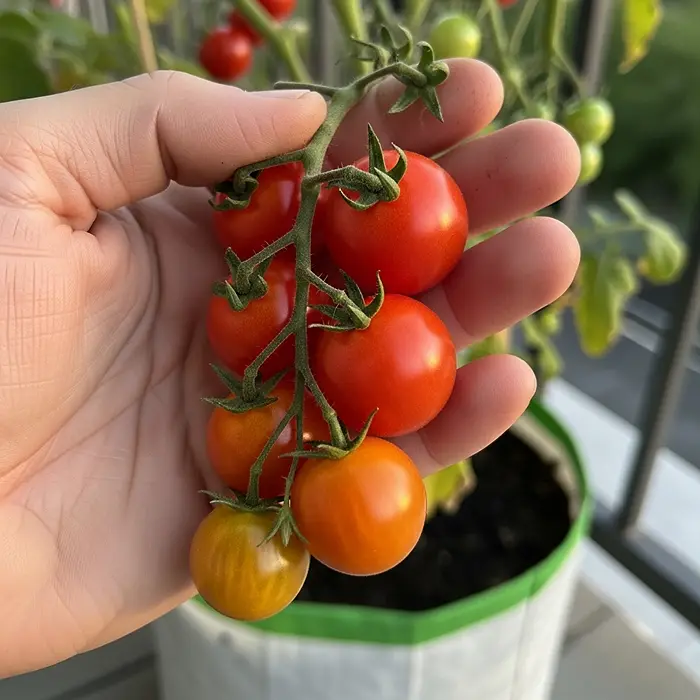
Here’s where it gets interesting — and measurable. The Brix scale quantifies sugar concentration in fruit juice, and cherry tomatoes consistently score higher. Most cherry varieties land between 7.0 and 10.0+ Brix, with superstar varieties like Sungold hitting 12–13. Regular slicers typically register 4.5–7.0 Brix, delivering that more balanced sugar-acid-umami profile.
Why the gap? Smaller fruit concentrates sugars more efficiently. In a restricted container root zone where nutrients are already limited, cherry tomatoes funnel available energy into many small, sugar-packed fruits instead of diluting it across fewer, larger ones. It’s basic plant metabolism — and it works in your favor.
Metabolic Efficiency in Container Gardening
Regular tomatoes burn a lot of energy on cell expansion — building those big, juicy, water-filled cells that give a Beefsteak its satisfying heft. That means higher nutrient demand, more water consumption, and sharply increased sensitivity to even short droughts or heat spikes.
Cherry types are metabolically leaner. Less water per fruit, lower calcium transport demands, and faster bounce-back from stress. When you’re comparing cherry vs regular tomatoes in the confined world of container gardening, this efficiency gap is the reason cherries are so much more forgiving.
If you want the deeper dive on container basics, our complete guide to growing tomatoes in containers covers the full setup from pot to harvest.
Data Comparison: Cherry Tomatoes vs Regular Tomatoes in Pots
| Factor | Cherry Tomatoes | Regular Tomatoes |
|---|---|---|
| Days to Maturity | 55–75 days | 70–95+ days |
| Minimum Pot Size | 5–7 gallons | 15–20 gallons |
| Water Stress Tolerance | Moderate–High | Low–Moderate |
| Disease Resistance | Often higher | Variety-dependent |
| Yield Pattern | Continuous | Large fruit, slower |
| Typical Brix Range | 7.0–10.0+ | 4.5–7.0 |
III. Picking the Right Container for Cherry Tomatoes vs Regular Tomatoes in Pots
Volumetric Minimums (Don’t Skimp Here)
I can’t stress this enough — undersizing your container is the fastest path to disappointment. Here are the research-backed minimums:
- Micro-dwarf varieties (Micro Tom, etc.): 1 gallon
- Determinate cherry types: 5–7 gallons
- Indeterminate cherry types: 10 gallons
- Indeterminate regular types (Beefsteak, etc.): 15–20 gallons minimum
When you’re torn between two sizes, always go bigger. More soil volume means more root room, better moisture buffering, and less frantic watering on hot days.
Thermal Dynamics & Root Respiration
Your container material matters more than most people realize — because roots are far more heat-sensitive than leaves.
Black plastic is basically a little oven in direct sun. It can push root zone temps above 110°F (43°C), which tanks nutrient uptake and stresses the plant hard. Fabric pots are a game-changer — water wicking through the material creates evaporative cooling that keeps roots 10–15°F cooler than plastic. Terracotta looks great and breathes well, but it dries out fast, so you’ll be watering more often.
Tomato roots perform best between 65°F and 80°F (18°C–27°C). Anything above 95°F (35°C) at the root zone starts impairing growth. According to Penn State Extension’s container tomato research, larger pots also hold more root mass and water, which helps significantly as temperatures climb and plants grow large with big water demands.
The Air Pruning Advantage
Here’s why I’m a fabric pot evangelist. When roots hit the breathable fabric wall, air exposure desiccates the root tip and stops it from elongating. This prevents that destructive root circling you see in rigid plastic containers.
The payoff? Instead of a few long, spiraling roots going nowhere useful, you get a dense, fibrous network with dramatically more surface area for nutrient and water absorption. Enhanced oxygen exchange through the fabric further supports healthy root respiration.
For cherry tomatoes vs regular tomatoes in pots, this root architecture boost benefits both types — but it’s especially valuable for regular tomatoes that already have higher nutrient demands.
IV. Substrate Engineering: Building the Right Soil System
Why You Should Never Use Garden Soil (I Learned This the Hard Way)
I know it seems logical — you’ve got perfectly good dirt in the yard, why not scoop some into a pot? Here’s why: garden soil in a container compacts into a dense, airless brick under irrigation.
Roots suffocate, water pools, and soilborne pathogens like Fusarium and Verticillium move in like uninvited houseguests. Container gardening demands a completely different growing medium.
A High-Performance Potting Mix Recipe
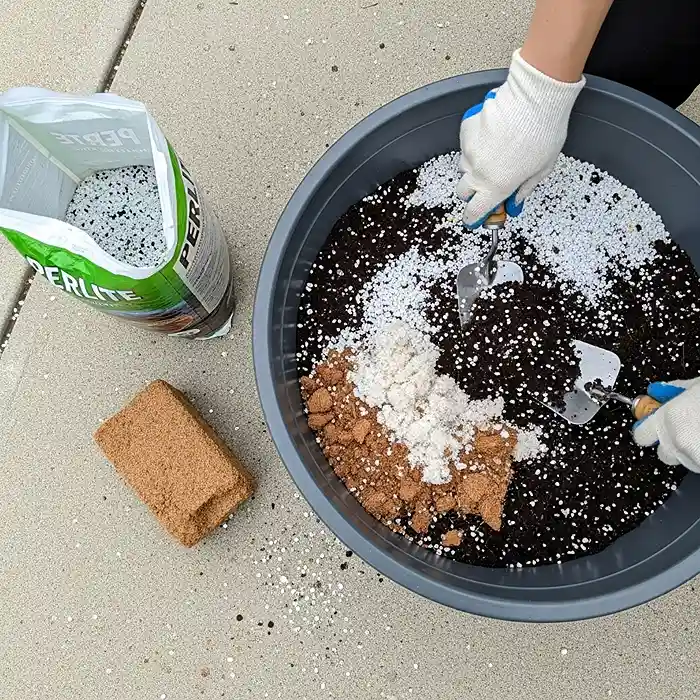
Build this soilless mix and your tomatoes will thank you all season:
- 40% Coconut Coir — Near-neutral pH, excellent water retention, resists compaction through a full growing season
- 30% Compost — Slow-release nutrients plus beneficial microbial life
- 20% Perlite — Creates air channels for drainage, root oxygenation, and hydraulic conductivity
- 10% Worm Castings — Bioavailable nutrients, humic acids, and a microbial boost
This ratio balances moisture retention with drainage — roots never sit in waterlogged media, but they also don’t dry out between waterings.
pH Balancing for Cherry Tomatoes vs Regular Tomatoes in Pots
Both types perform best in a pH range of 6.2–6.8. Outside this window, critical nutrients — calcium, magnesium, phosphorus — become chemically locked in the substrate and unavailable to roots, even when they’re physically present.
Test before planting with an inexpensive pH meter. Below 6.2? Add dolomitic lime. Above 6.8? Mix in elemental sulfur or extra peat moss. Recheck mid-season, because decomposing organic matter shifts acidity over time.
V. Watering & Fertilization When Growing Cherry Tomatoes vs Regular Tomatoes in Pots
Watering Differences (This Is Where Most People Go Wrong)
Cherry tomatoes handle brief dry spells better than you’d expect. They still need consistent moisture, but their smaller fruit size means less water demand per fruit and a wider margin of error. You’ve got some breathing room if you forget a morning check.
Regular tomatoes? Not so forgiving. Their large fruit is mostly water-filled cells, making them acutely prone to stress cracks when dry soil gets suddenly flooded, and to Blossom End Rot when calcium transport gets interrupted by irregular moisture.
The finger test is your best friend: push your finger two inches into the substrate. Dry at that depth? Water slowly and deeply until it runs from the drainage holes. During hot weather, check daily — containers can go from moist to bone-dry in a few hours on a summer afternoon.
Fertilization Protocol
During early vegetative growth, a balanced fertilizer (10-10-10) every two weeks supports stem and leaf development. Once flowers appear, switch to a lower-nitrogen, higher-potassium formula (5-10-10 or a dedicated tomato feed) to push fruit set and ripening.
Cherry tomatoes, with their nonstop production, do best with lighter, more frequent feeding — half-strength weekly beats full-strength biweekly. Regular tomatoes handle standard biweekly doses but are more sensitive to nitrogen excess, which drives foliage at the expense of fruit.
The Calcium Conundrum (It’s Not What You Think)
Blossom End Rot — that dark, leathery patch on the bottom of your tomatoes — isn’t simply a calcium deficiency. It’s a calcium transport problem. When watering swings between bone-dry and drenched, the plant’s vascular system can’t shuttle calcium ions to the rapidly expanding cells at the fruit tip, even when there’s plenty of calcium in the soil.
Small containers make this dramatically worse. Less substrate volume means less moisture buffering, which means faster wet-dry-wet swings. Regular tomatoes, with their larger fruit and higher per-fruit calcium demand, are far more susceptible than cherry types. The fix isn’t throwing calcium at the problem — it’s maintaining rock-steady moisture consistency.
VI. Planting & Support for Cherry Tomatoes vs Regular Tomatoes in Pots
Deep Planting & Adventitious Roots
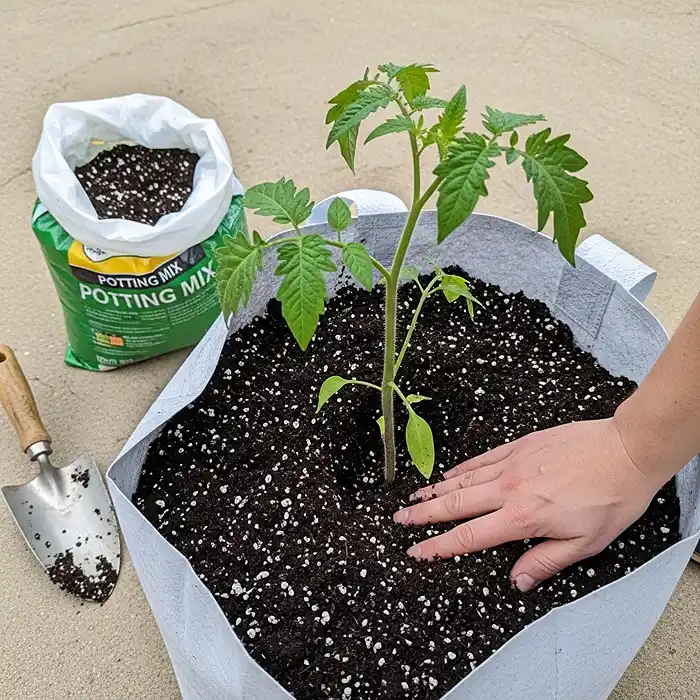
Here’s a trick that separates experienced growers from beginners: bury two-thirds of the tomato stem at transplanting. Every buried node sprouts adventitious roots, massively expanding the plant’s root system. Better drought resilience, stronger anchoring, and increased nutrient uptake — all critical when you’re growing tomatoes in pots with limited soil volume.
Support Systems: Cherry vs Regular Tomatoes
Cherry tomatoes get by with lightweight cages or bamboo stakes. Their flexible stems and smaller fruit clusters don’t put much mechanical stress on structures.
Regular indeterminate tomatoes need heavy-duty cages, rebar stakes, or a Florida Weave trellis. A fully loaded Beefsteak vine can carry 15–20 pounds of fruit at peak season — those light-gauge cages from the hardware store will buckle. On balconies, anchor supports to railings or walls to prevent wind from toppling the whole setup.
Pruning Logic
Indeterminate varieties: Pinch suckers that sprout in the leaf axils below the first flower cluster. This improves airflow, directs energy toward fruit, and bumps up individual fruit size.
Determinate varieties: Go easy. Their growth is genetically capped, and removing suckers directly reduces your fruiting branches — and your harvest.
VII. Climate Strategies for Growing Cherry Tomatoes vs Regular Tomatoes in Pots
Short-Season Climates
If your frost-free window is under 120 days, variety choice is everything. Early maturers like Sub-Arctic Plenty (45 days to harvest) can produce a solid crop even in Zone 3. Start seeds indoors 6–8 weeks before last frost, and use Walls of Water or season-extending cloches to buy yourself 2–3 extra outdoor weeks.
Heat Wave Management
When temps cross 90°F (32°C), tomato pollen goes nonviable and blossom drop kicks in. Protect your containers with 30–50% shade cloth during peak afternoon sun. Water first thing in the morning.
Spread 2–3 inches of mulch — straw, shredded bark, coconut coir — over the container surface to slash evaporation and moderate those wild soil temperature swings that wreck fruit development.
VIII. Harvesting & Kitchen Logic: Cherry Tomatoes vs Regular Tomatoes in Pots
How to Know They’re Ready
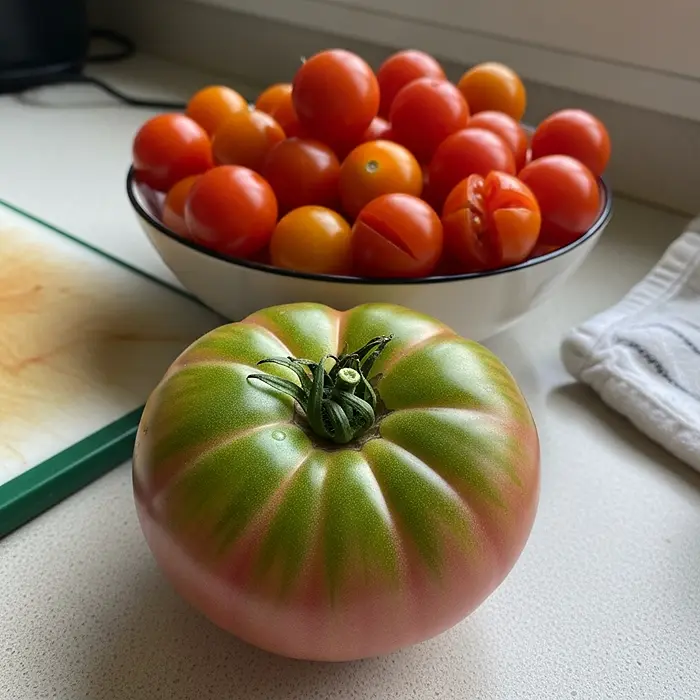
Cherry tomatoes hit peak sweetness when fully vine-ripened. Look for uniform color, a slight give when gently squeezed, and that satisfying clean snap when you twist them off the cluster. Don’t rush it — the last day or two on the vine is where the magic Brix numbers happen.
Regular tomatoes can actually be picked at the “breaker stage” — when the first blush of color shows at the blossom end — and ripened indoors on the counter. This dodges rain splitting, pest damage, and that one squirrel who’s been eyeing your Beefsteaks all week.
End-of-Season Cleanup Checklist
When the season wraps, proper hygiene prevents disease from hitchhiking into next year:
- Pull all plant debris from your containers
- Toss anything diseased — never compost it
- Sterilize pots with a 1:10 bleach-to-water solution, then rinse thoroughly
- Refresh or fully replace the substrate before your next planting
Frequently Asked Questions About Cherry Tomatoes vs Regular Tomatoes in Pots
Can you grow indeterminate tomatoes in pots?
Absolutely. Use a minimum 20-gallon container and invest in heavy-duty support — a reinforced cage or staked trellis system. Keep watering and feeding consistent, because the plant’s extended production cycle demands steady inputs all season long.
Why are my container tomatoes rotting on the bottom?
That’s Blossom End Rot, and it’s almost always caused by interrupted calcium transport due to inconsistent watering — not a calcium shortage in the soil. The solution is maintaining steady, even moisture. Check the top two inches of substrate daily and water deeply when dry.
What’s the best soil for cherry tomatoes vs regular tomatoes in pots?
Both types thrive in the same soilless mix: coconut coir or peat moss, compost, perlite, and worm castings. Never use garden soil in containers — it compacts, drains poorly, and brings in soilborne pathogens that’ll ruin your season.
How often should I water potted tomatoes?
Check daily. Insert your finger two inches into the substrate. If it’s dry, water slowly and deeply until runoff appears from the drainage holes. During heat waves, you may need to water cherry tomatoes once a day and regular tomatoes twice.
The Bottom Line: Cherry Tomatoes vs Regular Tomatoes in Pots — Which Should You Grow?
Choose Cherry Tomatoes If:
- You’ve got limited space or a small balcony
- Your containers are under 10 gallons
- You’re gardening in a hot climate
- You want continuous harvests you can graze on all summer
- You’re a beginner who wants a forgiving, high-reward plant
Choose Regular Tomatoes If:
- You can provide large containers (15–20 gallons minimum)
- You’ve got a strong, reliable support system ready
- You’ll actually commit to consistent daily watering
- You want thick slicing tomatoes for sandwiches, caprese, and weekend sauce projects
Here’s the honest truth: both cherry tomatoes and regular tomatoes can absolutely thrive in pots. The difference between a killer harvest and a disappointing season isn’t the plant — it’s whether you matched the right type to your container, your climate, and your realistic commitment level. Start with what you can control, and the biology handles the rest.