

Best Outdoor Herbs for Pots and Containers
Discover the best outdoor herbs for pots and containers and the exact growing system behind them — right soil, right depth, right care. No more bolting, no more rot. Start growing smarter today
Let me be honest with you — most container herb gardens fail not because of bad luck, but because of a shallow pot and the wrong bag of compost. If you want to grow the best outdoor herbs for pots and containers and actually harvest them instead of watching them bolt, yellow, or quietly give up, you need to understand a few things most guides skip right over.
The good news? Once the foundations are right, growing outdoor herbs in pots and containers is genuinely easier than in-ground planting — especially in a city. You control the soil, the drainage, the microclimate. No battling clay. No slugs the size of your thumb. Just you, your containers, and a surprisingly satisfying amount of fresh basil.
How deep should herb pots be?
Most herbs need 6–12 inches of soil depth. Taproot-heavy herbs like parsley and dill need at least 12 inches — go shallower and they’ll bolt before you get a single harvest.
Before we get into it — if you’re also thinking about growing herbs inside, check out our full guide to the best herbs to grow in pots (indoor & outdoor). It pairs perfectly with everything we cover here.
1. The Best Outdoor Herbs for Pots and Containers Start With Root Architecture
Taproot vs Fibrous Roots — Why Pot Depth Makes or Breaks Your Harvest
Here’s something nobody tells you at the garden centre: taproot depth is the single biggest reason container herbs fail.
Taproot herbs — parsley, dill, and cilantro — grow one dominant vertical root that anchors the plant and stores energy. Stick one in a shallow 6-inch pot and the plant panics. It reads the restriction as a survival threat and bolts straight to seed before you’ve gotten a single proper harvest. Maddening.
- Parsley & Dill: minimum 12-inch depth — Long Tom pots are brilliant for balconies
- Cilantro: 10–12 inches; it bolts at the first sign of cramped roots or heat
- Fibrous-rooted herbs (mint, basil, thyme): more forgiving — 6–8 inches is fine
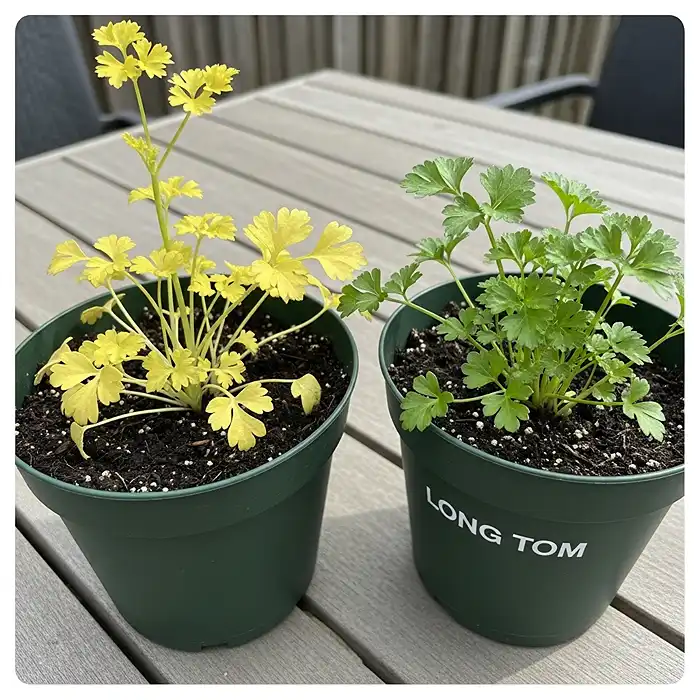
Air-Pruning Pots vs Traditional Containers — Best Outdoor Herb Pot Choices
Traditional plastic pots have a design flaw: roots hit the wall, can’t go further, and start circling. That circling root mass eventually strangles the plant from the inside. Not great.
Fabric grow bags fix this through air-pruning. When a root reaches the porous fabric wall, it dries out and stops — forcing the plant to branch new, healthy feeder roots instead. Denser root system, happier herb. The evaporative effect also keeps root temperatures down in summer, which matters a lot when your patio is basically a frying pan by July.
- Terracotta: Best for Mediterranean herbs — porous, breathable, mimics their rocky native habitat
- Glazed ceramic: Best for moisture-loving herbs like basil — holds water and warmth
- Fabric grow bags: Best where summer heat is genuinely brutal
2. Soil Substrate Engineering — The Best Outdoor Herb Containers Need the Right Mix
Why Garden Soil Is the Enemy of Pots
I know it’s tempting to scoop up some garden soil and save a few pounds on compost. Don’t. Garden soil compacts under repeated watering — and in a confined container, that compaction eliminates the pore space roots need to breathe. You end up with anaerobic, waterlogged conditions that rot-causing pathogens absolutely love. Your herbs do not.
The Best Soil Mix for Outdoor Herbs in Pots
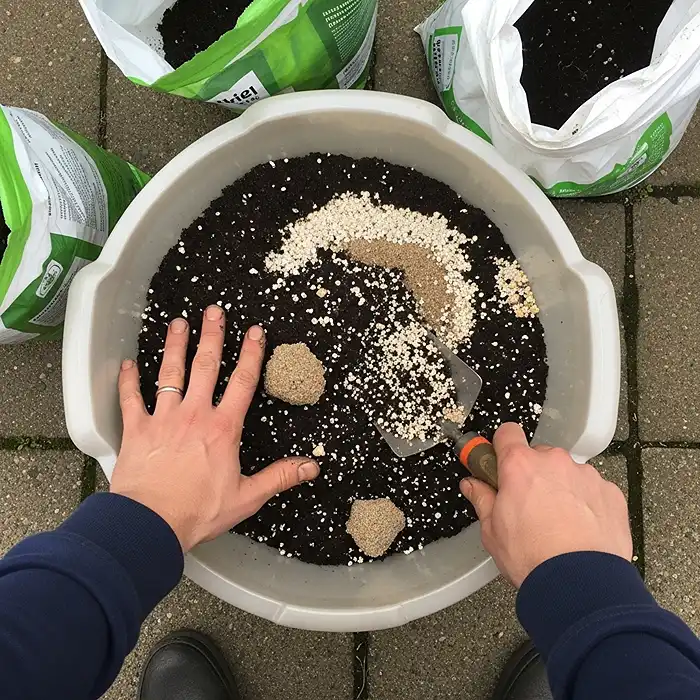
Good soil substrate engineering isn’t complicated — it’s about getting physical structure right before thinking about nutrients.
- Base mix: 1 part topsoil + 1 part compost + 1 part coarse horticultural sand or grit
- Perlite: Add 20% by volume — lighter than grit, excellent for drainage and aeration
- Skip the gravel layer at the bottom: This is a widespread myth. Gravel at the base creates a “perched water table” that actually raises moisture higher into the soil — making drainage worse, not better. Use a good mix and a pot with drainage holes. That’s it.
Feeding Your Best Outdoor Herbs in Pots Without Killing Their Flavour
Here’s the counterintuitive part: more fertiliser means less flavour. High nitrogen pushes fast, lush leafy growth — but dilutes the essential oils that make your herbs worth cooking with. Big, impressive plants that taste of almost nothing. Frustrating.
Use a seaweed-based liquid feed every 3–4 weeks during active growth — lower in nitrogen, rich in trace minerals. According to the RHS herb growing guide, Mediterranean herbs actually perform best in lean soil — feed them too richly and you undermine both flavour and winter hardiness.
3. The Best Outdoor Herbs for Pots and Containers — Picked by Category
Heat-Loving Mediterranean Herbs: The Best Outdoor Herbs for Sunny Containers
These are the easiest herbs you’ll ever grow in a pot. They evolved on dry, rocky, sun-blasted hillsides — a hot balcony or south-facing patio is basically paradise for them. The rule: keep them dry between waterings, use porous pots, and go easy on the feed.
- Rosemary: Woody perennial, full sun, terracotta pot — nearly unkillable if you don’t overwater
- Thyme: Low-growing, shallow wide pot, incredible drought tolerance once established
- Sage: Full sun, porous pot — prune after flowering or it gets leggy and resentful
- Oregano: Vigorous grower — harvest it hard and it just keeps coming back
- Lavender: Slightly alkaline, well-drained soil; gravel mulch at the base prevents crown rot
Sun-Tolerant but Moisture-Sensitive Herbs for Outdoor Pots
These want sun but can’t handle drying out the way Mediterranean herbs can. Consistent moisture — without sogginess — is the balance to aim for.
- Basil: Needs warm soil and warm nights — glazed ceramic holds heat better than terracotta
- Parsley: A deep pot is non-negotiable; keep it consistently moist
- Chives: Practically grows itself; divides easily and fills container gaps beautifully
- Cilantro: Sow successionally every 3–4 weeks, harvest young, keep roots cool — the only way to stay ahead of bolting
Aggressive Spreaders — Best Grown in Their Own Outdoor Containers
Mint is the horror movie villain of the herb garden. It spreads by underground runners and will colonise any pot it shares, crowding out everything else. Lemon balm and tarragon are similarly territorial. Give them their own pot, always. If you’re placing mint inside a larger display container, keep it in a separate inner pot — it will find a way through otherwise.
4. Quick Reference: Best Outdoor Herbs for Pots and Containers
| Herb | Lifecycle | Ideal Pot Type | Sun Requirement | Overwintering Strategy |
|---|---|---|---|---|
| Basil | Annual | Glazed Ceramic | Full Sun | Bring indoors before frost |
| Rosemary | Woody Perennial | Terracotta | Full Sun | Insulate roots; shelter from wind |
| Mint | Herbaceous Perennial | Isolated Plastic Pot | Partial–Full Sun | Dies back; regrows in spring |
| Parsley | Biennial | Deep Pot (12″+) | Full Sun | Protect crown with fleece |
| Thyme | Perennial | Shallow Wide Pot | Full Sun | Hardy; minimal protection needed |
5. How to Maintain the Best Outdoor Herbs in Pots and Containers
Prune Smarter, Harvest More
Most people harvest too timidly — snipping a few leaves here and there and wondering why the plant looks miserable. The fix is cutting more confidently, and in the right spot.
Always cut just above a leaf node. This breaks apical dominance — the plant’s instinct to grow tall and flower — and triggers two new lateral shoots at that node instead. More shoots, more future harvests. Never remove more than a third of the plant at once, and pinch out any flower buds on basil, parsley, and cilantro the moment you spot them.
Watering Outdoor Herbs in Pots — Keep It Simple
- Finger test: Push your finger 2 inches into the soil — only water if it’s dry at that depth
- Water in the morning: Foliage dries during the day, reducing fungal risk overnight
- Heatwave mode: Move pots to partial afternoon shade; cluster containers together — grouped pots lose moisture more slowly than isolated ones
Group Compatible Herbs — Make Maintenance Easy
Grouping the best outdoor herbs for pots by their water and sun needs makes your life dramatically simpler. Rosemary, thyme, and sage are the dream team — same drought preference, same lean soil, same sunny spot. Mixing them with moisture-hungry basil is a recipe for one thriving and the rest suffering.
6. Best Outdoor Herb Container Combinations That Actually Work
Mediterranean Dry Garden Mix — Best Low-Maintenance Outdoor Herb Pot
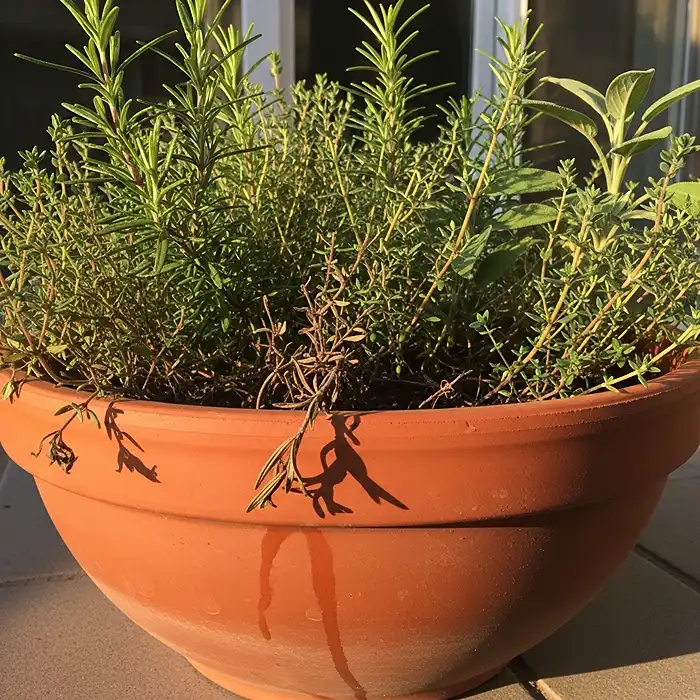
Rosemary + Thyme + Sage in a wide terracotta bowl. Top-dress with gravel mulch to reflect heat, suppress weeds, and protect the crown from rot. Water occasionally, feed rarely. These three practically run themselves — which is exactly what you want.
Moisture-Loving Culinary Blend for Outdoor Containers
Basil + Parsley + Chives in a glazed ceramic container. Morning sun and some afternoon shade in peak summer. Consistently moist, never waterlogged. This is essentially your kitchen herb lineup, just scaled up and moved outside.
Vertical & Balcony Strategy for Best Outdoor Herbs in Small Spaces
Prostrate rosemary is a personal favourite for balconies — it cascades over raised containers like it was designed for it. Use tiered planter systems for vertical growing without eating up floor space, and put pots on rolling stands so you can chase the sun as it shifts through the seasons.
7. Pests & Problems — Keeping Your Best Outdoor Herbs in Pots Healthy
Common Pests on Outdoor Herb Containers
- Rosemary beetle: Pretty, iridescent, and absolutely destructive — pick them off by hand the moment you spot them
- Aphids: Cluster on soft new growth; a sharp blast of water removes most of them, dilute soapy water handles the rest
- Sage leafhopper: Causes pale, ghostly stippling on leaves — remove affected foliage and improve airflow around the container
For a food-safe deterrent without synthetic chemicals, a dilute neem oil spray (1 tsp per litre of water) applied in the evening works well once a week during problem periods.
Is It Root Rot? Here’s How to Tell
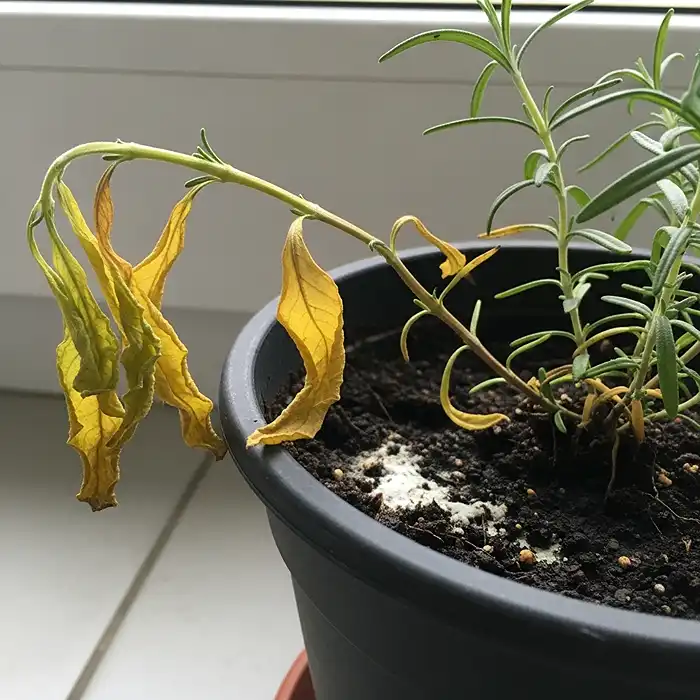
If your herb is yellowing and wilting but the soil is wet, that’s not a watering issue — that’s root rot. Tip the plant out: dark, mushy roots with a sour or sulphurous smell confirm anaerobic damage.
Emergency fix: Trim rotten roots back to healthy white tissue, let them air-dry for 30 minutes, and repot into fresh well-draining mix. It feels drastic but it works more often than you’d expect.
8. Winter Care for the Best Outdoor Herbs in Pots and Containers
Container herbs take winter harder than in-ground plants — there’s no surrounding soil to buffer the cold, and pots can freeze solid overnight. A little prep, though, goes a very long way.
- Woody perennials (rosemary, thyme, sage): wrap pots in bubble wrap or hessian and raise them off cold surfaces on pot feet — this alone prevents most winter losses
- Herbaceous perennials (mint, chives, tarragon): cut back hard and let them die down naturally; they’ll push fresh growth from the roots come spring
- Tender annuals (basil): bring indoors before the first frost without exception — even a light freeze kills it overnight
FAQs — Best Outdoor Herbs for Pots and Containers
How much sun do the best outdoor herbs in containers need?
At least 6 hours of direct sun per day as a baseline. Mediterranean herbs like rosemary, thyme, and oregano genuinely love 8+ hours — more sun typically means more flavour.
Can I grow the best outdoor herbs in pots on a balcony?
Absolutely. Use windbreak screening to protect from strong gusts, choose lighter-coloured pots to reduce heat absorption, and group containers together to slow moisture loss. Balconies can be brilliant microclimates once you work with them.
Seeds or seedlings for outdoor container herbs?
Seedlings give you a 4–6 week head start and make sense for fast-growing annuals like basil. Seeds are worth it for parsley, dill, and cilantro — wider variety selection, lower cost, and full control from germination.
How often should I fertilize the best outdoor herbs in pots?
Every 3–4 weeks with a light seaweed-based feed during active growth (spring through late summer). Mediterranean herbs want even less — once every 6 weeks maximum, or you’ll get volume without the flavour.
Final Thoughts: Growing the Best Outdoor Herbs for Pots and Containers Is a System, Not a Guess
The reason most container herb gardens disappoint isn’t effort — it’s a missing framework. Match pot depth to root type, get your soil substrate right, and maintain with intention rather than habit, and everything else clicks into place.
You don’t need a garden. You don’t need much space. You just need to understand what’s happening beneath the surface — and now you do.
Start with one well-matched container, one good soil mix, and one herb you actually cook with. Nail that first. Then build from there.