

Best Indoor Herbs to Grow on a Windowsill
Stop killing grocery store basil. Discover the best indoor herbs to grow on a windowsill — with real tips on light, soil, watering, and year-round harvests that finally work. → Start growing today.
Let me guess — you’ve killed a basil plant from the grocery store at least once. Don’t worry, we’ve all done it. Here’s the good news: the best indoor herbs to grow on a windowsill aren’t actually that hard to keep alive once you know what they really need. No garden required, no weird equipment, and definitely no agricultural degree.
Whether you’re doing this to save money, eat fresher, or just to finally have something green that survives in your apartment — you’re in the right place. Growing indoor herbs on a windowsill comes down to three non-negotiables: at least 6 hours of direct light, well-draining potting soil, and containers with drainage holes. Nail those three, and you’re already ahead of 90% of people who try this.
Table of Contents
Why Bother Growing Herbs on a Windowsill?
It’s Cheaper Than You Think (By a Lot)
Fresh herb bundles at the grocery store cost $2–$4 and go limp within a week. A seed packet costs roughly the same — but keeps producing for months. That’s not just cost-efficient, that’s actually kind of wild when you think about it.
Most culinary herbs work on a cut-and-come-again model: the more you snip, the more they push out new growth. It’s like a plant that rewards you for using it. The financial ROI alone makes growing herbs on a windowsill indoors worth it, but the flavor difference is honestly the bigger win.
It’s Good for Your Brain Too
Science backs this up — indoor plants are genuinely linked to lower cortisol (that’s the stress hormone) and better mood. And herbs bring a sensory bonus that regular houseplants don’t: you can touch them, smell them, and eat them. That micro-connection to food and nature adds up.
Eating a diverse range of herbs also feeds your gut microbiome. So your windowsill garden is basically pulling double duty as stress relief and a wellness habit. Not bad for a few pots on a ledge.
Perfect for Winter Indoor Gardening
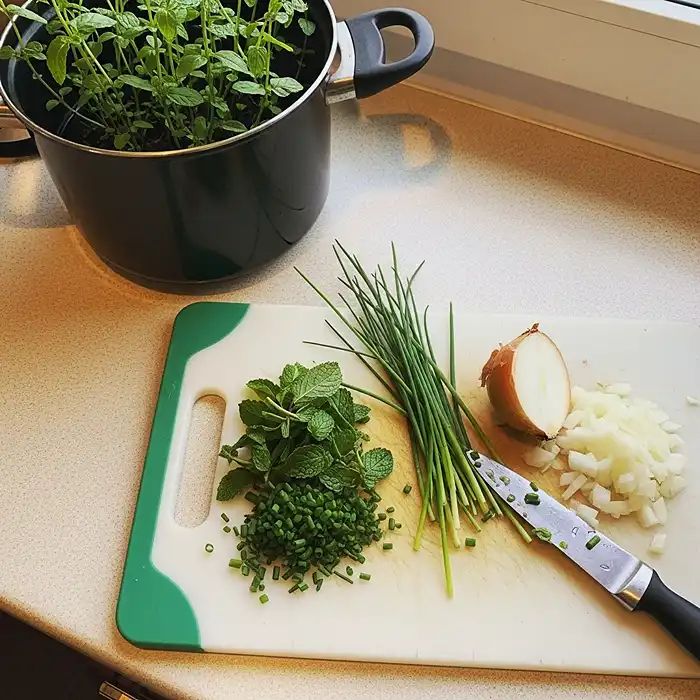
This is honestly where windowsill herb growing outperforms every other type of gardening. When everything outside is frozen or dormant, your kitchen window keeps producing. Winter indoor gardening with herbs means you’re never without fresh thyme for your soups or mint for your tea, no matter what month it is.
When daylight hours drop below 6 hours, grab a grow light for herbs — more on that below — and you’re good to go all year.
Light: The One Thing Most People Get Wrong
How Much Sun Do Indoor Herbs Actually Need?
Here’s where most windowsill herb attempts go sideways — not enough light. Most culinary herbs want 6–8 hours of direct sun daily, and a “bright room” doesn’t count. Window placement is everything:
- South or southwest-facing windows — ideal for sun-hungry herbs like basil, rosemary, and thyme
- East-facing windows — solid for moderate growers like parsley, chives, and mint
- North-facing windows — honestly, just add a grow light and don’t fight it
When You Genuinely Need a Grow Light for Herbs
Here’s something most articles won’t tell you: modern double-glazed windows filter UV light, so even your “sunny” window may be delivering less than herbs need. If you spot any of these, it’s time for a grow light for herbs:
- Stems stretching tall and spindly — this is called leggy growth and it’s a plant crying for sun
- Leaves going pale or yellowish despite you watering correctly
- Everything just… stopping during winter months
A full-spectrum LED grow light running 12–16 hours a day, positioned 4–6 inches above the plants, fixes all of this. It’s not glamorous, but it works. According to University of Maryland Extension’s guide on growing herbs indoors, supplemental lighting is one of the most impactful changes you can make for indoor herb success in low-light conditions.
Temperature & Airflow: The Overlooked Duo
Herbs like it comfortable — 65–70°F during the day and 55–60°F at night. Don’t stick pots directly against cold glass in winter (it’s like leaving them outside), and don’t put them above a radiator either (that’s basically a herb oven).
Stagnant air is also a sneaky killer — it invites fungal issues. Cracking a window occasionally or running a small fan on low mimics natural airflow and actually makes your herbs stronger over time. Plants grown with some air movement develop noticeably sturdier stems.
Best Indoor Herbs to Grow on a Windowsill: Quick Comparison Table
Here’s your at-a-glance guide to the best indoor herbs to grow on a windowsill. Bookmark this — it comes in handy.
| Herb | Scientific Name | Lifespan | Light Needs | Difficulty | Key Growing Note |
|---|---|---|---|---|---|
| Basil | Ocimum basilicum | Annual | High (6–8 hrs) | Moderate | Pinch the center stem early to stop bolting |
| Mint | Mentha spp. | Perennial | Medium (4–6 hrs) | Easy | Always give it its own pot — it’s a bully |
| Chives | Allium schoenoprasum | Perennial | Low–Medium | Easy | Low-light tolerant; great starter herb |
| Parsley | Petroselinum crispum | Biennial | Medium (5–6 hrs) | Easy | Needs steady moisture — don’t let it dry out |
| Rosemary | Salvia rosmarinus | Perennial | High (6–8 hrs) | Moderate | Sandy soil only — hates wet feet |
| Thyme | Thymus vulgaris | Perennial | High (6+ hrs) | Easy | Likes it dry between waterings |
| Cilantro | Coriandrum sativum | Annual | Medium (4–6 hrs) | Moderate | Cool-season lover — bolts fast in heat |
| Oregano | Origanum vulgare | Perennial | High (6+ hrs) | Easy | Mediterranean roots — drainage is critical |
Want to know which of these also do brilliantly in outdoor containers? Check out our full guide on the best herbs to grow in pots — indoor & outdoor for a deeper breakdown of container options beyond the windowsill.
Annual vs Perennial Herbs: What’s the Difference and Why Does It Matter?
If you’re planning a windowsill herb garden that actually lasts, understanding annual vs perennial herbs is genuinely important. Think of it like this: annuals are sprinters, perennials are marathon runners.
Annual Herbs (Basil & Cilantro) — The Fast and Fleeting
- Pros: Fast to germinate, big harvests quickly, satisfying results within weeks
- Cons: They complete their lifecycle in one season — once they flower and go to seed, they’re done
- Pro tip: Stagger-plant basil every 3–4 weeks so you always have a fresh batch coming up
Perennial Herbs (Mint, Chives, Rosemary, Thyme, Oregano) — Plant Once, Harvest Forever
- Pros: One planting gives you harvests across multiple years — that’s a genuinely great deal
- Cons: Slower to get established in year one; you’ll need some patience
- Pro tip: Buy perennials as nursery transplants to cut weeks off your wait time
Pots & Containers: Size Actually Matters Here
Go Bigger Than You Think You Need
Minimum 6-inch pots — that’s the rule. Those cute little 4-inch starter pots that come in gift sets look charming but strangle root development fast. A cramped root system means a stressed plant, and a stressed plant either bolts or dies. Bigger pots also hold moisture more evenly, which makes your watering routine a lot more forgiving.
Drainage Holes Are Not Optional
I cannot stress this enough: every single pot needs drainage holes. Place saucers underneath to protect your windowsill, but don’t let your herbs sit in collected water for more than 30 minutes or you’re setting up root rot.
Should You Buy a Windowsill Herb Garden Kit?
A good windowsill herb garden kit can make setup easier — especially if you’re buying one as a gift or want everything in one box. But choose carefully. A solid kit should have:
- Functioning drainage holes in every container
- An optional integrated grow light (huge bonus)
- Quality soil pods or room to add your own potting mix
If a kit uses containers under 4 inches? Walk away. Cute packaging, poor performance. Individual 6-inch pots will outgrow a gimmicky kit every time.
Soil & Planting: Get This Right From the Start
The Right Soil Mix for Indoor Herbs
Never use garden soil indoors — it compacts in pots and carries pests you don’t want in your kitchen. Always start with a sterile potting mix, then customize:
- All herb types: Mix in 20–30% perlite to improve drainage and root aeration
- Mediterranean herbs (rosemary, thyme, oregano): Add coarse sand to replicate the dry, rocky terrain they evolved in
Seeds vs Starter Plants — Honest Take
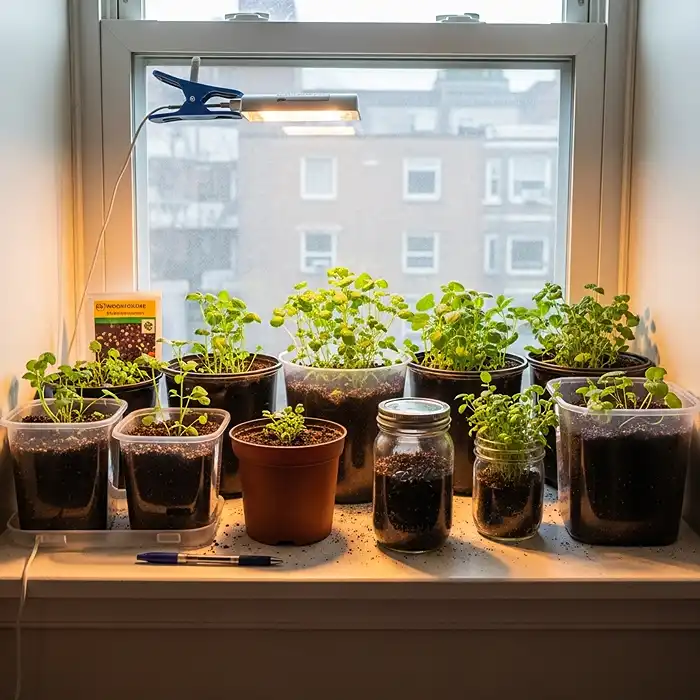
Seeds are cheaper and satisfying if you enjoy the process — but expect 2–4 weeks before transplanting, plus more weeks before your first harvest. Nursery starter plants cost a little more but give you a 4–6 week jump. If you want results fast, just buy the starter plant. Zero judgment here.
Don’t Bury Your Seeds
Most herb seeds are tiny and need to stay near the surface. Plant no deeper than ¼ inch, lightly press into moistened soil, and cover with just a thin layer. They need light to germinate — burying them deeper just delays or kills germination.
Watering Rules: The One Thing That Kills More Herbs Than Anything Else
When to Actually Water
Overwatering kills more indoor windowsill herbs than anything else — more than pests, more than bad light, more than neglect. The rule is simple: water only when the top 1 inch of soil is dry. Stick your finger in. If it’s still moist below the surface, leave it alone and check again tomorrow.
Try Bottom Watering Instead
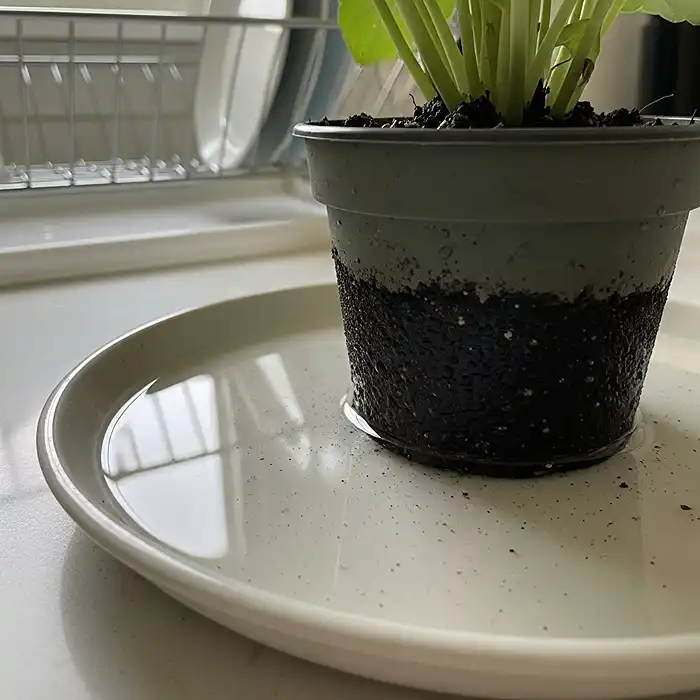
This is a game-changer: place your pot in a tray of water for 10 minutes and let the soil absorb moisture from the bottom up. The topsoil stays drier, which makes your herbs far less attractive to fungus gnats — those tiny flies that appear like magic and ruin everyone’s day.
Airflow & Humidity: Group Your Herbs Wisely
Keep moisture-loving herbs (parsley, mint) grouped together and away from Mediterranean herbs (rosemary, thyme, oregano) that prefer dry conditions. A pebble tray filled with water under the moisture-lovers raises local humidity without waterlogging the soil. And please — never mist Mediterranean herbs. That’s a fast track to fungal problems.
Advanced Tips That Actually Make a Difference
The 1/3 Harvesting Rule
Never take more than one-third of any plant in a single harvest. It feels restrained, but it’s what triggers the plant to branch out and produce more. Strip too much and you just stress it into survival mode. Light, regular trimming = bushy, productive herbs.
Pinching Basil (This Is Non-Negotiable)
Once your basil has 3 sets of leaves, pinch out the central growing tip just above a leaf node. This forces the plant to branch sideways instead of shooting straight up toward flowering. Why does that matter? Because once basil flowers, the leaves turn bitter and the plant’s basically done. Pinch early, pinch often, enjoy basil for months.
The “Petting” Trick
This sounds weird but it works: gently run your hands over your herbs for 30–60 seconds daily. The light physical stimulation mimics wind stress and causes the plant to produce thicker, stronger stems. It takes ten seconds and it genuinely helps. Plus, you get to pet your plants, which is its own reward.
Common Problems & How to Fix Them Fast
Leggy, Stretching Stems
Cause: Not enough light. Fix: Move to a south-facing window or add a full-spectrum grow light for herbs at 12–16 hours daily. This is almost always a lighting problem, not a watering one.
Yellow Leaves
Cause: Overwatering or drainage failure. Fix: Let the soil dry out fully, add perlite to improve drainage, and water less frequently. Yellow leaves are almost always soggy roots in disguise.
Aphids & Fungus Gnats
For a light infestation, rinse the plant with lukewarm water — often that’s all it takes. If pests persist, apply a diluted neem oil solution to leaves and topsoil weekly until they’re gone. Bottom watering (mentioned above) is your best prevention strategy for gnats specifically.
Root Rot
Root rot happens when soil stays wet and oxygen can’t reach the roots. Fix it with fast-draining soil, clear drainage holes, and a firm rule: no standing water in saucers. Ever.
How to Make Your Windowsill Herb Garden Look Good Too
The Thriller, Filler, Spiller Method
You don’t have to choose between functional and beautiful. Use this classic container design trick to make your windowsill herb garden look intentional and styled:
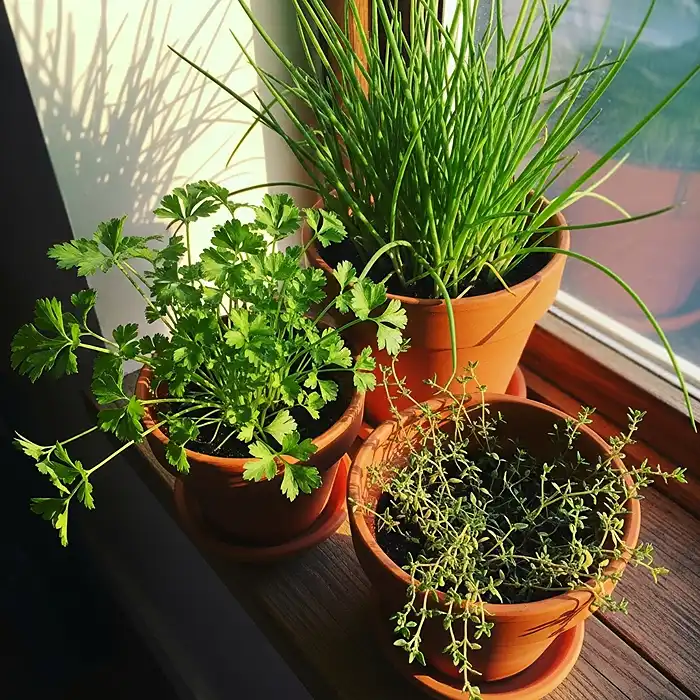
- Thriller (tall focal point): Chives, lavender, or upright rosemary
- Filler (mid-height body): Parsley, cilantro, or bushy basil
- Spiller (trailing over the edge): Cascading thyme or mint — but keep mint in its own pot, always
What Pairs Well With Your Herbs?
Mix in compact edible greens like arugula, lettuce, or microgreens alongside your herbs for a kitchen window that’s both gorgeous and productive. Just keep mint and oregano in their own separate containers — both are territorial and will muscle out anything growing next to them.
Best Indoor Herbs to Grow on a Windowsill FAQs
Can herbs really grow indoors all year?
Yes — absolutely. The best indoor herbs to grow on a windowsill will produce year-round as long as they get 6+ hours of light, either from a sunny window or a supplemental grow light for herbs. Winter is no excuse to go without fresh herbs.
How often do I need to water my windowsill herbs?
Only when the top inch of soil feels completely dry. Honestly, the answer to “should I water today?” is usually “probably not yet.” Overwatering is the single most common reason windowsill herbs die — not underwatering.
What are the easiest herbs for absolute beginners?
Chives, mint, parsley, and thyme are the most forgiving of the bunch. They handle inconsistent watering, tolerate a range of light conditions, and bounce back from beginner mistakes better than most plants. Start there, build your confidence, then branch out.
Do I need a windowsill herb garden kit to get started?
Nope. A few individual 6-inch pots, good potting soil, and a drainage saucer will outperform most kits on the market. That said, if you want an all-in-one setup — especially one with a built-in grow light — a quality windowsill herb garden kit can be a genuinely great starting point.