

7 Small Balcony Garden Ideas for Hot Weather
Discover 7 small balcony garden ideas for hot weather, plus heat-tough plants, cooling tricks, and watering tips to keep your balcony thriving all summer
Most balcony gardeners kill their plants the same way every summer: they pick the wrong plants, then watch them fry by July. These small balcony garden ideas for hot weather flip that around. Get the plant choices and watering right, and your balcony stays alive while everyone else’s crisps up.
I’ve grown on a west-facing balcony that hit 110°F at the railing. Here’s what actually survives, and how to set it up fast.
Table of Contents
Why Hot Weather Changes Everything for Balcony Gardens
A balcony bakes harder than a backyard. Concrete, brick, and metal soak up sun all day, then radiate heat back at your pots well into the evening. Your plants basically sit inside an oven.
Reflected light off glass doors and metal railings can push leaf temps 10-15°F higher than the air. Wind dries pots even faster.
- Heat buildup: Hard surfaces store heat and release it at night, stressing roots around the clock.
- Fast moisture loss: Small containers dry out 2-3x faster than ground beds.
- Reflected glare: Glass and pale walls scorch leaves on the shaded side too.
That’s why a regular potting mix and a black plastic pot is a recipe for crispy plants by noon.
Assess Your Balcony Before You Plant
Before buying a single plant, figure out how hot and sunny your space actually gets. A south or west-facing balcony in USDA zones 8-10 can hit full sun (6+ hours) with brutal afternoon heat.
| Factor | Why It Matters | What To Check |
|---|---|---|
| Orientation | South/west = hottest | Use a compass app |
| Weight limit | Wet soil is heavy | Ask your building manager |
| Wind | Dries pots fast | Watch on a breezy day |
| Water access | Daily watering needs | Locate nearest tap |
A standard 12-inch pot full of wet soil weighs around 20 pounds, so know your railing and floor limits before loading up.
How to Measure Sun Hours and Heat Exposure
Track the sun in one day. Check your balcony every 2 hours from morning to evening and note where direct sun hits. Anything getting 6+ hours is full sun and needs heat-tough plants.
- 8 AM-noon: Mark which spots get morning sun (gentler).
- Noon-4 PM: Flag afternoon-sun zones; these are your “heat traps.”
- Glass and metal: Spots near reflective surfaces run hotter than open ones.
When I mapped my own balcony, the corner by the glass door cooked plants 3 weeks faster than the open railing, even though both got “full sun.”
Pro Tip: Lay a cheap outdoor thermometer on the floor near your pots at 2 PM. If it reads 95°F+, that surface is roasting your roots.
Tools & Materials You’ll Need
Hot-weather success comes down to gear that holds moisture and beats heat. Grab these before you start your small balcony garden.
- Self-watering containers: Built-in reservoir cuts watering to every 2-3 days.
- Light-colored glazed or fabric pots: Reflect heat instead of absorbing it.
- Drip irrigation kit with timer: Waters at dawn without you lifting a finger.
- Shade cloth (30-50%): Drops leaf temps fast during heatwaves.
- Moisture-retaining potting mix: Look for coco coir or added compost.
- Moisture meter: Takes the guesswork out of when to water.
For container choices that won’t cook your roots, this guide to the best pots for balcony gardens breaks down what works in heat.
7 Small Balcony Garden Ideas for Hot Weather
Here are seven setups I’ve tested that handle real heat. Pick one or mix a few. Each pairs a layout with plants that genuinely shrug off high temps.
Idea 1 — Vertical Succulent and Cacti Wall
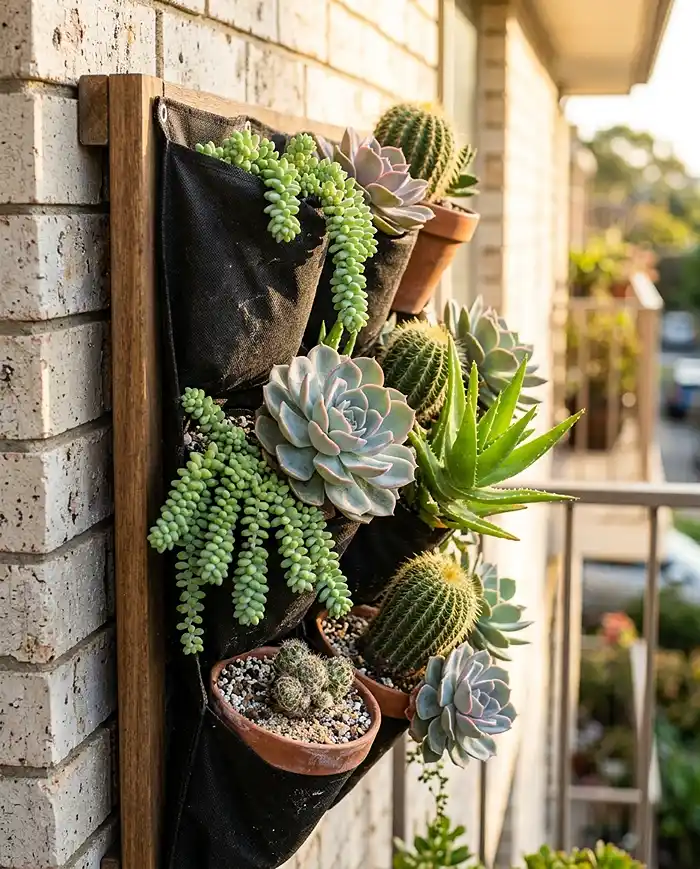
A vertical succulent wall is the easiest hot-weather win there is. Mount a wall planter or stacked pockets, fill with cactus mix, and plant drought-lovers that thrive on neglect.
- Best picks: Sedum, echeveria, aloe, and hardy hens-and-chicks.
- Soil: Fast-draining cactus mix, 50% grit.
- Water: Once every 7-10 days, even in heat.
Mine survived a 12-day work trip in 100°F weather with zero watering. Succulents are the closest thing to a set-it-and-forget-it plant.
Pro Tip: Skip glazed pockets here; unglazed terracotta or fabric lets excess water escape so roots don’t rot.
Idea 2 — Mediterranean Herb Corner
Mediterranean herbs love dry heat and full sun. Cluster rosemary, thyme, oregano, and lavender in light-colored pots and you’ve got a fragrant corner that doubles as a kitchen supply.
- Sun: Full sun (6+ hours) is exactly what they want.
- Soil pH: 6.0-7.5, gritty and well-drained.
- Bonus: Lavender flowers pull in pollinators all summer.
These herbs actually get more flavorful when stressed by heat, so a baking balcony is a feature, not a bug.
Pro Tip: Let the soil dry 2 inches down between waterings; soggy roots kill these faster than any drought.
Idea 3 — Shade-Cloth Lounge Garden
If you want tender plants and a place to sit, hang 30-50% shade cloth or a pergola sail. It creates a cooler microclimate that drops temps 10-15°F underneath.
- Mounting: Use tension rods or railing clamps; no drilling needed.
- Under the shade: Coleus, begonias, ferns, and lettuce.
- Timing: Stretch it midday, retract for gentle morning sun.
A retractable setup lets you give greens cool afternoons while still catching soft morning light.
Pro Tip: Angle the cloth to block the 2-4 PM sun specifically; that’s the window that does the most leaf damage.
Idea 4 — Self-Watering Container Cluster
Self-watering pots are the secret to growing edibles without watering twice a day. Group several together and the shared humidity keeps everyone happier in heat.
- Best edibles: Cherry tomatoes, peppers, eggplant.
- Reservoir: Refill every 2-3 days in peak summer.
- Spacing: Keep pots touching to trap moisture.
I grew ‘Sungold’ cherry tomatoes in self-watering tubs through a Texas July and only refilled the reservoirs every third day.
Pro Tip: Top the soil with 1 inch of mulch even in self-watering pots; it cuts surface evaporation by half.
Idea 5 — Heat-Loving Flowering Display
For nonstop color that laughs at heat, plant portulaca, lantana, bougainvillea, and zinnia. These bloom hardest when it’s hottest and barely sulk in drought.
- Portulaca: Succulent leaves, blooms in scorching sun.
- Lantana: Butterfly magnet, blooms May through frost.
- Bougainvillea: Loves dry roots and full sun.
Deadheading (snipping spent flowers) keeps zinnias and lantana pumping out blooms all season.
Pro Tip: Pale or yellowing leaves usually mean a feeding issue; these plant nutrient deficiency symptoms help you spot it fast.
Idea 6 — Tropical Privacy Screen
Tall, heat-loving plants in big planters give you shade and privacy at once. They block sightlines and create a cooler pocket behind them.
- Best picks: Canna, ornamental grasses, dwarf banana.
- Pot size: 14-18 inches wide for stability and root room.
- Wind: Place against a wall to anchor tall foliage.
A row of canna along my railing cut afternoon glare into the living room and stayed lush at 95°F+.
Pro Tip: Big pots in wind tip easily; drop a brick in the bottom for ballast before filling with soil.
Idea 7 — Cool Misting Micro-Oasis
Pair a small misting line or tabletop water feature with humidity-loving plants to cool the air around them. Misting can drop nearby temps 5-10°F on dry days.
- Plants: Ferns, caladium, and elephant ear.
- Misting: Run 2-3 short bursts during the hottest hours.
- Placement: Keep it in part shade so mist isn’t wasted.
This setup shines in arid climates where dry air is the real enemy, not the heat itself.
Pro Tip: Use a misting timer on the same circuit as your drip kit so it only runs 11 AM-4 PM.
Best Heat-Tolerant Plants for Balcony Containers
The best way to plan summer container gardening is to match plants by how much sun and water they handle. Here’s a quick reference.
| Category | Top Picks | Sun | Water |
|---|---|---|---|
| Succulents | Sedum, echeveria, aloe | Full sun | Every 7-10 days |
| Herbs | Rosemary, thyme, oregano | Full sun | When 2 in. dry |
| Edibles | Peppers, cherry tomatoes, eggplant | Full sun | Daily |
| Flowers | Lantana, portulaca, zinnia | Full sun | Every 1-2 days |
Stick to plants in the same column for each pot grouping so your watering schedule stays simple.
Watering and Soil Strategy for Hot Weather
Water deeply at dawn, never midday. Morning watering lets roots drink before the heat spikes, while midday water mostly evaporates and can scorch wet leaves.
- Timing: Water between 5 and 8 AM for the deepest soak.
- Depth: Soak until water runs from the drainage holes.
- Mulch: Add 1-2 inches of bark or pebbles to lock in moisture.
- Mix: Blend in coco coir or compost for water retention.
If water races straight through and the soil stays bone dry, your mix likely needs help; this guide to drainage and aeration in container soil fixes that fast.
Setting Up Low-Cost Drip Irrigation
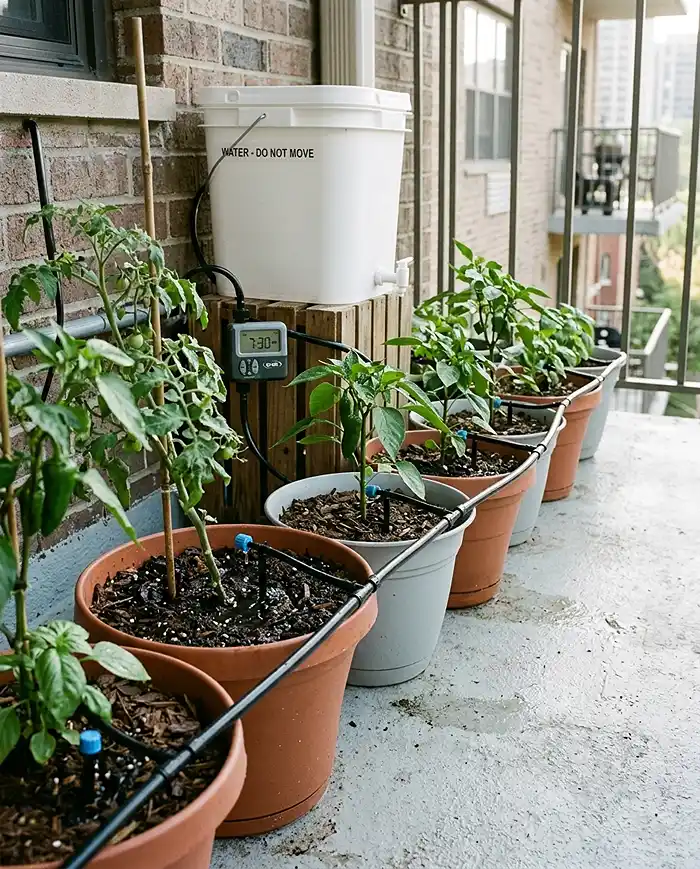
A timer-based drip kit waters your balcony at dawn, even with no outdoor tap. You can run it off a gravity reservoir or an indoor faucet adapter.
- Connect the timer to an indoor tap or a 5-gallon raised bucket.
- Run 1/4-inch tubing along your pots and clip it to the railing.
- Push a drip emitter into each pot, 1-2 per container.
- Set the timer for 6 AM, 10-15 minutes per day.
Success looks like soil that’s evenly moist 2 inches down by mid-morning, with no runoff pooling on the floor.
Protecting Containers and Plants From Extreme Heat
Keep roots cool and you’ll keep plants alive. The soil temp matters more than the air temp in containers.
- Shade the pots: Wrap dark containers in light fabric or tuck them behind taller plants.
- Group for humidity: Cluster pots so leaves create a moist pocket.
- Elevate off hot floors: Pot feet or a slatted rack let air flow underneath.
- Go light-colored: Pale pots run 10-20°F cooler than black plastic.
One summer I swapped black nursery pots for pale glazed ones and my pepper roots stopped cooking overnight.
Seasonal and Regional Considerations
Adjust your plan as summer heats up and based on where you live. Early summer is for planting; peak heat is for protecting.
| Region | Main Challenge | What To Do |
|---|---|---|
| Arid Southwest | Dry air, intense sun | Mist, mulch, afternoon shade |
| Humid Southeast | Heat plus fungus | Space pots, water at dawn only |
| Coastal | Salt wind, mild heat | Wind shelter, hardy succulents |
In zones 9-11, start heat-lovers by late April; in zones 6-8, wait until nights stay above 55°F.
Common Problems & Solutions
Wilting and Leaf Scorch
Midday wilting that bounces back by evening is normal heat stress, not thirst. If leaves stay limp after a deep morning soak, then you’re underwatering.
- Heat wilt: Add 30% shade cloth for the 2-4 PM window.
- Underwatering: Soak until water drains out, then check at dusk.
- Scorch: Brown crispy edges mean too much reflected sun; move pots back from glass.
Pro Tip: Poke a finger 2 inches into the soil before watering; damp soil plus wilting always means heat, not thirst.
Soil Drying Out Too Fast
Small pots in full sun dry out in hours. The fix is bigger containers, mulch, and moisture-holding mix.
- Pot size: Move up to 12+ inch containers; more soil holds more water.
- Mulch: 1-2 inches on top cuts evaporation by half.
- Self-watering inserts: Add a reservoir to stretch time between waterings.
Pro Tip: Porous terracotta wicks water out fast in heat; line it with a plastic nursery pot to slow the loss.
Pests Thriving in Heat (Spider Mites & Aphids)
Hot, dry air is spider mite heaven. Look for fine webbing and tiny yellow speckles on leaf undersides, plus clusters of aphids on new growth.
- Spider mites: Spray neem oil every 5-7 days and raise humidity with misting.
- Aphids: Hit them with insecticidal soap, coating leaf undersides.
- Prevention: Rinse leaves weekly; mites hate moisture.
Pro Tip: Spray neem at dusk, never in midday sun, or you’ll burn the leaves you’re trying to save.
Plants Stop Flowering or Fruiting in Extreme Heat
When it tops 90°F, many plants drop blooms and stop setting fruit. Tomato pollen, for example, goes sterile above 95°F.
- Add shade cloth: 30% shade keeps pollen viable.
- Steady moisture: Inconsistent water makes flowers drop.
- Be patient: Production resumes when nights cool below 75°F.
Pro Tip: Flick tomato flowers gently at midday to hand-pollinate when bees are hiding from the heat.
Expert Tips for a Thriving Hot-Weather Balcony
These small balcony garden ideas work even better with a few pro moves. Small tweaks make a big difference at 100°F.
- Cluster planting: Group pots tight so shared humidity buffers heat.
- Reflective pots: Pale glazed or fabric pots keep roots 10-20°F cooler.
- Water at dawn: Roots fill up before the heat hits.
- Rotate seasonally: Swap spent spring greens for heat-lovers by June.
Honestly, the single biggest upgrade is light-colored pots; I wish someone had told me that years before I cooked a whole row of basil.
small balcony garden ideas for hot weather FAQs
What plants survive best on a hot, sunny balcony?
Succulents, lantana, rosemary, and peppers are the toughest performers. They evolved for heat and full sun, storing water or thriving in dry, gritty soil while flimsier plants wilt.
How often should I water balcony plants in hot weather?
Most containers need a deep watering once a day in summer heat, and small pots in full sun may need twice. Larger and self-watering pots can stretch to every 2-3 days.
How do I keep balcony plants cool during a heatwave?
Hang 30-50% shade cloth for the 2-4 PM window, group pots together for humidity, elevate them off hot floors, and mist on dry days. These four moves can drop plant temps 10-15°F.
What are the best containers for hot weather gardening?
Light-colored glazed, fabric, or self-watering pots are best. Dark plastic and metal absorb sun and can push root-zone temps past 100°F, cooking roots from the inside out.
Can I grow vegetables on a hot balcony?
Yes, as long as you pick heat-tolerant types like peppers, cherry tomatoes, eggplant, and okra. Give them daily water, afternoon shade above 90°F, and roomy 12-inch-plus pots.
Key Takeaways
- The best small balcony garden ideas for hot weather start with heat-tough plants like succulents, peppers, and lantana.
- Light-colored glazed, fabric, or self-watering pots keep roots up to 20°F cooler than black plastic.
- Water deeply at dawn, mulch with 1-2 inches, and never water midday.
- Hang 30-50% shade cloth for the 2-4 PM window to stop scorch and keep plants flowering.
- Group pots together so shared humidity buffers the heat on your hottest days.