

Best Pots for Balcony Gardens in July Heat
Picking the right pot for a July balcony garden isn’t just about looks — it’s the difference between thriving plants and a crispy disaster by noon. The best pots for balcony gardens in summer are light-colored, well-draining, and sized generously enough to buffer heat and moisture swings.
Table of Contents
Why Pot Choice Matters More in July
In July, everything is amplified. Heat is relentless, sun angles are steep, and a bad pot can turn your balcony into a plant oven. Soil in the wrong container can hit 130°F — way beyond what most roots can survive.
Poor pot choice in peak summer means you’re fighting rapid soil drying, root heat stress, and wilting on a daily basis. Get it right once, and your plants practically take care of themselves.
How July Heat Affects Container Plants
Balcony microclimates are brutal in July. Walls reflect heat. Railings trap it. And unlike garden beds, container roots have nowhere to escape the heat.
Evaporation rates can double or triple compared to spring. A pot that needed watering every 3 days in May might need water twice daily by mid-July — especially in small or dark containers.
Root zone temperatures above 85°F start slowing growth. Above 95°F, many plants shut down or decline fast. That’s not the air temp — that’s what’s happening inside the pot.
The Hidden Danger of Hot Balcony Surfaces
Concrete and tile balcony floors absorb heat all day and radiate it upward through the night. Your pots are sitting in a slow cooker if you’re not careful.
Dark pots sitting on dark tile can push root zone temps 20–30°F above air temperature. That’s the hidden killer most July balcony failures come down to.
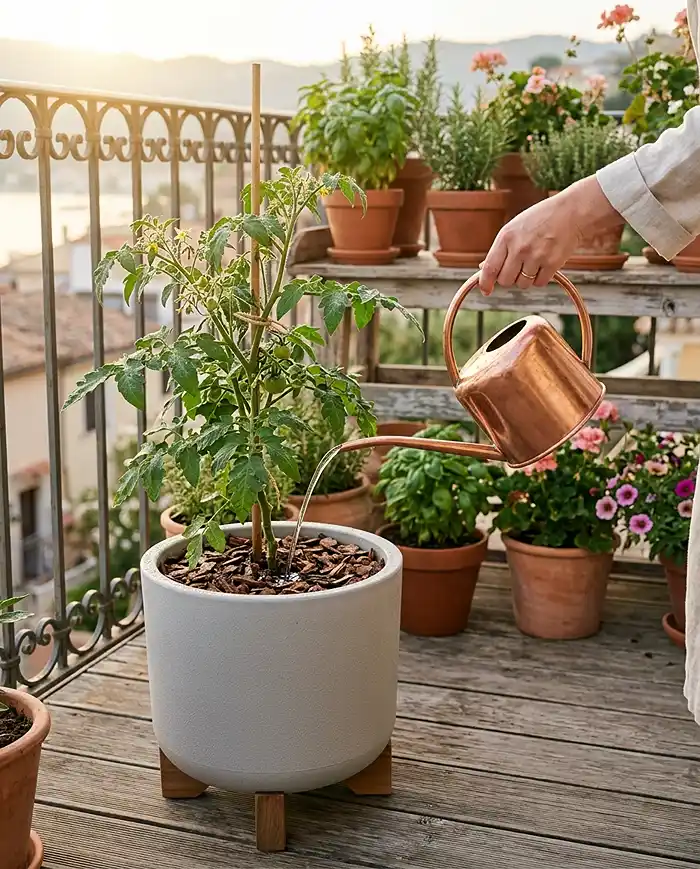
Raising pots off the surface using pot feet or a wooden pallet creates an air gap underneath. That single fix can drop root zone temps by 10–15°F on a hot afternoon.

Pot Materials Compared for Summer Performance
Not all pot materials behave the same under a July sun. Here’s how each one stacks up for heat retention, weight, drainage, and durability when it counts most.
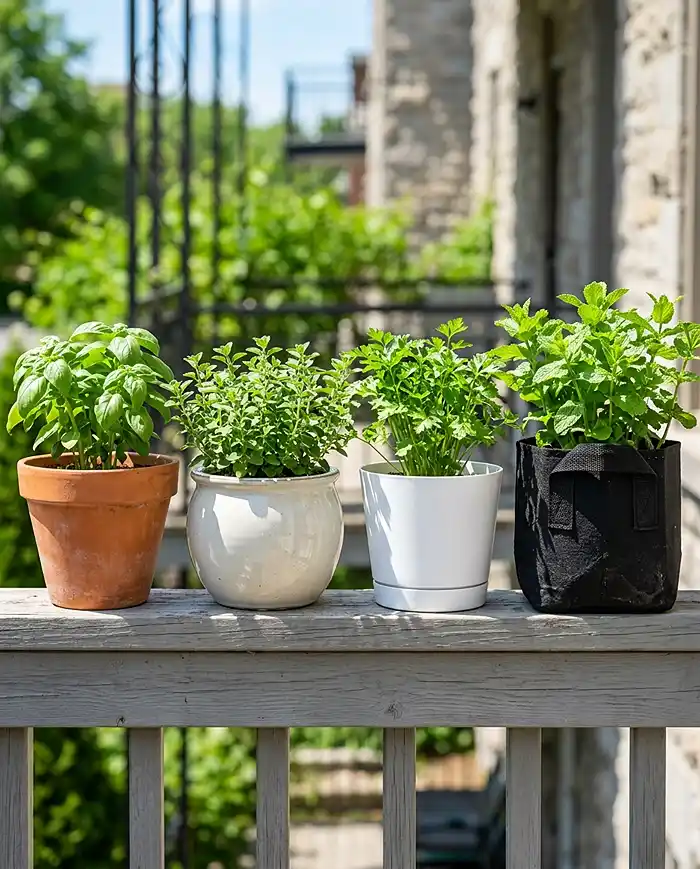
Terracotta and Clay Pots
Quick Answer: Terracotta is breathable and naturally cools roots through evaporation — making it one of the best pot materials for summer herbs and Mediterranean plants. The trade-off is faster moisture loss.
The porous walls allow air and water exchange, which keeps roots cooler than plastic or glazed ceramic. In my experience, terracotta pots stay noticeably cooler to the touch than resin pots in afternoon sun.
The downside? In July, terracotta pots may need watering once or even twice daily for thirsty plants like basil or tomatoes. Grouping them together helps slow evaporation by creating a more humid microclimate.
Pro Tip: Soak new terracotta pots in water for 30 minutes before planting — dry clay wicks moisture away from roots on day one.
Glazed Ceramic Pots
Quick Answer: Glazed ceramic hits a solid middle ground — better moisture retention than unglazed terracotta, decent breathability, and attractive enough for any balcony setup. Choose light colors for summer.
The glaze seals the pores, so water stays in the soil longer. That’s a real advantage during heat waves when you can’t water twice a day.
The main catch for balcony use is weight. A large glazed ceramic pot filled with wet soil can easily hit 50–80 lbs. Always check your balcony’s load-bearing limits before going big with ceramic.
Plastic and Resin Pots
Quick Answer: Plastic and resin pots retain moisture well and weigh almost nothing — perfect for balconies with weight restrictions. Just avoid dark colors in full July sun.
A dark navy or black resin pot in direct sun can reach internal temperatures that literally cook roots. I’ve seen healthy pepper plants wilt and never recover after a single hot afternoon in a black plastic pot.
Stick to white, cream, light grey, or terracotta-toned resin. You get the moisture retention of plastic without the root-scorching heat gain. Fine Gardening’s container material guide backs this up with solid comparisons.
Fabric Grow Bags
Quick Answer: Fabric grow bags are arguably the best summer container for heat-loving vegetables. They air-prune roots, drain perfectly, and release heat instead of trapping it.
The breathable fabric acts like a natural radiator — excess heat and moisture escape through the walls. Root zone temps stay significantly cooler than in plastic pots of the same size.
Air pruning prevents root circling, which means more efficient nutrient uptake and stronger plants. I’ve grown ‘Sun Gold’ cherry tomatoes in 10-gallon fabric bags on a south-facing balcony with outstanding results — even in a heat wave week.
Pro Tip: Place fabric grow bags inside a slightly larger decorative pot or basket. You get the thermal benefits of fabric with a tidier look.
Metal and Concrete Containers
Quick Answer: Metal and concrete pots are the hardest to use well in July. They absorb and store heat aggressively — but with the right strategies, they can work.
Galvanized steel troughs and concrete planters can hit root-damaging temperatures fast in direct July sun. They look great, but roots don’t care about aesthetics.
If you love the look, line metal containers with bubble wrap insulation or thick burlap inside the walls. Move them to a spot with afternoon shade, or choose taller plants that self-shade the container walls by July.
Choosing the Right Pot Size for July Planting
Here’s the rule: in July, always go one size bigger than you think you need. Larger soil volume means slower drying, more stable root temps, and more buffer against heat stress.
A small 6-inch pot can go from moist to bone dry in under 4 hours on a hot July day. A 14-inch pot in the same sun gives you a much wider watering window — usually 1–2 days even in peak heat.
Pot Size Chart by Plant Type
Here’s a quick reference to match your July plants to the right container size. These are minimum recommendations — bigger is always better in summer heat.
- Herbs (basil, thyme, oregano): Minimum 8 inches diameter, 8 inches deep
- Mint: Minimum 10 inches diameter — mint spreads, so give it room
- Rosemary: Minimum 12 inches diameter, 10 inches deep
- Leafy greens (lettuce, spinach, arugula): Minimum 10 inches wide, 6–8 inches deep
- Cherry tomatoes: Minimum 14–16 inches diameter, 12 inches deep; 5-gallon minimum
- Beefsteak/indeterminate tomatoes: Minimum 18–24 inches diameter; 10–15 gallon
- Peppers and eggplant: Minimum 12–14 inches diameter; 5-gallon minimum
- Petunias, geraniums, marigolds: Minimum 10–12 inches diameter per plant
Drainage and Color: The Two Most Overlooked Factors
Most gardeners obsess over pot material and forget the two factors that matter most in July: drainage holes and pot color. Honestly? These two details alone can save or sink your summer garden.
Drainage: In July, you’re watering heavily and often. Without adequate drainage holes, that water pools at the bottom and causes root rot — even in the middle of a heat wave. Check that holes are large enough (at least 1/2 inch diameter) and never let pots sit in saucers full of standing water.
Color: Light-colored pots reflect solar radiation. Dark pots absorb it. On a 90°F day, a white pot may keep roots 15–20°F cooler than an identical black pot in the same spot. That’s not a small difference — that’s survival vs. stress.
Best Pot Types for Specific July Plants
Different plants have different root depths and water needs. Matching the right pot to the right plant in July makes your whole balcony garden easier to manage.
Heat-Loving Vegetables (Tomatoes, Peppers, Eggplant)
Quick Answer: Go big, go light-colored, and consider fabric grow bags. Tomatoes, peppers, and eggplant thrive with deep root runs and steady moisture in July heat.
A ‘Better Boy’ tomato in a 10-gallon white fabric grow bag will outperform the same plant in a 5-gallon black plastic pot every single time during a July heat spell.
Peppers are surprisingly deep-rooted — they need at least 12 inches of depth to really perform. Light-colored glazed ceramic or resin pots in the 5–7 gallon range work beautifully for both peppers and eggplant.
Herbs (Basil, Mint, Rosemary, Thyme)
Quick Answer: Terracotta or light resin pots work best for most herbs. Size them appropriately — herbs in oversized pots can develop waterlogged roots even in July heat.
Basil needs consistent moisture and hates drying out — terracotta works but requires attentive watering. Group basil with other moisture-lovers to slow evaporation naturally.
Rosemary and thyme are Mediterranean natives — they love heat and tolerate dry soil. Terracotta is perfect for them. I’ve had a rosemary plant thrive for 3 summers in the same 12-inch terracotta pot on a south-facing balcony with minimal fuss.
Summer Flowers (Petunias, Geraniums, Marigolds)
Quick Answer: Medium-sized pots with excellent drainage keep summer flowers blooming continuously. Self-watering planters are a game-changer for petunias and geraniums in July.
Geraniums are surprisingly drought-tolerant once established, but they bloom best with consistent moisture. A 12-inch light-colored glazed ceramic pot handles them beautifully.
Marigolds are tough — they can handle more heat stress than most flowers. A 10-inch resin pot in cream or white, with a few drainage holes, is all they really need to put on a great July show.
Self-Watering and Insulated Pots for Hot Months
Self-watering containers have a built-in reservoir at the base that wicks moisture up into the soil as it dries. In July, this is genuinely life-changing for balcony gardeners.
You can fill the reservoir in the morning and not worry about watering until evening — or even the next day. For anyone who works long hours or travels in summer, this is a must-have investment.
Double-walled insulated pots add another layer of protection by creating an air pocket between the inner and outer walls. That air gap acts like insulation — keeping roots cooler during peak heat and warmer on cool nights. University of Maryland Extension’s guide on self-watering containers explains the wicking mechanism clearly.
Tools and Accessories to Pair With Your Pots
The right accessories can make any pot perform better in July. These aren’t optional extras — they’re practical tools that solve real summer problems.
- Pot feet or risers: Raise pots off hot balcony surfaces to create airflow underneath and reduce heat transfer from below
- Saucers (with caution): Useful for catching runoff, but empty them within 30 minutes to prevent root rot — never leave standing water in July heat
- Moisture meters: A $10–15 probe meter removes all the guesswork about when to water; particularly helpful for larger containers
- Mulch (2–3 inch layer): A layer of coco coir, shredded bark, or straw mulch on the soil surface can cut evaporation by up to 50%
- Shade cloth (30–50% density): Clip over individual pots or across a section of railing to cut heat load during peak afternoon hours
- Lightweight potting mix: Perlite-heavy or coco-coir-blended mixes drain better and stay cooler than dense garden soil
Setting Up Pots for Maximum July Success
How you set up a pot matters almost as much as which pot you choose. A great container filled with compacted, moisture-poor soil will still struggle in July heat.
Step-by-Step Pot Preparation
Follow these steps before planting anything in July, and you’ll start your plant off in the best possible position:
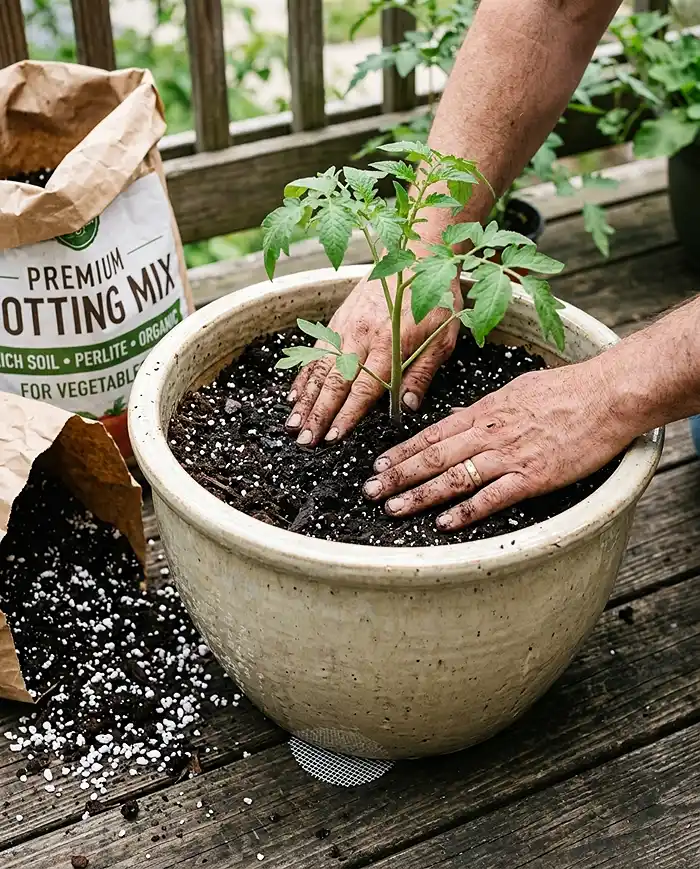
- Clean the pot thoroughly — scrub old pots with a 10:1 water-to-bleach solution to eliminate disease pathogens and pests from previous seasons
- Check drainage holes — make sure each hole is at least 1/2 inch wide and completely open; cover holes with mesh or a broken terracotta shard to prevent soil washout without blocking drainage
- Choose a quality summer potting mix — look for mixes with perlite, coco coir, and compost; avoid heavy garden soil which compacts and holds too much heat
- Optionally add water-retaining crystals — for large pots in hot spots, mixing in hydrogel crystals can extend the watering window by 24 hours
- Fill to 2 inches below the rim — this creates a watering reservoir so water soaks in rather than running straight off the edge
- Plant at correct depth and firm soil gently around roots — air pockets dry out and cause root die-back fast in July heat
- Water deeply immediately after planting — water until it runs freely from drainage holes, then check again in 2 hours and water once more if the top inch feels dry
Watering and Maintenance in Peak Summer
July watering schedules are different from spring — full stop. What worked in May will leave your plants gasping by the second week of July.
A good baseline for most balcony pots in July: water when the top 1 inch of soil feels dry to your finger. In practice, that usually means every 1–2 days for larger pots and every day (sometimes twice) for small containers in direct sun.
Water deeply in the morning so plants head into the hottest part of the day with full soil moisture. Evening watering works too — but avoid wetting foliage at night, which invites fungal disease.
Watch for these heat stress signals: leaf curling inward (daytime wilting that recovers by morning is normal, but wilting that persists into evening is a red flag), yellowing lower leaves, and dry, cracked soil pulling away from pot edges.
Regional Considerations for July Balcony Gardens
Where you garden in July dramatically changes which pot strategies matter most. A balcony in Phoenix operates under completely different rules than one in Seattle or Chicago.
Hot-dry climates (USDA Zones 9–11, e.g., California, Arizona, Texas): Self-watering containers and fabric grow bags are essential. Moisture loss is extreme. Shade cloth during 2–6 PM is often non-negotiable for any leafy plant.
Hot-humid climates (Zones 7–9, e.g., Southeast US, Mid-Atlantic): Drainage becomes the top priority — humidity slows evaporation but heavy summer rain combined with poor drainage causes root rot fast. Raise all pots on feet.
Northern/cooler climates (Zones 4–6, e.g., upper Midwest, UK, northern Europe): July heat waves are shorter but still intense. Light-colored resin or glazed ceramic performs well. Terracotta is excellent since humidity is lower and rapid drying is less of a crisis.
Common Problems and Solutions
Soil Drying Out Too Fast
Quick Answer: Chronically dry soil in July almost always means the pot is too small, too dark, or sitting in direct radiant heat from the balcony surface.
Fix it by upsizing to a larger container, adding 2–3 inches of mulch on the soil surface, switching to a self-watering system, or grouping containers together to create a more humid microclimate around the foliage.
If repotting mid-season isn’t possible, push hydrogel crystals down around the root zone using a pencil or chopstick and water them in — it’s a quick fix that buys you time until end of season.
Roots Overheating and Wilting Plants
Quick Answer: Root scorch is the silent killer of July container plants. If your plant wilts even with moist soil, the root zone temperature is likely the culprit.
Switch to a light-colored pot, wrap the existing pot in reflective bubble wrap or burlap, or relocate to a spot with afternoon shade. Even 2–3 hours of shade from 1 PM to 4 PM can make a massive difference.
Waterlogging and Root Rot After Heavy Watering
Quick Answer: Root rot in summer usually means drainage is blocked or the pot is sitting in a saucer full of standing water. Fix drainage first, then address the root damage.
Signs of rot: yellowing leaves, soft or brown mushy roots, soil that stays wet for days between waterings, and a faintly sour smell from the pot. Remove the plant, trim any black or mushy roots back to healthy white tissue, and repot in fresh dry mix.
Never let saucers hold standing water for more than 30 minutes in July. The risk of root rot actually increases in heat because pathogens thrive in warm, wet anaerobic conditions.
Pots Too Heavy for Balcony Weight Limits
Quick Answer: Most residential balconies handle 50–100 lbs per square foot. Wet soil is surprisingly heavy — a 15-gallon glazed ceramic pot can easily exceed 100 lbs when fully watered.
Swap heavy ceramic or concrete for fiberglass, resin, or fabric grow bags to slash weight dramatically. A 15-gallon fabric bag weighs just 1–2 lbs empty versus 15–25 lbs for an equivalent ceramic pot.
best pots for balcony gardens fAQs
What is the best pot material for a hot balcony in summer?
Light-colored glazed ceramic, white or cream resin, and fabric grow bags are the top three choices for hot summer balconies. They all balance moisture retention and heat management well. Avoid dark plastic and uninsulated metal in direct July sun.
How big should pots be for balcony vegetables in July?
Go bigger than you think — minimum 5 gallons (about 14 inches wide) for tomatoes and peppers, and at least 10 inches wide for herbs. Larger soil volume means slower drying, more stable root temperatures, and far less daily watering stress in peak heat.
Do dark-colored pots really harm plants in summer?
Yes — dark pots absorb solar radiation and can push root zone temperatures 20–30°F above air temperature. That’s enough to damage roots and shut down plant growth. Switch to light-colored pots, or wrap dark containers in white fabric or reflective material as a workaround.
How often should I water balcony pots in July?
Stick your finger 1 inch into the soil — if it’s dry, water thoroughly. In July, that usually means watering small pots daily and larger pots every 1–2 days. Adjust based on weather: add one extra watering session for every 5°F above average daily high temperatures.
Are self-watering pots worth it for summer balcony gardens?
Absolutely — especially for anyone who can’t water twice daily in a heat wave or travels during summer. Self-watering containers work best for tomatoes, peppers, herbs, and flowers. Avoid them for plants that prefer to dry out between waterings, like rosemary, thyme, and lavender.
What’s the difference between fabric grow bags and regular plastic pots?
Fabric bags air-prune roots (preventing circling), release heat through breathable walls, and drain perfectly — no waterlogging risk. Plastic pots retain moisture longer but trap heat and can overheat roots in direct sun. For July vegetables, fabric bags generally outperform plastic containers of the same volume.
Can I use terracotta pots for tomatoes in July?
You can, but be prepared to water daily — sometimes twice daily during heat waves. Terracotta’s breathability keeps roots cooler, but moisture loss is rapid. A 14-inch terracotta pot is the absolute minimum for a cherry tomato; 16–18 inches is better for midsummer stability.
How do I know if my balcony can handle large, heavy pots?
Most residential balconies handle 50–100 lbs per square foot. A single large ceramic pot filled with wet soil can exceed that limit on its own. Spread weight evenly, place heavy pots near load-bearing walls or support beams, and switch to lightweight resin or fabric containers when weight is a concern.
Key Takeaways
- Light-colored pots are non-negotiable in July — dark containers can push root zone temps 20–30°F above air temperature, causing heat stress even in otherwise healthy plants
- Bigger pots buffer better — larger soil volume slows drying, stabilizes root temperatures, and drastically reduces the daily watering burden during peak summer heat
- Fabric grow bags are the underrated hero — they air-prune roots, release excess heat through breathable walls, and drain perfectly, making them ideal for July vegetables
- Raise pots off hot balcony surfaces — pot feet or risers create an air gap underneath that can drop root zone temps by 10–15°F on a hot afternoon
- Self-watering containers are worth the investment — they extend your watering window significantly and are genuinely life-saving during July heat waves or short trips away