

Plant Nutrient Deficiency Symptoms
Decode plant nutrient deficiency symptoms in potted veggies fast. Yellow leaves, burnt edges, stunted growth — diagnose & fix in 24 hours. Read now! 🌱
Ever stared at a sad-looking basil plant and thought, “What did I do wrong this time?” Yeah, me too. If you’ve grown anything in a pot, you’ve probably watched a leaf go yellow and felt that little twist of gardener guilt.
Here’s the thing: your plants aren’t being dramatic. They’re literally telling you what’s missing — and once you learn to read the signs, you’ll feel like a plant whisperer.
Let’s break down plant nutrient deficiency symptoms in container gardens, why they hit pots way harder than garden beds, and how to fix them fast (sometimes in just a couple of days).
Table of Contents
What Plant Nutrient Deficiency Symptoms Actually Look Like
In simple terms, plant nutrient deficiency symptoms are the visible “S.O.S signals” your plants send when they’re short on something essential — nitrogen, iron, calcium, you name it. In containers, these signs show up faster because pots just can’t hold nutrients the way garden soil does.
Three big red flags to memorize:
- Yellowing leaves — the most common cry for help
- Stunted growth — your plant looks frozen in time
- Leaf edge burn — crispy brown margins like overdone toast
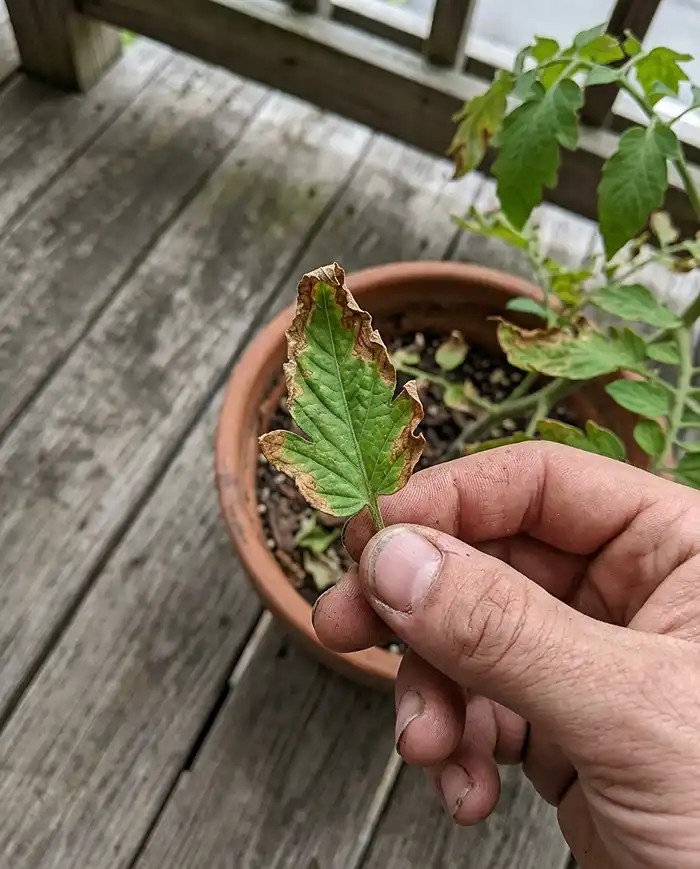
The good news? Most issues are reversible within a week if you catch them early. Stick around — I’ll show you exactly how.
Why Pots Are Basically Nutrient Drama Queens
Watering Washes Everything Out
Every time you water a pot until it drains, you’re flushing nutrients down the drain — literally. Nitrogen and boron are the first to bail. That’s why your container tomatoes get hungry way faster than the ones in your neighbor’s garden bed.
Potting Mix Doesn’t Hold Onto Much
Most bagged mixes are made of peat, coco coir, and perlite. They drain great, but they have low Cation Exchange Capacity (CEC), which is just a fancy way of saying they can’t grip nutrients well. It’s feast or famine in there.
If you want to set yourself up for fewer headaches, check out my full guide on the best soil and fertilizer for container vegetable gardens — it makes a huge difference.
pH: The Sneaky Saboteur
Sometimes nutrients are right there in the pot, but the pH is wrong, so plants can’t absorb them. Aim for pH 6.0–7.0 for most veggies and herbs. A $10 pH meter pays for itself the first month.
The One Trick That Cuts Diagnosis Time in Half
Here’s a pro move: learn the difference between mobile and immobile nutrients. It tells you where on the plant to look first.
| Nutrient Type | Elements | Where Symptoms Show Up |
|---|---|---|
| Mobile | N, P, K, Mg | Old (lower) leaves first |
| Immobile | Ca, Fe, B, Zn | New growth and tips first |
Plants can shuffle mobile nutrients around — pulling them from old leaves to feed new ones. So old leaves suffer first. Immobile nutrients can’t be moved, so the youngest tissue takes the hit.
That’s it. That’s the secret. According to Cornell University’s plant nutrition resources, this single rule explains the majority of visible deficiency patterns.
The 3 Big Warning Signs (and What They Mean)
Yellowing Leaves
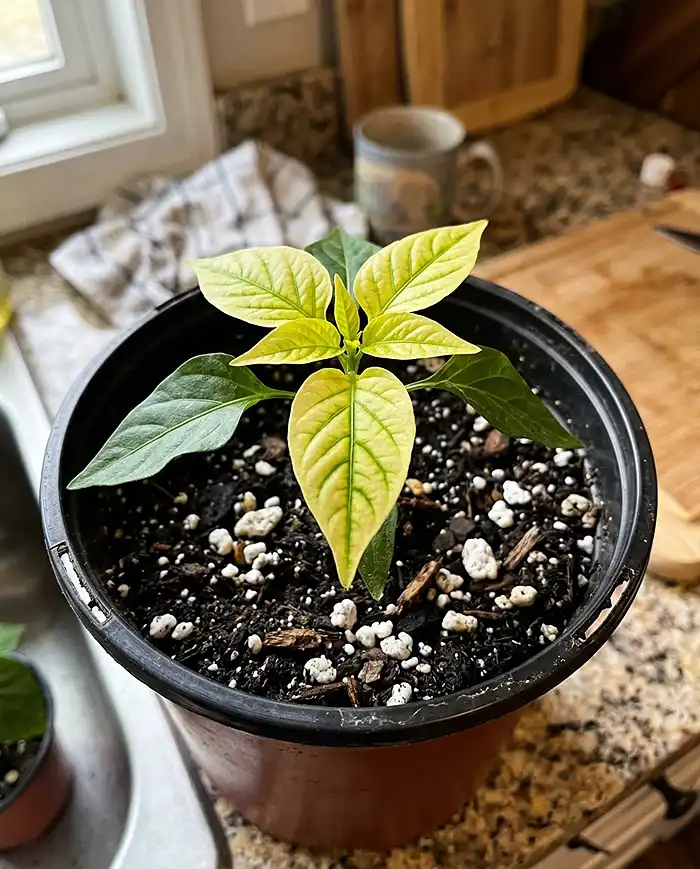
Where the yellow shows up tells you everything:
- Bottom leaves first → Nitrogen
- Yellow between green veins on old leaves → Magnesium
- New leaves yellow with green veins → Iron
If you’ve been Googling how to fix yellow leaves, this is your roadmap.
Stunted Growth
Tiny new leaves, no flowers, plant just sitting there looking bored? Suspect nitrogen, phosphorus, or zinc. In my experience, container basil hits this wall around week 4 — almost like clockwork.
Leaf Edge Burn
Brown, crispy edges with a green center scream potassium deficiency… or salt buildup from over-fertilizing (a classic container gardening mistake). Flush the pot with plain water for 5 minutes to rule that out.
Visual Guide to N-P-K Deficiencies
Nitrogen (N)
Pale, uniform yellow across the whole older leaf. Stems get thin and weak. Lettuce, spinach, and parsley are the snitches — they show it first.
Phosphorus (P)
Leaves go weirdly dark green with purple or red undersides. Super common in cold spring soil because phosphorus uptake tanks below 60°F (15°C).
Potassium (K)
Brown scorched edges, curling leaves, and sad-looking fruit. Tomatoes ripen unevenly, peppers stay pale.
Secondary and Micronutrient Issues Worth Knowing
Calcium vs. Magnesium (the lookalikes)
- Calcium: Hits new growth — deformed young leaves and the dreaded Blossom End Rot (black sunken patches on tomatoes and zucchini).
- Magnesium: Hits old leaves — yellow between the veins, veins stay bright green.
Iron vs. Manganese
Both cause yellow new leaves with green veins. The tie-breaker? Manganese deficiency adds little brown spots. Iron is just plain yellow.
Boron and Zinc
- Boron: Dead growing tips, brittle leaves, hollow broccoli stems.
- Zinc: Rosetting — bunched-up little leaves at the tips like a tiny green cabbage on top.
Don’t Get Fooled: False Deficiency Symptoms
Overwatering Pretending to Be Nitrogen Deficiency
Soggy roots can’t absorb nitrogen, so leaves yellow even though you’ve been feeding. Stick your finger 2 inches into the soil before reaching for fertilizer. Always.
Fertilizer Burn
Crispy tips on a heavily fed plant = salt buildup, not potassium deficiency. Flush the pot thoroughly and ease up on the feeding.
Pests and Viruses
Mosaic virus makes irregular, mottled patches. True deficiencies make uniform, predictable patterns. If it looks “random,” suspect bugs or disease first.
How to Fix Plant Nutrient Deficiency Symptoms (Step-by-Step)
Quick Fix (Within 24 Hours)
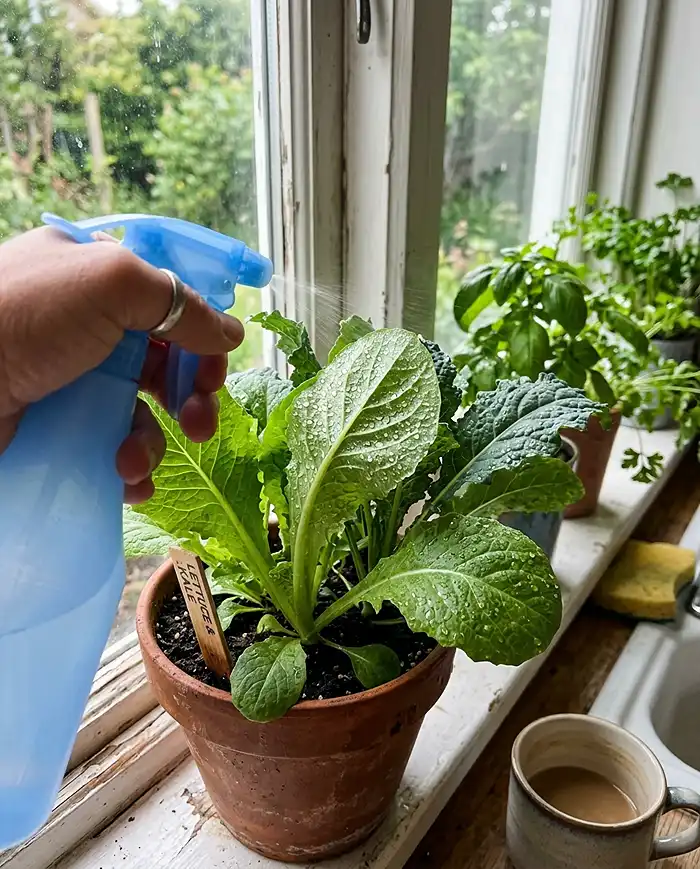
Grab a foliar spray — Epsom salt for magnesium (1 tsp per liter), iron chelate for iron, or an all-in-one micronutrient mix. Spray the underside of leaves. You’ll see improvement in 2–3 days. It’s almost magic.
Medium-Term (3–10 Days)
Switch to a balanced liquid fertilizer like 10-10-10 or fish emulsion at half strength every 7–10 days. Liquid feed = fast feed.
Long-Term Prevention
Mix slow-release pellets into the top inch of soil, add compost or worm castings to boost CEC, and set a feeding reminder on your phone. Future you will be grateful.
Preventing Deficiencies Before They Start
Five habits that have saved my container garden more than once:
- Start with a high-quality potting mix that already has compost in it.
- Water consistently — not bone-dry, not swampy.
- Test pH every 4–6 weeks.
- Follow a vegetable fertilizer chart matched to your crop’s stage (leafy greens love nitrogen; fruiting crops crave potassium).
- Rotate organic and synthetic feeds — compost tea one week, balanced liquid the next.
Quick Cheat Sheet (Screenshot This)
- Yellow old leaves → Nitrogen
- Yellow new leaves → Iron
- Purple leaves → Phosphorus
- Brown crispy edges → Potassium
- Deformed new growth or blossom end rot → Calcium
- Yellow between veins on old leaves → Magnesium
- Dead growing tips → Boron
Final Thoughts
Spotting plant nutrient deficiency symptoms early is honestly the difference between a thriving balcony garden and a sad row of pots. Remember the big three: yellowing leaves, stunted growth, and leaf edge burn.
Walk past your plants every morning with your coffee, glance at the leaves, and trust what they’re telling you. They’re great communicators — you just needed the translation guide.
Now go check on that basil. I’ll wait. 🌿