
Leafy Greens for Beginners
No yard? No problem. Grow lettuce, kale & arugula in pots — your first cut-and-come-again harvest is just 21 days away. Grab the free balcony checklist →
Let me let you in on a little secret: growing leafy greens for beginners is probably the easiest “adulting” win you’ll ever pull off. Seriously. No yard? No problem. No green thumb? Doesn’t matter. If you’ve got a balcony, a sunny windowsill, or even a forgotten corner of your patio, you’ve already got everything you need to stop buying those overpriced $6 organic salad mixes that wilt before you even open the bag.
All it really takes is decent soil, a container with drainage holes, and a few hours of sunlight. That’s the whole secret. And honestly? There’s something weirdly therapeutic about stepping outside with a pair of scissors and snipping your own dinner salad. It hits different when you grew it yourself.
This guide walks you through everything — from picking the right spot to harvesting your first leaves in as little as 21 days. No fluff, no filler, just stuff that actually works.
Table of Contents
Picking Your Spot: Sun, Weight, and Wind (The Stuff Nobody Tells Leafy Greens for Beginners)
Here’s where most beginners mess up before they even plant a single seed: they pick the wrong spot. Let’s fix that right now.
Sun Mapping — It’s Easier Than You Think
Grab your phone, open a compass app (or the free tool SunCalc), and figure out which direction your space faces. South and southwest exposures get the most light throughout the day, which is ideal.
But here’s the part that’ll make you smile — leafy greens are way more forgiving than tomatoes or peppers. While those sun-hungry fruiting crops demand 6–8 hours of direct light, lettuce, kale, spinach, and arugula can produce a perfectly good harvest with just 3–5 hours. Got a shady-ish balcony? You’re still very much in the game.
Structural Load — Yes, Your Balcony Has a Weight Limit
This is the container gardening tip that literally nobody talks about, and it matters. Most residential balconies are engineered for about 40–60 lbs per square foot. Sounds like plenty until you realize a single 5-gallon ceramic pot packed with wet garden dirt can tip the scale at over 50 lbs. Yikes.
The fix is simple: swap to lightweight fabric grow bags and use a perlite-heavy potting mix. A 7-gallon fabric bag filled with the container mix we’ll cover below weighs roughly 15–20 lbs fully watered. That’s a fraction of the load, with better drainage and happier roots.
Wind Protection — Your Plants Hate Drafts Too
If you’re gardening above the third floor, wind is your invisible enemy. It dries out soil in hours and absolutely shreds tender young leaves.
Good news — you don’t need anything fancy. A lattice panel zip-tied to your railing, a simple mesh windbreak, or even just clustering your containers in the most sheltered corner does the trick. This one change alone can cut your watering frequency in half. (Your future self will thank you.)
The Soil Secret Most Leafy Greens for Beginners Get Wrong
I’m going to be blunt here: your soil mix will make or break your entire garden. Get this one thing right, and literally everything else becomes easier.
Why Garden Soil Is a Container Killer
Standard garden soil compacts like concrete inside a pot. It suffocates roots, creates waterlogged anaerobic conditions, and basically rolls out a red carpet for root rot and fungal disease. One rule, no exceptions: never put ground soil in a container. Ever.
The 1/3 + 1/3 + 1/3 Formula (Memorize This)
Here’s the mix I recommend to every single person who asks me about container gardening tips:
- 1/3 commercial potting mix (peat- or coir-based) — this gives your roots structure and holds moisture.
- 1/3 finished compost — the slow-release nutrient powerhouse plus beneficial microbes your plants crave.
- 1/3 perlite or coarse vermiculite — the drainage and aeration layer that keeps roots breathing.
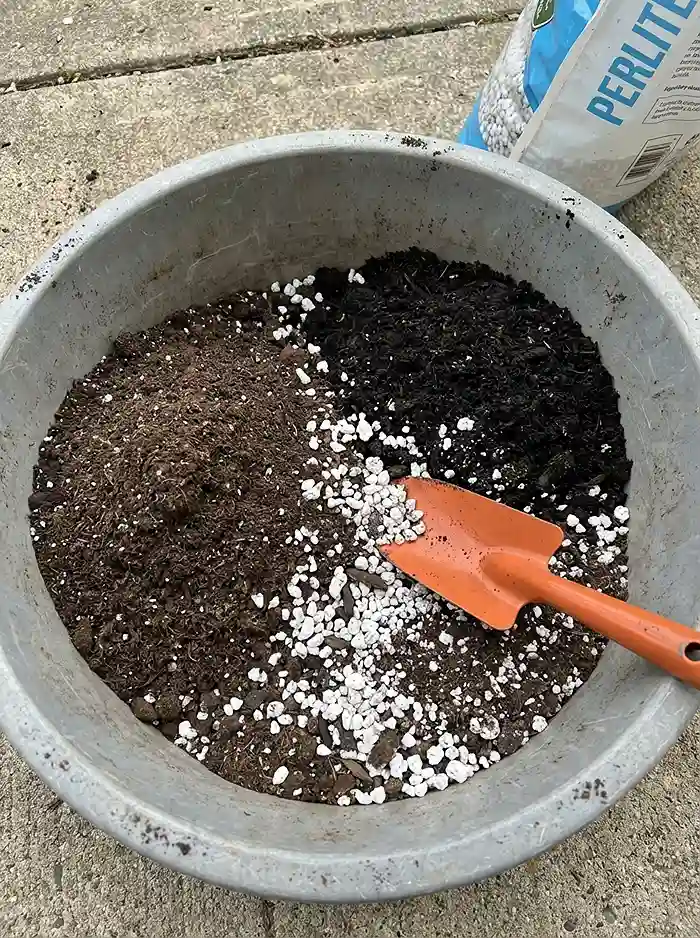
This blend drains freely, feeds your leafy greens for the first 4–6 weeks without additional fertilizer, and stays light enough that your balcony won’t have an existential crisis. If you’re looking for a deeper dive into getting started with small-space growing, check out this guide on best beginner plants for small-space gardening — it pairs perfectly with what we’re covering here.
Close the Loop: From Kitchen Scraps to Plant Food
After that first 4–6 weeks, your greens are going to want a snack. Instead of grabbing synthetic fertilizer off a shelf, try closing the nutrient loop with a small indoor worm bin or a countertop electric composter. Your kitchen scraps become compost, your compost feeds your greens, and your greens feed you. It’s a beautiful little circle — and it costs basically nothing once you’re set up.
The Quick-Win Crops: Why These Leafy Greens for Beginners Deliver the Fastest Results
Alright, this is the section you’ve been scrolling for. Let’s talk about the actual plants — organized by botanical family, because (fun fact) related plants share similar care needs. That means once you learn to grow one, you basically know how to grow its cousins.
For each crop, we’re answering the three questions every beginner actually wants to know: Why is it a fast win? When do I harvest? And will it grow back after I cut it?
Asteraceae Family — Your Salad Foundation
Lettuce (Lactuca sativa) is the undisputed beginner champion, and honestly? It’s almost hard to screw up.
You’ll get your first baby leaves in 30–45 days from seed, or a full head in 55–70 days. It tolerates partial shade, grows happily in pots as small as one gallon, and it just… works. Go with ‘Buttercrunch’ for buttery texture and solid heat tolerance, or ‘Little Gem’ if you want a compact romaine that fits in a container the size of a coffee can.
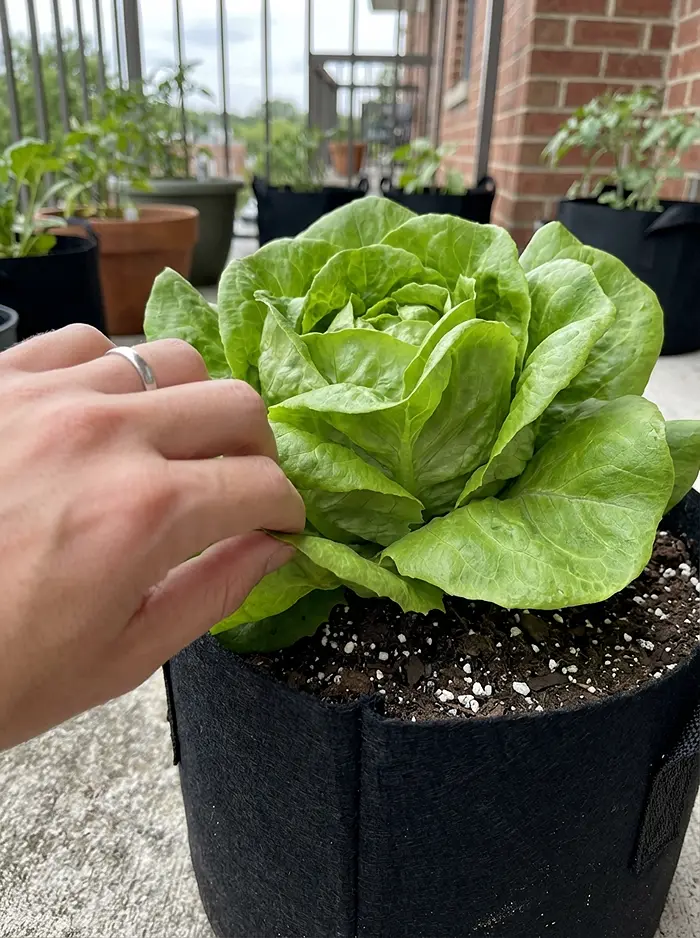
When to harvest: Baby leaves at 4–6 inches tall. Once the plant has 5+ leaves, start picking the outer ones anytime you’re hungry.
Does it regrow? Oh yes. Snip the outer leaves at the base, leave the center rosette alone, and never take more than a third of the plant at once. One lettuce plant can keep producing for 2–6 months before it bolts. That’s a lot of free salads.
Brassicaceae Family — The Tough Ones That Just Keep Going
Kale is the stoic workhorse of every balcony vegetable garden. Baby leaves are ready in 25–30 days; mature leaves in 55–65 days. It shrugs off frost, tolerates shade, survives neglect — and here’s a fun twist — it actually gets sweeter after a cold snap.
‘Dwarf Blue Curled Scotch’ is your best bet for small spaces: compact, curly, and ridiculously cold-hardy.
When to harvest: When the outer leaves are about the size of your hand.
Does it regrow? Kale is the cut-and-come-again champion of the entire plant kingdom. Strip the outer leaves weekly, protect that terminal bud at the center, and a single plant can produce for 9–12 months. I’m not exaggerating. According to the University of Minnesota Extension, kale is one of the most productive and cold-tolerant crops you can grow in any sized garden.
Arugula is your speed demon — first baby leaves in just 21–28 days from seed. It’s the fastest salad green you can grow, period. And that peppery bite? It turns a boring bowl of lettuce into something you’d actually pay $16 for at a restaurant.
Try ‘Astro’ for quick harvests and mild flavor, or ‘Sylvetta’ (wild arugula) if you want something slower to bolt with a more intense, almost nutty kick.
When to harvest: 2–3 inches for mild; 4–6 inches for the full peppery experience.
Does it regrow? Yep — cut 1 inch above the soil line and expect 3–5 regrowth cycles. When it starts bolting in warm weather, don’t fight it. Just succession sow a new batch every 2–3 weeks and you’ll never run out.
Mizuna gets an honorable mention here — 21–40 days to harvest, mild fringed leaves, excellent tucked between slower crops. Think of it as arugula’s chill, easy-going cousin.
Amaranthaceae Family — The Seasonal All-Stars
Spinach gives you baby leaves in 25–30 days and full-sized harvests in 40–50 days. It’s nutrient-dense and loves cool weather. The catch? It hates heat. Once temperatures hit 75°F (24°C), spinach bolts faster than you can say “I should’ve planted more.”
‘Bloomsdale Long Standing’ is the variety you want — a savoy-type specifically bred to resist bolting as long as possible.
When to harvest: Outer leaves at 3–5 inches. Harvest often — it actually delays bolting.
Does it regrow? Yes, but don’t expect the marathon performance you get from kale. In warm climates, treat spinach as a quick “sow-and-harvest-fast” crop for spring and fall rather than a long-term cut-and-come-again plant.
Swiss Chard is the secret weapon nobody talks about enough. First harvest in 30 days (baby) to 55–60 days (mature). It’s a biennial, meaning it can survive and produce for two full years in mild climates. It handles heat better than spinach and laughs at light frost.
‘Bright Lights’ is the variety that’ll make your balcony vegetable garden look like an Instagram post — neon stems in red, orange, yellow, and pink that double as straight-up ornamental plants.
When to harvest: Outer stalks when they’re 8–12 inches tall. The inner ones just keep coming.
Does it regrow? Absolutely. One ‘Bright Lights’ plant can feed you for 6–11 months with regular harvesting. That’s almost a year of greens from a single plant in a single pot. Hard to beat that.
Getting More From Less: Vertical and Intensive Strategies for Leafy Greens for Beginners
So you’ve got limited floor space. Join the club. Here’s how to multiply your harvest without multiplying your footprint.
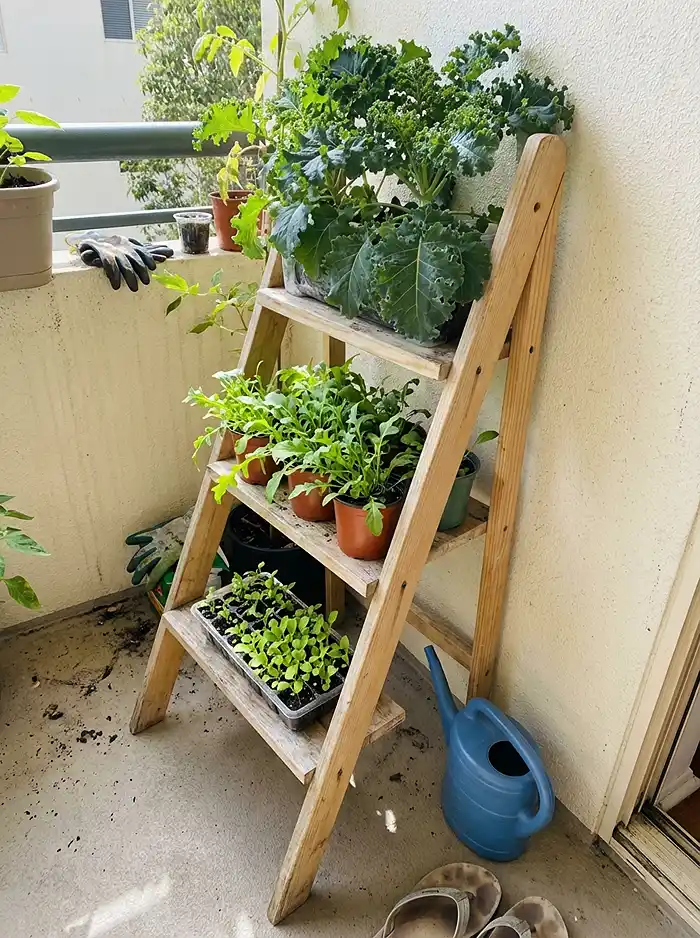
Go Vertical — Think in Three Dimensions
Wall-mounted shelves, tiered ladder planters, hanging baskets, pocket planters on fences — all of these convert dead vertical space into productive growing area. Leafy greens are perfect for this because they’re lightweight and shallow-rooted. A 6–8 inch container depth is all they need.
Vertical gardening is the #1 space-saving technique trending in 2026 for good reason: it can effectively triple your growing area without adding a single extra square foot of floor space.
Interplanting — Never Leave Soil Sitting Idle
Tuck fast crops like arugula or radishes (21–28 days) between slow growers like peppers or tomatoes. By the time the big plants need the space, you’ve already harvested two or three rounds of greens from the gaps.
Specific spacing that works well: lettuce at 4 plants per square foot, kale at 1 per square foot, arugula broadcast-sown across any open soil surface.
Succession Sowing — The “Never Run Out” Trick
This is the single smartest thing you can do as a beginner, and almost nobody does it at first. Sow a new round of seeds every 2–3 weeks. Stagger them across different containers so one batch is always at harvest stage while the next is coming up behind it.
This one habit transforms a short-season crop like arugula into a six-month continuous harvest pipeline. Future you will be so smug about it.
Keeping Things Alive: Watering and Pest Control for Leafy Greens for Beginners
Automated Watering — Set It and (Mostly) Forget It
Containers dry out way faster than ground beds, especially on windy balconies. A simple gravity-fed drip bag or a timer-based system with emitters every 6 inches delivers steady, even moisture without you having to think about it every day.
The goal: consistently moist, never waterlogged. “Soggy bottoms” cause root rot; bone-dry cycles trigger bolting. Find the sweet spot and your plants will practically take care of themselves.
The “Snail Patrol” — Organic Pest Defense
Keep it simple: mechanical barriers first, sprays second.
Beer traps handle slugs and snails (they’re surprisingly effective and mildly entertaining to set up). Fine insect mesh draped over your Brassicas keeps cabbage white butterflies from laying eggs on your kale. Diluted neem oil controls aphid outbreaks. And planting a few strong-scented herbs like basil or cilantro alongside your greens acts as a natural deterrent layer.
That’s your entire pest management plan. Not complicated, just consistent.
Cold Climate Spotlight: Growing Leafy Greens for Beginners in Zone 3
If you garden in Zone 3, “low-maintenance” means something slightly different — but it absolutely doesn’t mean “impossible.” Your productive window runs roughly May through October, and the key is choosing varieties that actually want to be cold.
Red Russian kale and cold-hardy spinach shrug off late-spring frosts like they’re nothing. Dark-colored containers absorb solar heat and warm the soil faster than lighter pots. Cold frames and floating row covers extend both ends of your season by 3–4 weeks.
And here’s the best part: kale exposed to frost converts its starches into sugars. Cold-climate kale is legitimately the sweetest, most flavorful kale you’ll ever eat. Consider it your consolation prize for shoveling snow in April.
Frequently Asked Questions
Can I use garden soil in my balcony pots?
No. Garden soil compacts in containers, suffocates roots, and creates prime conditions for root rot. Use a container-specific mix instead: 1/3 potting mix, 1/3 compost, 1/3 perlite.
How much sun do leafy greens actually need?
Less than you’d think. While most vegetables need 6–8 hours of direct sun, leafy greens like lettuce, kale, spinach, and arugula can produce a solid harvest with as little as 3–5 hours of sunlight per day.
Which crops will regrow after I cut them?
Lettuce, kale, Swiss chard, arugula, mizuna, and green onions all support cut-and-come-again harvesting. The key rule: always leave at least two-thirds of the plant intact so it can photosynthesize and push out new growth.
What’s the fastest vegetable to grow from seed?
Radishes win at 21–25 days. For leafy greens specifically, arugula is your speed champion — first baby leaves in just 21–28 days from seed.
What does “bolting” mean and how do I prevent it?
Bolting is when a plant stops making leaves and starts flowering to produce seeds — usually triggered by heat above 75°F or lengthening daylight hours. To delay it, harvest frequently, provide afternoon shade, and choose bolt-resistant varieties like ‘Bloomsdale Long Standing’ spinach or ‘Buttercrunch’ lettuce.
Your First Harvest Is 21 Days Away
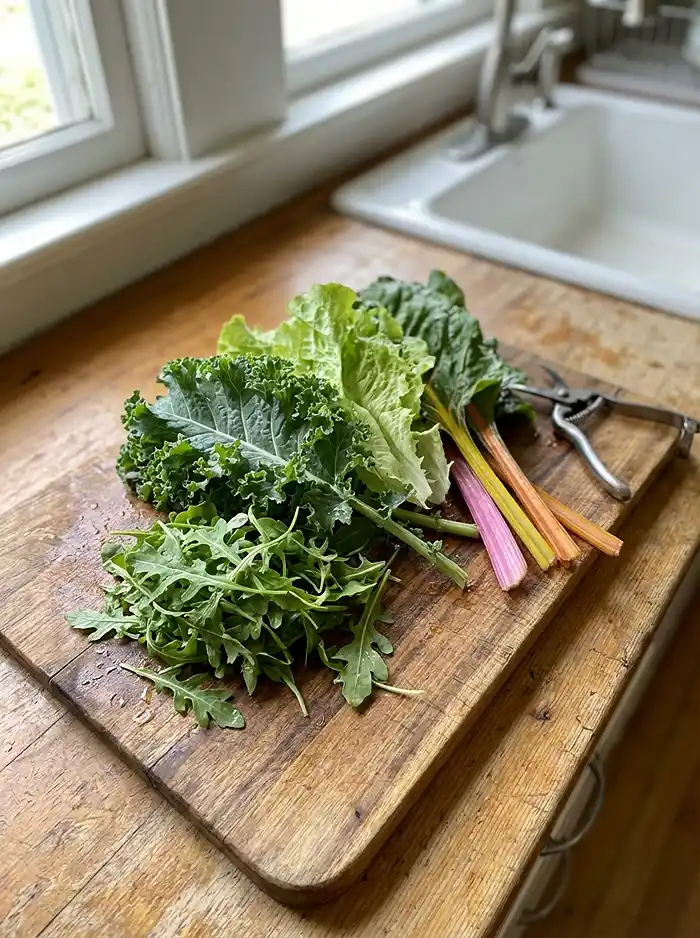
Here’s the truth that “small space” doesn’t want you to know: it was never actually a barrier. Two or three containers, the 1/3-1/3-1/3 soil mix, one lettuce plant, and one kale plant. That’s your entire starter kit.
Master cut-and-come-again harvesting on those two crops, and you’ll be eating homegrown salads within a month. Once that rhythm clicks — and it will — add arugula for speed, Swiss chard for color, and spinach for cool-season nutrition. Stack vertically. Succession sow. Close the nutrient loop.
Every leaf you grow is a leaf you didn’t buy, a skill you didn’t have last month, and a few quiet minutes spent doing something that genuinely matters. Start this week. Your balcony is ready. Your salad bowl is waiting.