

How Often Should You Water Windowsill Herbs?
Learn how often to water windowsill herbs like basil, mint, parsley, and thyme based on sunlight, season, pot size, and indoor conditions.
Here’s the deal: most windowsill herbs need watering every 2–7 days, depending on sunlight, pot size, drainage, and species. Mediterranean herbs like rosemary prefer drier soil, while basil and mint want consistently moist conditions. But here’s the secret nobody tells you—forget the calendar and check the top inch of soil before watering instead.
I’ve killed more herbs than I’d like to admit. Basil? Murdered. Rosemary? Drowned (ironic, right?). But after years of trial, error, and way too much Googling, I’ve finally cracked the code on how often should you water windowsill herbs—and I’m sharing everything I’ve learned so you don’t make my mistakes.
Whether you’re wondering about creating an indoor herb watering schedule, nailing your herb container drainage, or figuring out if you need grow lights for herbs, this guide has you covered. Let’s dig in.
If you’re just getting started with indoor herbs, it helps to understand the fundamentals first. Our complete guide to Windowsill Herb Gardens: Complete Guide for Growing Herbs on Your Window walks through everything from choosing the right herbs to setting up the perfect window environment before you even start watering.
Table of Contents
How Often Should You Water Windowsill Herbs? The Practical Schedule
Here’s the thing—there’s no magic number that works for every herb. Asking “how often should you water windowsill herbs” is kind of like asking “how often should you eat?” It depends on who’s asking!
The smartest approach? Group your herbs by thirst level and treat them accordingly.
Quick-Reference Watering Matrix (Your New Best Friend)
The Drought-Tolerant Mediterranean Crew:
- Herbs: Rosemary, Thyme, Sage, Oregano
- Light needs: South-facing windows (6–8 hours of sun)
- Watering: Every 5–7 days
- Golden rule: Let the top 2 inches dry completely—these guys actually like being a little neglected
The Middle-of-the-Road Soft-Leaf Gang:
- Herbs: Parsley, Cilantro, Dill
- Light needs: East or West-facing windows (4–6 hours)
- Watering: Every 3–5 days
- Golden rule: Water when the top inch feels dry
The Drama Queens (High-Maintenance but Worth It):
- Herbs: Basil, Mint
- Light needs: Bright light with warmth
- Watering: Every 2–3 days
- Golden rule: Keep slightly moist—these divas will wilt dramatically the moment they’re thirsty
Pro tip that’ll blow your mind: When you double the sunlight, you don’t just double the watering—you might need to water 2–3 times more often. Light intensity and water needs have a logarithmic relationship, not a linear one. (Fancy words, I know, but basically: more sun = way thirstier plants.)
Understanding Your Windowsill’s Weird Little Micro-Climate
Your windowsill isn’t just a shelf—it’s a tiny ecosystem with its own rules. And honestly? It can be kind of brutal on plants if you don’t understand what’s happening.
Why Your Herbs Are Thirstier Than You Think
Ever wonder why your windowsill herbs seem to dry out faster than outdoor plants? Here’s what’s actually going on:
Glass creates a mini greenhouse effect. That window amplifies heat during the day, sometimes dramatically. Your herbs are basically sunbathing under a magnifying glass.
Your HVAC is working against you. Central heating and air conditioning constantly pull moisture out of the air. Your herbs are fighting a losing battle against technology.
Indoor humidity is pathetically low. Most homes hover around 30–40% humidity. For reference, herbs would prefer something closer to 50–60%. They’re literally gasping for moisture.
Small pots = fast drying. Less soil means less water storage. It’s simple math, but easy to forget.
The botanical physiology for beginners version? Roots suck up water → leaves release it as vapor → brighter light and warmer temps mean faster water loss. It’s like your herbs are sweating, and sunny windowsills make them sweat harder.
How Window Direction Changes Everything About Watering
Not all windowsills are created equal. Where your herbs sit determines how often should you water windowsill herbs more than almost anything else.
South-Facing Windows (The Overachievers):
These get 6–8+ hours of direct sun. Your herbs will be happy, but also seriously thirsty. You’ll need to check soil daily in summer—sometimes twice. Best for Mediterranean herbs that can handle the intensity.
East or West-Facing Windows (The Goldilocks Zone):
Moderate light, predictable watering rhythms. This is honestly the sweet spot for most herbs. You can settle into a nice routine without constant monitoring.
North-Facing Windows (The Danger Zone):
Lowest light, lowest evaporation. Sounds good, right? Wrong. The real danger here is overwatering. With less light driving transpiration, soil stays wet longer, and root rot becomes your enemy. If this is your only option, consider adding grow lights for herbs.
My favorite concept: The “Light-to-Water Ratio.” More photons hitting your plants = more water leaving through leaves = more frequent watering. Track your sunlight, and your watering becomes totally predictable.
Herb Container Drainage: How to Prevent 90% of Watering Problems
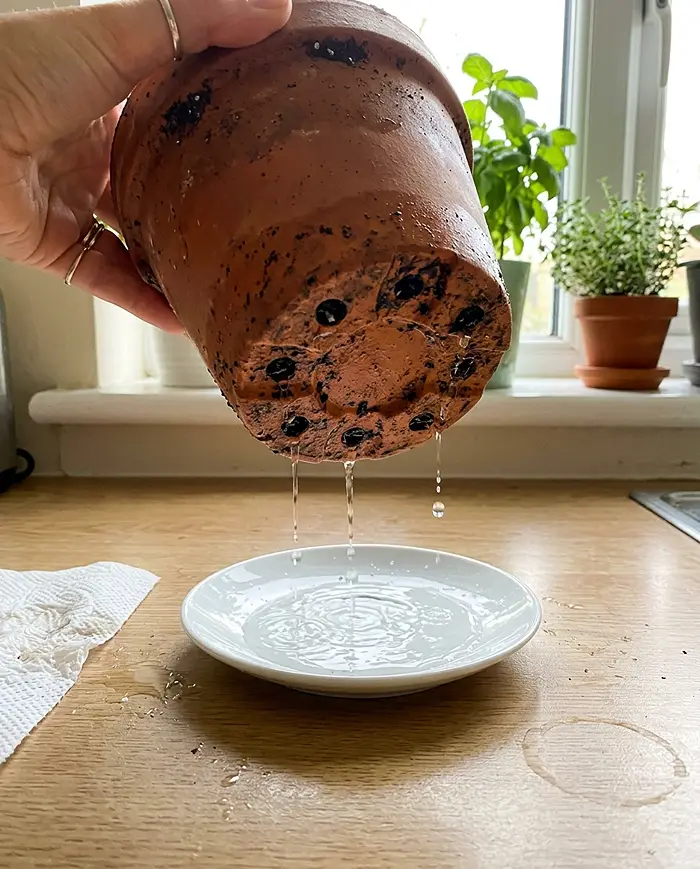
I’m going to be blunt: bad drainage kills more windowsill herbs than anything else. Get this right, and you’re already ahead of 90% of indoor gardeners.
Why Garden Soil Is Secretly Terrible for Indoor Herbs
I know it’s tempting to grab a scoop of soil from outside. Free dirt! What could go wrong?
Everything. Everything can go wrong.
Garden soil compacts into a brick when watered repeatedly indoors. Air pockets disappear. Roots suffocate.
It holds water like a sponge—and not in a good way. Roots sit in soggy conditions for days, begging for rot.
Bonus nightmares: outdoor soil often brings pests, weed seeds, and fungal spores right into your kitchen. Hard pass.
What to use instead:
Mix up this simple soilless recipe that actually works:
- 2 parts peat moss or coco coir (holds moisture without drowning roots)
- 1 part perlite (those little white chunks that look like styrofoam—they’re actually volcanic glass and create air pockets)
- Optional: coarse sand if you’re growing Mediterranean herbs that want extra drainage
The University of Maryland Extension specifically recommends “two-parts soilless potting mixture and one-part perlite” for indoor herbs. When agricultural experts agree on something, it’s worth listening.
How Pot Materials Affect How Often You Water Windowsill Herbs
Your container choice matters more than you’d think for determining how often should you water windowsill herbs:
Terracotta (The Classic Choice):
Porous walls let air and moisture escape. Great for rosemary, thyme, and sage—herbs that hate wet feet. Downside? You’ll water more often, and they’re heavy. But that rustic look? Chef’s kiss.
Plastic (The Practical Choice):
Retains moisture longer, lightweight, cheap. Perfect for basil, mint, and other thirsty herbs. Just be careful not to overwater since moisture can’t escape through the sides.
Glazed Ceramic (The Fancy Choice):
Middle ground on moisture retention. Looks gorgeous on a windowsill. Just make sure there are drainage holes—many decorative pots skip them, which is a recipe for disaster.
The One Rule You Cannot Break
Drainage holes are non-negotiable. I don’t care how cute that holeless pot is. Your herbs will die. Period.
And here’s a myth I need to bust right now: putting rocks at the bottom of a pot without drainage holes doesn’t help. In fact, it makes things worse.
Here’s why (science incoming): water doesn’t flow freely from fine soil into coarse rocks. Instead, the soil has to become completely saturated before water moves down. This creates something called a “perched water table”—basically, your roots are sitting in a swamp even with that rock layer. The water needs to physically exit the pot, not just move to the bottom.
If you love a decorative pot without holes, use it as a cachepot—put your herb in a plastic pot with drainage inside the pretty one, and remove it for watering.
Species-Specific Secrets: What Each Herb Actually Wants
Different herbs evolved in wildly different climates. Treating them all the same is like assuming your cactus and your fern want identical care. Spoiler: they don’t.
Mediterranean Herbs: The Low-Maintenance Legends
The lineup: Rosemary, Thyme, Sage, Oregano, Marjoram
These herbs hail from rocky hillsides around the Mediterranean Sea, where rain is scarce and soil drains fast. They’ve evolved some clever tricks:
- Waxy leaf coatings that lock in moisture
- Small or needle-like leaves to minimize surface area
- Root systems designed for rocky, fast-draining soil
- A genuine preference for “dry spells” between waterings
How often should you water windowsill herbs in this group? Only when the top 2 inches feel bone dry. Seriously—stick your finger in there. If there’s any dampness, walk away. These herbs would rather be neglected than smothered with love.
Overwatering Mediterranean herbs is the #1 killer. They’ll tolerate drought. They won’t tolerate soggy roots.
Moisture-Loving Herbs: The Thirsty Ones
The lineup: Basil, Mint, Parsley, Cilantro
These soft-leaved beauties evolved in lusher conditions and have zero chill about drying out:
- Large, thin leaves with lots of surface area (= rapid water loss)
- Fast transpiration rates
- Dramatic wilting when thirsty (basil is especially theatrical)
- Preference for consistent, even moisture
Watering rule: Check daily, water when the top inch feels dry. Basil especially will communicate its thirst through drooping leaves—usually in late afternoon. Don’t panic; water promptly, and it’ll bounce back within hours.
Bonus: Herbs That’ll Grow Straight in Water
Want to skip soil altogether? These herbs can actually live in just water:
- Mint: Absolute champ at water growing. Roots aggressively and can live in a jar forever.
- Basil: Roots easily in water but does better if you eventually transplant to soil.
- Sage: Works for propagation purposes, then move to soil.
Just snip a fresh cutting, plop it in a jar of clean water (no leaves submerged!), and change the water every 3–4 days. Roots usually appear within a week or two.
How to Know When to Water (Ditch the Calendar)
Here’s the truth: watering on a schedule is a rookie mistake. Conditions change constantly—weather, seasons, heating, humidity. Your Thursday watering routine might work great in spring and kill your plants in winter.
Instead, learn to read your herbs.
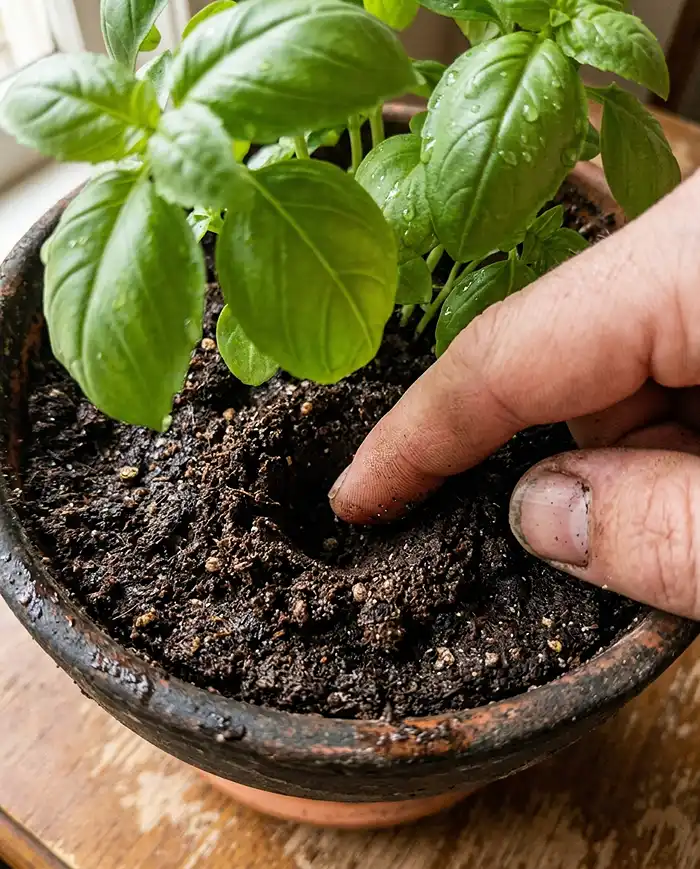
The Finger Test (Simple but Foolproof)
Stick your finger 1–2 inches into the soil. Dry? Water. Any moisture? Wait and check tomorrow.
This five-second test beats any fancy moisture meter. Your finger is free, always available, and surprisingly accurate.
The Weight Test (For the Lazy Days)
Lift your pot right after watering. Notice how heavy it feels. Now lift it a few days later—a dry pot feels shockingly lighter.
With practice, you can assess moisture without even touching the soil. It’s kind of a superpower.
Leaf Signals: Your Herbs Are Talking
Pay attention—your plants are constantly communicating:
- Temporary wilting: “I’m thirsty!” Water immediately; recovery takes hours.
- Yellow lower leaves: “I’m drowning!” Cut back on watering and check drainage.
- Brown, crispy leaf edges: “Your watering is inconsistent!” Establish a rhythm.
- Pale, leggy growth: “I need more light, not more water!” Move closer to the window.
How Often Should You Water Windowsill Herbs? Recognizing Overwatering
Here’s an uncomfortable truth: overwatering kills more indoor herbs than underwatering. We love our plants too much and drown them with affection.
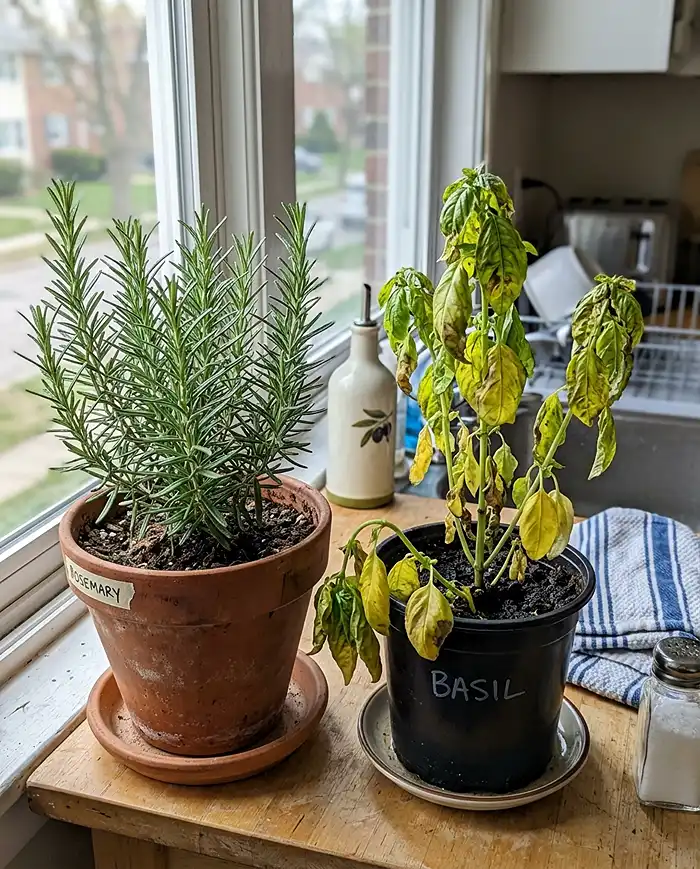
Warning signs you’re overwatering:
- Yellow leaves, especially lower ones, that drop easily
- Mushy, soft stems at the base (this is bad news)
- Soil that smells sour, musty, or like wet basement
- Tiny flies hovering around your plants (fungus gnats—they love soggy soil)
- Soil still wet 4+ days after watering
What’s actually happening underground: When soil stays waterlogged, oxygen can’t reach roots. Roots need air just like they need water. Without oxygen, beneficial fungi die and harmful fungi take over. They attack weakened roots, causing them to rot and collapse. By the time leaves turn yellow, the damage is already serious.
Prevention is easier than cure: good drainage, appropriate pot material, and checking soil before watering.
How Often Should You Water Windowsill Herbs Through the Seasons?
Your indoor herb watering schedule should shift with the calendar. What works in July won’t work in January.
Summer Watering (Everything Dries Faster)
- Check soil daily—sometimes twice during heat waves
- High-demand herbs might need water every single day
- Consider pulling pots back from intensely hot south-facing windows
- Morning misting helps if humidity drops below 40%
Winter Watering: The Indoor Paradox
Winter is tricky. Less light means slower growth and reduced water needs. But indoor heating absolutely tanks humidity, drying out soil faster than expected.
Navigate the paradox:
- Reduce watering frequency overall (plants are semi-dormant)
- Increase humidity with pebble trays or grouping plants together
- Keep herbs away from heating vents—they’ll crisp up fast
- Watch for drooping and adjust as needed
Advanced Troubleshooting: Fixing Common Problems
When Soil Repels Water (The Bottom Watering Fix)
Ever notice water beading on top of soil instead of soaking in? That’s hydrophobic soil—it’s gotten so dry that it actually repels moisture. Top watering just runs down the sides of the pot.
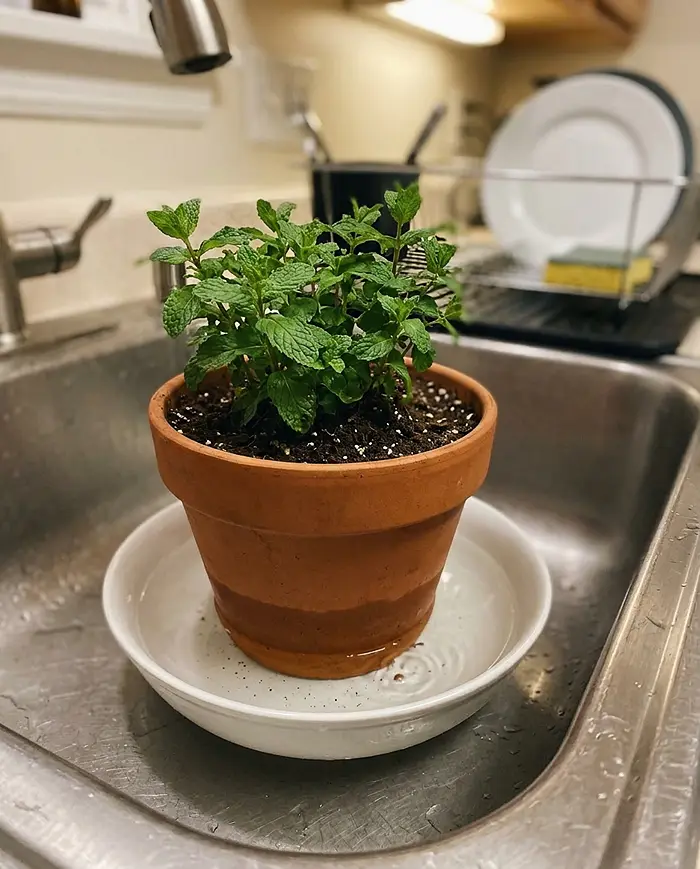
Fix it with bottom watering:
- Fill your sink or a basin with 1–2 inches of room-temperature water
- Set your potted herb in the water (drainage holes must be submerged)
- Let it soak for 20–30 minutes
- Remove, let excess water drain completely
- Return to the windowsill
This forces water up through the drainage holes, rehydrating soil from the bottom up. It’s incredibly effective.
Conquering Fungus Gnats
Those annoying tiny flies? They’re fungus gnats, and they’re a sure sign your soil is staying too wet on top.
Beat them:
- Let the top inch of soil dry completely between waterings (their larvae can’t survive in dry conditions)
- Improve airflow around plants
- Use yellow sticky traps to catch adults
- Avoid keeping the surface constantly moist
Grow Lights for Herbs: How They Change Your Watering Schedule
When windowsill light isn’t cutting it—especially in winter—grow lights for herbs become a game-changer. But they also affect how often should you water windowsill herbs.
What to know:
- Running lights 12–16 hours daily increases transpiration (and thirst)
- LED grow lights generate less heat than sunlight, so evaporation is slightly lower
- Consistent light cycles create more predictable watering patterns
- Position lights 6–12 inches above plants for optimal intensity
Bottom line: Herbs under grow lights usually need more water than those struggling through dim winter windows. Monitor more closely when you add supplemental lighting.
Harvesting Without Stressing Your Herbs
How you harvest directly affects water needs. Go too aggressive, and you’ll shock your plant.
The 1/3 Rule
Never remove more than one-third of your plant at once.
Why this matters:
- Encourages bushy, compact growth instead of leggy stems
- Prevents sudden water stress
- Keeps the root-to-shoot ratio balanced
- Promotes continuous leaf production
Heavy harvesting is like running a marathon—your herbs need recovery time. Regular, light harvesting keeps them productive and healthy.
FAQ: Your Burning Questions About Watering Windowsill Herbs
How often should you water basil indoors?
Every 2–3 days in bright light. Keep soil slightly moist but never soggy. Basil is dramatic—it’ll wilt pathetically when thirsty but bounces back fast after watering.
Can you overwater herbs in pots?
Absolutely. It’s the most common way people kill indoor herbs. Without proper herb container drainage, excess water suffocates roots and invites fatal root rot.
What temperature do windowsill herbs prefer?
65–75°F (18–24°C) works for most herbs. Basil likes the warmer end and suffers below 50°F. Avoid cold drafts and heating vents.
Why do my herbs taste bland?
Low light is usually the culprit. Sunlight drives essential oil production—the stuff that makes herbs actually taste like something. Make sure herbs get 6+ hours of direct light, or add grow lights for herbs.
Can I reuse potting soil?
Yes! Remove old roots, add fresh compost, and mix in perlite to restore drainage. Replace completely every 2–3 years.
The Cheat Sheet: How Often Should You Water Windowsill Herbs?
Mediterranean herbs (Rosemary, Thyme, Sage, Oregano): Every 5–7 days. Let them dry out.
Soft-leaf herbs (Parsley, Cilantro, Dill): Every 3–5 days. Moderate moisture.
High-demand herbs (Basil, Mint): Every 2–3 days. Keep slightly moist.
Quick Diagnostic Guide:
- Yellow leaves → Water less
- Wilting + dry soil → Water immediately
- Fungus gnats → Improve drainage, let soil dry more
- Brown leaf edges → Stabilize your watering rhythm
- Pale, leggy growth → More light, not more water
At the end of the day, figuring out how often should you water windowsill herbs isn’t about memorizing a schedule—it’s about learning to read your plants. Check the soil. Watch the leaves. Adjust for seasons. Your herbs will tell you what they need if you pay attention.
Now go save those windowsill herbs. You’ve got this.