

Growing Herbs in Low-Light Windows
Learn how to grow herbs in low-light windows with the best herb choices, simple setup tips, and fixes for weak, slow, or leggy growth.
Growing herbs in low-light windows is totally doable when you pick the right shade-tolerant culinary herbs and nail the basics—watering, soil, and maybe some supplemental lighting. The secret? Understanding what your plants actually need to survive (and thrive!) when sunlight is scarce.
So you’ve got a kitchen window that doesn’t exactly scream “sun-drenched Mediterranean paradise.” Maybe it faces north, or there’s a building blocking your light, or you’re just working with what you’ve got in a small apartment. Here’s the good news: growing herbs in low-light windows isn’t some impossible dream—it’s absolutely achievable once you know the tricks.
I’ve killed my fair share of herbs trying to make basil happen on a dim windowsill (spoiler: it didn’t happen). But after plenty of trial and error, I’ve figured out which herbs actually want to hang out in the shade, and how to keep them happy. If you’re diving into indoor gardening for small spaces, this guide will save you a lot of frustration—and dead plants.
Table of Contents
Why Some Herbs Survive in Low Light (and Others Just… Don’t)
Let’s get a little nerdy for a second—but I promise it’ll make everything else click.
The Light Compensation Point: Your Plant’s Break-Even Point
Here’s a term that sounds fancy but is actually pretty simple: the light compensation point is basically the minimum amount of light a plant needs to not starve itself.
Think of it like this—your plant is constantly burning energy just to stay alive (respiration), and it makes energy through photosynthesis. The light compensation point is where those two balance out. Below that threshold? Your herb is running on empty and slowly dying.
Shade-tolerant herbs have naturally low light compensation points. They’re the efficient little cars of the plant world—they don’t need much fuel to keep going. Sun-lovers like basil? They’re gas-guzzlers that need way more light to break even.
Etiolation: When Your Herbs Get Leggy and Sad
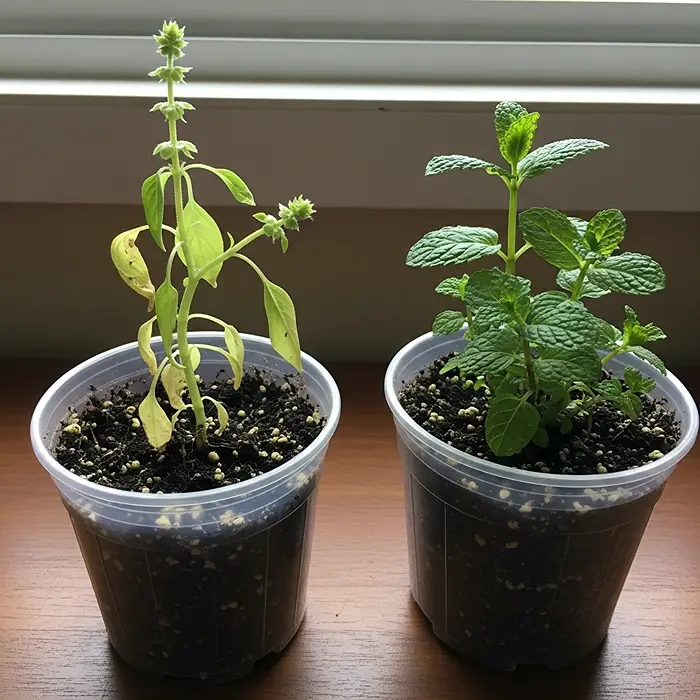
Ever seen a plant that looks like it’s desperately stretching toward a window, with pale leaves and stems that are way too long and skinny? That’s etiolation, and it’s basically your plant screaming “I NEED MORE LIGHT!”
Here’s what to watch for:
- Super long, weak stems (like the plant hit a growth spurt but forgot to build muscle)
- Pale, yellowish leaves instead of healthy green
- The whole plant leaning dramatically toward the window
- Floppy, droopy growth that can’t support itself
Here’s the thing that trips most people up: your room might feel bright to you, but your eyes are way better at adjusting to low light than your plants are. What seems like a “sunny spot” to you might be basically twilight to your herbs. They measure actual light energy, not vibes.
Your Window Is Lying to You (Sort Of)
That gorgeous window flooding your room with light? It’s delivering way less growing power than you think.
Regular window glass—especially double-paned windows—blocks a ton of the good stuff plants need. We’re talking about PAR (photosynthetically active radiation), which is the light wavelengths plants actually use for photosynthesis. Some window coatings can cut that usable light in half or more.
This is why growing herbs in low-light windows requires understanding that a north-facing window might look bright but is basically a plant desert in terms of usable energy. Your eyes adjust; your mint does not.
The Best Herbs for Growing in Low-Light Windows
Okay, here’s where we get practical. These are your ride-or-die herbs for shady situations.
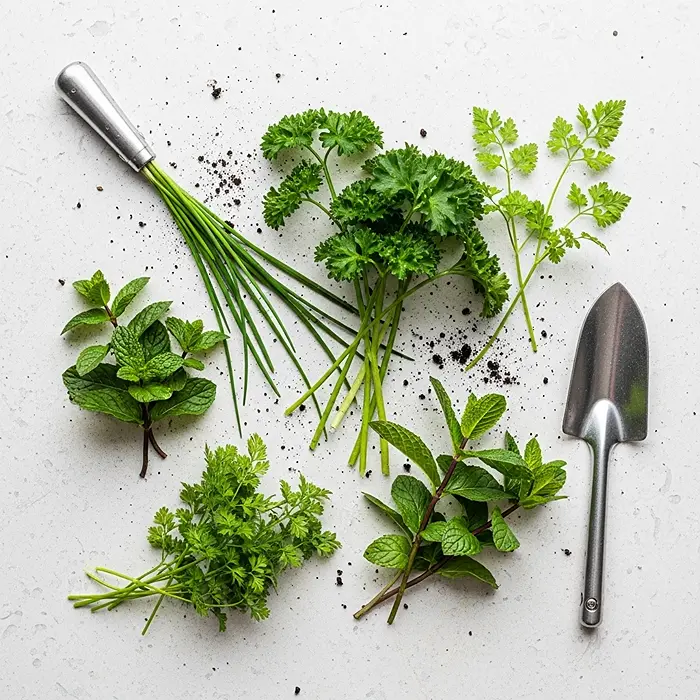
Shade-Tolerant Culinary Herbs: The Cheat Sheet
| Herb | How Much Sun It Really Needs | Shade Tolerance | The Real Talk |
|---|---|---|---|
| Mint | 2 hours | Very High | Will probably try to take over everything—keep it contained! |
| Parsley | 3 hours | High | Slower growth, but totally worth it |
| Chives | 3 hours | Very High | Seriously, just start here if you’re nervous |
| Chervil | 2 hours | Excellent | Actually PREFERS shade—weirdo in the best way |
| Cilantro (Slow-Bolting) | 3 hours | Moderate-High | Get the slow-bolt varieties or you’ll be disappointed |
| Lemon Balm | 2 hours | High | Smells amazing and basically wants to live |
| Sweet Woodruff | Indirect only | Excellent | The ultimate shade queen |
Growing Herbs in Low-Light Windows: The Mint Family Winners
If you’re setting up a windowsill herb garden, the mint family (Lamiaceae) should be your best friends.
Peppermint, spearmint, and chocolate mint (yes, that’s a real thing and it’s delightful) all genuinely thrive with just a couple hours of direct sun. Lemon balm is part of this family too and shares that same easy-going attitude.
Why do these herbs handle low light so well? They’ve evolved with leaves that are really efficient at capturing whatever light is available, and they bounce back quickly even when conditions aren’t perfect. Plus, when light is limited, they focus on making more leaves instead of flowers—which is exactly what you want when you’re growing herbs for cooking.
Fair warning: mint is aggressive. Like, “will escape its pot and try to conquer your entire windowsill” aggressive. Give it its own container and maybe keep an eye on it.
The Carrot Family: Parsley, Cilantro, and the Secret Star
Parsley and cilantro belong to the Apiaceae family, and they’ve got a hidden superpower for growing herbs in low-light windows.
Chervil is the real MVP here. Unlike most herbs that just tolerate shade, chervil actually prefers it. Growing it in full sun makes the leaves taste worse and causes it to bolt (go to seed) way too fast. Shade is its happy place.
Parsley does its thing reliably with 3-4 hours of light. The leaves might be a bit smaller than outdoor-grown parsley, but the flavor is all there.
Cilantro is the drama queen of the herb world—always threatening to bolt the second it gets stressed. But here’s the hack: shade actually delays bolting! Lower light keeps cilantro in “make more leaves” mode instead of “time to flower and die” mode. Just make sure you grab slow-bolting varieties.
Chives: The “You Actually Can’t Kill This” Option
If you’re brand new to growing herbs in low-light windows, start with chives. Seriously.
Both regular chives and garlic chives handle partial shade like champions. According to Iowa State University Extension, they’re among the best candidates for indoor growing, especially when light is limited.
They’re so forgiving it’s almost boring. You can snip off what you need, and they just… keep growing. They don’t demand much attention, they tolerate your mistakes, and they make eggs taste better. What’s not to love?
Shade-Loving Herbs Nobody Talks About
Want to impress your plant-nerd friends? Try these overlooked options:
Sweet woodruff thrives in conditions that would murder most herbs. It’s got this lovely vanilla-like flavor that’s traditionally used in German May wine and works great in desserts.
Sorrel brings a bright, lemony punch to salads and soups while handling partial shade without complaint.
Angelica tolerates low light and adds unique flavor to beverages and baked goods, though it does need a bigger pot than most windowsill herbs.
How to Actually Keep Your Low-Light Herbs Alive
Getting the right herbs is step one. Keeping them happy is where the real work (okay, gentle effort) comes in.
Soil Matters More Than You Think for Growing Herbs in Low-Light Windows
Please, for the love of all things green, don’t use dirt from your yard.
Garden soil turns into a waterlogged, compacted nightmare indoors. There’s less airflow, less evaporation, and your poor herb’s roots end up drowning in dense, soggy mud.
What you actually want:
- A peat-perlite mix (about 60:40 ratio) or coco-perlite blend
- Something light and fluffy that drains well
- Skip the potting mixes with built-in fertilizers
Container requirements (non-negotiable):
- Drainage holes. Just… drainage holes. Always.
- Terra cotta pots breathe well but dry out faster
- Plastic holds moisture longer, which can actually be helpful when you’re growing herbs in low-light windows since evaporation is slower anyway
The Finger Test: Stop Killing Herbs with Kindness
Here’s a truth bomb: overwatering kills more indoor herbs than bad lighting.
When there’s less light, photosynthesis slows down, which means your plant drinks less water. The soil stays wet way longer than you’d expect, and soggy roots = dead herbs.
The foolproof method:
- Stick your finger about an inch into the soil
- If it’s dry down there, water thoroughly
- If it’s still damp, walk away and check back in a couple days
- When you do water, let it drain completely—never let your pots sit in a saucer of water
I cannot stress this enough: “wet feet” (roots sitting in standing water) will destroy your herbs faster than almost anything else. Your shade-grown herbs are extra vulnerable because their metabolism is already running slower.
Feed Them Less (No, Really)
Low light = slower metabolism = lower appetite.
Your shade-grown herbs can’t process nutrients as quickly as plants basking in full sun. Dump a bunch of fertilizer on them, and they’ll put out weak, spindly growth—the opposite of what you want.
The 50% rule:
- Whatever the fertilizer package says, cut it in half
- Apply every 2-3 weeks when your herbs are actively growing
- In winter? Skip fertilizing altogether if growth has stalled
Your herbs might grow slower in low light, but they’ll be healthier and tastier if you’re not force-feeding them nutrients they can’t use.
Light Management Strategies for Growing Herbs in Low-Light Windows
Let’s talk about working with what you’ve got—and knowing when to bring in backup.
Which Direction Does Your Window Face?
This matters more than you might think.
East-facing windows are kind of the sweet spot for shade-tolerant herbs. You get that gentle morning light without the harsh afternoon intensity.
West-facing windows deliver stronger afternoon sun and might actually support some sun-loving herbs alongside your shade-tolerant crew.
North-facing windows are… challenging. Let’s be honest—most culinary herbs won’t make it here without supplemental lighting. Even the tough ones like mint and chervil will appreciate some LED help.
South-facing windows need monitoring, especially in summer. Your shade-preferring herbs like chervil might actually get scorched. Move them back from the glass or use a sheer curtain to dial down the intensity.
When You Need Backup: Supplemental Lighting for Growing Herbs in Low-Light Windows
Sometimes window light just isn’t enough, and that’s okay! LED grow lights are game-changers.
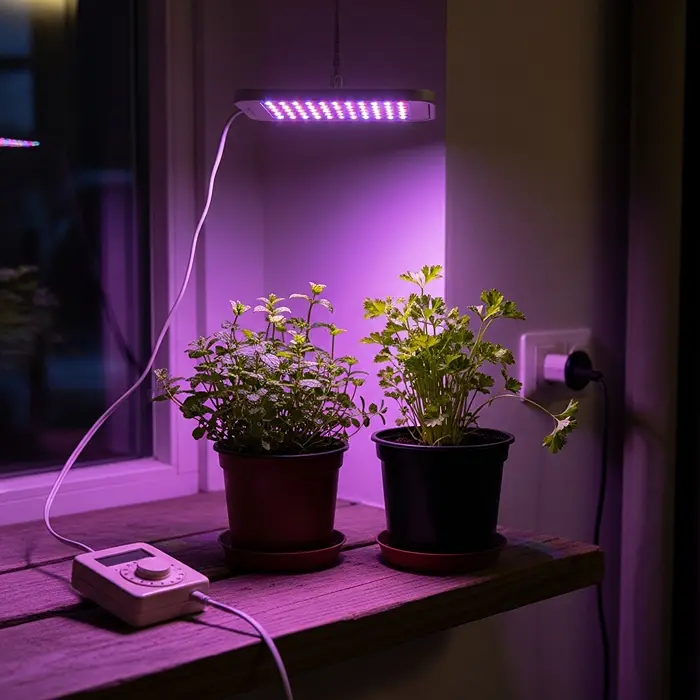
What to look for:
- Full-spectrum lights covering the 400-700nm PAR range (this is what plants actually use)
- Color temperature between 5000K-6500K for leafy herb growth
- Position them 6-12 inches above your plants
How long to run them:
- Winter: 12-16 hours daily (your plants need this when natural light is scarce)
- Summer: 6-8 hours to supplement shorter cloudy days
- Get a timer—seriously, consistency matters and you will forget
Important: decorative LED strips are not the same thing. Those cute little lights might look nice, but they don’t have the right spectrum or intensity to actually help your plants grow. Invest in actual grow lights with published PAR specs.
The Weekly Spin: Rotation Protocol
Plants grow toward light. It’s called phototropism, and it means your windowsill herbs will develop a permanent lean if you don’t intervene.
Simple fix:
- Rotate each pot 90 degrees clockwise once a week
- Set a phone reminder if you need to (I definitely need to)
- Watch for improved symmetrical growth
It takes 10 seconds and prevents your herbs from looking like they’re trying to escape through the window.
The Harvest Hack Most People Miss
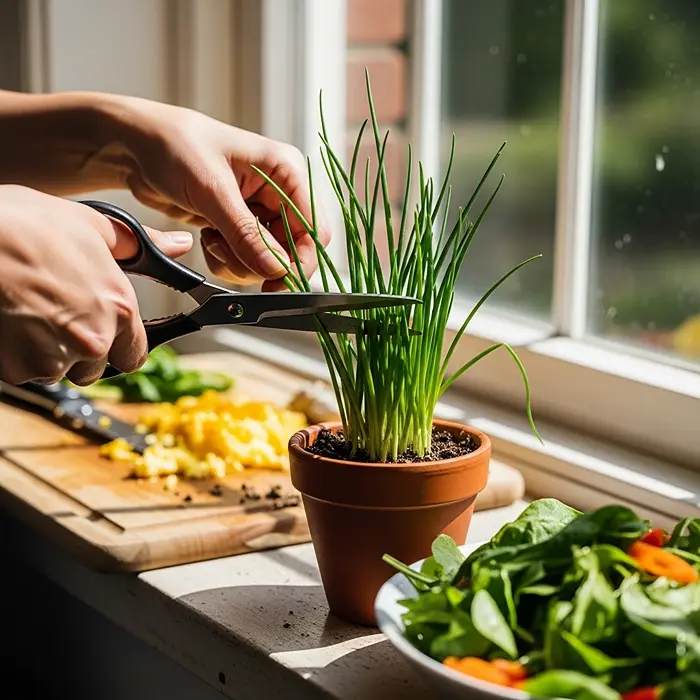
Here’s an insider tip that separates thriving indoor herb gardens from scraggly disappointments: strategic harvesting.
When you pinch off the growing tip of your herb, you’re doing more than collecting ingredients—you’re basically telling your plant “stop growing straight up and start branching out.”
It’s all about something called apical dominance. The main stem tip releases hormones that suppress side shoots. Remove that tip, and suddenly the plant puts energy into growing bushier instead of taller.
This is HUGE when you’re growing herbs in low-light windows. Unharvested herbs stretch toward light in one weak, leggy stem. Regular harvesting forces compact, bushy growth that actually captures light more efficiently.
The harvesting rules:
- Never take more than one-third of the plant at once
- Cut just above a leaf node (where leaves attach to the stem)
- Start harvesting once your plant has 4-6 sets of true leaves
Bonus: this also delays bolting in cilantro and parsley by keeping them focused on leaf production instead of trying to flower.
Dealing with Pests and Seasonal Changes
Indoor growing has its own quirks. Here’s how to handle them.
Bugs Happen (But They Don’t Have to Win)
Low humidity plus warm indoor air equals paradise for certain pests. Spider mites love dry conditions and stressed plants—exactly what you might be dealing with in a low-light situation. Aphids go crazy on soft new growth, especially on mint family herbs.
Natural pest control:
- Neem oil solution (2 tablespoons per gallon of water) sprayed weekly
- Insecticidal soap for active infestations
- When you bring home new plants, quarantine them for two weeks before adding them to your collection (learned this one the hard way)
A simple soapy water spray (1-2 tablespoons mild dish soap per gallon) handles most pest problems if you catch them early.
Let Your Herbs Rest in Winter
Even indoor herbs benefit from a seasonal slowdown.
Winter adjustments for growing herbs in low-light windows:
- If possible, let nighttime temps drop to 55-60°F
- Water less frequently as growth slows
- Stop fertilizing from December through February
Fighting against seasonal rhythms exhausts your plants. A little rest period now means more vigorous growth when spring rolls around.
Troubleshooting: When Things Go Wrong
“Help! My indoor herbs are dying!”
The usual suspects: overwatering (check if the soil is soggy and roots are mushy), not enough light (look for stretched, pale growth), poor drainage (make sure water can escape), or too much fertilizer (flush the soil and back off the feeding schedule).
“Can I really grow herbs in a north-facing window?”
Honestly? Most herbs will struggle without help. You’ll want supplemental LED lighting running 12-16 hours daily. Stick with the toughest shade-tolerant varieties—mint, chervil, and sweet woodruff have the best shot.
“What are the absolute easiest herbs for low light?”
Mint, lemon balm, chives, and sweet woodruff. Chervil actually prefers shade, so it’s weirdly perfect for dim spots. These are your “if these die, maybe try fake plants” options.
Your Quick-Reference Checklist for Growing Herbs in Low-Light Windows
- Pick shade-tolerant herbs that match your actual light situation
- Use light, well-draining potting mix (not garden soil!)
- Only water when the top inch of soil feels dry
- Fertilize at half-strength every 2-3 weeks during growing season
- Rotate pots 90 degrees weekly for even growth
- Add LED grow lights for winter months or north-facing windows
- Harvest regularly to encourage bushy, compact plants
The Bottom Line of Growing Herbs in Low-Light Windows
Growing herbs in low-light windows isn’t about fighting your space—it’s about working with it. Choose the right shade-tolerant culinary herbs, master the basics of watering and soil, and don’t be afraid to bring in some supplemental lighting when needed.
Your indoor herb garden might not look like those Pinterest-perfect sun-drenched kitchens, but it can absolutely provide fresh herbs for your cooking year-round. Start with chives or mint, get comfortable with the routine, and expand from there.
And hey—even if you kill a few plants along the way (we all do), each one teaches you something. That’s just part of the journey. Happy growing!