

10 Best Herbs for a Sunny Windowsill
Discover the best herbs for a sunny windowsill, including easy indoor varieties with strong flavor, compact growth, and simple care.
Let me guess—you’ve killed at least one grocery store basil plant. Maybe two. Possibly an entire herb graveyard situation.
Don’t worry, we’ve all been there. Those sad little supermarket herbs aren’t designed to survive your kitchen. They’re grown for quick shelf appeal, not long-term relationships.
But here’s the good news: growing an indoor herb garden that actually thrives isn’t complicated. You just need the right herbs, the right window, and a few tricks that nobody bothers to tell you.
I’ve spent years figuring out what works (and spectacularly failing at what doesn’t), so let me save you the heartbreak. This guide covers everything you need to know about the best herbs for a sunny windowsill—from picking your window to troubleshooting yellow leaves.
Ready to finally keep some windowsill herbs alive? Let’s do this.
Table of Contents
Why Bother with a Sunny Windowsill Herb Garden?
Okay, I know what you’re thinking: “Can’t I just buy herbs at the store?”
Sure. But let me change your mind real quick.
You’ll Actually Save Money (No, Really)
Those little plastic clamshells of fresh herbs? They run $3–$4 each. And half the time, you use two sprigs and watch the rest turn into green mush in your fridge.
A single potted basil plant costs the same and keeps producing for months. Do the math—your windowsill herbs basically pay for themselves after a few weeks.
Fresh Herbs Taste Ridiculously Better
Here’s something most people don’t realize: herbs start losing their essential oils the second they’re harvested. Those store-bought herbs traveled hundreds (sometimes thousands) of miles before landing in your grocery cart.
When you snip herbs from your windowsill and toss them straight into the pan? That’s peak flavor. It’s not even close.
It’s Weirdly Relaxing
There’s something satisfying about nurturing little plants. Watching them grow, pinching off leaves for dinner, feeling like you’ve got your life together (even if your email inbox says otherwise).
Plus, if you’re working with limited square footage, indoor gardening for small spaces is one of the best ways to bring some green into your life without sacrificing precious floor space.
More Sun = More Flavor (Science Says So)
Here’s a nerdy tidbit: the sunlight intensity near glass actually boosts essential oil production in herbs. Those oils are what create the flavors and aromas we love.
Translation? A sunny windowsill doesn’t just keep herbs alive—it makes them taste better.
Solar Mapping 101: Finding the Right Window
Not all windows are created equal, and picking the wrong one is where a lot of indoor herb gardens go sideways.
Let me break this down simply.
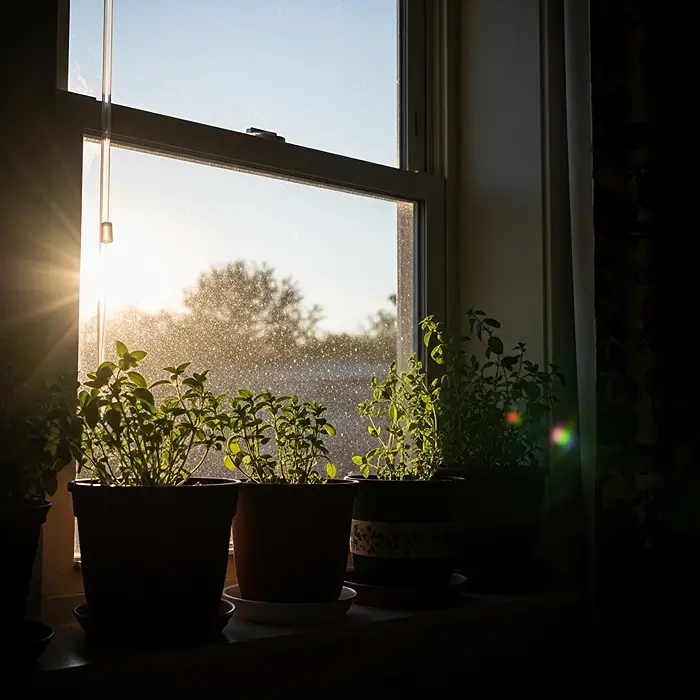
South-Facing Windows: The Gold Standard
If you’ve got a south-facing window, congratulations—you’ve hit the herb-growing jackpot. These windows get 6–8 hours of consistent, direct light, which is exactly what sun-loving Mediterranean herbs crave.
Rosemary, thyme, oregano, sage? They’ll be very happy here.
One heads-up though: winter light is weaker even in south-facing windows. You might need to supplement with grow lights during the darkest months, but we’ll get to that later.
West-Facing Windows: Proceed with Caution
West-facing windows deliver intense afternoon sun. Great for heat-lovers like basil, but there’s a catch.
That strong afternoon light can actually scorch delicate leaves. The glass creates what nerdy gardeners call a “thermal boundary layer”—basically, it gets hot enough near the window to fry your plants.
Solution? Sheer curtains during peak afternoon hours. Problem solved.
East-Facing Windows: The Gentle Option
East-facing windows give you moderate morning sun—softer and cooler than the afternoon blast.
This is actually perfect for herbs that don’t love intense heat, like parsley and cilantro. They’ll grow a bit slower than in a south-facing window, but they’ll be happier and less likely to bolt (more on that disaster later).
For a deeper dive into window placement and setup, check out our complete guide to windowsill herb gardens.
The 10 Best Herbs for a Sunny Windowsill
Alright, let’s get to the good stuff. These are the herbs that tolerate direct sun and actually thrive on a windowsill.
I’ve ranked them by how forgiving they are, because let’s be honest—we’re all learning here.
| Herb | Scientific Name | Light Needs | Best Compact Variety | Water Preference |
|---|---|---|---|---|
| Basil | Ocimum basilicum | 6–8 hours | ‘Spicy Globe’ | Evenly moist |
| Thyme | Thymus vulgaris | 6–8 hours | ‘Compact’ | Dry between watering |
| Rosemary | Salvia rosmarinus | 6–8 hours | ‘Blue Boy’ | Dry between watering |
| Oregano | Origanum vulgare | 6–8 hours | Greek Oregano | Dry between watering |
| Chives | Allium schoenoprasum | 4–6 hours | ‘Grolau’ | Evenly moist |
| Mint | Mentha spp. | 4–6 hours | ‘Spearmint’ | Slightly moist |
| Parsley | Petroselinum crispum | 4–6 hours | Flat-leaf Italian | Consistently moist |
| Sage | Salvia officinalis | 6–8 hours | ‘Berggarten’ | Dry between watering |
| Cilantro | Coriandrum sativum | 4–6 hours | ‘Calypso’ | Evenly moist |
| Dill | Anethum graveolens | 6–8 hours | ‘Fernleaf’ | Evenly moist |
1. Basil (Ocimum basilicum) – The Diva
Let’s start with everyone’s favorite—and everyone’s most-murdered—herb.
Basil is a bit high-maintenance, I won’t lie. It needs warmth (above 70°F), hates cold drafts, and throws a fit if you look at it wrong. But when you get it right? Fresh basil whenever you want it. Pesto on demand. Life-changing.
The ‘Spicy Globe’ variety stays compact and bushy, which is perfect for windowsills. And here’s the key move most people miss: pinch the growing tips early and often. This prevents that sad, leggy look and keeps your basil producing bushy, flavorful growth.
Water when the top inch of soil feels dry. Never let it sit in standing water, or you’ll have root rot faster than you can say “caprese salad.”
2. Thyme (Thymus vulgaris) – The Low-Key Legend
If basil is the diva, thyme is the chill friend who just goes with the flow.
This herb is practically unkillable. It thrives in dry conditions, actually prefers low humidity, and doesn’t need much attention. Just give it strong south-facing light and forget about it (mostly).
The biggest mistake people make with thyme? Overwatering. Let the soil dry out completely between waterings. Seriously, neglect it a little. It likes that.
3. Rosemary (Salvia rosmarinus) – The Sun Worshipper
Rosemary needs all the light you can give it. If you don’t have a south-facing window, honestly, don’t bother—it’ll just get sad and leggy.
Here’s a crucial tip: never cut into the woody stems. Only trim the green growth. Rosemary can’t regenerate from old wood, so aggressive pruning will leave you with a bare stick.
This herb likes dry roots but appreciates some humidity in the air. A pebble tray underneath the pot works wonders for this.
According to Penn State Extension’s guide to growing herbs indoors, rosemary is one of the herbs that does best in direct sunlight, needing those full 6+ hours to really thrive.
4. Oregano (Origanum vulgare) – The Flavor Bomb
Here’s something cool: oregano’s essential oil concentration actually increases with more sunlight. More sun literally equals more flavor.
Like its Mediterranean cousins, oregano prefers to dry out between waterings. Soggy roots = sad, flavorless oregano.
Compact Greek oregano is my go-to recommendation. It stays manageable, tastes amazing, and makes your homemade pizza sauce sing.
5. Chives (Allium schoenoprasum) – The Beginner’s Best Friend
If you’re nervous about killing things, start here.
Chives are ridiculously forgiving. They tolerate a range of light conditions, bounce back from neglect, and reward you with a mild onion flavor that elevates everything from scrambled eggs to baked potatoes.
The ‘Grolau’ variety was literally bred for indoor growing—it produces less leggy growth under windowsill conditions. Just cut them about an inch above the soil, and they’ll keep coming back like a reliable friend.
6. Mint (Mentha) – The Friendly Invader
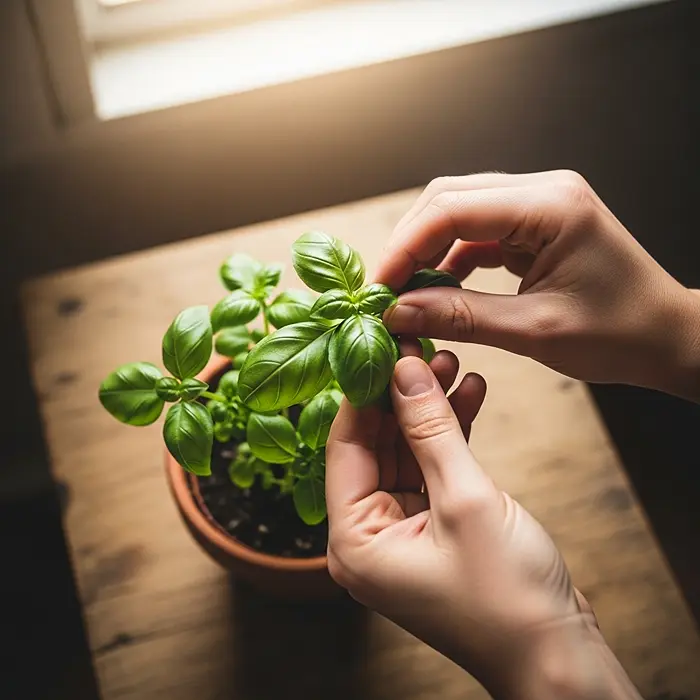
Mint is super easy to grow. Maybe too easy.
Important warning: Always grow mint in its own pot. This stuff is invasive. Put it with other herbs, and it’ll choke them out within weeks. It’s basically the house guest who moves in and takes over your Netflix account.
Keep the soil slightly moist (not soggy), and give it afternoon shade during brutal summer heat. Otherwise, mint pretty much takes care of itself.
7. Parsley (Petroselinum crispum) – The Slow Starter
Parsley tests your patience. The seeds can take 2–3 weeks to germinate, which feels like forever when you’re excited about your new herb garden.
Pro tip: soak seeds overnight in warm water before planting. This speeds things up significantly.
Unlike the Mediterranean herbs, parsley likes consistent moisture. Don’t let it dry out completely, or you’ll get bitter, unhappy leaves. East-facing windows work great for parsley—the gentler light keeps it happy.
8. Sage (Salvia officinalis) – The Set-and-Forget Option
Sage is wonderfully low-maintenance. Dry conditions? No problem. Full sun? Loves it. Occasional neglect? Totally fine.
The main thing that’ll kill sage is overwatering. These roots rot fast in soggy soil, so err on the side of too dry rather than too wet.
Light pruning keeps sage compact and bushy. Left alone, it can get woody and sparse—a little trim now and then works wonders.
9. Cilantro (Coriandrum sativum) – The Drama Queen
Okay, cilantro is… challenging. Not because it’s hard to grow, but because it’s determined to flower and die as quickly as possible.
This herb prefers bright light but cooler temperatures—ideally below 75°F. The second it gets too hot, it bolts. And once cilantro bolts (sends up flowers), the leaves turn bitter and production stops. Game over.
The solution? Succession planting. Start new seeds every 2–3 weeks so you always have fresh cilantro coming up as the older plants inevitably bolt. It’s annoying, but it works.
10. Dill (Anethum graveolens) – The Tall One
Dill grows a long taproot, which means it needs a deeper container than most herbs—at least 8–10 inches deep.
It loves direct sunlight (the more, the better) and rewards you with that distinctive flavor that makes pickles… well, pickles.
Pinch off flower heads as soon as they appear. Once dill flowers, it stops producing leaves and channels all its energy into making seeds. Fine if you want dill seeds, not great if you want dill leaves.
Grouping Your Herbs by Needs (This Makes Life Easier)
Here’s a trick that’ll simplify your watering routine: group herbs with similar needs together.
The “Ignore Me” Group (High Sun + Dry Soil)
These Mediterranean herbs like to dry out between waterings:
- Rosemary
- Thyme
- Oregano
- Sage
Water them when the soil is completely dry. Overwatering is the enemy here.
The “Check on Me” Group (High Sun + Moderate Moisture)
These herbs need more regular attention:
- Basil
- Mint
- Parsley
- Chives
Water when the top inch of soil feels dry. They like moisture but still need good drainage.
The “I’m Going to Bolt” Group
These two are on a mission to flower and die:
- Cilantro
- Dill
Harvest frequently, pinch flowers immediately, and accept that you’ll need to replant regularly.
Setting Up Your Windowsill Garden for Success
Let’s talk technical stuff—but I promise to keep it simple.
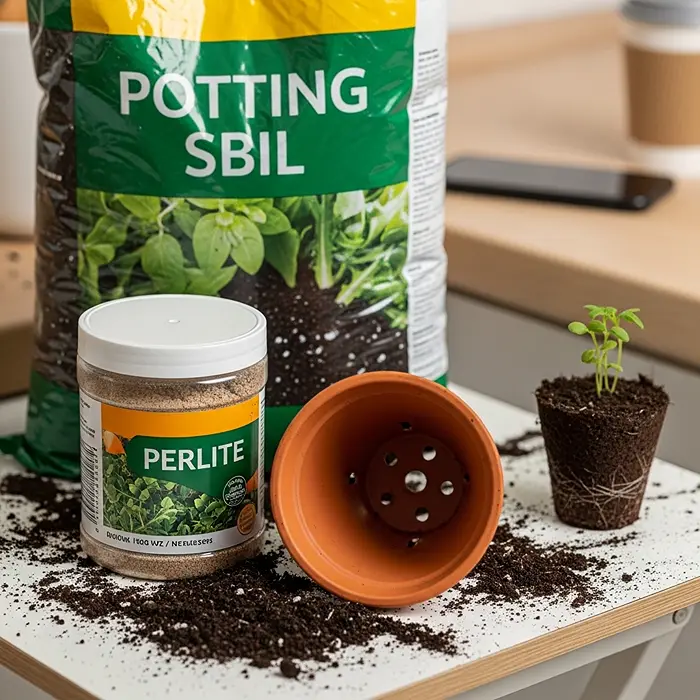
The Golden Rule: Drainage or Death
I cannot stress this enough: every pot needs drainage holes. No exceptions. Not even one.
Herbs hate sitting in water. Their roots need oxygen, and waterlogged soil suffocates them. This leads to root rot, which is basically a death sentence for herbs.
Use saucers to catch runoff, but empty them after watering. Don’t let your pots sit in puddles.
Choosing the Right Pots
Most herbs need containers at least 6–8 inches deep. Dill and parsley need 8–10 inches because of their taproots.
Terracotta pots breathe well and help prevent overwatering—perfect for Mediterranean herbs. But they dry out faster, so you’ll need to check them more often.
Plastic pots retain moisture longer, making them better for thirstier herbs like basil, parsley, and mint. They’re also lighter, which matters on a windowsill.
The Perfect Soil Mix
Here’s my go-to recipe:
- 3 parts high-quality potting soil (not garden soil!)
- 1 part perlite or vermiculite
The perlite creates air pockets that help roots breathe and water drain properly. Garden soil compacts and suffocates roots indoors—don’t use it.
Pruning and Harvesting: How to Keep Herbs Producing
Here’s a secret that changed my herb game: the more you harvest, the more they grow.
The One-Third Rule
Never take more than one-third of a plant’s foliage at once. Removing too much stresses the plant and slows recovery.
Think of it like a haircut—a trim encourages growth, but shaving someone bald takes a while to recover from.
Preventing Leggy, Sad Plants
Pinch basil and oregano tips regularly. This forces them to branch out sideways instead of shooting up tall and spindly.
For chives, cut them about an inch above soil level. They’ll regenerate surprisingly fast from what looks like a dramatic haircut.
Troubleshooting Common Problems
Even with the best care, stuff happens. Here’s how to diagnose and fix the most common issues.
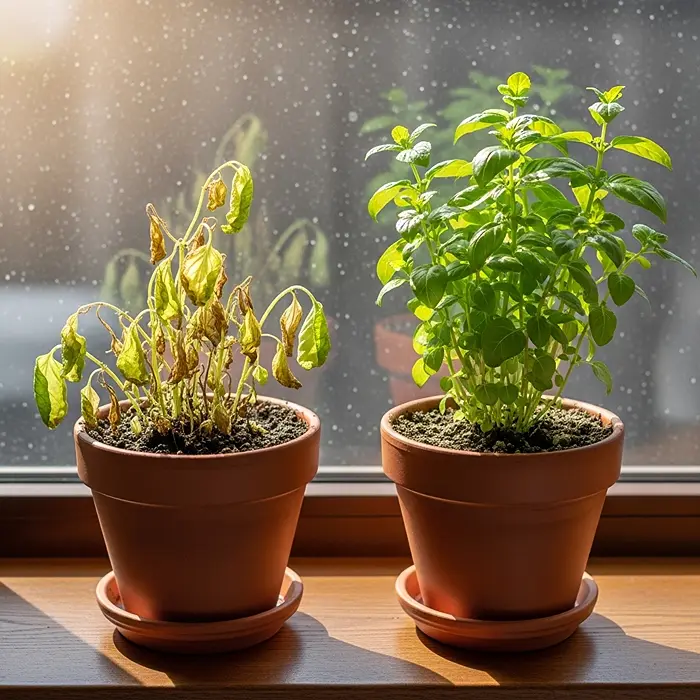
Yellow Leaves
This is almost always a watering issue. Nine times out of ten, you’re overwatering.
Other possibilities: blocked drainage holes or nutrient deficiency. But seriously, check your watering first.
Brown, Crispy Leaf Edges (Leaf Scorch)
Your herbs are getting too hot. This happens a lot with west-facing windows during summer.
Move plants slightly back from the glass, or add sheer curtains during peak afternoon sun. The “magnifying glass effect” through windows is real and brutal.
Bolting (Flowers Appearing)
When herbs flower, they stop producing leaves. It’s their way of saying, “My work here is done.”
Heat stress triggers bolting in cilantro, dill, and basil. Remove flower buds immediately when you spot them, and consider moving heat-sensitive herbs to a cooler spot.
Pests (Aphids and Spider Mites)
Indoor herbs can still get bugs. Here’s my 3-step organic approach:
- Rinse plants thoroughly under running water to knock off visible pests
- Apply insecticidal soap to all leaf surfaces (including undersides)
- Follow up with neem oil weekly until the pests are gone
Always quarantine new plants before adding them to your windowsill. One infested newcomer can wreck your whole garden.
When Winter Light Isn’t Enough: Supplemental Lighting
Even south-facing windows can get pretty dim during winter. If your herbs start looking pale and leggy around December, it’s time for backup.
LED grow lights are game-changers. Position them 6–12 inches above your plants and run them for 12–16 hours daily.
Look for full-spectrum white LEDs—they provide the wavelengths herbs need for healthy growth and flavor development. They’re surprisingly affordable now, and your winter basil will thank you.
Frequently Asked Questions
Can herbs grow indoors without direct sunlight?
Technically, yes—but only with grow lights. Most fresh culinary herbs need direct sunlight to thrive. LEDs can replace natural light effectively, though, so don’t let a dark apartment stop you.
Why are my windowsill herbs turning yellow?
Almost certainly overwatering or poor drainage. Let soil dry appropriately between waterings and make sure those drainage holes aren’t clogged.
Which herbs handle the most direct sun?
Rosemary, thyme, oregano, basil, and sage are your sun champions. They evolved in the Mediterranean, where intense sunlight is the norm.
How many hours of sun do windowsill herbs need?
Most need 6–8 hours of direct sunlight daily. Parsley, cilantro, chives, and mint can manage with 4–6 hours.
Ready to Start? Here’s Your Game Plan
Starting a sunny windowsill herb garden doesn’t have to be complicated. Here’s what I’d do if I were starting from scratch today:
Week 1: Pick 2–3 forgiving herbs to start. Mint, chives, and thyme are nearly foolproof. Buy small plants rather than starting from seed—instant gratification helps build momentum.
Week 2: Get your setup right. Good pots with drainage holes, quality potting mix with perlite, and the best window you’ve got. These basics prevent 90% of problems.
Ongoing: Harvest regularly, water appropriately for each herb’s needs, and actually use your herbs. There’s no point growing them if they just sit there looking pretty.
The first time you snip fresh basil directly into a pot of sauce—herbs you grew yourself, on your own windowsill—you’ll get it. That’s the moment when indoor herb gardening stops feeling like a chore and starts feeling like magic.
Now go claim that sunny windowsill. Your future self (and your future cooking) will thank you.