

Heat Tolerant Trailing Flowers for Container Edges
The right heat tolerant trailing flowers for container don’t just look good — they keep looking good when July turns brutal. This guide covers the best spillers for scorching edges, plus balcony flowers that actually survive August.
Table of Contents
The Magic of Heat Tolerant Trailing Flowers
There’s a reason professional container displays always look fuller and more finished than what most of us manage at home. The secret isn’t the thriller plant in the center — it’s the spillers draping over the edges.
Cascading plants do two things at once. They hide bare potting mix and plastic pot rims, and they soften the hard geometry of a container into something lush and intentional.
But here’s what most container gardening guides skip: choosing the wrong trailing variety means watching your edges fry by mid-July. A heat-resilient spiller isn’t optional — it’s the only way the display survives through August.
I grow on a south-facing concrete balcony in zone 7b, and the reflected heat off the floor bakes pot edges all afternoon. I’ve lost petunias, lobelia, and bacopa to that heat. The plants in this guide are the ones that didn’t die.
Assessing Your Container’s Microclimate
Before you plant anything, you need to understand what a container edge actually experiences. It’s one of the harshest microclimates a plant can face — far more stressful than open ground or even a raised bed.
The outer wall of a pot in full sun can reach 120°F on a 90°F day. Roots pressed against that wall are cooking. Trails of foliage draping over the rim get hit from above by sun and from below by radiant heat bouncing off hard surfaces.
Mapping Full Sun and Reflected Heat
Start by watching your space at 10 a.m., 1 p.m., and 4 p.m. on a sunny day. Direct overhead sun is only part of the picture.
Concrete patios, brick walls, and glass doors reflect heat like an oven. That radiant heat can literally cook delicate trailing foliage even when the plant isn’t in direct sun. I’ve seen bacopa wilt on a north-facing edge simply because it was inches from a white stucco wall.
Map your hot zones honestly. Then choose your spillers accordingly — anything labeled “full sun” in a catalog was likely tested in garden soil, not a sun-baked terracotta rim.
Soil and Moisture-Retention Strategies
Standard potting mix alone won’t cut it for trailing edge plants. Their roots are jammed against the outer wall where moisture evaporates fastest.
Use this blend: 80% premium potting mix + 20% coco coir. Coco coir holds moisture up to 8x its weight, releases it slowly, and doesn’t compact. Mix in hydrogel polymers at the rate listed on the package — typically 1 teaspoon per gallon of soil.
This isn’t about overwatering. It’s about creating a buffer so roots at the pot wall don’t desiccate between your morning watering and late afternoon heat. The difference in plant resilience is dramatic.
- Coco coir: improves moisture retention without waterlogging roots
- Hydrogel polymers: absorb and release water slowly at the root zone
- Premium potting mix: provides drainage structure and baseline nutrients
- Avoid garden soil entirely — it compacts and cuts off oxygen to trailing roots
Top Heat-Tolerant Trailing Flowers for Pot Edges
These aren’t just “sun-tolerant” plants pulled from a generic list. Each one has the specific genetic traits — thick leaves, deep taproots, or self-regulating bloom cycles — that let it push out flowers during genuine heatwaves.
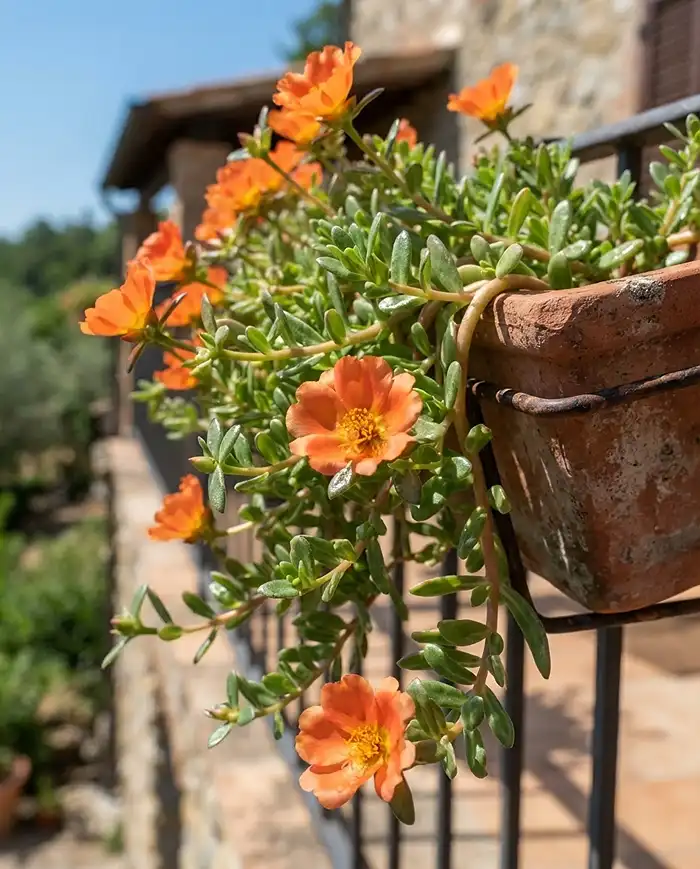
Here’s a quick comparison before we dig into each one:
| Plant | Best USDA Zones | Bloom Color | Self-Cleaning? | Water Needs |
|---|---|---|---|---|
| Portulaca (Moss Rose) | 2–11 (annual) | Pink, red, yellow, orange | Yes | Low |
| Trailing Lantana | 8–11 (perennial), annual elsewhere | Purple, yellow, bi-color | Yes | Low–Medium |
| Calibrachoa | 9–11 (perennial), annual elsewhere | Nearly every color | Yes | Medium |
| Sweet Potato Vine | 9–11 (perennial), annual elsewhere | Foliage only | N/A | Medium |
Purslane and Moss Rose (Portulaca): The Drought Survivors
Quick Answer: Portulaca is the most heat and drought-tolerant trailing flower available. Fleshy succulent leaves store water reserves, letting it bloom continuously even when you miss a watering on a 95°F day.
Portulaca’s thick, succulent-like foliage isn’t just pretty — it’s a survival mechanism. Those leaves store water reserves the plant draws on when soil dries out fast in a sun-baked pot.
I planted ‘Mojave Tangerine’ in a terracotta window box on my south rail in summer 2023. It went unwatered for four days during a heat dome (I was traveling). Everything else in the box fried. The Portulaca bloomed right through it.
Low-profile and spreading 6–12 inches, it’s perfect for draping over pot rims without smothering neighboring plants. It opens flowers in sun and closes them at night — which means blooms look fresh every morning.
Pro Tip: Portulaca needs afternoon sun to bloom fully — don’t waste it on a shaded edge.
Trailing Lantana: The Colorful Pollinator Magnet
Quick Answer: Trailing Lantana (Lantana montevidensis) handles intense southern heat better than almost any flowering spiller. Rough, textured foliage resists sunscald while clusters of blooms attract butterflies and hummingbirds all season.
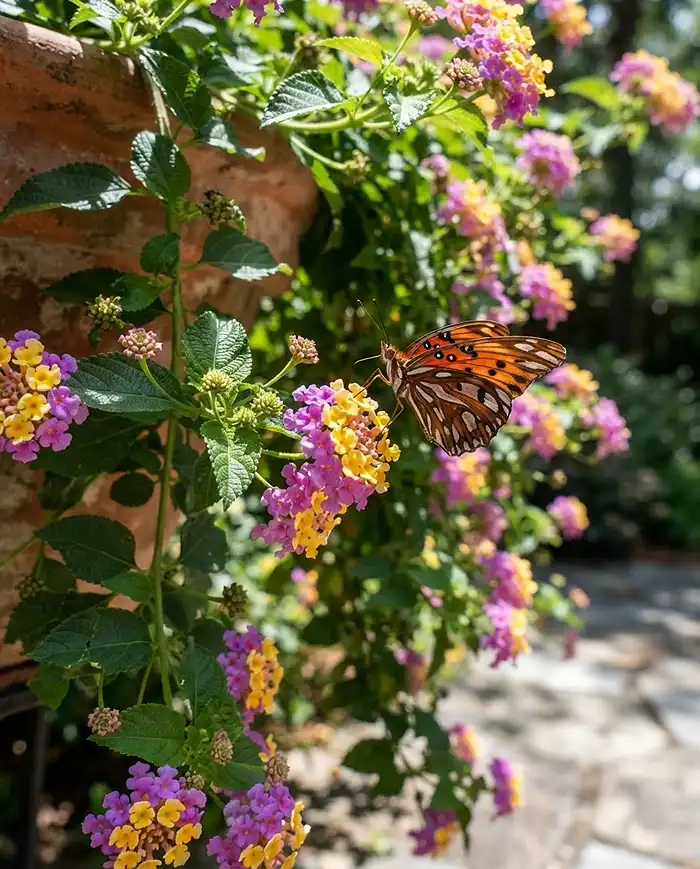
Lantana montevidensis is a different beast from its upright cousin. It spreads 2–4 feet wide and trails freely over container edges, making it one of the best summer flowers for container edges in zones 8 and warmer.
The foliage has a rough, almost sandpapery texture that reflects rather than absorbs intense light. It’s genuinely hard to sunburn. Blooms come in purple, yellow, or bi-color, and the plant doesn’t slow down in extreme heat the way softer-leaved flowers do.
One honest note: Lantana is toxic to pets and listed as invasive in some southern states. Check your local regulations before planting it in zones 9–11 where it can overwinter.
Pro Tip: Deadheading isn’t required, but a hard cutback in midsummer triggers a strong flush of fresh growth and blooms for fall.
Calibrachoa (Million Bells): The Relentless Bloomer
Quick Answer: Calibrachoa produces hundreds of miniature petunia-like flowers continuously from spring through frost. It’s self-cleaning — spent blooms drop without deadheading — making it ideal for low-maintenance container edges and hanging baskets in heat.
Calibrachoa is what petunias wish they were. Same look, tougher constitution, zero deadheading required. The plant sheds spent flowers on its own, keeping edges clean even when you’re not paying attention.
Modern hybrids like ‘Superbells Lemon Slice’ or ‘MiniFamous Neo Magenta’ are bred specifically for heat tolerance and container performance. As of summer 2024, breeders have released improved varieties with better heat recovery — meaning fewer mid-season slumps.
It does need consistent moisture more than Portulaca or Lantana. The coco coir soil mix mentioned earlier makes a real difference here.
Pro Tip: Feed Calibrachoa every 10 days — it’s a heavy feeder and will yellow fast in a nutrient-depleted container.
Sweet Potato Vine: The Bold Foliage Spiller
Quick Answer: Ornamental Sweet Potato Vine (Ipomoea batatas) provides dramatic, architectural foliage in chartreuse, bronze, or deep purple. It grows aggressively and needs trimming every 2–3 weeks to prevent it from overwhelming flowering companions.
Not every spiller needs to bloom. Sweet Potato Vine earns its place through bold, contrasting foliage that makes flowers pop harder by comparison. A deep purple ‘Blackie’ behind bright orange Portulaca looks stunning.
The vigorous growth is both its strength and its problem. I’ve had Sweet Potato Vine completely engulf a ‘Supertunia Vista Bubblegum’ in under three weeks. Trim it back hard and often — at least every 2–3 weeks — or it wins.
It’s one of the most heat-tolerant spillers available, thriving in conditions that stress flowering plants. Use it as a contrast foil rather than your only trailer. Check out native flower balcony garden ideas for pairing inspiration.
Pro Tip: Cuttings root in a glass of water in under a week — free plants for every other container on your balcony.
Step-by-Step Planting Guide for the “Spiller” Technique
The Thriller, Filler, Spiller method works because each plant type occupies a different physical space. Your spillers need to be positioned correctly from day one — not just dropped in randomly.
- Place the thriller (tall focal plant) dead center in the pot
- Add fillers (mounding mid-height plants) around the thriller
- Position spillers at the outer perimeter, pressed toward the container edge
- Tilt each spiller plug at a 45-degree outward angle before backfilling soil
- Face the angled plant toward the primary sun direction
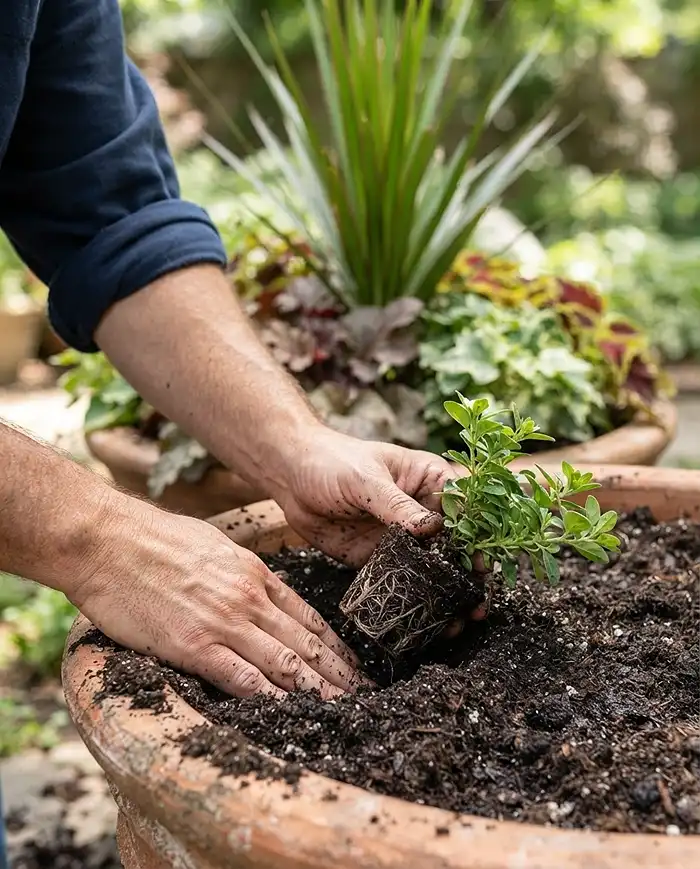
That 45-degree outward angle is what most guides skip. It trains the plant to cascade naturally over the rim rather than growing upright and inward toward the thriller.
Plant in spring after your last frost date, or in fall in zones 9+. Water in thoroughly with a diluted liquid fertilizer on planting day to reduce transplant stress.
Spacing matters too. In a 14–16 inch round pot, three to four spillers evenly spaced around the perimeter gives each enough root space without competition.
Peak Summer Maintenance and Feeding Schedule
A container in peak summer isn’t a set-it-and-forget-it situation. Profuse blooming in a restricted space burns through moisture and nutrients fast — faster than most gardeners expect.
The two things that kill trailing container flowers in summer aren’t heat or pests. They’re inconsistent watering and nutrient depletion from frequent watering flushing fertilizer out of the pot.
Deep Watering Rules for High Summer
Quick Answer: Water deeply every morning before the day’s heat peaks. Run water until it flows freely from drainage holes — this ensures the entire root zone is saturated, not just the top inch of soil.
A shallow sprinkle does more harm than good. It conditions roots to stay near the surface, where they’re most vulnerable to heat. A deep soak pushes roots downward toward cooler, more stable soil.
Water early — before 9 a.m. if possible. Watering midday in extreme heat causes rapid surface evaporation before water reaches deep roots. Evening watering works in dry climates but risks fungal issues in humid ones.
Check soil moisture before watering by pushing a finger 2 inches into the soil. If it’s still moist, wait. Overwatering is a real risk even in summer heat, especially with the moisture-retaining soil mix described above.
Pro Tip: A self-watering insert or reservoir-style pot bottom dramatically reduces daily watering frequency for balcony flowers on hot concrete.
Liquid Fertilization for Continuous Flowering
Quick Answer: Apply a high-phosphorus, water-soluble bloom booster every 10–14 days throughout summer. Frequent watering flushes nutrients from containers fast, and nutrient-starved plants abort flower buds under heat stress.
Phosphorus (the middle number in NPK) drives root development and flowering. A ratio like 10-52-10 or a dedicated bloom booster formula applied every two weeks keeps spillers producing continuously.
Skip granular slow-release fertilizers for containers in peak summer — they rely on soil moisture to release, which means inconsistent delivery during heat spikes. Liquid fertilizer gives you predictable, immediate results.
Signs of nutrient deficiency in trailing plants: yellowing leaves starting at the tips, reduced bloom size, and stems going bare near the soil. If you see these, feed immediately and don’t wait for your scheduled day.
Common Problems and Solutions
Even the toughest spillers can struggle in extreme weather. Catching problems early — before they kill the plant — is what separates a recovering container from a dead one.
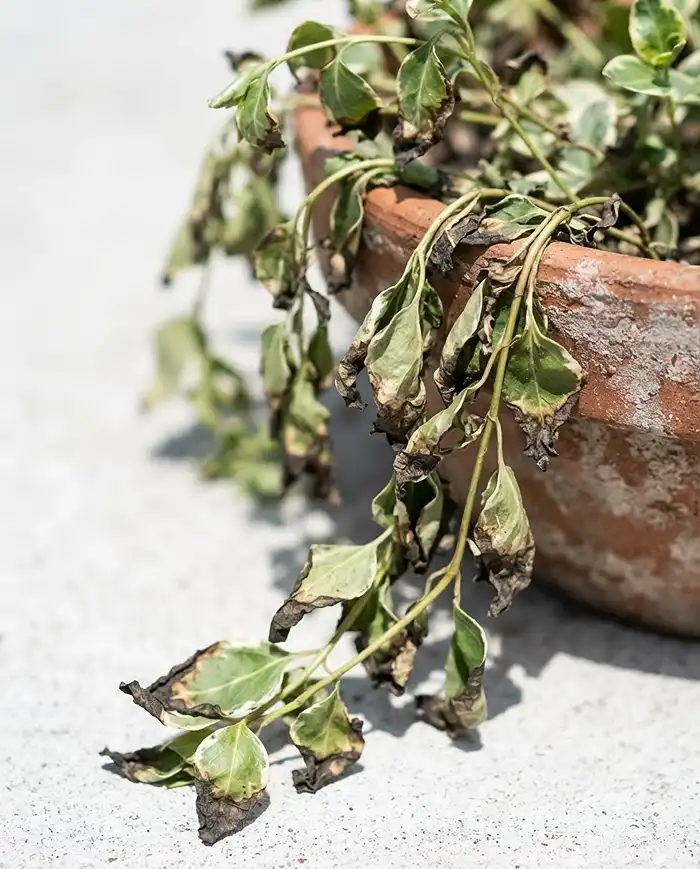
Crispy Foliage and Fried Petal Edges
Quick Answer: Crispy brown leaf edges with green centers usually mean sunburn, not underwatering. Wilted yellow foliage that’s wet at the soil points to overwatering. Dry, wilted yellow foliage means underwatering.
Sunburned trailing foliage is common on plants that drape over bright concrete. The fix: rotate your container 180 degrees weekly so no single side takes all the punishment.
During triple-digit heat domes, move containers to afternoon shade temporarily — even sun-lovers need relief when temperatures exceed 105°F for multiple consecutive days. This isn’t coddling; it’s keeping the plant alive to rebloom when heat breaks.
Leggy Vines Lacking Center Blooms
Quick Answer: Leggy spillers — long bare stems with blooms only at the tips — need a pinch-back pruning. Cut stems back by one-third to force branching from the crown, which produces denser growth and more blooms.
“Legginess” happens when a plant puts all its energy into extending existing stems rather than producing new ones. It’s common in mid-August after weeks of heat stress.
Don’t be afraid to cut back hard. Snip stems to within 2–3 inches of the base for Calibrachoa and Lantana. They’ll look rough for a week, then push out dense new growth. This technique also works as a mid-season reset if blooming has significantly slowed. For more on maintaining balcony plantings, see this guide on herb garden layout for balcony spaces — the pruning principles transfer directly.
heat tolerant trailing flowers for container FAQs
How many trailing plants fit in a standard container?
A 14- to 16-inch round pot comfortably supports three to four trailing edge plants. Space them evenly around the perimeter so roots don’t aggressively compete for water and each plant gets adequate light to cascade outward.
Do trailing annuals need to be deadheaded?
Modern hybrids like Calibrachoa and Supertunias are self-cleaning — they drop spent blooms without help. However, cutting stems back by one-third in mid-August revitalizes the plant and produces a strong flush of blooms through fall.
Will trailing plants survive if they touch hot concrete?
No. Delicate trailing vines will bake if they rest directly on sun-drenched concrete. Elevate your container on heavy-duty pot feet or a plant caddy to create an insulating air buffer between the foliage and the hot surface.
Can I mix trailing flowers with herbs in the same container?
Yes, with some planning. Heat-tolerant herbs like thyme, oregano, and rosemary make excellent companions for trailing flowers in hot containers. Avoid pairing spillers with moisture-loving herbs like basil, which needs different watering than drought-tolerant trailers.
What is the best container material for hot climates?
Light-colored or glazed ceramic and resin containers retain less heat than dark terracotta or metal. If you’re using terracotta, double-potting inside a larger container with an air gap significantly reduces root-zone temperatures in summer.
Key Takeaways
- Choosing heat tolerant trailing flowers for containers is non-negotiable — the wrong spiller won’t survive a real summer heatwave on an exposed edge
- Portulaca, trailing Lantana, Calibrachoa, and Sweet Potato Vine are the four most reliable spillers for container gardening in extreme heat
- Amend your potting mix with 20% coco coir and hydrogel polymers — roots at the pot wall need extra moisture retention
- Plant spillers at a 45-degree outward angle so they cascade naturally over the rim instead of growing back into the pot
- Feed every 10–14 days with a bloom booster and water deeply every morning — containers in summer heat exhaust nutrients and moisture far faster than garden beds