

Small Balcony garden Storage Ideas
Good small balcony garden storage is the difference between a productive growing space and a cluttered obstacle course. If you’ve ever stubbed a toe on a half-open bag of potting mix at 7 a.m., you already know the frustration.
Smart organization doesn’t just tidy things up — it protects your supplies from UV damage, rain, and pests, and it buys back precious square footage for more plants. Here’s exactly how to do it.
Table of Contents
Conquering Clutter with Small Balcony Garden Storage
I garden on a 48-square-foot east-facing balcony in zone 6b. For two seasons I just stacked things in the corner — a leaning trowel, an open bag of perlite, seed packets rubber-banded together.
By spring, the perlite had absorbed rain and gone rock-solid. Half my seed packets had moisture damage. The trowel had a rust bloom across the blade. That one messy winter cost me about $60 in ruined supplies.
The fix wasn’t more space — it was smarter systems. Once I installed two wall-mounted shelves and a deck box, my apartment balcony garden went from chaos to an organized growing station.
Pre-Planning Your Balcony Storage Space
Before buying a single bin or hook, audit what you actually have. Walk your balcony and identify every “dead zone” — the awkward corner behind a planter, the high wall above the railing, the gap beside the door.
These ignored areas are your biggest opportunity. A dead corner can hold a slim rolling cart. A high wall can support two stacked shelves. Map it before you spend anything.
Measuring Footprints and Vertical Space
Grab a tape measure and note your total floor area, your wall height from floor to ceiling or railing cap, and the depth of any alcoves. Most urban balconies run 4–8 feet deep with 8–10 feet of vertical clearance.
A tall, narrow shelving unit that’s 12 inches deep and 70 inches high holds the same volume as a wide deck box — but uses a fraction of the floor footprint.
Wall-mounted cabinets go even further. A 24-inch-wide cabinet mounted at eye level stores tools, fertilizer, and sprayers without touching the floor at all. That reclaimed floor space goes straight to planters.
For balcony garden ideas that maximize vertical space, prioritize units that are taller than they are wide. Anything under 14 inches deep fits on most balcony ledges without blocking walkways.
Weatherproofing and HOA Restrictions
Check your rental agreement or HOA rules before drilling a single hole. Many limit cabinet height to 36–42 inches above the railing line for sight-line reasons. Others prohibit any wall penetrations at all.
If you can’t drill, use over-the-railing hook systems or freestanding shelves with rubber feet. For weatherproofing, assess your exposure: south and west-facing balconies get intense afternoon UV that degrades plastic within a season.
On those exposures, choose powder-coated steel, galvanized metal, or UV-stabilized resin over standard plastic. Everything fabric — tool rolls, canvas bags — needs to live inside a lidded bin or get brought indoors.
Smart Storage Solutions for Potting Soil
Potting mix isn’t inert dirt — it’s a living medium full of beneficial microbes, mycorrhizal fungi, and perlite that can be ruined by the wrong storage. Leave it in the original plastic bag outdoors and you’re asking for trouble.
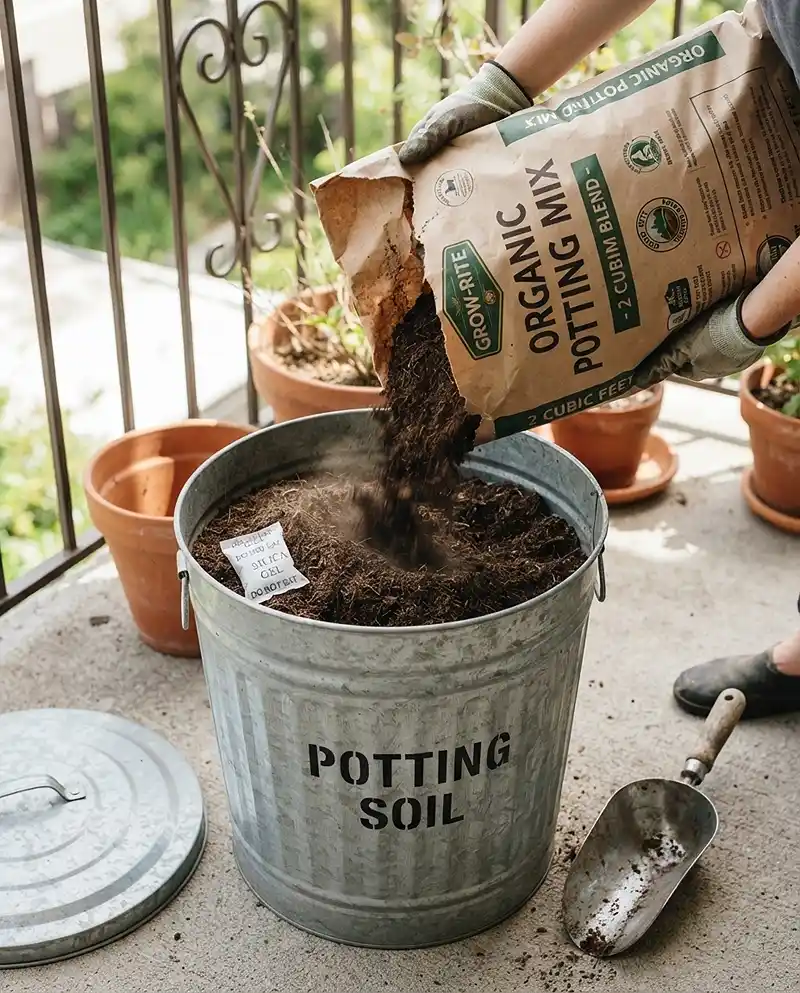
UV light degrades the bag within weeks. Rain saturates it. And a consistently damp bag becomes a fast-food buffet for fungus gnats. Decant your soil properly and it stays usable for an entire season.
Galvanized Bins and Heavy-Duty Totes
Transfer opened potting mix into an opaque, watertight container as soon as you crack the bag. My go-to is a 20-gallon galvanized steel bin with a press-fit lid — it blocks UV, won’t crack in the cold, and the metal finish actually looks decent on a balcony.
Heavy-duty resin totes with locking lids (Rubbermaid Roughneck or similar) are a cheaper alternative. Look for ones rated for outdoor use, which means UV-stabilized plastic. A standard storage tote will yellow and crack after one summer of direct sun.
Fungus gnats can’t penetrate a properly sealed lid. That single upgrade — bag to bin — eliminated my gnat problem entirely by mid-summer 2024.
Pro Tip: Drop a silica gel packet into the soil bin to absorb any residual moisture and keep the mix fluffy between uses.
Dual-Purpose Storage Benches
A deck box for balcony gardeners does double duty: it’s seating for guests and a hidden cabinet for heavy supplies. A 70-gallon resin deck box easily holds a 25-lb bag of perlite, two gallons of liquid fertilizer, and a coiled hose.
For a more refined look, acacia wood deck boxes are weather-resistant and warm in tone — they blend naturally with terracotta planters. Just make sure it has a teak oil treatment each spring to prevent cracking.
Place it along the wall, not in the center, so it doubles as a surface for potting up seedlings without blocking traffic flow. A waterproof seat cushion on top turns it from storage into seating in ten seconds.
Organizing Hand Tools and Watering Gear
Rusted pruners and a cracked watering can left baking in the sun are expensive to replace. Sharp metal tools corrode fast outdoors — especially in coastal or humid climates. Getting them off the floor and out of the weather is priority one.
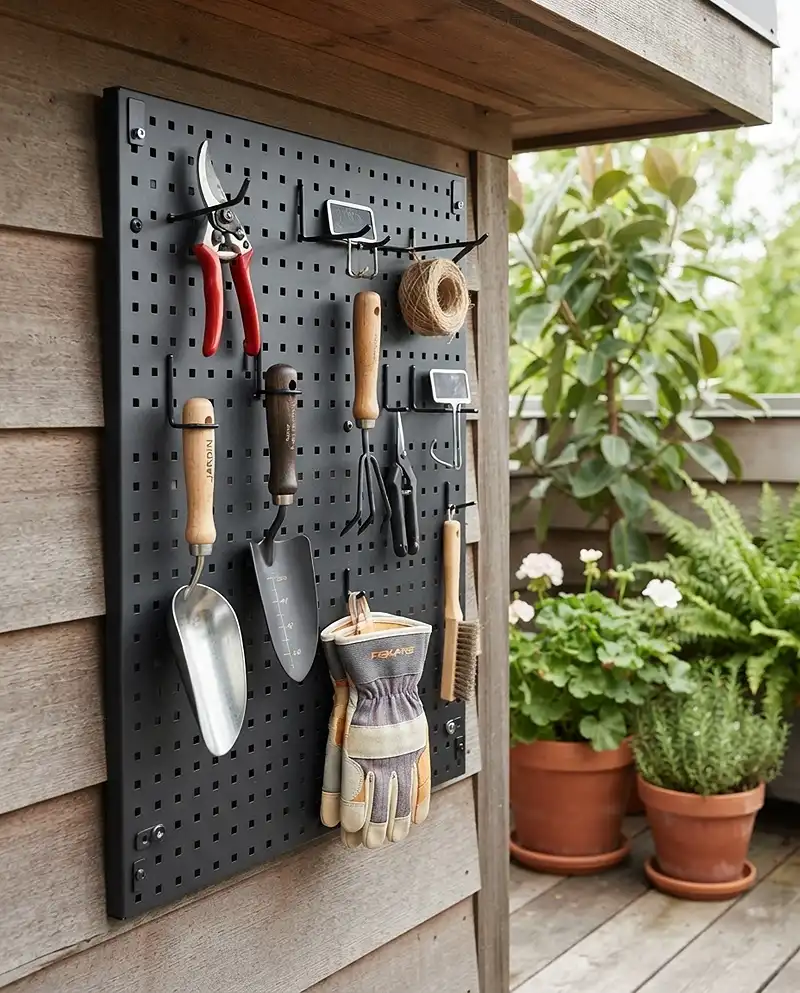
Wall-Mounted Pegboards and Railing Hooks
An exterior-grade pegboard — look for HDPE or powder-coated steel rather than MDF — mounts to a wall or fence and keeps tools visible and dry. Hang bypass pruners, a soil scoop, a hand trowel, and your gloves all within arm’s reach.
If drilling isn’t allowed, over-the-railing hook systems work surprisingly well. They clamp onto a standard 2-inch railing and support 20–30 lbs of hanging weight. I use four of them across my railing for a watering can, gloves, and small sprayers.
The key advantage: tools that hang dry instead of sitting in pooled water on a shelf. I lost two trowels to rust before I figured that out. Everything hanging on the pegboard has been rust-free for 18 months now.
Rolling Utility Carts and Caddies
A rust-resistant steel bar cart is one of the most versatile tools in apartment gardening. Roll it into a sunny spot for repotting, then tuck it into a shaded corner or through a sliding door when you’re done.
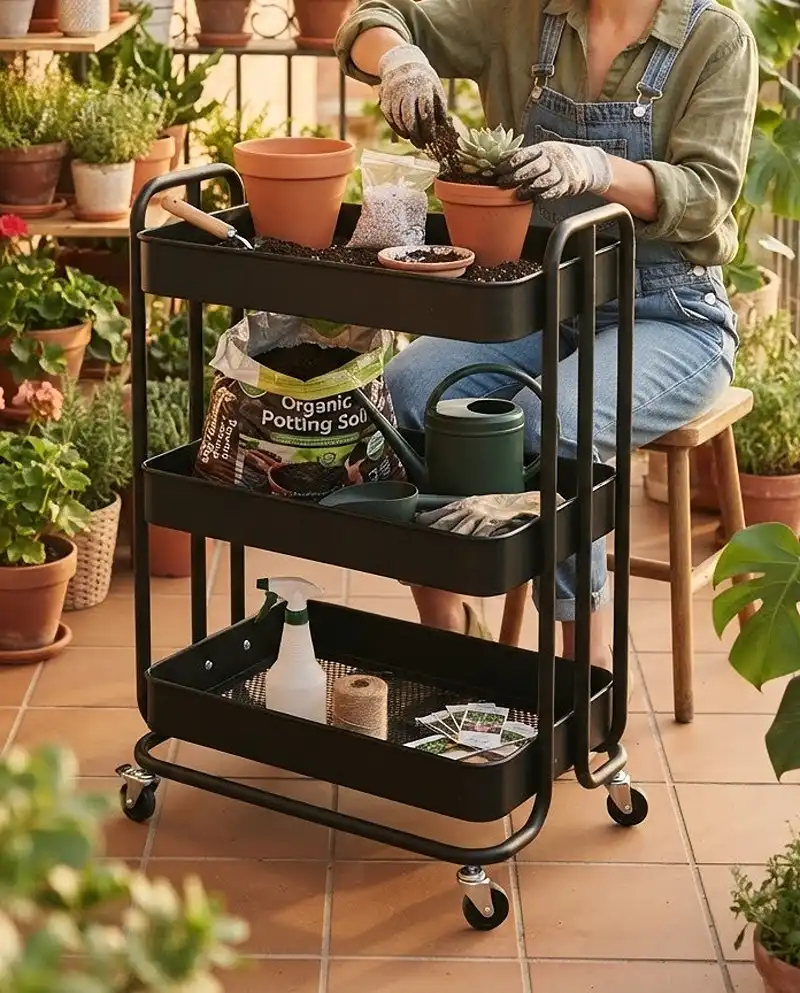
The bottom shelf holds heavy items — a bag of compost, a watering can. The top shelf becomes a temporary potting surface. Three-tiered caddies work the same way on a smaller footprint, great for balconies under 40 square feet.
Look for powder-coated finishes over chrome — chrome pits quickly in outdoor humidity. A handled garden caddy with a canvas insert is another option for carrying small tools between the storage area and the plants.
Safe and Effective Seed Storage
Seeds are alive. Inside every hull is a dormant embryo that can be killed by heat, moisture, or light. A balcony — with its swings from 40°F nights to 90°F afternoons — is exactly the wrong place for long-term seed storage.
Think of your balcony as a short-term staging area, not a permanent seed library. Most seed packets lose 20–50% germination viability after just one summer of improper outdoor storage.
Temperature and Humidity Control
The golden rule: dark, cool, and dry. Seeds stored in those three conditions hold viability for years. That means a climate-controlled closet or the crisper drawer of your refrigerator — not the balcony, ever.
Use an airtight container — a glass mason jar or a hard-sided food storage box — with one or two silica gel packets inside. Label the outside with the storage date. Swap out the silica packets every six months as they absorb moisture over time.
Bring seed packets outside only when you’re actively sowing. Put them back inside the same day. As of spring 2025, I’ve kept my ‘Mortgage Lifter’ tomato and ‘Chioggia’ beet seeds viable for three seasons using this method.
Photo Boxes and Binder Organization
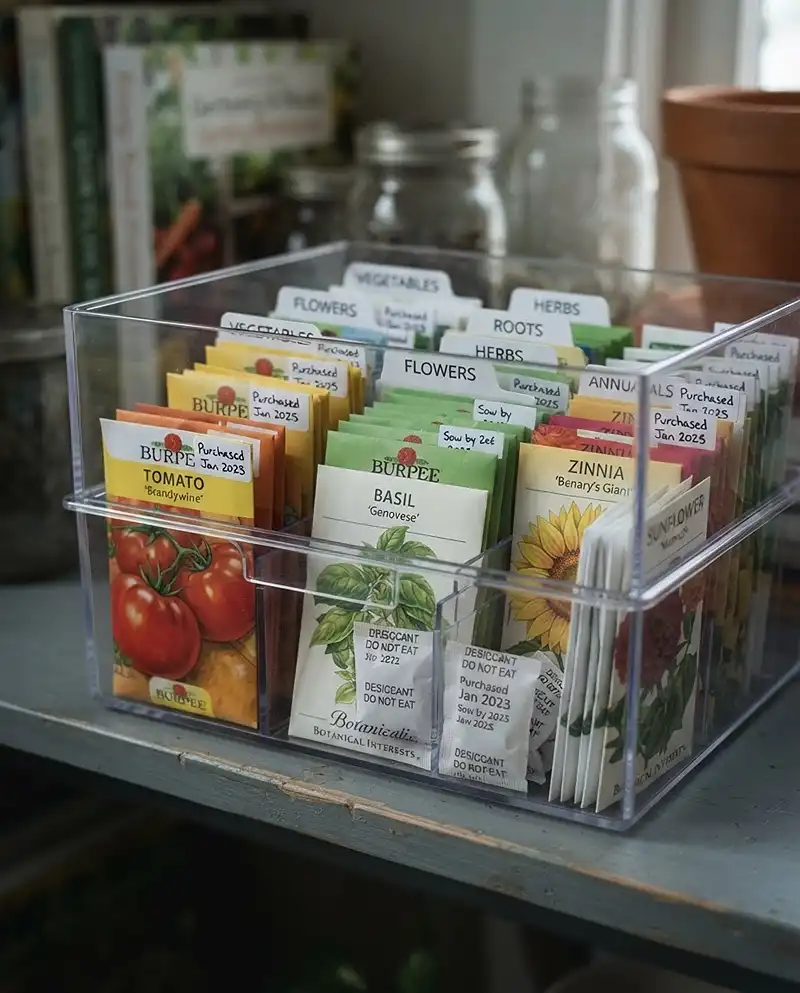
For organizing a large collection, clear plastic photo storage boxes are ideal. They’re stackable, inexpensive, and let you see the packets at a glance without digging. Sort by plant family or by sowing month.
A three-ring binder with trading card sleeves is another solid system — especially if you save seeds from your own plants. Each sleeve holds one packet. Organize chronologically by sowing date so January’s onion seeds are at the front.
- Label each packet with the year it was packed or purchased
- Note germination rate from the previous season on a sticky tab
- Group by sowing month so you grab the right packets at the right time
- Keep a running inventory sheet taped inside the box lid
Step-by-Step Guide to Organizing Your Balcony
Set aside one weekend to do this properly. Rushing it means you’ll be reorganizing again in two months. Here’s the sequence that works:
- Deep-clean first. Remove everything, sweep or mop the floor, wipe down walls.
- Install vertical storage. Mount pegboards, shelving brackets, and railing hooks before anything goes back on the balcony.
- Decant supplies. Transfer soil, compost, and perlite into sealed bins. Toss anything that’s wet, moldy, or past its use-by date.
- Set up tool zones. Hang tools on the pegboard. Put the rolling cart or caddy in its home position.
- Bring plants back in last. Arrange them around the newly organized storage zones, not the other way around.
The final step is critical. Most gardeners put plants back first and then try to squeeze storage in. Doing it backwards means the storage always wins the best spots.
Seasonal Maintenance for Stored Supplies
Good storage systems need two check-ins per year — once in late fall before the first freeze, and once in early spring before the growing season kicks off.
Fall checklist: Empty and dry all storage bins before sealing them for winter. Oil any wooden surfaces. Move resin totes indoors if temperatures will drop below -10°F, as some plastics crack at extreme cold.
Spring checklist: Inspect all bins for cracks or warping. Test lid seals by checking for condensation inside after a rain. Clean and oil all metal tools before first use. Check silica gel packets in seed containers and swap them if they’ve changed color.
This biannual routine takes about 90 minutes total and adds years to your equipment. It’s far cheaper than replacing a cracked bin or a rusted-out pruner every spring.
Common Problems and Solutions
Outdoor storage of organic matter and metal tools creates predictable problems. Here’s how to catch and fix the most common ones fast.
Mold and Fungus Gnats in Stored Soil
If you open your soil bin and see white fuzz or tiny flies rising up, the mix got wet and stayed wet. Don’t use it on plants yet — it needs rescue first.
Spread the affected soil in a thin layer on a dark-colored tray and set it in direct sun for two to three days. This “solarization” process kills gnat larvae and dries the mix back out.
Once dry, mix in a light dusting of diatomaceous earth (food-grade, about 1 tablespoon per gallon of soil). The DE punctures the exoskeleton of any remaining larvae without harming plants. Then transfer back to a clean, dry bin with a fresh silica packet.
Rusting Tools and Degraded Seed Viability
Light surface rust on a trowel or pruner isn’t a death sentence. Submerge the metal parts in undiluted white vinegar for 30 minutes to 2 hours, depending on rust severity. Scrub with steel wool, rinse well, dry thoroughly, and rub a thin coat of linseed oil over the metal.
For seeds you’re not sure about, do a quick germination test: dampen a paper towel, place 10 seeds on one half, fold it over, and seal in a zip bag. Leave it somewhere warm for the number of days listed on the packet.
If fewer than 7 of 10 germinate, the viability is dropping — sow more thickly to compensate. Under 5 of 10, replace the packet before wasting a whole season.
small balcony garden storage FAQs
Can I leave my potting soil outside all winter?
Freezing doesn’t ruin the mineral components of potting mix — perlite and peat survive cold fine. But repeated freeze-thaw cycles can kill the beneficial mycorrhizal fungi added to premium mixes. If you left soil outside over winter, revive it in spring with a dose of compost tea or a fresh handful of worm castings before using it on plants.
What is the best way to store seeds on a hot balcony?
Don’t store seeds permanently on a balcony. Heat above 85°F destroys the plant embryo inside the seed hull within weeks. Bring seed packets indoors to a cool, dark closet or the crisper drawer of your refrigerator. Only take them outside on the day you’re sowing, then bring the rest back in immediately.
How do I hide an ugly bag of fertilizer or compost?
Use the cachepot method: place the bag inside a large decorative planter — terracotta, fiberglass, or glazed ceramic — and top it with a matching saucer. It disappears into the garden aesthetic completely. A 16-inch planter fits most standard 5-lb fertilizer bags with room to spare.
What type of shelving holds up best on an outdoor balcony?
Powder-coated steel and UV-stabilized resin shelving outlast everything else. Avoid MDF or untreated wood — both swell and degrade within one wet season. For a warmer look, powder-coated steel with teak or acacia shelving boards is durable and attractive.
How much vertical storage can I add without violating HOA rules?
Most HOA and rental agreements allow storage up to 36–42 inches above the top of the railing. Check your lease or HOA covenants specifically — some prohibit visible storage items from street level. Freestanding shelves with no wall penetration are the safest choice if you’re unsure.
Key Takeaways
- Good small balcony garden storage starts with a vertical-first plan — measure your wall height before buying anything wide and horizontal.
- Decant potting soil from its original bag into a sealed, opaque galvanized bin or heavy-duty resin tote to block UV, rain, and fungus gnats.
- Seeds must be stored indoors in a cool, dark, dry location — the balcony is for sowing, not for storing.
- A deck box or storage bench doubles as seating and hides heavy supplies like perlite and watering cans out of sight.
- A biannual maintenance check in fall and spring keeps your balcony garden organized and your supplies in good shape year-round.