

Bee Friendly Container Plants
A single balcony planter can become a lifeline for hungry pollinators. Bee friendly container plants turn even the smallest patio into a real feeding stop for native bees and honeybees.
Table of Contents
The Importance of Creating a Bee-Friendly Container Garden
I grow herbs and flowers on a south-facing patio in zone 7a, and the first summer I added lavender and borage, I counted bees within an hour. That’s the thing nobody tells you: bees find flowers fast when the right plants are there.
Urban development has wiped out huge stretches of wildflower meadow, so a container garden isn’t just decoration anymore. It’s a “pollinator pit stop,” a small patch of food between larger habitat that’s disappearing. Native bee populations are declining, and home gardeners are one of the few groups who can push back on that trend, one pot at a time.
Planning Your Pollinator-Friendly Planter
A good pollinator pot isn’t random. It needs a plan built around two things: continuous blooms and zero toxic chemicals.
Aim for something flowering from the first warm week in spring straight through the first frost in fall. That means layering early bloomers like chives with mid-summer workhorses like zinnias, then late-season anchors like asters. Skip any pre-treated “bug-free” potting soil or plants — those are usually loaded with pesticides that kill the exact insects you’re trying to feed.
Choosing the Right Container Size and Colors
Quick Answer: Use pots at least 15 inches wide so multiple plants can share root space, and favor flower colors bees can actually see — blue, purple, white, and bright yellow.
Bees don’t see the color red the way we do, so red blooms mostly go unnoticed unless another color or scent pulls them in. Wider, shallower containers also warm up faster in spring, which gets flowers producing nectar earlier in the season.
| Container Size | Best For | Plant Capacity |
|---|---|---|
| 12–14 inches | Single herb or one flower variety | 1–2 plants |
| 15–18 inches | Mixed herb and flower combo | 3–4 plants |
| 20+ inches | Full “thriller, filler, spiller” design | 5–7 plants |
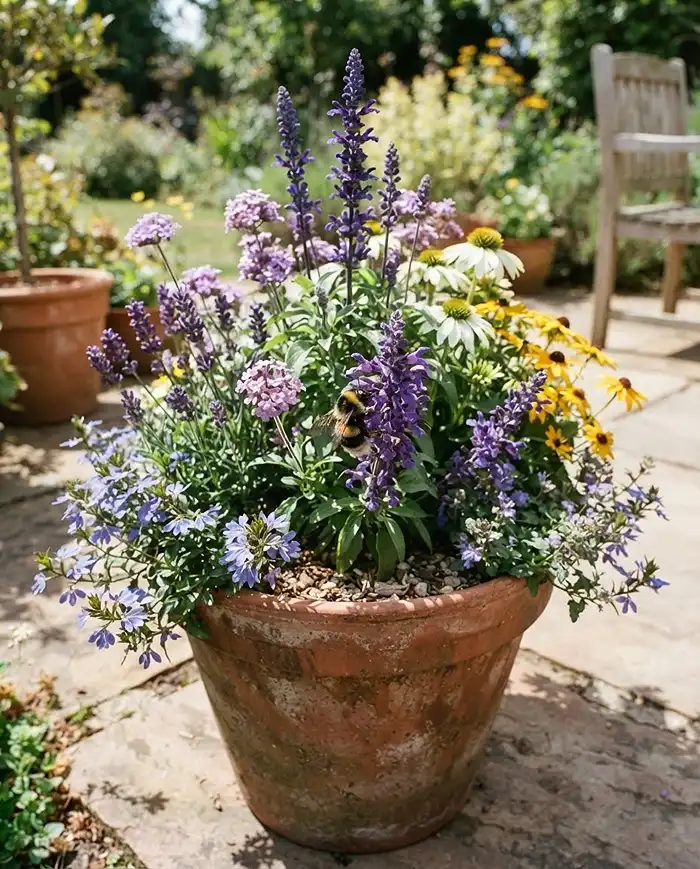
Formulating a Nutrient-Dense, Chemical-Free Soil Mix
Quick Answer: Blend a peat-free potting mix with compost, perlite, and a slow-release organic fertilizer to feed blooms all season without harming bees.
I mix roughly 60% quality potting soil, 25% finished compost, and 15% perlite for drainage. That combination holds moisture without staying soggy, which matters for herbs like rosemary that hate wet feet.
Whatever you do, check the label before buying pre-mixed “flowering” soils. Some are pre-treated with systemic pesticides like neonicotinoids, which move into the pollen and nectar itself and are fatal to foraging bees, even in small doses.
Top Culinary Herbs That Attract Bees
Here’s something most kitchen gardeners don’t realize: letting herbs “bolt” — going to seed and flowering instead of staying leafy — produces some of the richest nectar sources in the whole garden. A bolted basil or cilantro plant is a bee magnet, even though most cooks yank it out.
Lavender, Rosemary, and Thyme: The Mediterranean Magnets
Quick Answer: Group drought-tolerant Mediterranean herbs together in sandy, fast-draining soil, and their small tubular flowers will pull in bumblebees all summer.
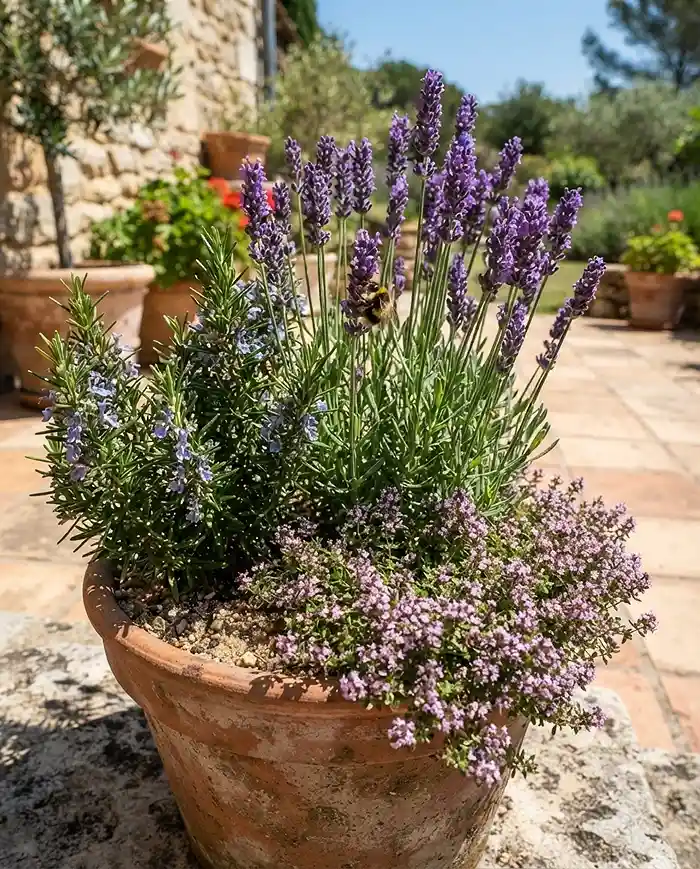
I grow ‘Munstead’ lavender, ‘Tuscan Blue’ rosemary, and creeping thyme together in one 18-inch pot with extra sand mixed into the soil. All three want the same thing: full sun, minimal water, and soil that drains within seconds of a hard rain.
- Lavender’s tiny purple flowers are packed with nectar that long-tongued bumblebees are built to reach
- Rosemary blooms as early as March in zone 8, giving bees food before most annuals wake up
- Thyme spreads low and thick, creating a solid mat of tiny blossoms bees can graze for hours
Pro Tip: Prune lavender right after its first bloom flush to trigger a second round of flowers in late summer.
Borage, Mint, and Chives: Prolific Bloomers for Tiny Pollinators
Quick Answer: Borage, mint, and chives are moisture-loving herbs that refill their nectar so fast bees will revisit the same flower repeatedly in a single afternoon.
Borage is the standout here. Its star-shaped blue flowers refill with nectar roughly every two minutes, so a single plant can host a steady rotation of bees all day long.
Mint is a different story. I made the mistake of planting it directly in soil once, and it choked out everything else within a month. Now I always sink mint in its own plastic nursery pot, submerged inside the larger container, to stop the roots from taking over.
Chives are easy — let a few stems flower into their purple pom-poms instead of harvesting every stalk, and you’ll have a steady bee draw from late spring on.
Best Flowers to Pair With Your Herbs
Herbs alone will feed bees, but pairing them with the right annuals and native perennials turns one pot into a full buffet. Think of it as diversifying the menu, not just adding more food.
The Superiority of Single-Bloom Flowers
Quick Answer: Choose single-bloom flowers like native purple coneflower or simple daisies over ruffled double-bloom varieties, since doubles often can’t offer nectar at all.
Heavy breeding for showy, ruffled “double” flowers frequently mutates the stamens — the pollen-producing parts — into extra rows of petals. The flower looks fuller, but the nectar and pollen inside are physically blocked or gone entirely.
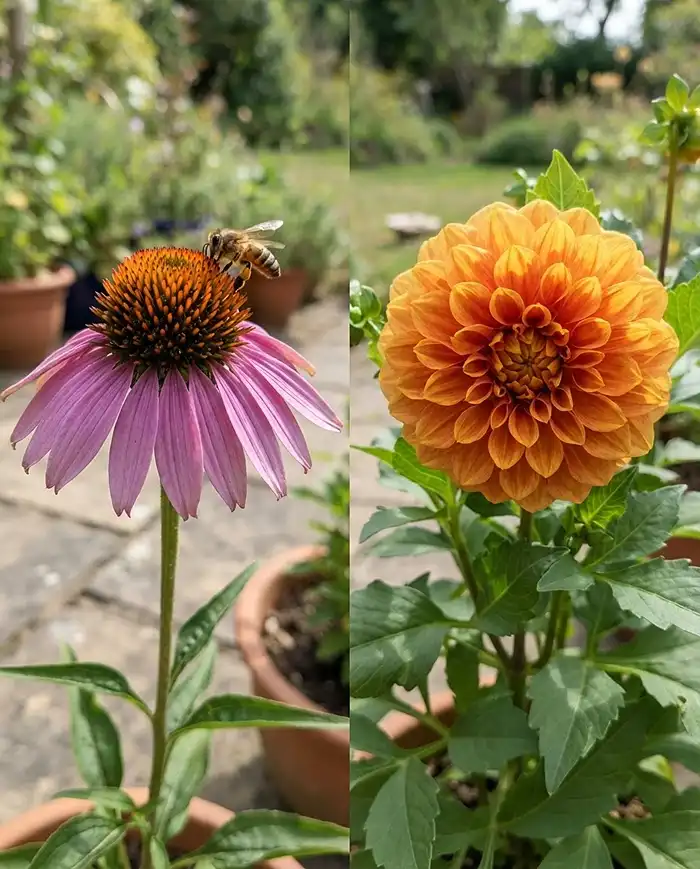
A single-bloom Echinacea purpurea has an open, flat center bees can land on directly. A double-bloom “pom-pom” mum, by contrast, might look impressive but offer almost nothing to a hungry forager.
Real Example: I swapped a double-bloom zinnia variety for single-bloom ‘Profusion’ zinnias two seasons ago, and bee visits on that pot roughly tripled by midsummer, based on my own casual daily counts.
Zinnias, Cosmos, and Sweet Alyssum for Container Edges
Quick Answer: Use fast-growing zinnias, cosmos, and sweet alyssum as colorful spillers and fillers around your central herb, creating a dense landing pad for tired bees.
‘Profusion’ zinnias and ‘Sensation Mix’ cosmos both bloom nonstop from early summer to frost if you deadhead regularly. Tuck low-growing sweet alyssum like ‘Snow Princess’ around the container’s edge to spill over the sides.
- Zinnias: tall, bold color, cut-and-come-again for continuous rebloom
- Cosmos: airy texture, thrives in poor soil, self-seeds readily
- Sweet alyssum: low spreading mat, blooms almost continuously in cool weather
Step-by-Step Planting Guide for Your Bee Oasis
Start with your “thriller” — the tallest structural plant, usually rosemary or a tall zinnia — centered in the pot. This anchors the design and gives smaller plants something to grow around.
Next, ring the thriller with your “filler” plants: lavender, borage, or coneflower, spaced roughly 6 to 8 inches apart so roots have room. Finish with a “spiller” like sweet alyssum or trailing thyme along the rim.
Gently firm the organic soil mix around each root ball as you go, pressing out air pockets without compacting the soil too hard. Water slowly and deeply right after planting, then top with an inch of mulch to hold moisture.
Caring for Your Pollinator Pots Without Chemicals
Deadheading — pinching or snipping off spent flowers — is the single biggest thing you can do to keep a bee pot productive. It tricks the plant into producing more blooms instead of putting energy into seed production.
Check your containers every couple of days during peak summer heat, since pots dry out faster than garden beds. A finger test two inches down is more reliable than guessing by looking at the surface.
For pests, always reach for manual removal or a hose blast before any spray, even an “organic” one. Insecticidal soaps and neem oil can still harm bees if applied while they’re actively foraging.
Common Problems and Solutions
Even a well-planned bee garden runs into a few predictable snags. Here’s how to handle the two that come up most.
Managing Aphids Without Harming Bees
Quick Answer: Blast aphids off with a strong stream from the garden hose, and if that’s not enough, apply insecticidal soap only at dusk after bees have returned to their hives.
I check my borage and rosemary weekly for aphid clusters, usually clumped on new growth. A firm hose spray in the morning knocks most of them off without touching a single bee, since foraging peaks midday.
If the infestation is heavy, spray insecticidal soap in the evening, once flowers have closed for the day and bees have gone home. Never spray an open, actively visited bloom.
Differentiating Wasps from Native Bees
Quick Answer: Yellow jackets have smooth, shiny, narrow-waisted bodies and aggressive behavior, while native bees like mason and leafcutter bees are fuzzy, rounder, and almost entirely focused on flowers, not people.
True bees foraging on a bloom are extremely unlikely to sting unless they’re grabbed or crushed. Yellow jackets, on the other hand, tend to hover near food and trash, not flowers, and react defensively much faster.
If you see a small, fuzzy insect quietly working its way around your lavender, that’s almost certainly a solitary native bee, not a threat.
bee friendly container plants FAQs
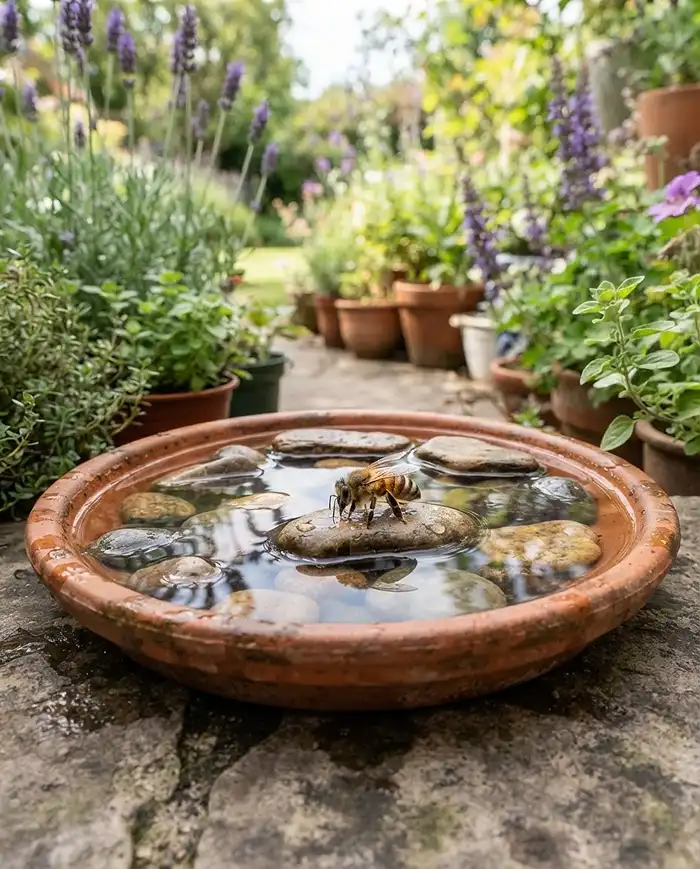
Do I need to provide a water source for the bees?
Yes, a shallow terracotta saucer filled with clean water and a few flat river stones makes an easy bee bath. The stones give bees a dry landing spot so they can drink without drowning, and it’s especially helpful during hot, dry stretches.
Which flower colors are bees most attracted to?
Bees see in the ultraviolet spectrum and are essentially blind to red, but they’re strongly drawn to blue, purple, violet, white, and bright yellow blooms. Choosing flowers in these colors is one of the simplest ways to boost bee visits.
Will a bee-friendly container make my patio unsafe for seating?
No. Foraging bees are focused entirely on gathering nectar and pollen and generally ignore people nearby. Placing containers a few feet from high-traffic seating areas is enough for bees and humans to coexist without any issues.
Conclusion
Bee friendly container plants don’t need acres of space, just a few well-chosen pots, single-bloom flowers, and chemical-free soil. Start with one 18-inch container this season and build from there.
For more design ideas, check out these related guides on native flower balcony gardens and herb garden layouts for balconies.
You might also like this guide to summer flowers for container edges.
To learn more about supporting native pollinators beyond your container garden, the Xerces Society’s pollinator conservation resources are a solid next step.
Key Takeaways
- Bee friendly container plants work best when blooms overlap continuously from spring through fall
- Container gardening for pollinators starts with pots at least 15 inches wide and chemical-free soil
- Herb garden ideas like letting basil or chives bolt turn kitchen herbs into serious nectar sources
- Balcony flowers in blue, purple, white, and yellow draw far more bee visits than red varieties
- A pollinator container garden thrives on single-bloom flowers, regular deadheading, and manual pest control